
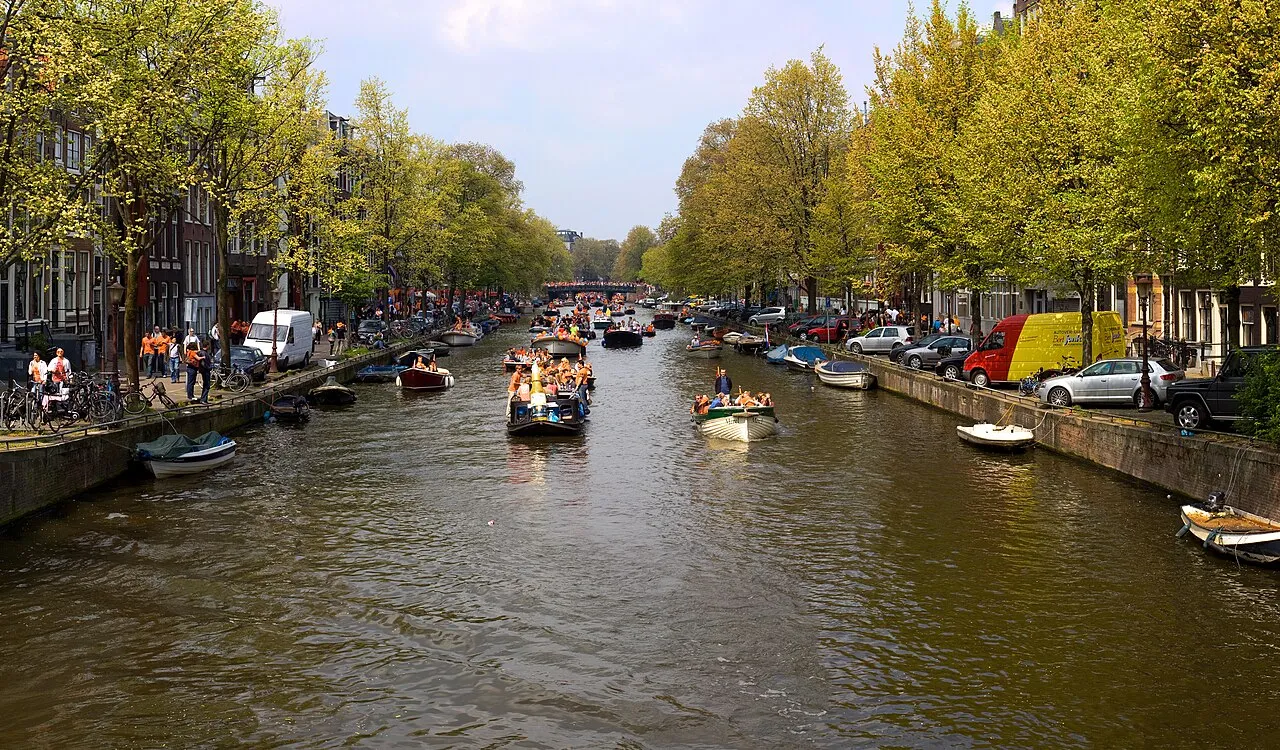

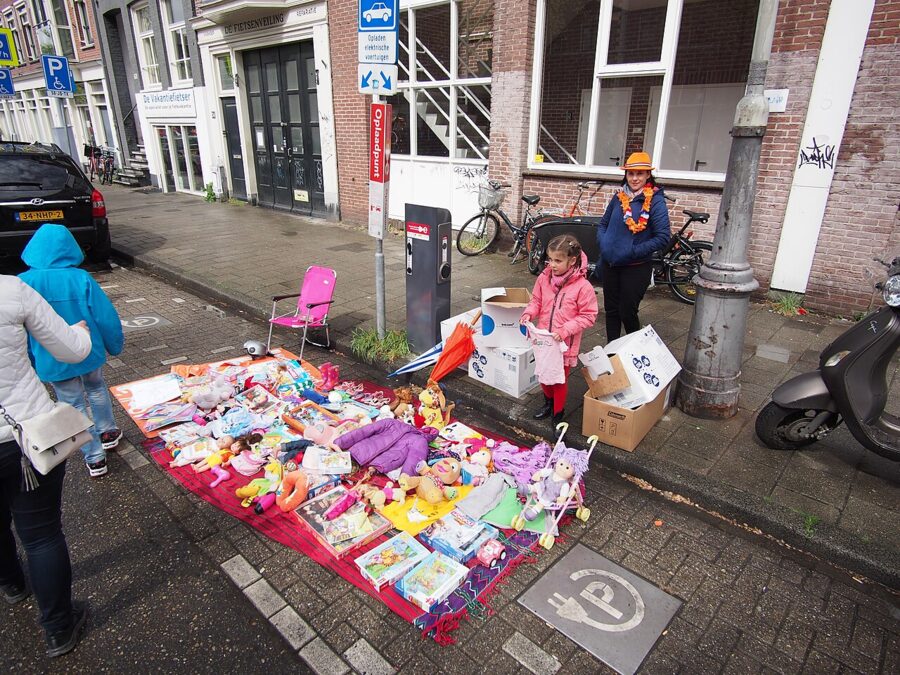
At 06:00 on 27 April, anyone in Amsterdam may unroll a blanket on almost any pavement in the city and sell whatever is theirs: old records, a child’s bicycle, a box of mismatched glasses, a lemonade nobody asked for. No permit, no pitch fee, no tax. By 20:00 the selling has to stop, the leftovers sit on the curb, and the canals behind them are still jammed with boats full of people dressed head to foot in orange.
That is King’s Day, Koningsdag, the Dutch king’s birthday and the biggest street party in the country. In 2027 it falls on Tuesday 27 April, King Willem-Alexander’s 60th birthday, with King’s Night on the Monday evening before. Hundreds of thousands of people pour into a city of under a million, the trams give up on the center, and for one day the usual Amsterdam rules on selling, drinking and noise are swapped for a different, stricter set.
Whether you should plan a trip around it depends on what you want from Amsterdam. If it is the Rijksmuseum in peace and a quiet canal-house dinner, avoid the last week of April entirely. If it is to see the city at its loudest, friendliest and most crowded, come, book early, and read the rules first, because they changed in 2026 and change again in 2027.
Contents11 parts
- Is it worth the trip?
- The date, and why it moves
- King's Night, the evening before
- The vrijmarkt: the city as a flea market
- The canals: who can be on the water
- Where to go, and where not to
- Getting around
- The rules on the street, and the fines
- Museums, shops and markets that close
- Booking a bed
- What to bring and wear

Is it worth the trip?
For most people who like a party, yes, once. King’s Day in Amsterdam is not a parade or a show you watch from a seat. It is a whole city out on the street at the same time: a flea market that runs through every neighborhood, free stages on the squares, boats on every canal, and children selling cupcakes. The atmosphere is good-natured, and almost everyone is drinking.
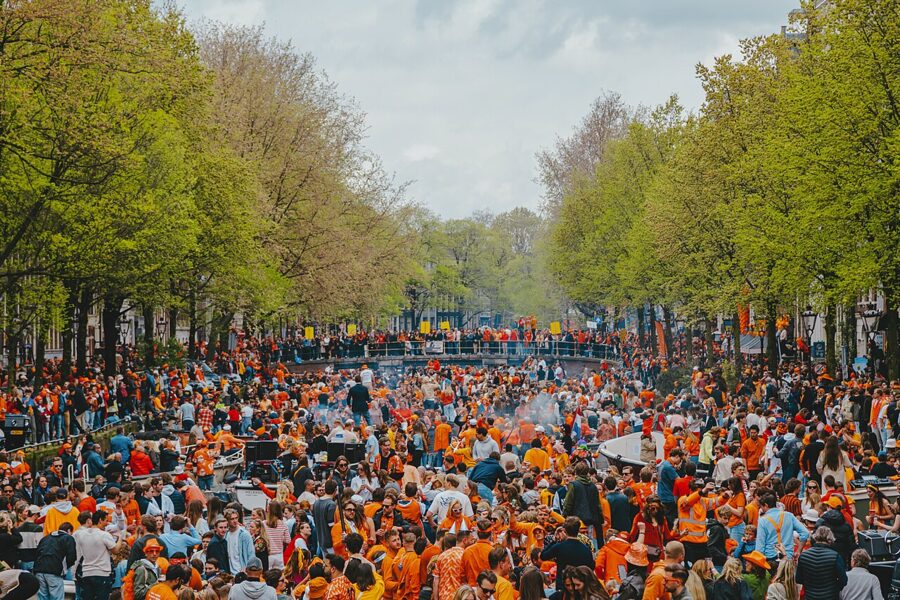
The costs are real too. Hotel prices on the nights around 27 April are among the highest of the year, there are no trams in the center, many museums close, and the busiest streets in the Jordaan reach a density that the city now treats as a safety problem. An internal report made public in the summer of 2025 called King’s Day 2025 unmanageable for the ambulance service, which is why the mayor brought in a package of new measures for 2026 and 2027.
My advice: if you come for one day, give it the morning market and the early afternoon on the canals, and be somewhere calmer by 17:00. If you have a week, put King’s Day in the middle of it and do your museums on the days either side.
| Date | What happens |
|---|---|
| Monday 26 April 2027, evening | King’s Night (Koningsnacht): parties in bars, clubs and on small café stages; the NS alcohol ban on trains starts at 19:00 |
| Tuesday 27 April 2027, 06:00–20:00 | King’s Day free market (vrijmarkt) across the city |
| Tuesday 27 April 2027, from 11:00 | Street events and free stages, with music allowed from 12:00 (2026 times) |
| Wednesday 28 April 2027, 07:00 | The alcohol ban on trains and stations ends |
| Saturday 26 April 2031 | Next time the date moves, because 27 April 2031 is a Sunday |
The date, and why it moves
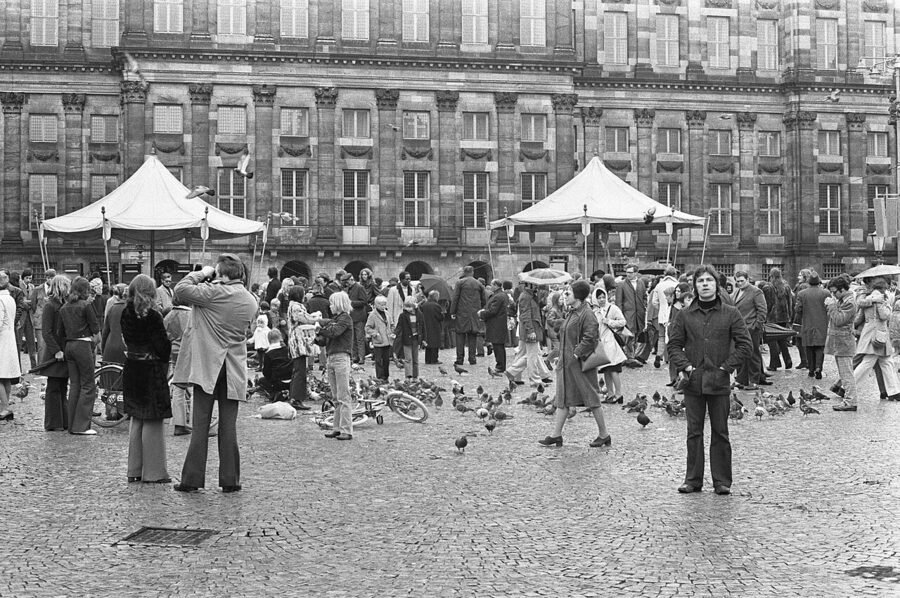
The holiday began as Prinsessedag, Princess’s Day, on 31 August 1885, when a newspaper editor in Utrecht organized a party for the fifth birthday of Princess Wilhelmina. Once she became queen it was Koninginnedag, Queen’s Day, held on her birthday until she abdicated in 1948. Her daughter Juliana moved it to her own birthday, 30 April, from 1949, and turned it into the national holiday it is now.
When Beatrix took the throne on 30 April 1980 she kept the date, partly in honor of her mother and partly because her own birthday, 31 January, is far too cold for a day spent outdoors. Willem-Alexander became king on 30 April 2013, and from 2014 the holiday moved to his birthday, 27 April, and took the name King’s Day.
The one rule that catches people out: when 27 April is a Sunday, King’s Day moves back a day to Saturday 26 April, and King’s Night to the Friday evening. That happened in 2014, the very first King’s Day, and again in 2025. The next time is 2031.
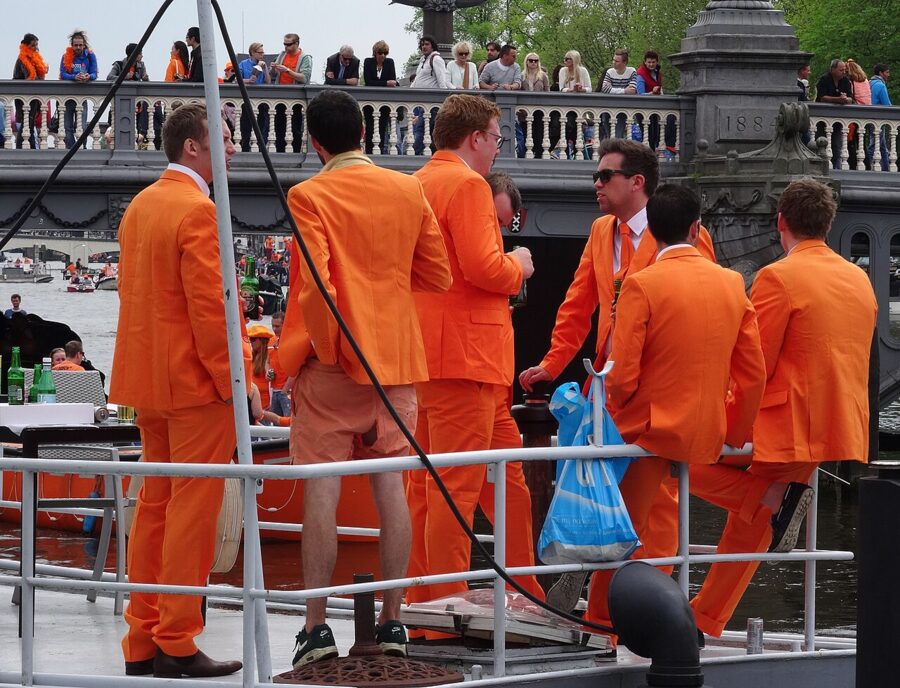

Orange is the color because the royal family is the House of Orange-Nassau, named after the principality of Orange in southern France that William of Orange inherited in 1544. The royal family does not spend the day in Amsterdam. Each year they visit one town, and on 27 April 2027 it is Lelystad in Flevoland, which also marks its own 60th anniversary that year.
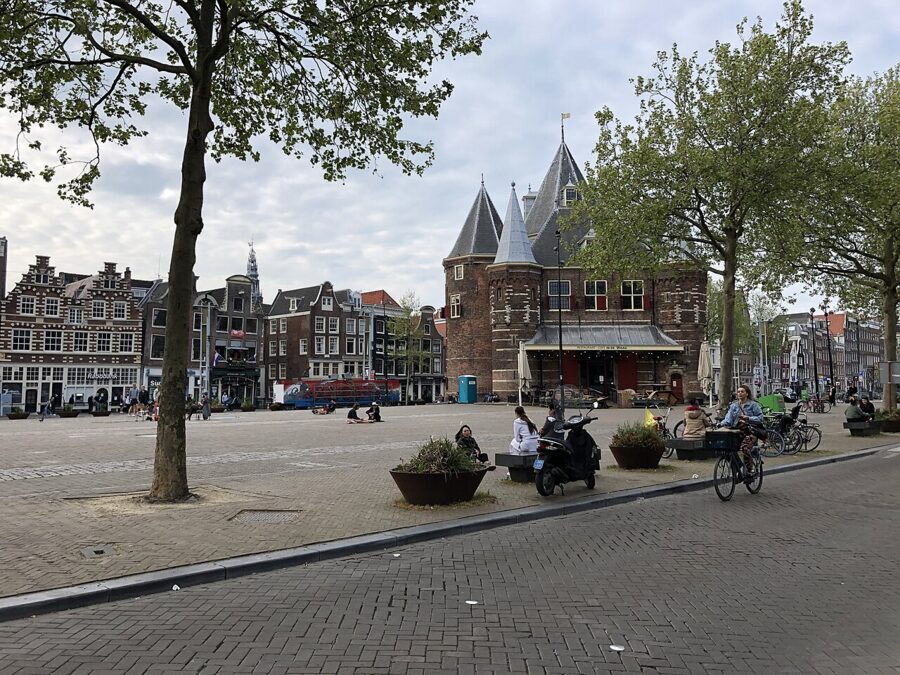
There have been quiet years. In 2020 and 2021 the pandemic cancelled the street celebrations entirely, and the free market moved online. The photo below is the Nieuwmarkt at six in the evening on King’s Day 2020, a square that in a normal year you would struggle to cross.

King’s Night, the evening before
Koningsnacht, King’s Night, is the warm-up, and for many Amsterdammers in their twenties it is the main event. Bars and clubs run special nights, and cafés with a drinks license can get a permit for a small outdoor stage with live music or a DJ. In 2026 those stages ran from 19:00 to 01:00, and the city capped the number of outdoor beer taps per stage on the busiest squares: three on the Leidseplein and the Nieuwmarkt, four on the Rembrandtplein and in the Reguliersdwarsstraat, two on the Spui, the Amstelveld, the Westerstraat and the Marie Heinekenplein.
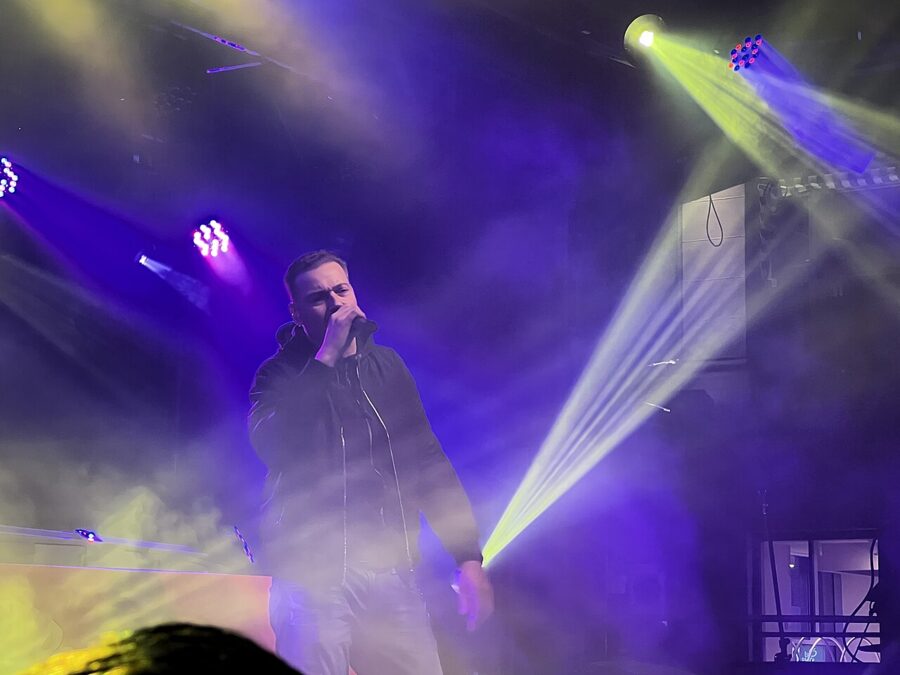

Bars and cafés keep weekend opening hours that night, whatever day of the week it falls on, and the clubs go much later: in 2026 several ticketed club nights ran until 05:00, and one club until 08:00 the next morning. The nightlife guide covers the clubs and the closing rules; the Leidseplein and the Rembrandtplein are where the outdoor crowds gather.
The practical choice is the one locals make: do King’s Night properly and lose the morning of King’s Day, or go to bed early and be at the market by nine. Trying both is how people end up asleep on a bench at noon. If you are crossing the IJ late, ferry F3 between Centraal and Buiksloterweg ran all night in 2026.
The vrijmarkt: the city as a flea market
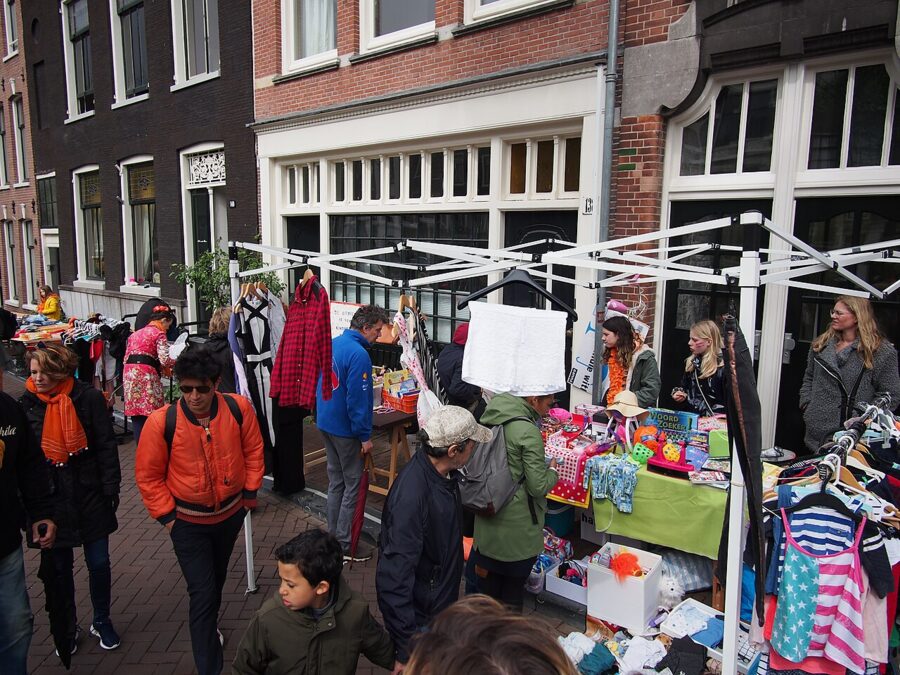
The vrijmarkt, the free market, is the oldest and best part of the day. On King’s Day anyone may sell second-hand goods on the street without a permit, from 06:00 to 20:00, and no VAT is charged. Until 1996 the Amsterdam market began the evening before and ran for 24 hours; now the selling starts at dawn.
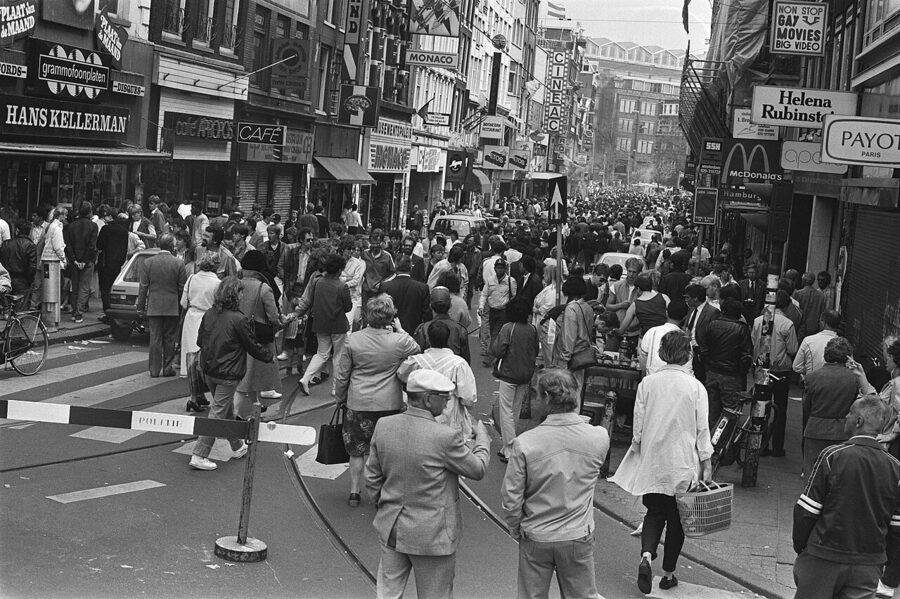
Today no pitch can be reserved. You may sell almost anywhere, but you must keep clear the entrances to houses and shops, emergency routes, bridges, the approaches to bridges and fire hydrants. People claim their spot early with chalk. Tape is banned, because it fouls the street, and you can be fined for using it.
The city’s rules on what can and cannot be sold, as of 2026:
- Allowed: second-hand goods such as toys, furniture, books and clothes; soft drinks in plastic bottles or cans, never glass; dry snacks that do not spoil, such as crisps, cookies, candy and cake without cream.
- Not allowed: alcohol, unless you are a licensed bar or shop; new commercial stock and advertising without a permit; perishable food such as meat, fish and dairy, unless you are registered with the Chamber of Commerce and meet hygiene rules; live animals.
Where the best markets are
The most famous market is in the Jordaan, where the Westerstraat, the Tweede Anjeliersdwarsstraat, the Bloemgracht, the Lauriergracht and the side streets turn into one continuous stall. It is also the most crowded place in the city: the city tells market sellers to avoid it and families with children to stay away. Go before 10:00 or not at all.
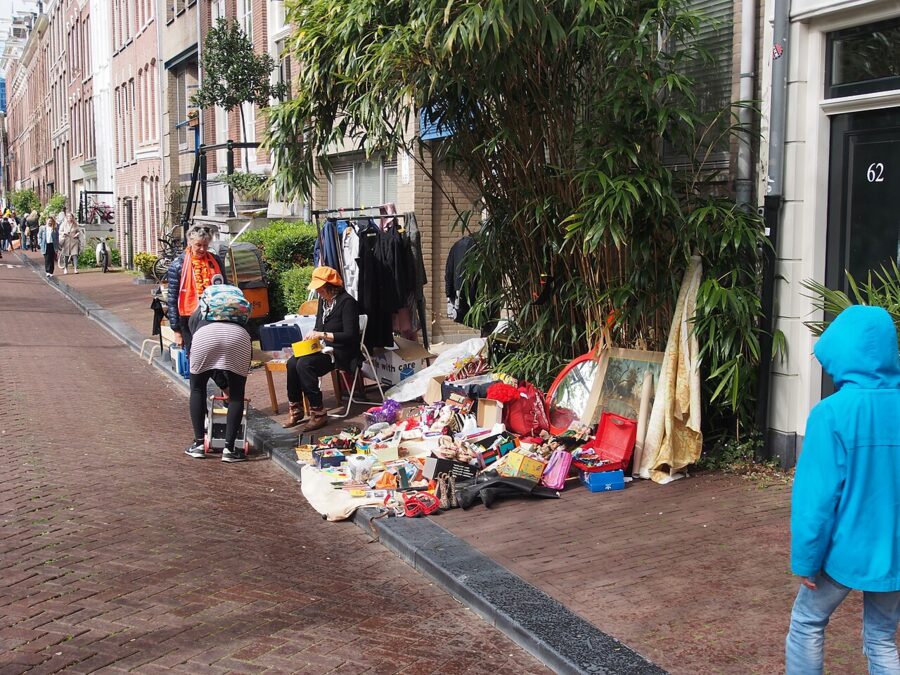
Elsewhere, the markets are calmer and often better. The tourist board’s free-market list points to the Beethovenstraat in Oud-Zuid for quality second-hand goods, the streets of the Rivierenbuurt, the Erasmuspark in West, the Buikslotermeerplein and the Van der Pekstraat in Noord, and the Bredeweg in Watergraafsmeer, where the market comes with a free neighborhood festival run by volunteers. The Haarlemmerdijk and Haarlemmerplein, just north of the Jordaan, have the Jordaan’s feel with a little more room.
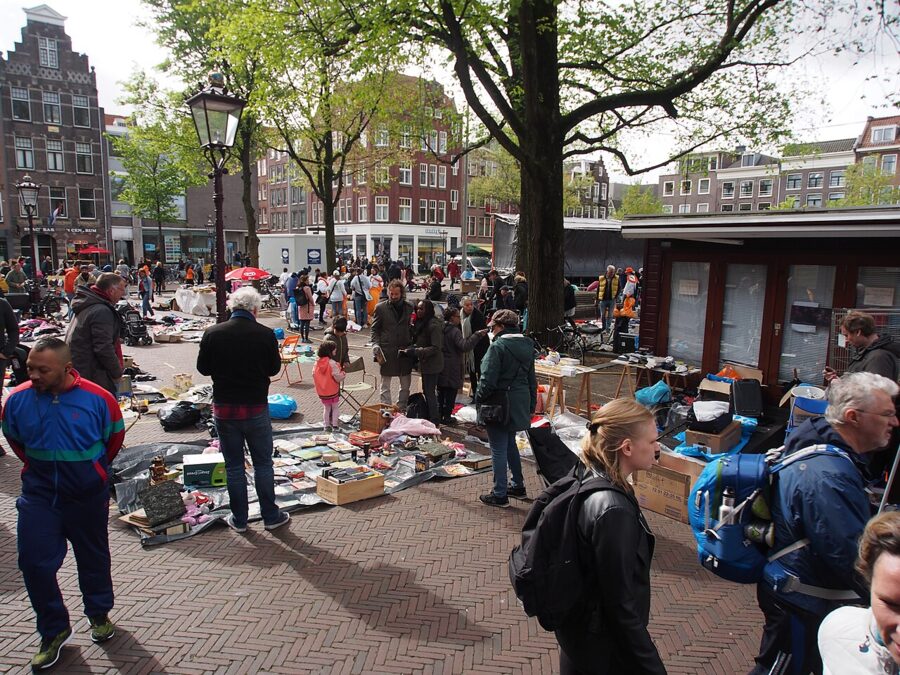
Unsold goods should not be dumped. In 2026 the city put collection containers for leftovers in Nieuw-West, Oost, Zuid, West and Noord, so the toys and clothes nobody bought could go to a second home.
The children’s markets and the Vondelpark
Part of the city is set aside for kindervrijmarkten, children’s markets, where only children under 16 may sell. The best known is in the Vondelpark, where the gates traditionally open at 09:00 and children lay out their old toys and books, put on little shows and challenge passers-by to games for coins. Passers-by often pay more than the asking price, and that is part of the point.
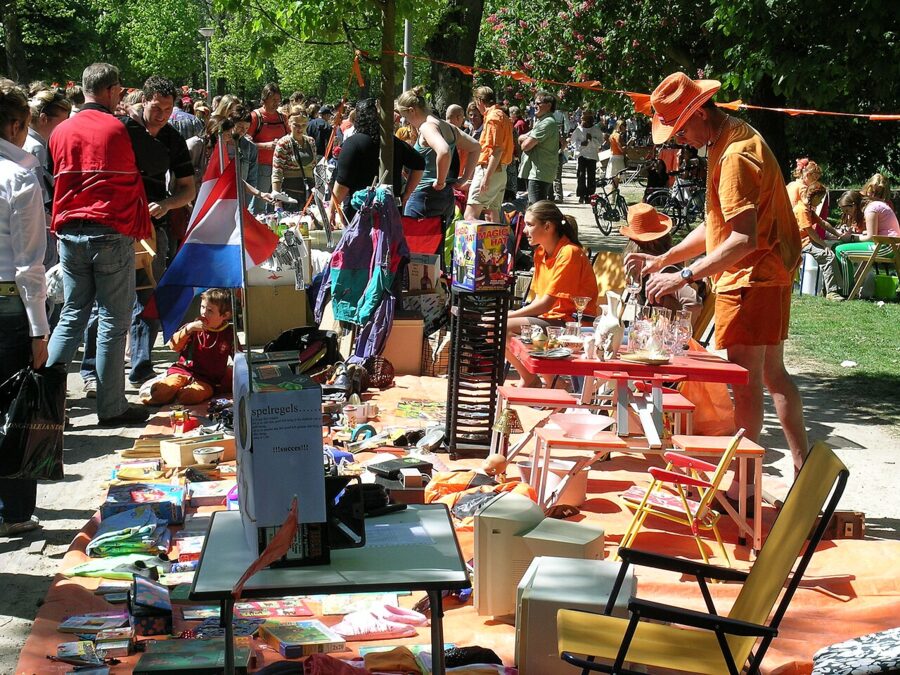

The 2026 list of children’s market areas in the city also included the Sarphatipark in De Pijp, the Westerpark, the Amstelveld, the Rembrandtplein, the Frederiksplein, the even-numbered side of the Leliegracht between numbers 36 and 58, the Erasmuspark, the Bilderdijkpark, the Amsterdamse Poort shopping center in Zuidoost and the NDSM wharf in Noord. At the NDSM, the largest children’s market in the city, a pitch had to be booked in advance in 2026, and selling started at 09:00.
The canals: who can be on the water
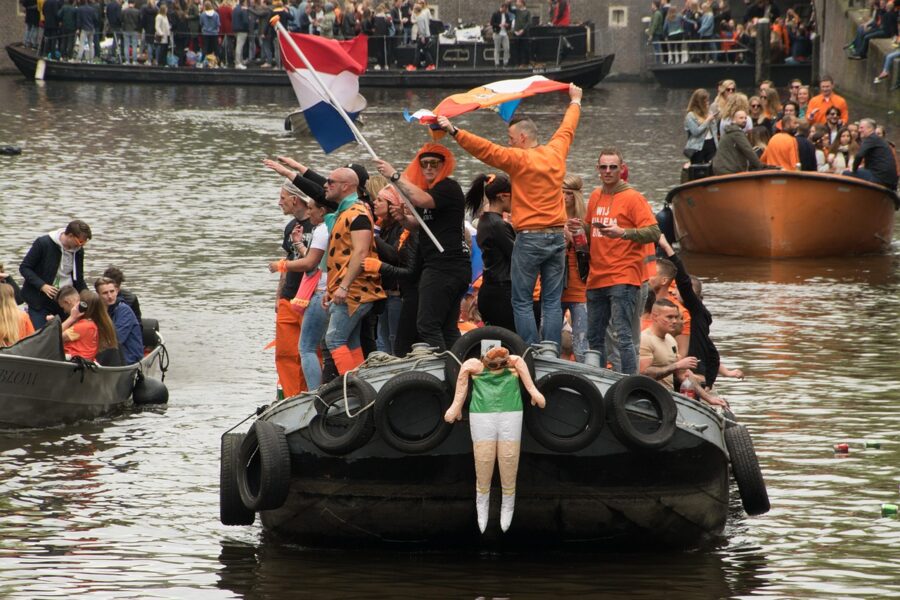
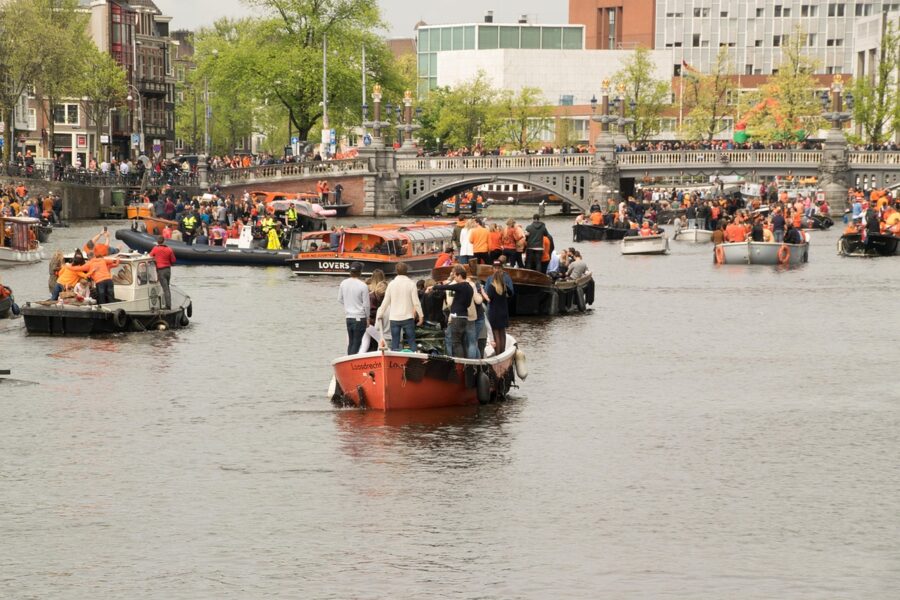
The canals are the image everyone knows: orange boats nose to tail, music, flags, people dancing on the bridges. They are also where the city has tightened most. These were the boating rules for the city center in 2026, and the city has given no sign of relaxing them:
- Only boats shorter than 10 meters may enter the city center, and every boat needs a valid vignette (the city’s boating permit).
- No more than 12 people plus the skipper on board. The exemptions of earlier years are gone; only licensed tour boats are exempt, and the limit does not apply on the through-routes: the Amstel, the Nieuwe Herengracht, the Oosterdok, the Westerkanaal, the Kattensloot, the Kostverlorenvaart, the Schinkel and the Nieuwe Meer.
- Many canals are one-way for the day. Follow the direction signs, keep right, and give way rather than force a passage.
- Maximum speed 6 km/h, no amplified music, no shouting, and the person steering may not drink.
- In the center, boats must be emission-free or covered by the transition rules for older engines.
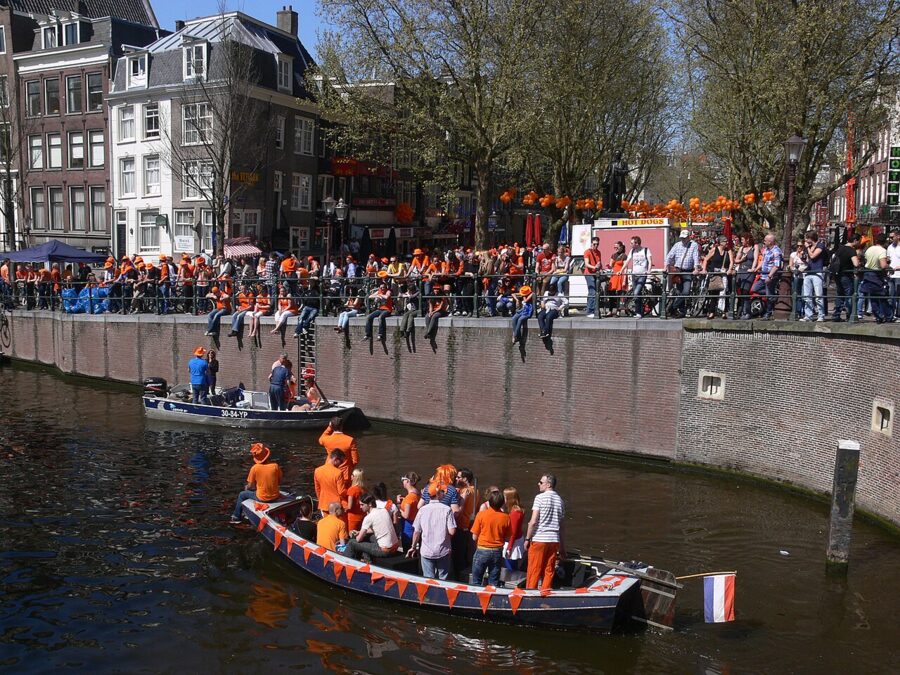

The fines for carrying too many people go to the skipper: €80 (about US$93) for a private skipper under 16, €160 (about US$185) for anyone older, and €800 for a business. They can be given again each time an inspector stops the same boat. The water police also breathalyze skippers; the legal limit is the same as on the road.
If you have no boat, you are not missing much. The view from the bridges and quays is better than the view from a boat stuck in a queue under one of them. The tourist board’s favorite spot is where the Prinsengracht passes the Amstelveld, which also had a free stage in 2026. For a normal canal trip on another day, see the canal cruise guide.
Where to go, and where not to
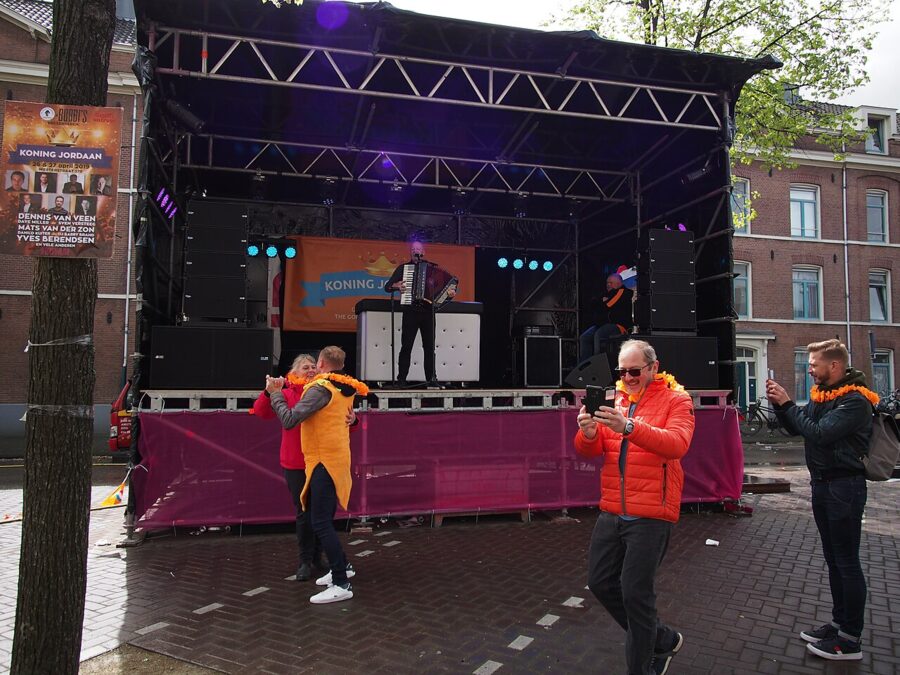
The rule of thumb: the closer you are to the Westerstraat, the Dam and Centraal, the worse the crowd. In 2026 the city allowed free street events inside the center only on a short list of squares and streets, each capped at 2,000 people, open to all and free: the Amstelveld, the Leidseplein, the Nieuwmarkt, the Reguliersdwarsstraat, the Rembrandtplein, the Spui, the Westerstraat and the Marie Heinekenplein in De Pijp. Events ran from 11:00 to 20:00, with music from noon.
The Jordaan and the Westerstraat
The Westerstraat is the most famous party street and the one that worries the city most. The tourist board advises families with children to stay away, and in recent years the street has been run with marked entrances and exit-only points. From 2027 the Westerstraat and the Noordermarkt become an official event area, where the city wants a single organizer responsible for security and first aid. As of November 2026 the city has not said whether it will be fenced or how entry will work, so check the city’s King’s Day page in April.
The Homomonument, Reguliersdwarsstraat and the squares
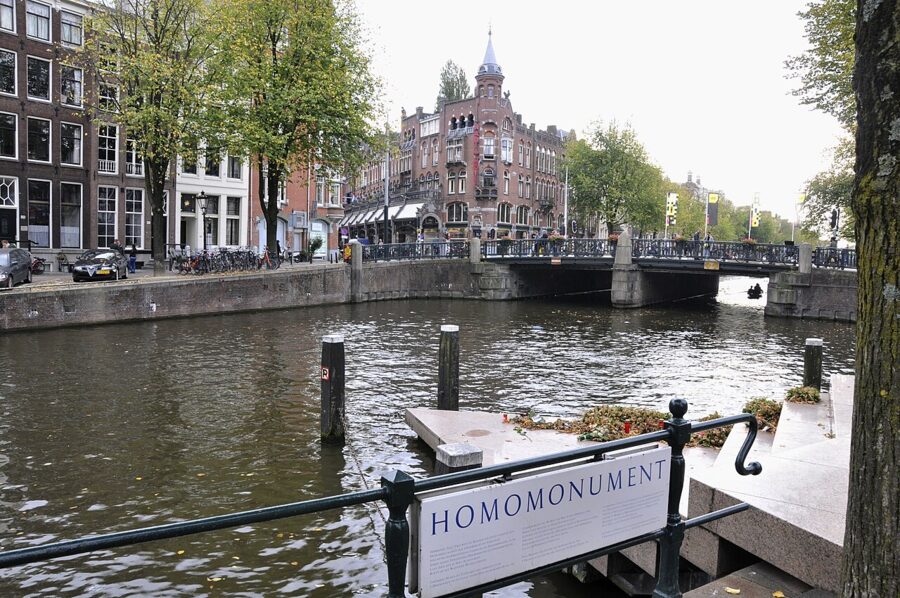
The free party at the Homomonument, by the Westerkerk, is the city’s main queer King’s Day stage, with DJs all day; the city licensed it for both King’s Night and King’s Day in 2026. The Westermarkt tram stop is closed for roadworks until early 2027, so walk the ten minutes from the Dam. The Reguliersdwarsstraat, the city’s gay street, has its own run of bar parties between the Koningsplein and the Vijzelstraat.
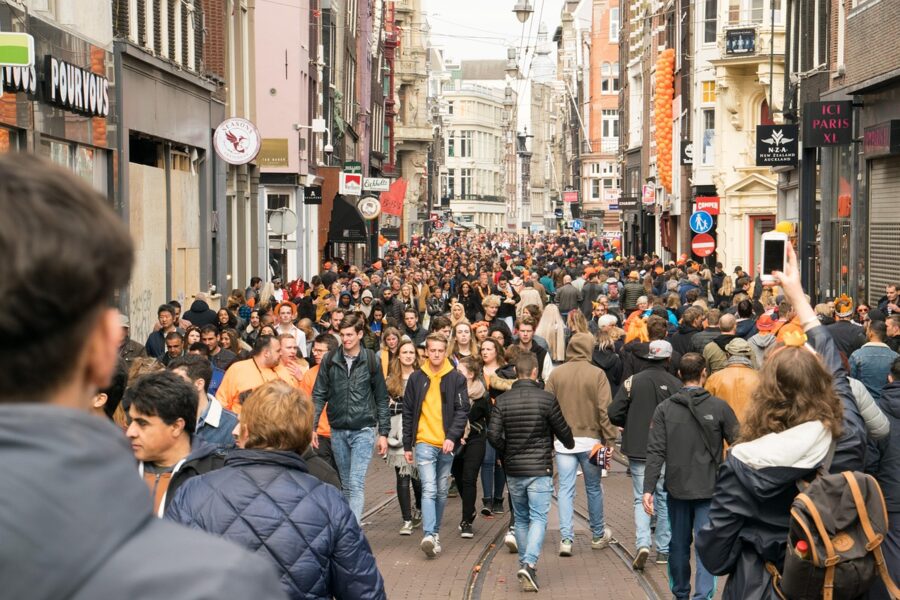
Where not to go: Centraal Station, the Damrak, the Dam and the shopping streets between them are the bottlenecks, along with the Leidseplein, the Rembrandtplein and the Spui when their stages are at full volume. Avoid arriving or leaving through Centraal between about 15:00 and 20:00 if you can use Amsterdam Zuid, Amstel or Sloterdijk instead.
Noord, Oost and the festivals
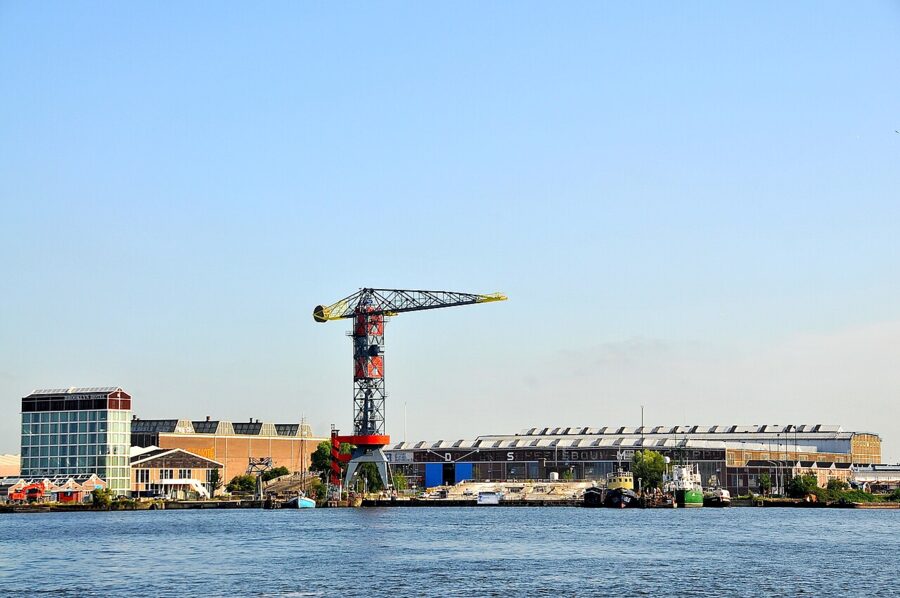
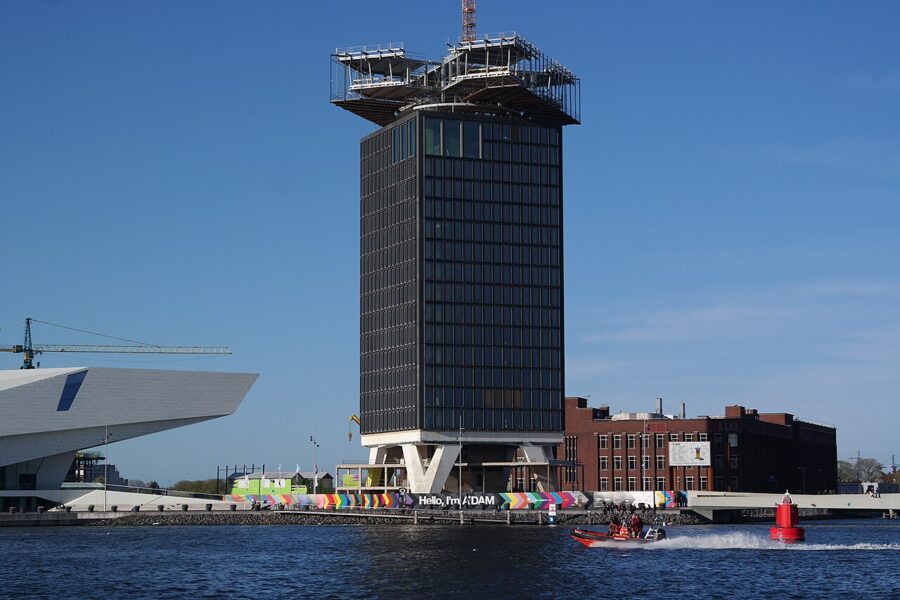
Across the IJ, the NDSM wharf hosts NDSM Vrijhaven: a free program with live music, workshops, food trucks and the big children’s market, which ran from 11:00 to 20:00 in 2026. The beach club Pllek, on the same wharf, held a free party from noon until 03:00. Ferry F4 runs from Centraal to the NDSM, and in 2026 it ran with an extra boat until midnight. In Oost, the Bredewegfestival in Watergraafsmeer is the gentlest choice in the city: street theater, music, a market and an open-air opera, all free.

The big paid festivals are on the edges of the city, and the city has pushed them there on purpose. In 2026 Kingsland filled the Olympic Stadium from 12:00 to 20:30, with tickets from €59.50 (about US$69); Loveland’s King’s Day edition ran at Meerpark in Oost from 11:00 to 22:00, from €69.95; and Free Your Mind with Oranjebloesem took over the RAI until 22:00, from €56.50. Tickets for every event must be bought in advance; the city does not allow sales at the door. The 2027 line-ups were not out as of November 2026.

If you want out altogether, the parks on the edge of the city, such as Park Frankendael and the Amsterdamse Bos, stay calm, and the towns around the city hold their own, smaller King’s Day markets. A day trip to Volendam and Marken will not escape the orange, but it will escape the crush.
Getting around
Walk. That is the tourist board’s advice and mine. On King’s Day no trams run through the city center, several lines run diverted routes around its edge, and buses and taxis are kept out of most of it until late in the evening. Large signs and colored walking routes point the way to the main events.
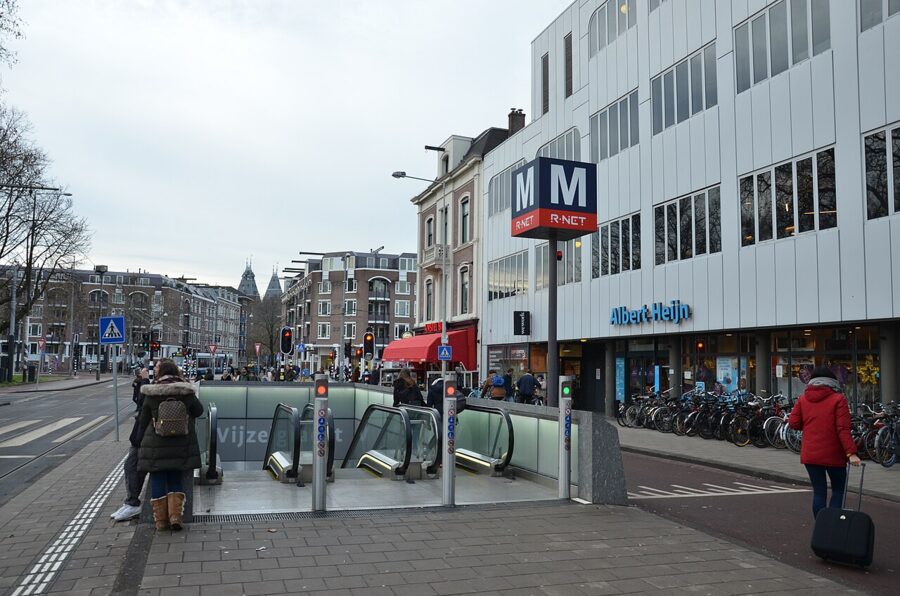
The metro is the way to cross the city. Metro 52, the Noord/Zuidlijn, runs under the center from Noord through Centraal, Rokin, Vijzelgracht and De Pijp to Europaplein and Station Zuid, which puts it within walking distance of most of the parties without touching a tram. Watch for station closures; in 2026 they were:
- RAI, train and metro station, closed all day. NS says RAI and Science Park close again on King’s Day 2027.
- Europaplein, metro 52, closed for boarding after 18:00 (you could still get off).
- Amstelveenseweg, closed from 18:00 to the end of service.
- Science Park station, closed all day.

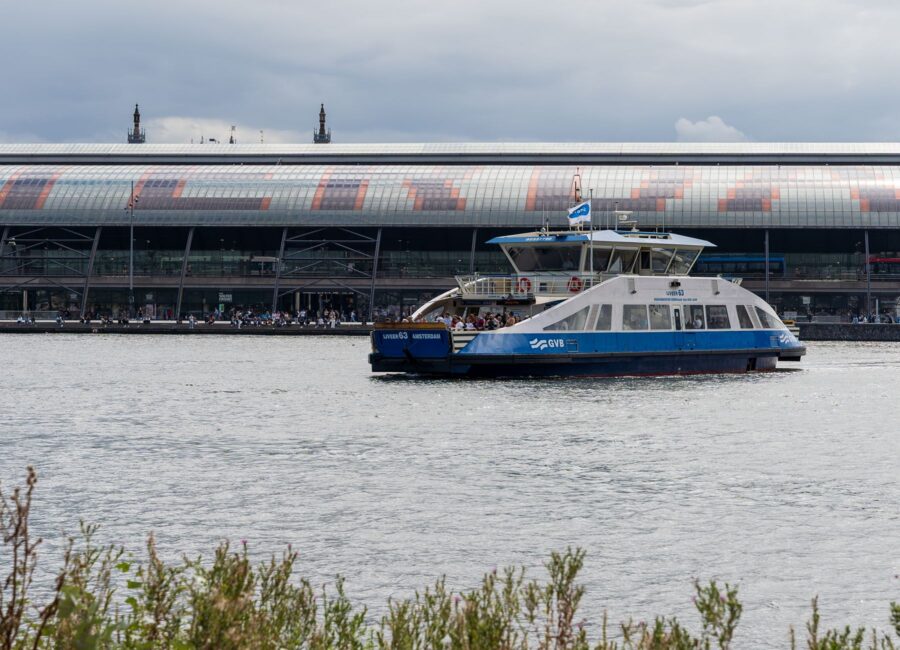
On the water, ferry F3 between Centraal and Buiksloterweg ran all night after King’s Night, and F3 and F4 ran with an extra boat until midnight on King’s Day itself. The ferries across the IJ are free. On trams, buses and the metro, check in and out with a contactless bank card or phone (OVpay); no separate ticket is needed.
NS, the national railway, runs its Oranjedienstregeling, the orange timetable, with longer and extra trains. From 19:00 on 26 April to 07:00 on 28 April you may not take alcohol into a station or onto a train anywhere in the country, and station shops stop selling it. NS offers no travel assistance for disabled passengers at Amsterdam Centraal all day on King’s Day, or at Amsterdam Zuid from 18:00, and the tourist board has warned in past years that the luggage lockers at Centraal are out of use. If you have a flight from Schiphol, allow far more time than usual and consider leaving from Zuid.
Cars are a mistake. The city center has been closed to traffic from about 07:30 in recent years, most of the central taxi ranks are out of use, and the city publishes a map of where taxis can pick up. If you are driving in, park at a P+R on the edge and take the metro.
The rules on the street, and the fines
King’s Day comes with its own set of rules, on top of the usual ones. As of 2026:
- You may carry only one can or bottle of alcohol on the street. A six-pack, a crate or a home beer tap counts as more than one and can be taken away.
- Shops inside the S100 ring road that are licensed to sell alcohol may sell one alcoholic drink per customer, may not sell it chilled, and may not sell or display anything on the street. This applies from 06:00 to midnight.
- Leave glass at home; the city asks everyone not to bring it, and stalls may sell soft drinks only in plastic or cans.
- No sound systems or amplified music in public space, on a bike or on a boat.
- No handing out flyers, samples or advertising without a permit.
Illegal parties and illegal alcohol sales are where the city now concentrates its enforcement. Anyone caught gets an order to stop, backed by penalties: €1,000 (about US$1,160) if they carry on, then €2,000 and €4,000, with double amounts for businesses.
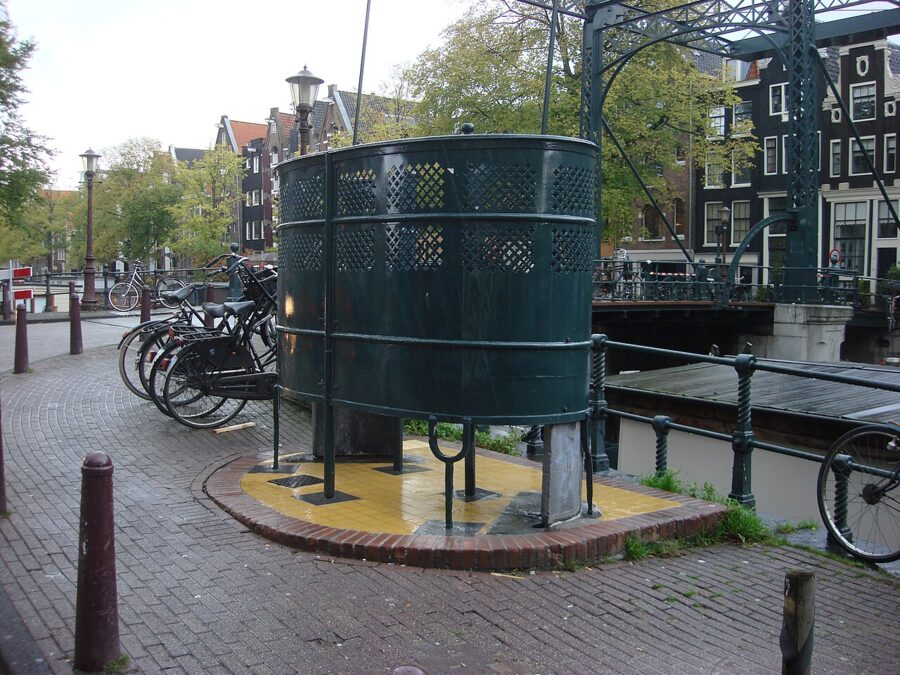
Public urination is the offense most visitors actually commit. Amsterdam’s nuisance-fine bylaw sets the fine for relieving yourself in the street at €160 for anyone 16 or older, as of 2026. On King’s Day the city adds temporary urinals and toilets, which are marked on the King’s Day map along with first-aid posts and water points, and some residents let you use their own toilets for a small charge. For women in particular, go before you need to.

Museums, shops and markets that close
Many museums close, and the ones that stay open tend to be calmer than usual, because almost everyone is outside. The Rijksmuseum opens every day of the year, and the tourist board’s holiday list names the Stedelijk, Moco, the Hortus Botanicus and Artis as open on King’s Day, and its King’s Day tips add the Van Gogh Museum. The Anne Frank House closes early, at 17:00, on 27 April.
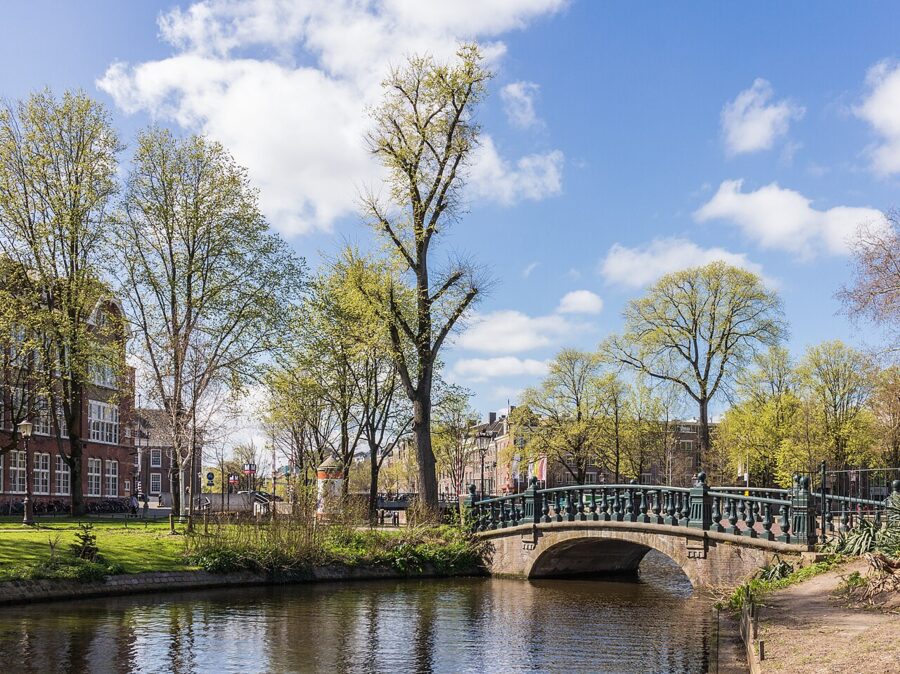

Closed on King’s Day, according to their own opening rules: Our Lord in the Attic, the Rembrandt House, the Scheepvaartmuseum, H’ART, Museum Van Loon, the Houseboat Museum, Eye, NEMO and the Sex Museum. The museums guide has the hours and prices for the rest. The Waterlooplein flea market does not trade either, which makes sense when the whole city has become one.
Shops may legally open, but most of the big stores on the Kalverstraat stay shut. Larger supermarkets usually open for part of the day and small neighborhood ones for most of it, so do your shopping, and get your cash, the day before.
Booking a bed
This is the part to do first. The nights around 27 April are among the most expensive of the year in Amsterdam, and the cheaper rooms go early. One holiday-rental platform put the average for a night in Amsterdam during the week of King’s Day 2026 at €412 (about US$480), the highest of the 34 Dutch towns it compared. Hotels and hostels also tighten their terms: Amsterdam Hostel Leidseplein, for example, moves to a 20-day cancellation period over King’s Day.
Taxes add to the bill. Amsterdam’s tourist tax goes up from 12.5 to 16 percent of the room price from January 2027, on top of the 21 percent VAT that hotel rooms have carried since January 2026. Holiday flats in the Jordaan, the Haarlemmerbuurt and other central districts may be let for at most 15 nights a year since April 2026, so there are fewer of them, and every legal listing must show a registration number.
Where to stay is a trade between the party and sleep. A room within a short walk of a metro 52 stop, in De Pijp or around Vijzelgracht, gets you to the center and back without trams.
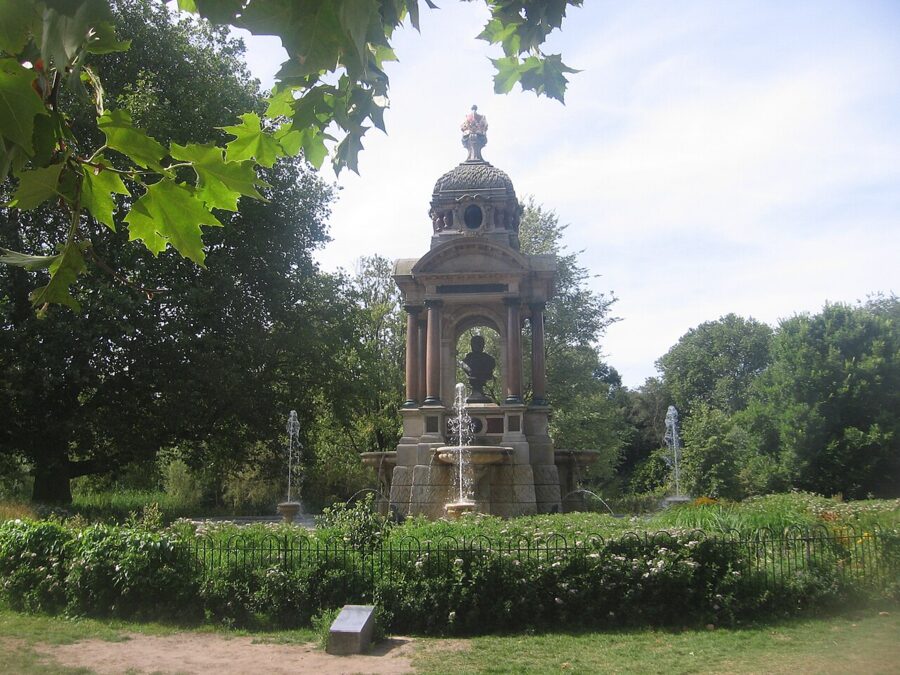
Noord, by the ferries, and the areas around Amstel and Zuid stations are calmer and usually cheaper. A room above the Damrak or in the Jordaan puts you in the middle of it, with music under the window until the stages stop. The where-to-stay guide goes through the neighborhoods one by one.
What to bring and wear
Something orange. A T-shirt, a scarf or a pair of sunglasses is enough; plenty of people go further with wigs, suits and face paint. If you arrive without, the market stalls and the children with face paint will fix it for a few coins, and in the week before the holiday the high-street chains stock whole racks of orange.
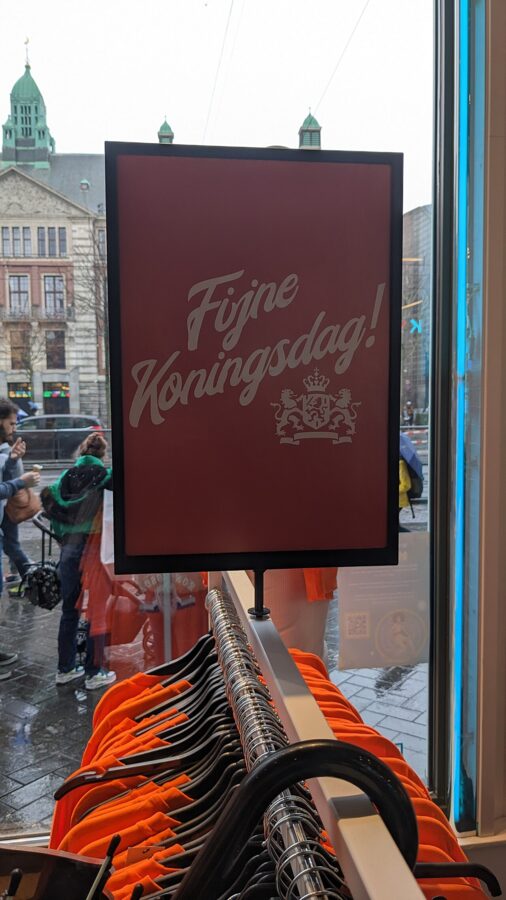

Cash, in coins and small notes. The market stalls, the children and the residents renting out toilets mostly do not take cards, and cash machines in the center have queues on the day. Bring a refillable water bottle as well; the city sets up water points, and many outdoor bars serve drinks in deposit cups, which you can hand back at points marked on the city’s map.
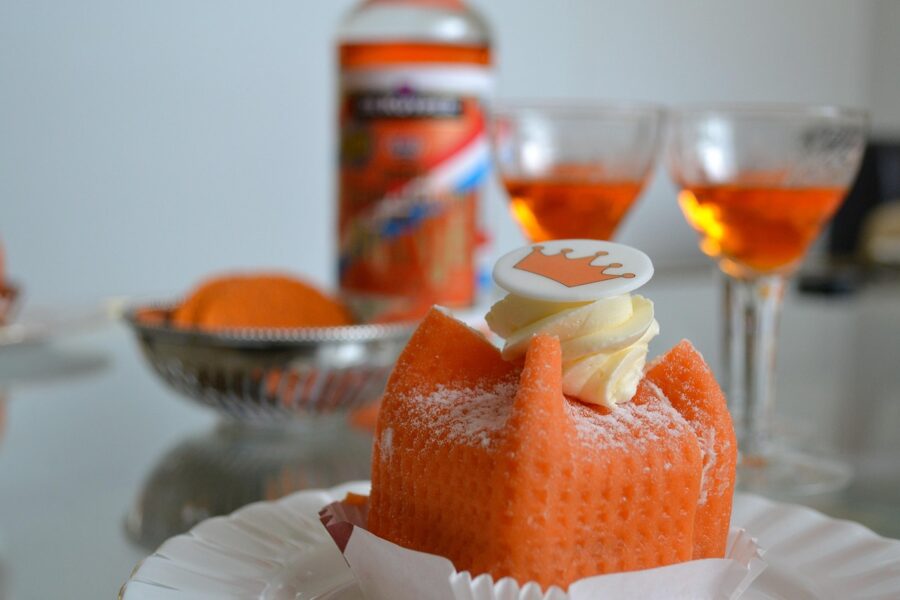
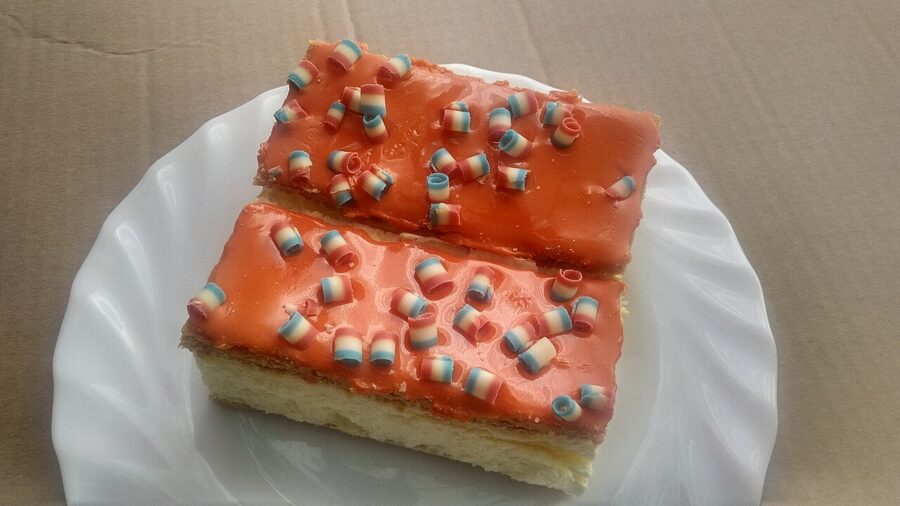
Eat something orange too. Bakeries ice their pastries for the holiday, the tompouce above all, a slab of custard between two layers of puff pastry that is impossible to eat neatly, and the street stalls sell everything from homemade cake to fried snacks.

Dress for rain. Late April in Amsterdam is cool, with highs of around 14°C (57°F) at best and a good chance of showers; the Amsterdam weather guide has the averages. Take a poncho or rain jacket rather than an umbrella, which you will not have room to open.
For safety, agree on a meeting point with your group before you go in, keep your phone charged and your wallet in a front pocket. If someone needs help and it is not life-threatening, go to one of the first-aid posts on the city’s map rather than calling 112; there are bicycle first-aid teams in the center too. Children are best taken to the Vondelpark, the Sarphatipark or the NDSM in the morning, and kept well away from the Westerstraat after noon.
So set the alarm. Be at a Vondelpark gate or a Jordaan canal with a pocket of coins by 09:00, buy something you do not need from a child who has been up since dawn, watch the boats from the Amstelveld at noon, and take metro 52 from Vijzelgracht back to your bed before the 20:00 rush.