
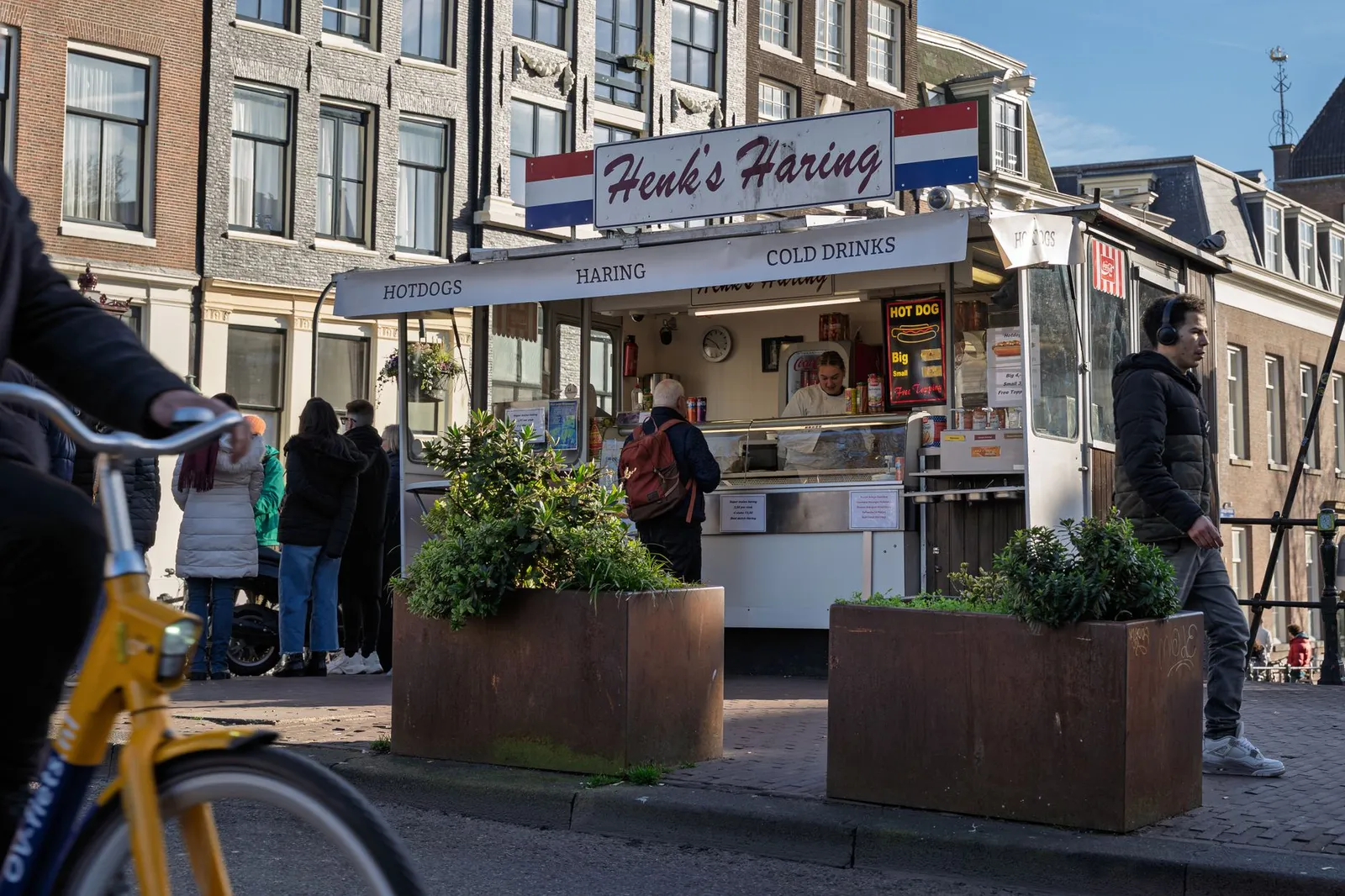
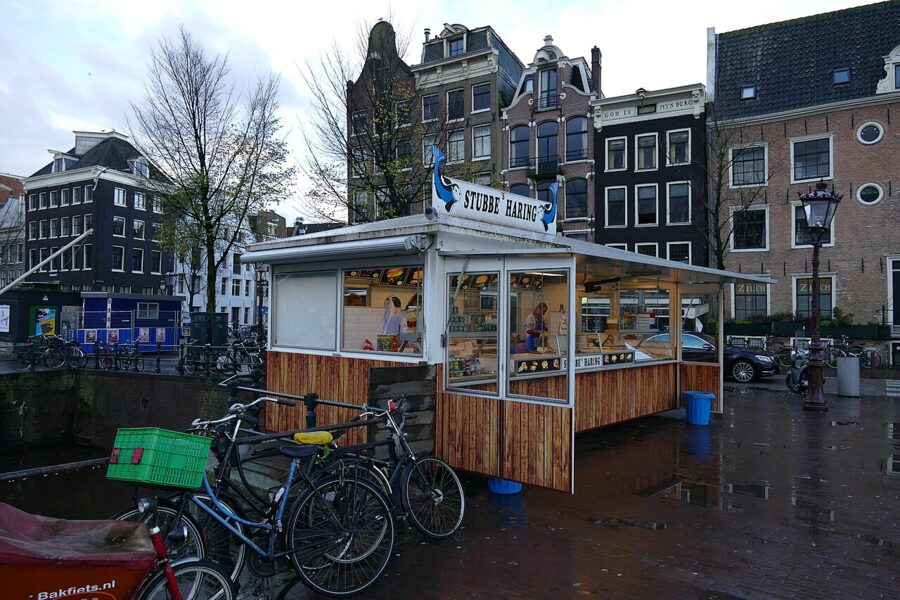
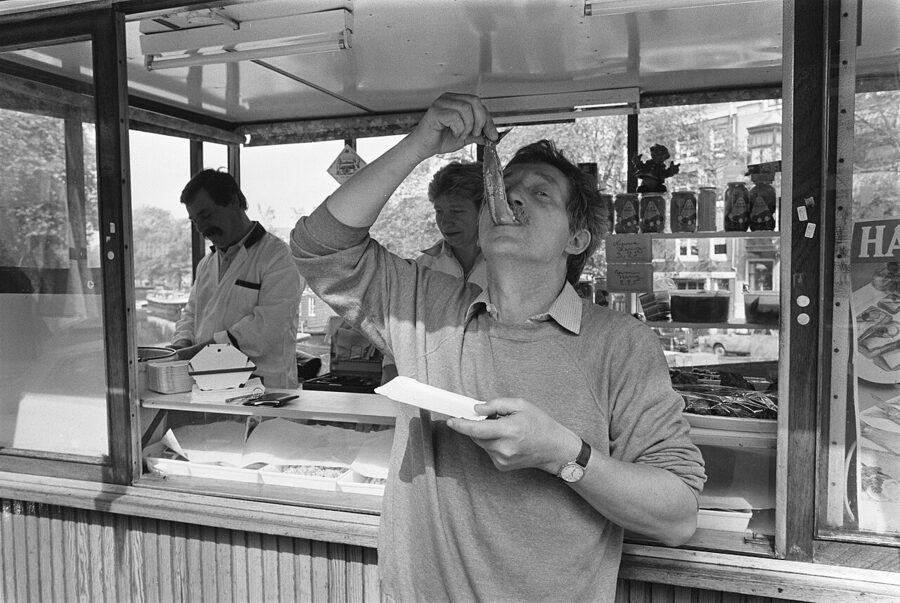
Stubbe’s herring stall stands on the Singel a few steps from the lock at the Haarlemmerstraat, and it hands the fish over on a sheet of waxed paper rather than a plastic tray. The people eating at the counter are mostly on their way home from work. Nobody sits down, nobody takes long, and the herring comes the Amsterdam way: cut into pieces, with chopped raw onion and pickle, instead of lifted whole by the tail.
That stall is a fair summary of Dutch food in this city. The best of it is cheap, quick, eaten on your feet or at a bar, and sold by places that have done one thing for decades: the herring cart, the croquette counter, the brown café with a plate of bitterballen, the corner café with the apple pie. A sit-down Dutch dinner is harder to find, and some of the city’s best-loved restaurant food came from Indonesia and Suriname rather than from a Dutch grandmother.
So eat the way Amsterdam does. Herring at a stall, bitterballen with a small beer at five, a stamppot when the weather turns, and a rijsttafel or a roti for dinner. What follows is what each of those is, when it is in season, where it is done well as of November 2026, and what to walk past on the Damrak.
Contents10 parts
- The five things to eat if you have one day
- Herring: how to eat it, when, and where
- Fries, kroketten from the wall and the snack bar
- Stroopwafels and poffertjes
- The brown café plate: bitterballen, ossenworst and cheese
- Home cooking: stamppot, hutspot and erwtensoep
- The colonial kitchen: rijsttafel, roti and broodje pom
- Sweet things: apple pie, licorice and the winter specials
- Jenever and Dutch beer
- What to skip
None of this is expensive. A slice of the city’s most famous apple pie costs €8 (about US$9), a plate of seven bitterballen the same at the café that bakes the pie, and a bowl of pea soup in a Dutch restaurant around €9.50 (about US$11). The money goes on the sit-down meals: a stamppot runs to about €19.50 (about US$23), a rijsttafel for two from about €63 (about US$73) for the pair.
The calendar matters more than you might expect. New herring arrives in June and loses its name at the end of September, pea soup and stamppot belong to the cold months, and the oliebollen stalls are already up as of late November. Come in summer for the fish, in winter for the mash.
The five things to eat if you have one day
If there is only time for five, make it these, in roughly this order through the day.
- A herring at a stall, ideally in June or July when it is Hollandse Nieuwe. Stubbe’s on the Singel, Frens by the Bloemenmarkt or the fish stall on the Albert Cuypmarkt.
- A warm stroopwafel, fresh from a stall on the Albert Cuypmarkt (Monday to Saturday, 09:30–17:00).
- A slice of apple pie with whipped cream at Winkel 43 on the Noordermarkt, or at ‘t Papeneiland on the canal corner a minute away.
- Bitterballen and a beer in a brown café between 17:00 and 19:00, when the office crowd fills the room.
- A rijsttafel or a roti for dinner: the first for a long evening at a table, the second from a counter in De Pijp.
A kroket from a vending wall at midnight is the unofficial sixth. It is not good food, exactly, but it is what Amsterdam actually eats after a night out, and it costs a few coins.

Herring: how to eat it, when, and where
Dutch herring is not raw in the way sushi is raw. The fish is gutted at sea in the old manner, called kaken, which leaves part of the pancreas in place; its enzymes, with a light salting, ripen the flesh and give it the soft, almost creamy texture. Every herring sold for eating this way must also be frozen at minus 20 degrees or colder for at least 24 hours, a rule against parasites that has the side effect of letting the stalls sell herring all year.
How to eat it
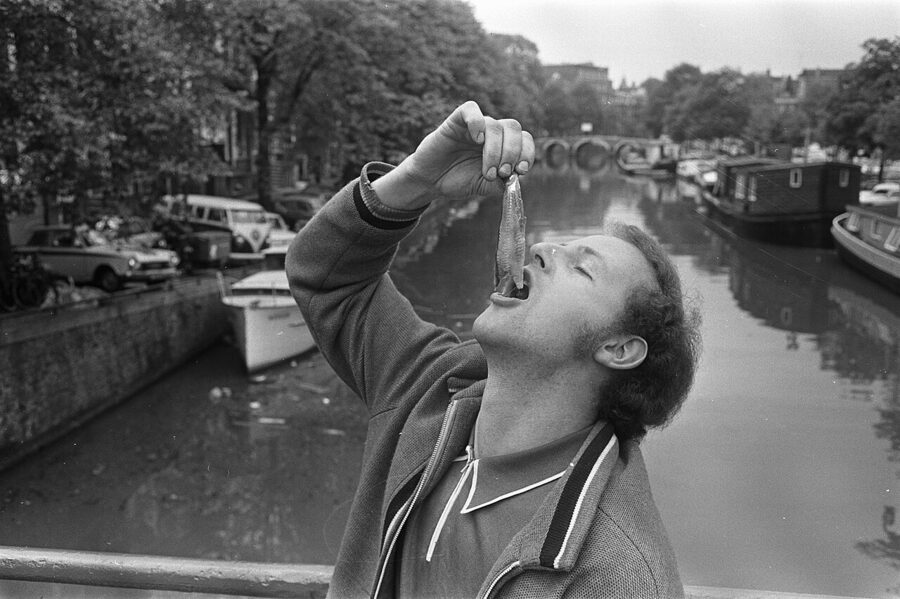
There are two schools. The national one holds the fish by the tail, tips the head back and lowers it in, onions and all. Amsterdam, as the city’s own tourist board points out, serves its herring cut into pieces with chopped onion and pickle, eaten with a little stick.
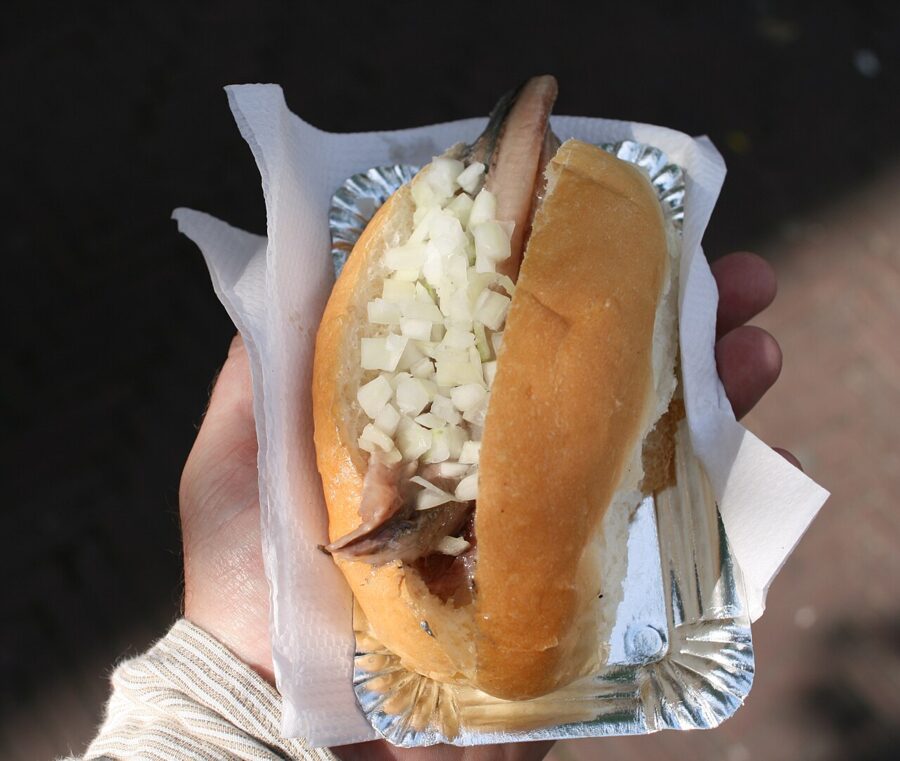
If you would rather not stand at a counter with a fish in your fingers, order a broodje haring: the same herring with onion and pickle in a soft white roll. It is the version to take away, and the easiest one to carry.

The season: Hollandse Nieuwe and the rest of the year
Hollandse Nieuwe is a protected name under EU rules. It may only be used for herring caught between 1 May and 31 August, and only sold under that name between 1 May and 30 September of the same year. The start date is announced each year by the Nederlands Visbureau, the fish trade’s marketing office, once enough fish have the required fat and no roe; the 2026 season opened on 16 June in Scheveningen.
Outside those months you are eating maatjesharing from the frozen stock of the same catch, which is a perfectly good herring and what the stalls sell from October to May. The difference is real but small. If you are here in November, have one anyway.
Where to buy herring in Amsterdam
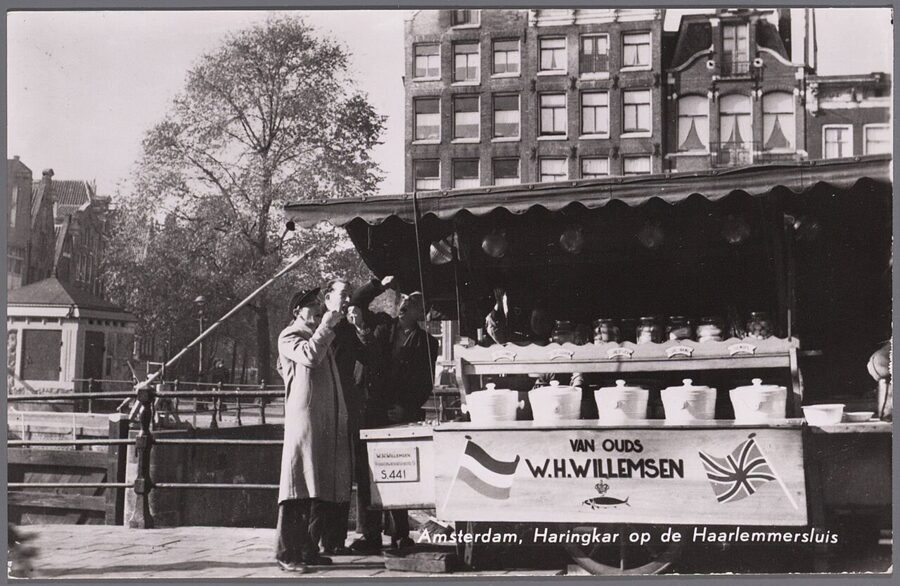
These are stalls and fish shops with a long record and a current place on the city’s own list of the best herring, last updated in June 2026.
- Stubbe’s Haring, Singel 8, by the lock near Centraal. The after-work stall, herring on waxed paper.
- Haringhandel Frens, Singel 486, on the square between the Singel and the flower market. A family stall for more than 30 years.
- Vishandel Albert Cuyp, Albert Cuypstraat 155, on the market in De Pijp for more than 65 years. Metro 52 to De Pijp.
- Vishandel ‘t Centrum, Haarlemmerdijk 4, a fish shop of more than 50 years where the herring is cleaned in front of you and you can eat at the counter.
- Vis op Zuid, Maasstraat 27 in Zuid, open until 18:30 on weekdays.
- Volendammer Vishandel MOP, Jan Evertsenstraat 116 in De Baarsjes, also good for kibbeling.
Kibbeling is the fallback for anyone who cannot face raw fish: battered, fried chunks of white fish, usually cod, with a garlic or herb mayonnaise. It is market food, at its best hot from the fish stalls on the Dappermarkt in Oost and the Ten Katemarkt in Oud-West.
Fries, kroketten from the wall and the snack bar
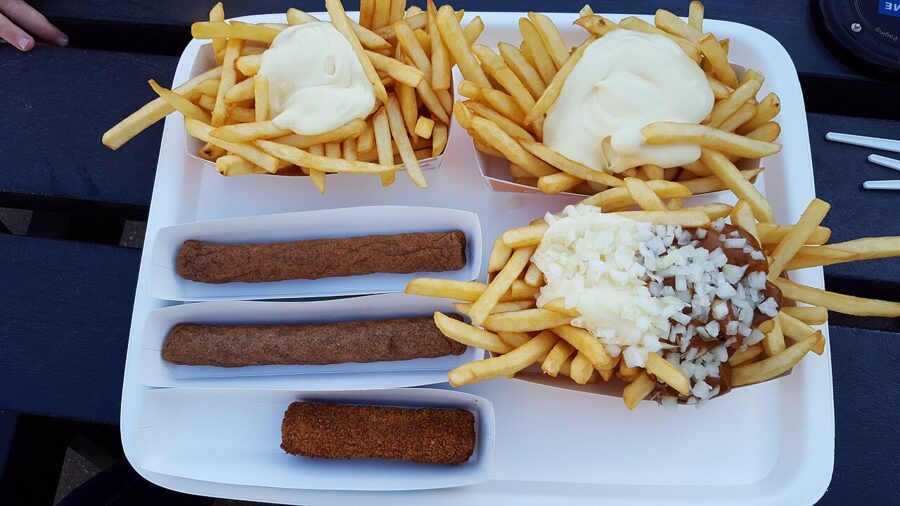
The Dutch eat fries thick-cut, double-fried and from a paper cone, and they argue about sauce the way other countries argue about football. Ask for patat met (with mayonnaise), patat speciaal (mayonnaise, curry ketchup and chopped onion) or patatje oorlog, “war fries”: mayonnaise, warm peanut satay sauce and raw onion, named for what the cone looks like by the time you get to the bottom.
Vleminckx de Sausmeester, a hatch in the wall at Voetboogstraat 33 between the Spui and the Heiligeweg, has sold Flemish fries since 1957 and is the place most Amsterdammers will send you. There are three sizes, more than twenty sauces on two boards, and the sauce is charged separately, as the sign over the counter has said for decades. As of November 2026 it opens daily from 11:00 to 19:00, until 20:00 on Thursdays; the fries are cooked in vegetable oil in a fryer used for nothing else, and the queue moves faster than it looks.

The kroket and the wall
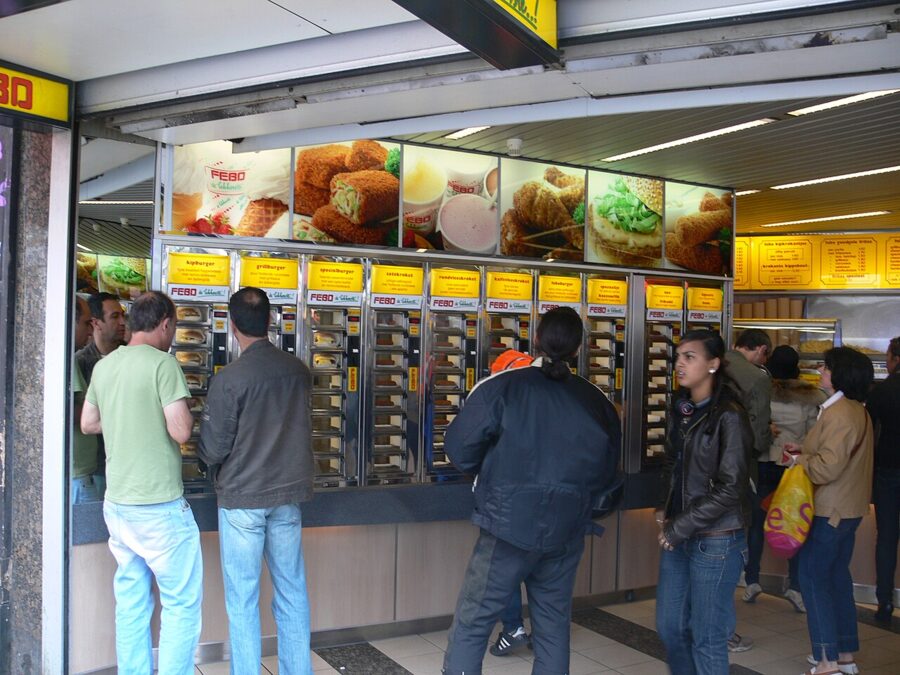
A kroket is a cylinder of thick meat ragout, breaded and deep-fried, and the classic way to eat it is on a soft white roll with mustard. The most Amsterdam way to buy one is from a wall of small heated glass doors at FEBO: you pay at the wall, open the hatch and take your croquette. The chain was founded in 1941 by a baker, Johan de Borst, and named after the Ferdinand Bolstraat in De Pijp where he learned his trade; his first vending wall opened on the Karperweg in 1960, and there are more than twenty branches in the city today.

For a croquette eaten at a counter, the place is Eetsalon Van Dobben on the Korte Reguliersdwarsstraat, just off the Rembrandtplein, which has served them since 1945 and stays open late at weekends. The other name you will hear is Holtkamp, the patisserie at Vijzelgracht 15, whose veal croquettes date from 1969 and whose shrimp croquette was first made in the late 1980s at the request of Café Luxembourg. The croquette kitchen moved out of the shop in 2026 to a sister company in Nieuw-Vennep; you will find Holtkamp croquettes on menus across the city, and you can buy them at the shop to fry at home.
A snack bar menu has its own vocabulary. A kaassoufflé is melted cheese in a fried pastry case; a bamischijf is fried noodles shaped into a disc and breaded, a Dutch-Indonesian hybrid; a frikandel you have met. None of it is health food, all of it is cheap, and the snack bars in the neighborhoods are better than the ones on the tourist streets.
Stroopwafels and poffertjes
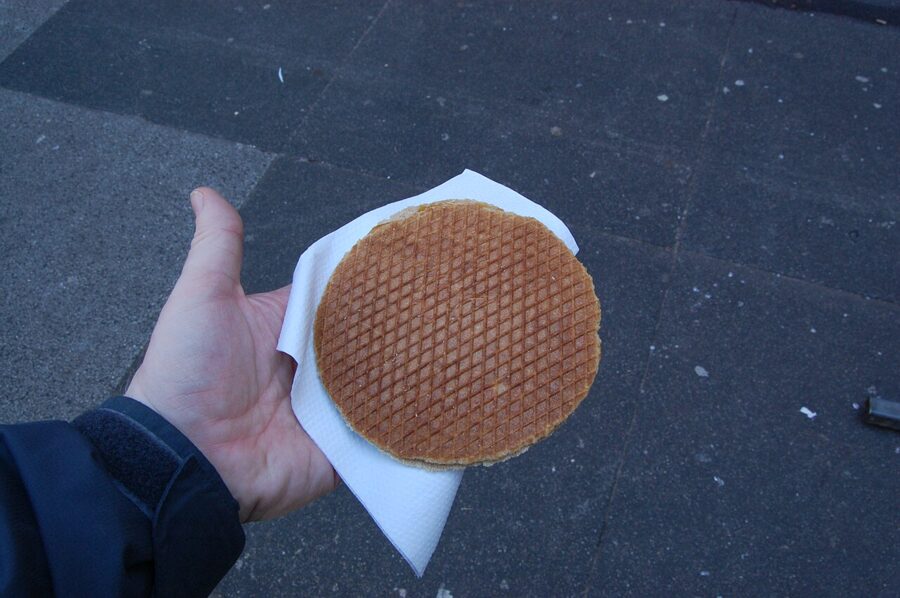
A stroopwafel is two thin waffle halves with a layer of syrup between them. It was first made in Gouda in the nineteenth century; sources disagree on who baked the first one and when, with names and dates from the early 1800s to 1864, and from about 1870 they were made outside Gouda as well. The packaged ones in every supermarket are fine with coffee, especially rested on top of the cup for a minute so the steam softens the syrup.
The fresh ones are another thing. The Albert Cuypmarkt, about 260 stalls along the Albert Cuypstraat in De Pijp, has stroopwafel bakers among them, selling the wafers fresh and warm as well as by the bag. The market runs Monday to Saturday from 09:30 to 17:00 and is closed on Sundays; metro 52 to De Pijp puts you at its western end.
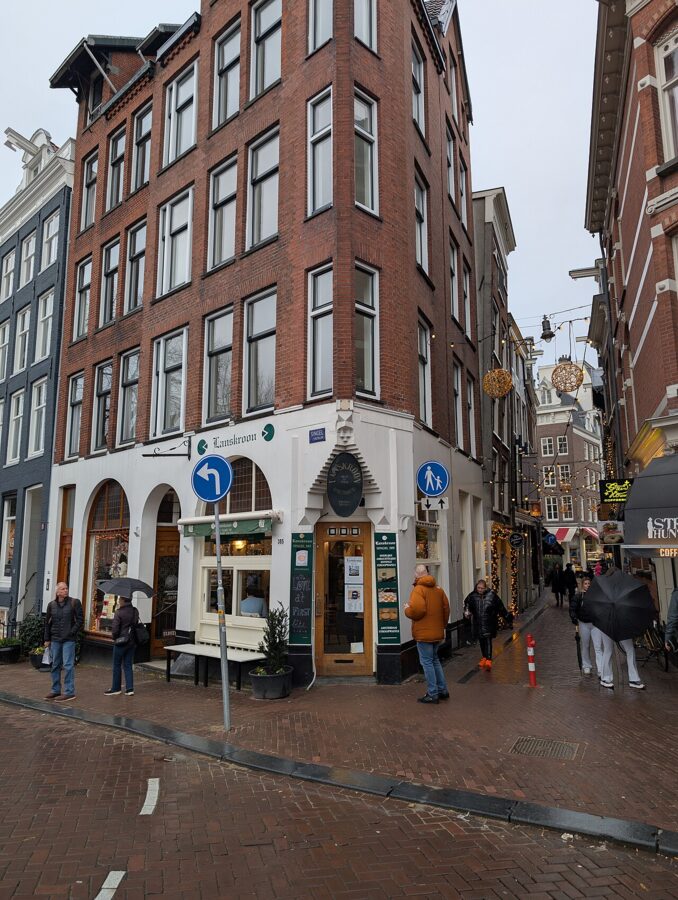
For a stroopwafel to take home, go to Lanskroon, the bakery at Singel 385 that has baked in the center since 1958. Its large koningsstroopwafels come with honey or coffee-caramel filling and stay crisp for days. It opens 09:00–17:00 Monday to Thursday, 09:00–17:30 on Fridays and Saturdays, and 10:00–17:30 on Sundays, as of November 2026, with tables if you want to eat there.
Poffertjes
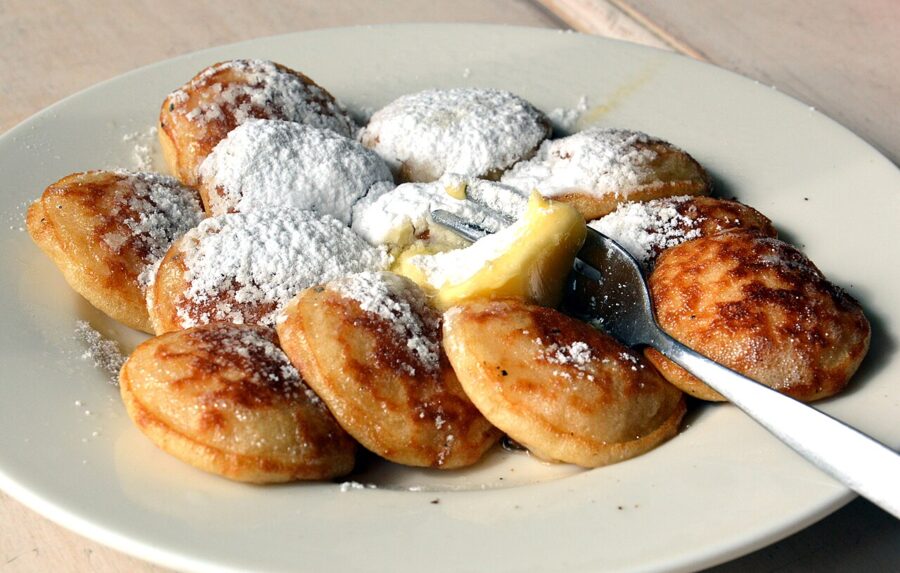
Poffertjes are small, puffed pancakes made with wheat and buckwheat flour and yeast, turned in a cast-iron pan with dozens of shallow hollows. The first mention of them as food is in a description of an Amsterdam fair from 1734. They come ten to twelve on a plate, with a knob of butter melting in the middle and a snowfall of powdered sugar.
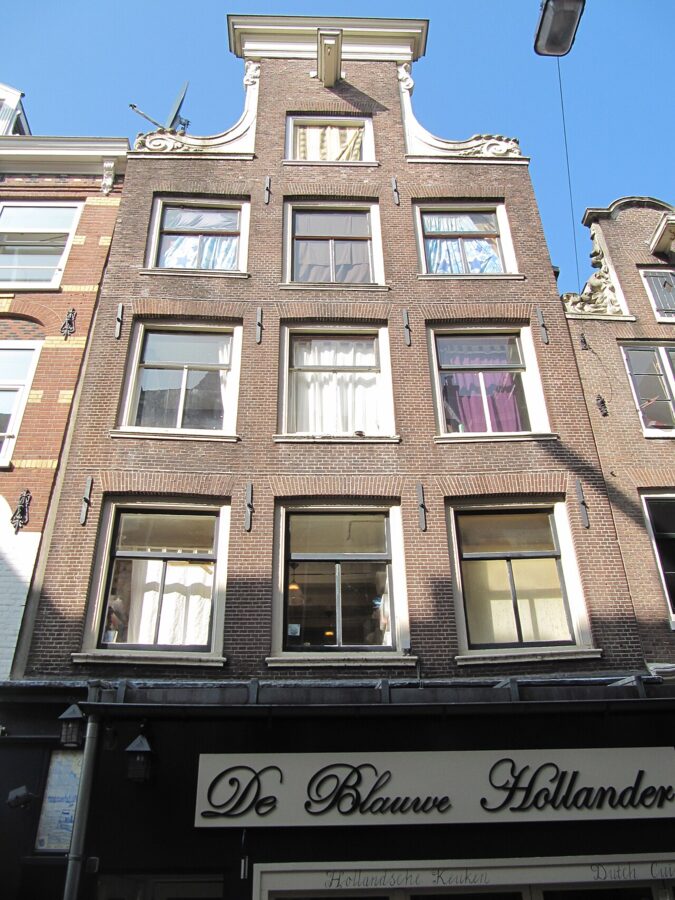
Many places in Amsterdam serve them from frozen, so it is worth going somewhere that bakes them. Pat’s Poffertjes in the Jordaan bakes them fresh; Groot Melkhuis, a grand café in the Vondelpark since 1874, is the easy stop with children; and De Blauwe Hollander has them on its dessert menu for €8.25 (about US$10). For full-size pannenkoeken, The Pancake Bakery at Prinsengracht 191 has been flipping them since 1973 and has a queue to prove it.

The brown café plate: bitterballen, ossenworst and cheese
The brown café is where Amsterdam drinks: dark wood, old rugs on the tables, no music to speak of, and a small menu of snacks meant to keep a round going rather than to replace dinner. What you order with the beer is the borrelhapje, the drinks snack, and three of them matter.

Bitterballen
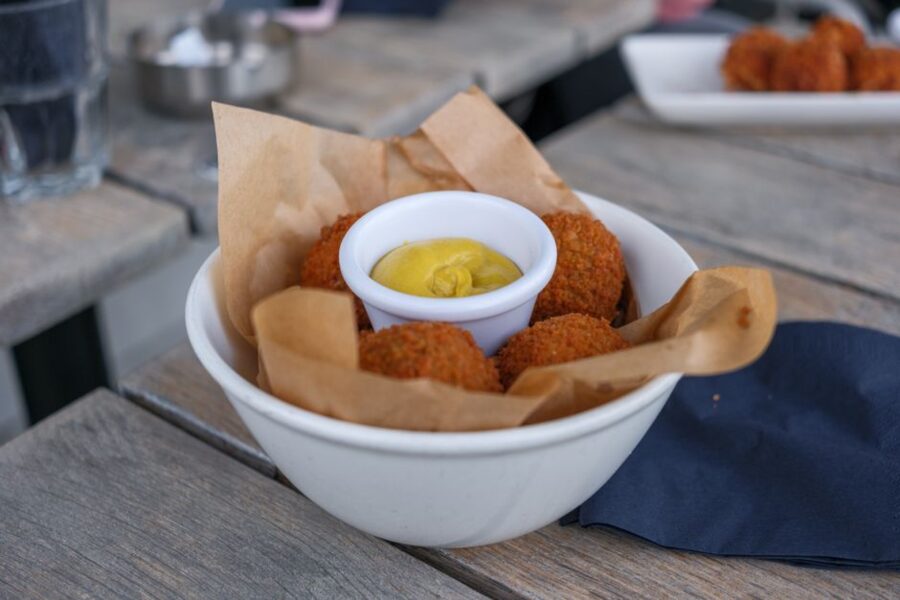
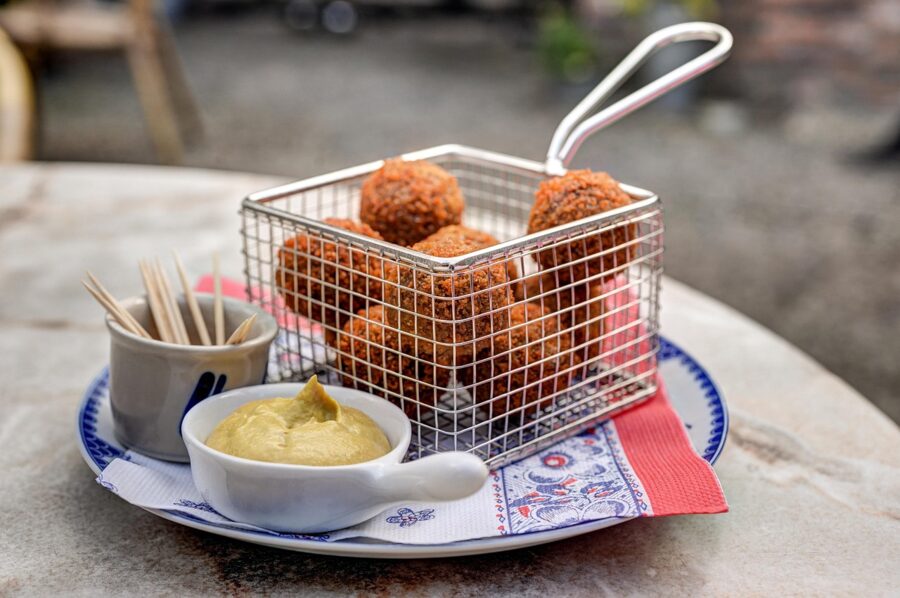
A bitterbal is a small round kroket, about 20 grams of beef or veal ragout in a crisp breaded shell, served with mustard. The name has nothing to do with taste: it comes from the bittertje, the small glass of jenever or herb liqueur it was eaten with. In April 2020 the bitterbal was added to the Dutch inventory of intangible cultural heritage, which tells you how seriously the country takes a fried snack.
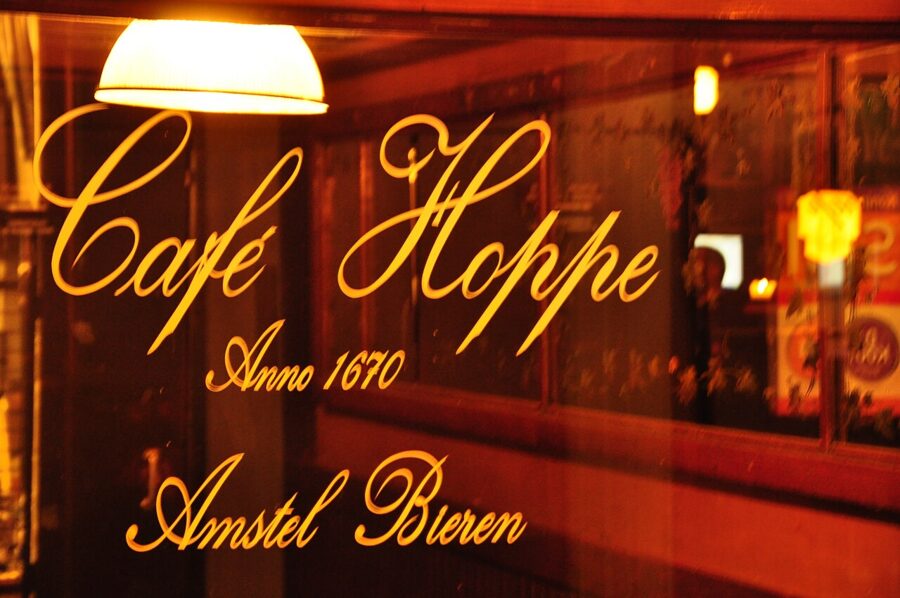
Order them as a plate of six to eight, or as a bittergarnituur, a mixed plate with cheese sticks and small spring rolls. Winkel 43 charges €8 for seven as of November 2026. Good places to eat them are the old ones: Café Hoppe on the Spui, ‘t Papeneiland at Prinsengracht 2, and the distillers’ tasting rooms described further down.
Ossenworst
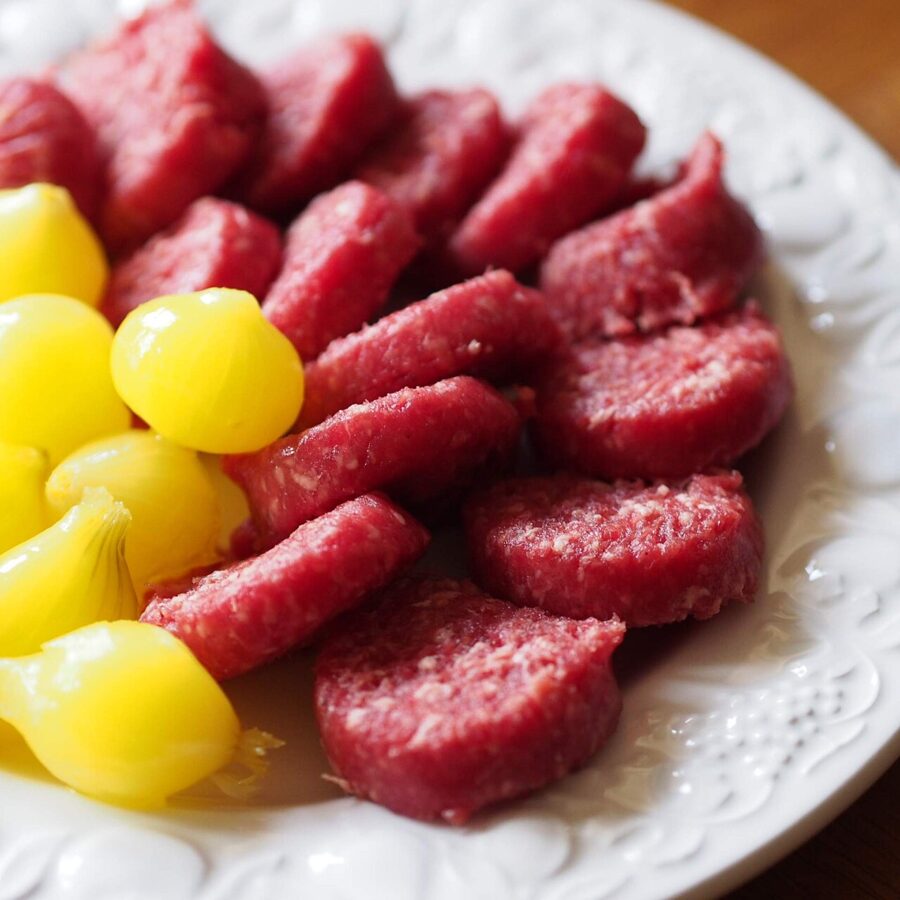
Ossenworst is the most Amsterdam thing on the plate. It began as a sausage of ox meat in the city’s Jewish kitchen in the seventeenth century, when oxen were driven in from Denmark and Germany in large numbers. Its spices, pepper, clove, mace and nutmeg, came from the Dutch East Indies. Traditionally it is aged and smoked at a low temperature so the meat stays raw; today it is usually lean beef, and the smoking is often skipped.
It comes sliced, with mustard and Amsterdamse uitjes, small onions pickled with spices and colored yellow. The butcher whose name you will see on menus is Louman: Winkel 43 serves “ossenworst van Louman” with mustard and onions for €8.50 (about US$10). De Drie Fleschjes, the tasting room behind the Nieuwe Kerk, puts it on its short snack list next to meatballs in gravy and Beemster cheese with mustard.

Cheese
Dutch cheese is sold by age more than by name. Jong is a few weeks old and mild, belegen has a few months and some character, and oud and overjarig are hard, crumbly and full of salt crystals. Order a plate of oude kaas cubes with mustard in a brown café, or ask a cheese shop to cut you a sliver of young and old side by side before you buy.
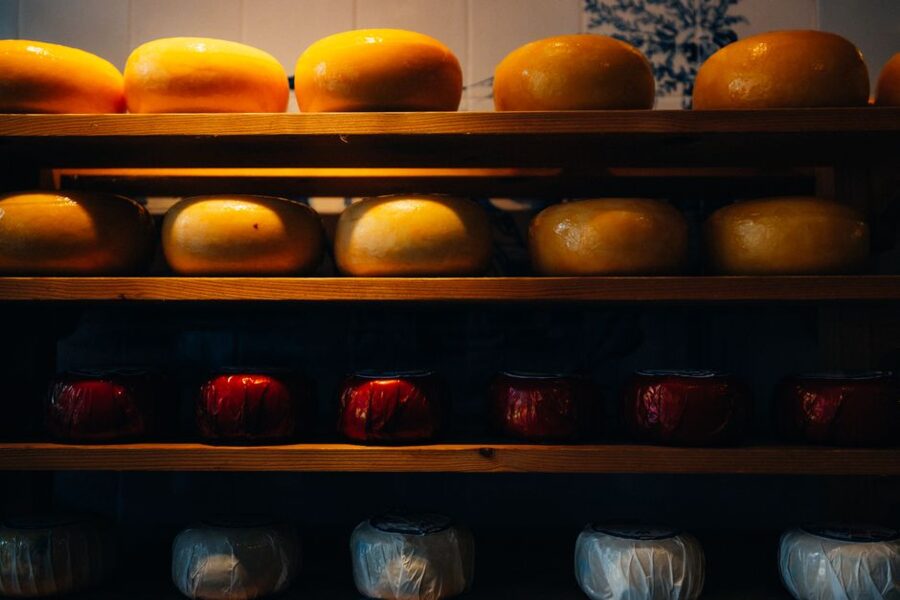
For buying, De Kaaskamer at Runstraat 7 in the Nine Streets has its shelves stacked to the ceiling and will make you a sandwich with the cheese of your choice. Tromp has four shops in the city with staff who will let you taste first. The Reypenaer tasting room runs guided tastings of its aged cheeses, and the Saturday organic market on the Noordermarkt has farm cheesemakers selling their own.
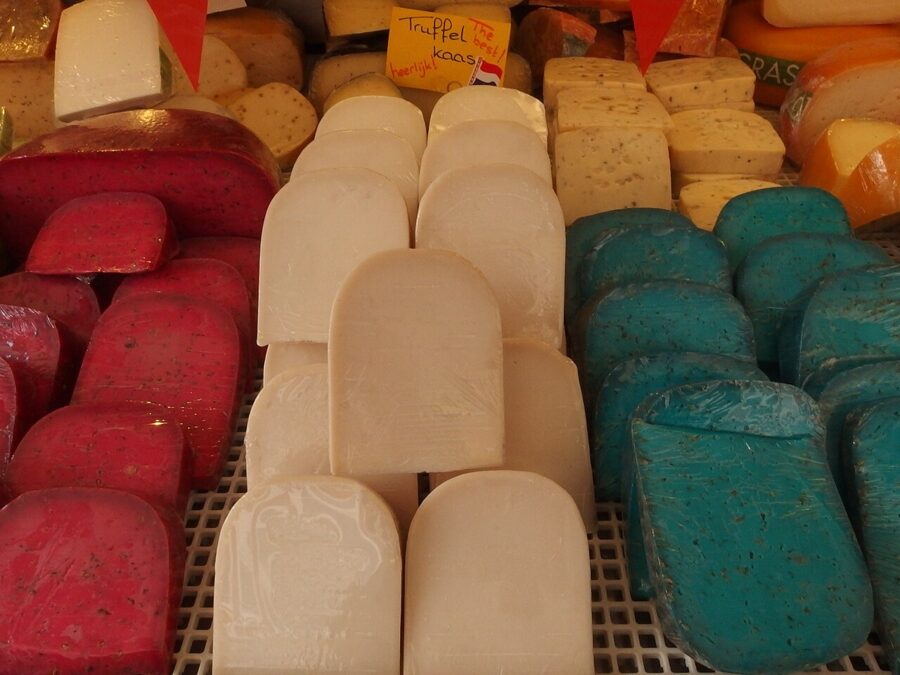
For the full show of farms and wheels, go to the Zaanse Schans, where Henri Willig runs a cheese farm; its Cheese & More shops in Amsterdam sell the same cheeses and give tastings. I would skip the wheels waxed green, purple or black and flavored with pesto, lavender or truffle. They are souvenirs more than cheese, and a Dutch cheese board runs on plain jong, belegen and oud.

Home cooking: stamppot, hutspot and erwtensoep
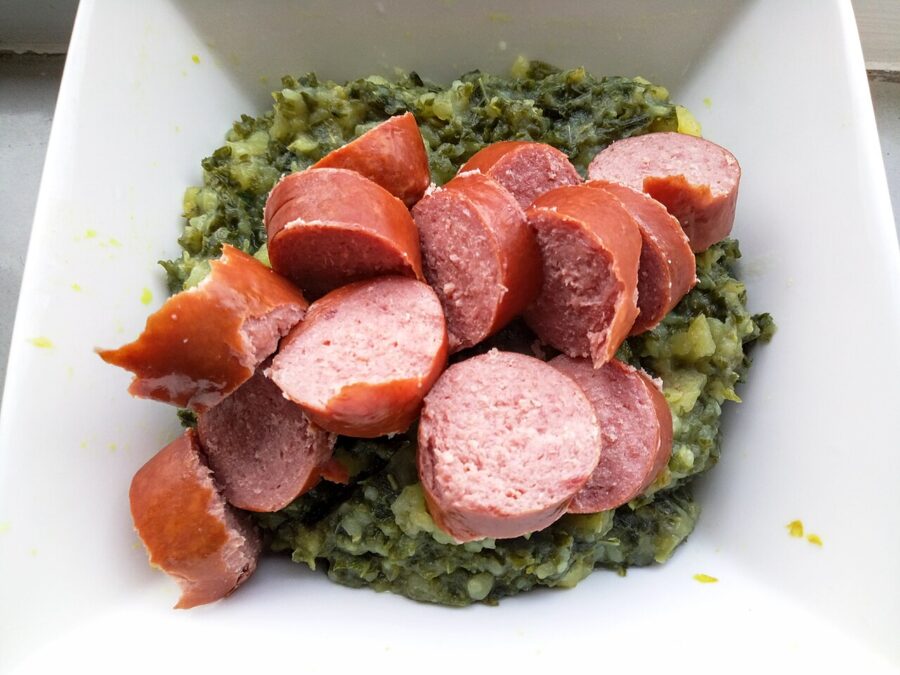
The everyday Dutch dinner of the last century was potatoes, vegetables and meat, and its winter form is stamppot: potatoes mashed together with a vegetable and served with a smoked sausage, a meatball or a slice of fried bacon, and gravy poured into a hollow in the middle. The classic versions are boerenkool (kale), zuurkool (sauerkraut) and andijvie (raw endive stirred into the hot mash). Hete bliksem, “hot lightning”, adds apples.

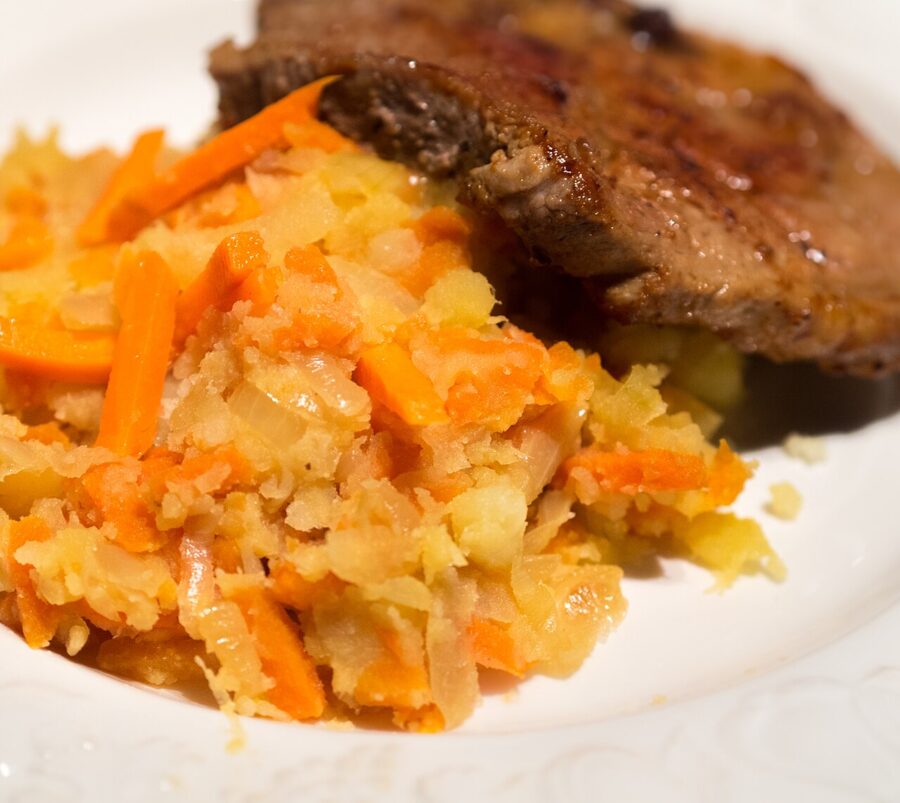
Hutspot is the carrot-and-onion version, boiled together with the potatoes and mashed, traditionally served with boiled beef, klapstuk. It carries a story every Dutch child learns, tied to the end of the Spanish siege of Leiden on 3 October 1574. The hutspot eaten that day had no potatoes, which had not yet reached the Low Countries; it was made with parsnips.

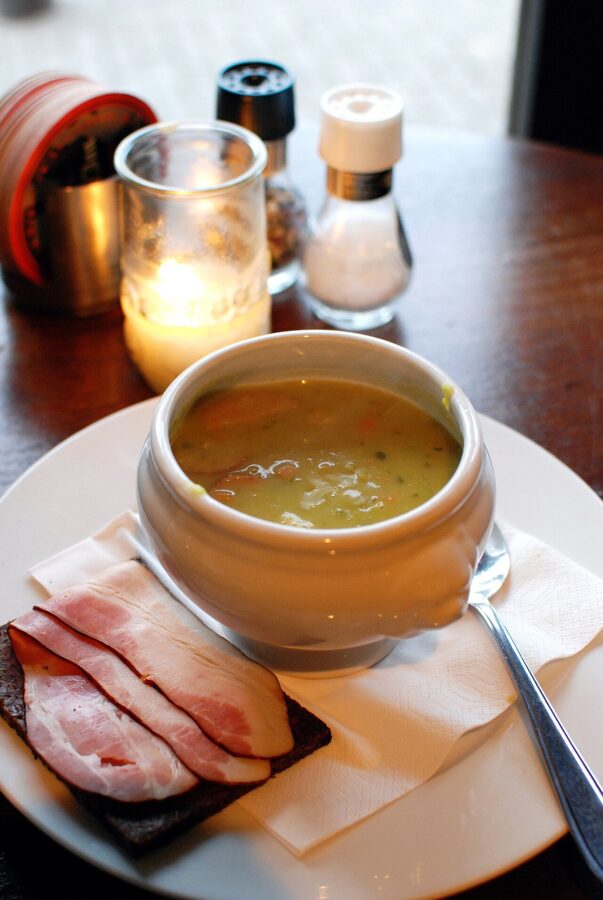
Erwtensoep, also called snert, is split-pea soup that is supposed to be thick enough to hold a spoon upright, made with pork, celery, leek and slices of rookworst. It comes with rye bread topped with katenspek, a smoked bacon. Most Dutch restaurants put it on the menu in winter.

Where to eat it
Few Amsterdam restaurants still cook this food, and the good ones fill up. Book ahead for dinner, and note that kitchens close early, at 22:00 in the places below. That is also the short answer to what time the Dutch eat dinner: early.
- Moeders, Rozengracht 251, has served Dutch classics since 1990 under walls hung with photographs of mothers; bring a photo of yours and they will put it up. Stamppot, suddervlees (slow-braised beef), and erwtensoep with sausage and bacon from Louman. As of November 2026 it opens every day from 17:00, the kitchen takes orders until 22:00, and with 38 seats it books out: reservations only through its website, not by phone.
- Heemelrijck is a family name from 1949 revived in 2023, now three restaurants: Van Woustraat 23 in De Pijp, Lijnbaansgracht 246 by the Leidseplein, and the smaller Petit Heemelrijck at Singel 161. On the current menu, snert costs €9.50 and the stamppots, zuurkool, hutspot or the day’s choice with gravy, bacon and a meatball or sausage, €19.50.
- De Blauwe Hollander, Leidsekruisstraat 28, opened on 1 April 1979. Its snert with katenspek on rye is €9 (about US$10), a herring with beetroot salad €8.75 (about US$10), and stamppots €18.75 (about US$22), including vegetarian hutspot with cheese croquettes.
- Stamppot Amsterdam, Leidsekruisstraat 11, does little else, with rookworst from the butcher Van Hees, Van Dobben bitterballen and Dutch craft beer. It is open daily from 11:30 to 21:30.
- Proeflokaal A. van Wees, Herengracht 319, the distillery’s tasting room, makes its erwtensoep with a wild boar rookworst and serves it with rye bread and katenspek.

Older guides still send readers to Hap-Hmm on the Eerste Helmersstraat, a no-frills Dutch canteen that ran for 61 years. It closed on 1 June 2026.
The colonial kitchen: rijsttafel, roti and broodje pom
Ask an Amsterdammer for the city’s best restaurant food and the answer will often be Indonesian or Surinamese. Both kitchens came with the colonial history of the Dutch East Indies and Suriname and with the people who moved to the Netherlands from there, and both are now as much a part of eating in Amsterdam as herring.
Rijsttafel
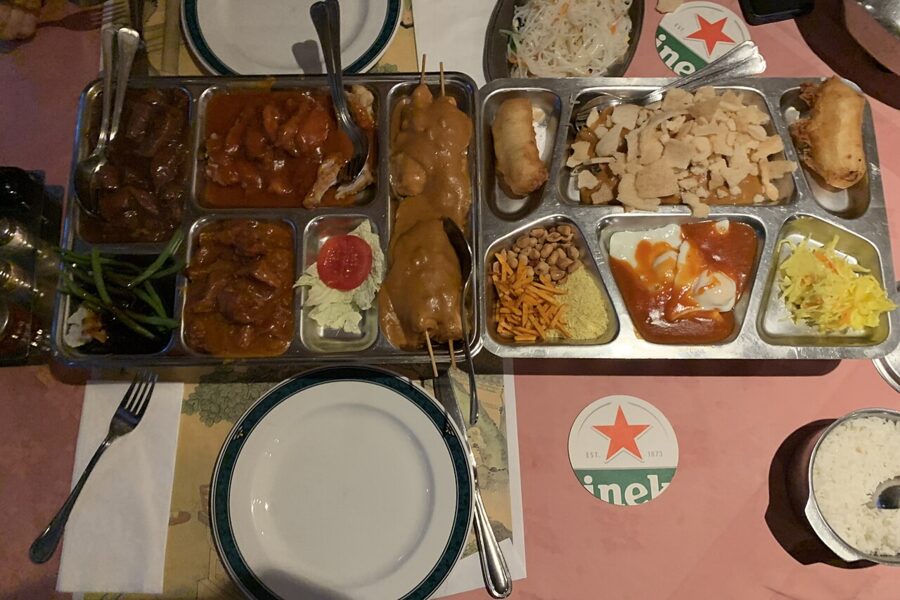
The rijsttafel, “rice table”, is a colonial invention rather than an Indonesian one. Dutch households and hotels in the East Indies served rice with a long procession of small dishes from across the archipelago, as many as forty: satay, rendang, vegetables in coconut, sambals, pickles, crackers. It was meant to impress: a show of the whole colony’s cooking on one table.
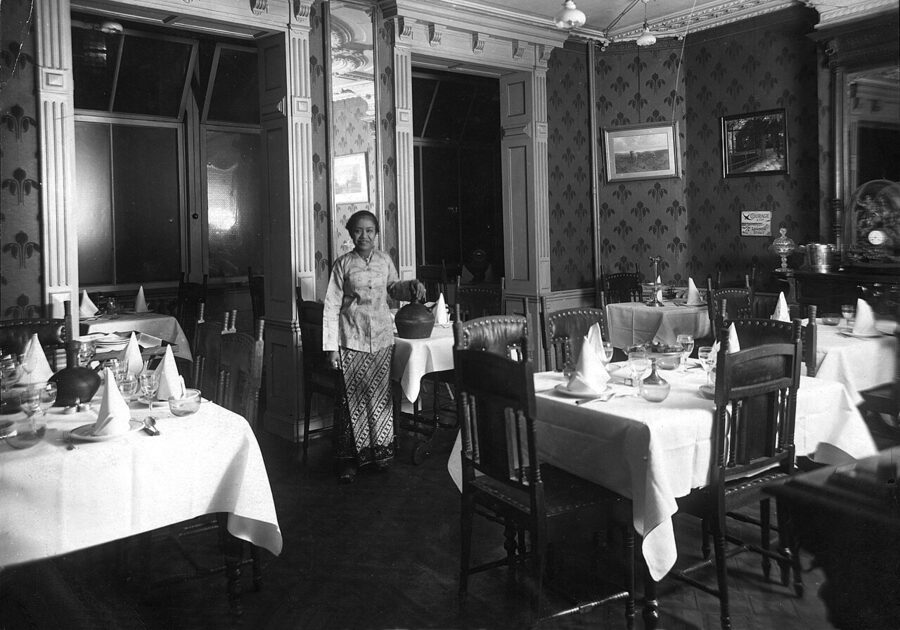
Three places do it well, at different prices. Blauw, at Amstelveenseweg 158–160 near the west end of the Vondelpark, holds a Michelin Bib Gourmand for 2026; its rijsttafel of meat, fish and vegetables costs €48.50 (about US$56) a person for a minimum of two. Sampurna, at Singel 498 by the flower market, has served Indonesian food for more than thirty years, with rice tables from €31.50 to €41.50 (about US$37 to US$48) a person, ordered for the whole table.
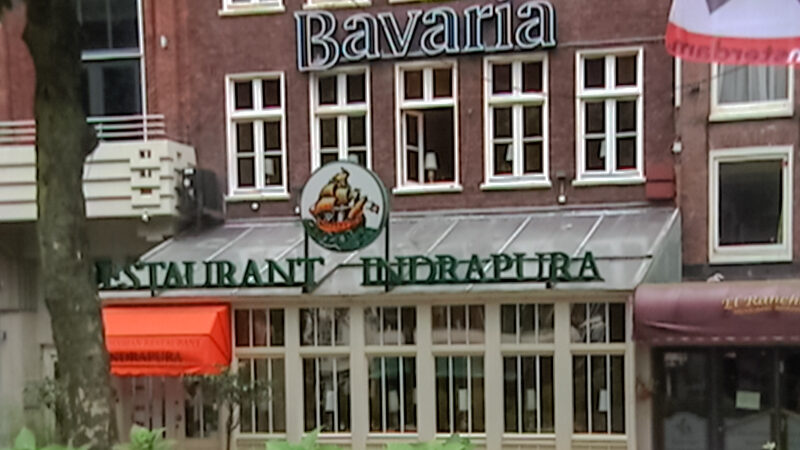
Indrapura, on the Rembrandtplein at number 40, is the third, also more than thirty years old, with rijsttafels for two or more. Sampurna and Indrapura will make the whole spread vegetarian or vegan. Ask for the spicy dishes to be marked if you care; the sambals on the side are where most of the heat lives.


Roti and broodje pom
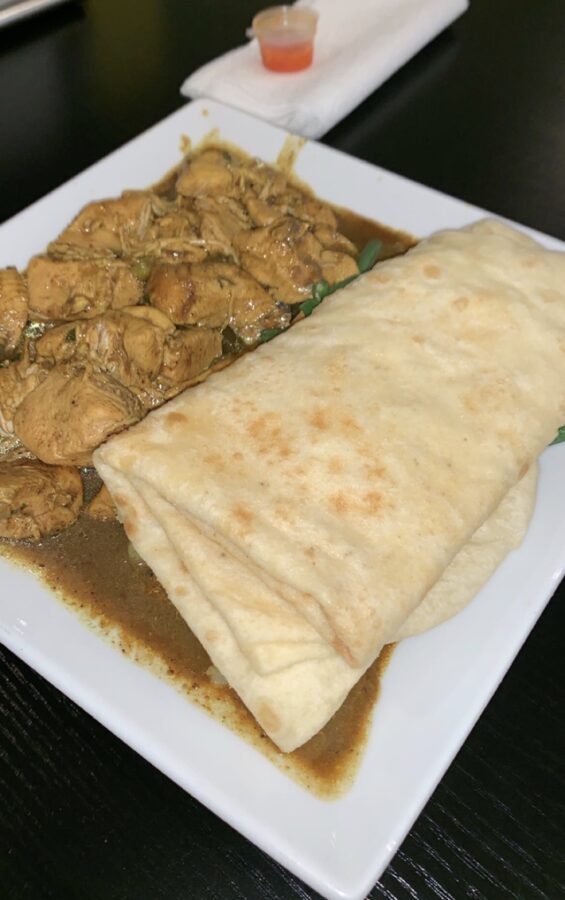
Surinamese roti is a thin, soft flatbread brought to Suriname by Hindustani contract laborers from India, and in the Netherlands the word means the whole meal: the roti folded beside a chicken masala curry, potato, long beans and a boiled egg. You tear the bread and use it to eat the rest. It became a Dutch takeaway staple after the large migration from Suriname in the mid-1970s.
Broodje pom is the sandwich to look for alongside it. Pom is a festive Surinamese oven dish of grated pomtayer root and spiced chicken, of Jewish origin with a Creole adaptation, and at a Surinamese counter it comes warm in a soft roll.

- Spang Makandra, Gerard Doustraat 33 in De Pijp, a Surinamese-Javanese warung since 1978; the name means “strong together”. Roti, saoto soup and pom with rice, and walk-ins are welcome when the tables are free.
- Roopram Roti, Van Woustraat 37A in De Pijp (Tuesday to Saturday 13:00–21:00, Sunday 15:00–21:00) and Eerste van Swindenstraat 4H in the Dapperbuurt (Tuesday to Sunday 14:00–21:00). Both are closed on Mondays, and in the last ninety minutes before closing it is takeaway only.
- Tokoman, with counters on the Zeedijk, the Haarlemmerstraat and the Waterlooplein, is the quick stop for a broodje pom in the center.
Sweet things: apple pie, licorice and the winter specials
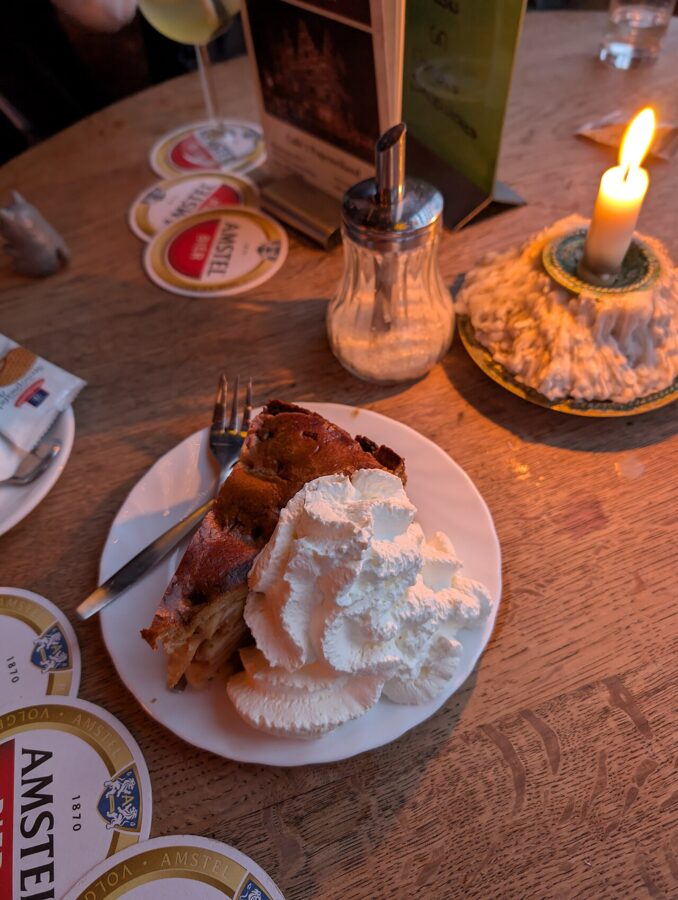
Dutch apple pie, appeltaart, is deep, with a buttery crust and a lattice on top, the filling chunks of apple with cinnamon and often raisins, and a heap of whipped cream, slagroom, on the side. Most cafés have one. Two have the reputation.
Winkel 43’s menu prices its slice at €8 as of November 2026, and the café on the corner of the Noordermarkt and the Westerstraat sells hundreds a day; on market days, Monday and Saturday, expect to queue. ‘t Papeneiland, at Prinsengracht 2, is a brown café in a building from 1642 that has poured beer since 1896, with a homemade pie, blue Delftware on the walls and, in the cellar, the entrance to an old tunnel that once led to a hidden Catholic church at Prinsengracht 7. Bill Clinton ate the pie there on his visit to Amsterdam.
Licorice, peanut butter and the rest of the cupboard
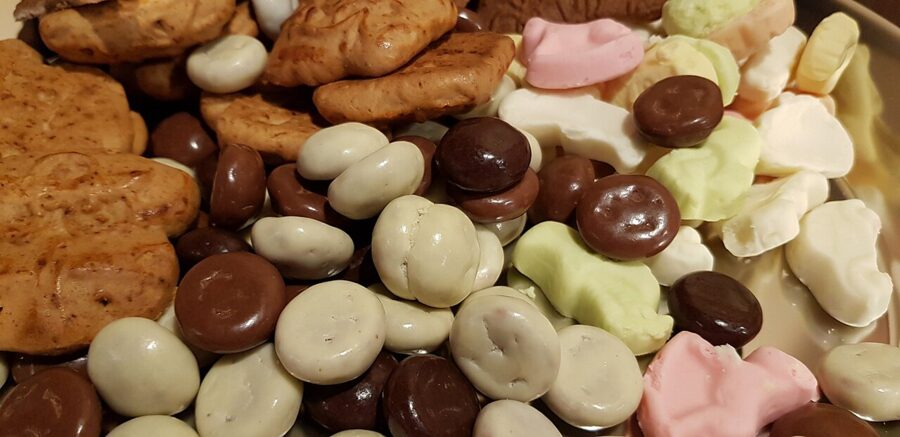
The Dutch eat more licorice per head than anyone else, and Dutch drop is not the sweet red rope you may know. It is black, often salty, sometimes very salty when it is dubbelzout, and it comes soft or hard in coins, diamonds, cats and farmhouses. Buy a mixed bag at any supermarket and taste carefully.
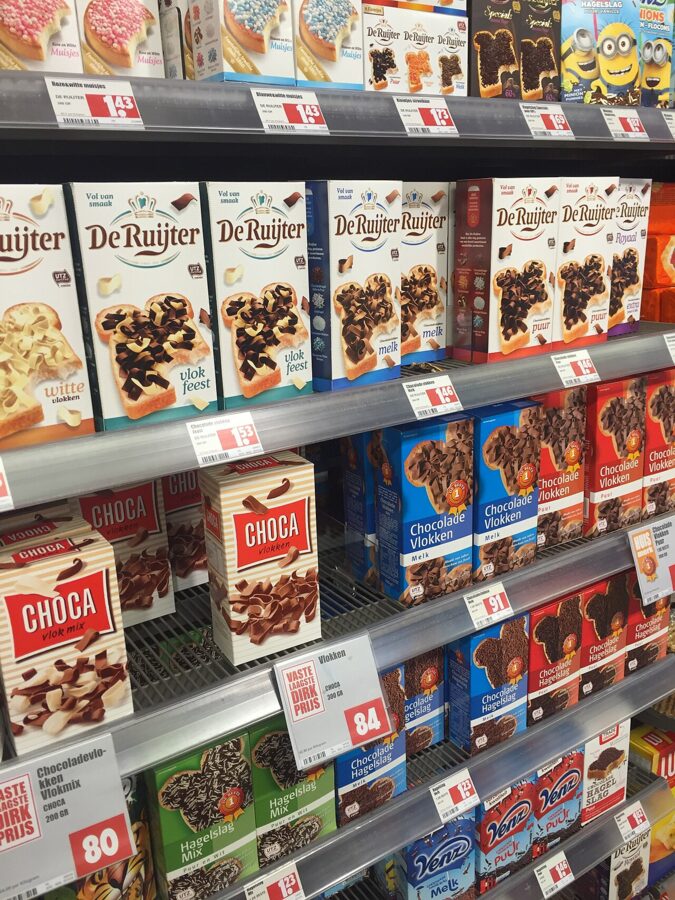
Peanut butter, while you are in the supermarket, is pindakaas, “peanut cheese”. When Calvé brought it to the Dutch market in 1948 it could not be called butter, because Dutch law kept that word for dairy, and a name already in use in Suriname stuck. Next to it on the shelf is hagelslag, chocolate sprinkles, which adults put on buttered bread for breakfast without embarrassment.

Oliebollen and Sinterklaas
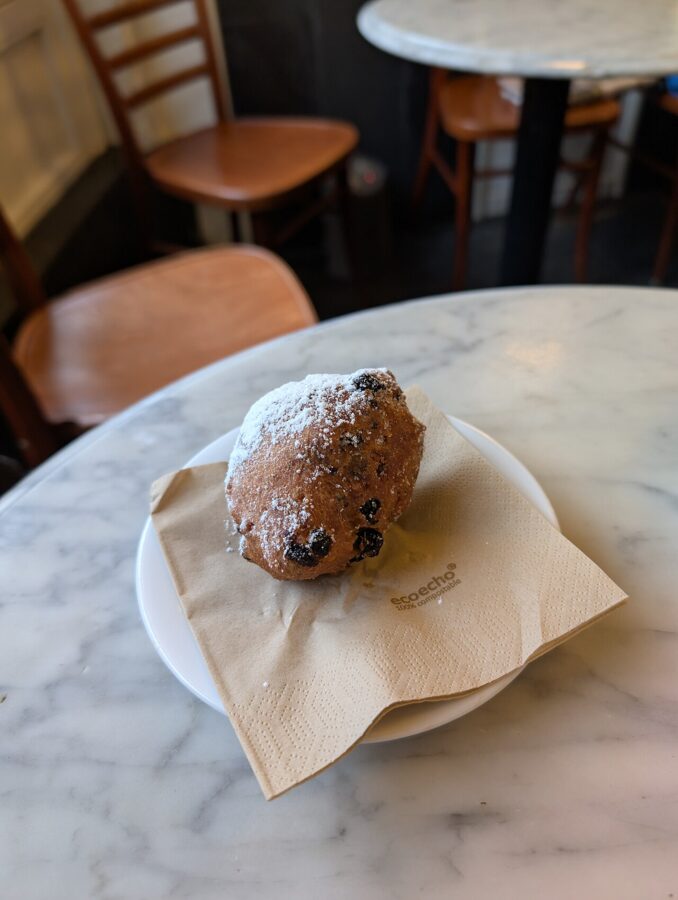
From mid-October to New Year’s Eve, wooden stalls across the city fry oliebollen, balls of yeast dough with raisins and currants, dusted with powdered sugar. They are a New Year’s Eve tradition, best bought hot from the stall and eaten immediately, with a napkin to catch the sugar.
Before that comes Sinterklaas on 5 December. Through November the shops fill with chocolate letters, given as presents with the first letter of the recipient’s name, and pepernoten, small crunchy biscuits spiced like speculaas. Buy a bag; they are cheap, they are everywhere, and they vanish soon after the fifth.

Jenever and Dutch beer
Jenever is the Dutch juniper spirit that came before gin, distilled from a base of malt wine and flavored with juniper. Jonge and oude, young and old, describe the style rather than the age. Oude jenever is the older, maltier recipe; jonge is the lighter, more neutral one that took over after the Second World War, when there was little grain for malt wine.
It is served in a small tulip glass filled to the brim, and the first sip is taken bent over the bar without lifting the glass. A jenever with a beer alongside is a kopstootje, a “headbutt”, and it is a perfectly respectable order at five in the afternoon.
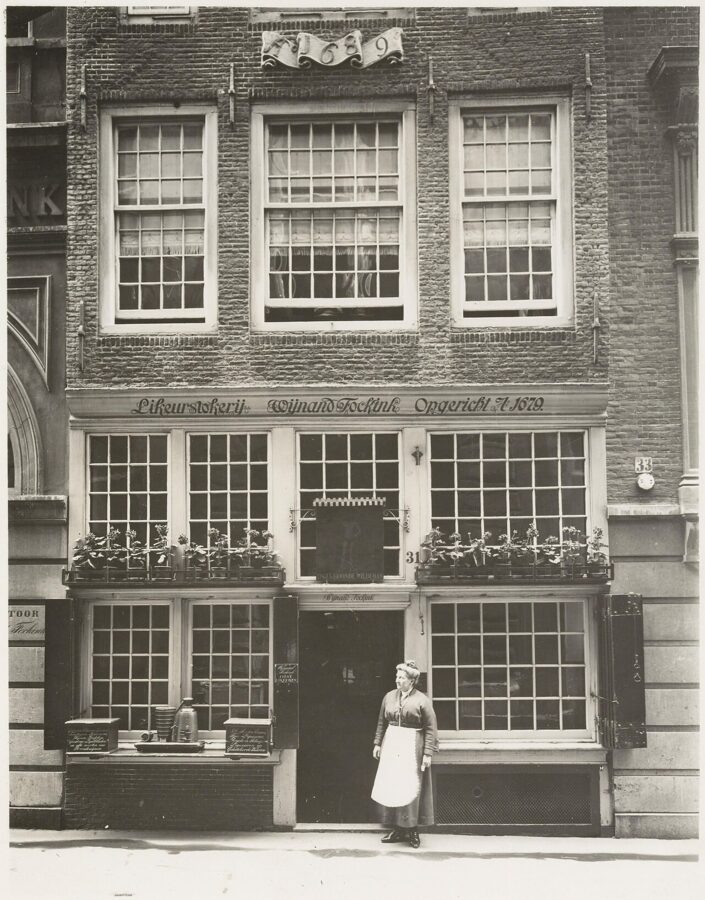
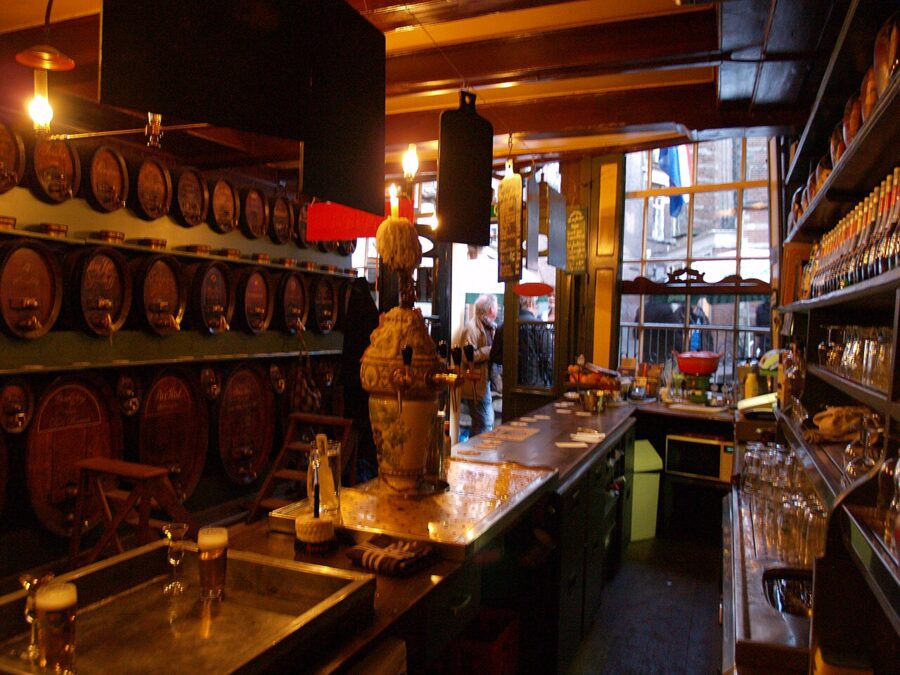
The tasting rooms of the old distillers are the places to drink it. Wynand Fockink in the Pijlsteeg, behind the Dam, has made jenever and liqueurs since 1679. De Drie Fleschjes at Gravenstraat 18, behind the Nieuwe Kerk, dates from 1650 and is the oldest tasting room in the city, with casks behind the bar and ossenworst on the snack list.

Proeflokaal A. van Wees, at Herengracht 319, is the tasting room of the Van Wees distillery, opened in 1973, with more than seventeen jenevers and a kitchen that serves bitterballen, a broodje ossenworst until 16:00 and the erwtensoep mentioned above. In Oost, Distilleerderij ‘t Nieuwe Diep sells its own jenevers from a hatch in a former pumping station in the Flevopark; its small bar in town, ‘t Kelkje, is at Oudezijds Achterburgwal 164 in the Red Light District.
Beer
Ordinary Dutch beer is pils, poured in a small glass with a tall head: a fluitje or a vaasje, and the Dutch drink several rather than a pint. Heineken is the Amsterdam name, and its old brewery on the Stadhouderskade is now the Heineken Experience. The more interesting glass is from the city’s small brewers.
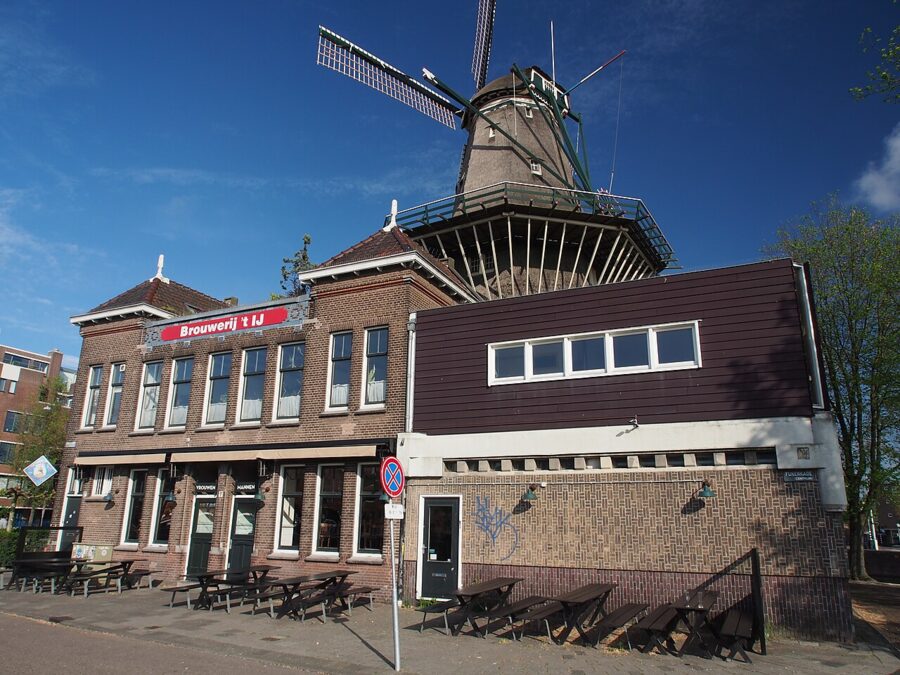
Brouwerij ‘t IJ brews in a former bathhouse under the De Gooyer windmill at Funenkade 7 in Oost, and its taproom there opens 14:00–22:00 on weekdays and 12:00–22:00 at weekends, as of November 2026, with ossenworst and boiled eggs on the snack list. In late autumn its bok, a dark, malty seasonal beer, is on tap; the brewery also runs ‘t Blauwe Theehuis in the Vondelpark. In de Wildeman, a former distillery near Centraal, has 18 taps and about 250 bottled beers, mostly Belgian and Dutch.
Proeflokaal Arendsnest on the Herengracht pours only Dutch beer, with Dutch jenever on the back shelf, which makes it the best single place to taste the country’s range.
What to skip
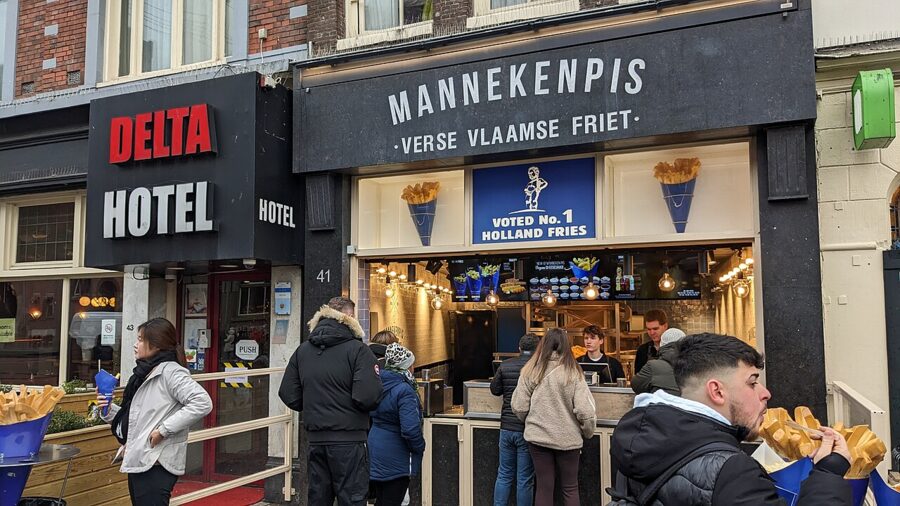
The Damrak, the broad street from Centraal to the Dam, is the first thing most people see of Amsterdam, and its ground floors are lined with places selling waffles, pizza slices, ice cream and “Dutch” snacks to people who have just stepped off the train. FEBO itself closed its branch there. The one counter on the Damrak with a queue that means something is Manneken Pis at number 41, a Flemish fries counter; for everything else, walk on.

A few other things are not worth your money. Stroopwafels dipped in chocolate and covered in sprinkles or marshmallow are a dessert with a stroopwafel underneath. Herring from a souvenir-shop fridge is a poor substitute for a stall. Flavored cheese in colored wax, as above, is a souvenir rather than a cheese, and poffertjes from a bag of frozen ones are not worth a sit-down price.
The same goes for any restaurant near the Dam advertising “traditional Dutch food” with pictures of every dish. The real versions are a short walk away: the stamppot on the Leidsekruisstraat, the herring on the Singel, the bitterballen on the Spui. Use the rest of your day to get to them.
Start where the city does. Walk to Stubbe’s on the Singel, take the herring in pieces with onion and pickle, and eat it standing at the counter like everyone else; then walk west to the Prinsengracht for apple pie, and save the stamppot for when it gets dark.