
Keukenhof is open for 53 days in 2027, from Thursday 18 March to Sunday 9 May, and on one of those days its ticket shop stops selling arrival times at noon. That day is Saturday 17 April, when the Bloemencorso flower parade rolls past the main entrance and the roads around Lisse close behind it. Try to book a 14:00 slot that afternoon and there is simply nothing to book.
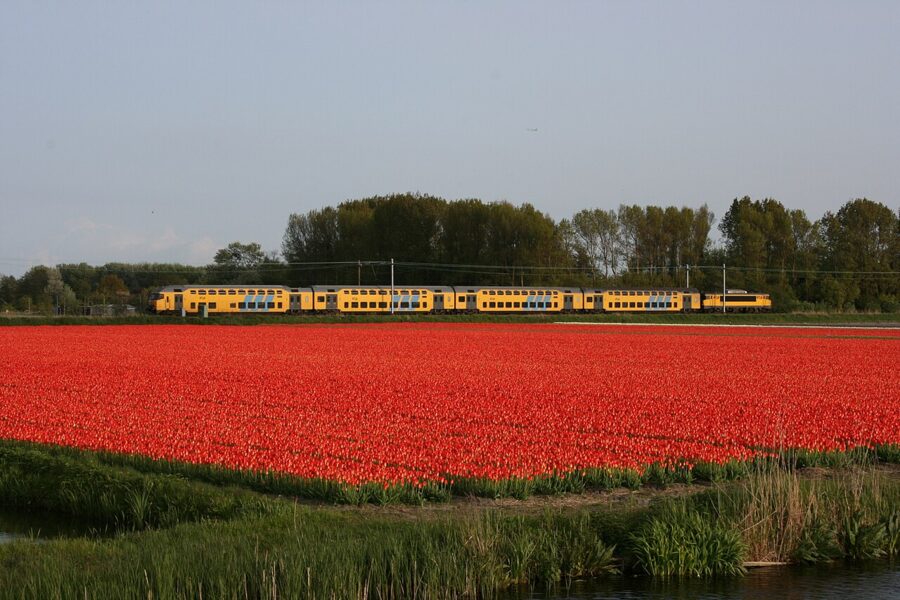
The other thing to know is the railway. Trains between Haarlem and Leiden run past the edge of the Keukenhof estate, close enough that you see the bulb fields from the window, and no train has stopped there for passengers on a regular timetable since September 1944. Everyone arrives by bus, car, bike or coach, and on an April weekend all four are full.
So a Keukenhof day is mostly logistics, and the logistics are easy once you know them: a timed ticket bought online, a bus from the RAI or Hoofddorp, and a date in the middle of April if you came for tulips rather than daffodils. The garden does the rest. It covers 32 hectares, about seven million bulbs go into it by hand every autumn, and in 2025 an average day brought around 26,500 people through the gate.



The 2027 season: dates, hours and what a ticket costs
Keukenhof opens on Thursday 18 March 2027 and closes on Sunday 9 May. It is open every day of the season from 08:00 to 19:00, and the last visitors are let in at 18:15. Outside those eight weeks the garden is shut to the public, which answers the question people ask every June: the beds are being dug up, and the next season’s bulbs go in from October.
Tickets are sold online only, for a fixed date and a half-hour arrival window between 08:00 and 18:00. There is no ticket desk to fall back on, so a slot that sells out is gone. As of late November 2026, entry tickets and parking for 2027 are already on sale in Keukenhof’s own ticket shop; the combination tickets with the bus, the shop says, go on sale in mid-January.
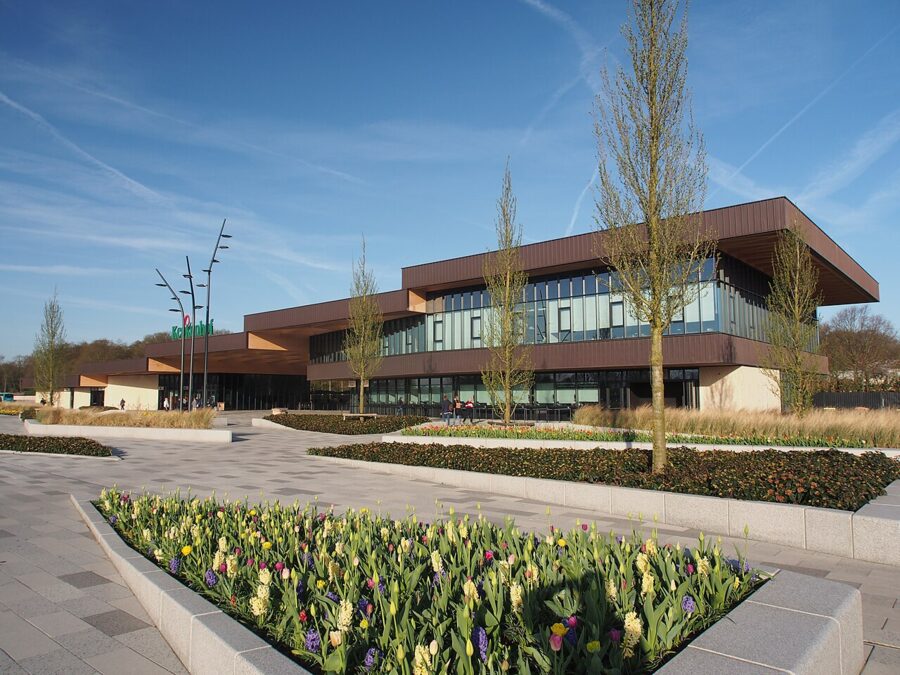

The adult price changes with the date. It is €21 (about US$24) in the opening week, 18 to 25 March, and again in the closing week, 5 to 9 May. On most other days it is €22 or €23, and it goes up to €25 (about US$29) on Easter weekend (27 and 28 March), on 9 to 11 April, every day from Friday 16 to Sunday 25 April, and from 30 April to 2 May. Children aged 4 to 17 pay €11 (about US$13) on every date, and children up to 3 go free.
| Keukenhof 2027 | As of November 2026 |
|---|---|
| Season | Thursday 18 March to Sunday 9 May 2027 |
| Hours | Daily 08:00–19:00, last entry 18:15 |
| Adult ticket | €21–€25, depending on the date |
| Children 4–17 | €11; under 4 free |
| Car parking | €10 a day bought online, €15 at the car park |
| Camper parking | €12.50 a day bought online |
| Wheelchair reservation | €5 |
| Whisper boat | €11 adults, €5.50 children 4–11 |
| Bike rental, 3 hours | €12.50 adults, €9 children 4–11 |
Keukenhof’s conditions let you cancel a ticket yourself up to four days before your date, at €2.50 per purchase. Inside those four days the ticket stands, rain or shine. That is the one argument for waiting until the week before to book a quiet weekday, when you can see the forecast and the slots are still open.
When the tulips are at their best
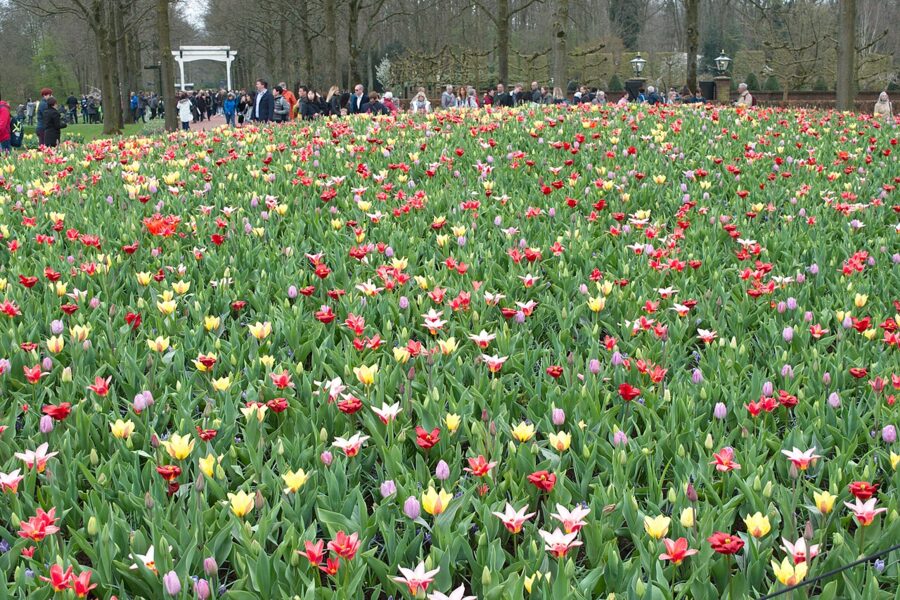
Keukenhof is not only tulips, and the calendar decides what you see. The season opens on crocuses, daffodils and hyacinths in March. Tulips start in early April and are usually at their peak from the middle to the end of the month, with the late varieties still going into May.
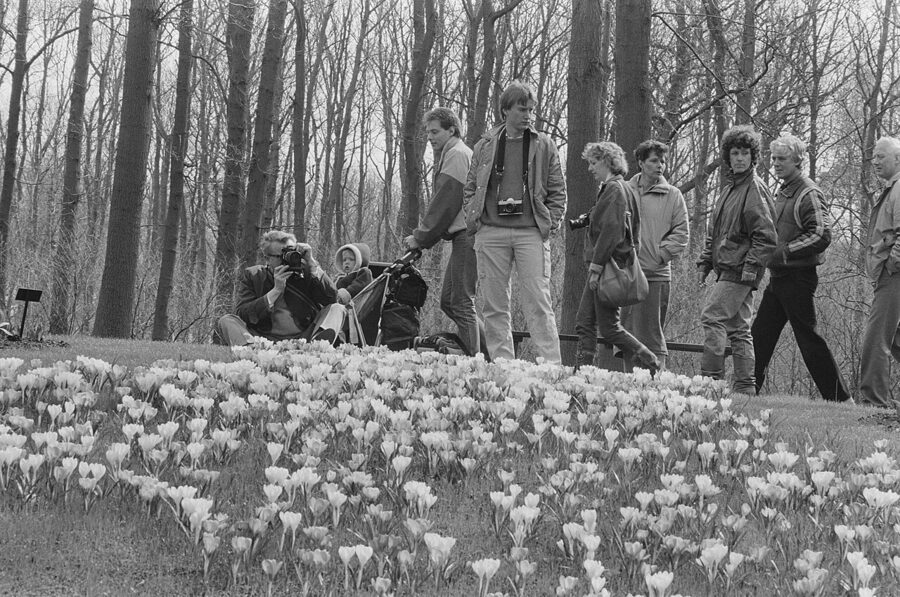

The weather moves all of this by a week or more in either direction. A mild winter brings everything forward and a cold March holds it back, and Dutch spring is cool and changeable even in a good year (the Amsterdam weather month by month shows how much). The garden hedges its bets: the 40 gardeners plant from early October until about the start of December, and they layer the bulbs so that one bed flowers in waves rather than all at once.
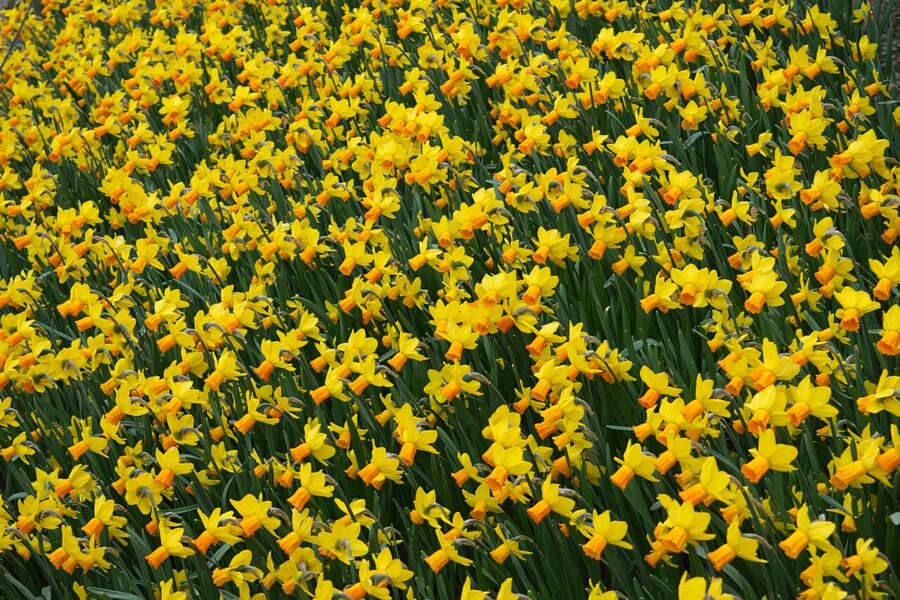

If you can pick only one week, I would take the one that starts on Monday 12 April. The tulips are usually coming into their best, weekday tickets are €23 rather than €25, and you are out of the way before the parade weekend. If that week is impossible, a weekday in the first days of May is the bargain: the late tulips are still out, and the ticket drops back to €21 from 5 May.


Getting there from Amsterdam
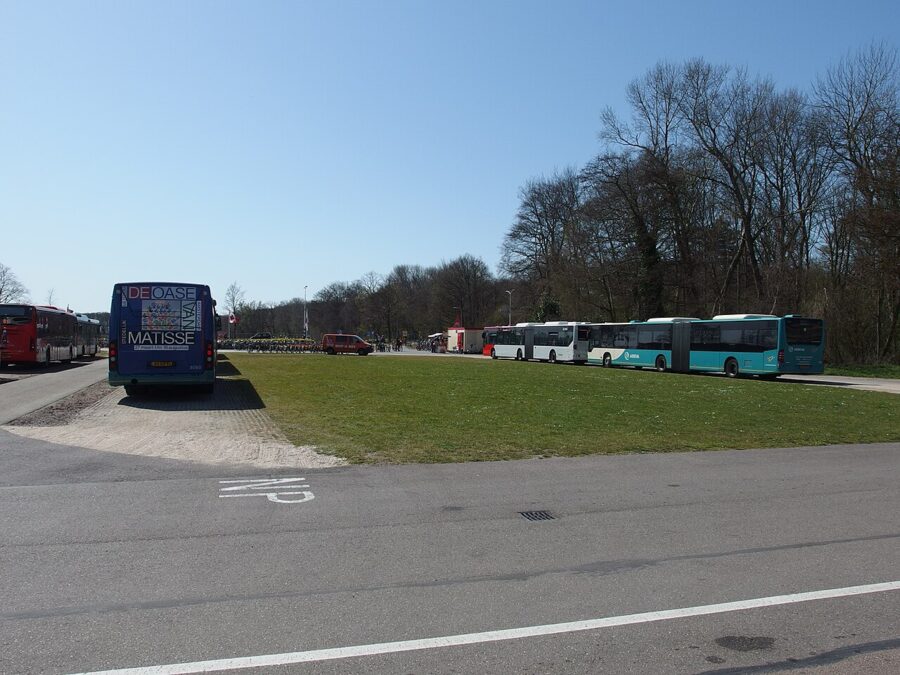
Keukenhof sits just outside Lisse, between Haarlem and Leiden, about half an hour from Amsterdam and Schiphol when the roads are clear. In season the regional bus company Qbuzz runs the KeukenhofBuzz, express buses from four boarding points straight to the main entrance with no stops on the way. In 2026 more than a fifth of all visitors came by public transport, and the share is rising.
The bus from Amsterdam RAI
From the city this is the simplest route. Take metro 52 (the Noord/Zuidlijn) from Centraal to Europaplein, the stop beside the RAI convention center, and board the KeukenhofBuzz at the Europaplein bus stop. In 2026 it ran as line 852, and the ride to Keukenhof took about 35 minutes.
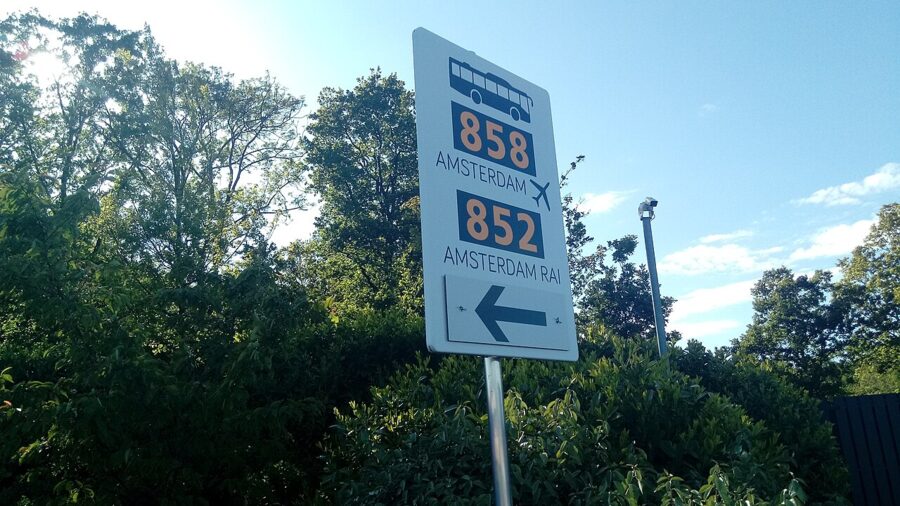

Qbuzz says the RAI is the most popular of the boarding points, and some people use it with a suitcase in hand: Keukenhof in the morning, the airport in the evening. If you do that, remember the airport bus is not running in 2027, so your onward route is the Hoofddorp bus and a train back to Schiphol.
From Schiphol: change at Hoofddorp
For years the airport had its own Keukenhof bus, and older maps and signs still show it. Because of building works at Schiphol, the KeukenhofBuzz did not leave from the airport in 2026, and Qbuzz has said the bus will leave from Hoofddorp station again in 2027, with Schiphol back as a boarding point from 2028.
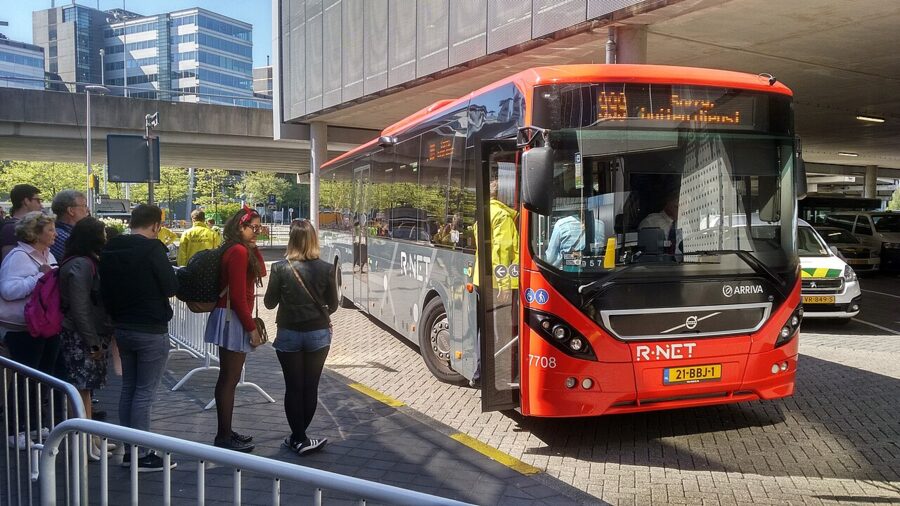

The detour is small. Hoofddorp is the next station after Schiphol on the line toward Leiden, a few minutes by train, and from the bus stop at Hoofddorp station the KeukenhofBuzz (line 859 in 2026) takes about 25 minutes. Trains run to Hoofddorp from Amsterdam Centraal, Sloterdijk and Zuid, so if you are staying in the west of the city this can be quicker than the metro to Europaplein.
One oddity: Keukenhof’s ticket shop still lists a “Schiphol” bus combi for 2027, at a slightly higher price than the Hoofddorp one. Read what it covers before you pay for it, because the bus itself, according to the company that runs it, leaves from Hoofddorp.
From Leiden and Haarlem
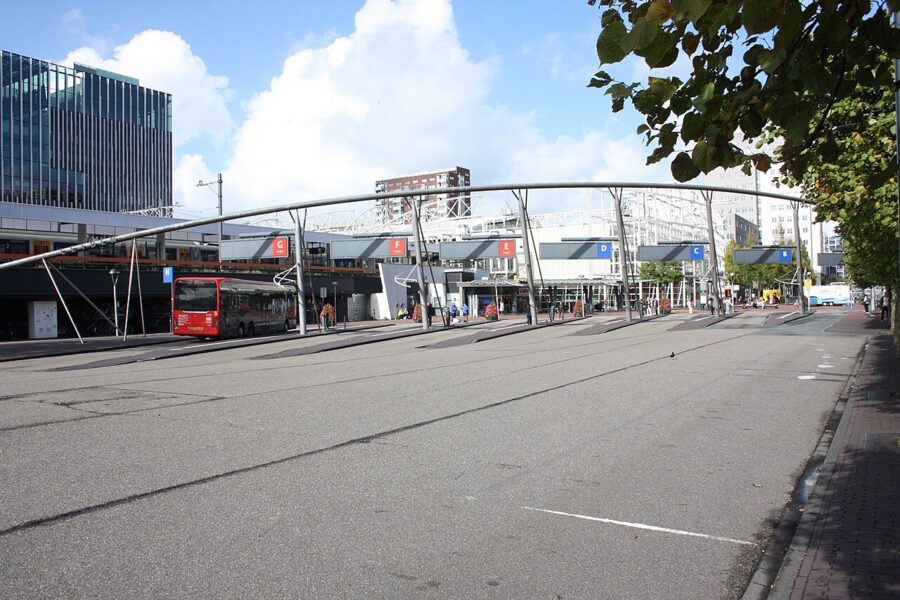
If you are staying in Leiden, the KeukenhofBuzz leaves from the bus station on the city side of Leiden Centraal (line 854 in 2026) and takes about 30 minutes. From Haarlem, it leaves from the stop on the left as you walk out of the station (line 850 in 2026) and takes about 40 minutes. Both stations are on fast direct trains from Amsterdam, so either works as a way to combine Keukenhof with a night somewhere other than the capital.

Bus tickets and combi tickets
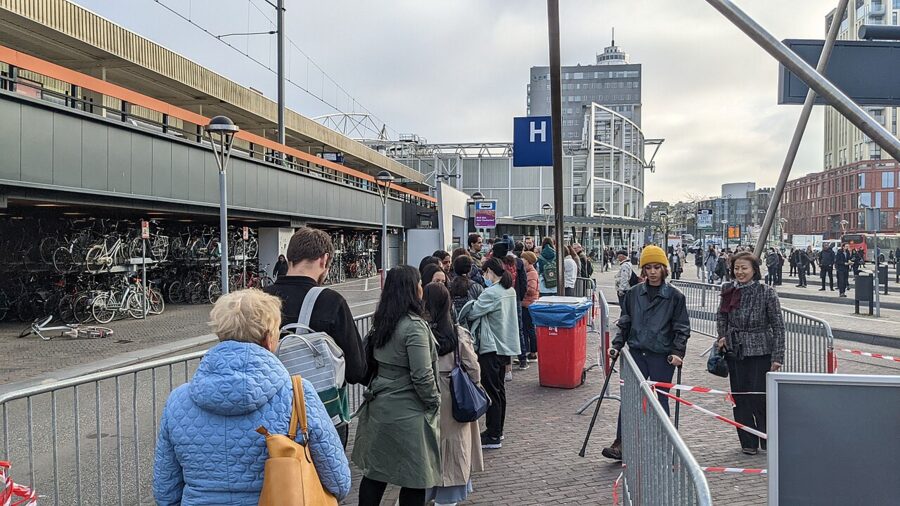
You can pay for the KeukenhofBuzz like any Dutch bus, by checking in and out with an OV-chipkaart or a contactless bank card (OVpay). It is a flat fare with no reduction for children, and on busy days Qbuzz only lets you on if you also hold a valid Keukenhof entry ticket. The alternatives are a return bus ticket bought online, or a combi ticket that bundles the bus and the garden.
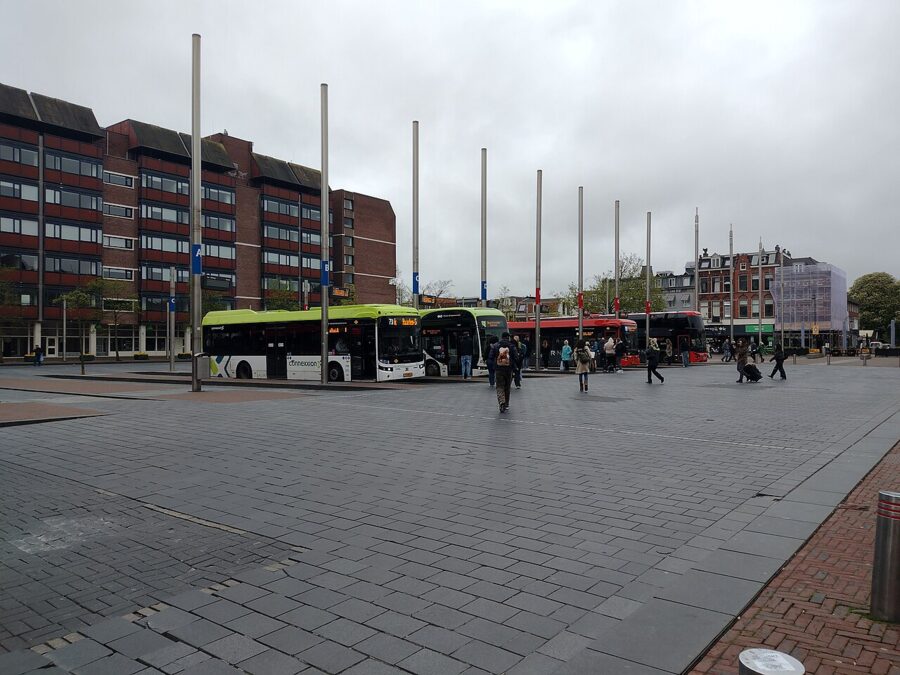

Here is what Keukenhof’s ticket shop lists for 2027, as of November 2026. The combi prices rise and fall with the entry price on your date, so the adult figures below run from the cheapest day to the dearest.
| Boarding point | Bus return, adult / child 4–17 | Bus + entry, adult | Bus + entry, child 4–17 |
|---|---|---|---|
| Amsterdam RAI (Europaplein) | €19.10 / €9.20 | €39.75–€43.75 | €18.70 |
| Hoofddorp station | €13.50 / €6.50 | €34–€38 | €16.20 |
| Leiden Centraal | €13.50 / €6.50 | €34–€38 | €16.20 |
| Haarlem station | €13.50 / €6.50 | €34–€38 | €16.20 |
Do the sums and the adult combi saves you less than a euro over buying the two parts separately. Its real use is convenience, one ticket for the bus and the gate. Whatever you pay with, carry your entry ticket on the bus, because on busy days that is what gets you aboard. There is also a train, bus and entry combi sold through the NS Spoordeelwinkel, which adds the train from your home station; Qbuzz’s Keukenhof page listed it from €42.50 for 2026, and the 2027 price was not out yet in November.
Why the train does not stop
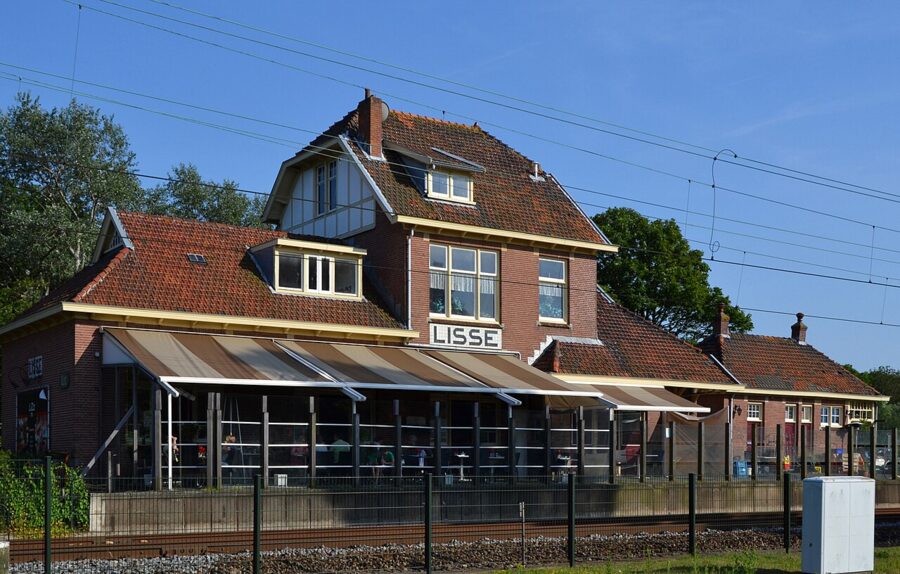
Lisse did have a station. It opened in 1891 as a halt on the Haarlem–Leiden line (first called Delfweg), got its handsome station building in 1904–1905, and lost its regular passenger service on 17 September 1944, the day the Dutch railway strike began. For decades afterwards special trains stopped there in the bulb season, from Belgium and Germany as well as Amsterdam.
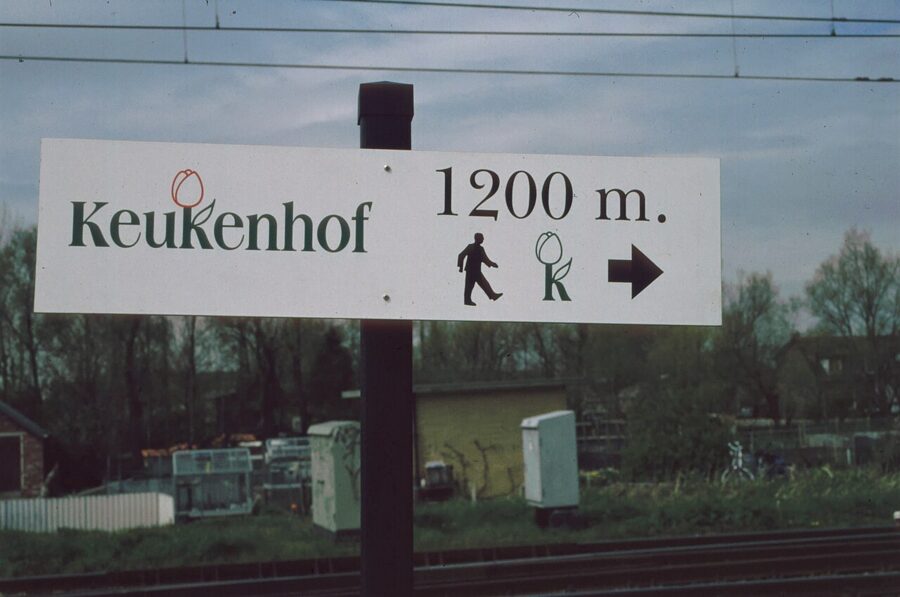

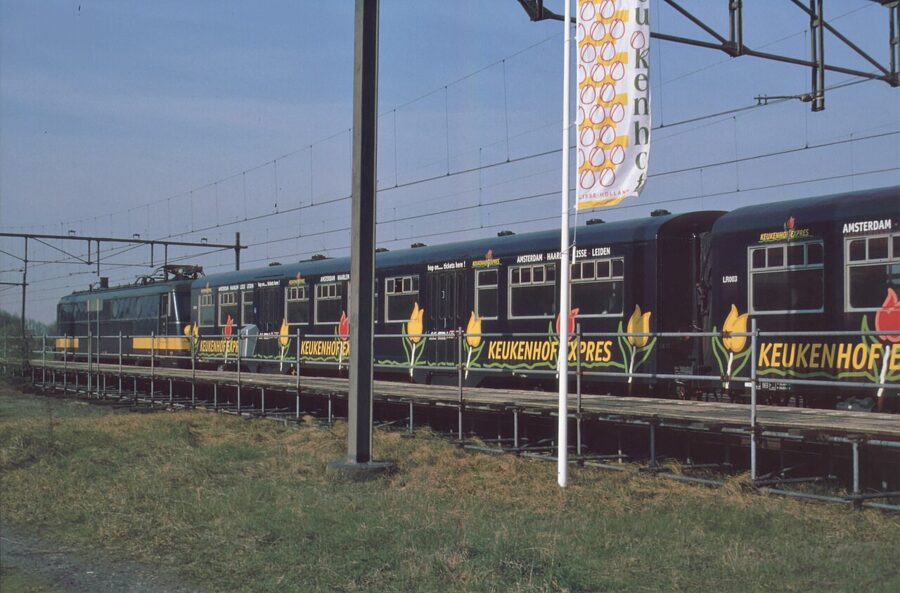

The last trains to call were the Keukenhof Expres, run from Amsterdam by the private operator Lovers Rail in 1998 and 1999. The foundation that owns the Keukenhof estate bought the station in 2008 with an eye on bringing the trains back, but in 2010 the national railway and the track manager decided against reopening it, even as an event halt, because nobody could predict from day to day how many people would use it. The building has been a restaurant since 1994.

By car
Driving is easy until it is not. Parking costs €10 (about US$12) a day if you buy the parking ticket online with your entry, and €15 if you pay at the car park, which is reason enough to buy it in advance. Keukenhof traffic jams are a fixture of the Dutch traffic news every April, so the same rule applies as for the bus: be there for opening or come in the late afternoon.
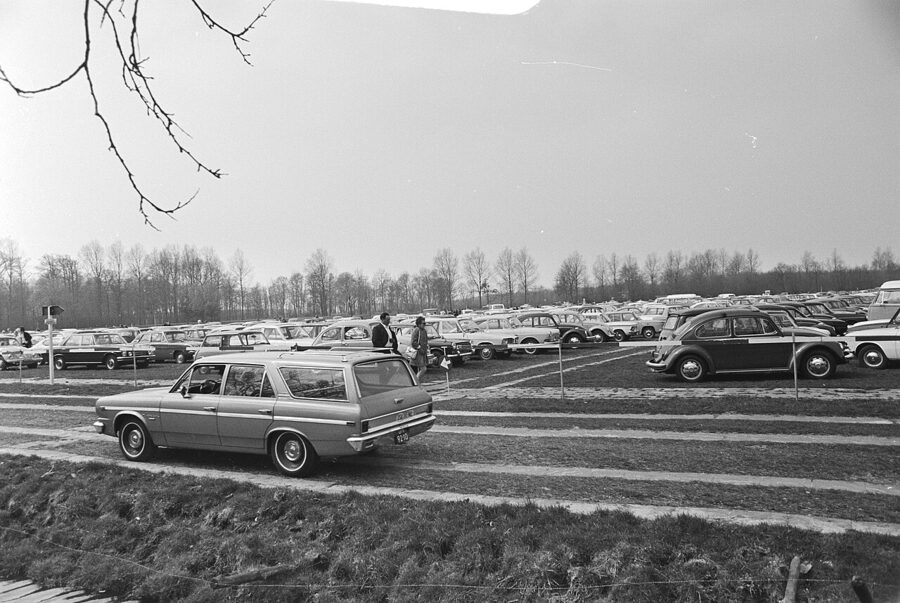

On parade day, 17 April, do not drive at all if you can help it. Roads near any point on the route close two hours before the floats pass and stay shut for two hours after, and the main car park cannot be reached or left while the parade goes by the entrance.
Coach tours and shuttles
Plenty of companies sell a coach seat from central Amsterdam with the Keukenhof ticket included, some with a stop at a tulip farm, a windmill cruise or Zaanse Schans on the same day. You pay well over the public transport price for a guaranteed seat and a pick-up near your hotel. If you are traveling with someone who cannot stand in a bus queue, that seat is worth it; if not, the KeukenhofBuzz gets you to the same gate.
Inside the garden
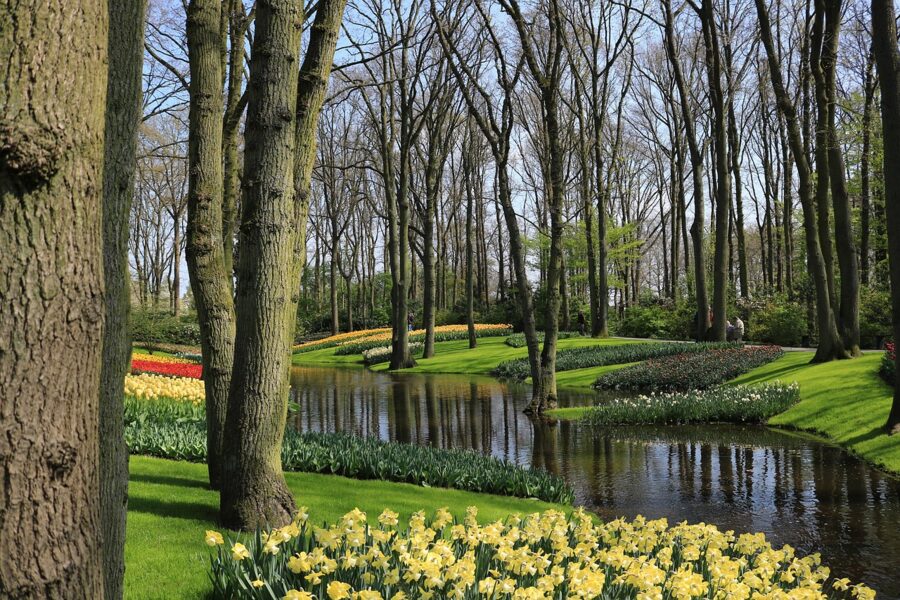
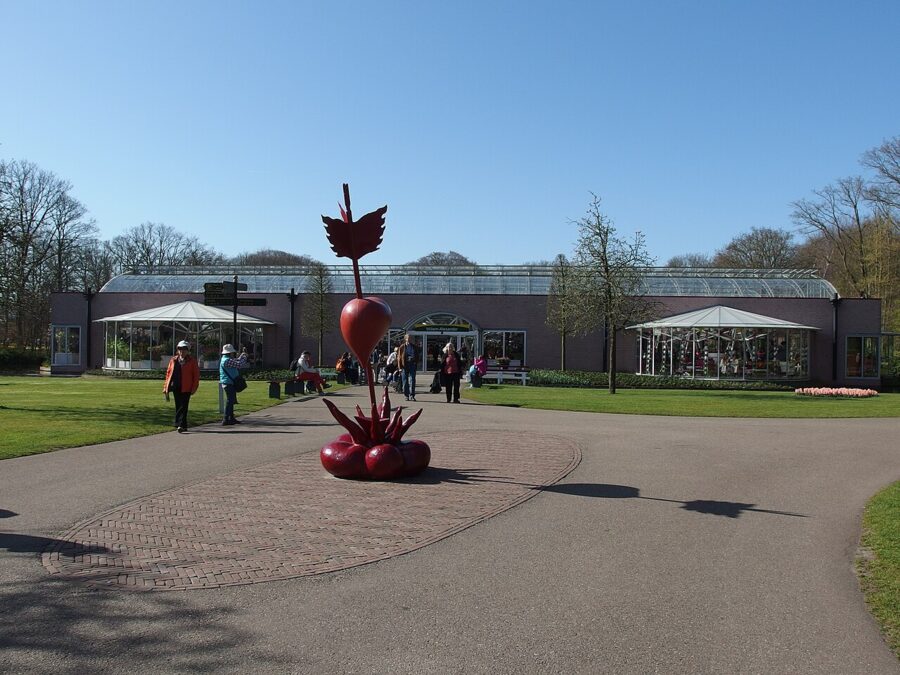
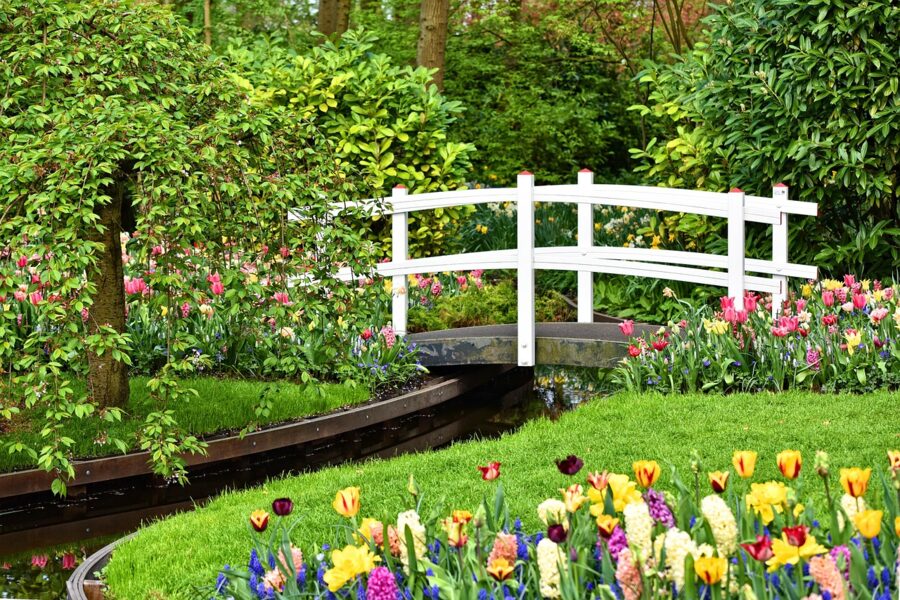
Keukenhof is a park first and a flower show second. The bones are old: winding paths, ponds, streams and tall beeches from a 19th-century estate garden, with the bulb beds redesigned every year between them. Give it at least three hours, and longer if you want the pavilions, the windmill and a walk to the edge where the fields begin.
The pavilions
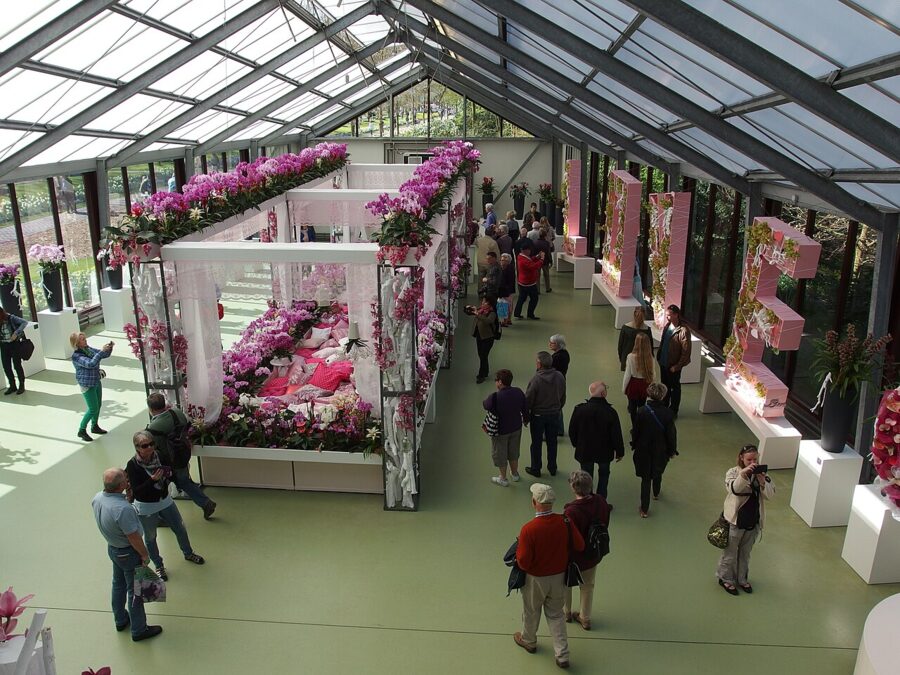
When it rains, and in a Dutch April it will, the pavilions are where you go. Each has a job. In recent seasons the long Willem-Alexander Pavilion has held the big bulb shows, built around hundreds of tulip varieties and closing the season with a lily show. The Beatrix Pavilion has been given over to orchids and anthuriums for the whole season, and the Oranje Nassau Pavilion stages a different flower show nearly every week.

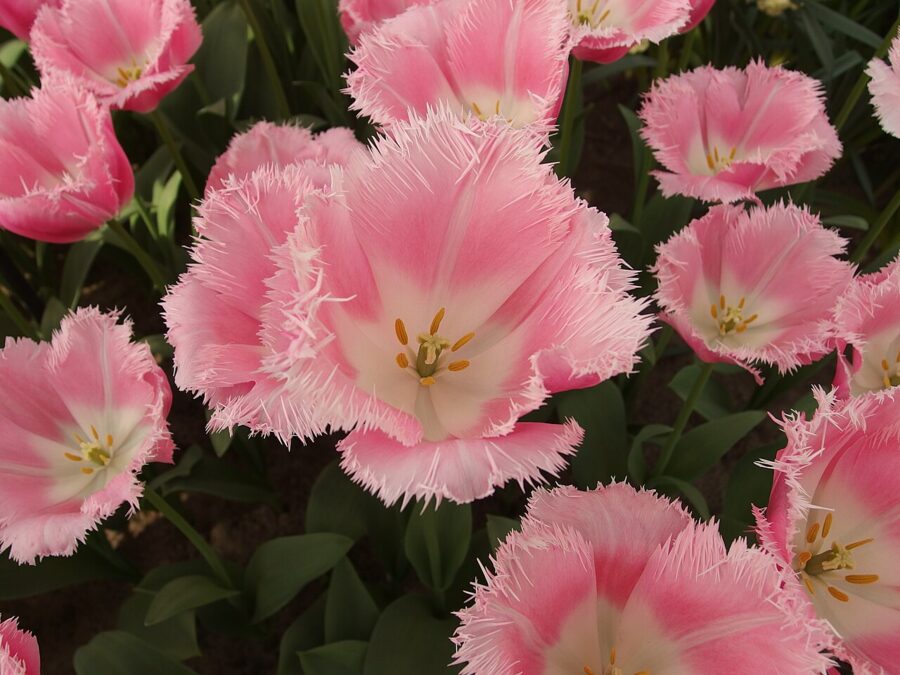
The cut-flower shows are where growers show off, and they are where you see what a tulip can look like close up: fringed, parrot-striped, double, almost black. The labels give the variety names, which is useful if you plan to buy bulbs in the autumn rather than off a market stall in spring.


The windmill and the whisper boat
The windmill at the northern edge of the garden is older than Keukenhof itself. It was built in 1892 as a polder mill in Scharmer, in the province of Groningen, and moved to Lisse in 1957 as a gift from the Holland America Line. It is a listed national monument, its sails can turn, and it grinds and pumps nothing: its job here is decoration, and the view.
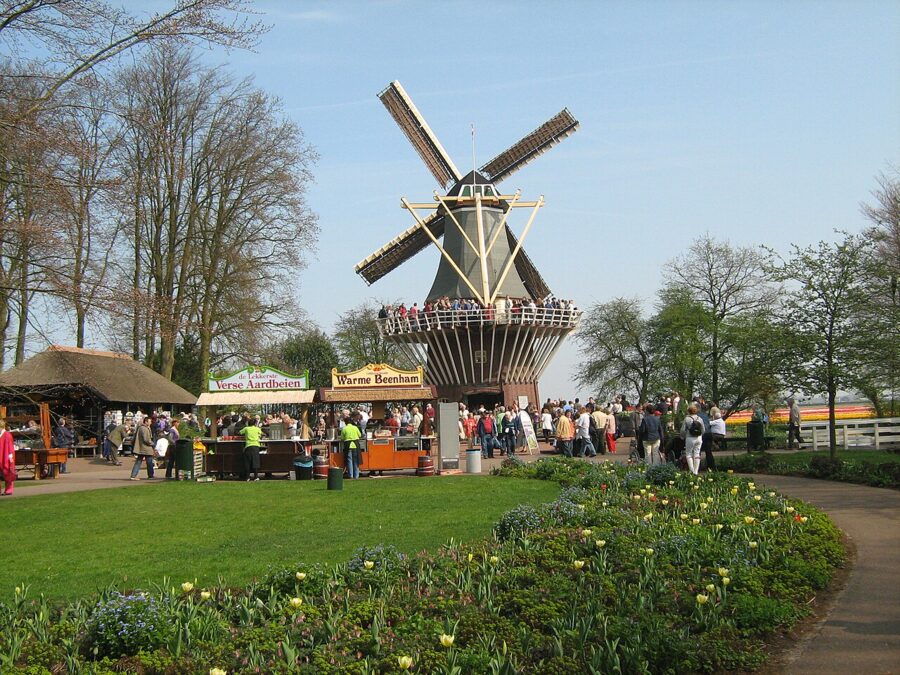

Climb up to the gallery for the one view in Keukenhof that shows you where you are: the park behind you and the striped commercial fields in front, running off toward the dunes. Behind the mill is the landing for the whisper boat, a quiet electric boat that takes you along the waterways past the fields. It costs €11 for adults and €5.50 for children aged 4 to 11, and you need a Keukenhof entry ticket to book it.
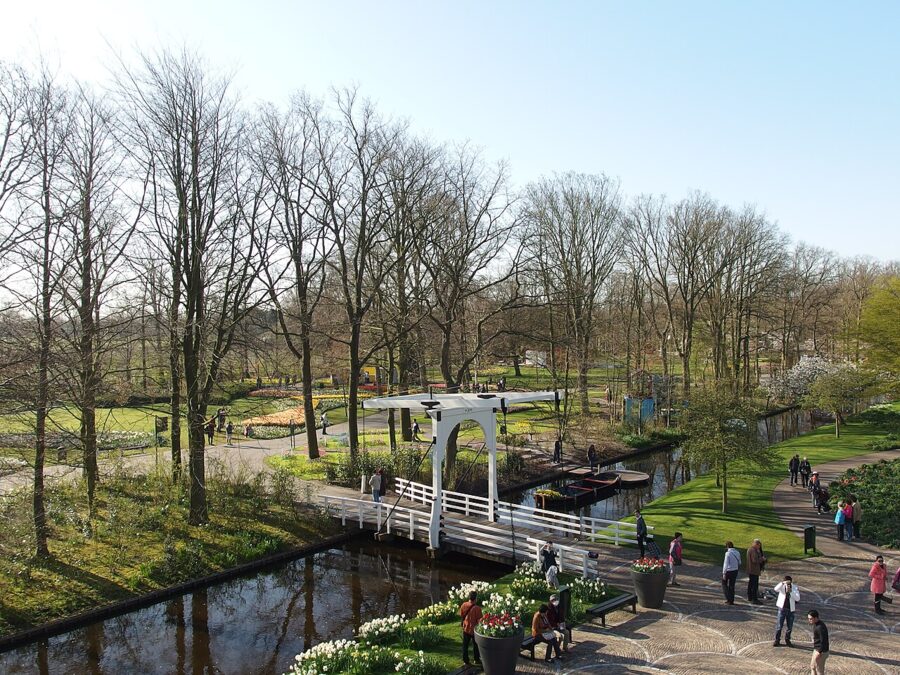

The gardens within the garden
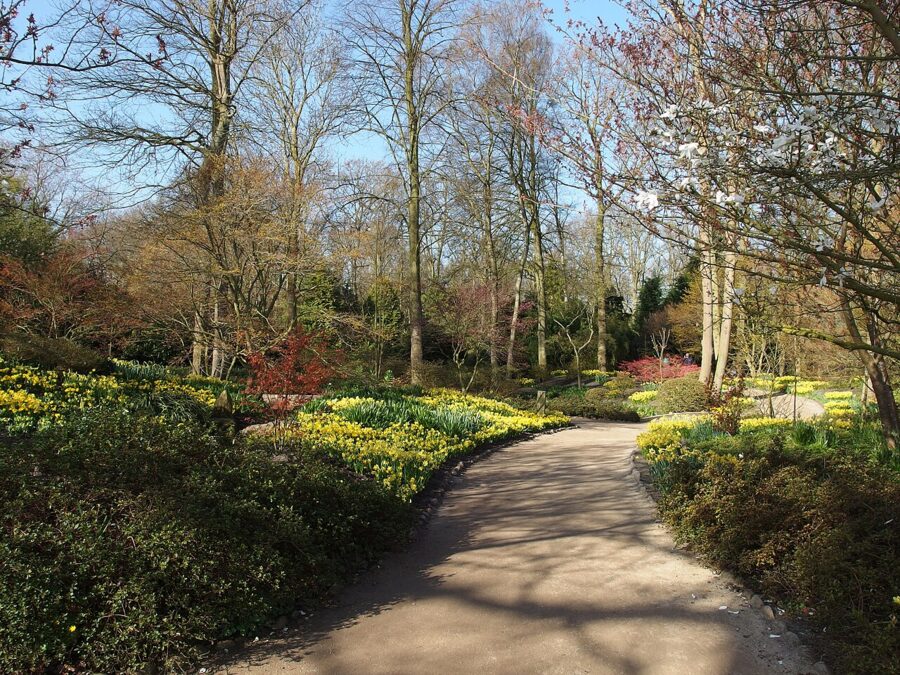
Between the big lawns are smaller gardens that most people walk straight past. There is an English-style garden of winding paths and sudden views, a walled historical garden with old bulb varieties, a nature garden where bulbs grow among shrubs and perennials, and a Japanese country garden in the shade of the trees. They are where you go when the main beds are wall-to-wall with phones.

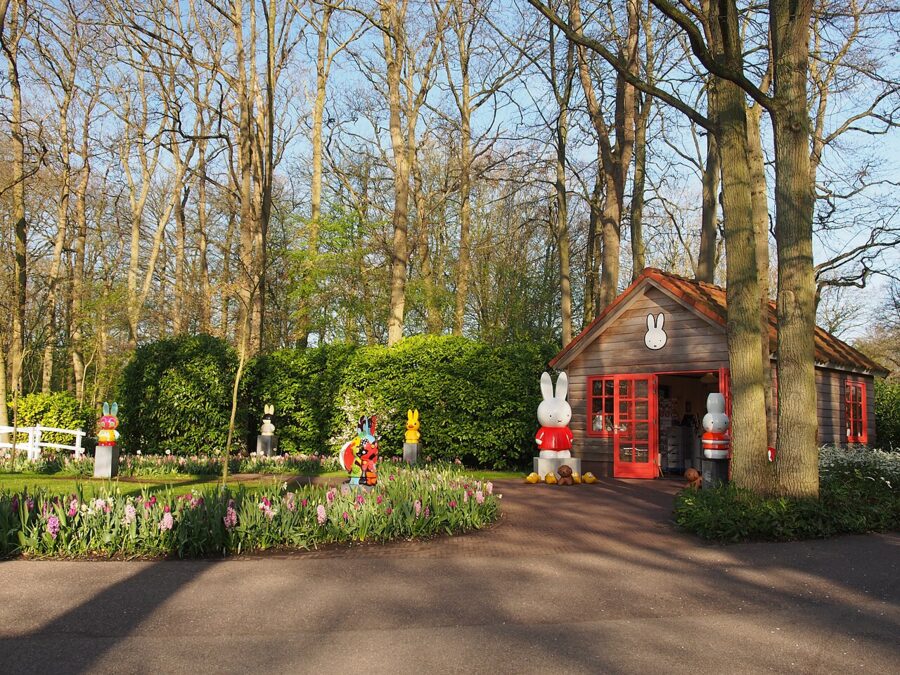
For children there is a playground, a maze, an animal meadow and a treasure hunt through the park, plus a little Miffy house, the Dutch rabbit known at home as Nijntje. It is enough to make a family day work, and it means that a child bored of tulips by 11:00 does not end the visit.

No theme in 2027
In some years Keukenhof builds its beds and flower shows around a theme of the year. For 2027 it has none, so do not go looking for one: the flower shows in the pavilions simply change through the season. I do not count that as a loss; the themed mosaics are rarely the best beds in the park.
From the castle’s kitchen to a flower show
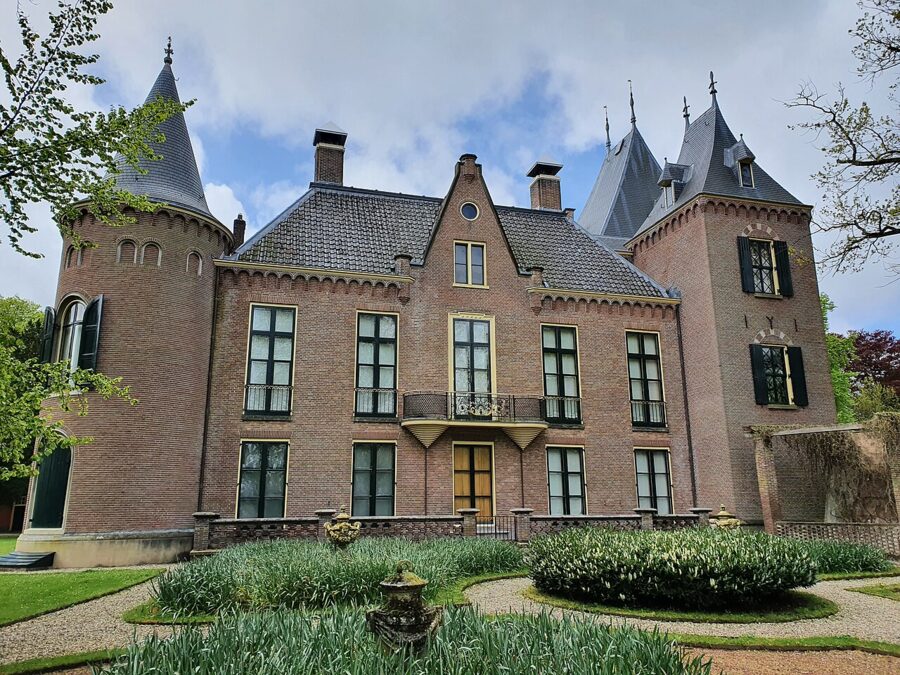
The name means “kitchen court”. In the 15th century this was dune country belonging to Slot Teylingen, the castle where Jacoba of Bavaria lived, and its game, herbs and berries went to the castle kitchen. In 1641 or 1642 (sources differ) Adriaen Maertensz Block, a former commander for the Dutch East India Company, built a country house here, later turned into the turreted Kasteel Keukenhof.
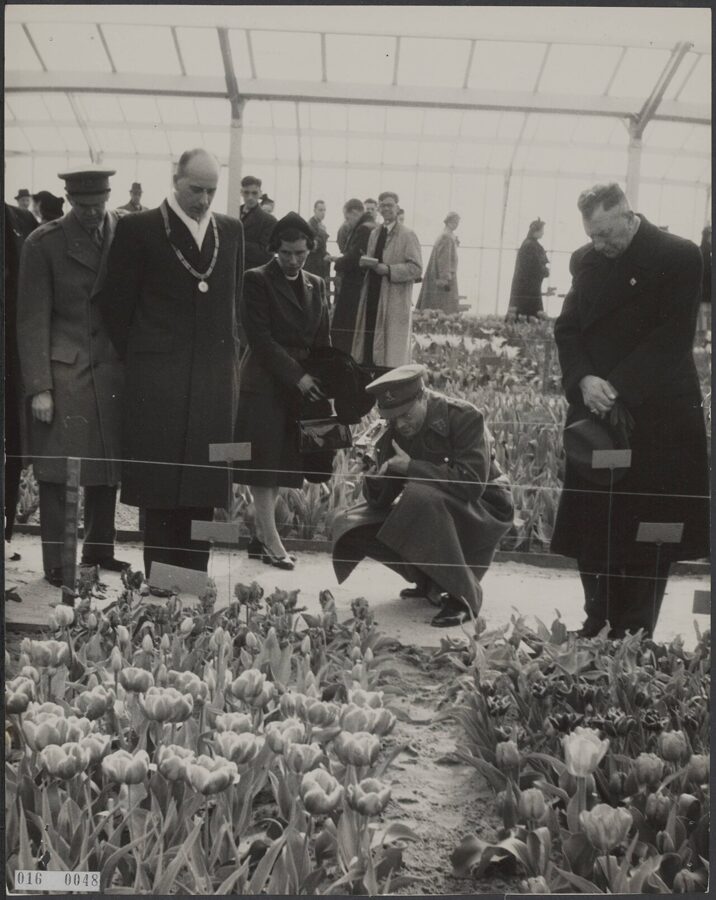
In 1857 the owners called in the garden architects Jan David Zocher and his son Louis Paul, who also designed the Vondelpark in Amsterdam, and their English-style park is still the skeleton of the garden you walk through today. The flower show came in 1949, when the mayor of Lisse and a group of leading bulb growers set up an exhibition on part of the estate to show their bulbs to buyers. It opened in 1950, and the garden still works as a showroom: more than 100 growers supply the bulbs.

The castle itself is a separate visit. It sits on the wider estate next to the garden, with its own gardens, a petting farm and events through the year, and the house can be seen on guided tours sold separately from the flower garden ticket. Dogs on a lead are welcome on the estate.

The bulb fields outside the fence
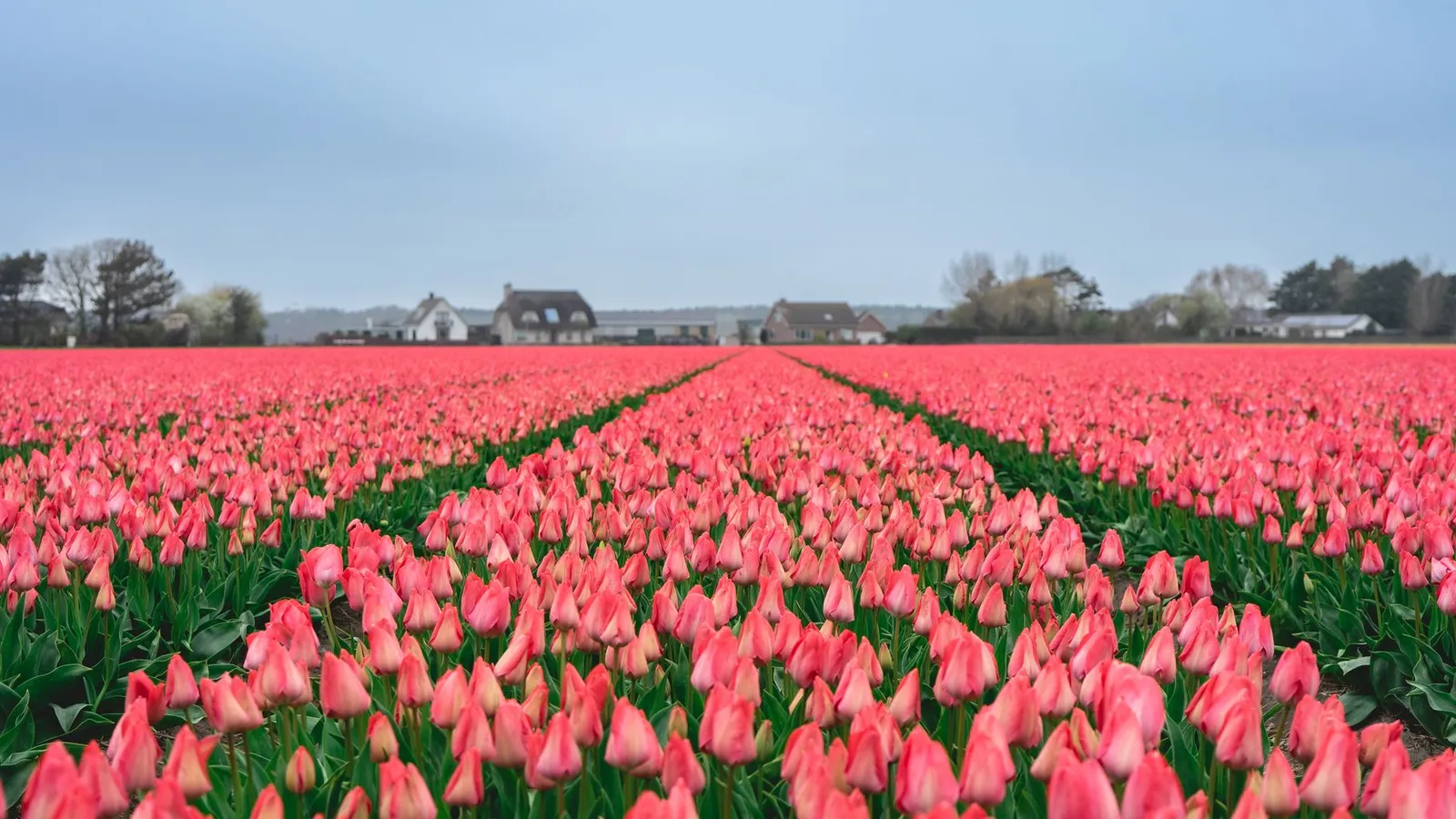
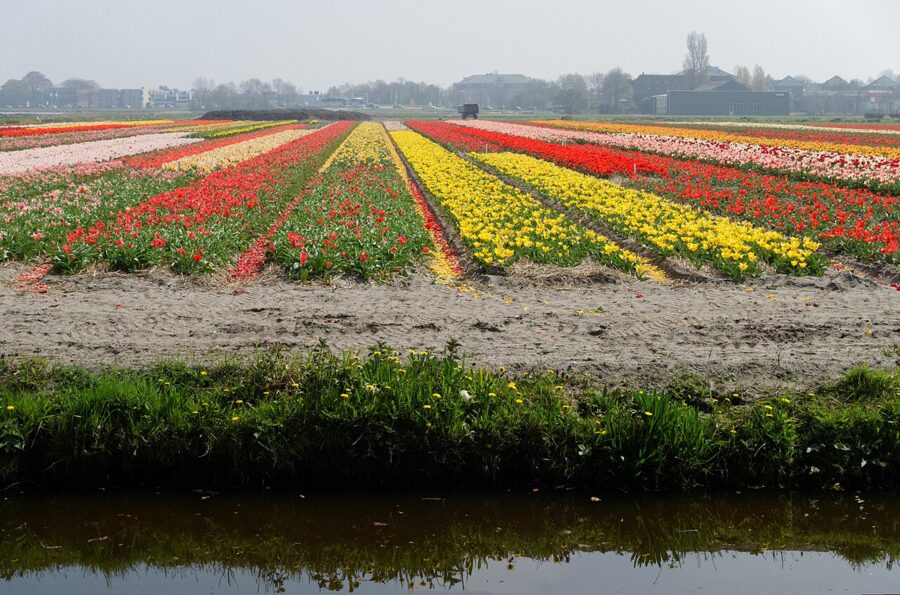
The fields are the part of the trip people remember, and they are free. Keukenhof is a garden; the striped fields you see from the windmill and the bus are working farms in the Bollenstreek, the bulb district that runs along the coast from west of Leiden to west of Haarlem. Its villages are Lisse, Hillegom, Sassenheim, Voorhout and Noordwijkerhout, and the growers chose this strip for its sandy soil just above sea level.

When the fields flower
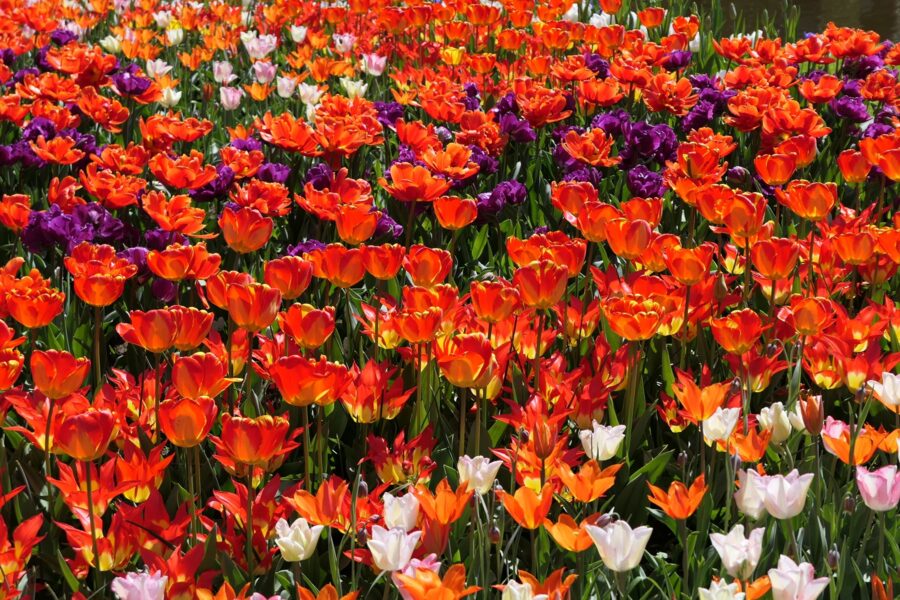
The fields follow roughly the same calendar as the garden. After the crocuses, the daffodils, hyacinths and tulips start flowering at the end of March and keep going into May, and the tulip fields are at their fullest in the second half of April. But a field is only in color for a short window, because these flowers are grown for their bulbs, not their blooms.
Soon after a field opens, the grower tops it: the flower heads are cut off so the plant puts its strength into the bulb. Years ago the heads were strung into garlands and sold to people on day trips. A field that was red on Tuesday can be green by the weekend, so if you see one in full color, stop.

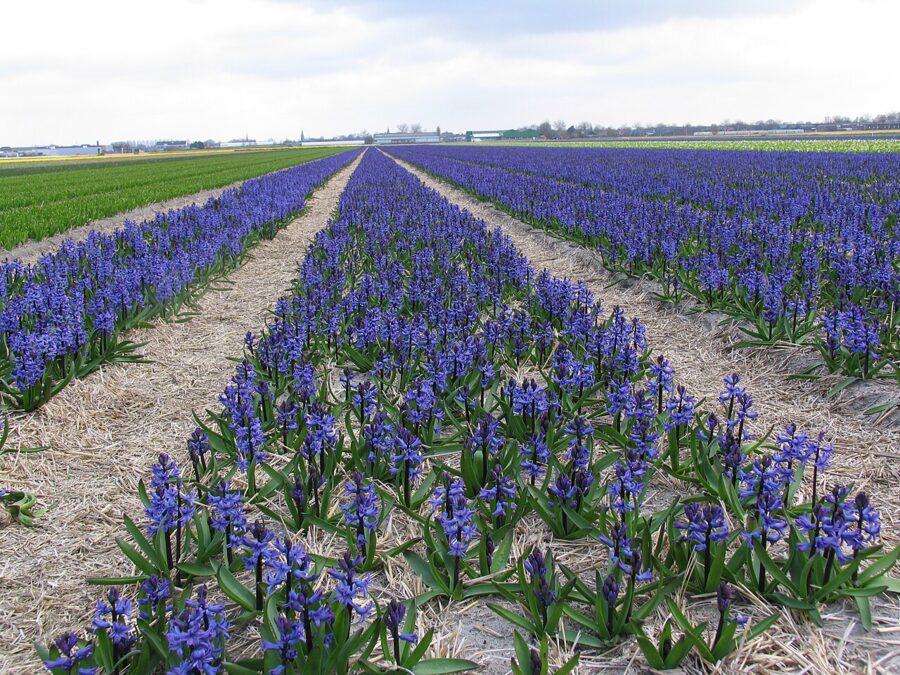

The one rule: stay out of the fields
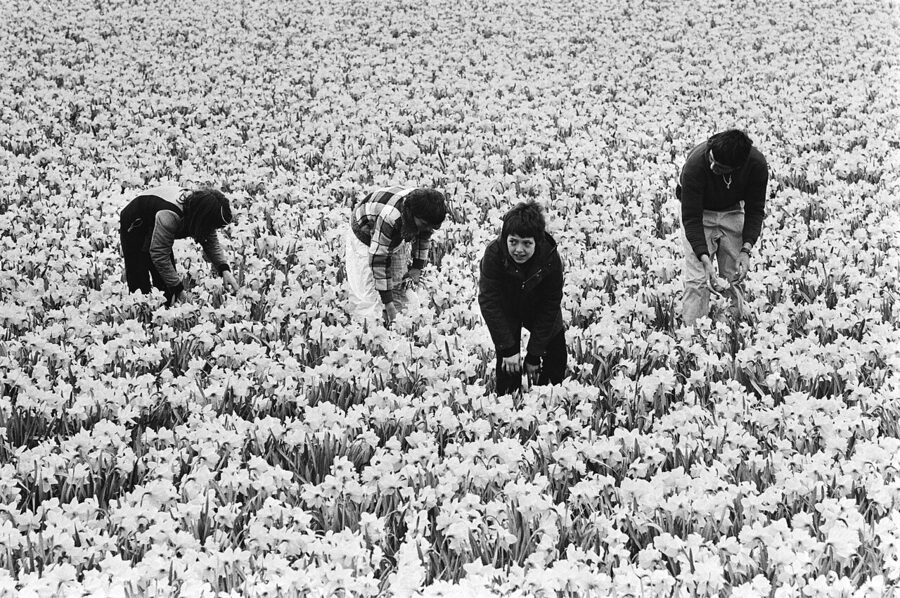
The fields are nurseries, not a backdrop, and walking into them for a photo is the fastest way to annoy a Dutch farmer. Stepping between the rows damages the crop and can carry disease from one field to the next, and growers have been asking visitors for years to keep out. Stay on the road, the verge and the cycle paths, and take your picture from there.
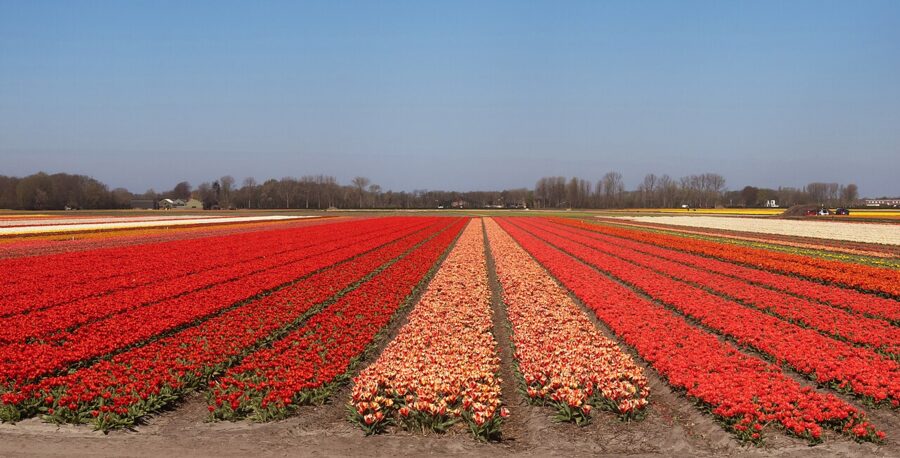

If you want to stand among tulips, go to one of the tulip attractions that let you. Tulip Experience Amsterdam (in the bulb district, despite the name), The Tulip Barn in Hillegom and De Tulperij in Voorhout all have fields or gardens you can walk into, with free parking, and some let you pick your own stems. That is a better photo than a trespass, and nobody shouts at you.
By bike from the gate
The best way to see the fields is on a bicycle, at the speed the district was laid out for. Keukenhof’s bike rental hires bikes at the gate for €12.50 for three hours (€9 for children aged 4 to 11), with four signposted routes of 5 to 25 kilometers through the fields. Bikes are for outside the park only; inside, you walk.
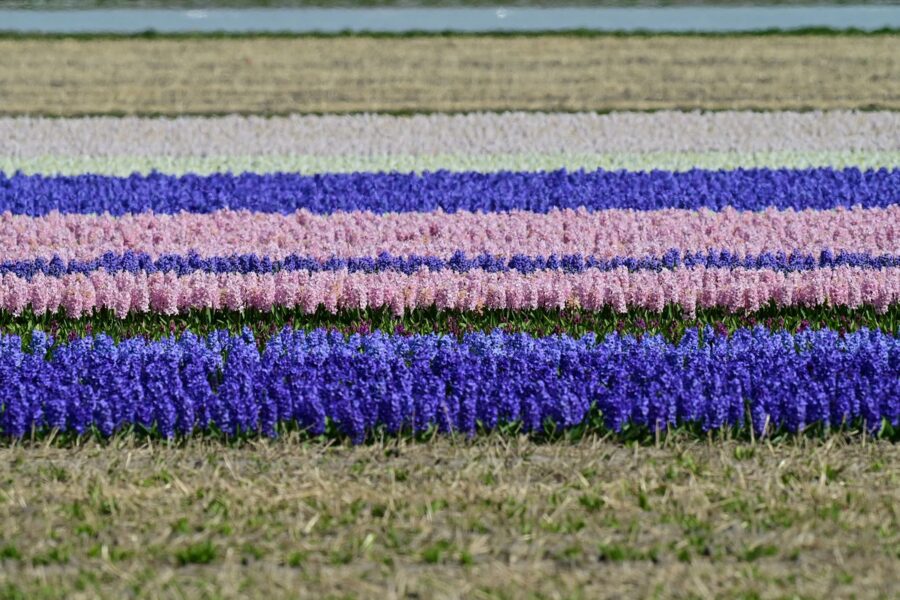
Do the ride before or after the garden, not in the middle. In the morning the light is low and the cycle paths are empty; in the late afternoon the coach parties have gone and the light softens. The rental is sold by start time, like the garden tickets, so book the slot you want with your entry.
Bloemencorso: Saturday 17 April 2027
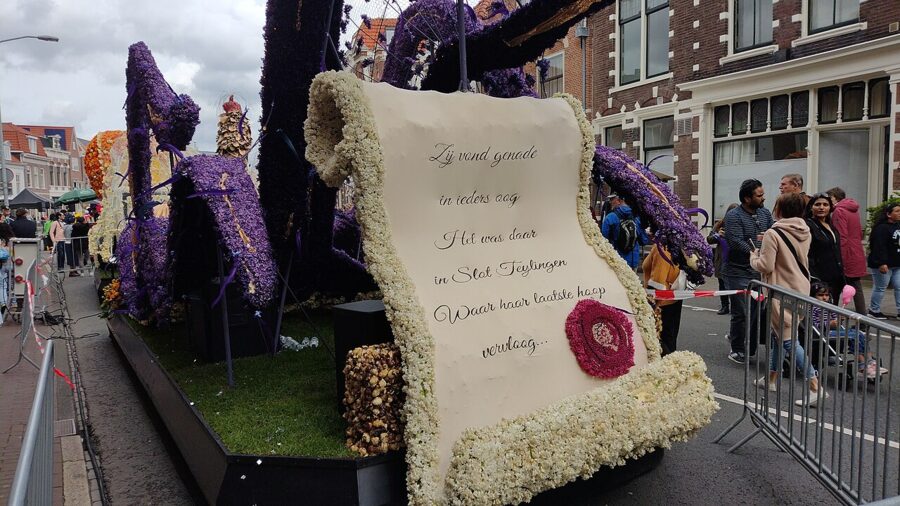
The Bloemencorso Bollenstreek is the region’s flower parade, and it has run every spring since 1947. On corso Saturday, 17 April 2027, a procession of floats covered in hyacinths and other spring flowers rolls 42 kilometers from Noordwijk to Haarlem by way of Voorhout, Sassenheim, Lisse and Hillegom, with marching bands in between. It passes Keukenhof on the road along the main entrance.
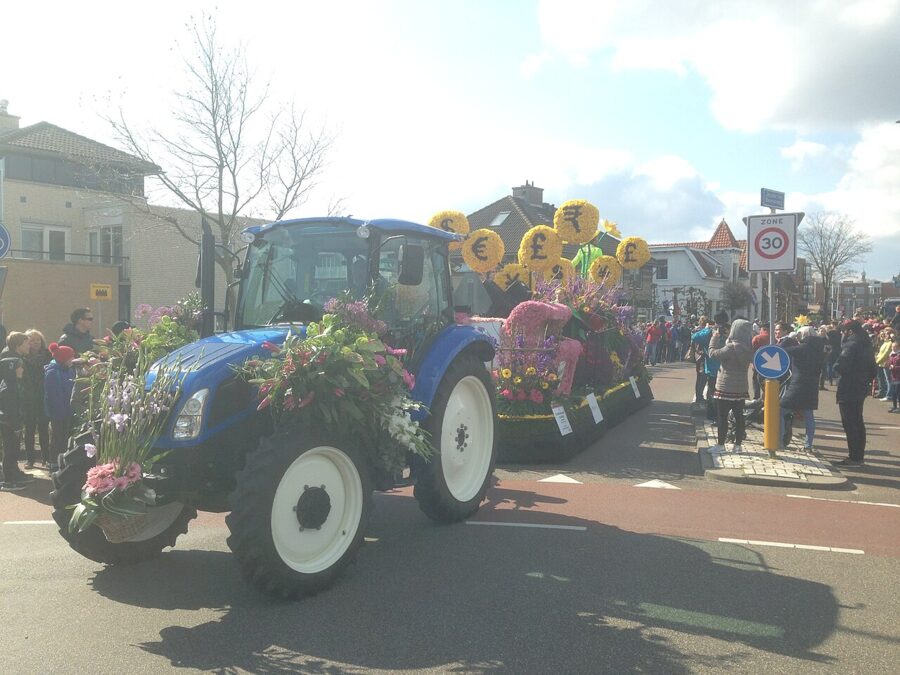

The parade is only the peak of a week. The corso’s 2027 program has the floats being covered with flowers on 14, 15 and 16 April, a low-stimulus run without music on 16 April, and an illuminated evening parade through Noordwijkerhout on Friday 16 April. After arriving in Haarlem on Saturday evening, the floats stand on display in the city on Sunday 18 April before they leave again in the late afternoon.
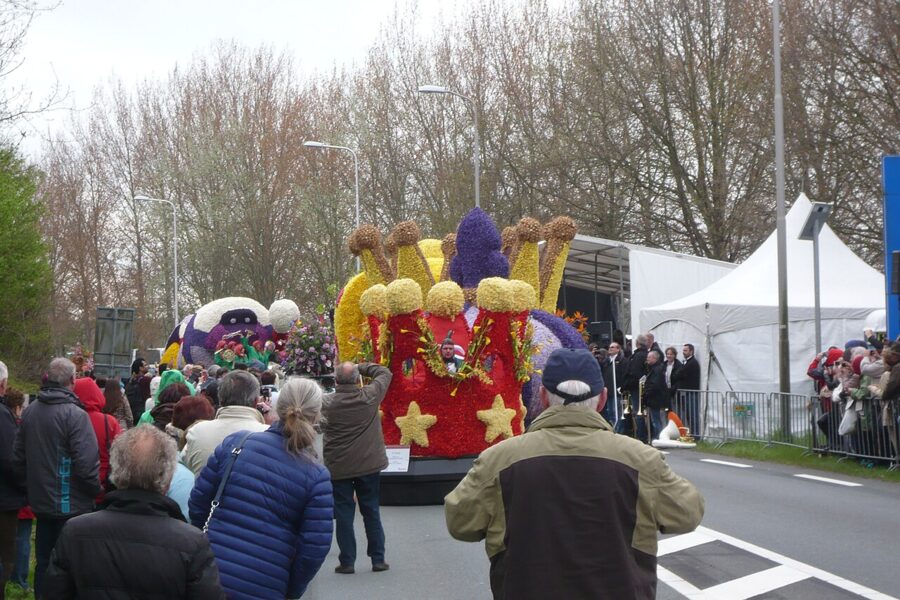

Whether to combine the parade with Keukenhof is a real choice. The ticket shop sells arrival slots on 17 April only up to noon, and the road past the entrance closes while the parade goes by, so you either arrive early and stay late or watch the floats somewhere else on the route. If you have only one day for flowers, I would pick a different day for the garden and give corso Saturday to the parade, on a free stretch of verge in Sassenheim or Hillegom rather than at the busy Keukenhof end.

Crowds, food, dogs and wheelchairs
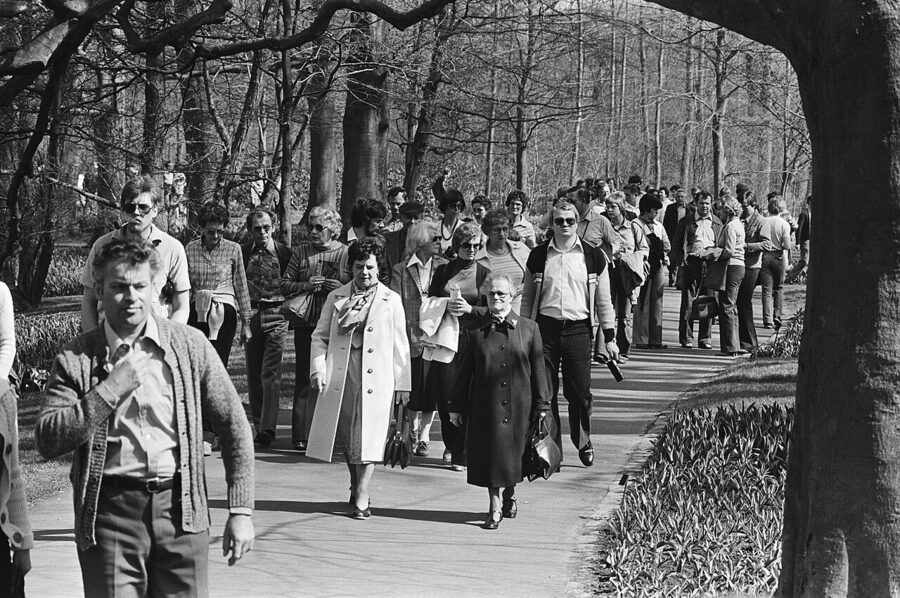
Keukenhof draws more than 1.4 million people in its eight weeks, and about four in five of them come from abroad. The busiest days are predictable: Easter (28 and 29 March 2027), the weekends in April, corso weekend and King’s Day on 27 April. The quietest hours are predictable too, the first hour after opening and the late afternoon.

Food. You may bring your own food and drink into the garden and eat it on the lawns, just not inside the restaurants. There are cafés and food stalls across the park, but the queues build from midday, so a sandwich in your bag is the smart move. Eat early or late, the same as with everything else here.
Dogs. Dogs are allowed in Keukenhof on a lead, but not inside the pavilions or restaurants, so a dog effectively keeps one of you outside every time it rains. The estate around the castle also welcomes dogs on a lead.
Wheelchairs and buggies. The paths are wide and mostly flat, and the park is easy going in a wheelchair or with a pushchair. You can reserve one of Keukenhof’s wheelchairs for €5 when you book your ticket; there are not many, so book it with the entry rather than on the day. Wheelchairs, walkers and buggies are allowed in the park, and bicycles are not.
Bulbs to take home. Keukenhof has shops selling bulbs, though spring is the wrong season to buy a tulip bulb for planting. If you are flying to the United States, Canada or Britain, the certificate rules for bulbs are the same as at the Bloemenmarkt in Amsterdam: check for the official sticker before you pay.
A Keukenhof day, planned
Book an arrival slot between 08:00 and 09:00 on a weekday in the middle of April. Take metro 52 to Europaplein or a train to Hoofddorp, and be at the bus stop early: the bus slots in Keukenhof’s shop start at 07:30. Walk straight through the entrance to the far side of the park first, while everyone else stops at the first beds by the gate.
Go up the windmill, look at the fields, and decide whether you want the whisper boat or a bike. Do the pavilions when it rains or at lunch, when the outdoor paths are fullest. By early afternoon you have seen the garden; that is the time to rent a bike for a loop through the fields, or to leave for Haarlem or Leiden and the rest of the day, and the rest of the week can go to things to do in Amsterdam.

Keep two dates in your head and the rest follows. The garden is open from 18 March to 9 May, and on Saturday 17 April the last arrivals are at noon. Book a weekday slot around the middle of April, take the bus from the RAI or Hoofddorp, and on the way out to the fields, watch for a train sliding past the old Lisse station without stopping.