

In late April 2019, researchers working for the city of Amsterdam and the Dutch bulb growers’ association walked along the Singel and bought 102 packets of tulip bulbs from 15 sellers on the Bloemenmarkt. They planted all 1,362 bulbs. Fourteen came up, and not one of them looked like the picture on its packet.
That is the number to carry in your head when you step under the first glass roof at the Koningsplein end. The Bloemenmarkt (flower market) is still a row of greenhouse-style stalls on the canal, and it has been trading on this spot since 1862. It is also, by the account of local reporters and the city’s own planners, a place many Amsterdammers now avoid.
None of that means you should skip it. It means you should know what you are looking at before you open your wallet: a souvenir street with bulbs, a few buckets of cut tulips in season, a market with roots going back four centuries, and one of the better views in the canal belt if you cross to the far quay. The bulbs are where the money goes wrong, and the season you visit decides most of it.
Contents9 parts
- What the Bloemenmarkt is now
- From growers' boats to a wall of glass
- How the flower market lost its flowers
- Buying bulbs that will actually come up
- Taking bulbs home: the rules, as of November 2026
- Hours, crowds and when to go
- Getting there
- Where Amsterdam buys its flowers instead
- Is the Bloemenmarkt worth it?


What the Bloemenmarkt is now
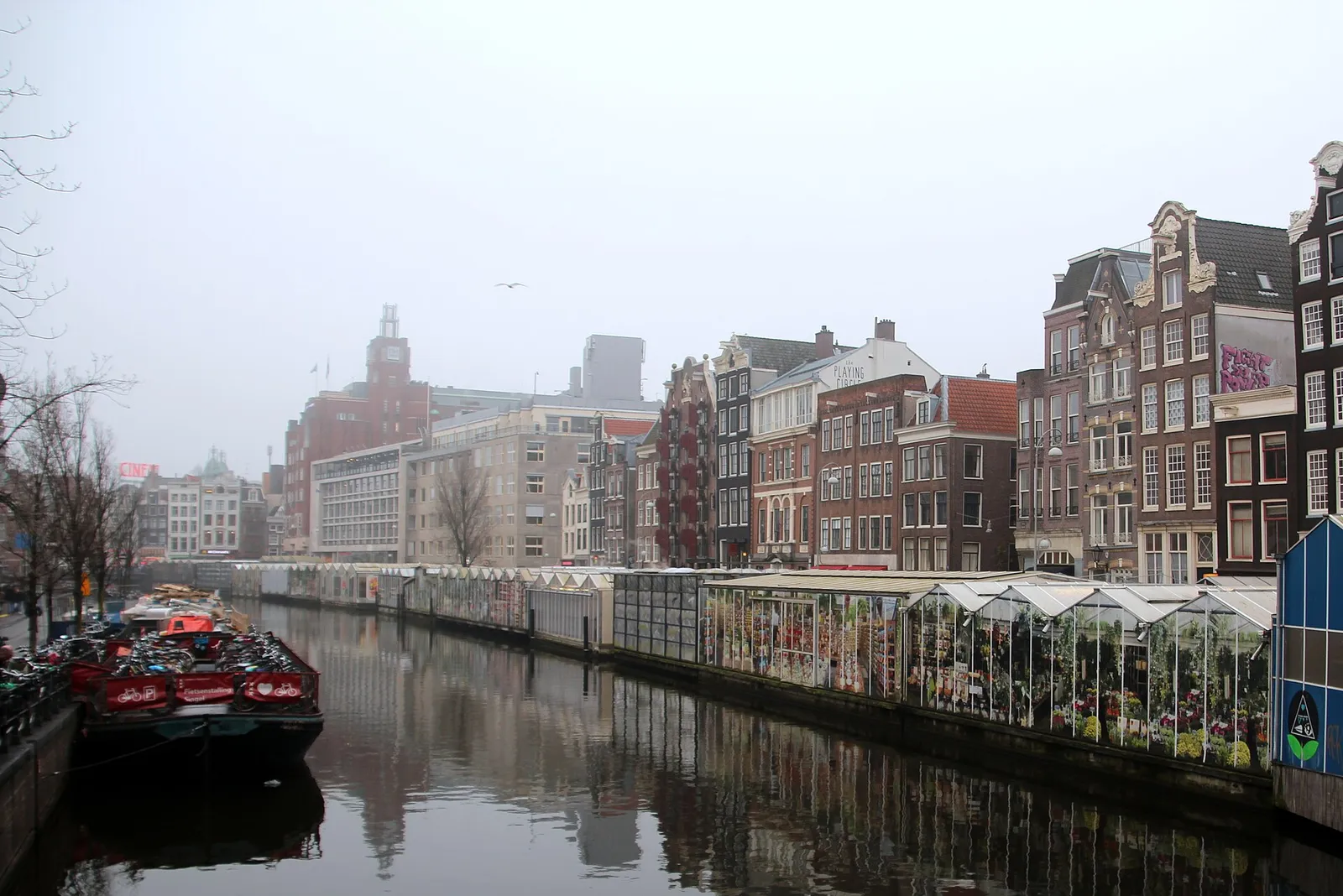
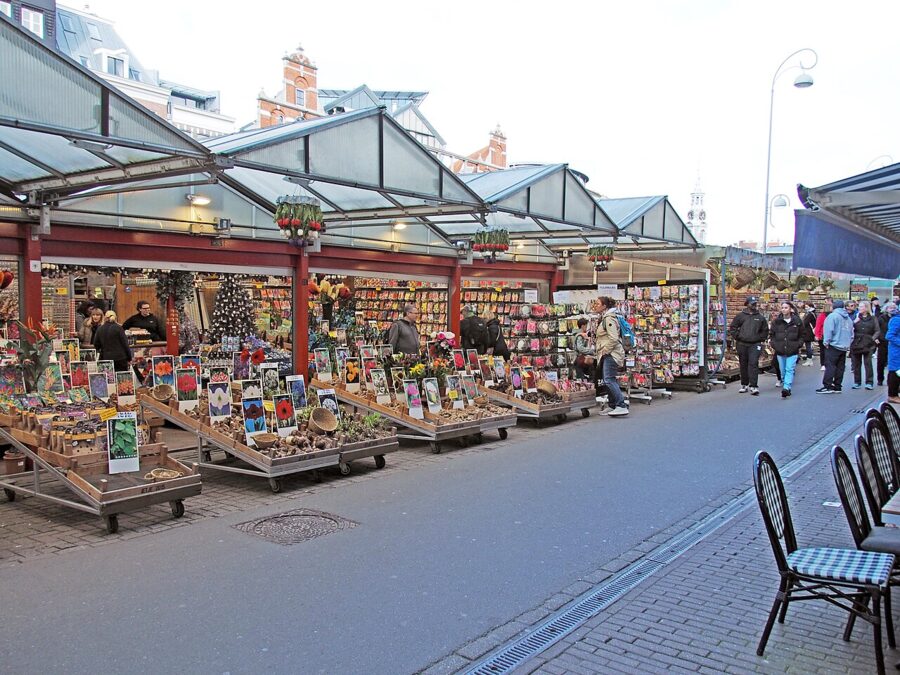
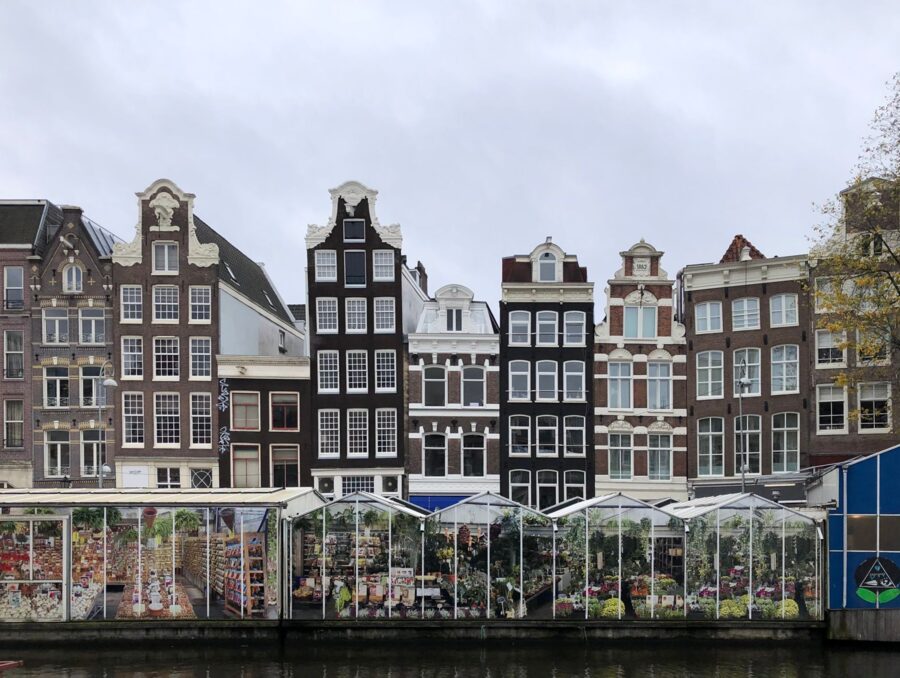
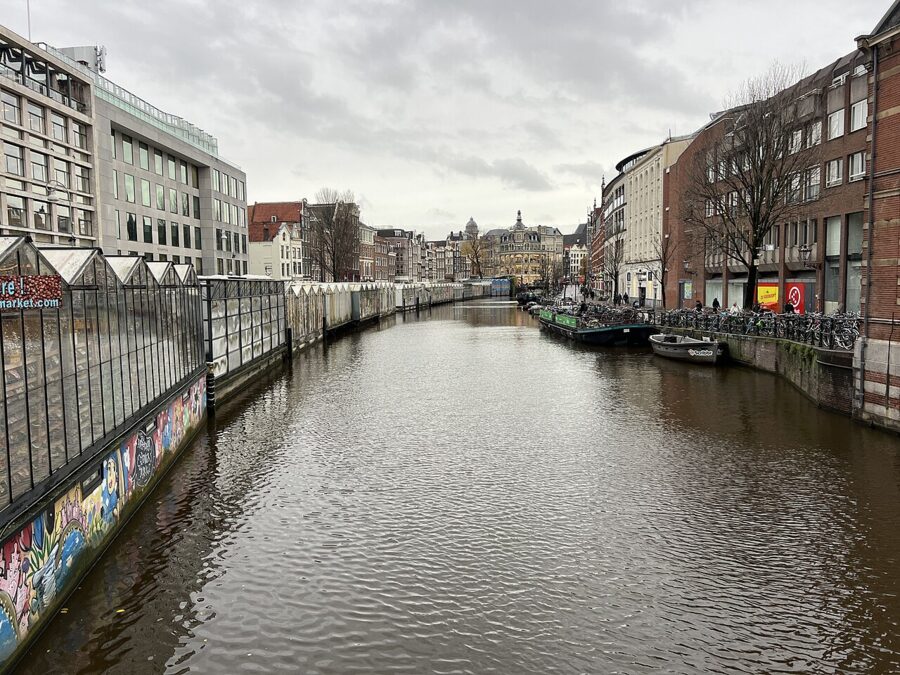
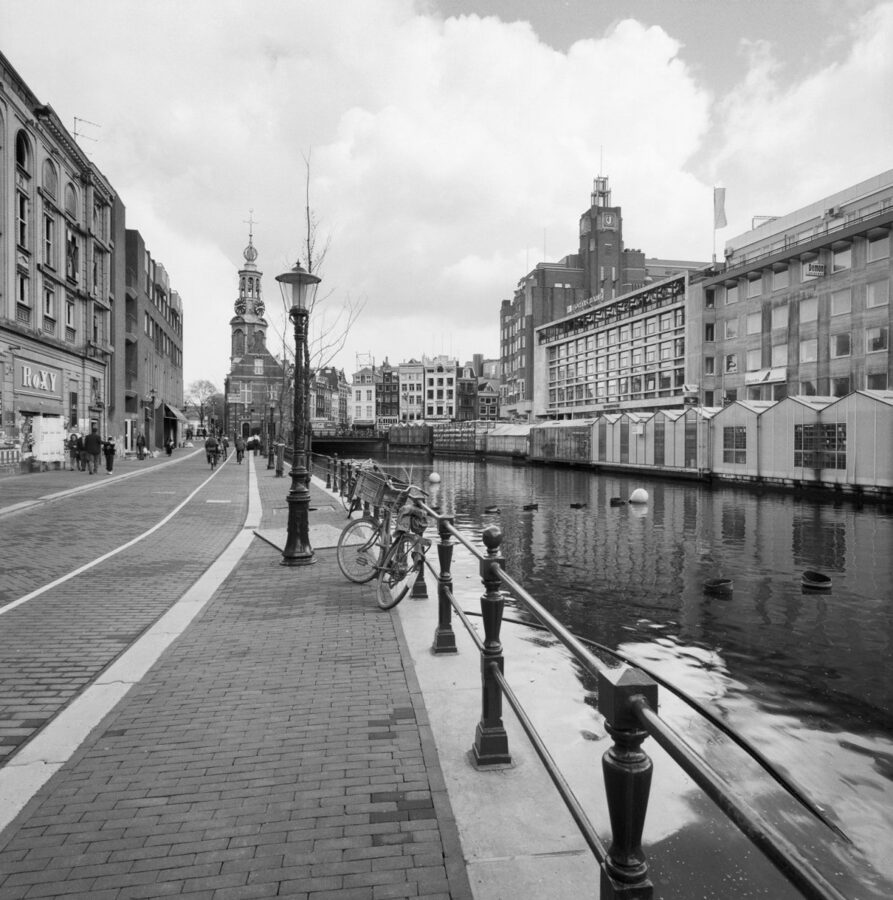
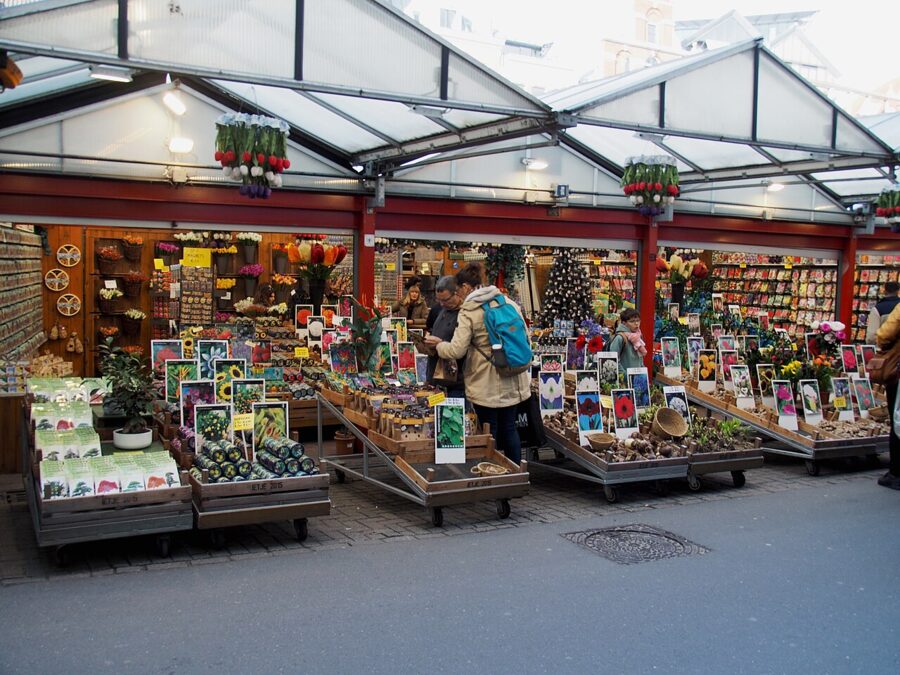
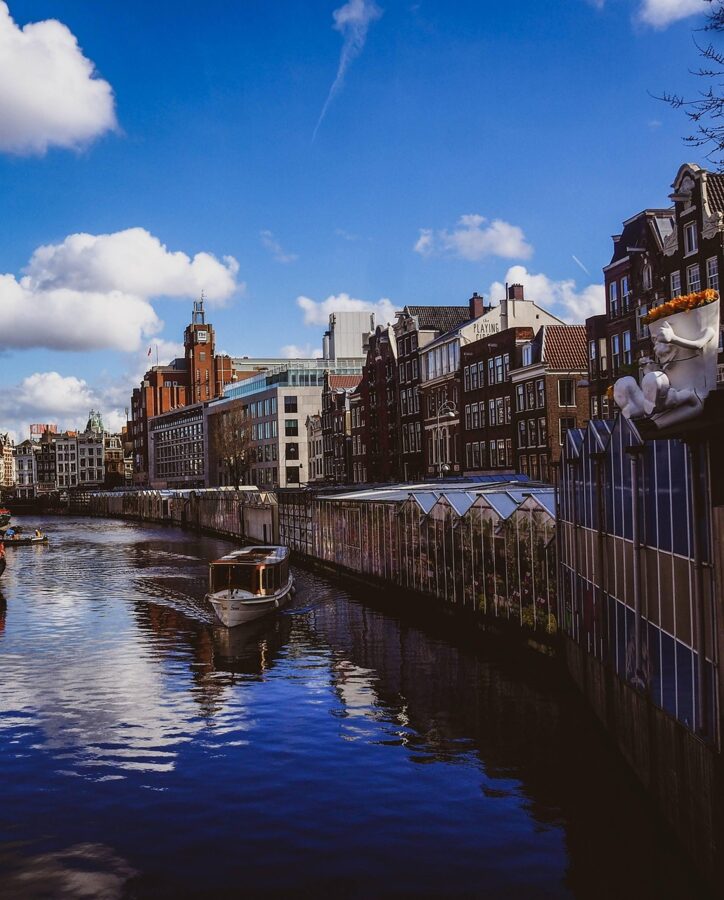
The market runs along the Singel between the Koningsplein and the Muntplein, the stretch where the city’s oldest ring canal meets the shopping streets. There are about sixteen stalls (the count given in 2019). Each one is a glass-roofed structure sitting in the canal, built on concrete tanks that replaced the old boats toward the end of the 20th century (some guides say the units now stand on piles; either way they no longer move). From the street they open like shops, and from the water they close ranks into one continuous back wall.
So “floating” is half true. The units sit in the water rather than on the quay, but nothing here has sailed anywhere in living memory. The name survives because it is a good name, and because the tour boats keep using it.

What is actually for sale
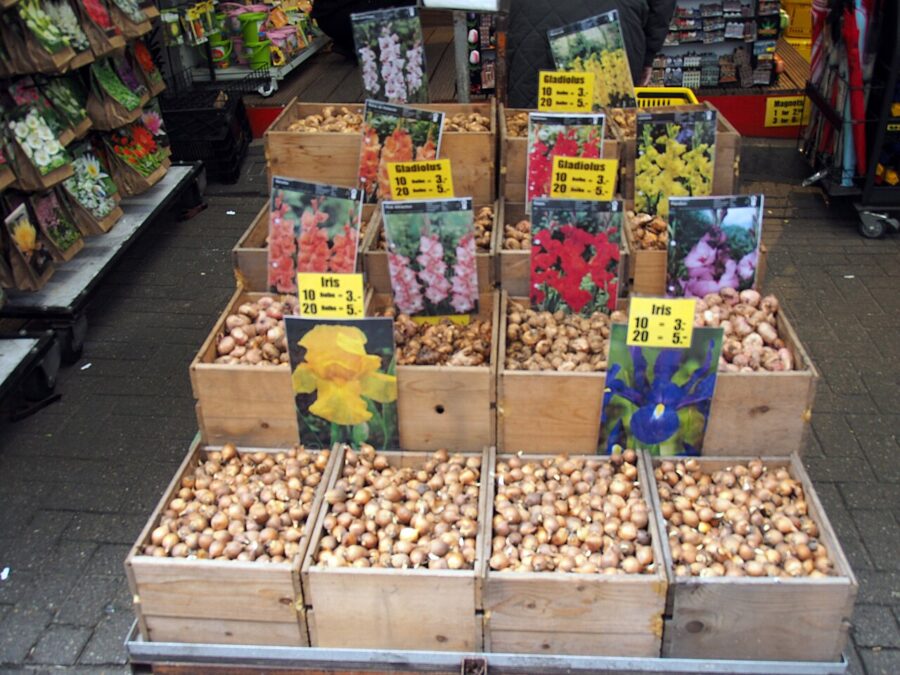
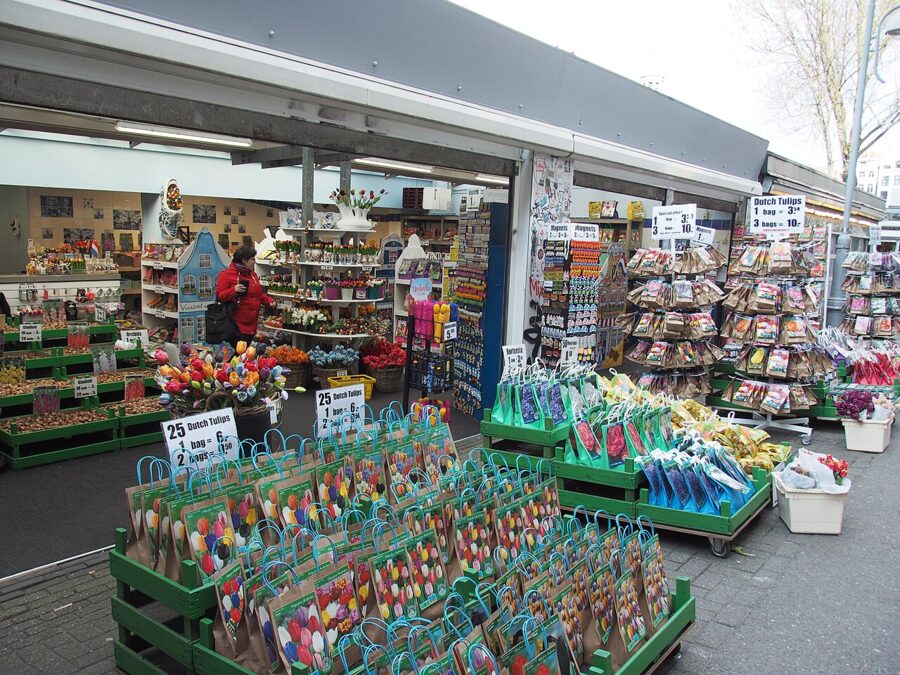
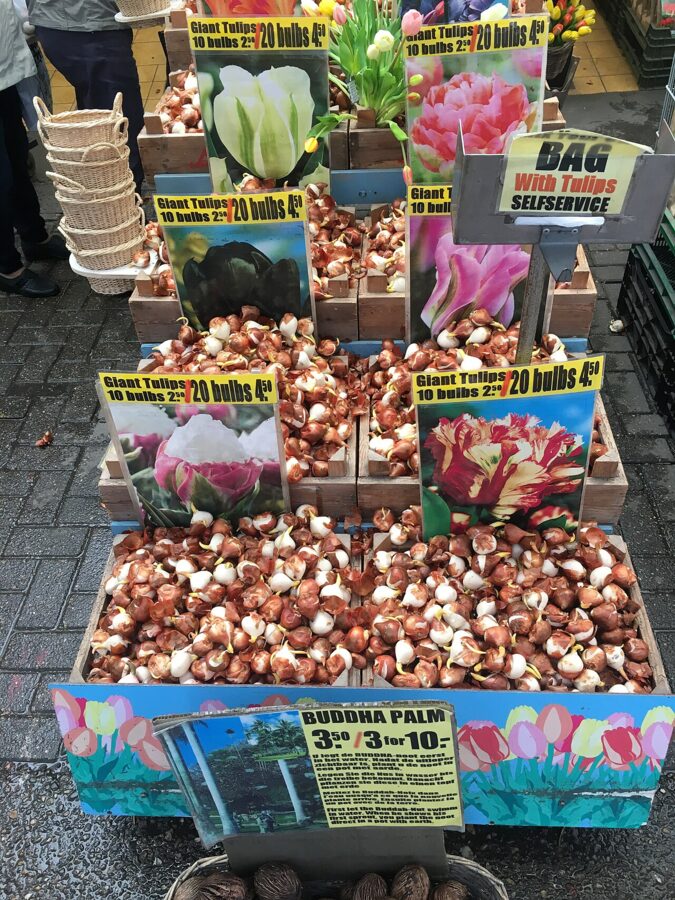
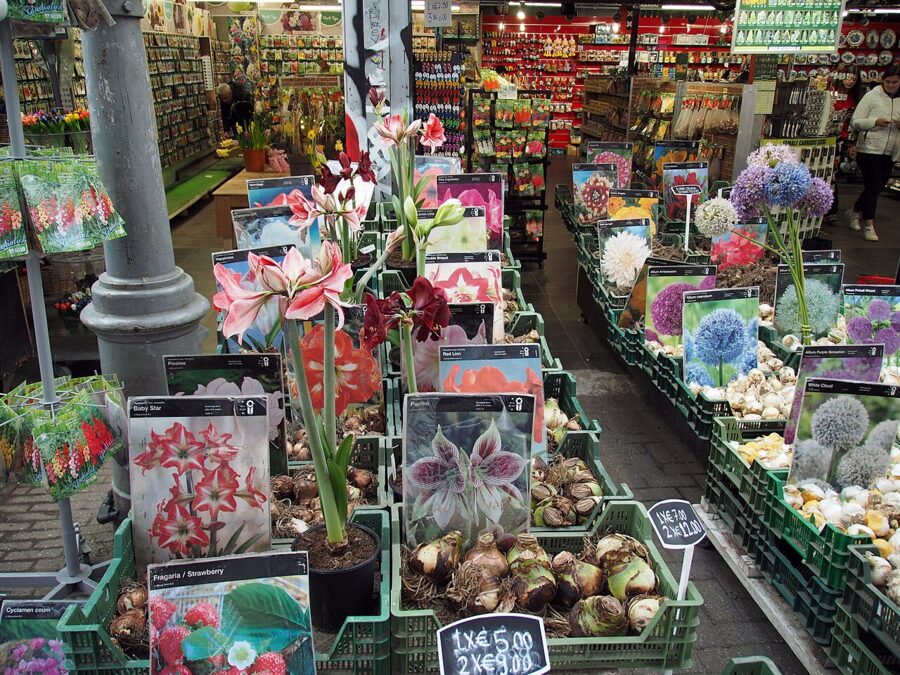
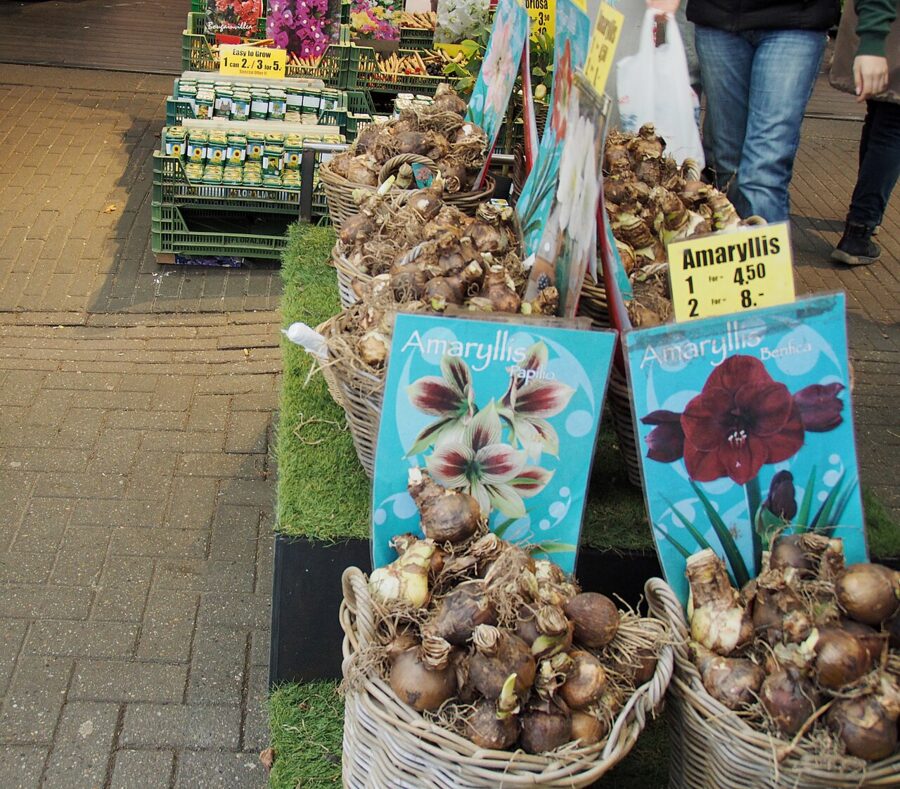
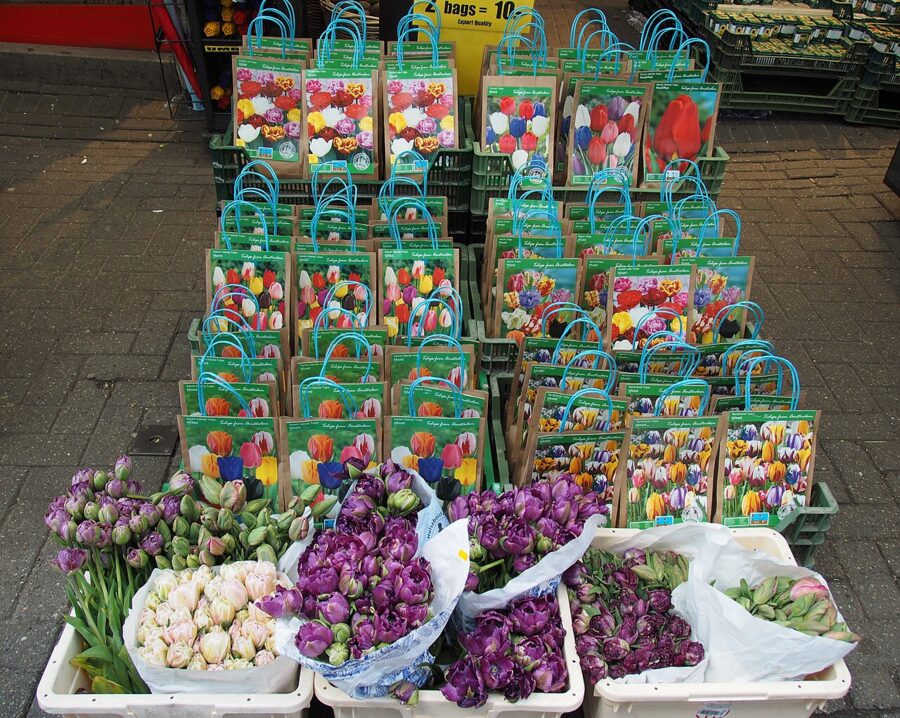
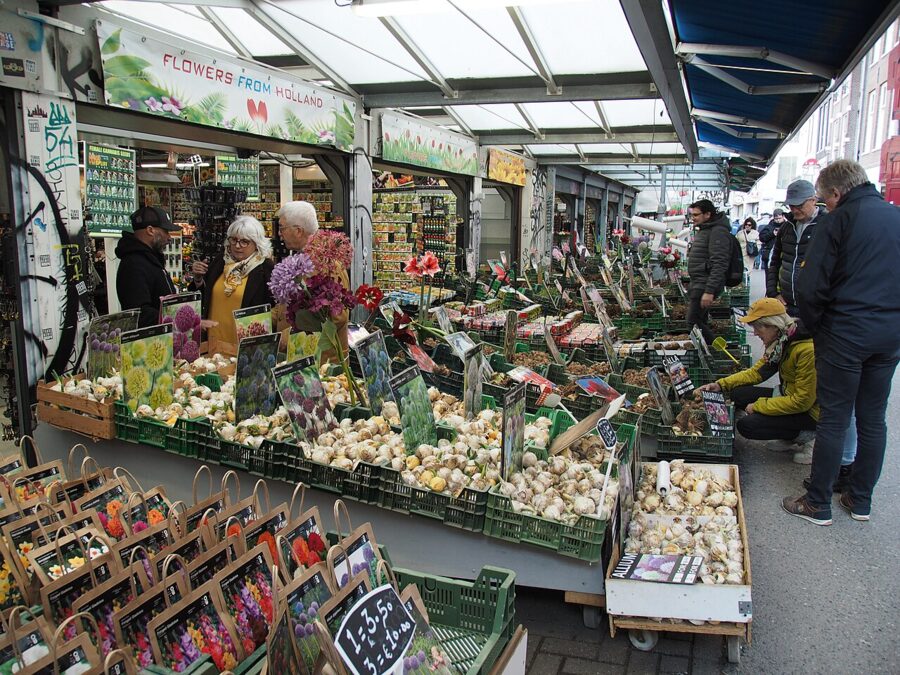
Bulbs come first. Tulips in every color the printing press can manage, plus daffodils, hyacinths, crocus, alliums and big amaryllis bulbs for growing indoors, sold loose from crates, in mesh bags and in gift packs with a photo on the front. Seeds come second, from vegetables to sunflowers.
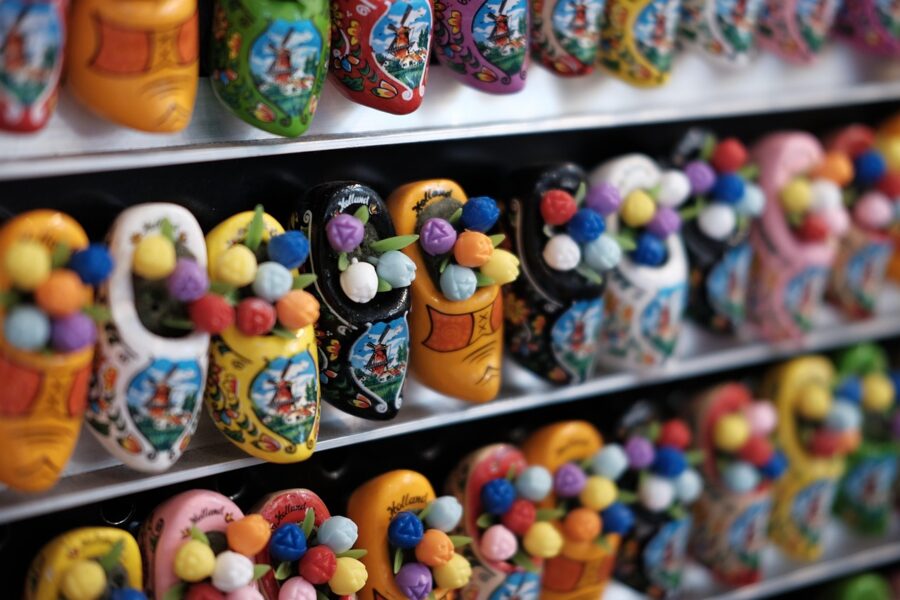
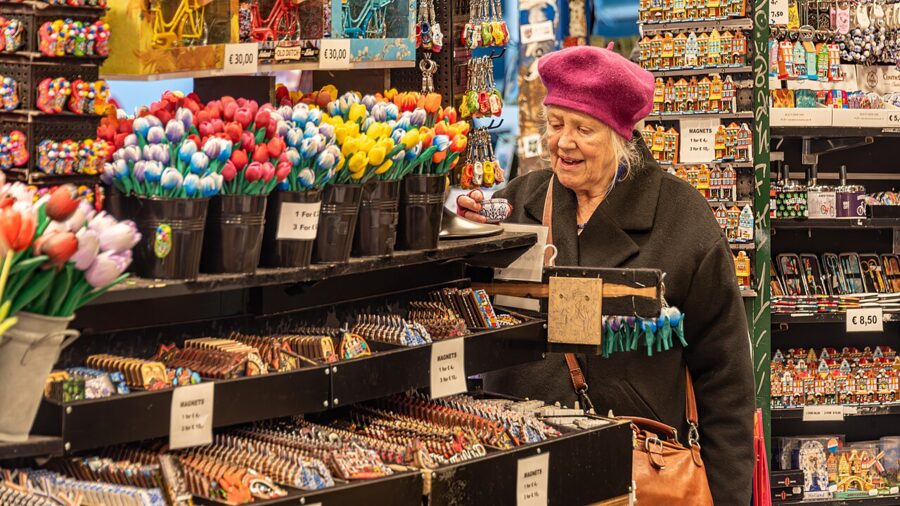
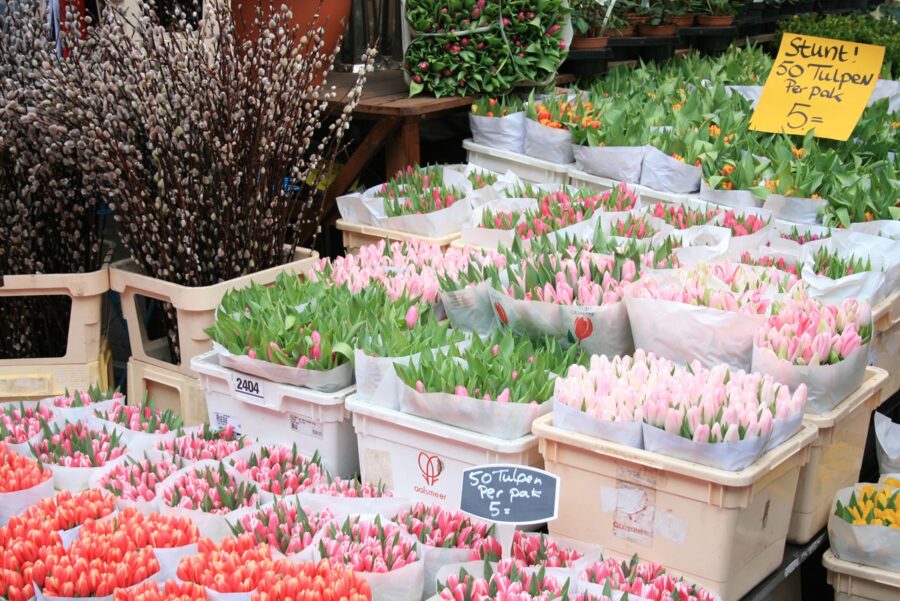
Then the souvenirs. In February 2026, AT5 described most stalls as selling keychains, mugs and magnets alongside the bulbs and artificial tulips, and that matches what you see: wooden tulips, miniature clogs, windmill fridge magnets, mugs printed with cannabis leaves. Cut flowers are now a sideline. A few stalls put out buckets of tulips in spring, but the last florist who made bouquets to order left in 2019.

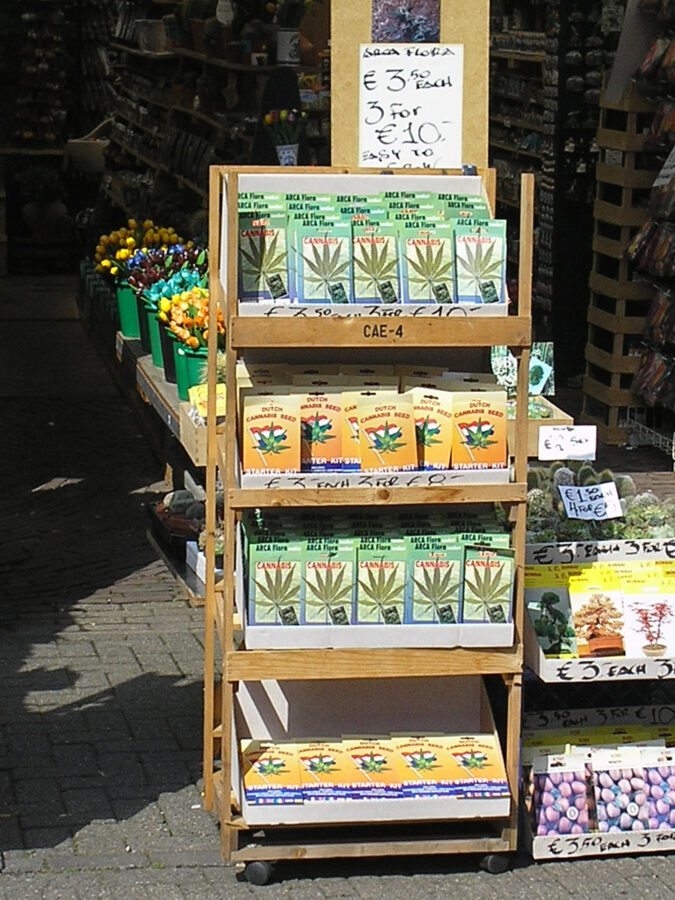
Several stalls also sell cannabis seeds and grow kits. Selling seeds is legal in the Netherlands, and the boxes sit openly next to the sunflower packets. The coffeeshops sell the finished product under the Dutch tolerance policy; the Bloemenmarkt sells the beginning of it. What your own country thinks of a packet of cannabis seeds at its border is a separate question, and not one to test with a souvenir.

On paper, souvenirs were limited to a quarter of each stall’s range, the official figure reported in 2019. That year the departing florist told the newspaper Trouw that nobody ever enforced it, and you can count the magnets yourself.

From growers’ boats to a wall of glass
The market is older than its address. Its first recorded mention, in 1620, puts it on the Sint-Luciënwal along the Nieuwezijds Voorburgwal, the canal that ran past the city hall (now the Royal Palace on the Dam). It stayed there for more than two centuries. In 1862 it moved to its present stretch of the Singel, where it was known as the tree and plant market (bomen- en plantenmarkt).
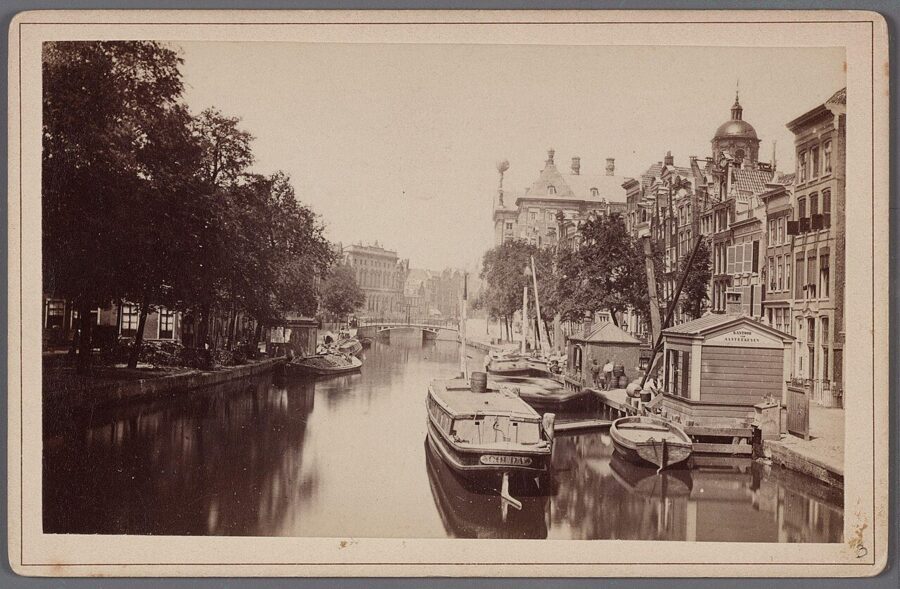
Trade came by water. Growers loaded trees, shrubs and plants at their nurseries outside the city and brought them in daily by boat, then sold straight off the deck at the Singel quay. The customers were Amsterdammers stocking gardens, balconies and window boxes, and the stock was mostly green. Cut flowers were hardly sold here until the 1960s.
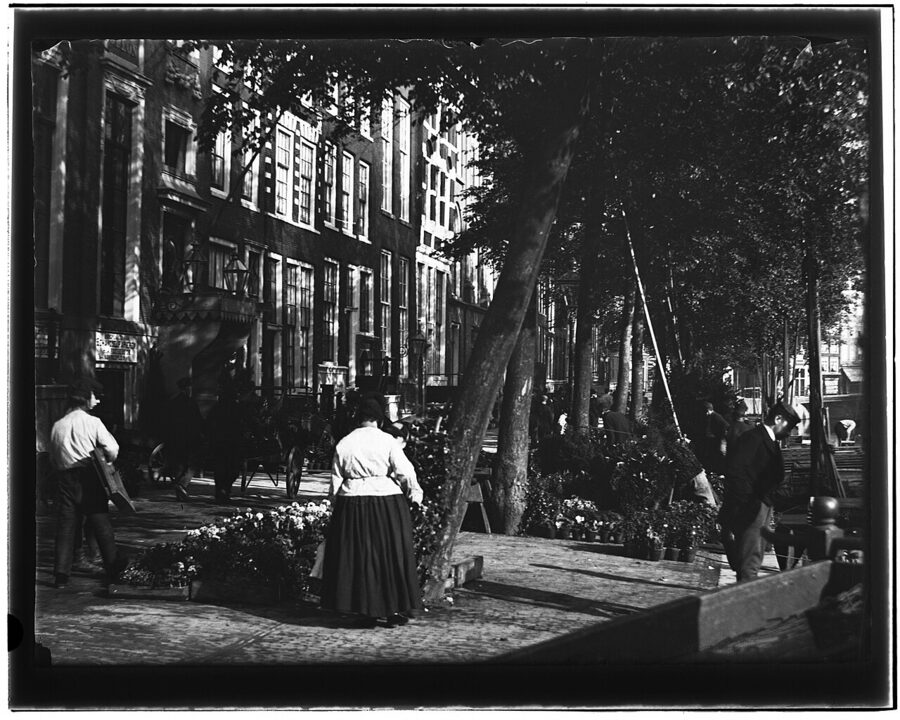
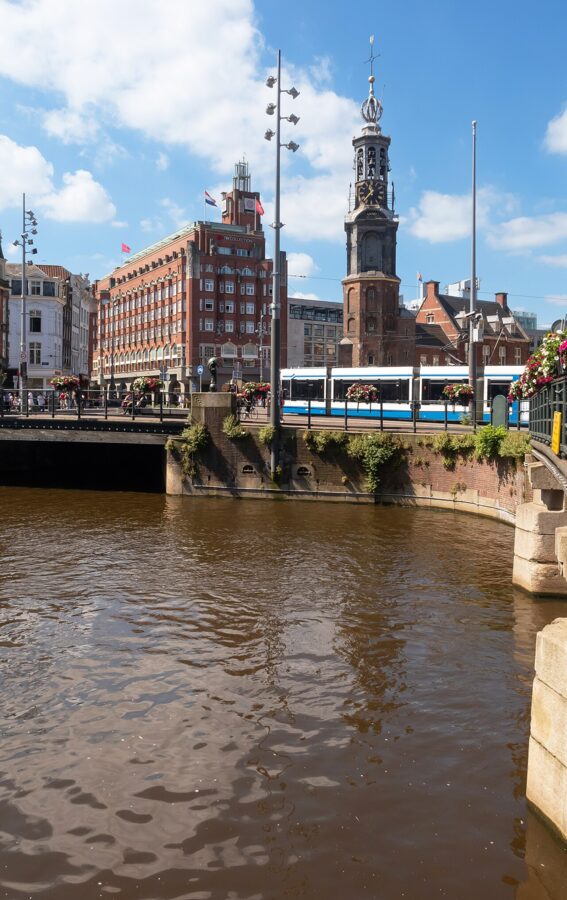
The Singel was once the city’s moat, and the market’s eastern end still has a piece of the old defenses. The Munttoren grew out of the Regulierspoort, a city gate built in 1480–1487. When the gate burned in 1618 only the western tower was rebuilt, and Hendrick de Keyser gave it the octagonal top and open lantern in 1619–1620. It took its name, the Mint Tower, in the disaster year of 1672, when Amsterdam briefly struck coins here.
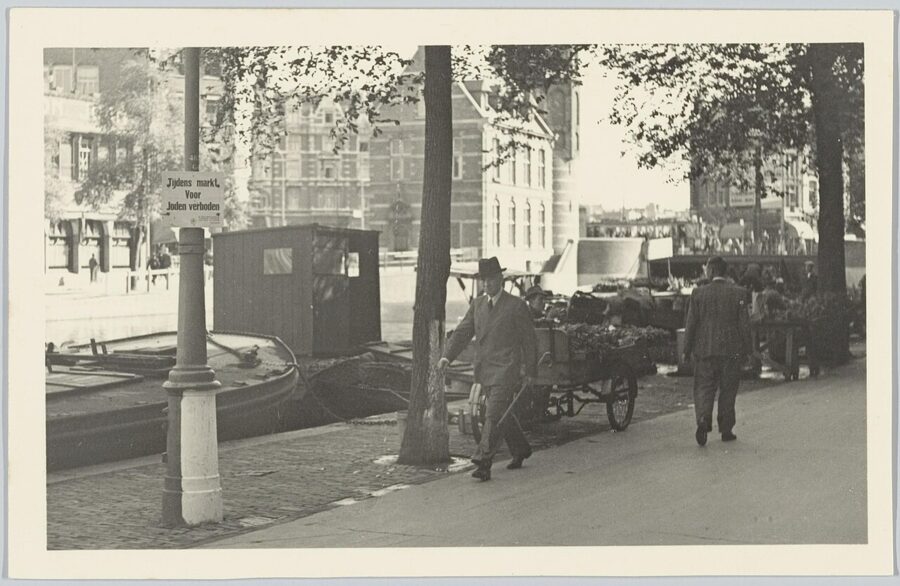
The market’s history has its dark page too. Under the German occupation, a sign went up at the Singel market reading “Tijdens markt voor Joden verboden”: closed to Jews during market hours. The city archive dates the photograph of it to about May 1941.
After the war, the market settled into the rhythm the photo archives record: plants for the balcony in spring, tulips at Easter, Christmas trees in December. Photographers from the national press agency Anefo came back winter after winter in the 1950s, 1960s and 1970s to record the first trees arriving, and in 1981 they photographed the Easter crush.
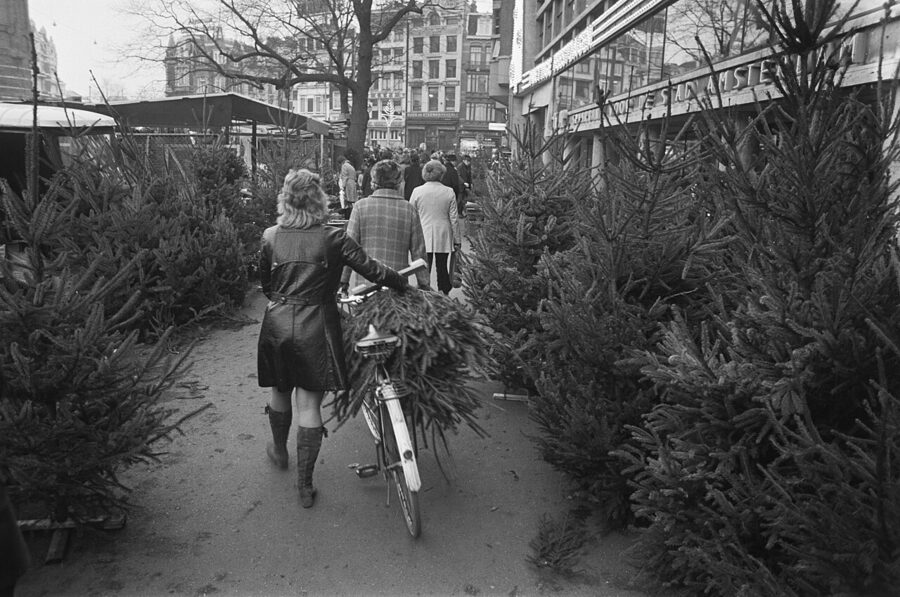
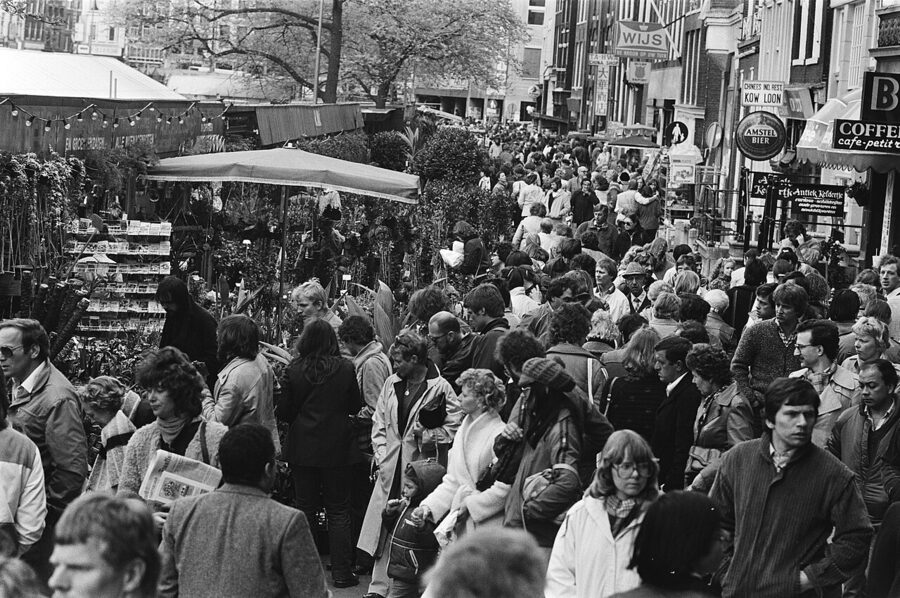
Toward the end of the 20th century the boats gave way to the concrete tanks and greenhouse-like superstructures you see today. That fixed the market in place and turned its water side into the closed front that heritage groups now complain about. It also made the stalls into permanent shops, and permanent shops on a busy route between the Dam and the Leidseplein follow the money.

How the flower market lost its flowers
The turning point has a name and a date. Timmer’s Bloemen en Planten had traded on the Singel since 1943, and Michael Saarloos had worked there for 45 years, first as an employee and then as owner. In April 2019 he sold up. He told AT5 that the Bloemenmarkt was no longer a flower market: the crowds bought bulbs, not bouquets, and his regular customers had stopped coming because walking the market was no longer pleasant.
Six months later came the bulb test. The city and the growers’ association, the KAVB, had bought those 1,362 bulbs in late April and planted them; about one percent flowered. A comparison batch from roadside stalls on the N208 in Lisse, in the middle of the bulb district, did only slightly better at two percent. The city, the KAVB and Lisse asked the consumer authority ACM to investigate, and the KAVB’s director called the sellers conmen.

Then the city tried to fix it. Around the turn of 2022 it surveyed residents about what the market should become. The heritage society Vereniging Vrienden van de Amsterdamse Binnenstad answered in March 2022 with a blunt piece titled, roughly, “just abolish the Bloemenmarkt”: buy out the stallholders, take the structures off the water, and give the Singel back its trees and its open view of the Munttoren.
Neither happened. In February 2026 the city dropped its renewal plan for the market. A spokesperson for the responsible alderman, Mbarki, told AT5 there was not enough money to buy out all the stallholders, which any new direction required.
The wish to change the market is still there, the city says, but not the means. As of late 2026, the Bloemenmarkt is what it was in 2019, only with the plan to change it officially shelved.

Buying bulbs that will actually come up
The 2019 test does not mean every bulb on the Singel is dead. It means the market sells bulbs all year to people who will not be around to complain in April, and the timing does most of the damage. After the test, the KAVB published plain advice for buyers, and the growers’ guidance boils down to a few rules.
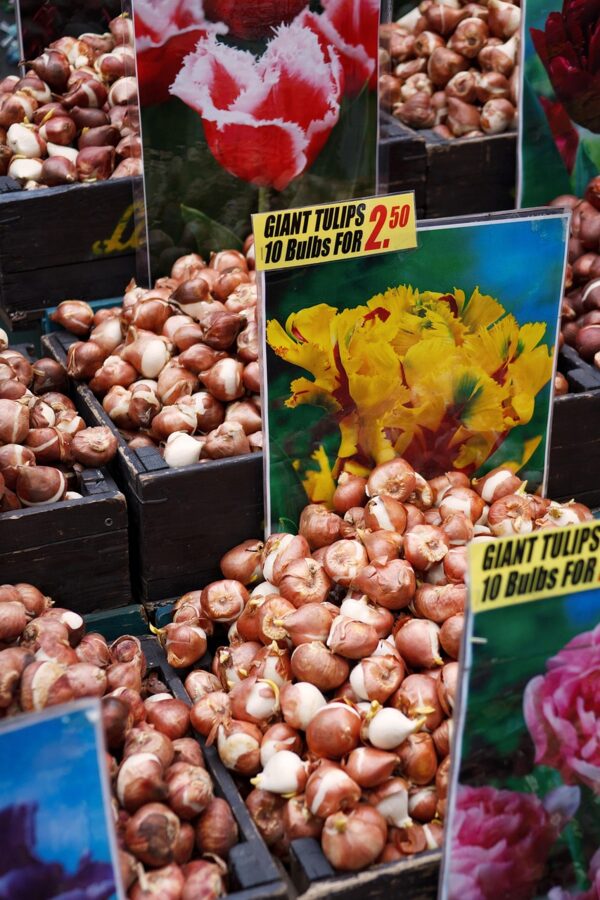
- Buy tulips in autumn. Tulip bulbs are lifted in summer and should be sold and planted before January. They need a cold winter in the ground and flower in March or April.
- Do not buy tulip bulbs between January and summer. By then they should already be in someone’s garden. A tulip bulb sold in April is a leftover.
- Squeeze before you pay. A healthy bulb is hard and whole. Soft spots, mold or rot mean no.
- Ignore blue and black. There are no blue or black tulips. Purple and very dark purple exist; a packet showing a sky-blue tulip is showing you a fiction.
- In spring, buy cut tulips instead. Most people cannot store bulbs in the cool, controlled conditions growers use, and the KAVB itself suggests cut flowers as the better buy.
My own rule is simpler. If you are in Amsterdam between September and early December, buy a modest bag of named tulips or daffodils, feel every bulb, and plant them as soon as you are home. If you are here between January and summer, buy a bunch of cut tulips for your room and leave the bulbs on the rack.


Taking bulbs home: the rules, as of November 2026
Bulbs are plants for planting, and the US, Canada and Britain all want proof that what you carry in is free of pests and soil. That proof is a phytosanitary certificate issued by the Dutch plant protection service, the NVWA, or for small retail packs a certificate sticker from the same service. A printed “export approved” line on a gift bag is not the same thing. Here is where each set of rules stands.
United States
The USDA’s traveler page on plants and bulbs, last updated in February 2026, lets you bring 12 or fewer bare-rooted plants with no soil or growing medium, and they need a phytosanitary certificate from the plant protection service of the country you are leaving. Thirteen or more need an APHIS import permit and must be shipped through a USDA plant inspection station rather than carried in your bag. Plants in soil are refused outright.
Declare everything to Customs and Border Protection on arrival. The USDA is explicit that you face no penalty for declared items, even if the officer refuses them. Whether an officer counts each bulb in a certified 25-bulb bag against that limit of 12 is the question to put to APHIS before you buy in bulk; I would not assume the answer.

Canada
Canada has the clearest system, worked out jointly with the US and the Netherlands. Under CFIA directive D-01-02, small retail packages of dry flower bulbs for personal use can come in with a Dutch “Certificate of Inspection” sticker instead of a full certificate. The sticker must be an original, it is valid for six weeks from the date of issue, and it must carry the genus and species of the bulbs; mixed packs need a second content sticker listing every name.
The packs must travel with you as baggage, be free of soil and be declared on arrival. Loose bulbs, bulk lots, mail and courier parcels and anything in the onion genus (Allium) fall outside the sticker scheme and under the full import rules.
United Kingdom
Since Brexit, Great Britain treats the Netherlands like any other foreign country for plant health. GOV.UK’s rules for plants brought from the EU require a phytosanitary certificate for plants for planting, which covers bulbs, even for your own garden. Over 2 kg of plants for planting, you must also arrange an inspection by a plant health inspector when you arrive, and the EU plant passport is no longer recognized. These rules cover England, Scotland and Wales.
Travelers from EU countries
If you live in another EU country, bulbs bought for your own garden move freely in your luggage, with no certificate needed. This is the one group of buyers for whom the cheapest loose bulbs on the Singel cause no customs trouble at all, provided they were bought in the right season.
| Going home to | What the bulbs need (as of November 2026) |
|---|---|
| United States | Phytosanitary certificate from the Dutch NVWA; 12 or fewer bare-rooted plants in baggage, permit and inspection station above that; no soil; declare to CBP |
| Canada | Original NVWA Certificate of Inspection sticker on a small retail pack, with botanical names, issued within six weeks; no soil, no Allium; declare |
| Great Britain | Phytosanitary certificate for plants for planting; inspection required above 2 kg |
| Other EU countries | No certificate for your own garden |
The practical upshot: at the stall, ask to see the official sticker or certificate on the pack, not a printed claim, and check the date on it. If the seller cannot show you one, buy the bulbs only if you live in the EU.
Hours, crowds and when to go
The Bloemenmarkt is open every day and costs nothing to walk. There is no single official timetable, because each stall sets its own hours.
On weekdays and Saturdays most open around 09:00 or 09:30 and close at 17:30. On Sunday they open later, around 11:00 or 11:30, and close at about 17:30. Guides disagree on the exact Sunday start, so treat these as rough shop hours rather than a fixed opening time.

- Time of day: morning, before the walking tours reach it. From midday the narrow pavement between the stalls and the traffic fills up.
- Season for bulbs: September to early December, when the tulip bulbs on sale are this year’s crop and still in their planting window.
- Season for color: March to May, when cut tulips appear in buckets and the bulb fields outside the city are in flower.
- After closing: the shutters come down and the stretch goes dead. The city itself describes the empty market street in the evening as feeling unsafe; it is simply not a place to linger after dark.
- How long: fifteen to twenty minutes end to end at a browsing pace, longer if you are choosing bulbs with care.
Getting there
The market fills the Singel between the Koningsplein at its western end and the Muntplein, with the Munttoren, at its eastern end. It sits on the natural walking line from the Dam to the Leidseplein, and you can reach it on foot from the Dam in a few minutes along the Kalverstraat or the Rokin.
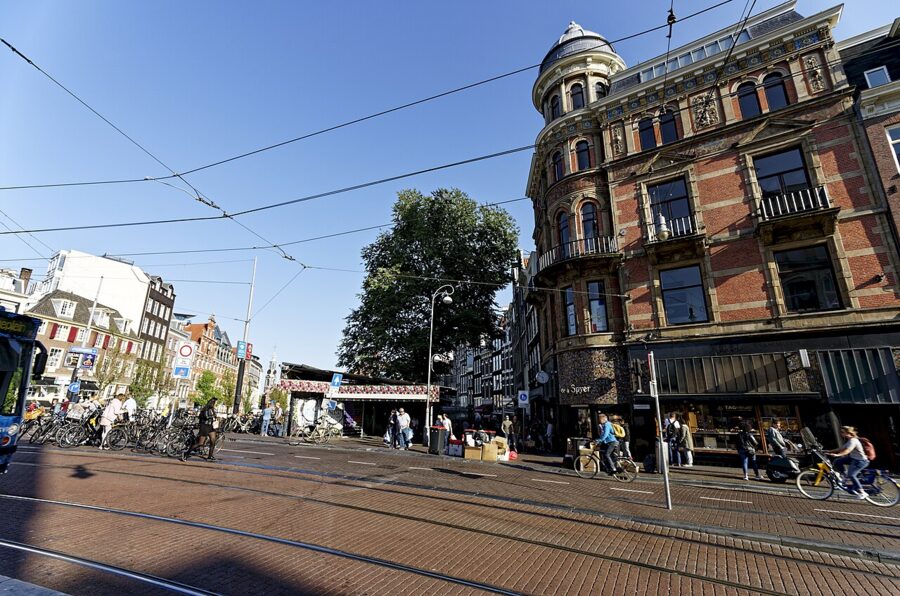

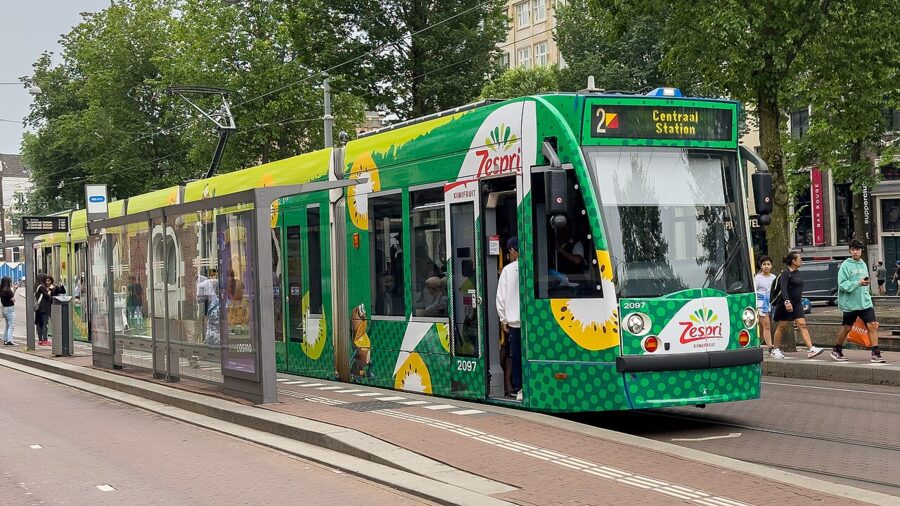

- Tram to the Koningsplein end: trams 2, 17 and 24 stop at Koningsplein, all running direct from Centraal Station via the Dam (GVB network as of November 2026). The same three lines continue to the Leidseplein.
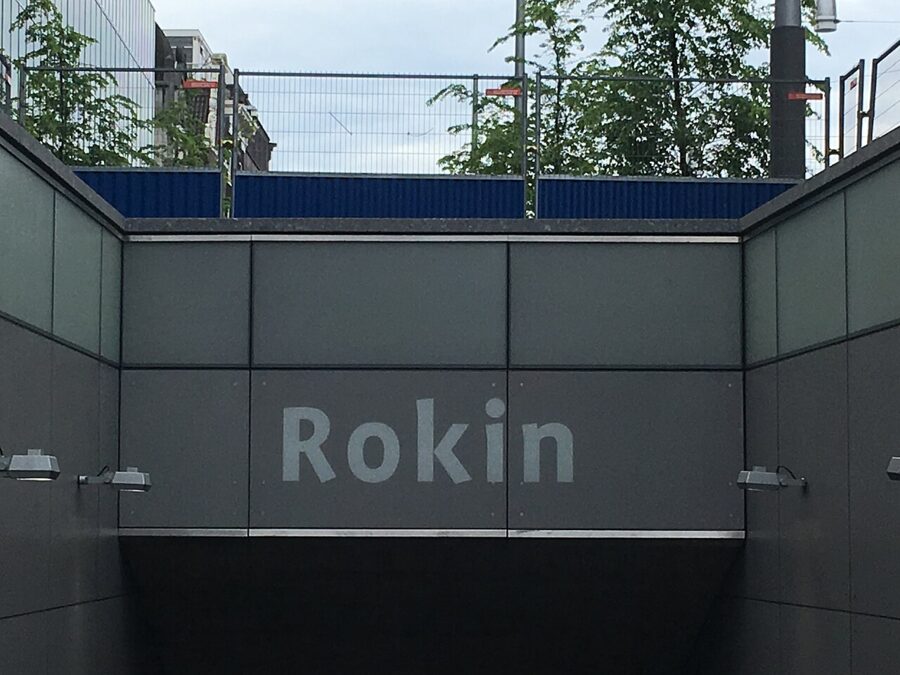
- Tram to the Munttoren end: trams 4 and 14 stop at Rokin, a short walk from the Muntplein. Tram 4 continues to the Rembrandtplein, and tram 14 runs on past the Rembrandtplein to the Waterlooplein flea market.
- Metro: metro 52 (Noord/Zuidlijn) stops at Rokin, one stop from Centraal Station.
- By boat: canal cruises that use this stretch of the Singel pass the back of the glasshouses, which is the only way to see the “floating” side up close.

For the best view of the market, cross the Singel at either end and walk the far quay. From there you see the whole row of glasshouses sitting on the water with the Munttoren behind, which is the picture on every postcard and the one thing the street side cannot give you.

Where Amsterdam buys its flowers instead
When Amsterdammers want plants or a bunch of flowers for the table, they go elsewhere. Even the heritage society that wants the Bloemenmarkt abolished points them to the same two places: the Amstelveld and the Noordermarkt.
Amstelveld, Mondays. On the square by the wooden Amstelkerk, between the Prinsengracht and the Reguliersgracht, a plant and flower market sets up every Monday with 27 stalls of potted plants, herbs and cut flowers. It is under fifteen minutes on foot from the Munttoren by way of the Rembrandtplein, and it is the closest thing in the center to what the Singel market used to be.
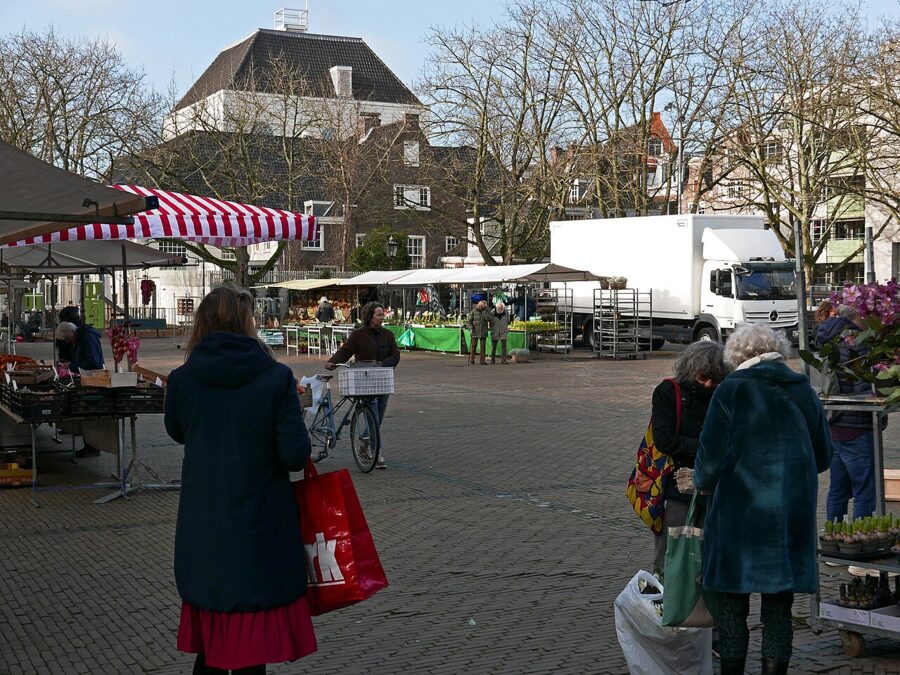
Noordermarkt, Saturdays. The Saturday farmers’ market around the Noorderkerk in the Jordaan has flower and plant stalls among the cheese and bread. On Mondays the same square around the church becomes a flea market, so the Noordermarkt rewards two visits in one week.
Dappermarkt and Haarlemmerplein. The Dappermarkt in Oost, open Monday to Saturday with about 200 stalls, sells plants alongside its produce and clothing, and the small Wednesday market on the Haarlemmerplein carries flowers with its mostly organic groceries.
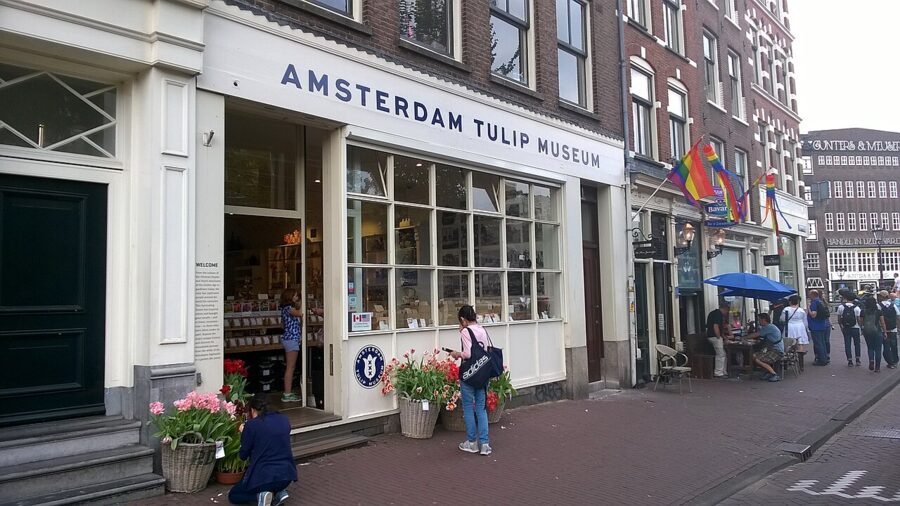
The Amsterdam Tulip Museum. For the story of the tulip rather than the flower itself, the Amsterdam Tulip Museum at Prinsengracht 116 opens daily from 10:00 to 18:00 (closed 27 April and 25 December) and charges €7 (about US$8) for adults, €4 for students and €15 for a family, as of November 2026. Its shop sells bulbs too; its website does not say whether they carry export stickers, so ask before you buy.

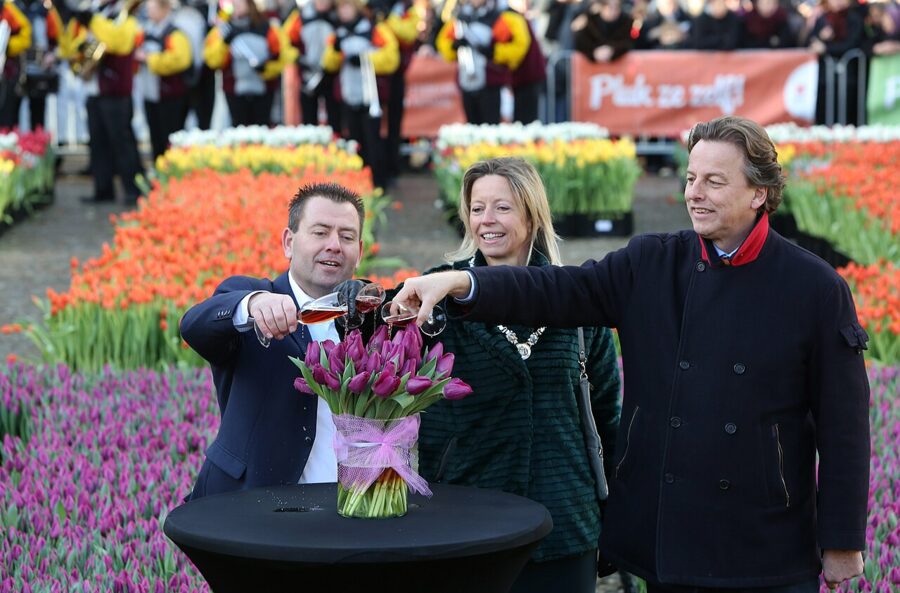
National Tulip Day. On Saturday 16 January 2027, Dutch tulip growers open a picking garden of about 200,000 tulips on the Museumplein, by the Rijksmuseum, from 13:00 to 17:00. Entry is free and each person can pick up to ten stems; I amsterdam’s listing for National Tulip Day warns of an average queue of about an hour. Earlier editions were held on the Dam.

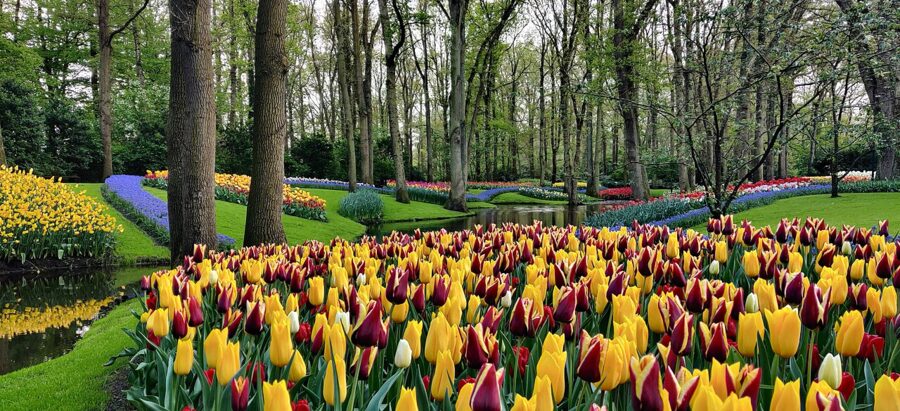
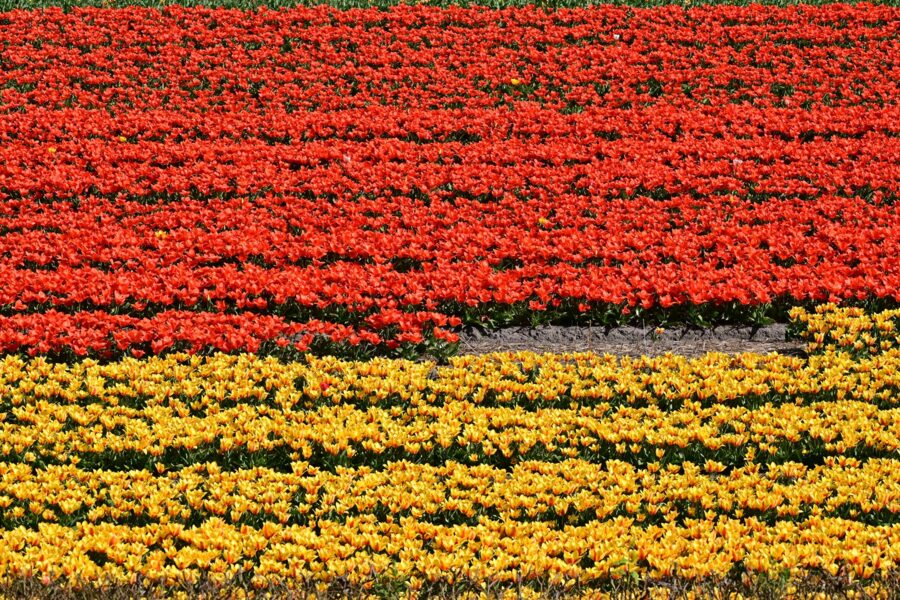
Keukenhof and the bulb fields. If you want tulips in the ground, Keukenhof in Lisse opens for the 2027 season from 18 March to 9 May, daily 08:00–19:00 with last entry at 18:15, and the commercial bulb fields around Lisse flower in the same weeks.
Is the Bloemenmarkt worth it?
Worth a walk, not a trip. If you are going between the Dam and the Leidseplein anyway, take the Singel instead of the Kalverstraat, start at the Koningsplein, walk the stalls east until the Munttoren stops you, and then cross over and look back at the glasshouses from the far quay. Give it twenty minutes and no more than a few euros of your money unless the season is right.
Buy bulbs here only between September and early December, only firm ones, and only with the official sticker if you are flying to North America or Britain. In spring, buy a bunch of cut tulips and leave the bulb bags hanging. Do that, and you will not join the 1,348 bulbs from 2019 that never came up.