
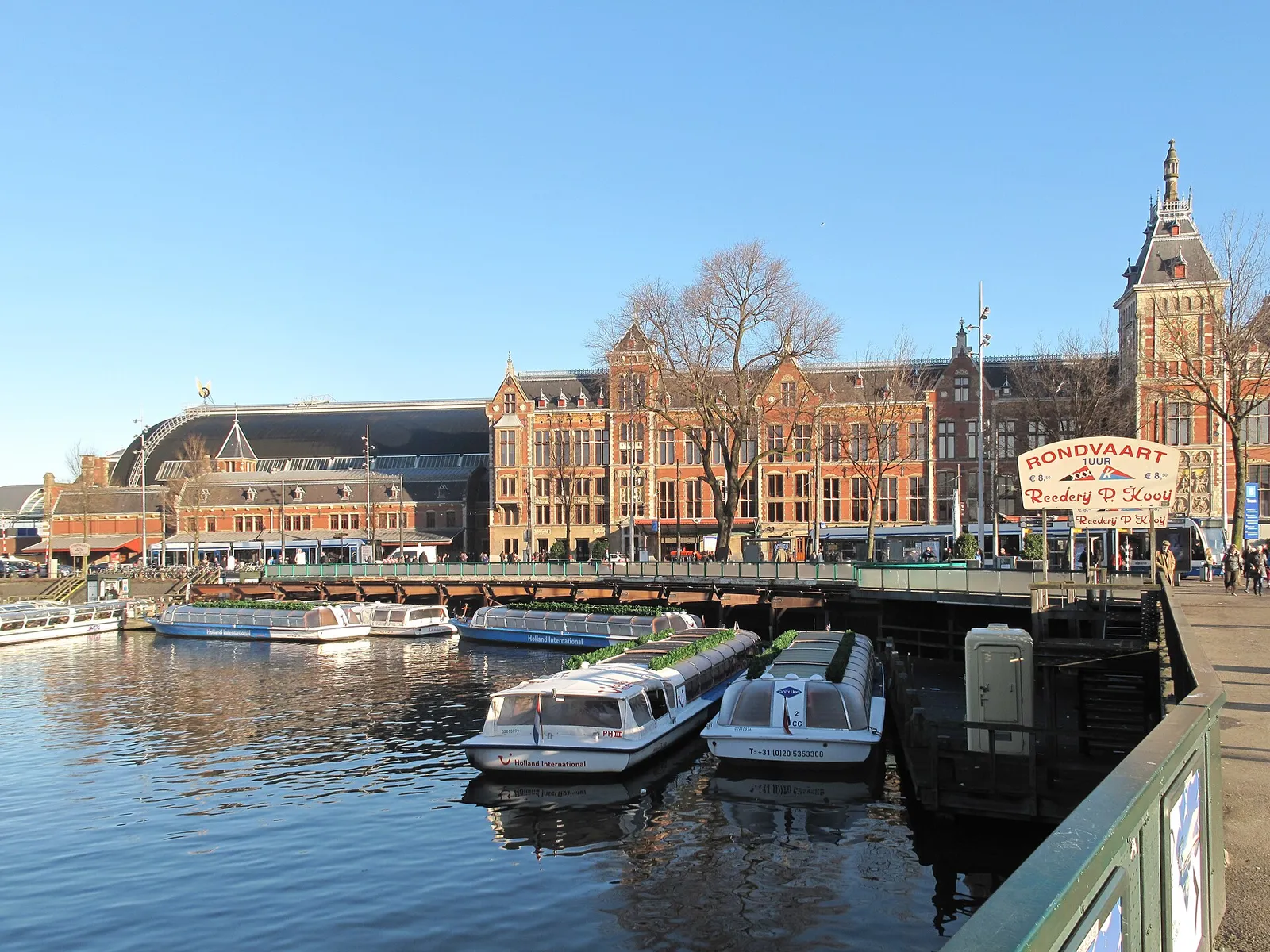

The LOVERS pier sits on the Prins Hendrikkade, across the road from Centraal Station, and the one-hour boat that leaves it costs €13.50 (about US$16) when you book online. Stromma’s boat from Damrak pier 5, two minutes away, costs the same, takes the same hour and follows much the same loop through the canal ring. So the company is the smallest decision you will make about a canal cruise in Amsterdam. The boat is the big one.
A long glass-roofed boat with an audio guide in 19 languages is one kind of hour. An open electric boat with twelve people and a skipper who talks is another. The boat you steer yourself, ducking under a bridge while a 20-meter cruise boat waits behind you, is a third, and it needs no license. Each suits a different reader, and the wrong pick is the most common way to waste the hour.
It is also late November. The Amsterdam Light Festival switched on on 26 November, the city adds a levy of €2.70 (about US$3) per passenger to most tickets, and the departures after half past four are the ones to book ahead.
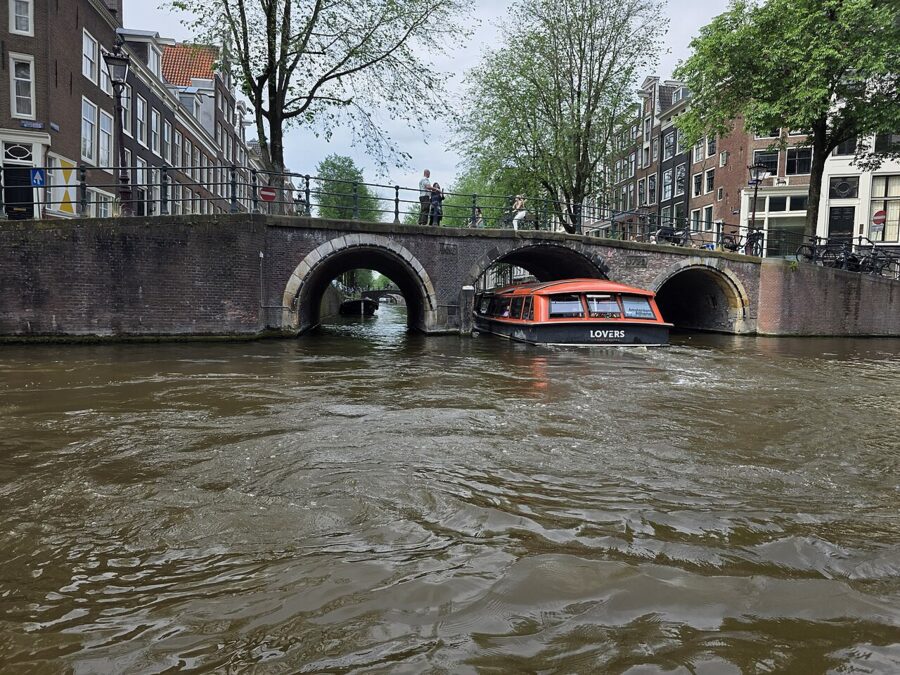

Two things hold for every kind of boat. Routes are not guaranteed, because the canals are working water: bridges open, delivery barges block corners, and both LOVERS and Stromma warn that a sight on the brochure may not appear on your trip. And the boats are now quiet. Passenger boats in the city have had to sail emission-free since 1 January 2025, so the diesel thrum that once came with a canal tour has gone.


Which boat for which reader
Start with the weather and the company you keep, not the price. The spread between the cheapest glass boat and a decent open boat is about €8 (about US$9), and between an open boat and a self-drive boat split six ways it is nothing at all. Prices below are the lowest online fares listed as of 27 November 2026.
| Kind of boat | Length | From | Best for |
|---|---|---|---|
| Big glass-roofed boat with audio guide | 60–75 min | €13.50 per adult | First visit, rain, cold, children, a fixed budget |
| Open boat with skipper-guide | about 60 min | €19.40 to €21.50 per adult (about US$23 to US$25) | Dry weather, questions, smaller canals |
| Evening, drinks or dinner boat | 60 min to 2 hours | €15.50 to €89 (about US$18 to US$103) | Lit bridges, a night out |
| Hop-on hop-off boat | 24 or 48 hours | €27.50 (about US$32) | Using the boat as transport between museums |
| Self-drive electric boat | 2–4 hours | €69 per boat for up to six (about US$80) | Groups, repeat visitors, your own route |
| Pedal boat | 1 hour | €24.50 per person (about US$28) | Fun for an hour, a short stretch of canal |
The big glass boats
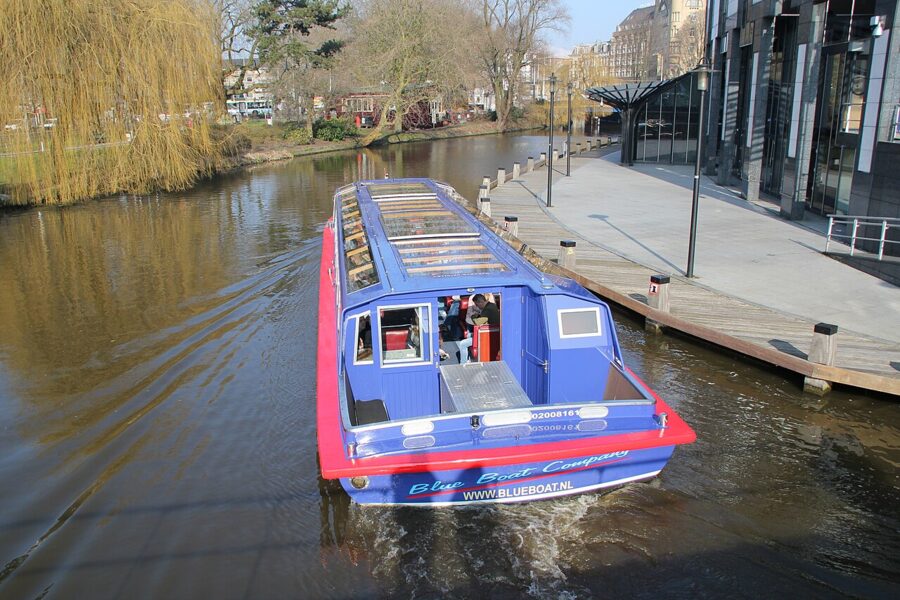
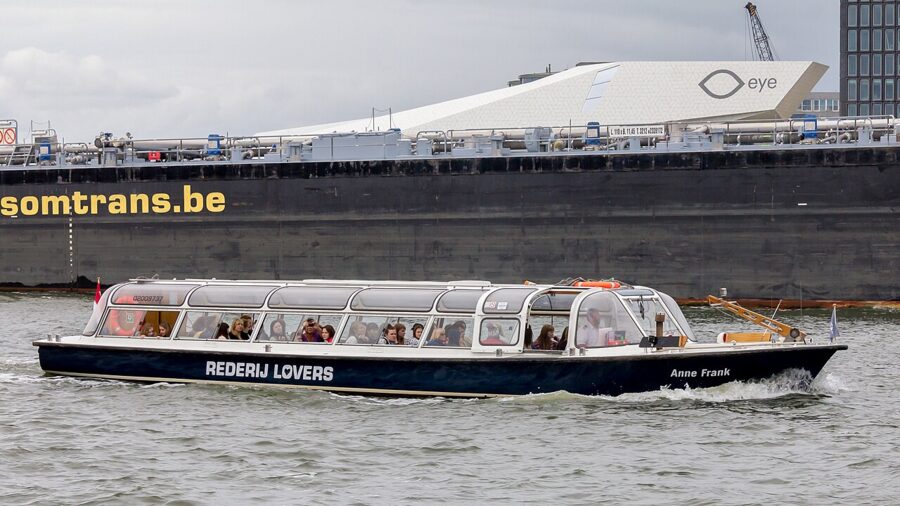
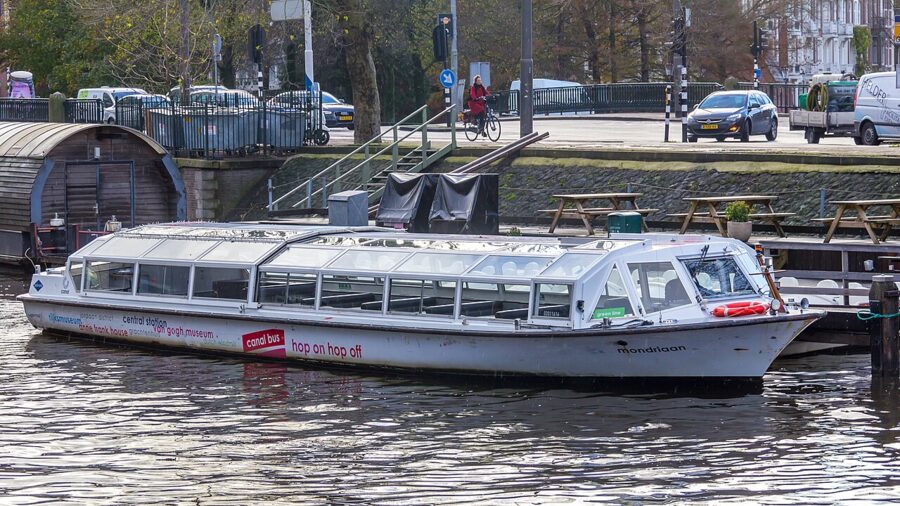
These are the long, low boats with a glass roof and windows down both sides, built to the “Amsterdam canal type” that has carried visitors here for decades. LOVERS, Stromma, Blue Boat Company and a handful of smaller firms run them from Centraal Station, the Damrak, the Rijksmuseum, Leidseplein and the Anne Frank House. You get a seat, a toilet on most boats, heating in winter and recorded commentary, either from a speaker at your seat or on your phone with your own earphones.
They are the right choice for a first visit, for anyone with small children, and for the eight months of the year when an open boat is cold. The commentary is uneven and the windows reflect, so the photographs from a glass boat are rarely your best. Sit near the open stern deck if the boat has one, and step out there when the boat turns onto the Amstel.

Open boats with a skipper-guide
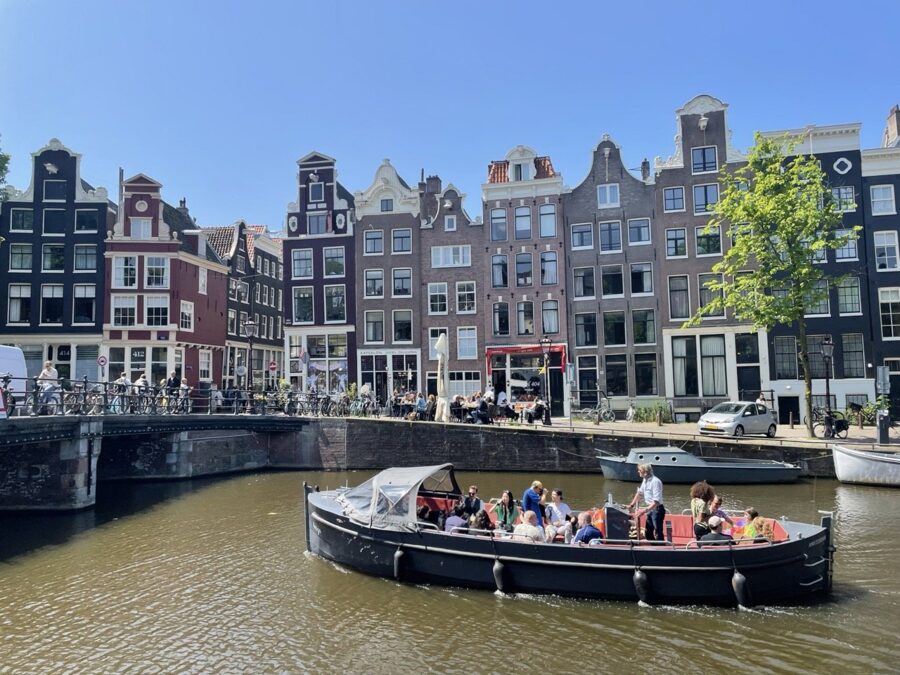
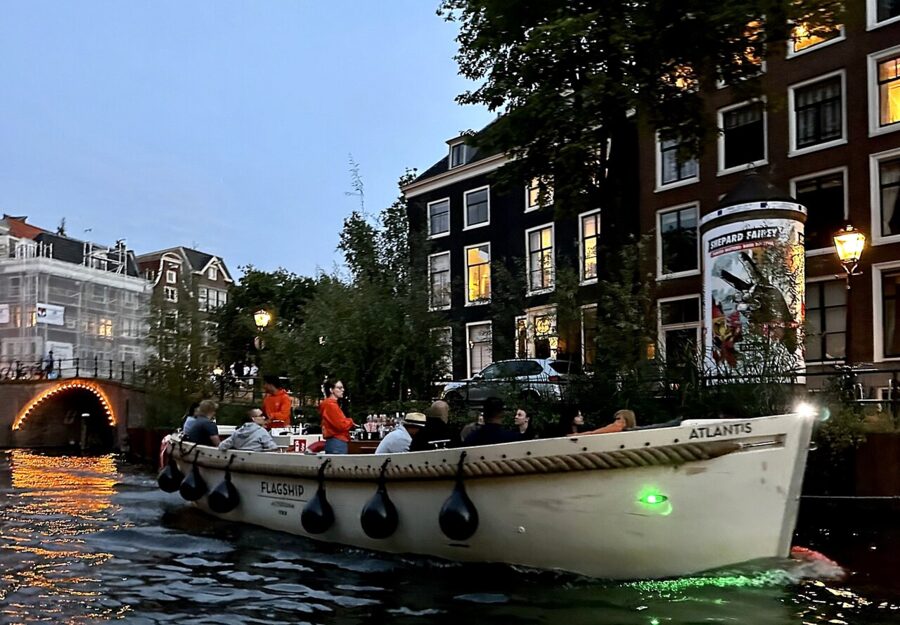
Smaller electric boats, open to the sky, with a skipper who steers and talks at the same time. Those Dam Boat Guys caps public trips at ten people, Flagship Amsterdam lists one-hour public tours from €19.40, and Stromma’s own open boat runs an hour for €21.50. Because the boats are small, they can take the narrow side canals the big boats avoid, and you can ask the skipper which café on the Prinsengracht is worth a stop.
This is the boat I would pick on any dry day between April and October. Many open-boat tickets include a drink or two, and that changes the mood as much as the route does. Some switch to covered or semi-covered boats in winter, so read the listing before you book.
Evening, drinks and dinner boats
LOVERS runs a one-hour evening cruise between 18:00 and 21:00 from €15.50, the same loop as by day with the bridges lit. Blue Boat’s evening cruise takes 90 minutes for €28 (about US$32). Then come the boats with food: wine and cheese for about 90 minutes from €35 (about US$41), a pizza cruise that leaves Centraal at 18:00 on Tuesdays, Thursdays and Saturdays, also from €35, and a four-course dinner over two hours from €89.
Stromma sells a cocktail cruise of 75 minutes from €33.50 (about US$39), which answers the Dutch search for its name. The food on these boats is the price of the view, not the reason to go. If you want to eat well and see the canals at night, take the plain evening hour and book a table on the Haarlemmerdijk afterward.
Hop-on hop-off
City Sightseeing Amsterdam runs red boats on a longer loop with stops at Centraal Station, the Passenger Terminal, Het Scheepvaartmuseum, Gassan’s diamond works, Waterlooplein, the Albert Cuyp Market, the Rijksmuseum and Westermarkt by the Anne Frank House. The hop-on hop-off boat runs from 09:30, with the last departure from the first stop at 17:45, on 24-hour or 48-hour tickets from €27.50.
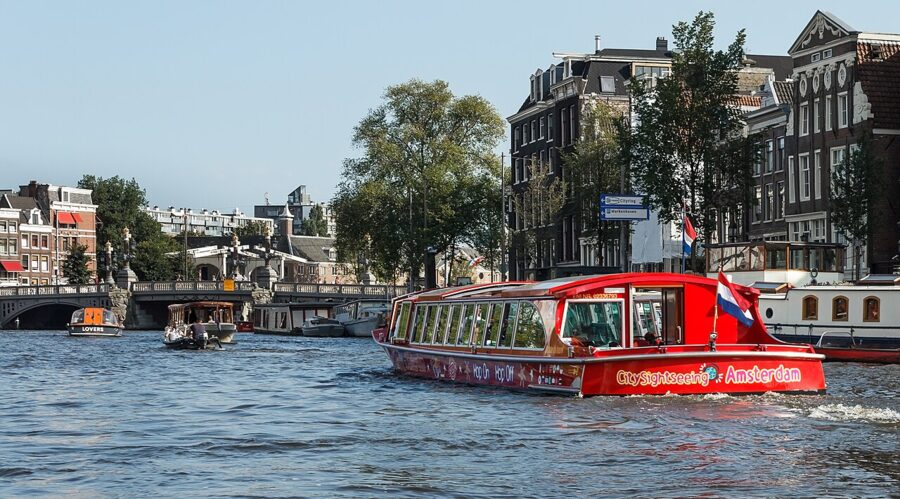

It only pays if you plan to get off at least twice. For a single loop, a one-hour glass boat at half the price shows you more of the canal ring.
Salon boats and private hire
The salonboot is the old wooden saloon boat with brass fittings and big windows, once the boat of company directors and notaries. Hired with a skipper, often with catering, it suits a birthday, a wedding party or a group too large for a self-drive boat. Mokumboot’s private boats with a skipper start at €425 (about US$493) per boat for up to 35 people, which is cheaper per head than it sounds for a full boat.
What you pass on the water
A standard hour from Centraal or the Rijksmuseum usually runs along the Amstel, the Prinsengracht, the Leidsegracht and the Herengracht, and most companies sail it clockwise. The 75-minute versions add a loop of the harbor side or more of the Amstel. Here is what to look for, in roughly the order a clockwise boat from Centraal meets it.
The Prinsengracht, the Westerkerk and the Anne Frank House
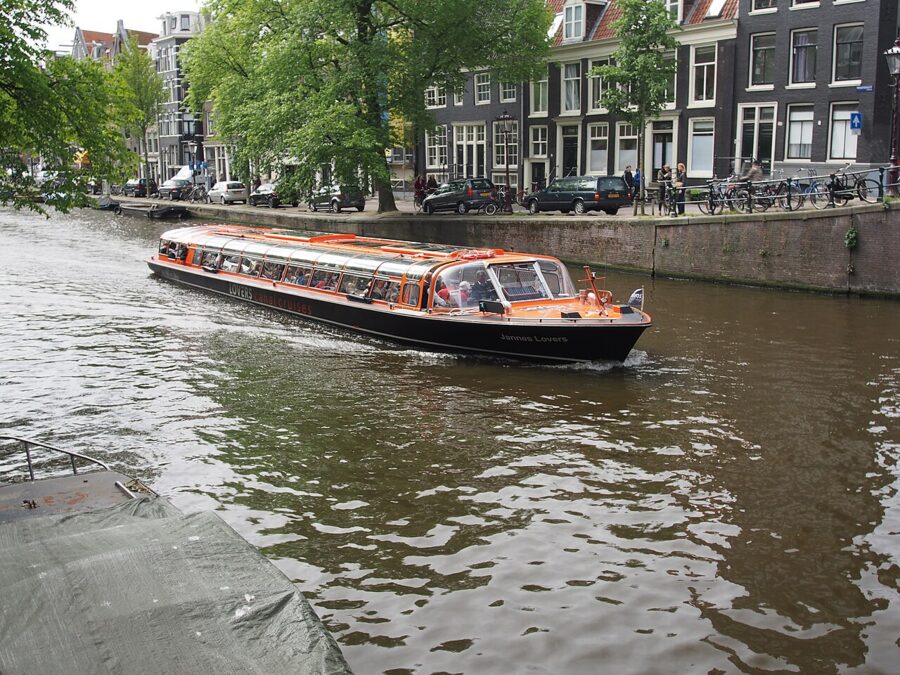
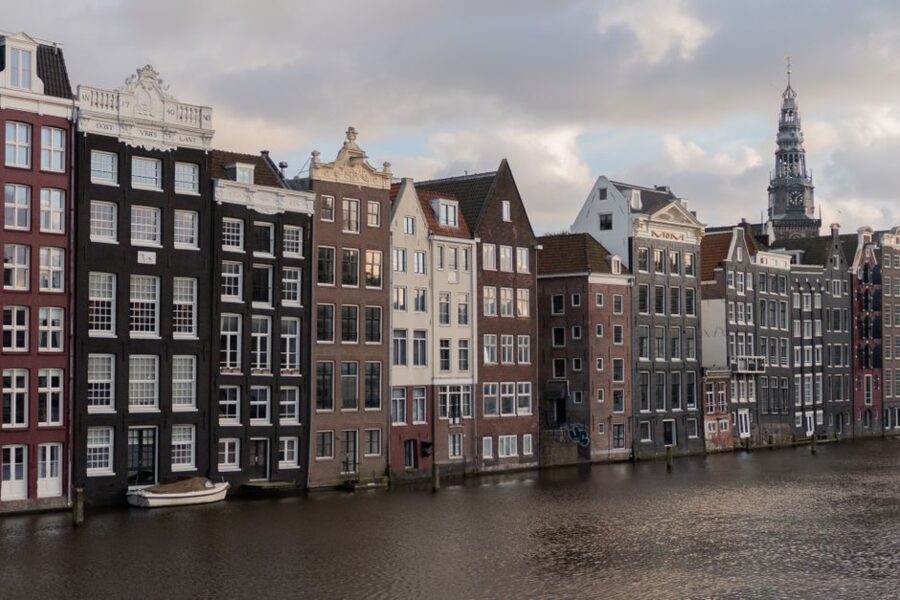
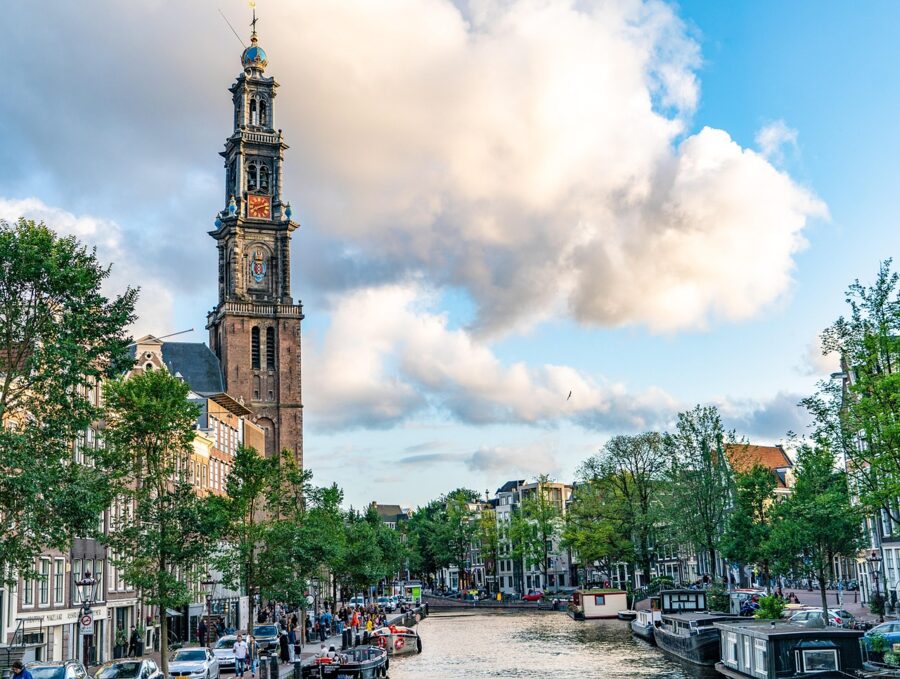
The Prinsengracht is the outermost and longest of the three main canals, and it runs past the Jordaan on one side and the canal ring proper on the other. At its north end the Noorderkerk stands over the Noordermarkt. Further south the Westerkerk tower is the landmark you will see from half the route, and at its foot, at Prinsengracht 263, is the Anne Frank House, which looks smaller from the water than people expect.
The Golden Bend
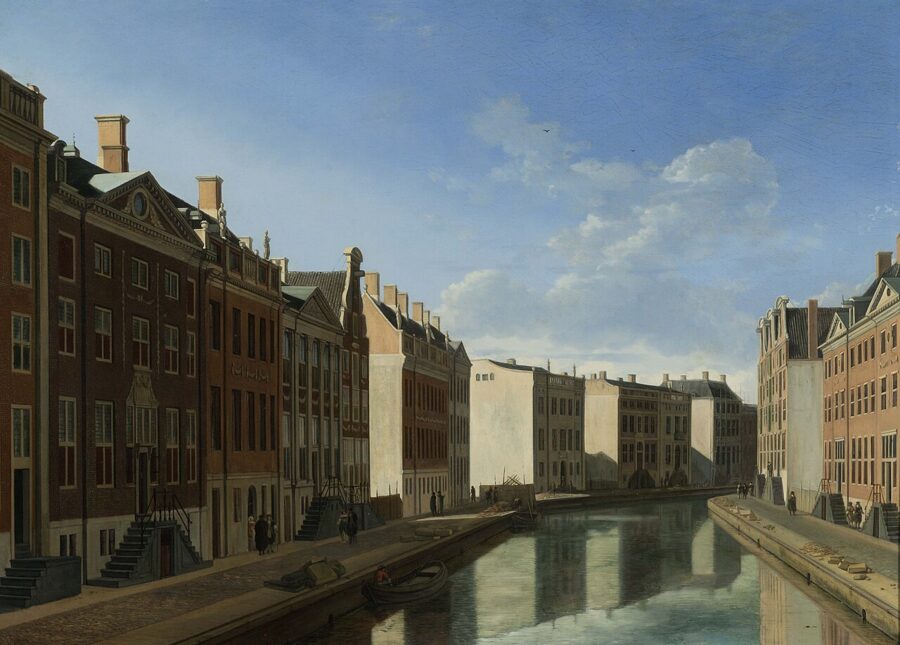
Between the Leidsestraat and the Vijzelstraat the Herengracht makes a kink, and the houses on it grow wide. This is the Gouden Bocht (Golden Bend). When the canal ring was extended east from 1663, the three canals here were set further apart, the plots on the south side came out deeper, and the city encouraged buyers to take double plots. The lots were sold between 1664 and 1668, and the richest families in the city built double-width houses with classical facades, marble halls and painted ceilings.
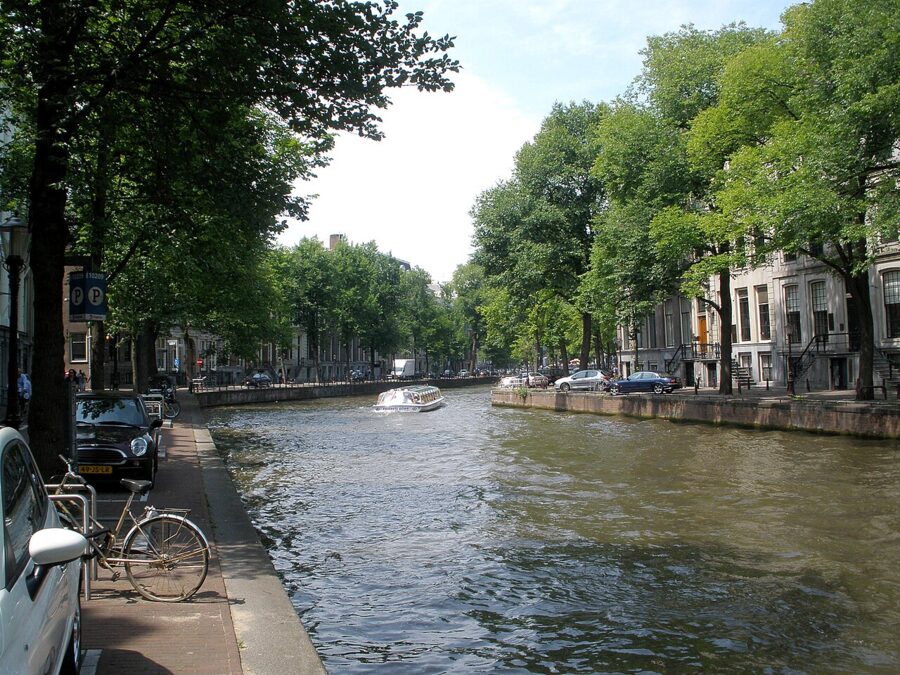
Look for Herengracht 475, the house built for the De Neufville family in 1731, often called the finest on the bend. From a boat you see the facades the way they were designed to be seen, from the water, with the steps and doorways at eye level.
The Reguliersgracht and the 15 bridges
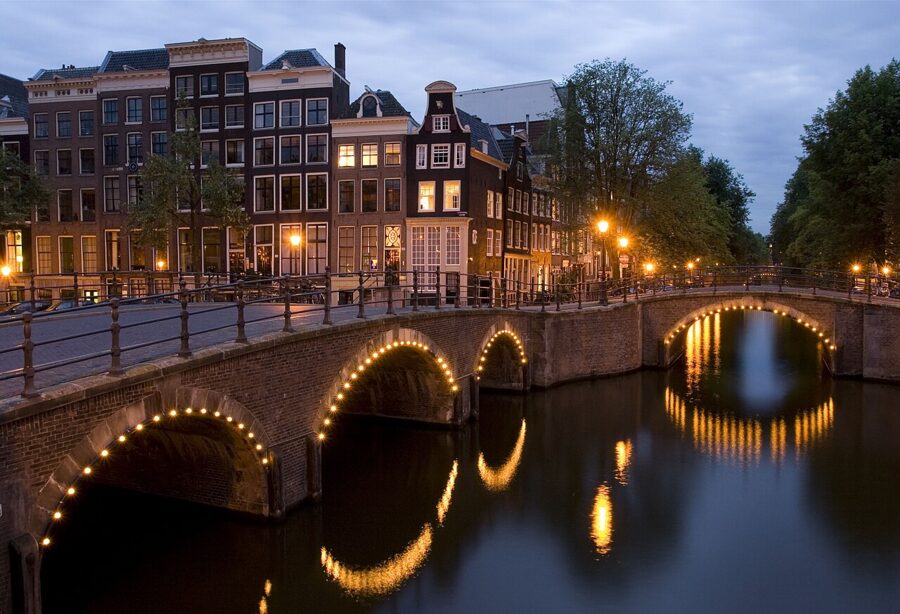
Where the Reguliersgracht meets the Herengracht, near the foot of the Thorbeckeplein off Rembrandtplein, the big boats slow down for the most photographed view in the canal ring. Look south down the Reguliersgracht and seven arched bridges line up one behind the other, all the way to the Lijnbaansgracht. I amsterdam’s guide to the city’s bridges puts the spot where you can count 15 bridges at once at this same corner, on the odd-numbered side.

The Reguliersgracht nearly did not survive. It was dug in 1664, and in 1901 the city wanted to fill in the rest of it to run an electric tram, until a campaign by the new Amstelodamum society, writers and painters stopped the plan. Every boat that slides under those seven bridges owes them a nod.

The Amstel and the Magere Brug
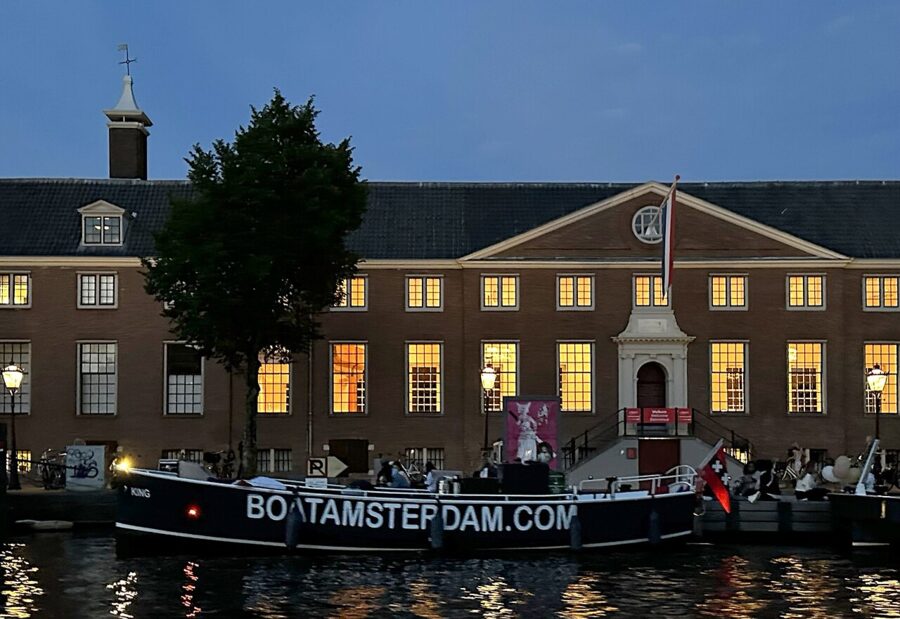
The Amstel is the river the city is named after, wide enough that the boat suddenly feels small. Coming from the Muntplein end, where the Bloemenmarkt starts along the Singel, you pass Hotel de l’Europe, the Blauwbrug, the Koninklijk Theater Carré and the long brick front of the Amstelhof, which held the Hermitage Amsterdam and is now the H’ART Museum.
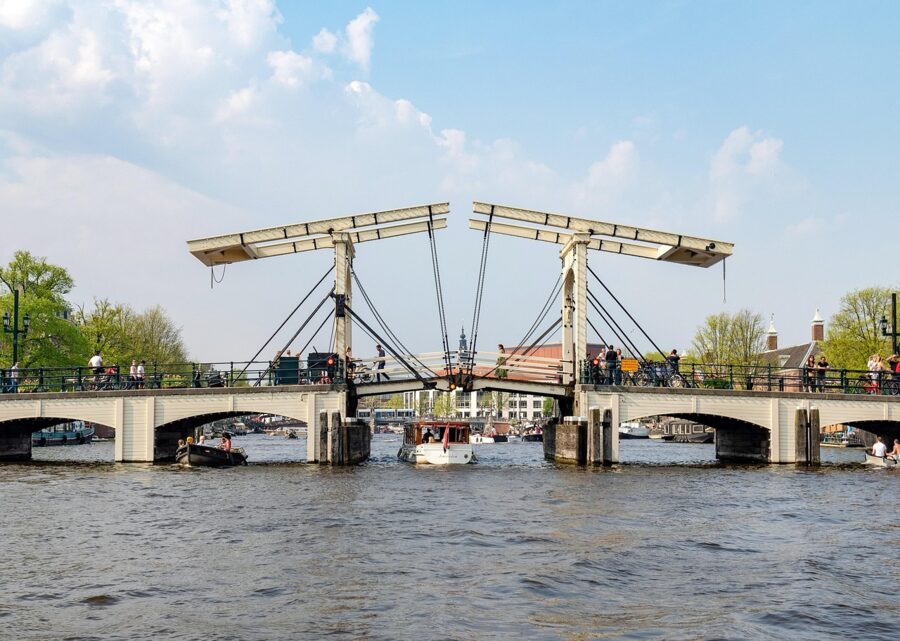
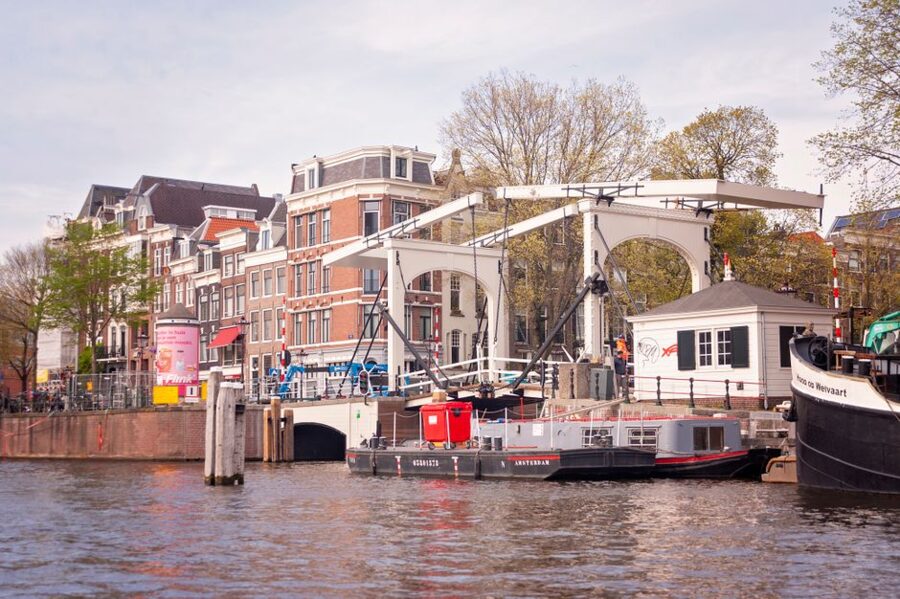
The Magere Brug (Skinny Bridge) is bridge number 242 and a national monument since 2002. The first bridge here, built around 1691, was a narrow, cheap wooden one with 13 arches, because the far bank of the Amstel was still almost empty after the economic slump of 1672, and “skinny” stuck.
It was replaced in 1871 and again in 1934, when the city insisted the new bridge look like the old one. The tale of two skinny sisters who paid for it is just that, a tale. The Bridge Hotel looks onto it from the Amstel.

The harbor side
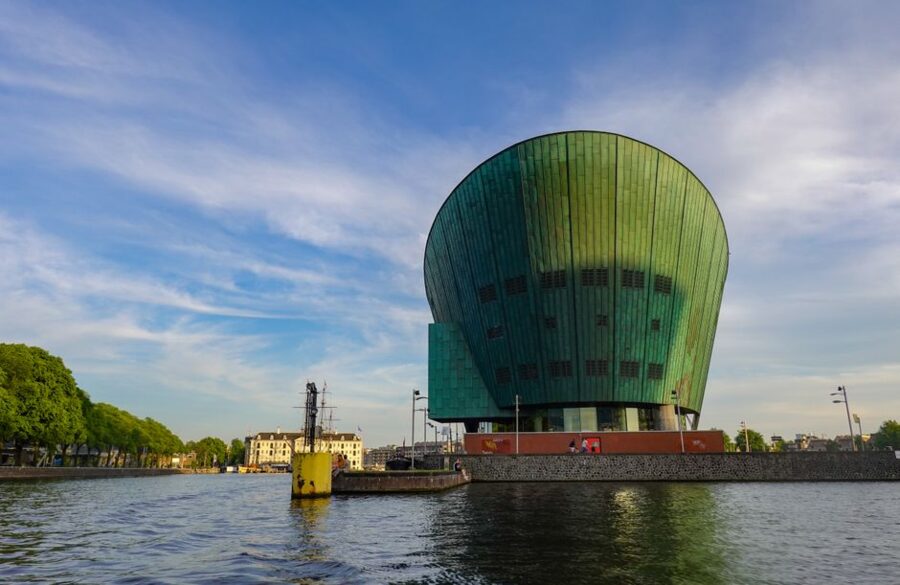
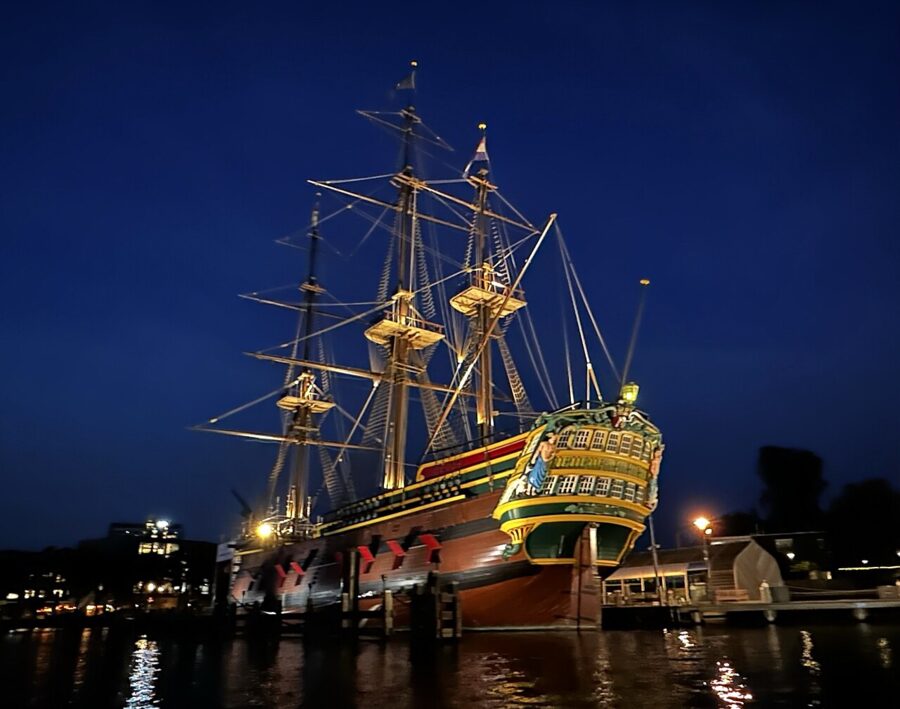
Routes that swing out through the Oosterdok pass the copper-green hull of Science Center NEMO, built over the entrance to the IJ tunnel, and the replica of the East Indiaman Amsterdam moored outside Het Scheepvaartmuseum. Blue Boat’s 75-minute City Canal Cruise names the replica among its sights; the one-hour boats from Centraal often skip this stretch.

One question that turns up in every search: yes, sea and river cruise ships do sail from Amsterdam, from the Passenger Terminal on the IJ, which the hop-on hop-off boat stops at. That is a different trip from a canal cruise, and no canal boat goes anywhere near the sea.
Where the boats leave from
There is no single best place to start. Pick the pier nearest to what you are doing before or after, because the route from each one covers the same canal ring. Arrive 15 minutes early: seats on the big boats are first come, first served, and check-in closes before departure.
Centraal Station and the Damrak
The busiest cluster. LOVERS’ main pier is at Prins Hendrikkade 25, Stromma boards at Prins Hendrikkade 37 opposite the station and at Damrak pier 5, and Flagship’s Centraal departures leave from Prins Hendrikkade 33a. Trips from here run about an hour. The Sex Museum is a three-minute walk down the Damrak if anyone in your group wants a different kind of history before boarding, and De Wallen begins just behind the Damrak houses.
The Rijksmuseum and the Stadhouderskade
The second cluster lines the Singelgracht along the Stadhouderskade. Stromma boards at Stadhouderskade 520, right across from the Rijksmuseum, LOVERS at Stadhouderskade 511, and Blue Boat at numbers 501 and 550, nearer Leidseplein. Stromma’s and Blue Boat’s trips from here run 75 minutes, because they have further to go to reach the center, and the extra 15 minutes are mostly spent getting there. The LOVERS boat from this pier keeps to the one-hour loop.

Leidseplein
LOVERS has a small pier on the Leidsekade opposite number 97, and Stromma boards at Leidsebosje 2, a 70-minute trip that ends at the Rijksmuseum pier rather than where it began. In November and December Stromma’s Leidseplein pier opens only Friday to Sunday, except 28 to 31 December. It is the obvious start if you are staying near Leidseplein or coming out of the Vondelpark.
The Anne Frank House
LOVERS runs a small pier at Prinsengracht 265, next door to the museum, and Flagship’s boats also start at the Anne Frank House. Westermarkt is the nearest tram stop. This is the pier to use if you have a timed museum ticket and want the boat straight after.
What it costs, as of November 2026
Every operator sells cheaper online than at the kiosk, and most show a struck-through “regular” price next to a lower web price. The figures below are the lowest listed web fares on 27 November 2026 for an adult, with the operator’s own pages linked where I took them.
| Cruise | Departs | Length | Adult, from |
|---|---|---|---|
| LOVERS classic one-hour cruise | Centraal, Leidseplein, Anne Frank House, Rijksmuseum; daily 09:00–21:00 | 60 min | €13.50 |
| Stromma 100 Highlights | Damrak pier 5 or Prins Hendrikkade 37 | 60 min | €13.50 |
| Stromma 100 Highlights | Stadhouderskade 520 (Rijksmuseum) | 75 min | €17.50 (about US$20) |
| Stromma 100 Highlights | Leidsebosje 2 (Leidseplein) | 70 min | €16.50 (about US$19) |
| Blue Boat City Canal Cruise | Stadhouderskade 501 or 550 | 75 min | €26 (about US$30), plus levy |
| Stromma open boat | Damrak pier 6 | 60 min | €21.50 |
| LOVERS evening cruise | Same four piers; 18:00–21:00 | 60 min | €15.50 |
| City Sightseeing hop-on hop-off boat | Eight stops | 24 or 48 hours | €27.50 |
Children pay less on every boat, with different age bands. Stromma lets children up to and including 3 ride free and charges €12.50 (about US$15) for ages 4 to 12, while LOVERS sells child tickets for ages 4 to 13 and lets under-4s ride free with a paying adult. Blue Boat’s child fare for its City Canal Cruise is €13.50.
The passenger levy
Amsterdam charges a per-passenger levy on canal boats, the vermakelijkhedenretributie, and in 2026 the rate on motorized tour boats is €2.70. Some operators fold it into the fare; Blue Boat and Boaty quote prices “excluding tax” and add it at checkout. The levy is also in court: a ruling on 6 November 2026, in a case brought by one operator, struck down the city’s increase from €1.50 (about US$2) to €2.50 (about US$3) for the years that operator challenged. As of late November the €2.70 line still appears on booking pages, and passengers who already paid will not see that money back.
Free with a card, and cancellation
The I amsterdam City Card includes one canal cruise with participating operators, among them Blue Boat, LOVERS, Stromma and Mokum Open Boat Tours, and you show the card at the pier instead of booking. The card also covers entry to many of the big Amsterdam museums and public transport, so it is worth having for those; the boat alone does not justify it. LOVERS tickets can be cancelled or changed up to 8 hours before departure, and Stromma and Blue Boat allow free cancellation up to 24 hours before.
Renting a boat and the rules on the water
Steering your own small electric boat through the canals is the best fun the city sells to a group, and it is legal without any license. Under national rules you need a boating license only for a boat longer than 15 meters or one that can go faster than 20 km/h, as Rijkswaterstaat’s boating rules put it, and the rental firms’ boats are built to stay under both.
Prices are per boat, not per head. Boaty, which has rented boats from a dock in De Pijp since 2008, charges €69 for two hours before noon and €79 (about US$92) after, up to six people, plus €2.70 per person in levy. Mokumboot rents boats for up to eight from €97.50 (about US$113) for two hours from seven boarding points, with a €100 (about US$116) card deposit. The pedal boats at Stromma’s piers by the Rijksmuseum, Leidseplein, the Westerkerk and on the Keizersgracht seat four, from €24.50 per person for an hour as Stromma lists them, and in late November only some of those piers are renting.
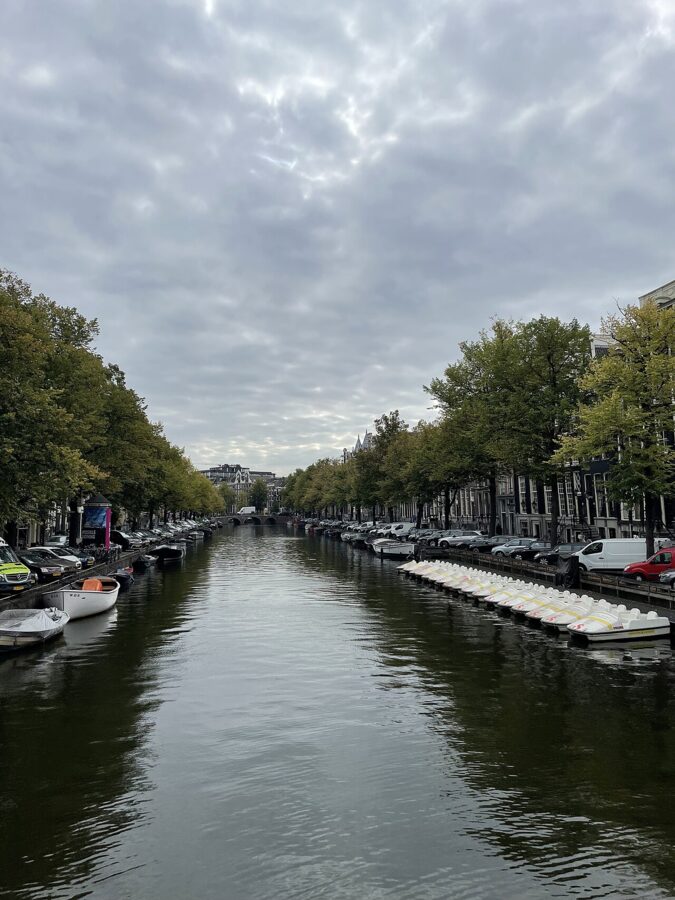

The rules, from the city’s boating page, the national government and the rental firms’ own terms:
- Speed: 6 km/h on the canals, lowered from 7.5 km/h in 2017. If your boat still throws a wake at that speed, go slower.
- Numbers: since 23 May 2019 a pleasure boat may carry at most 12 people plus the skipper. A bigger group needs a licensed passenger boat with a skipper.
- Alcohol: the legal limit for anyone steering a boat is 0.5 per mille, the same as on the road, and the water police breath-test. Rental firms go further: passengers may drink, the skipper stays sober.
- Noise: no amplified music. Mokumboot bans music on board outright, along with shouting.
- Traffic: keep right, give way to boats coming from your right, and give way to professional boats, which means every cruise boat and freight barge. Many bridges clear less than two meters.
- Mooring: never under a bridge, at a junction, in a narrow canal or by the rescue steps, and never tied to a tree.
- Litter: nothing goes overboard. Take a bin bag.
- No-go water: rental boats may not sail on the IJ, in the harbor or along the Nieuwe Herengracht, according to Mokumboot’s terms, though crossing them is allowed.
Private diesel boats were barred from the center canals from 1 April 2025, with temporary exemptions for owners who already held a permit, and the rental fleets are electric. Expect a short briefing at the dock, a route map and life jackets. The briefing is the useful part; listen to it.
Evening, winter and the Light Festival
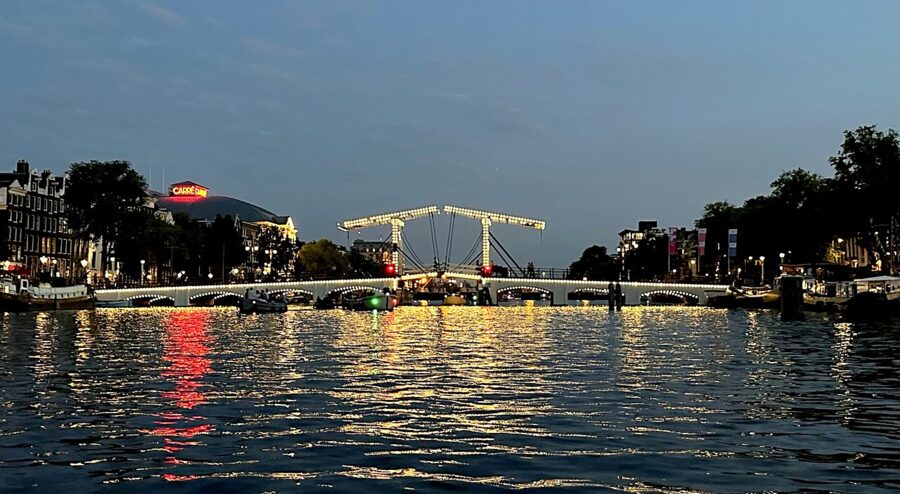
The canals change after dark. The bridge arches are outlined in bulbs, the windows of the canal houses show their stucco ceilings, and the Magere Brug carries about 1,200 lights. An evening boat in summer leaves in daylight and comes back in the blue hour; in November it is dark by five.

Amsterdam Light Festival 2026–2027
The fifteenth edition runs from 26 November 2026 to 17 January 2027, with about 20 light artworks placed above, along and in the water on a new route through the center. According to the festival’s own information, the lights are on daily from 16:30 to 23:00, closing at 21:00 on New Year’s Eve. This edition has no theme: the artists were asked what they wanted to tell the city. On 12 and 19 December the route gets extra programming as Light Nights.
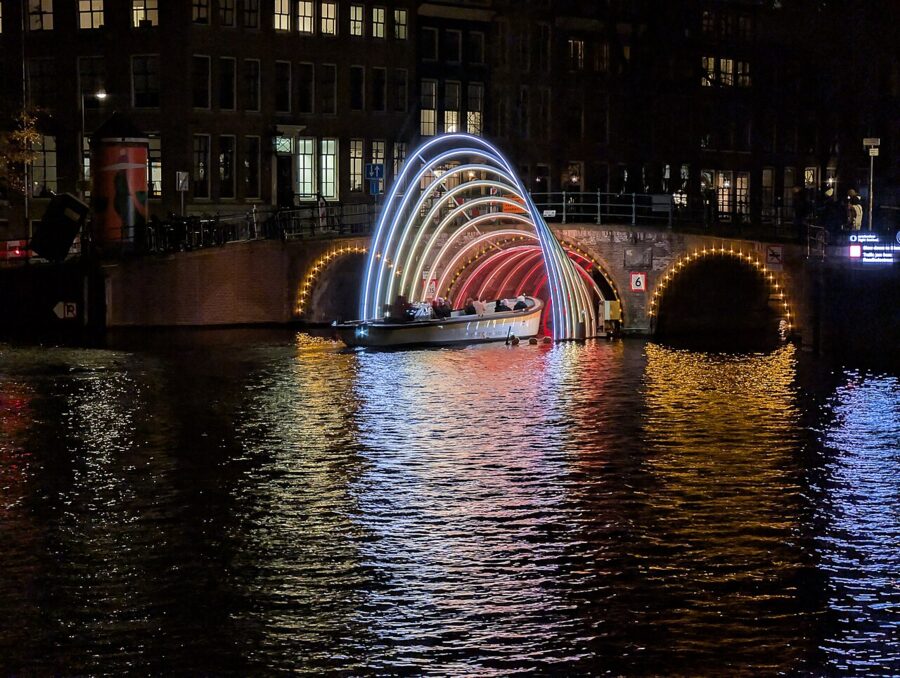
Most Light Festival cruises run on heated, enclosed boats, and the open-boat versions cost more. LOVERS departs daily from 17:00 to 21:40 on trips of 75 to 110 minutes depending on canal traffic, from €22.50 (about US$26). Stromma’s festival canal cruise of 75 minutes starts at €24.75 (about US$29) and its open boat at €29.75 (about US$35); Blue Boat sails 90 minutes from Stadhouderskade 550 for €29.75. Mokumboot rents covered self-drive boats with blankets on board, or a private boat with a skipper who knows the route.
The festival foundation has no structural funding from the city, and it marks its Official Partners among the cruise firms; buying from one of them sends part of the money to the artists. Its information points are inside Amstel 1 (entrance on the Zwanenburgwal) and on the Middenkom at Centraal Station, opposite LOVERS, Thursday to Sunday from 16:30 to 21:00 and daily over the Christmas break, closed on 25 and 31 December.
Winter
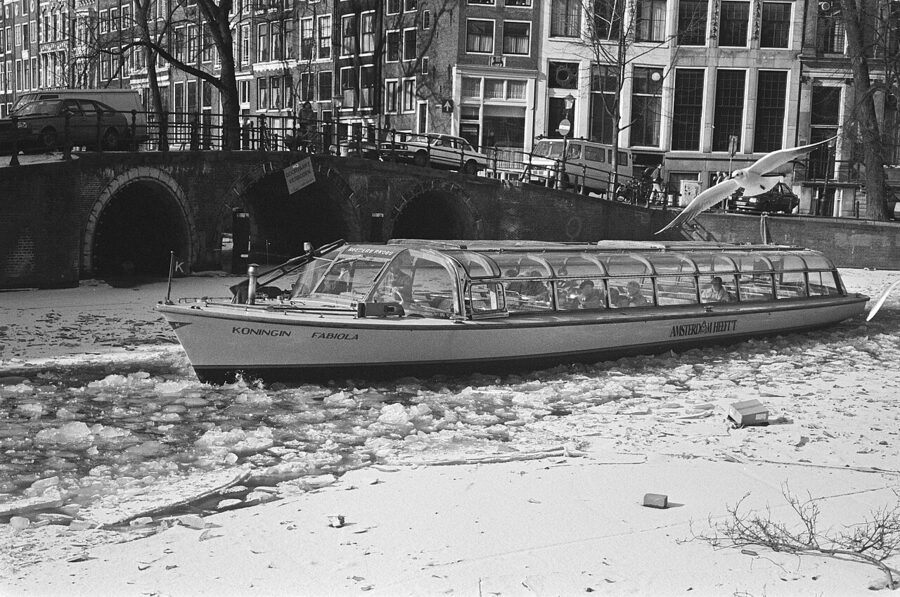
The glass boats run all year, heated, and winter is the season when they make the most sense. Some open boats stop or switch to covered boats, and some piers cut back to weekends: Stromma’s Leidseplein pier, for one, opens Friday to Sunday only in November and December. Go in the morning on a clear, cold day, when the low sun lights the gables and the boats are half empty.
The canal ring and its UNESCO listing
Until the end of the 16th century Amsterdam fitted inside the Singel, which was the city moat from 1480 until 1585. On 5 March 1613 the city decided to dig three new canals, the Herengracht, the Keizersgracht and the Prinsengracht, in arcs around the old town, starting from the Brouwersgracht. The swampy ground between them was drained and raised, sold off in plots of equal width, and built up with the gabled houses you see from the boat. From around 1660 the canals were carried on to the Amstel, and by about 1680 the Nieuwe Herengracht, Nieuwe Keizersgracht and Nieuwe Prinsengracht had given the city the half-moon shape it kept for two centuries.
UNESCO added the “Seventeenth-Century Canal Ring Area of Amsterdam inside the Singelgracht” to the World Heritage List on 1 August 2010. The listing covers 198.2 hectares with a buffer zone of 481.7 hectares, and it rests on three criteria: the ring as a masterpiece of hydraulic engineering and town planning, its influence on new cities for almost two centuries, and its standing as an example of a planned port city. UNESCO’s own text is frank about the flaws, naming the widened Weesperstraat, tall modern buildings in the north of the area and “aggressive advertising”.
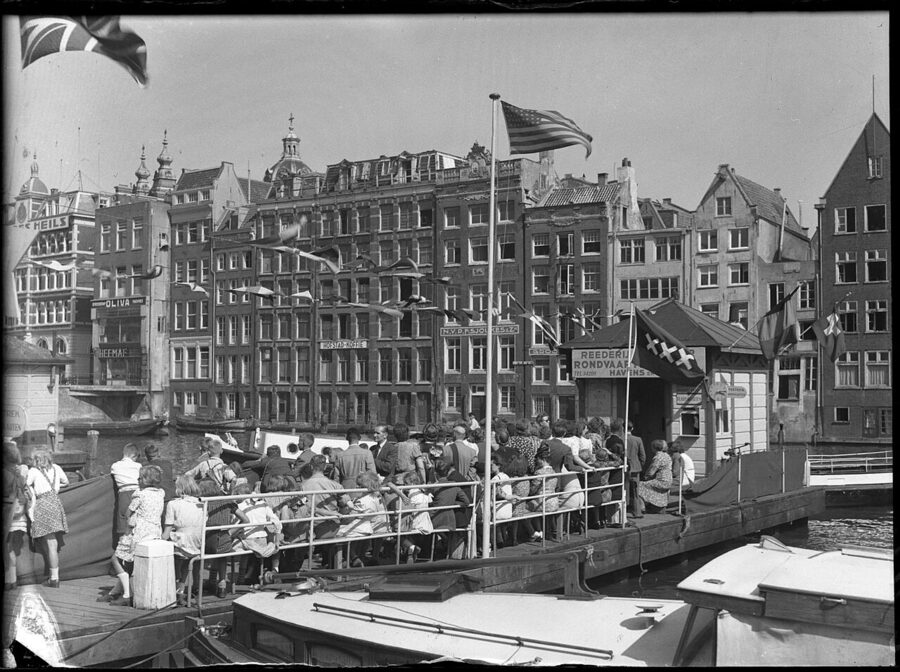
The canal cruise came much later. The first organized trip ran in 1901 from the pier at Hotel de Doelen, and few people wanted one, because until 1935 the city’s sewers emptied into the canals and the water smelled like it. After the war the boats became the queue you still see on the Damrak.

What goes wrong, and how to avoid it
The boat is full. Summer weekend evenings and Light Festival evenings fill up fast. Book a day ahead for those; for a weekday morning in February, turn up.
The wrong side. Seating is first come, first served on the big boats. Board early and take a window seat, ideally near the back, where the open deck is.
Accessibility. Blue Boat’s City Canal Cruise is wheelchair accessible, while LOVERS lists its classic one-hour cruise as not wheelchair accessible, so check the listing for your exact departure before you pay.
The audio guide. Several operators now stream commentary to your own phone over the boat’s Wi-Fi. Bring earphones; Stromma sells them at the pier for €1.50 if you forget.
Your own boat in the wrong place. Junctions are where a small rental boat meets a 20-meter cruise boat that cannot stop quickly. Stay right, give way, and in a crowded stretch simply stop and let the big boat pass.
Photographing windows. If a small boat takes you along the edge of the Red Light District, the request not to photograph the windows applies from the water exactly as it does on the quay. Keep the camera down.
For a first trip, keep it simple. Walk out of Centraal Station, cross to the Prins Hendrikkade, buy the one-hour boat online on your phone for €13.50, and take a window seat near the back. Then come back after dark in a smaller boat, or in one you steer yourself, and see the Reguliersgracht bridges lit up from the Herengracht corner.