
The rule at Damrak 18 has no exceptions: nobody under 16 gets in, and that includes the baby asleep in the carrier on your chest. It is the first thing to know if you are coming down from Centraal Station with a stroller, which would not have made it up the stairs anyway.
Everyone else pays €10 (about US$12) and walks into the Sexmuseum Venustempel, the Temple of Venus, which opened on the Damrak in 1985 and still calls itself the oldest sex museum in the world. It sits on the busiest stretch of street between the station and the Dam, squeezed between the snack counters and currency exchanges, and plenty of the people who go in decided to about thirty seconds earlier.
That is the right spirit for it. Take it as a cabinet of curiosities with a sense of humor, give it an hour, and it is one of the better ten euros you can spend on this street. Expect a scholarly museum of sexuality and you will leave muttering about mannequins.
From a few showcases to a maze on the Damrak
The museum began small. By its own account, it opened in 1985 with a modest collection of 19th-century erotic objects in a handful of display cases, and nobody knew whether the idea would last. It did, and the collection grew faster than the floor space.
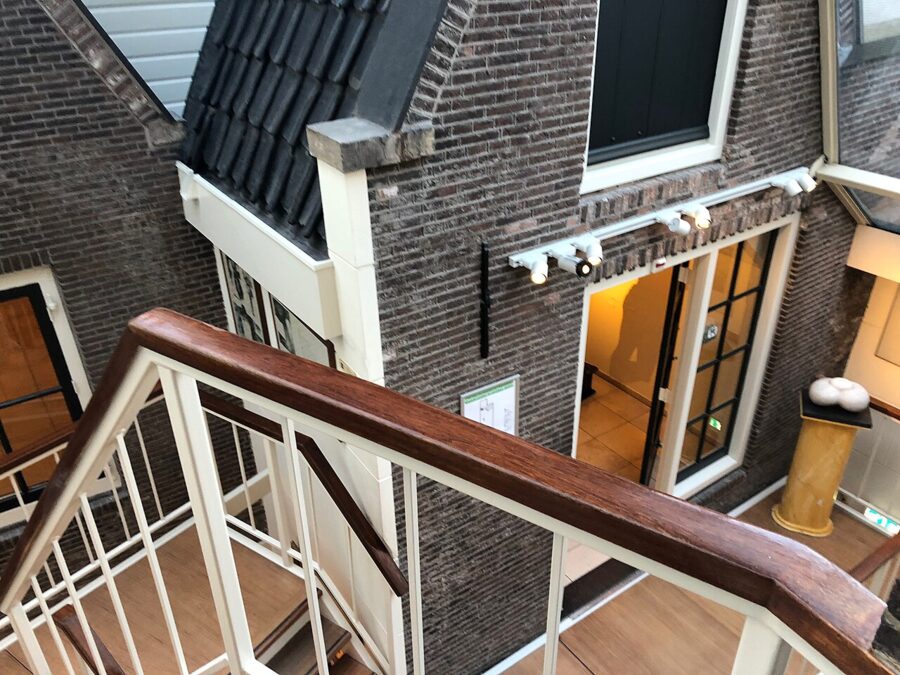
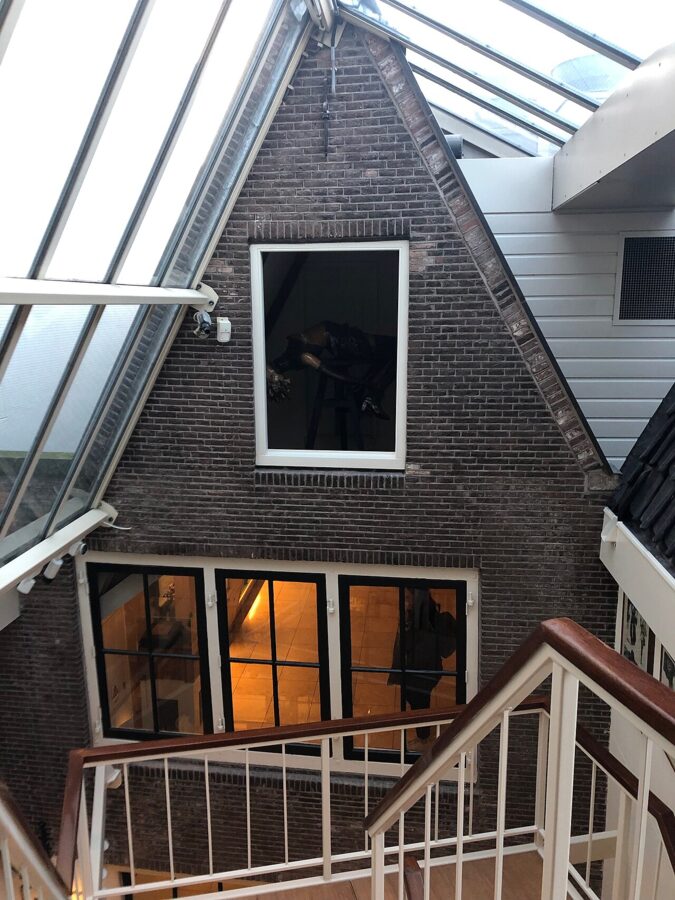
Over the years rooms were added through the 17th-century front house and into the buildings behind it, until the museum became the warren it is now: corridors, half-landings and an open stairwell that links the front house to two rear houses. During one early renovation, workers found two small erotic objects in the foundations, a fragment of a Delft blue tile and a little bronze figure of Hermes. Somebody had been decorating this address with that sort of thing long before 1985.
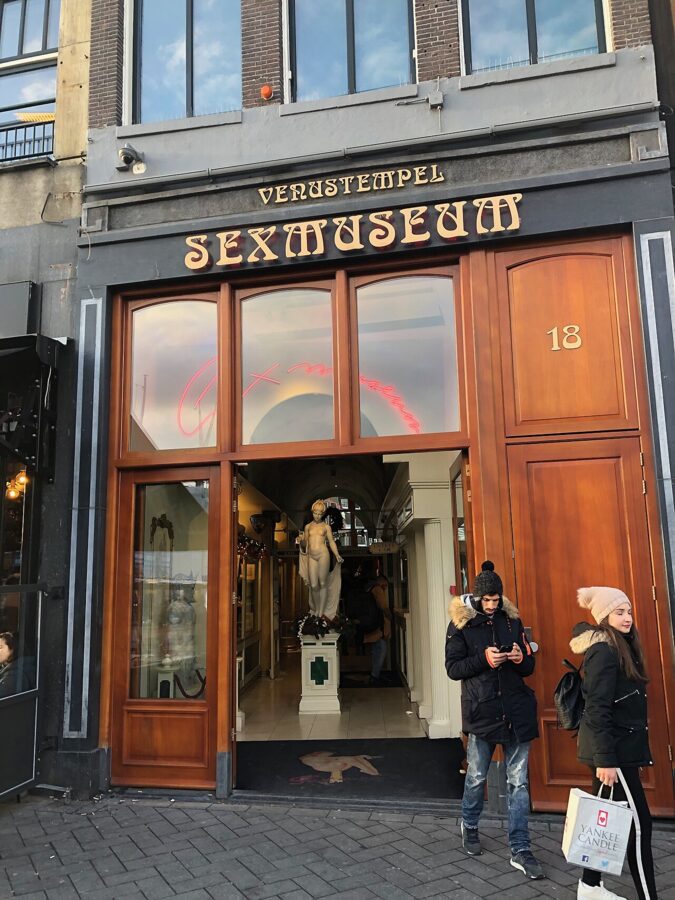
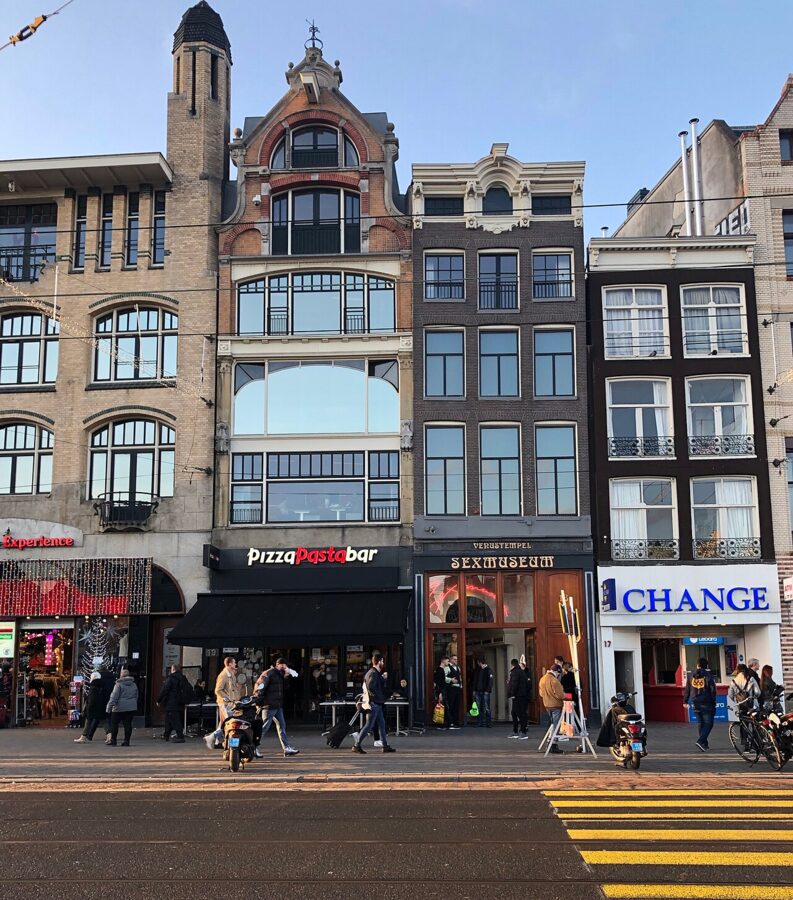
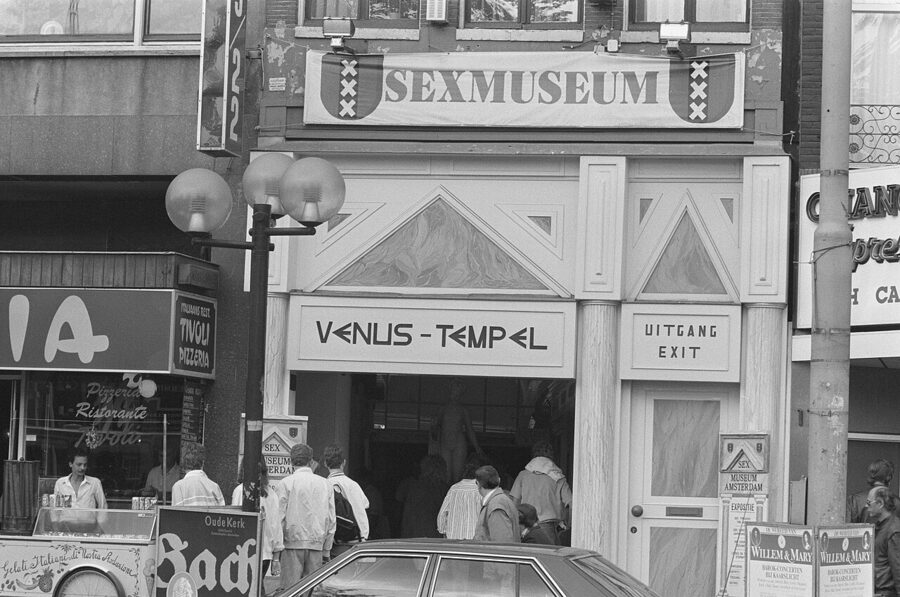
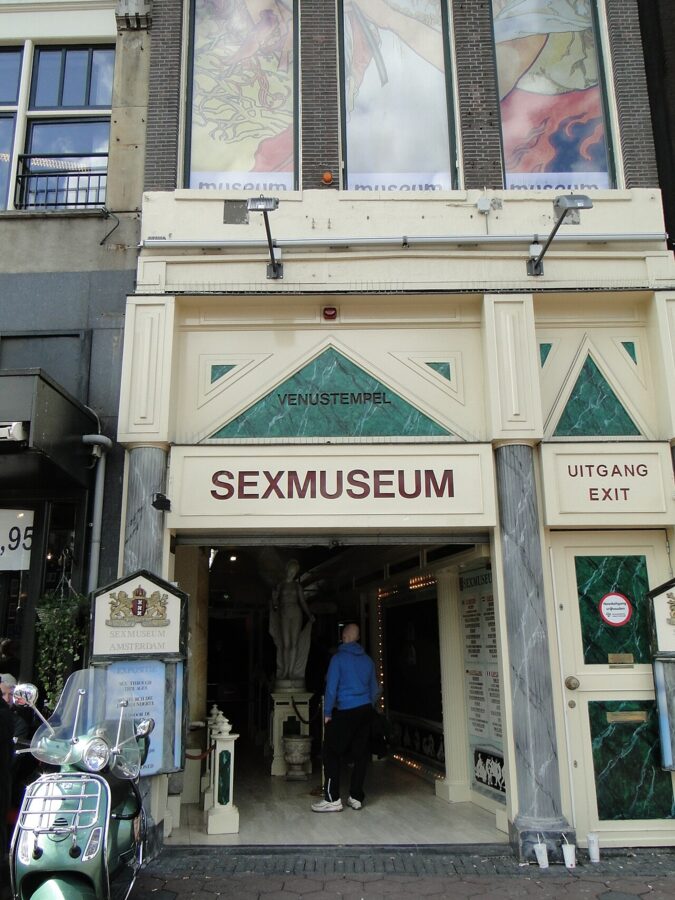
The front has changed more than the inside. A temple-style entrance, in one version or another, lasted into the 2010s, and for years a painting two stories high filled the upper windows. The city decided that counted as advertising, the museum argued it was a sunscreen, and in August 2018 the museum was told to take it down. The plain wooden front you see today is what replaced the whole temple act.

What is inside
The route winds up through several floors, and the building does half the work of keeping it interesting: you climb, turn, cross a landing and come out somewhere you did not expect. The collection runs from fertility figures and classical statuary to Victorian photographs, mid-century pin-ups, film posters and kitsch, with cases on ancient Greece, Rome and China along the way. Labels are short and in English.
The rooms are named after people with reputations: Mata Hari, Oscar Wilde, the Marquis de Sade, Rudolph Valentino and Madame de Pompadour. The tone is cheerful rather than clinical, and the explicit material is there but not the point. The upper rooms get more graphic, with fetish and S&M photography, and that is the stretch some people walk through quickly.
The corridor and the wax figures
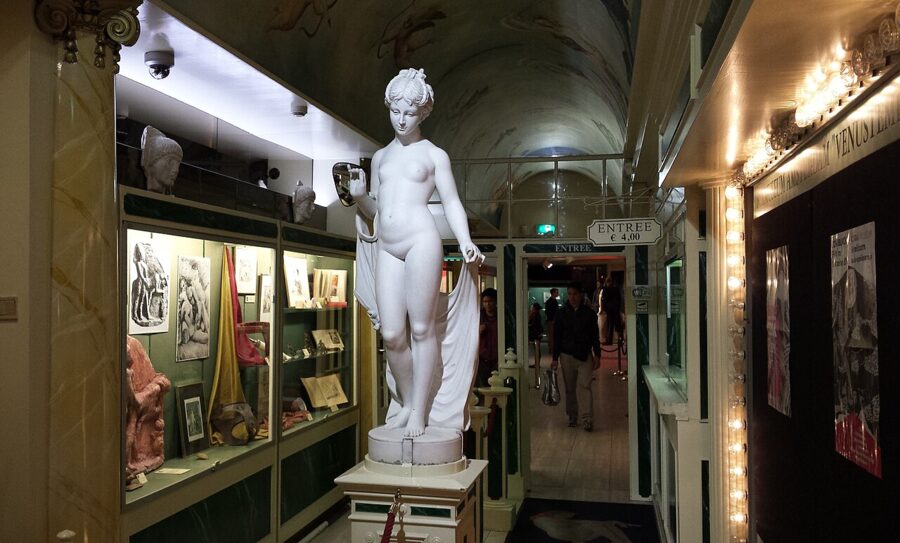
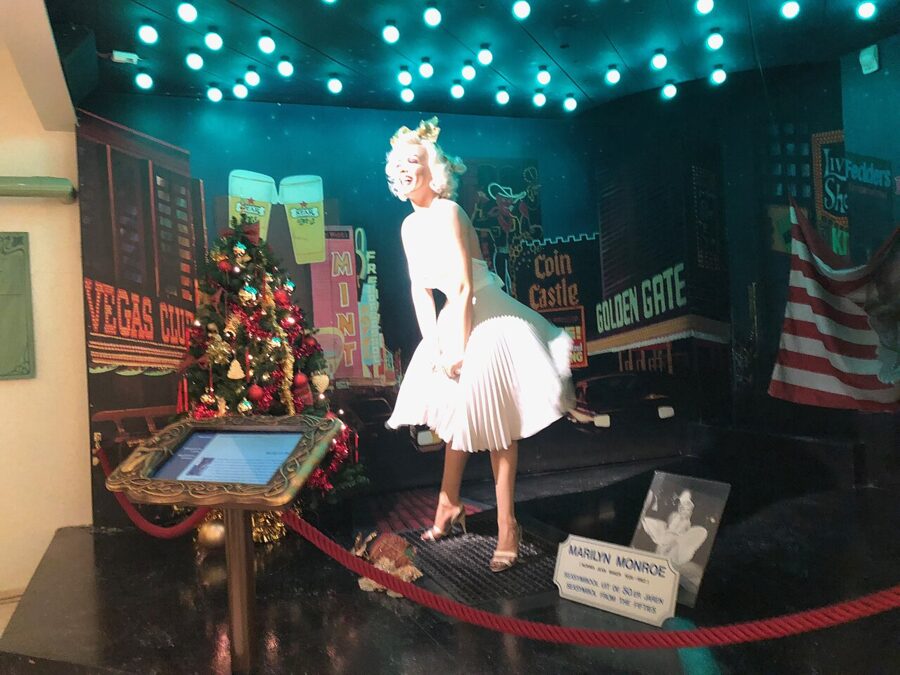
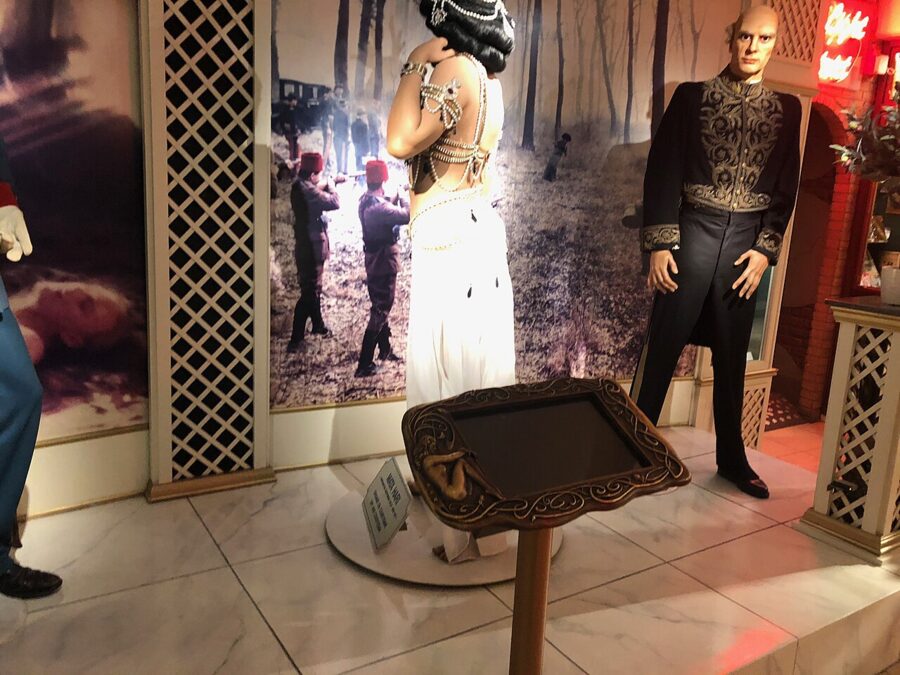
You start in a long painted corridor with a white Venus on a plinth, which sets the temple theme the name promises. Then come the figures. A wax Marilyn Monroe holds down her white dress on a stage set, Mata Hari stands in a beaded gown in front of a painted firing squad, and a mannequin flasher in a trench coat lurches out at you near the start, a joke that still works on about half the room.

Objects worth slowing down for
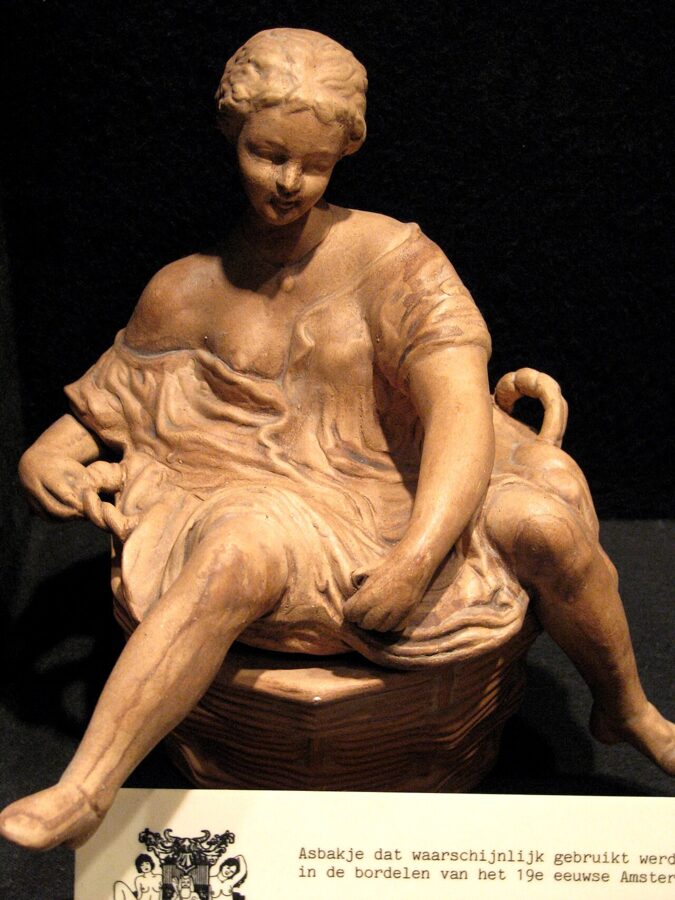
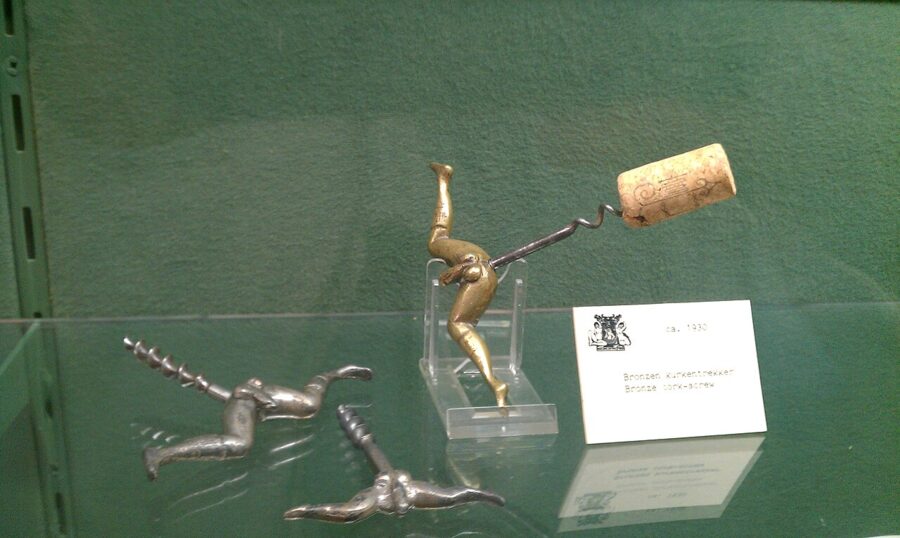
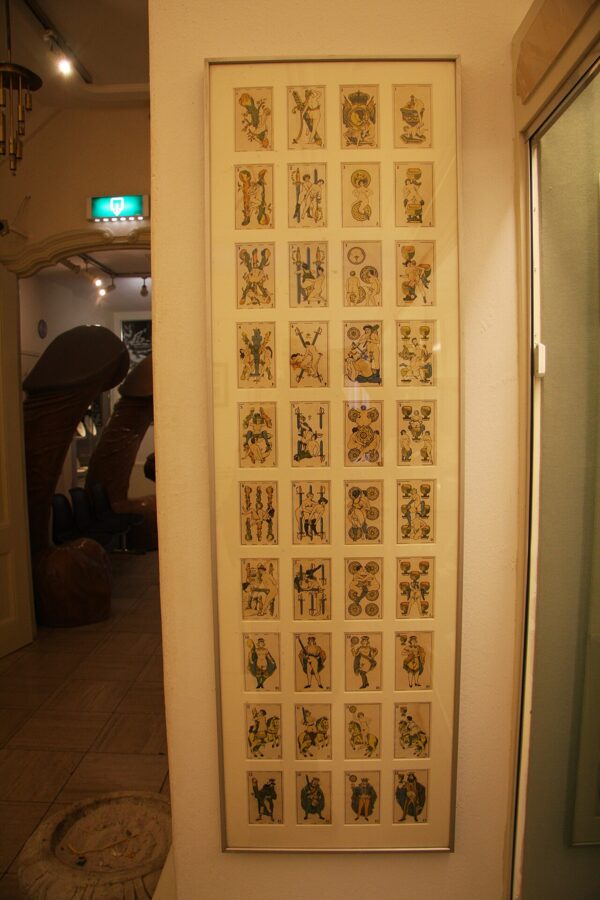
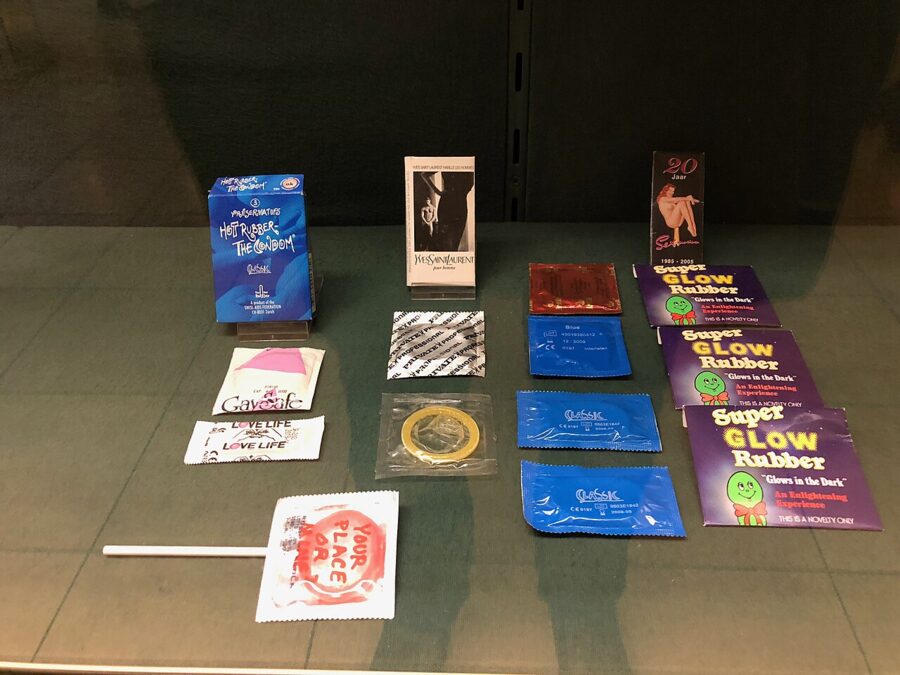
The small things are better than the big set pieces. Look for a terracotta ashtray in the shape of a young woman, labelled as probably used in Amsterdam brothels in the 19th century, and a case of bronze corkscrews from around 1930 in which the corkscrew is the least interesting part. A whole wall holds a deck of antique illustrated playing cards, and there is a shelf of condom packets that does more for social history than most of the paintings.



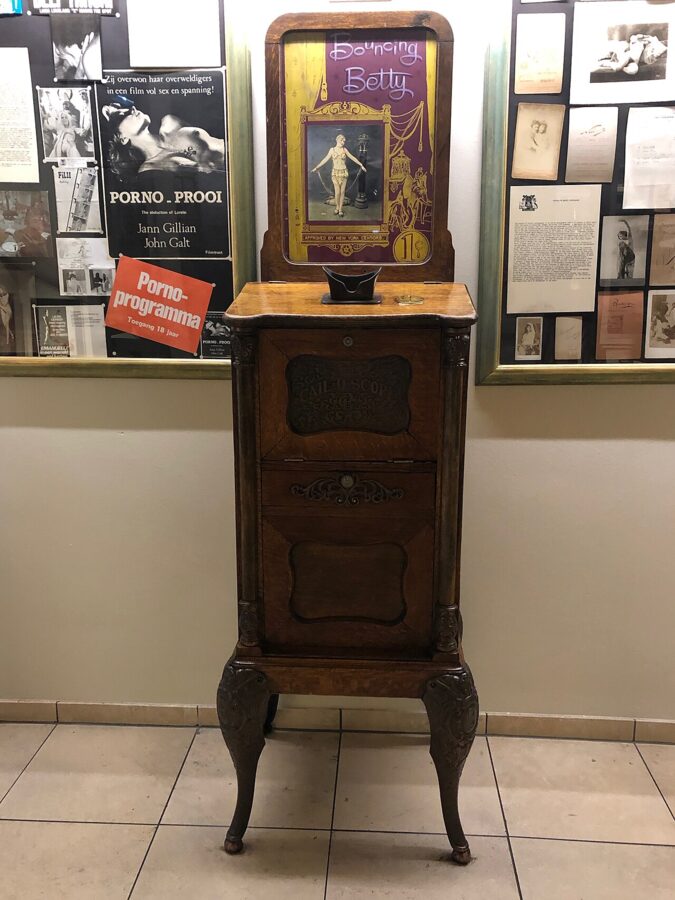
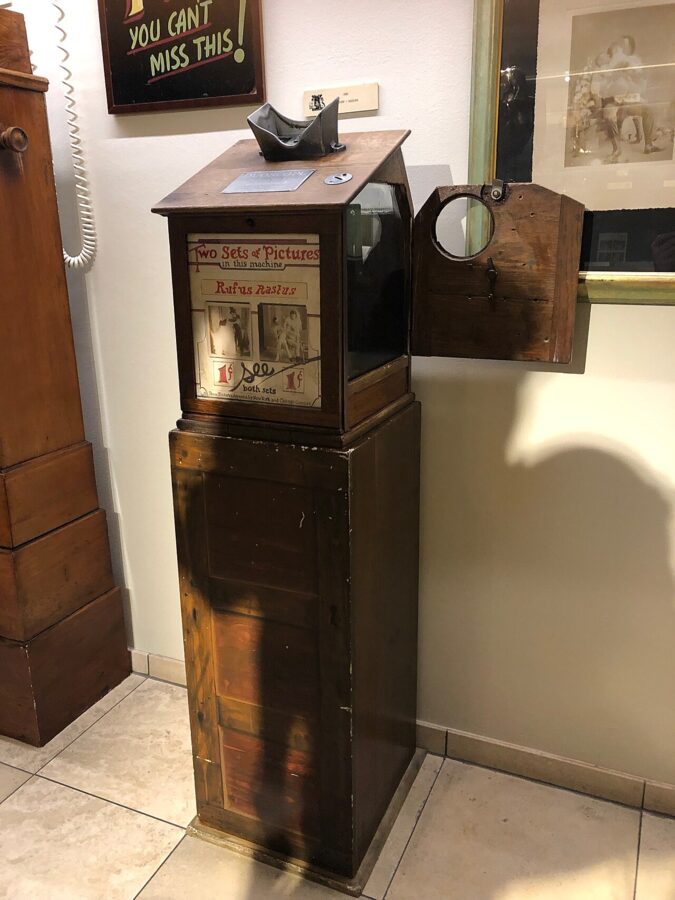
The machines are the other highlight. Before film there were coin-operated viewers, wooden cabinets you bent over to watch a flip-card reel or a stereo photograph, and the museum has several, with signs promising more than the cards inside deliver. They are a reminder that the peep show is a much older business than the neon on the Oudezijds Achterburgwal.
The street of old Amsterdam
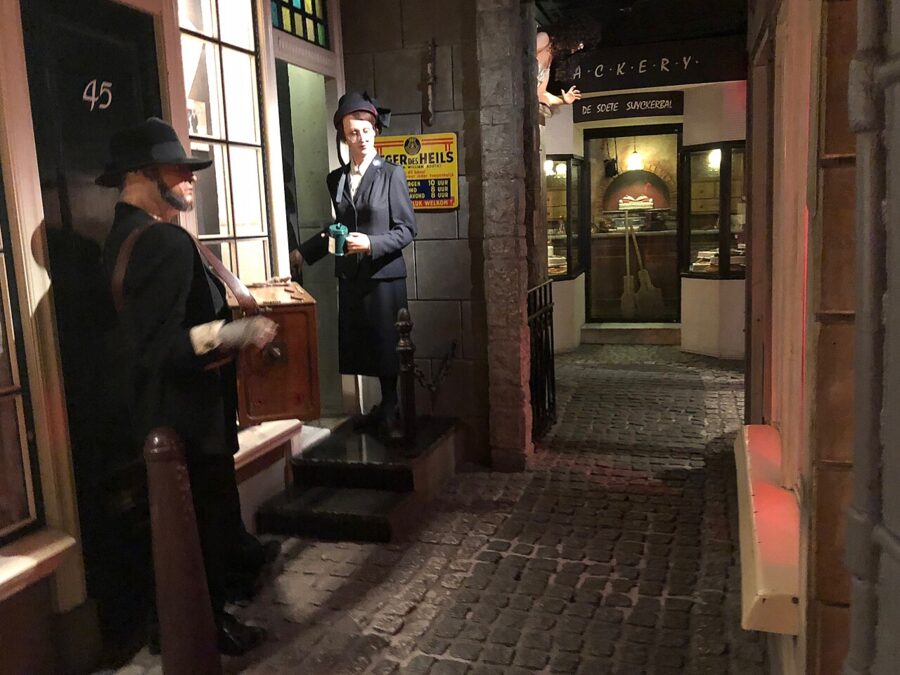
Partway through, the floor turns to cobbles and you are in a life-size diorama of an old Amsterdam street: a narrow lane with house fronts, a man in a hat lingering in a doorway and a Salvation Army officer handing out tracts beside a poster for the Leger des Heils. It is a stage set, but a pointed one, because the real thing is a five-minute walk away in De Wallen, and the mix of trade and preaching it shows is part of that neighborhood’s history too.
Tickets, hours and the age rule
The basics, as of November 2026, from the museum’s practical information and its answers to common questions:
| Opening hours | Daily 10:00-18:00, last entry 17:30 |
|---|---|
| Exceptions | Closed on King’s Day (27 April); opens at 12:00 on 1 January |
| Ticket | €10, the same online or at the door |
| Discounts | None: no student price, and the Museumkaart, CJP and other passes are not accepted |
| Minimum age | 16, for everyone, babies and toddlers included |
| Ticket validity | Online: 12 months from purchase. Box office: the day of purchase only |
| Payment | Cash, iDEAL, PayPal and most cards; no cards that need a signature |
| Access | No lift. Wheelchair users can see the ground floor free of charge |
| Bags | No large bags or backpacks, and no storage for them |
| Photos | Allowed, with no flash, no selfie sticks and no photos of staff |
You do not need to book. An online ticket costs the same €10 and only saves you the line at the till, which matters on summer weekends and hardly at all on a weekday in November. Once bought, tickets are not refunded, and the charge appears on your statement under BEM International BV rather than the museum’s name.
The age limit is enforced without discussion. The museum says plainly that the building has no lift and no room for strollers, and that there are no exceptions for babies, so a family with small children should split up or skip it. Leave the big backpack at the hotel too: there is nowhere to put it.
Inside there are gender-neutral toilets on the first floor and free wifi, but no café and no shop. Food is not allowed, though a closed bottle of water is, and alcohol and drugs are banned in the building. Dogs are welcome on a leash if they behave.
How long it takes, and is it worth it
The museum puts a visit at about an hour, and that is about right if you read the labels. Thirty minutes is enough to see the highlights, and nobody needs more than ninety. Go at 10:00, when the first rooms are empty, or late in the afternoon before the 17:30 last entry; the middle of a summer Saturday is when the narrow landings jam.
Is it worth it? At €10 for an hour indoors on the Damrak, yes, as long as you want a laugh with some history mixed in rather than the reverse. Couples and groups of friends get the most out of it. If you want to understand how sex work in Amsterdam actually functions, this is the wrong museum, and the next section tells you which is the right one.
Sex Museum, Erotic Museum or Red Light Secrets
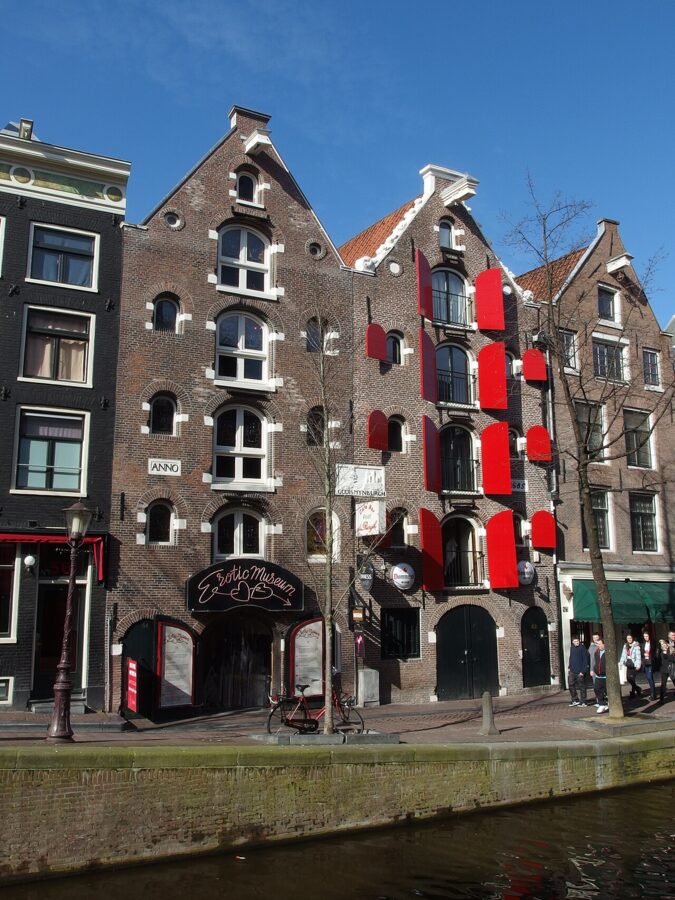
Amsterdam has three museums in this line, and they do different jobs. The Sex Museum is the light, all-ages-over-16 history tour on the Damrak. The other two are in the Red Light District itself, on the Oudezijds Achterburgwal, and open late into the night.
| Sex Museum (Venustempel) | Erotic Museum | Red Light Secrets | |
|---|---|---|---|
| Address | Damrak 18 | Oudezijds Achterburgwal 54 | Oudezijds Achterburgwal 60h |
| Minimum age | 16 | 18 | 16 |
| Price | €10 | €10 at the door, €15 online | €14.50 online |
| Hours | 10:00-18:00 | 11:00-01:00, Fri-Sat to 02:00 | 11:00-01:00, last entry 00:00 |
| About | Erotic art and objects through history, with humor | Erotic art and curiosities, more adult | Window sex work, in a former brothel |
The Erotic Museum is the adults-only cousin in a canal house in De Wallen, with a room of John Lennon’s erotic sketches as its calling card. Its own site lists €10 at the door or €15 (about US$17) online with a goodie bag, as of 2026. It suits a late evening in the district better than a morning.

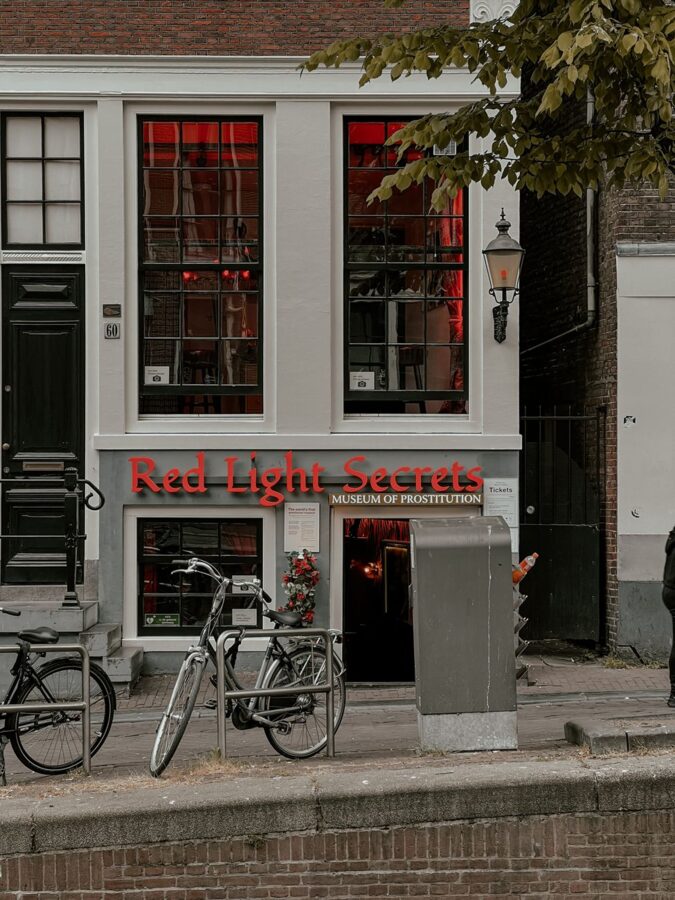
Red Light Secrets, also called the Museum of Prostitution, is the one with something to say. It occupies a former brothel and walks you through the rooms, the landlord’s office and the working day, with an audio guide of 12 stories told by a sex worker called Inga and the chance to sit behind a red-lit window and see how the street looks from the other side. Tickets are €14.50 (about US$17) online as of 2026, the minimum age is 16 and the building is not wheelchair accessible.
My pick: the Sex Museum if you want an hour of kitsch and history by daylight, Red Light Secrets if you want to understand the district before you walk through it. Doing both in one day works well, Damrak first.
The Damrak around it
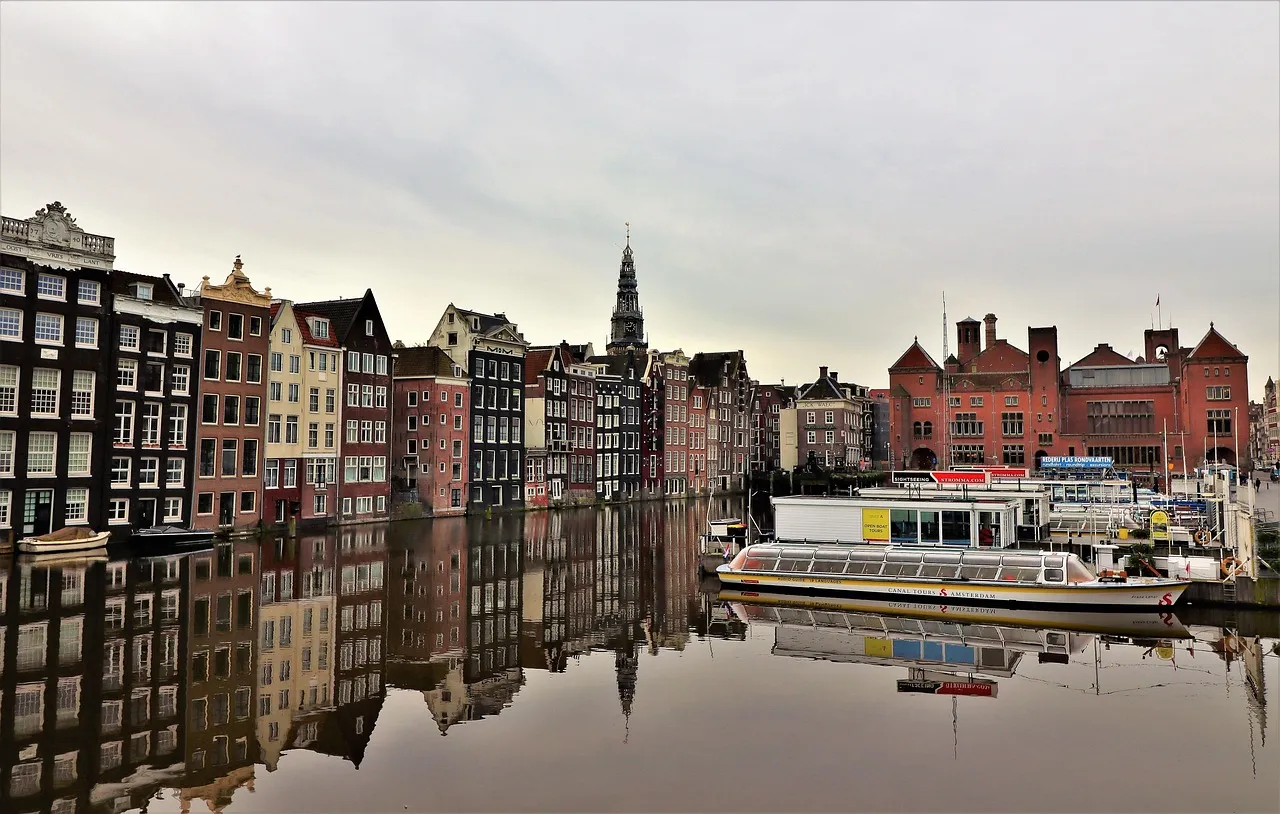
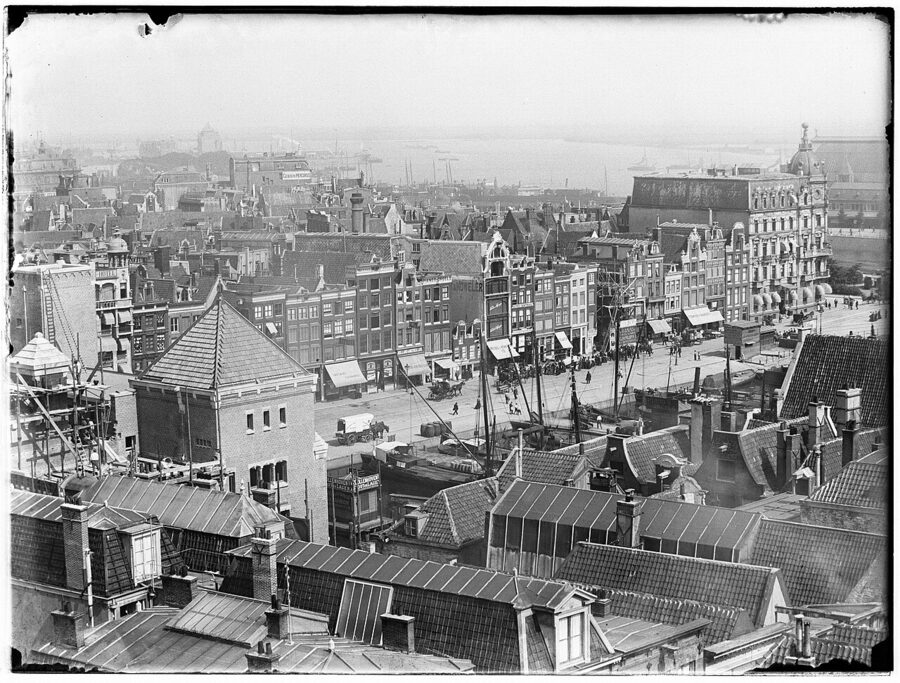
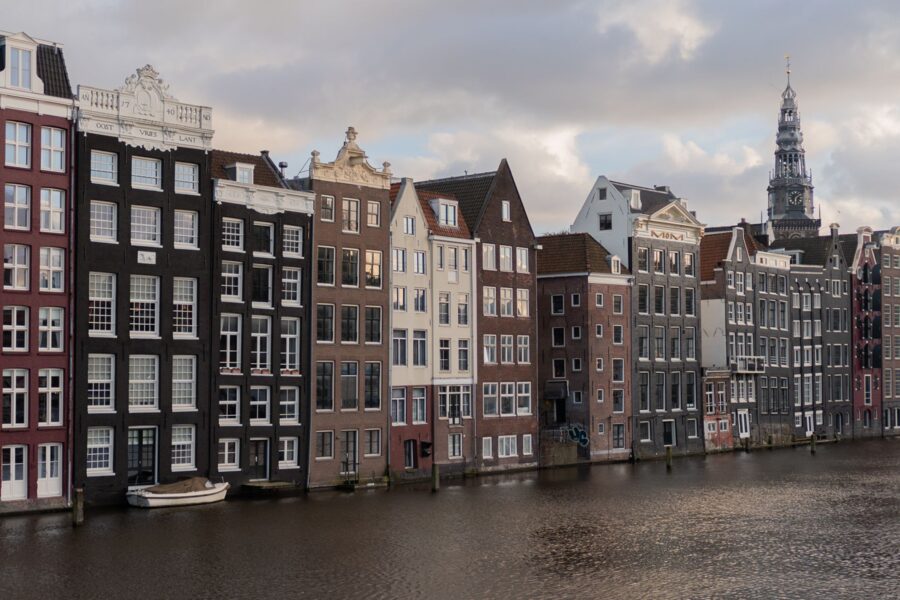
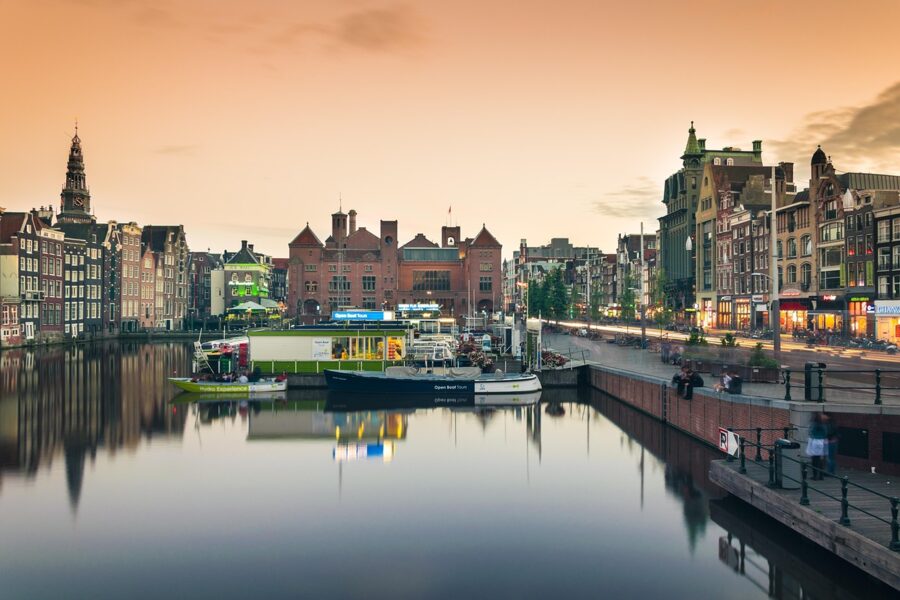
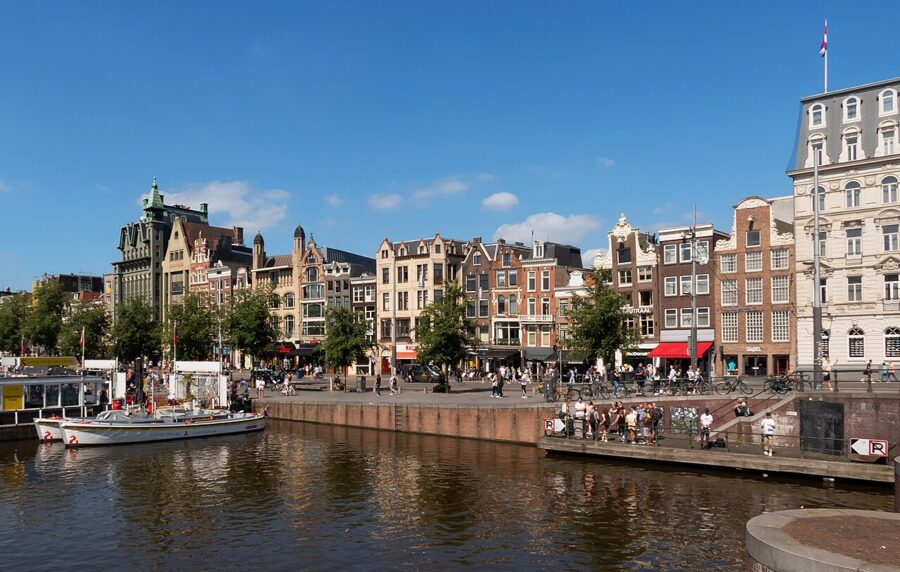
The Damrak was once the harbor arm of the Amstel, the water that brought ships to the Dam, and its east side still has the row of leaning houses standing straight in the water. Today the street is a corridor of souvenir shops, exchange offices, fast food and tour-boat ticket booths. Look at the houses, and eat somewhere else.
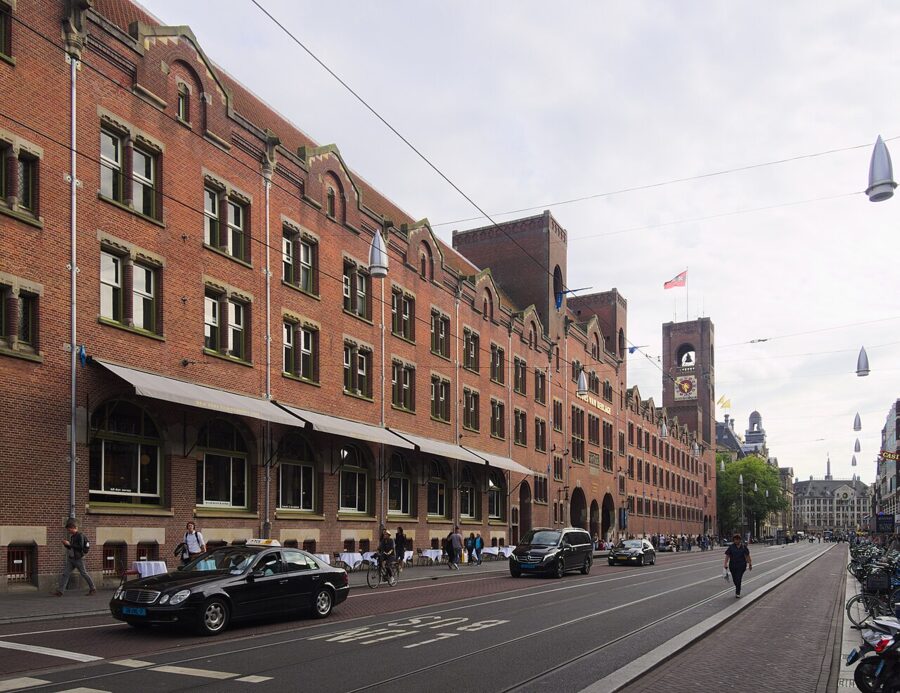
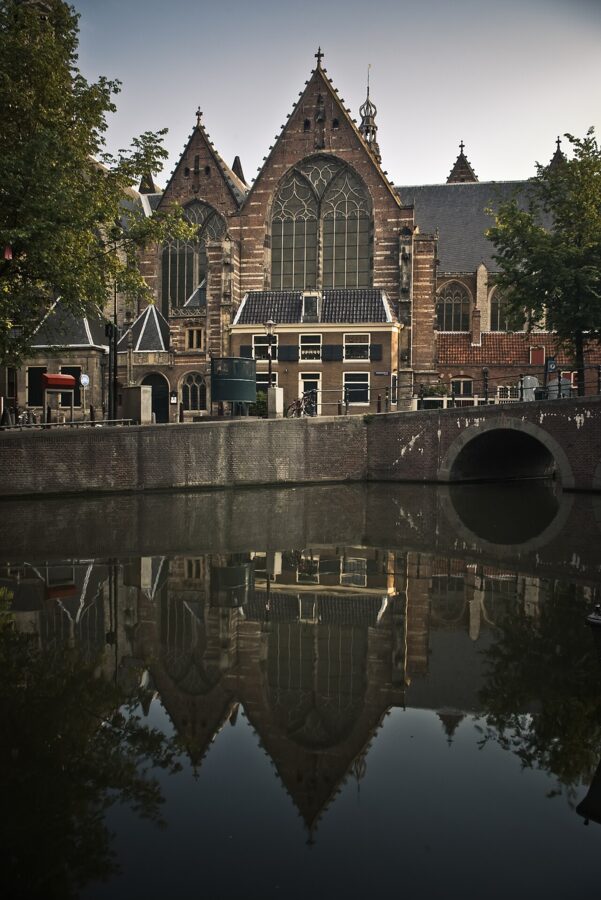
Two minutes south is the Beurs van Berlage, the brick stock exchange H.P. Berlage built between 1898 and 1903, now used for events and exhibitions. Behind the houses in the water stands the Oude Kerk, the city’s oldest building, open 10:00-18:00 Monday to Saturday and 13:00-17:30 on Sunday as listed on its visitor page. And a few minutes away on the Oudezijds Voorburgwal is the best museum within reach of the Sex Museum.


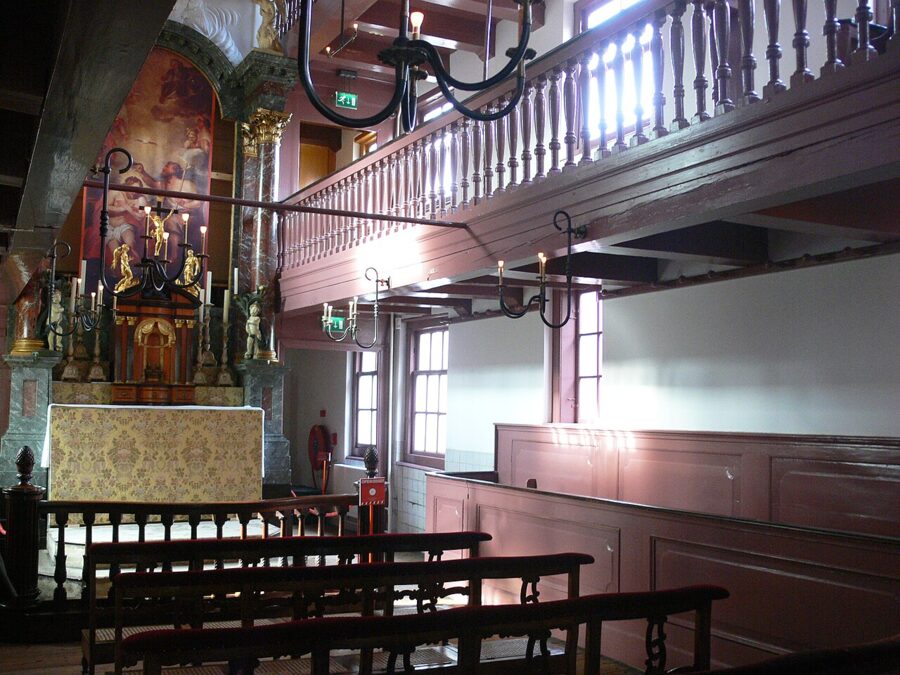
That is Museum Ons’ Lieve Heer op Solder, a canal house with a complete Catholic church hidden in its attic from the years when Catholics could not worship in public. It opens daily 10:00-18:00 and an adult ticket is €18 (about US$21) on its price list. If you only have time for one more museum nearby, make it this one; the city’s other museums are rounded up in Amsterdam museums.

One block east of the Damrak, past the Warmoesstraat, the Red Light District begins. Mind the rules on the way: drinking alcohol and smoking cannabis in the street are banned across the city center, the Damrak included, and the city’s guide for newcomers puts fines for nuisance at €100 to €650. Smoke in a coffeeshop or not at all.
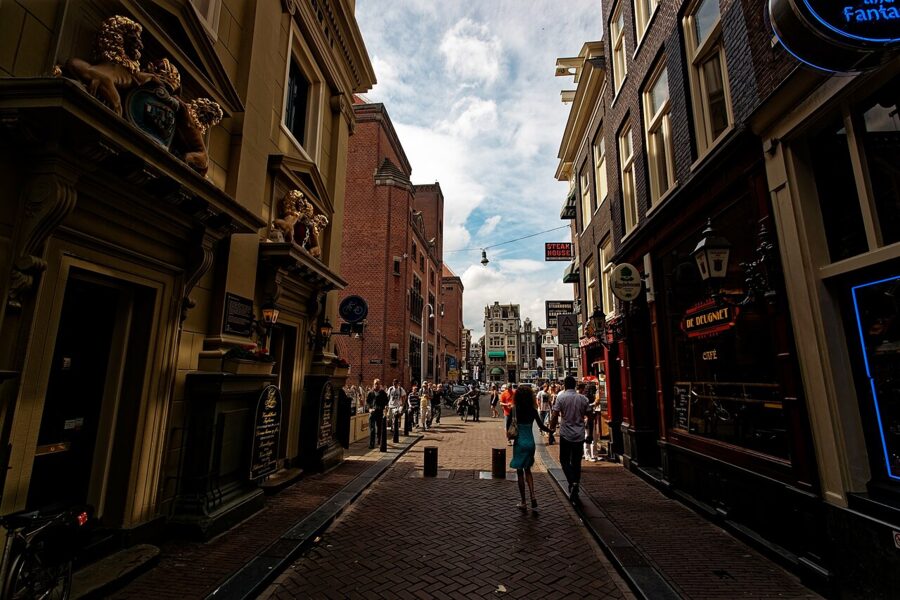

If you came with children under 16, the age rule sends you elsewhere. Science Center NEMO is a walk east along the water from Centraal Station, and the boats for canal cruises leave from the Damrak and the station front, a few doors from the museum.
Getting there
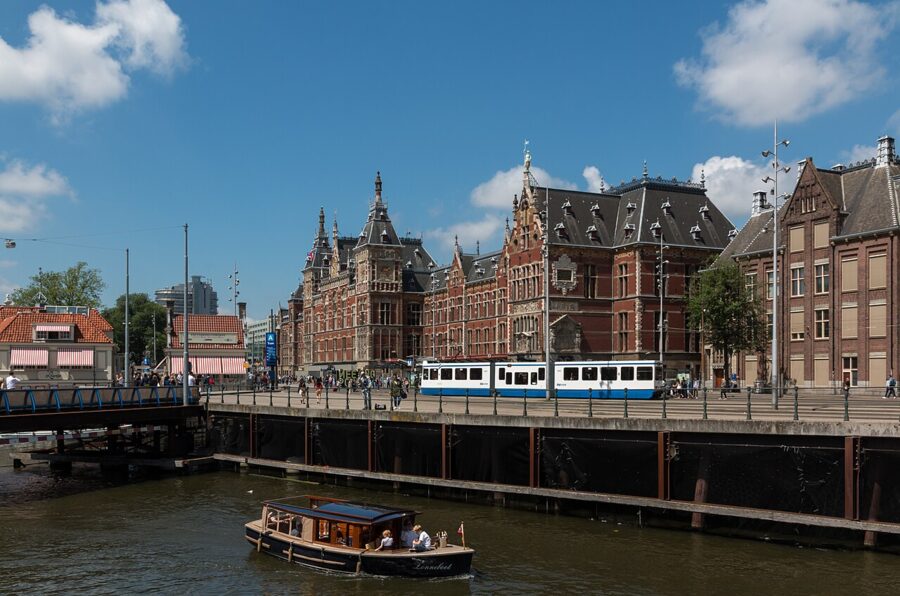
The address is Damrak 18, 1012 LH Amsterdam, on the west side of the street. From Amsterdam Centraal, where the trains, the metro and most trams stop, walk south down the Damrak for about three minutes; the nearest tram stop is Dam, a minute further on, served by trams 2, 4, 14 and 24 (as of November 2026). Do not drive: parking means a city-center garage and a walk, which takes longer than the train.


Leave the stroller and the big backpack at the hotel, bring €10 and anyone over 16, and be at the wooden door on the Damrak at 10:00, before the landings fill up.