
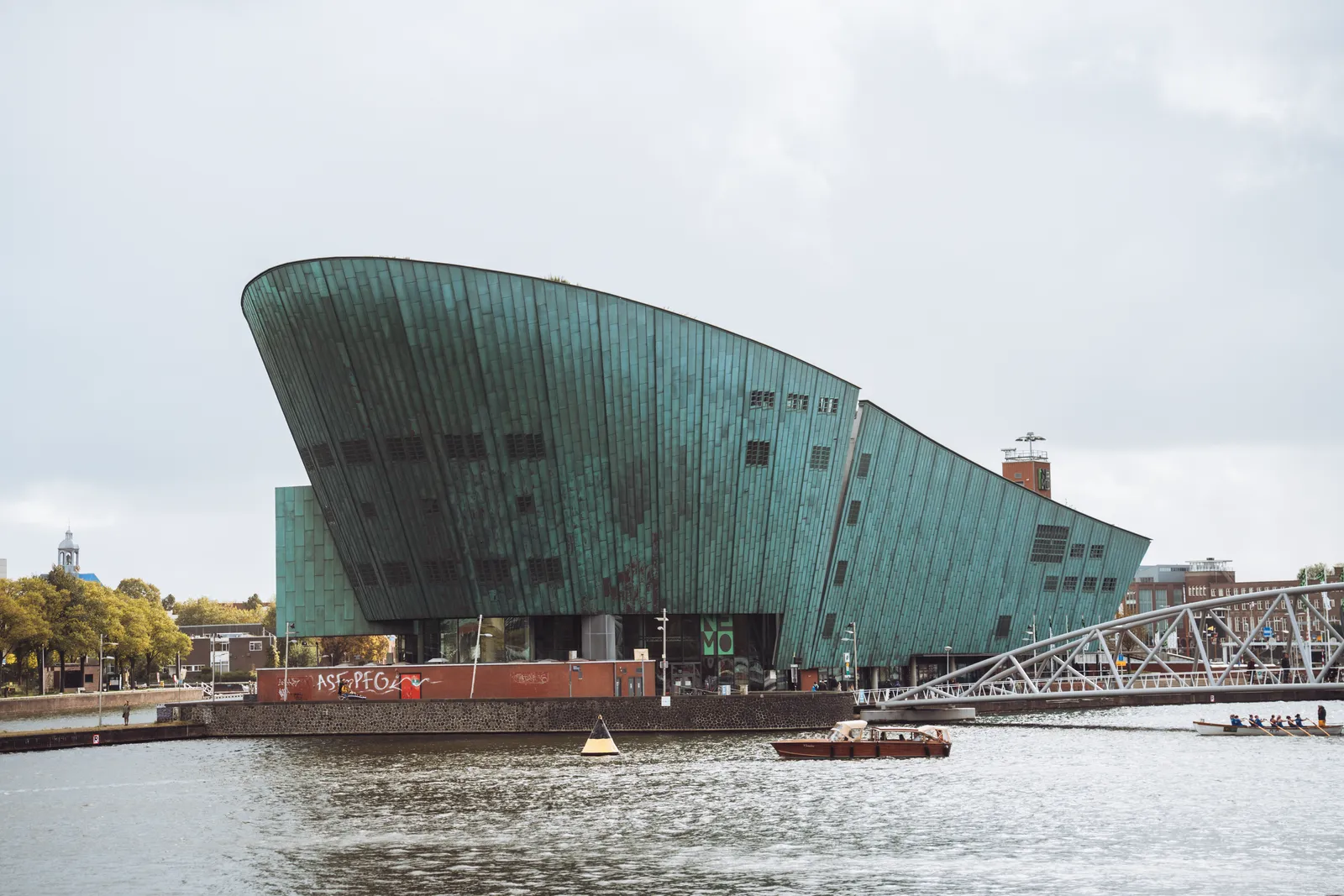
NEMO charges €21.50 (about US$25) to everyone from a four-year-old up, grandparents included, and nothing at all for the best thing it owns. The roof is free. You climb the outside of Renzo Piano’s green hull from the quay, past the families waiting at the ticket desk below, and step out on the highest public square in the Netherlands, reopened in 2025 after a rebuild with wooden decking and more than 75 kinds of plants.
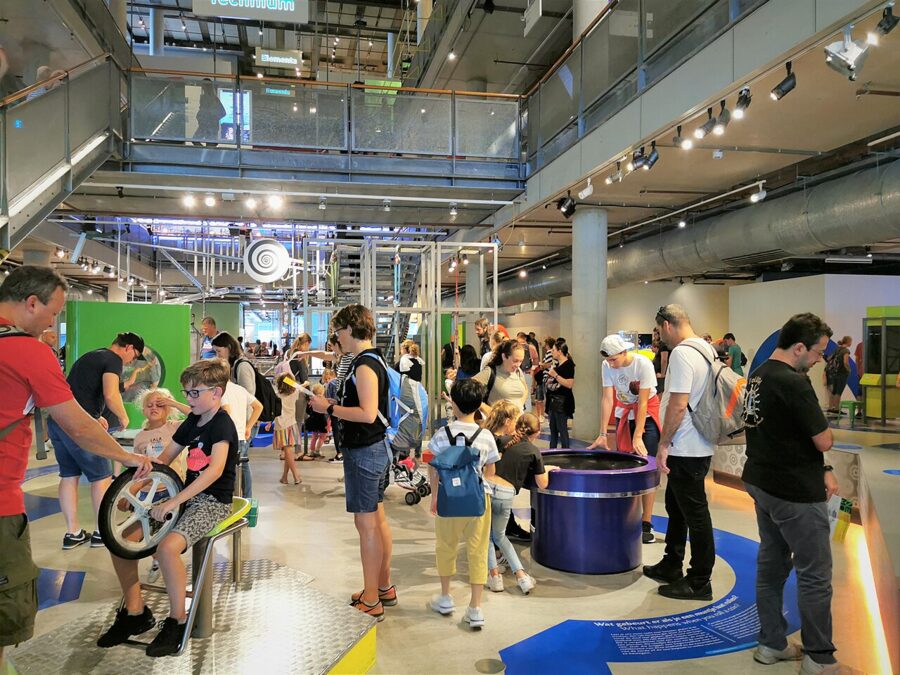
Under that roof are four floors of things you are meant to handle: soap bubbles big enough to stand in, an eight-meter machine that moves tennis balls, a laboratory where children put on safety glasses, and a top floor about sex, birth and death that the museum itself keeps for ages 12 and up. It is the largest science museum in the country, and it expected about 640,000 people through the doors in 2025. On a wet Sunday in the school holidays you will feel most of them.
Whether the ticket is worth it depends on the age of the child more than on anything inside. A five-year-old gets an hour out of the first floor and little from the rest. A ten-year-old can lose a whole afternoon in the lab and at the water tables, and a teenager wants the fourth floor, which younger siblings will not follow; adults without children mostly come for the roof, and on that point they are right.
Contents10 parts
- Who NEMO suits, and how long to give it
- A green ship built on top of a tunnel
- The roof: free, rebuilt, and open without a ticket
- Floor by floor, as of November 2026
- Tickets, time slots and the cards that get you in free
- Opening hours and the extra Mondays
- When it is busy, and when it is not
- The renovation, and what is new for 2026
- Getting there from Centraal
- Next door: the Scheepvaartmuseum and the OBA

Who NEMO suits, and how long to give it
The house rules set the floor. Children under 13 may only come in with an adult, children up to and including age three go free, and some activities are only open from age six. The fourth floor, Humania, is meant for 12 and over, and the museum says so plainly.
The sweet spot is roughly six to twelve. That is the age for the lab, the water tables, the shield game on the third floor and the giant ball machine, and it is the age that will happily do the Chain Reaction demonstration twice. Under four, the bubbles and the pulleys on the first floor are most of the value, which is fine, because the toddler is free and you are paying for yourself.
Your ticket has a start time but no end time: stay as long as you like, up to closing. With children in the six-to-twelve band, I would plan on three hours inside and half an hour on the roof. Adults on their own get through the floors in about 90 minutes, longer if Humania hooks them.
In 2026 NEMO also started opening some evenings for adults only, with talks, films and theater on science themes. The November evening on the science of pleasure, run with Schmutz Cinema in the second-floor auditorium, cost €18.50 and sold out. Watch NEMO’s announcement of the adult evenings and its event listings if you are in town without children.
A green ship built on top of a tunnel
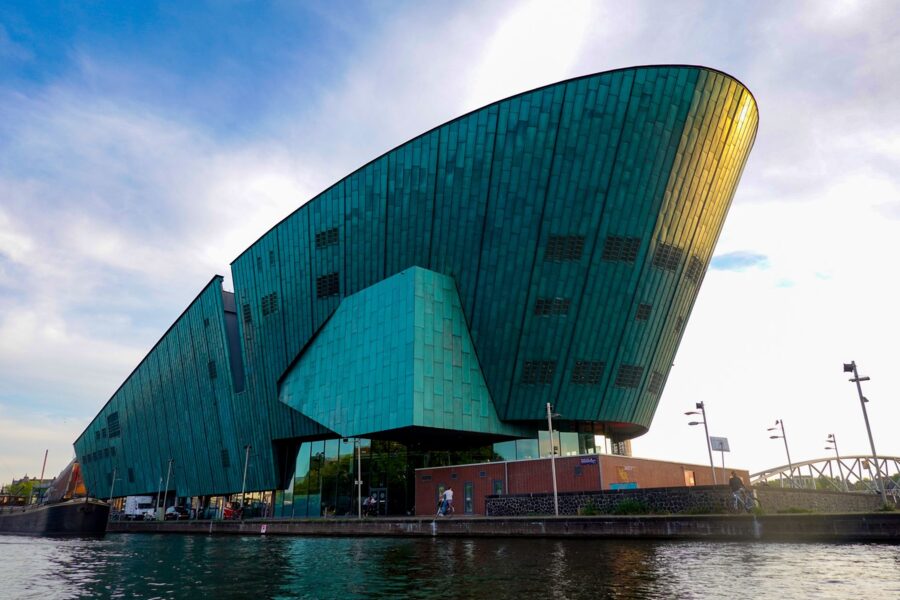
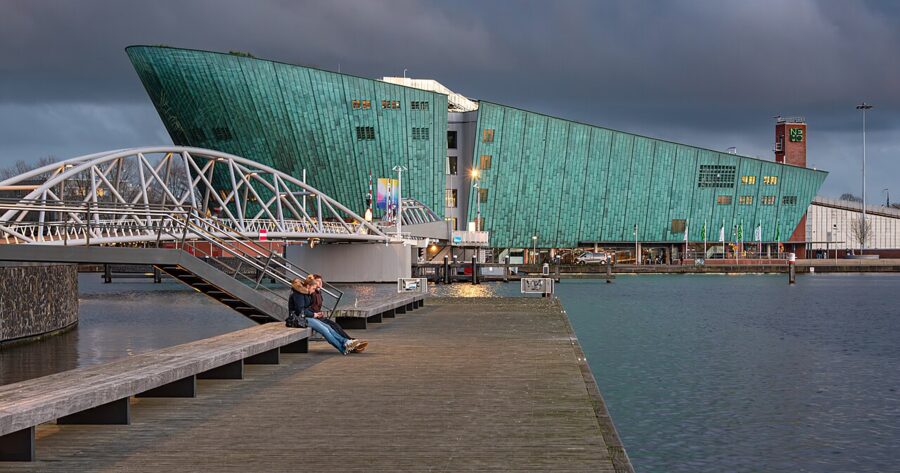
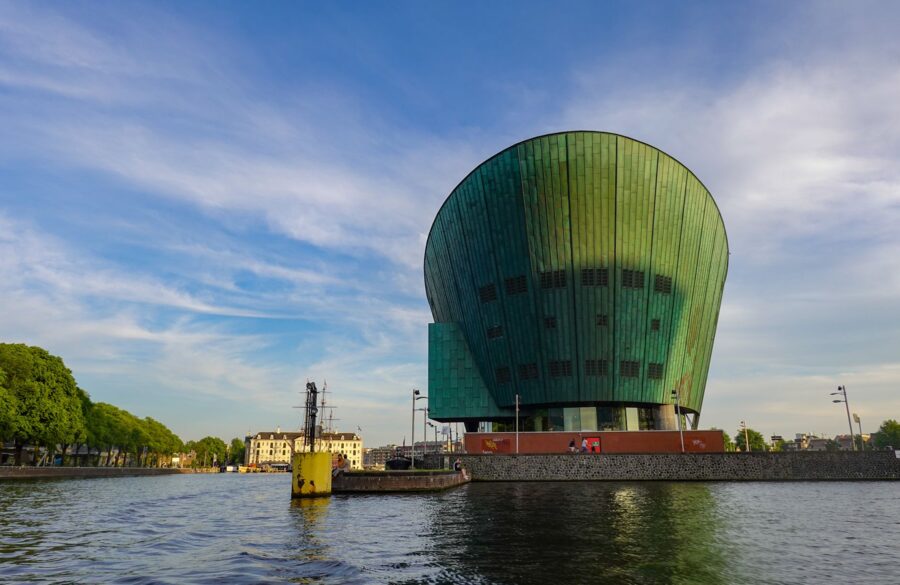
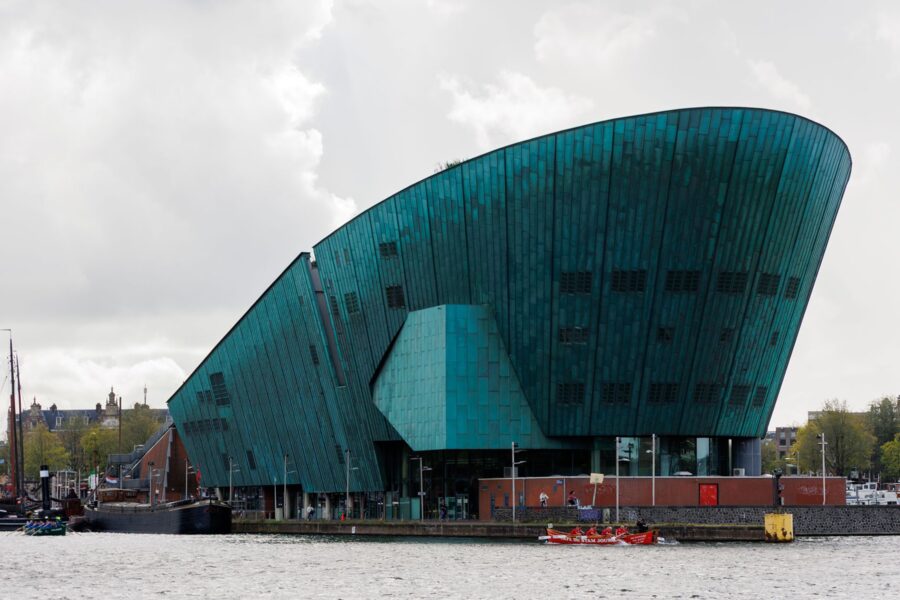
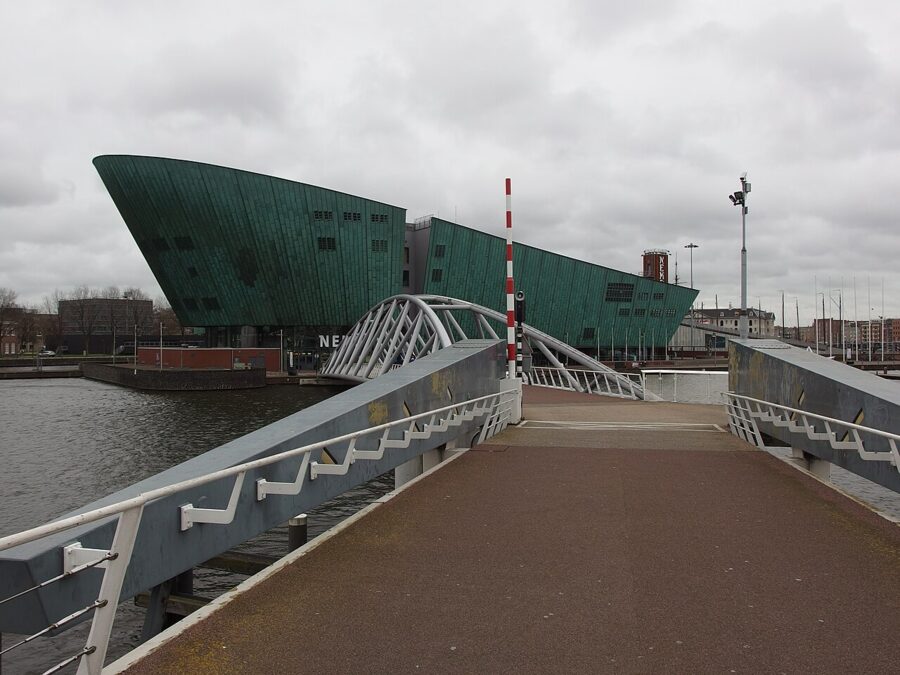
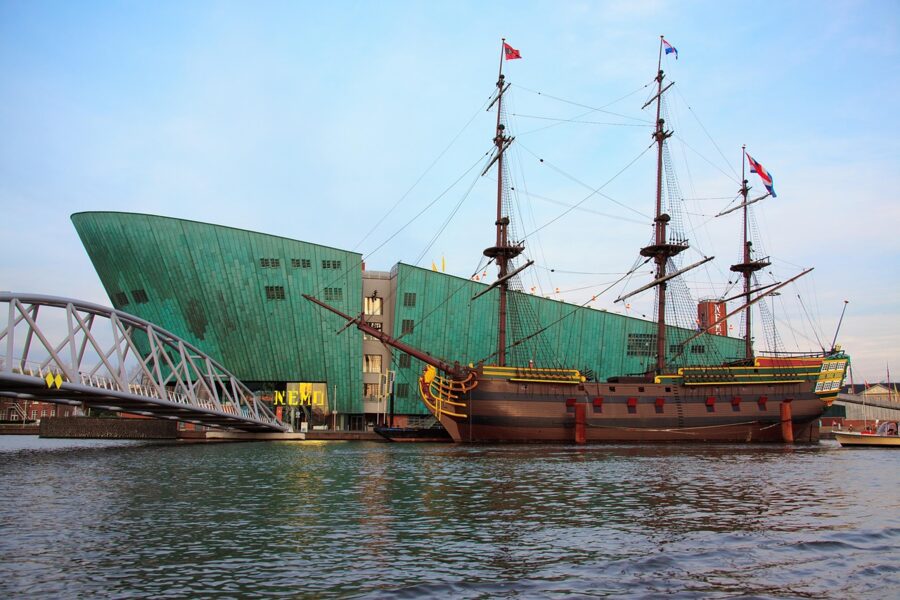
The site was the problem Piano had to solve. The museum stands on top of the IJtunnel, the road tunnel that takes cars under the IJ to Amsterdam-Noord, and the curve of the tunnel as it dives underground gave the building its shape. As the traffic drops into the ground, the building rises out of the water in mirror image, which is why from the quays it looks like the bow of a ship putting out to sea.
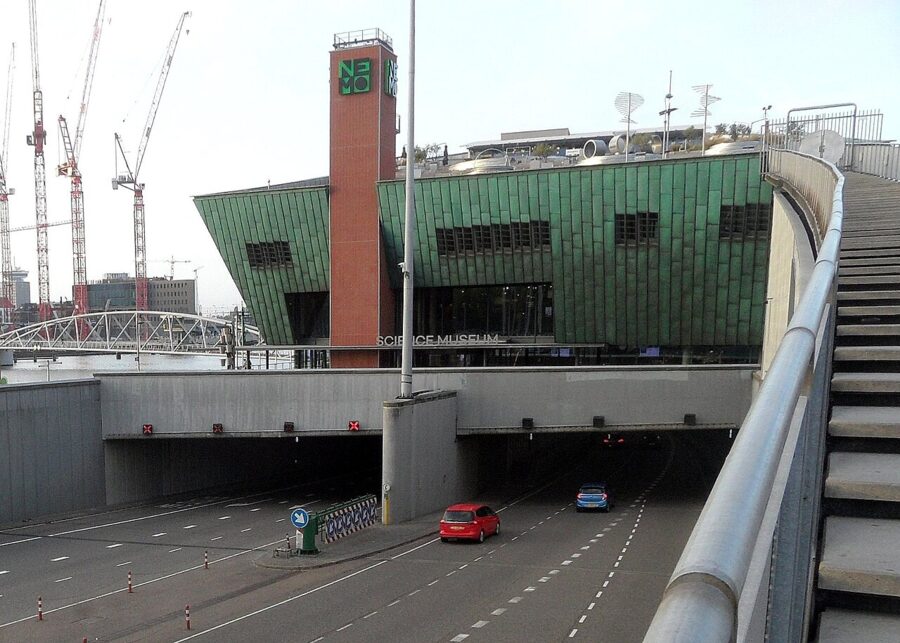

Inside, Piano went the other way. He wanted nothing to compete with the exhibits, so the walls are neutral gray, windows are kept to a minimum and a single main staircase gives you your bearings; he called it “the noble factory.” The result is dim and a little hangar-like, and after an hour children stop noticing the building at all, which was the point.
The roof was the other half of the idea. In his notes for the design Piano wrote that Amsterdam was a one-dimensional city with no square overlooking it, and he set out to give it one. That square is the sloping roof, and the whole building is, in effect, a staircase up to it.
From the Museum of Labor to NEMO
The museum is much older than the building. The painter Herman Heijenbrock, whose subjects were industry and labor, founded the Museum van den Arbeid (Museum of Labor) in 1923 to show his collection of machines and paintings and to get young people excited about technology. In 1954 it became the Netherlands Institute for Industry and Technology (NINT), on the Rozengracht and, from 1983, the Tolstraat.
The move to the Oosterdok came in 1997, under the name NewMetropolis. The building drew praise at home and abroad, and within 18 months the museum was running deficits big enough to force a new start. It came back as NEMO, first a science center and then the NEMO Science Museum, and celebrated its centenary in 2023 under its current director, Géke Roelink. You can read the full history of NEMO on its own site.
The roof: free, rebuilt, and open without a ticket
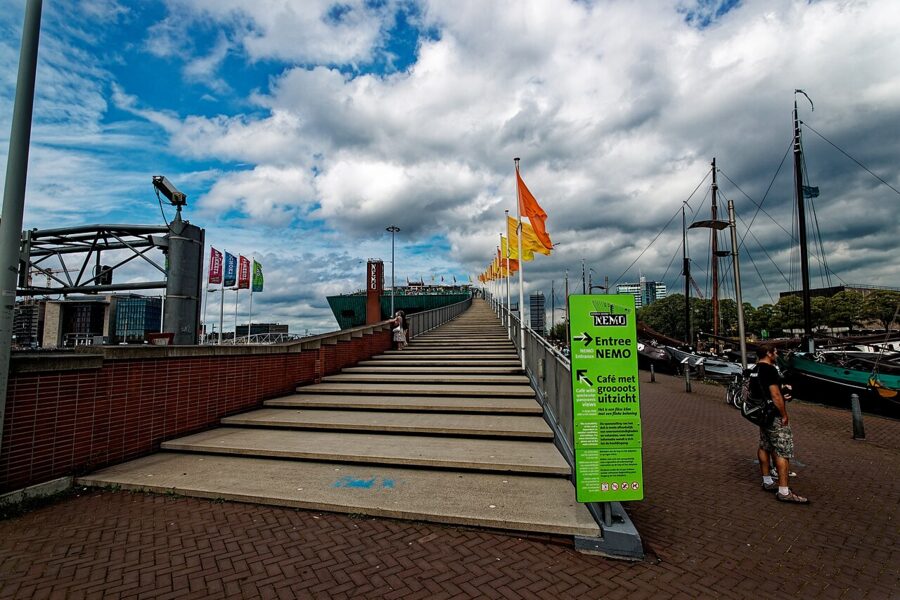
NEMO’s rooftop square is open Tuesday to Sunday, 10:00–17:30, as of November 2026, and it costs nothing. You reach it by the wide steps on the east side, straight up from the street, or by the lift in the entrance hall. You do not need a museum ticket for either.
The square you climb today is new. The old concrete roof was worn out and leaking so badly that NEMO decided to replace it rather than patch it, closed it for eight months, and had Mayor Femke Halsema open the new one on 22 May 2025, as the museum’s present to the city for Amsterdam’s 750th anniversary. The deck is now mostly wood, and Piano, 88 at the time, still had a hand in the new drawings, according to NH Nieuws’ report on the reopening.
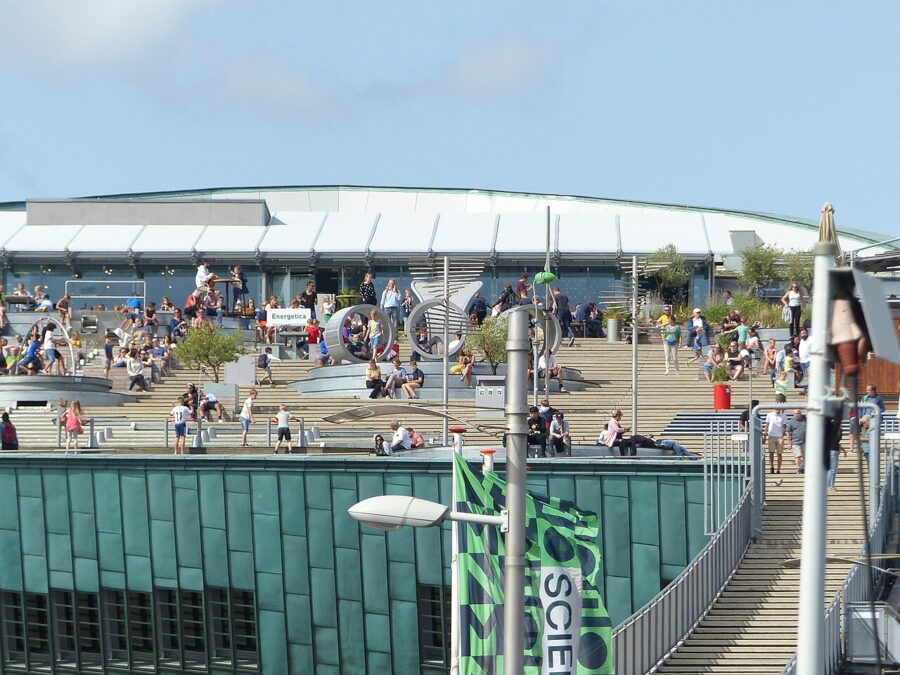

The planting was done with the slope in mind. Rainwater runs down the roof, so the plants that need the least water sit at the top and the thirstier ones lower down, more than 75 species in all. Blackbirds forage in the bushes, blue tits and great tits hunt for insects, and a butterfly garden sits at the bottom of the square.
The science is outdoors too. A measuring post called the Bioto plant listener logs temperature, moisture and soil conditions and feeds them to a live dashboard, and there are boards for naming clouds and spotting the city’s birds. Children do not stay long at the boards; they run the steps.

Food, drink and the view
At the top are the Museum Restaurant and the Conservatory bar, with a large terrace; you do not need to book. At the bottom of the square, next to the butterfly garden, a kiosk sells drinks and ice cream from its own terrace, and closes in bad weather. NEMO is smoke-free, and that includes the roof and the square at the entrance.
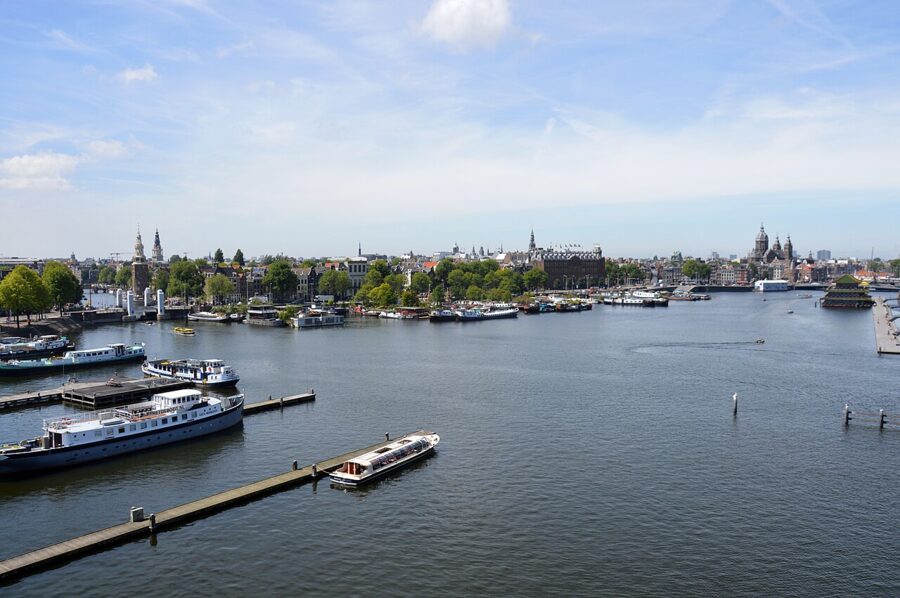
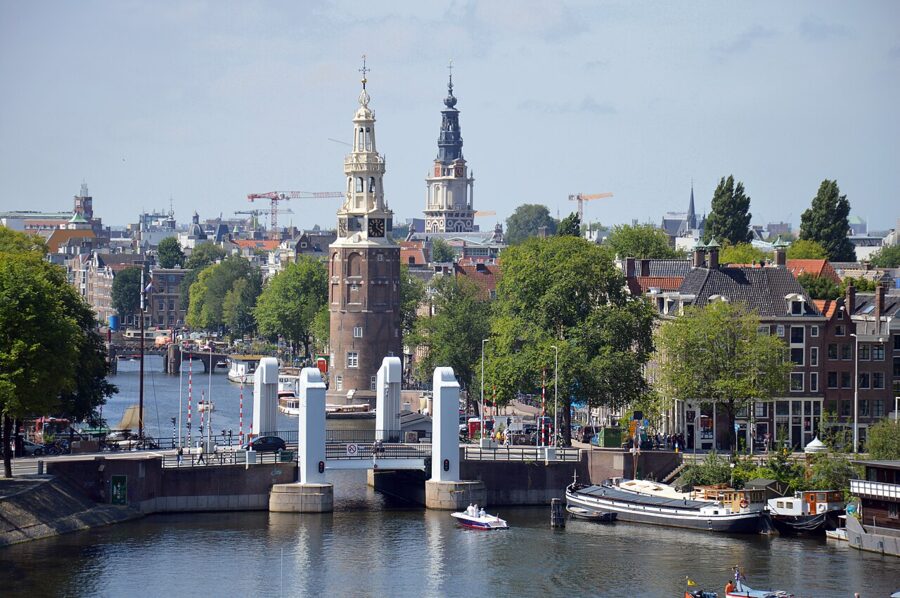
The view is the reason to come. Looking west you get the Oosterdok, the library and the long roofline of Centraal; south, the old center, with the Montelbaanstoren standing over the Oudeschans. In summer 2026 the roof stayed open until 21:00 on Thursdays from late June to late August for free concerts by Amsterdam bands, and it is worth checking whether that returns in 2027.
One warning for anyone with a stroller or unsteady legs: the middle of the roof is one huge staircase, its steps marked for contrast but without handrails, and the furniture moves around. The lower terrace by the kiosk is reachable by the lift from the entrance hall, and the restaurant terrace at the top has a push-button door and accessible toilets on the fifth floor. NEMO’s accessibility page has the rest, including an indoor navigation app for visitors with a visual impairment.
Floor by floor, as of November 2026
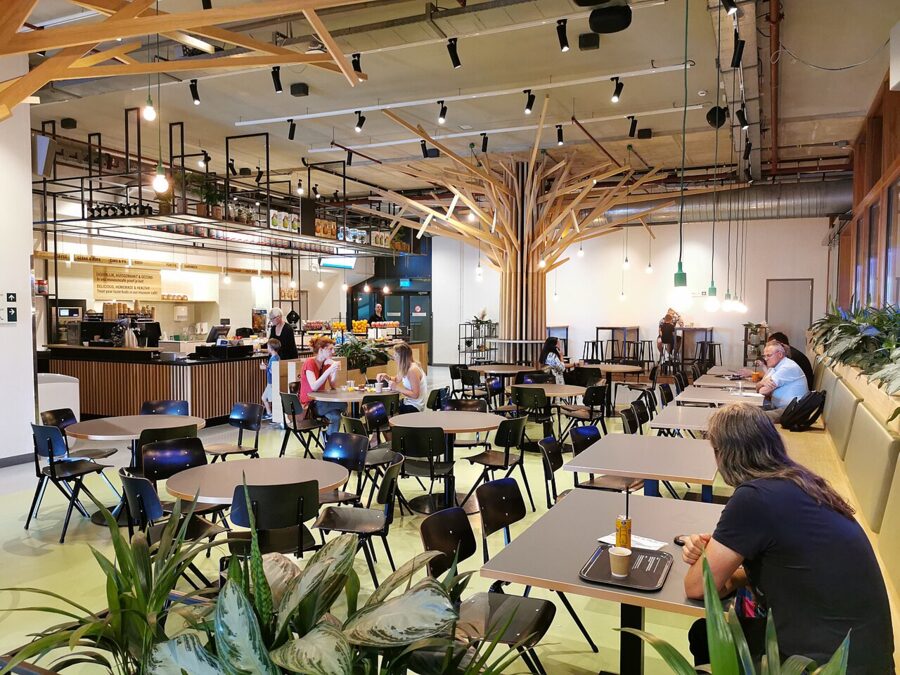
The floors are numbered from the entrance hall upward: one to four are exhibitions, five is the restaurant level, and the roof square is above that. A coffee bar sits on the first floor just past the ticket check, and the Museum café is on the second. You may eat your own lunch in the areas set aside for it (ask the staff where), but not in or next to the exhibitions.

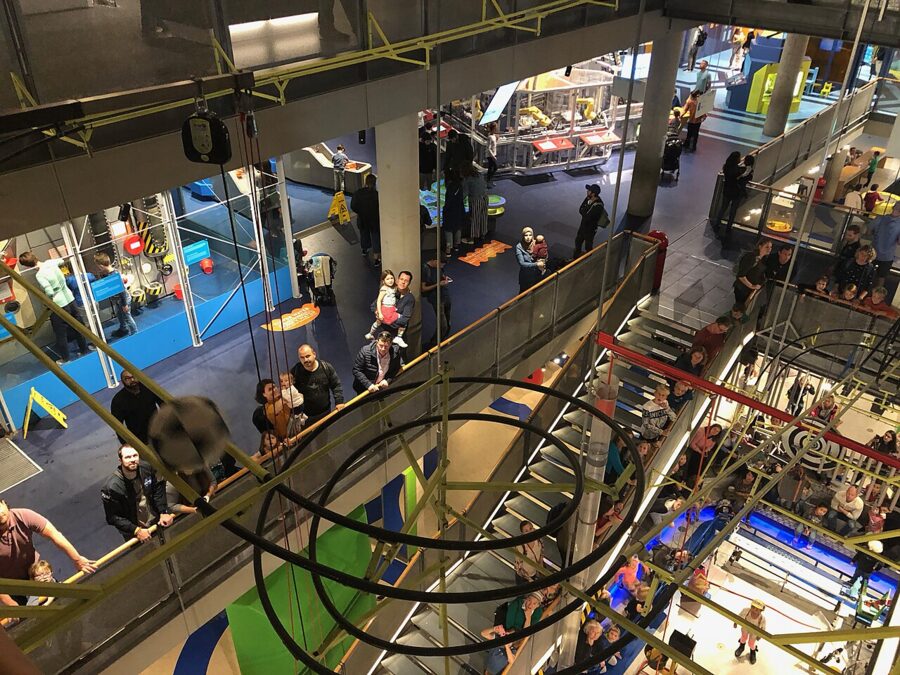

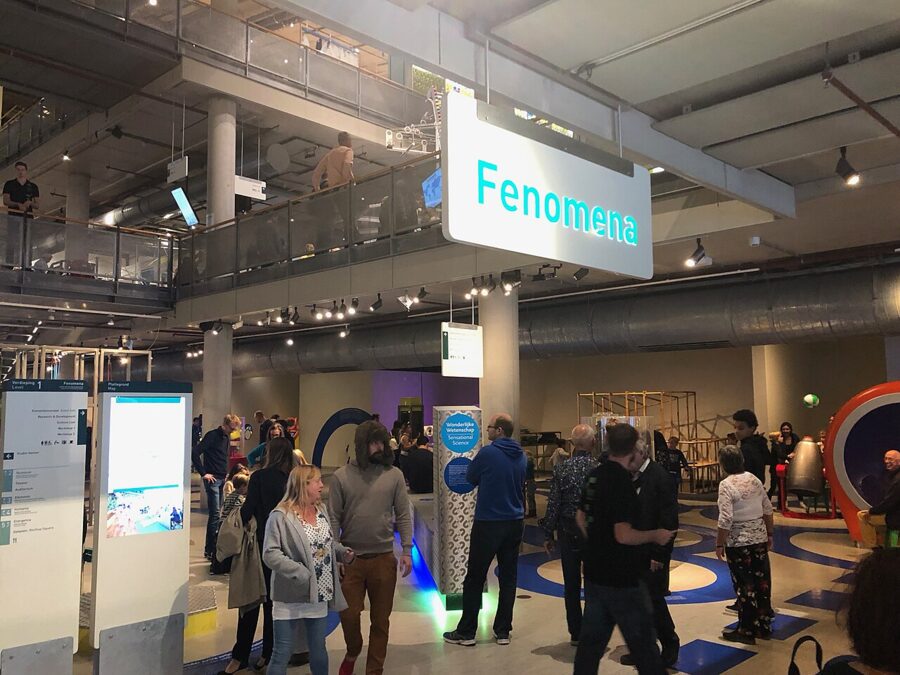
First floor: Fenomena
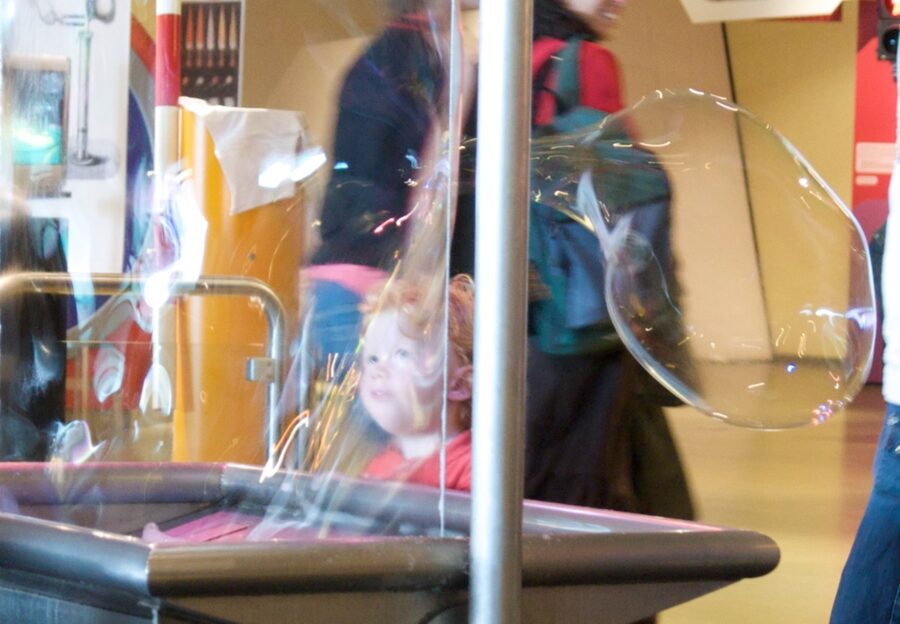
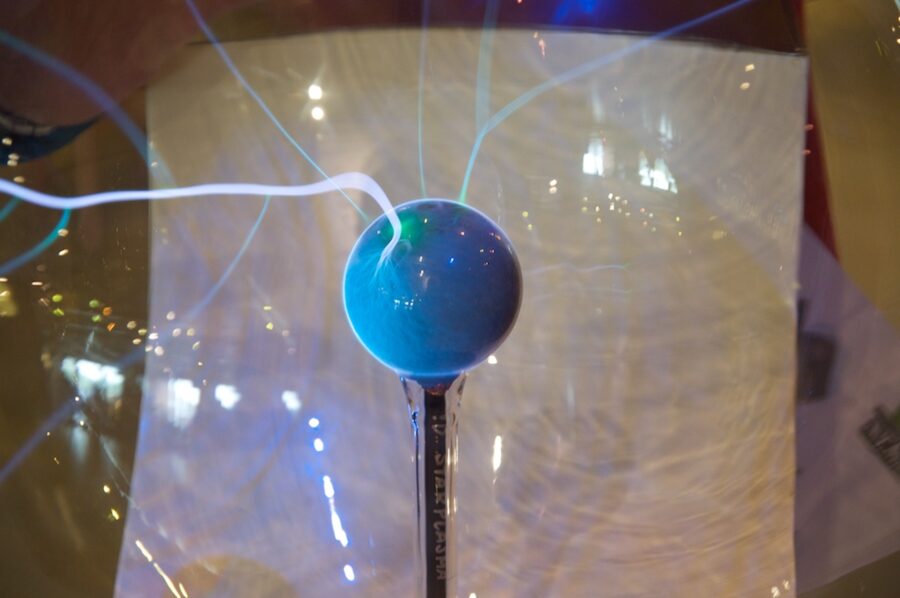
Fenomena is physics you can feel: light, sound and static electricity. It is where the soap-bubble station lives, with a mix of soap and glycerine strong enough to pull a bubble up around a standing child. There is a spinning chair with a bicycle wheel that shows the gyroscope effect, chairs on pulleys that you haul yourself up in (more pulleys, less effort), a lightning globe and a mirror that lets you appear to float.



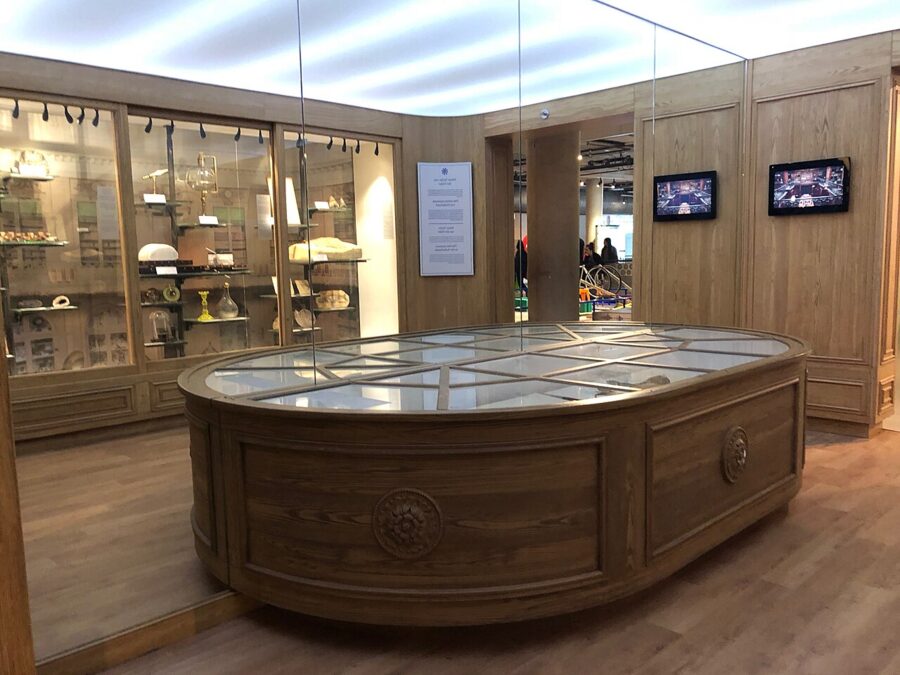
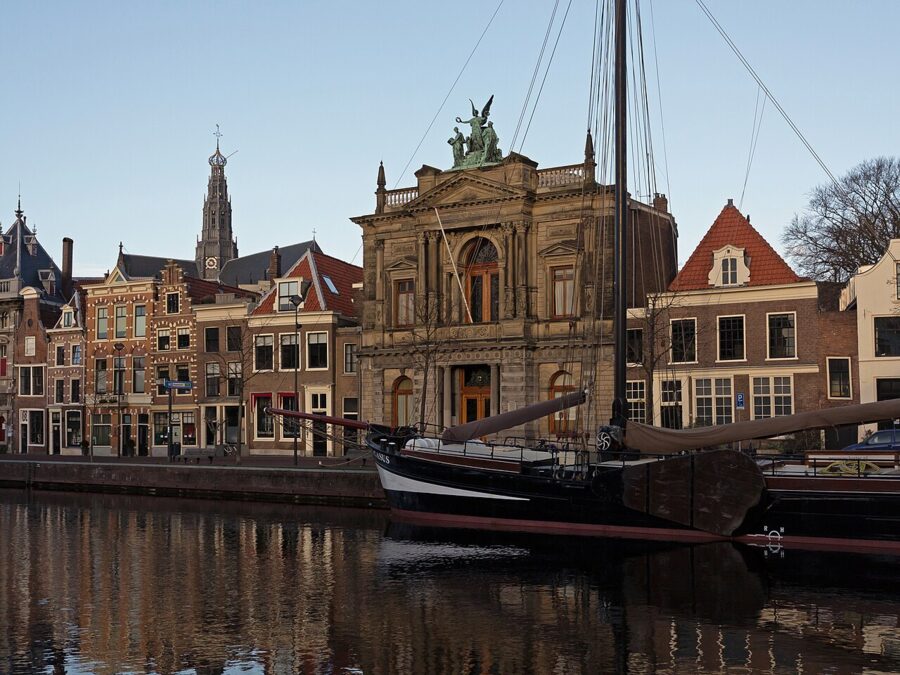
The quieter corner of the floor is for adults. A small wood-paneled room is a miniature of the Teylers Museum in Haarlem, the oldest museum in the Netherlands, founded in 1784 under the will of Pieter Teyler van der Hulst, a wealthy Haarlem resident who believed that spreading knowledge would make society better. Next to it, a section on science through the ages follows how knowledge went from the privilege of the rich to something anyone could have.


Second floor: Technium and the Maker Space
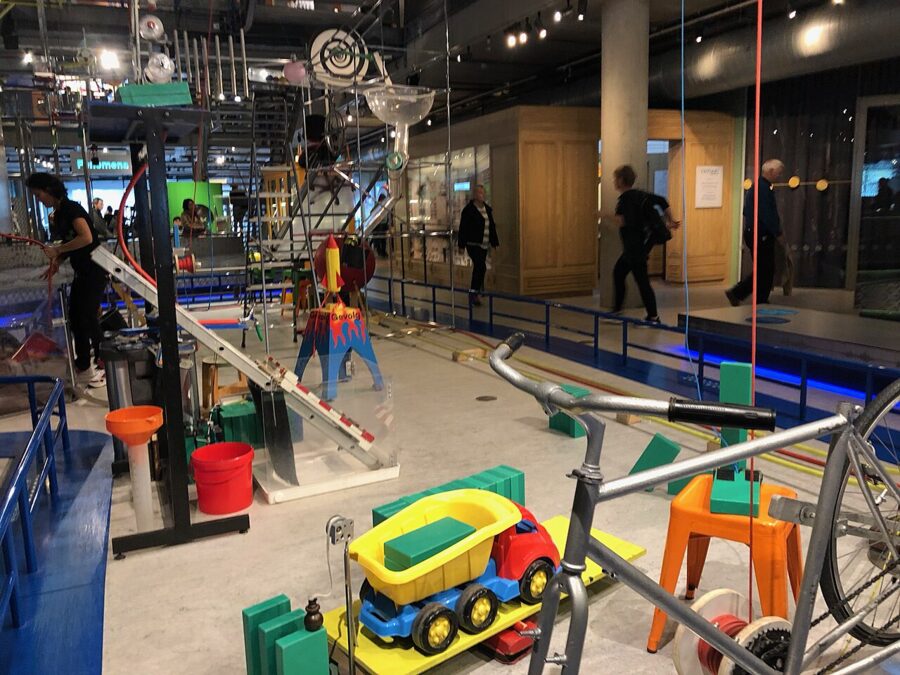
Technium is about the made world: bicycles, T-shirts, phones, rubbish. Its centerpiece is The Factory, an eight-meter machine in which you move tennis balls around a course using an Archimedes’ screw, a spring, gears, a spiral lift and a merry-go-round. Around it you can design a bicycle from memory and watch software build it on a big screen, balance an energy mix to keep a city’s lights on, and work out how to make a T-shirt without the toxic dyes.

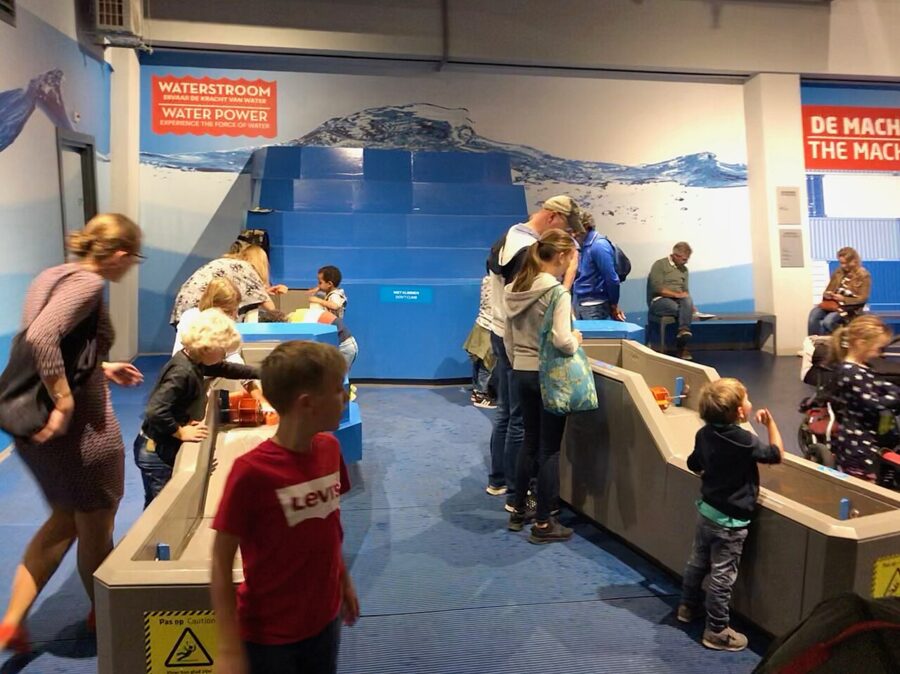
Water Power is the Dutch section, and the best one on the floor. You clean water until it is drinkable, protect a model country from flooding and build a dam to make electricity. Nearby, the Contemplation Container makes the point that the average Dutch person throws out 35 bags of residual waste a year, and asks you to look in the bin and sort it again.

The Maker Space on the same floor is a workshop for tinkering. On any given day there is something to build with your hands, such as an electric circuit that has to light a bulb, or a table of appliances taken apart to see whether you can still tell what they were. Look out of the second-floor window too: the three floating domes in the dock are POND, an installation whose colors, powered by microbes, show the state of the water after dark.

Third floor: Elementa and the Laboratory
Elementa goes from the Big Bang down to the atom. The object to touch is a 47-kilo iron meteorite, 4.6 billion years old and so older than the Earth, found at Nantan in China in 1958. There is a trip through the solar system, past planets and comets, and a corner on how life might start, built around the 1953 experiment in which Stanley Miller and Harold Urey cooked up a “primordial soup” and found amino acids in it within a week.
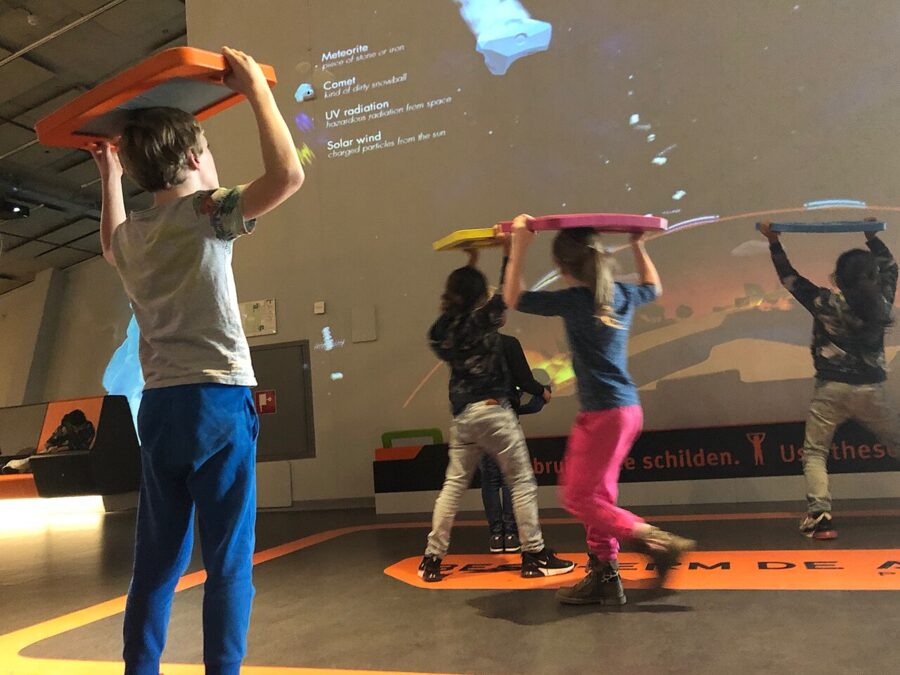

The Laboratory is, to my mind, the best thing in the building for anyone over six. You put on a lab coat and safety glasses and run real tests on everyday materials: what color red cabbage turns, what salt does to plant cells, which inks hide inside green and brown, what makes a rocket go. Instructions come in eight languages, English included, and one table adjusts to wheelchair height.
The third floor also has the lactation room. If you have a baby and a ten-year-old, this is the floor to camp on.
Fourth floor: Humania, for 12 and up
Humania is about being human, split into “I was,” “I am” and “I will be.” It takes on gender, sexuality, consent, sexual orientation, the naked body, birth and death, plainly and without euphemism, and the museum’s Dutch page warns that some of it can be confronting. It is the floor a teenager will still be talking about at dinner.
The centerpiece is A Handstand, an 8.5-meter sculpture by Florentijn Hofman of a figure upside down and inside out, with the skeleton on the outside. Around it you can test your willpower by gripping an ice-cold rod against an opponent, play a game controlled only by your breathing, find out which positions your body can hold, and walk a dark tunnel about how different cultures deal with the dead. With an eight-year-old, skip it and go back down to the lab.
The Chain Reaction and the daily demonstrations
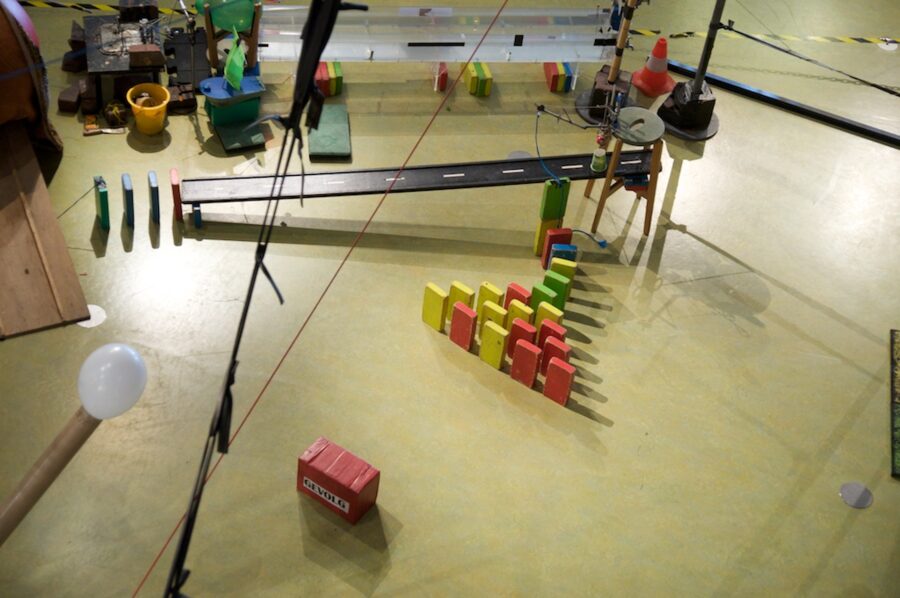
NEMO’s staff run demonstrations through the day, and the one that matters is the Chain Reaction. An office chair rolls, a mannequin plays tennis, dominoes fall into one another, and a presenter explains potential and kinetic energy while it all goes off. When NEMO asks people what they liked, it is one of the things they single out by name.

In the school holidays NEMO adds extra workshops and seasonal experiments in the lab; for the Christmas break of 2026 it promises winter experiments. NEMO does not do guided tours, and it has no birthday-party packages, though a group of children with timed tickets is welcome.
Tickets, time slots and the cards that get you in free
Every ticket has a start time, which spreads people across the day. Book online and you are guaranteed entry; the desk only sells whatever is left for that day. Arriving early or late for your slot is not a problem, and you can show the ticket on your phone. The ticket shop listed these prices as of November 2026:
| Ticket | Price |
|---|---|
| Age 4 and over (children, teenagers and adults alike) | €21.50 |
| Age 0–3 | Free |
| Students in higher education, European Youth Card (CJP), University Card | €14 (about US$16) |
| Museumkaart, I amsterdam City Card, Amsterdam Stadspas, VriendenLoterij VIP card, ICOM card, NEMO annual pass | Free, but book a timed ticket |
| Companion of a visitor with a disability (one per visitor) | Free |
Card holders still need a timed booking, and the card is checked with the booking at the door; without a valid card you pay the full rate. Changing an online ticket is done with a self-service tool using a ticket number from your order (it usually starts with 77), and refund requests go through ticket support and take up to 30 working days, as NEMO’s FAQ explains.
You can buy a Museumkaart at the NEMO desk: €75 for adults and €39 for those 18 and under, both including a €4.95 registration fee, and you get a temporary card you can use the same day. If the trip also includes the Rijksmuseum and a couple of the other Amsterdam museums, do the sums before you buy single tickets. NEMO also sells the I amsterdam City Card in its 24-hour (€67) and 48-hour (€94) versions, which add public transport.
Opening hours and the extra Mondays
NEMO is open Tuesday to Sunday, 10:00–17:30, as of November 2026. On New Year’s Day it opens 12:00–17:30. It also opens on Mondays in the school holidays, on public holidays and through spring and summer, and its plan-your-visit page lists the exact Mondays:
- December 2026: Monday 21 and 28
- January 2027: Monday 4
- February 2027: Monday 8, 15 and 22
- March 2027: Monday 22 and 29
- April to August 2027: every Monday
- October and November 2027: Monday 18 and 25 October, Monday 1 November
- December 2027: Monday 27
The museum’s own pages give two versions of the summer rule, “from March to 24 August” in one place and “April to September” in another. Trust the dated list above over either.
When it is busy, and when it is not
NEMO’s own advice is the right advice: weekdays after 14:00, outside the Dutch school holidays. School groups are dropped off on the museum’s west quay until 11:00, which tells you who has the building on weekday mornings in term time. Rain fills it fast; on a warm, dry Sunday a good part of the city is in the Vondelpark instead.
Amsterdam is in the northern region for school holidays. The government’s 2026–2027 school holiday table gives these dates for the north:
| Holiday | Northern region (Amsterdam) |
|---|---|
| Christmas | 19 December 2026 – 3 January 2027 |
| Spring (voorjaarsvakantie) | 20–28 February 2027 |
| May (meivakantie) | 24 April – 2 May 2027 |
| Summer | 10 July – 22 August 2027 |
The other regions matter too, because NEMO draws families from all over the country. The south takes its spring break a week earlier, 13–21 February 2027, and the central and southern summer holidays run on to 29 August and 5 September. In those weeks book the latest slot that still leaves you two hours, and keep the roof, which needs no ticket, for whenever the floors get too full.

The renovation, and what is new for 2026
The big job of the last few years was the roof. It was rebuilt over eight months in 2024 and 2025 while the museum below stayed open, and by the end of 2025 more than 300,000 people had been up, about half the number the museum expected inside for the whole year. As of November 2026 NEMO has announced no closure of the museum itself, and its opening calendar already runs to December 2027.
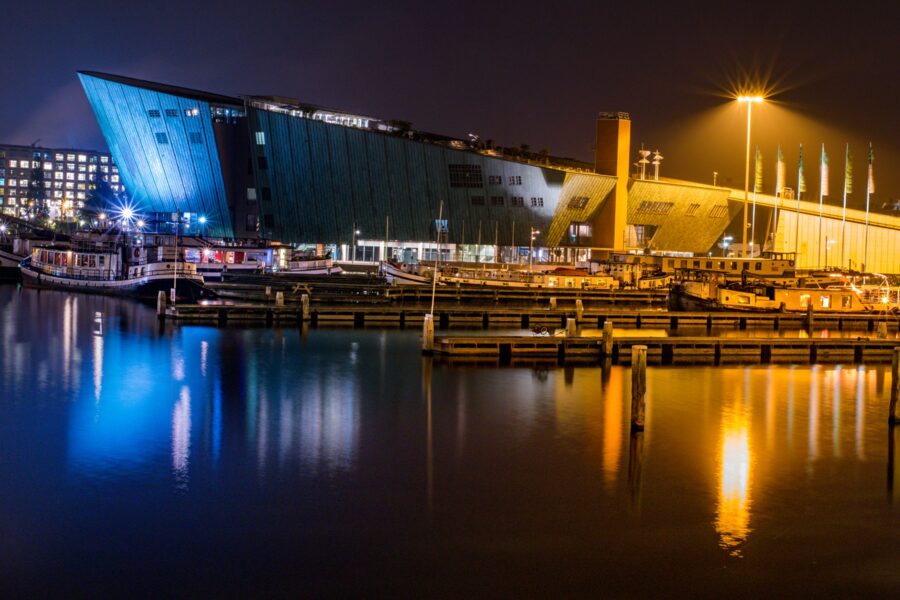
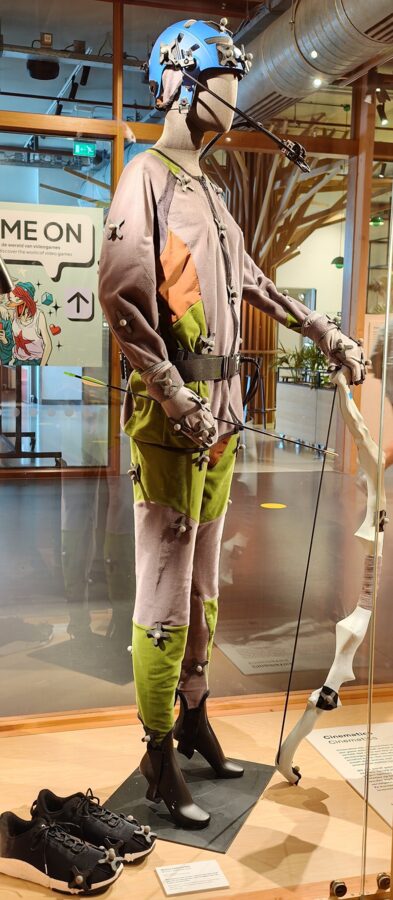
Inside, the museum picks a theme a year. For 2026 it was Play, with the game designer and artist Mary Flanagan as its first artist in residence and the Game On exhibition on video games over the summer. The adult evenings started in 2026 as well, as a pilot. From 26 November 2026 to 17 January 2027 NEMO is one of the sites of the Amsterdam Light Festival, so the building is worth a look after dark even when the doors are shut.
Getting there from Centraal
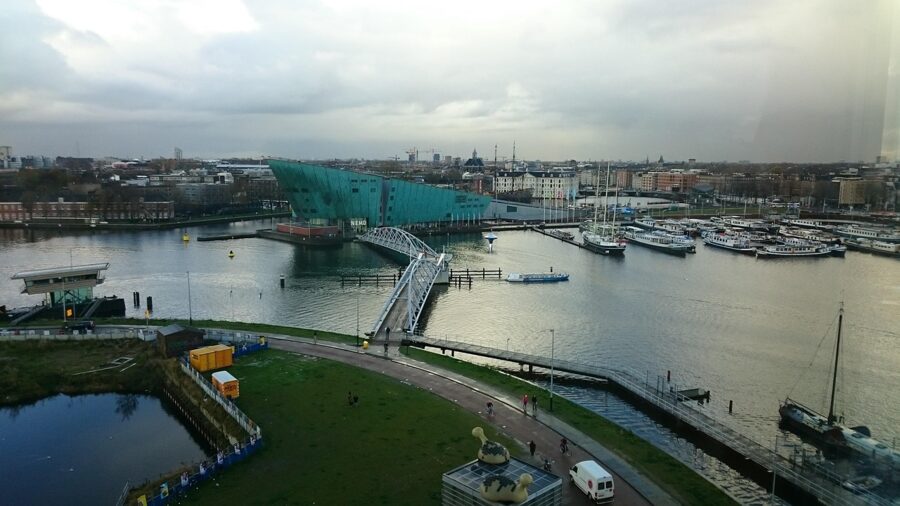
NEMO is at Oosterdok 2, and on foot it is about 15 minutes from Amsterdam Centraal. Leave the station by the main exit on the city side, turn left and follow the water east; the green hull is in sight most of the way, and you reach the entrance over the footbridge across the IJtunnel ramp. NEMO’s getting-here page gives the same route.
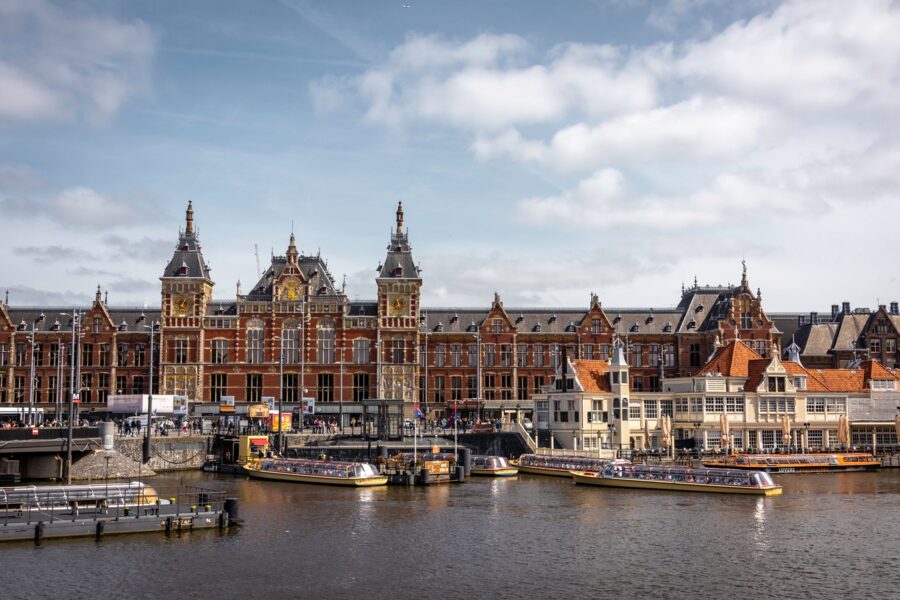
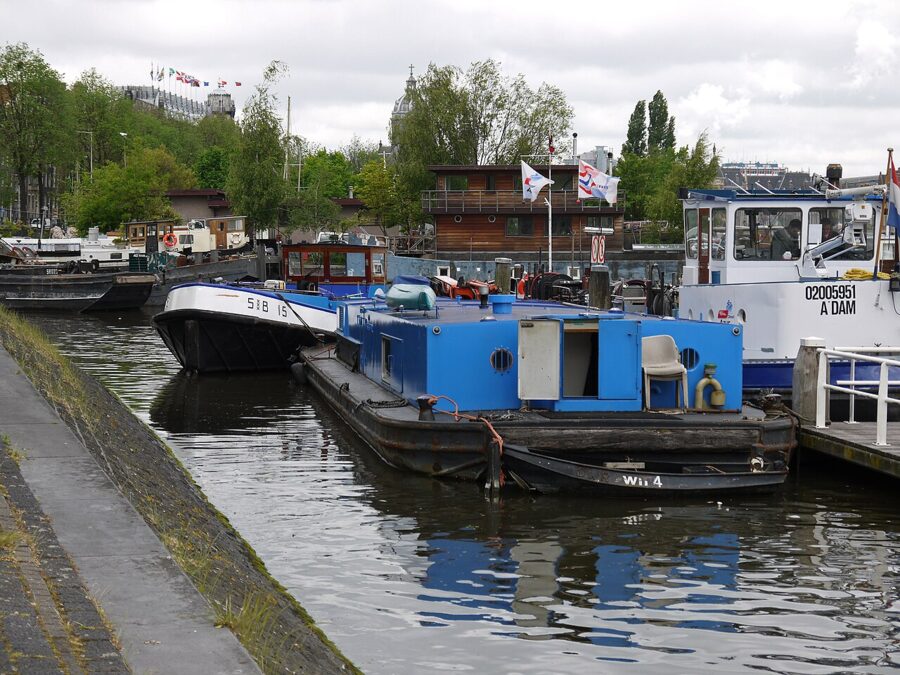


By bus, take GVB bus 42 from Centraal toward Cruquius-eiland and get off at Kadijksplein, about five minutes’ walk from the entrance. Many of the boats for a canal cruise leave from in front of Centraal, so a morning on the water and an afternoon at NEMO fit into one day without a tram. The Red Light District lies a short walk southwest of the station, and the waterfront route to NEMO does not pass through it.
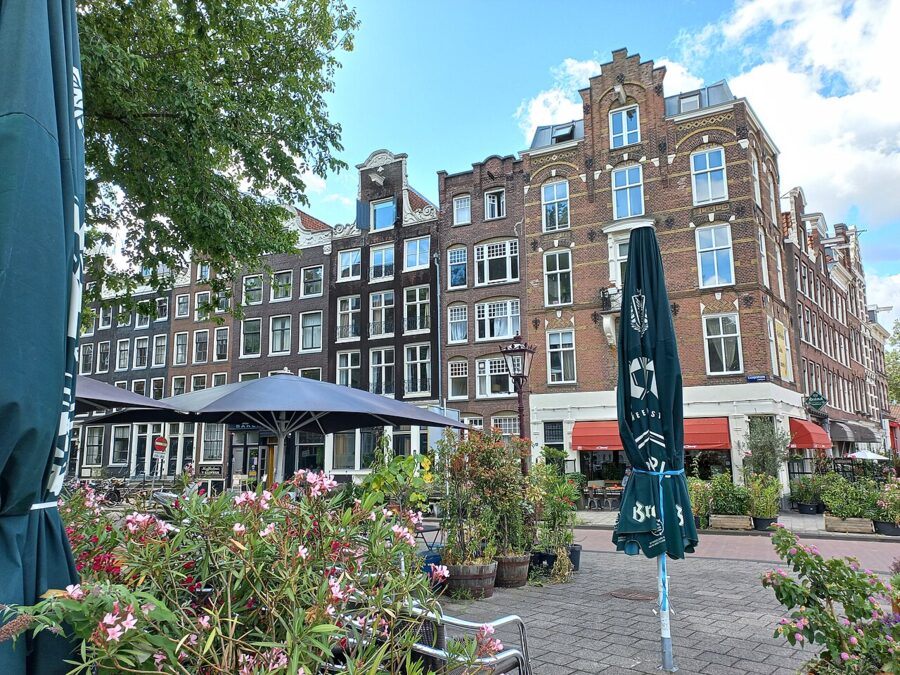
Driving is a bad idea and NEMO says as much. It has no parking of its own; the nearest garages are Oosterdok (400 meters), Markenhoven (600 meters), Q-Park Waterlooplein (750 meters, by the Waterlooplein market) and Q-Park Amsterdam Centraal (1.3 kilometers), all at central Amsterdam rates. The P+R garages at Noord or Zeeburg cost a fraction of that, with public transport into the center.
Next door: the Scheepvaartmuseum and the OBA
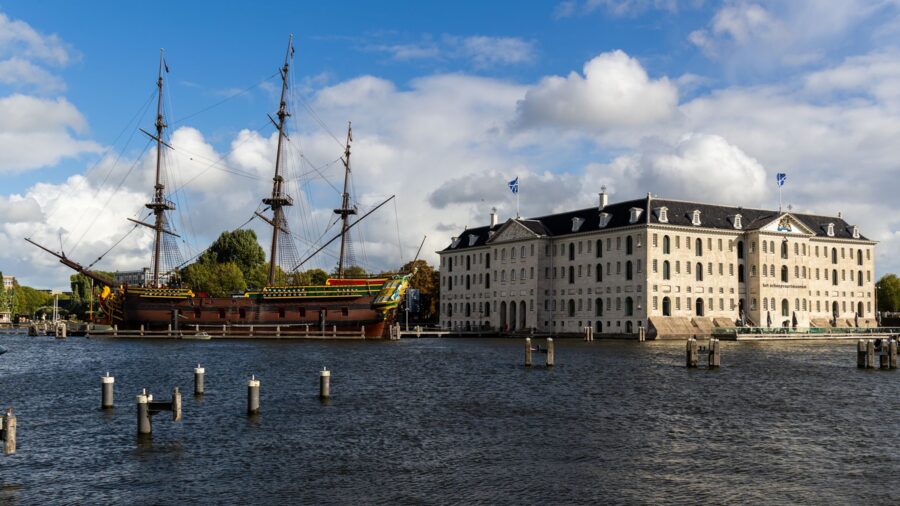
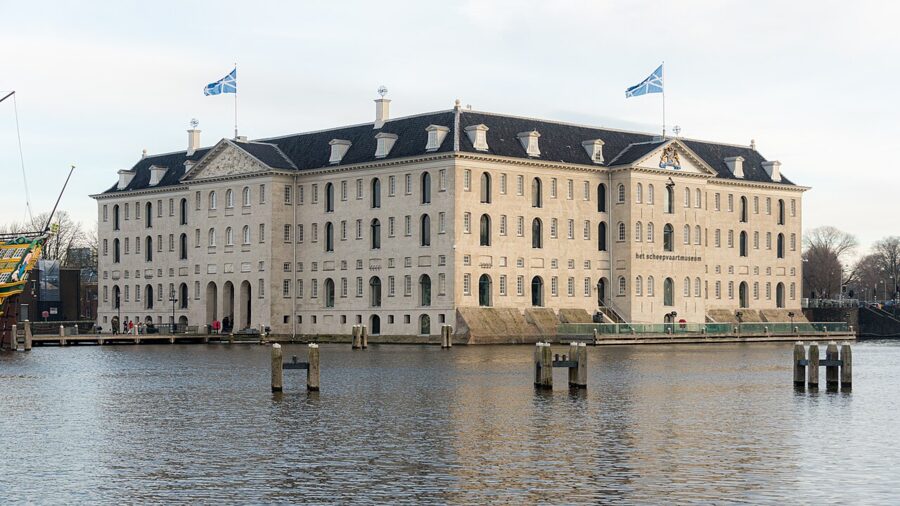
The white classical block across the water east of NEMO is Het Scheepvaartmuseum, the National Maritime Museum, at Kattenburgerplein 1. It occupies the Admiralty’s naval storehouse of 1656, with the replica of the East Indiaman Amsterdam moored alongside, and you can go aboard (the ship is partly accessible by a special lift).
As of November 2026 the Scheepvaartmuseum is open daily 10:00–17:00, closed on King’s Day, Christmas Day and New Year’s Day. Adults pay €20, children aged 5–17 pay €8.50 and children four and under go free, and the Museumkaart and the I amsterdam City Card both cover it. It takes cards only, no cash. Doing it on the same day as NEMO is a lot for small children; for a ten-year-old who likes ships, it is a good morning before a NEMO afternoon.

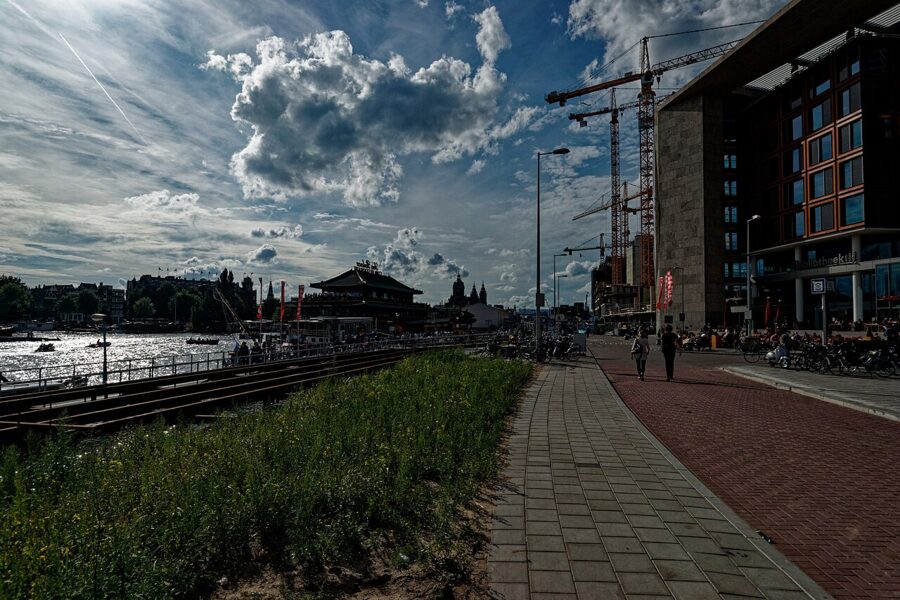
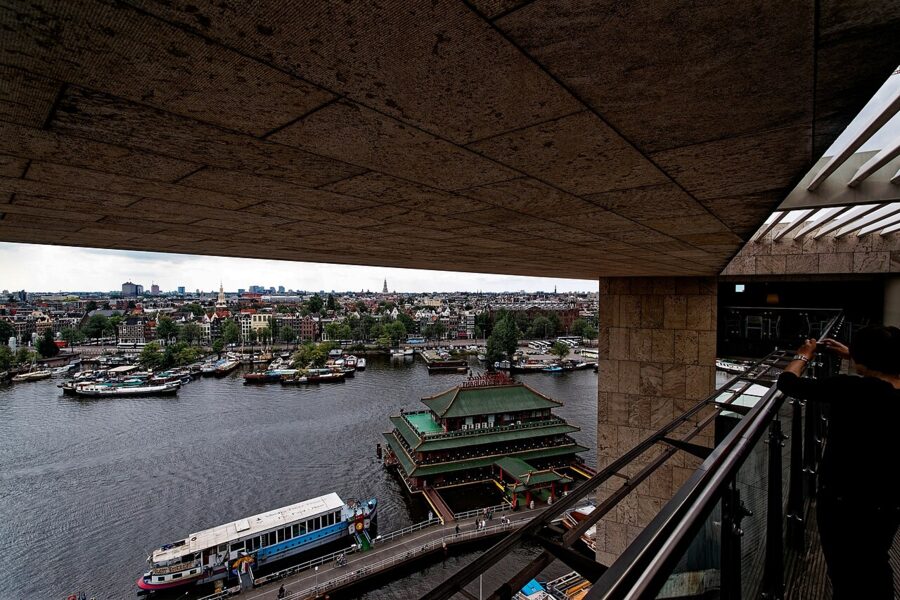
West of NEMO, on the Oosterdokseiland, is OBA Oosterdok, the central branch of Amsterdam’s public library. According to I amsterdam’s listing it is open daily 10:00–22:00 and free to walk into, and its seventh floor has a restaurant with a terrace over the city. When NEMO’s roof shuts at 17:30, the library’s top floor is the second free view in the neighborhood, and it looks straight back at the green hull.


Book a weekday slot at 14:00 or later, walk 15 minutes east from Centraal, and do the roof before the floors while there is still light. If the children are under four, skip the ticket altogether and take them up the outside stairs, since the best thing NEMO owns still costs nothing.