
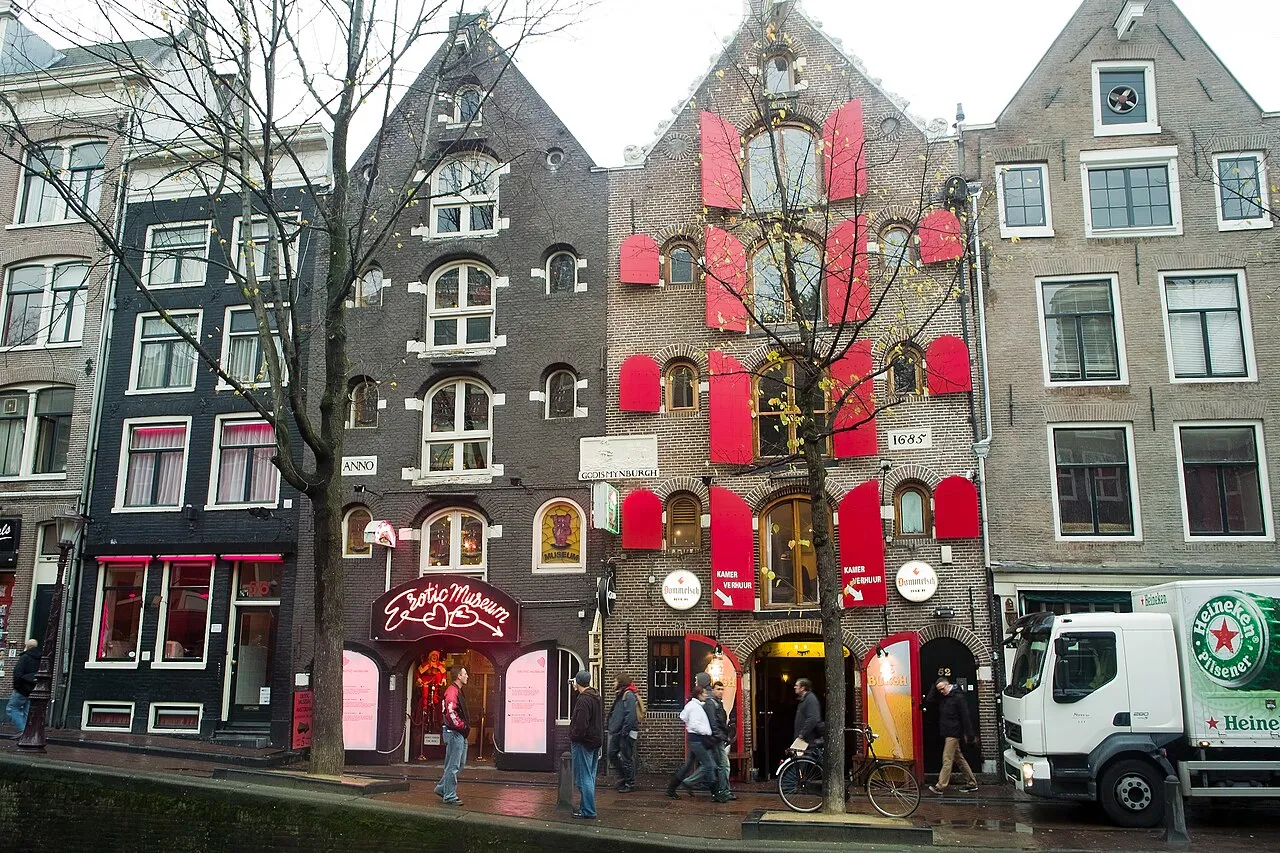

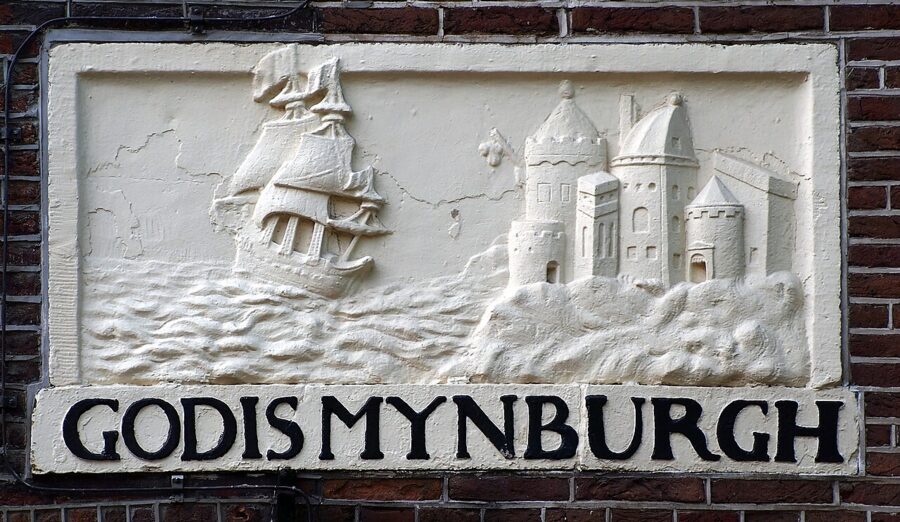
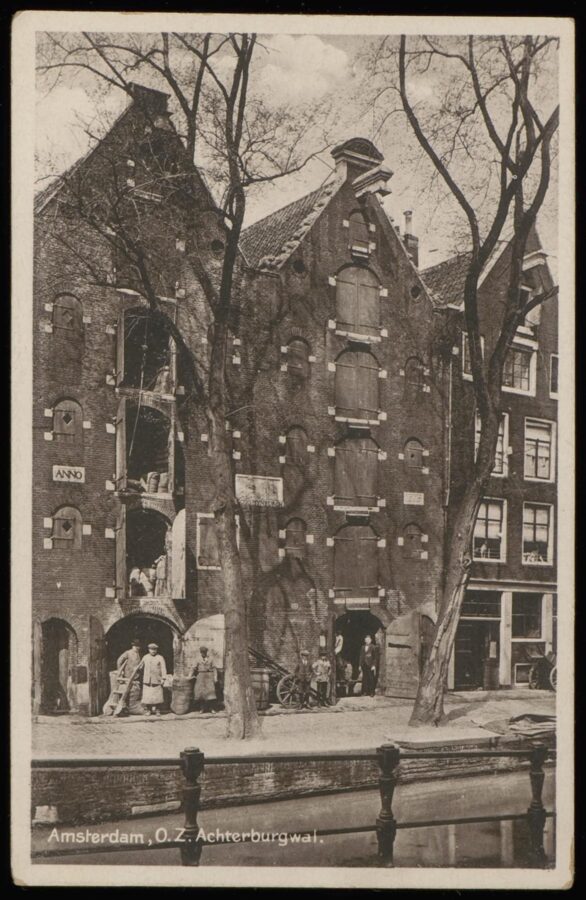
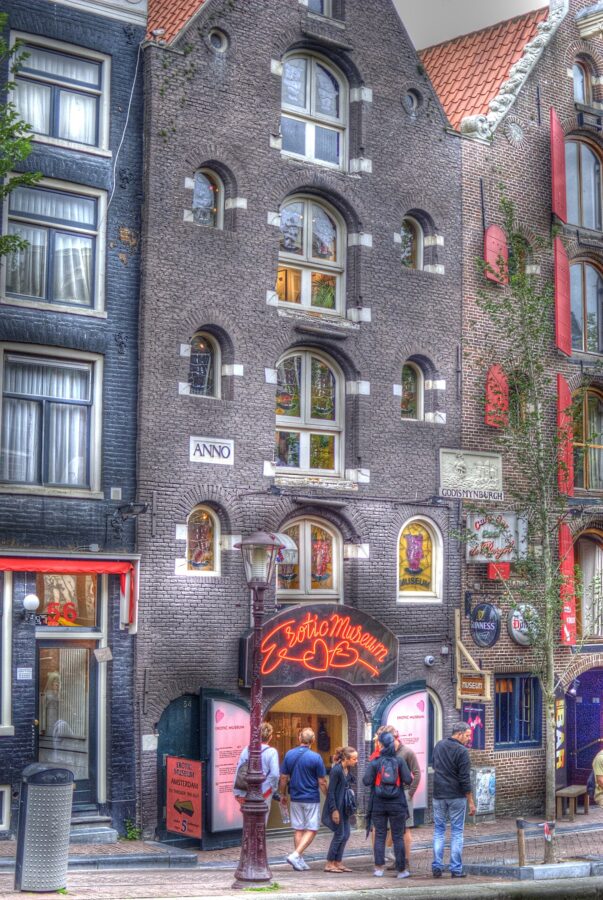
The stone set into the front of Oudezijds Achterburgwal 54 reads ANNO, and that is all it says. The year is on the house next door: 1685, carved into the matching stone of number 52, the twin warehouse that kept its carved fruit festoons when this one lost them. Between the two gables a shared stone shows a ship riding past a castle on a rock, over the words GOD IS MYN BURGH.
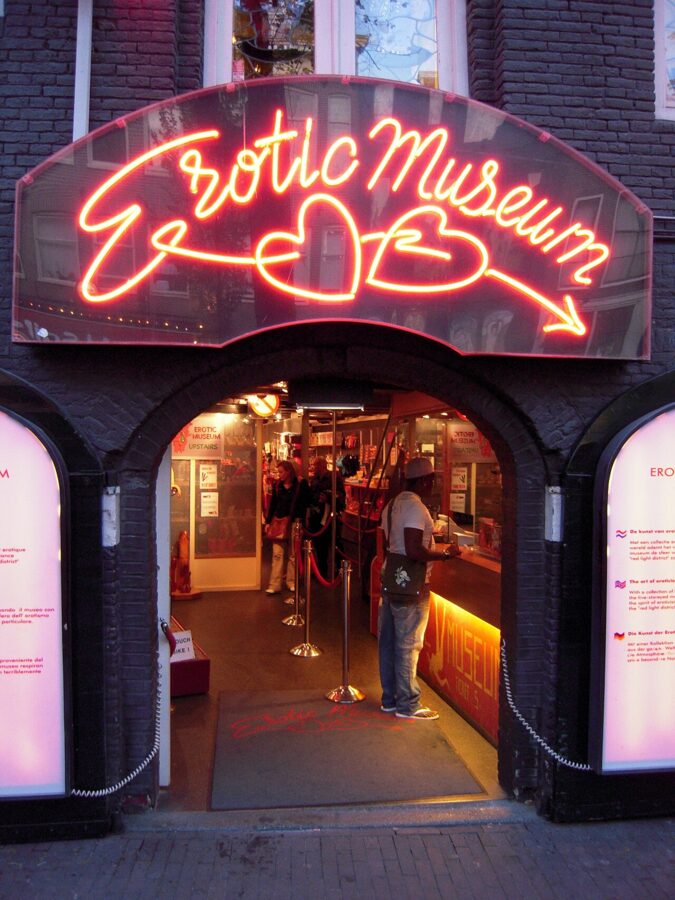
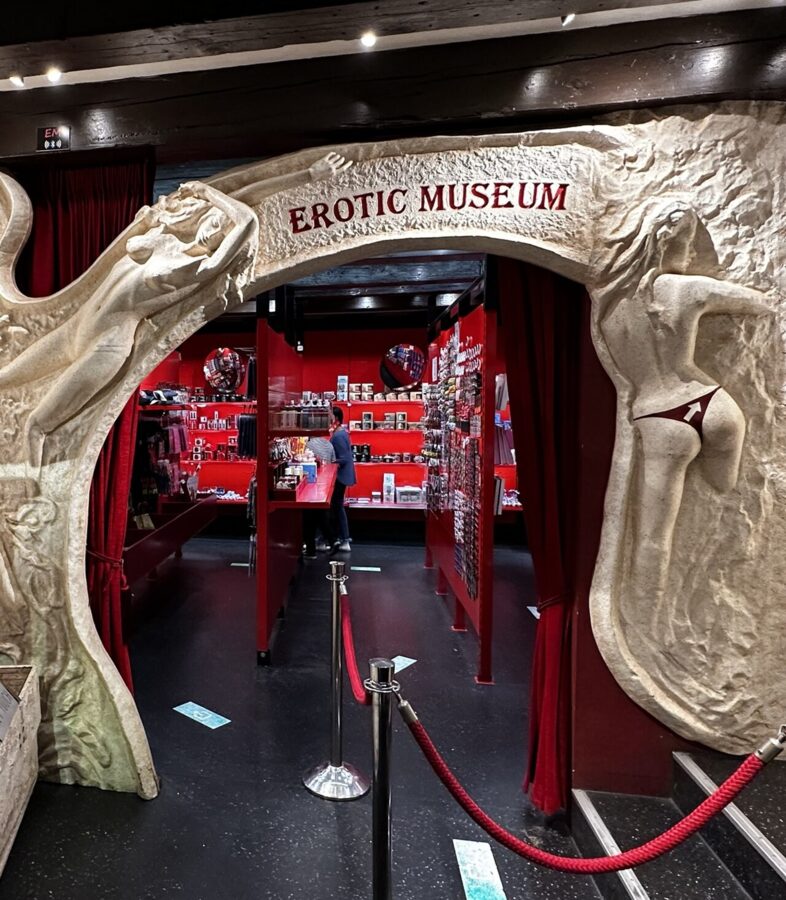
Below all that sits a looping red neon sign, a mannequin on a bicycle in the doorway and a ticket desk that charges €10 (about US$12) for five floors of erotica. The Erotic Museum, the Erotisch Museum on its Dutch signs, is the cheapest of three sex-themed museums within a ten-minute walk of each other, and the only one open until two in the morning at weekends.
I would go for the building, the John Lennon wall and the sheer oddness of the cases, and expect to laugh more than blush. If what you really want is to understand the windows outside, there is a better museum a few doors along, and I will get to it.
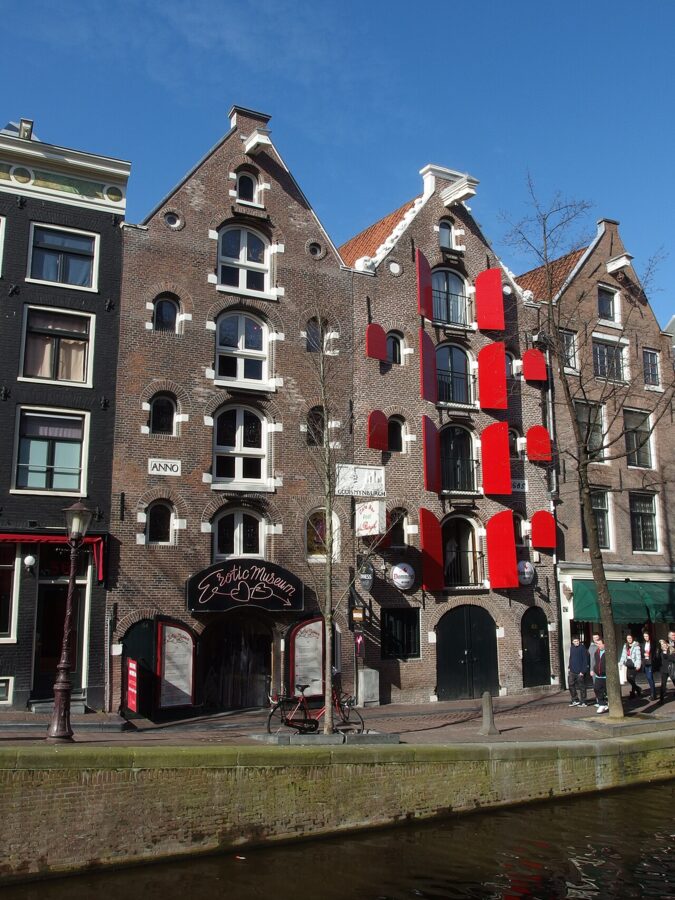

The museum sits on the east quay of the Oudezijds Achterburgwal, the canal at the center of De Wallen, a couple of minutes’ walk east of the Oude Kerk. It is open daily from 11:00, and it closes at 01:00 from Sunday to Thursday and 02:00 on Friday and Saturday. Entry is for 18 and over.

A warehouse from 1685 on the Achterburgwal
Before it held whips and lithographs, number 54 held goods. The national monuments register lists it as a pakhuis (warehouse) dating from 1685, protected since March 1970, with an intact spout gable that has lost the decorative festoons once draped down its sides. Number 52 still has its flower-and-fruit trims, which is the quickest way to tell the pair apart.
The register treats the two as a group, and the logic is visible from the quay. Same height, same arched windows picked out in pale stone, the date split between them, the shared stone on the dividing line. Somebody in 1685 built a matched pair of storehouses here, in a merchant city that needed dry space above the water for its goods.
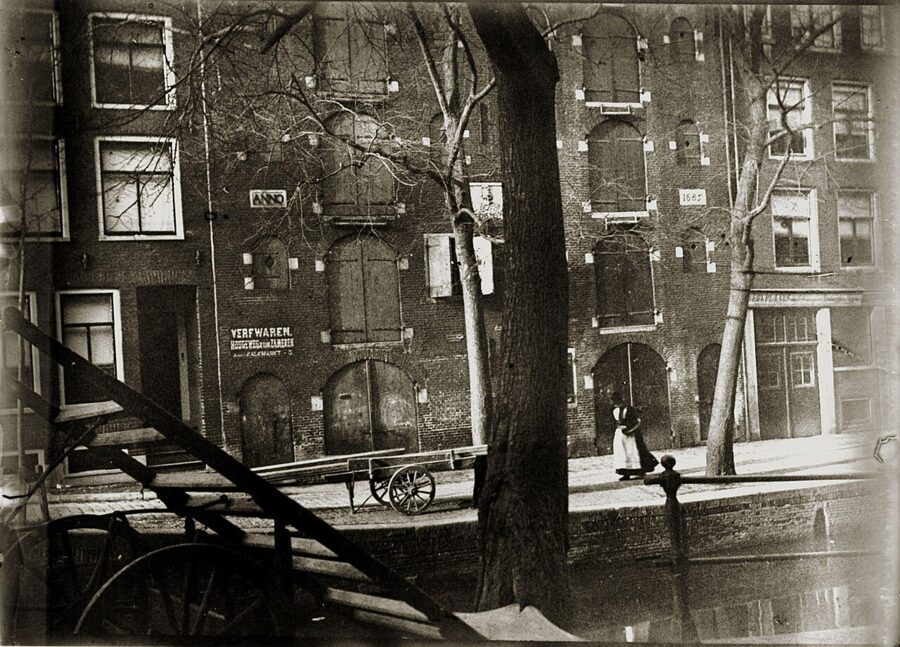
Breitner, who roamed the old center with a camera in the 1890s, caught this stretch of the quay before the neon age. A picture postcard from around 1910 in the city archive shows the same two gables, captioned simply as two warehouses on the Oudezijds Achterburgwal. Neither picture shows anything you would not recognize today, apart from the absence of a neon heart.
Inside, the warehouse shows. The museum is narrow and vertical, one room or so per floor, and you climb rather than wander. That shape suits a collection that works best as a sequence of small surprises, and it is also why the visit is short.
Inside the Erotic Museum, floor by floor
The museum does not publish a floor plan, and the order below follows its own tour descriptions and the most recent accounts of a walk through. Collections like this get shuffled, so treat the floors as a guide rather than a promise. What the museum itself lists in 2026 is the bicycle at the door, a fine art gallery, a John Lennon room, Victorian peepshows, a BDSM floor, an adult Snow White, a photo corner and a gift shop.

The girl on the bicycle
The first exhibit meets you at the entrance: a mannequin of a Dutch girl on a decorated bicycle, which the museum describes with a wink as particular. Reviewers have been describing what moves under the saddle for years, so I will leave it there. It sets the tone, which is more seaside postcard than sex education.
Antiques, curiosities and Victorian peepshows
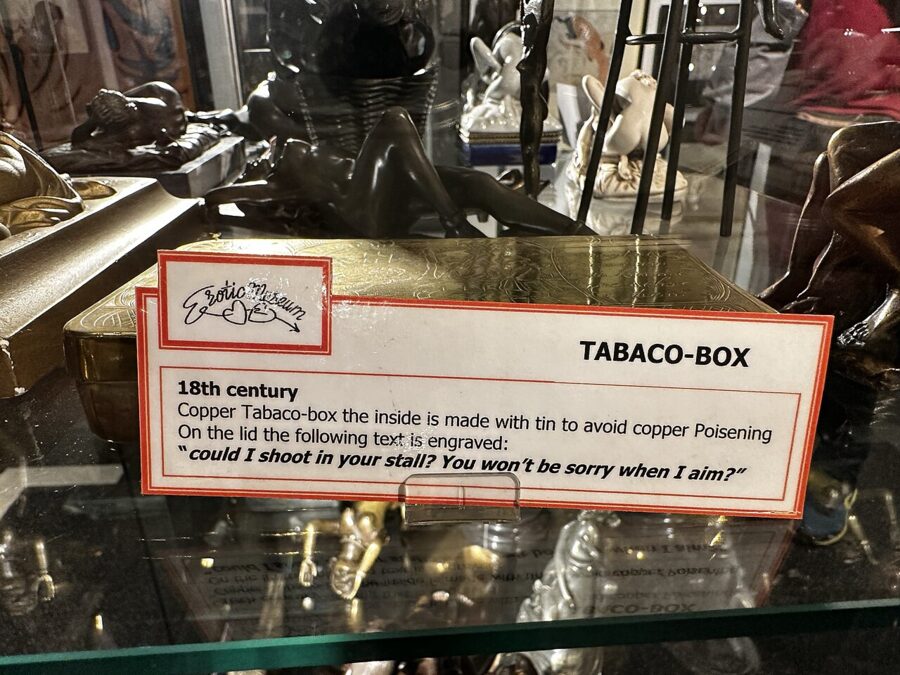
The lower floors hold the cases most worth your time: small erotic objects in ceramic, glass, metal and wood, many of them antiques from all over the world. Accounts from the last couple of years mention a terracotta oil lamp in the Pompeian style and an African fertility figure. The labels are short, in English, and sometimes funnier than the objects.

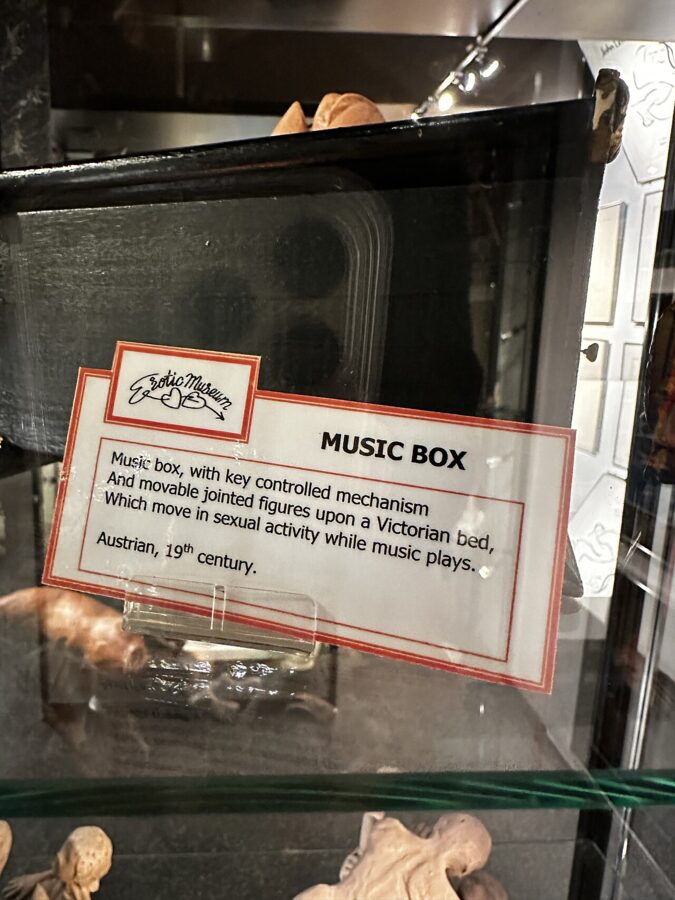
The Victorian section is the quiet surprise: genuine 19th-century stereoscope photographs, the paired images people once peered at through a viewer to see in three dimensions. They were the respectable parlor gadget of their day, and somebody inevitably loaded them with nudes. Along with a 19th-century Austrian music box whose little figures on a bed move in time to the tune, they make the point the museum keeps returning to: erotica is old, and it was always a business.

Cartoons and Snow White, all grown up
One floor up the mood flips to cartoon. Life-size comic figures, a fairy-tale mural of a far less innocent Snow White with mushroom stools to sit on, and screens playing animated porn. The museum calls the Snow White wall the best photo of the day, and it is hard to argue.

The gallery and the John Lennon wall
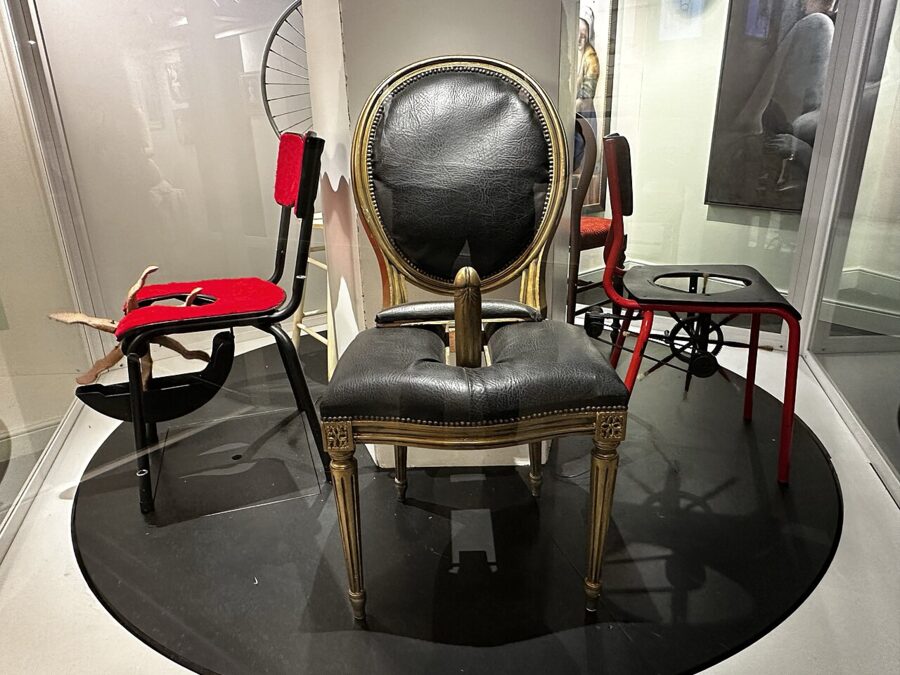
The gallery floor is the closest the museum comes to an art museum: sculpture, lithographs and paintings under proper lighting, some of it by working artists. Photographs of Bettie Page, the 1950s pin-up whose bondage shoots made her a cult figure, turn up here and on the floor above.
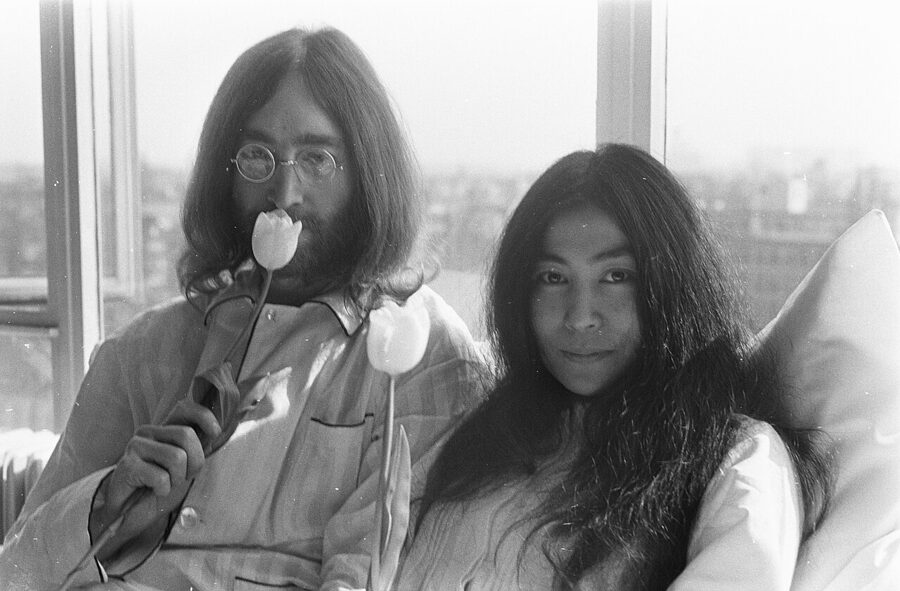
The draw for most people is the John Lennon room, a wall of his erotic sketches and handwritten lyric sheets, framed and on permanent display. Most of the drawings are simple line portraits of Lennon and Yoko Ono, and only a couple are explicit. Lennon has a local link: he and Ono spent part of their 1969 honeymoon in bed at the Amsterdam Hilton for their first bed-in for peace, out in the south of the city.
The BDSM floor
The top of the building is given over to rope, leather and restraints, with a suspended mannequin hanging over a glowing tank of water as the set piece. It is staged rather than shocking. Some reviewers find this floor the least comfortable in the building, for reasons that have more to do with how women are posed than with the gear itself.
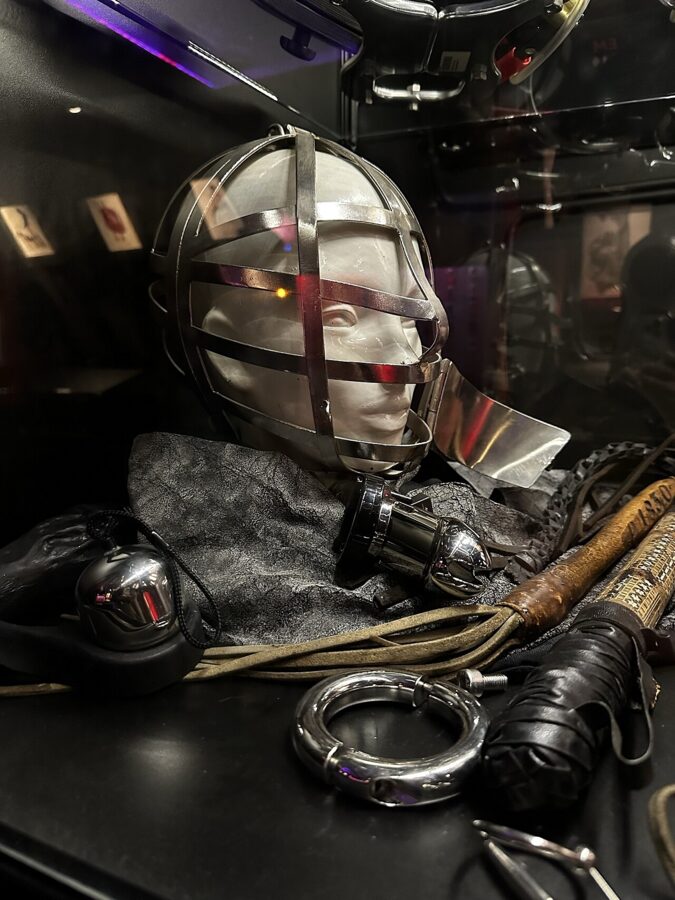

Photo corner and gift shop
On the way out there is a photo corner with a giant golden statue and a mock electric chair, and photos are clearly welcome. Older reviews also describe a recreated red-light window with a waxwork figure; it does not appear in the museum’s current tour, so do not count on it. The gift shop is the last room before the door.
Tickets, hours and how long it takes
Buy at the door unless you want the extras. The online ticket costs more and comes with a goodie bag and a 10 percent voucher; at the door you simply pay and walk in. The online sale runs through a third-party ticket site linked from the Erotic Museum’s own website.
| As of November 2026 | Erotic Museum |
|---|---|
| Address | Oudezijds Achterburgwal 54, 1012 DP Amsterdam |
| Sunday to Thursday | 11:00–01:00 |
| Friday and Saturday | 11:00–02:00 |
| Ticket at the door | €10 |
| Ticket online | €15 (about US$17), with goodie bag and 10% voucher |
| Age | 18 and over |
| Time needed | 30–45 minutes |
The time is my estimate, not the museum’s: five small floors, one or two rooms each, and most people are back on the quay inside the hour. Bring ID if you could pass for under 18. I could not confirm whether there is a lift or which cards the desk accepts, and in a 17th-century warehouse I would plan on stairs.

When to go is a matter of taste. Late on a Friday, when the street is at its loudest, the museum doubles as a place to step out of the crowd, and it is one of very few museums in the city where you can still buy a ticket after midnight. In daylight it is quieter and you see the gables properly on the way in.
Erotic Museum, Sex Museum or Red Light Secrets
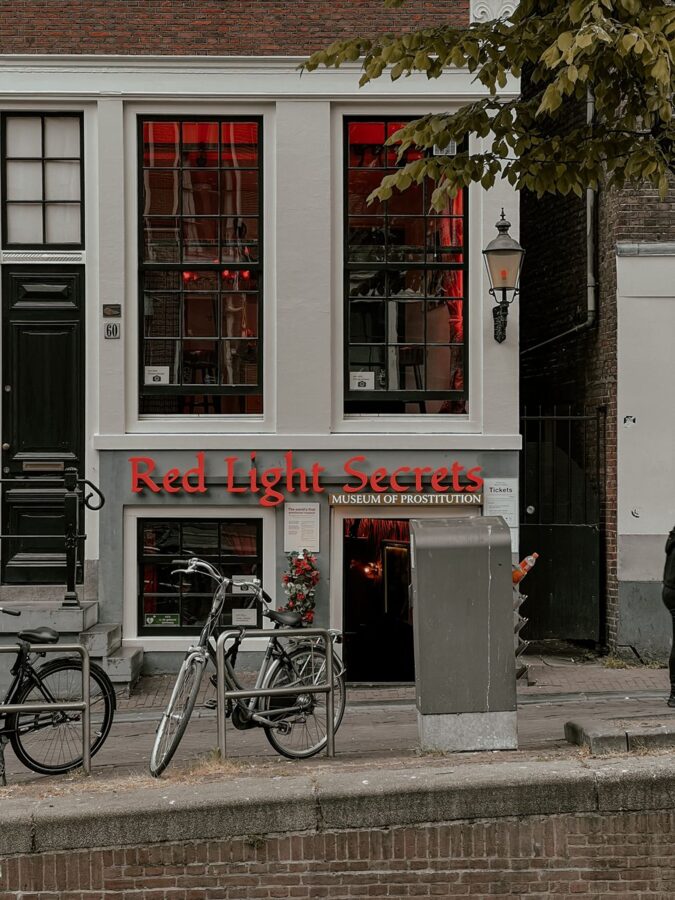
Three museums cover similar ground within ten minutes’ walk, and they are less alike than the names suggest. The Sex Museum on the Damrak, also called the Venustempel, opened in 1985, calls itself the oldest sex museum in the world and sits a few minutes from Centraal. Red Light Secrets, at Oudezijds Achterburgwal 60H, is a museum of prostitution in a former brothel a few doors along from number 54.
| As of November 2026 | Erotic Museum | Sex Museum (Venustempel) | Red Light Secrets |
|---|---|---|---|
| Where | Oudezijds Achterburgwal 54 | Damrak 18 | Oudezijds Achterburgwal 60H |
| Hours | 11:00–01:00, Fri–Sat to 02:00 | 10:00–18:00, closed King’s Day | 11:00–01:00 |
| Ticket | €10 door, €15 online | €10 | about €15 online |
| Minimum age | 18 | 16 | 16 |
| Best for | Curiosities, Lennon, a laugh | A daytime visit near Centraal | Understanding the windows |
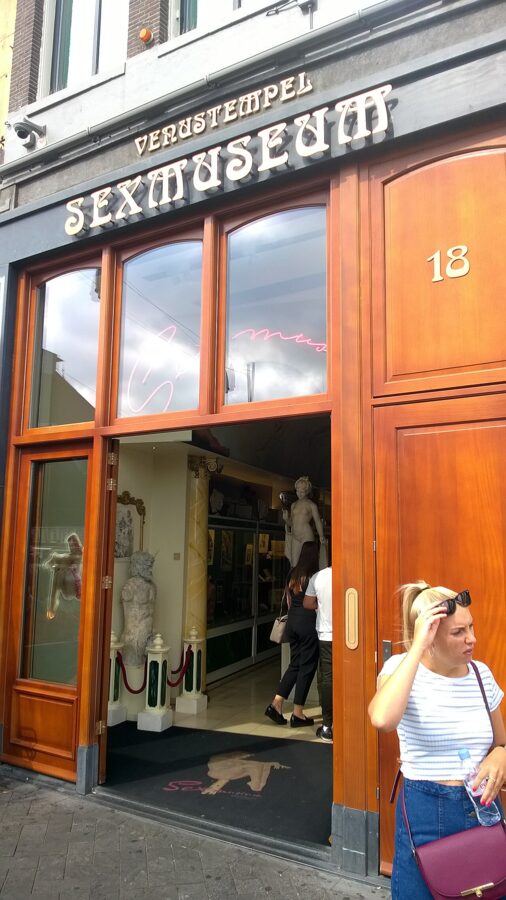

The Sex Museum’s hours and rules make it the daytime option: 10:00 to 18:00, €10, online tickets valid for a year, and no lift to the upper floors. It draws bigger crowds than the Erotic Museum, and the collection leans more toward history and less toward cartoon. If you are passing the Damrak in the afternoon anyway, it is the easier visit.
Red Light Secrets is the one I would pick if you choose only one. It is the only museum of the three about the work going on outside: the rooms of a real brothel, an audio guide of twelve stories told by a former sex worker, and the chance to sit in a red-lit window yourself and feel the street looking back. It is not wheelchair accessible, and prices online run around €15 as of 2026.
The Erotic Museum’s case is simpler. It is the cheapest at the door, it stays open the latest at weekends, and it is the one where you will laugh. If you want all three in one go, start at the Damrak before six, then walk to the Achterburgwal for the other two after dinner.
The street outside and what is nearby
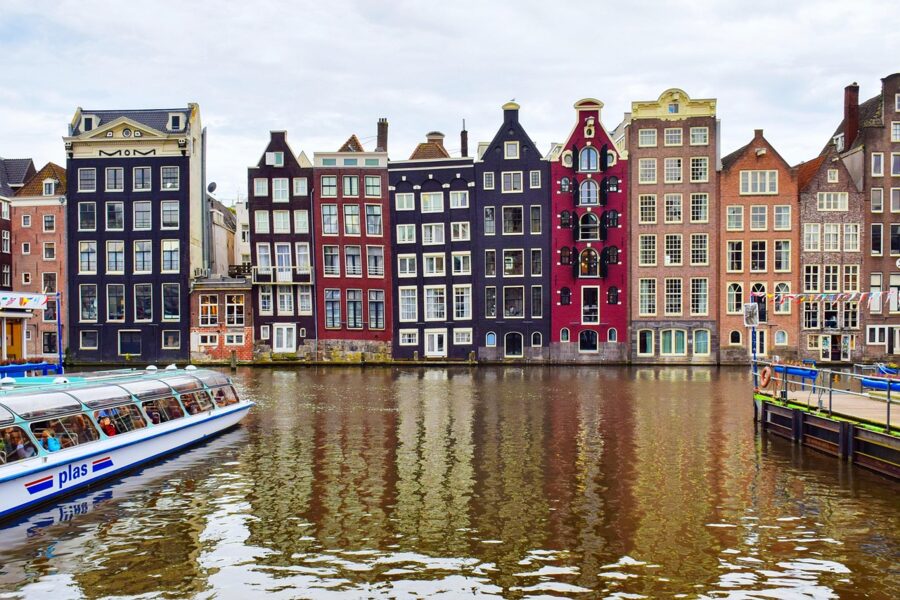
Step out of number 54 and you are in the middle of the Red Light District, on its busiest canal. The rules that matter apply the moment you leave the museum: the city’s rules for the old center ban drinking alcohol and smoking cannabis in public, guided tours are not allowed in the district, bars close at 02:00 and the windows at 03:00. Fines for nuisance run from €100 to €650.
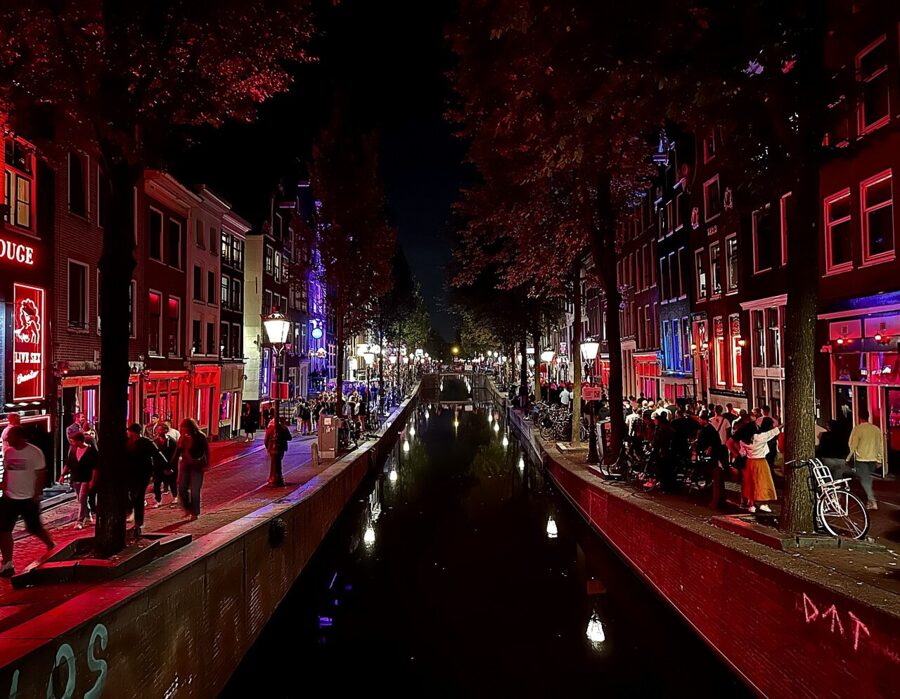

Do not photograph the windows. The city’s own guidance calls it disrespectful, the sex workers will tell you so more directly, and nobody needs a picture of a stranger at work. The museum’s photo corner exists for exactly the shot people are tempted to take outside. For where you can still smoke legally, see the coffeeshops article: inside, yes; on this street, no.
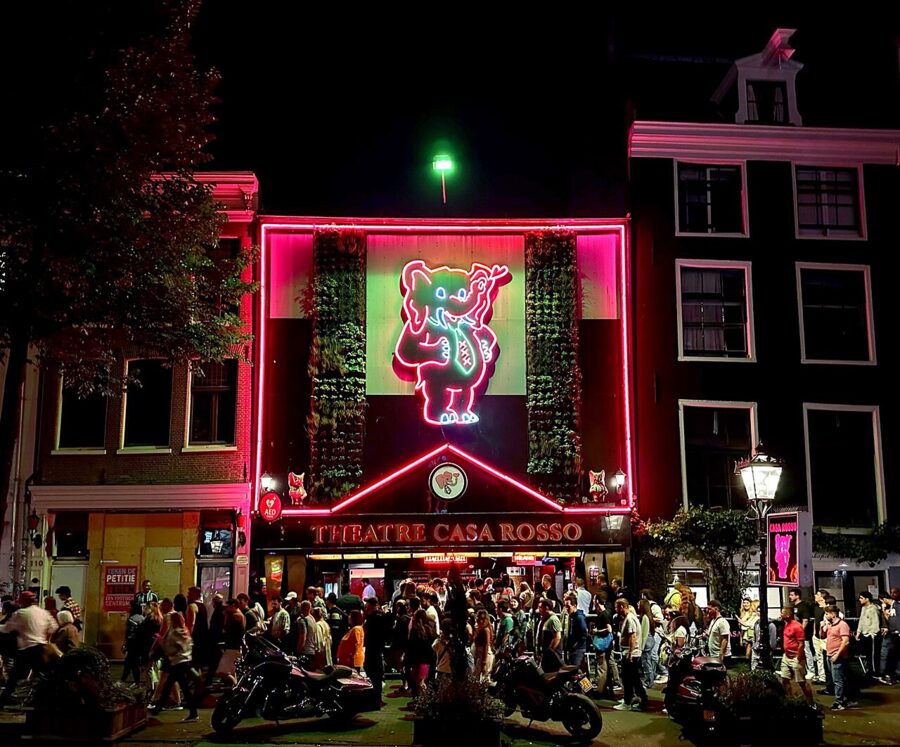
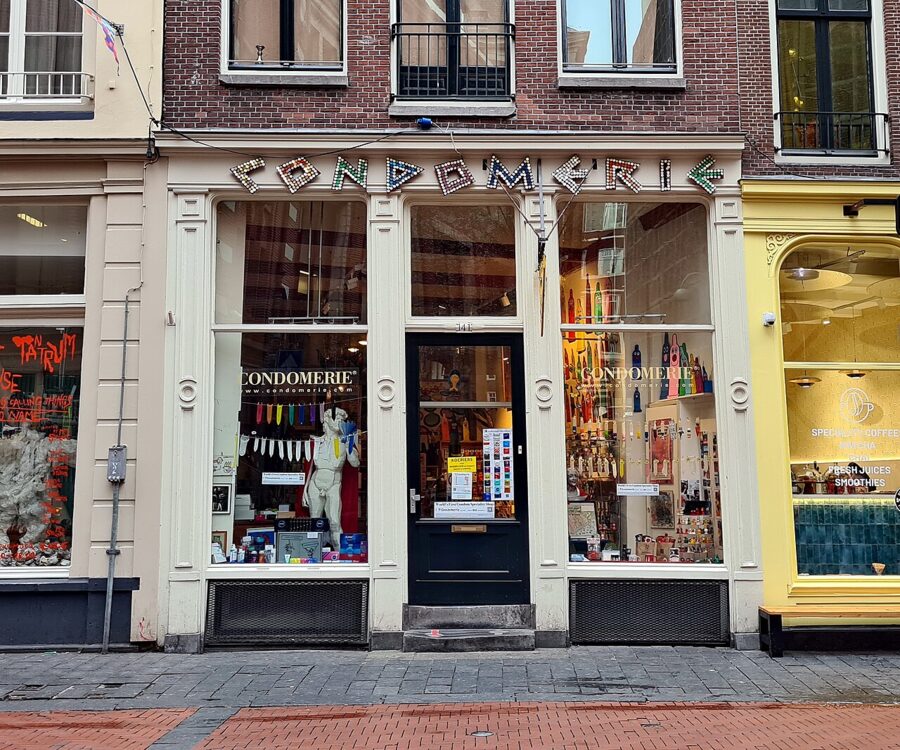
Along the same canal, Casa Rosso runs its live stage show further south, and the Moulin Rouge sits up at the northern end. On the Warmoesstraat, a few minutes west, the Condomerie is the condom specialist and a better souvenir stop than the museum shop. For the rest of the evening, the nightlife guide covers where to drink once you are done here.


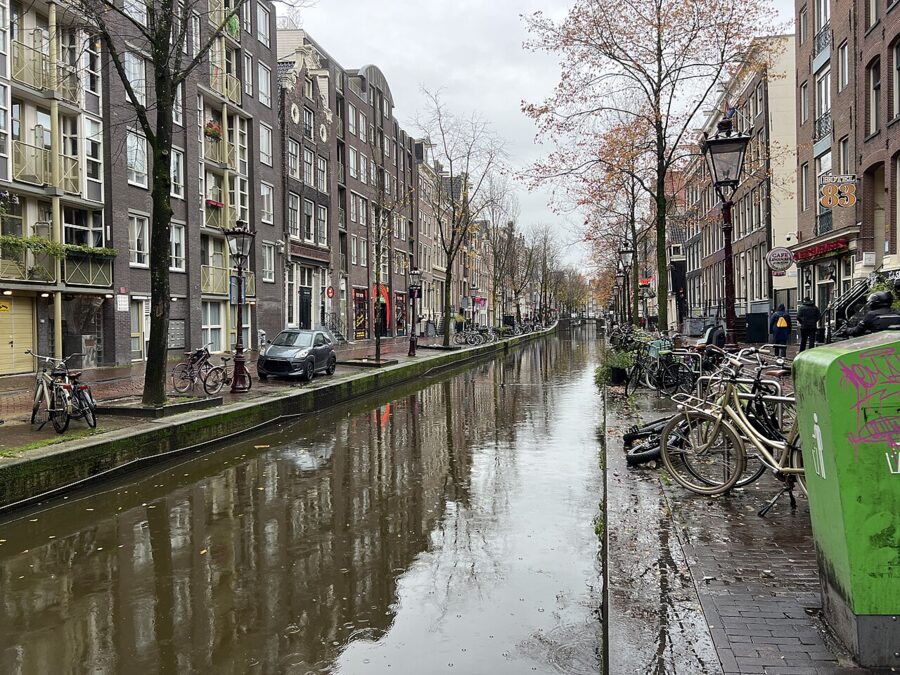

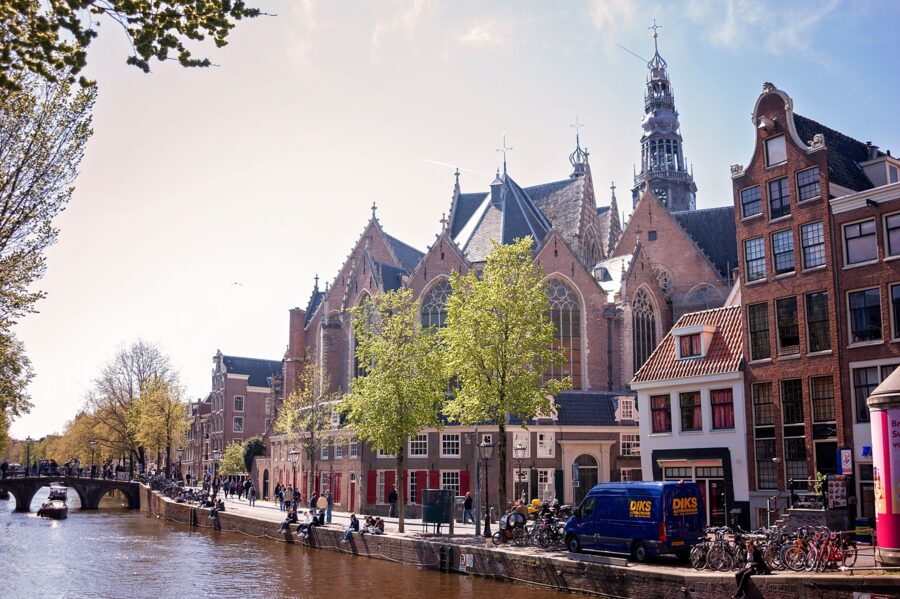
The Oude Kerk, the city’s oldest building, is a two-minute walk west across the Oudezijds Voorburgwal. The souvenir shops between here and there sell the three Xs of the Amsterdam XXX symbol on everything, though the crosses come from the city’s coat of arms and have nothing to do with the windows.
Getting there
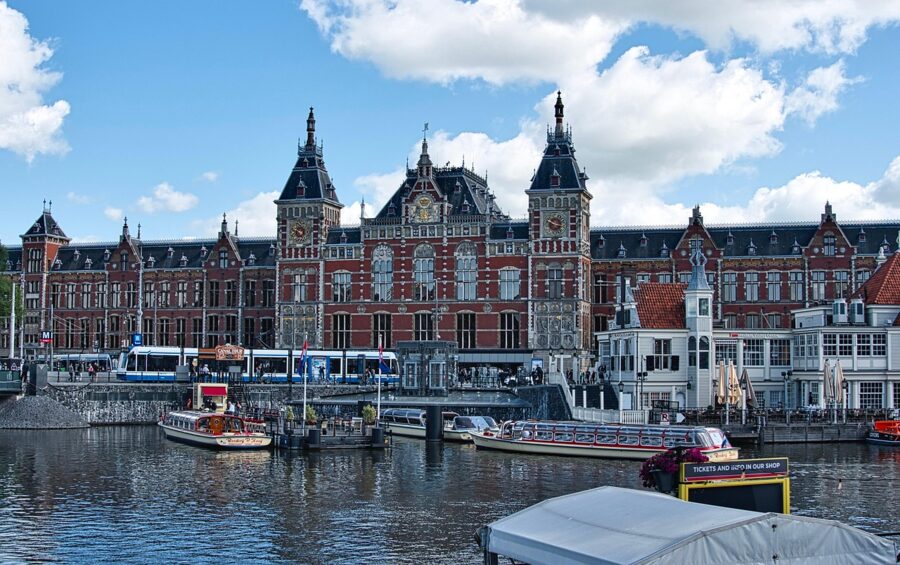
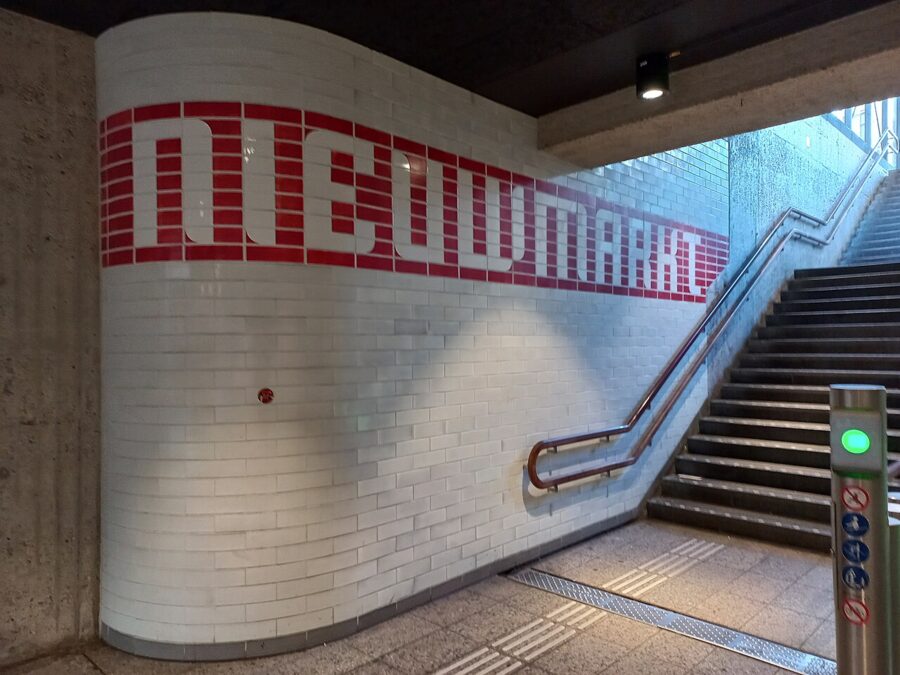
From Amsterdam Centraal it is about a ten-minute walk: down the Damrak, left into the old center toward the Oude Kerk, then across to the Oudezijds Achterburgwal and south along the east quay to number 54. By metro, take line 51, 53 or 54 one stop to Nieuwmarkt and walk five minutes west through the narrow streets. Metro 52 to Rokin also works, with a slightly longer walk east across the Damstraat.
Cycling is fine to arrive but miserable to leave: the quays are narrow and packed after dark, and you will push the bike more than ride it. Lock it at a rack on the edge of the district and walk the last stretch.
Then stop on the quay before you go in, look up at the ANNO stone and the ship by its castle, and give the gable the minute most people save for the gift shop. Ten euros at the door, five floors up, and back out onto the Achterburgwal well before the windows close.