
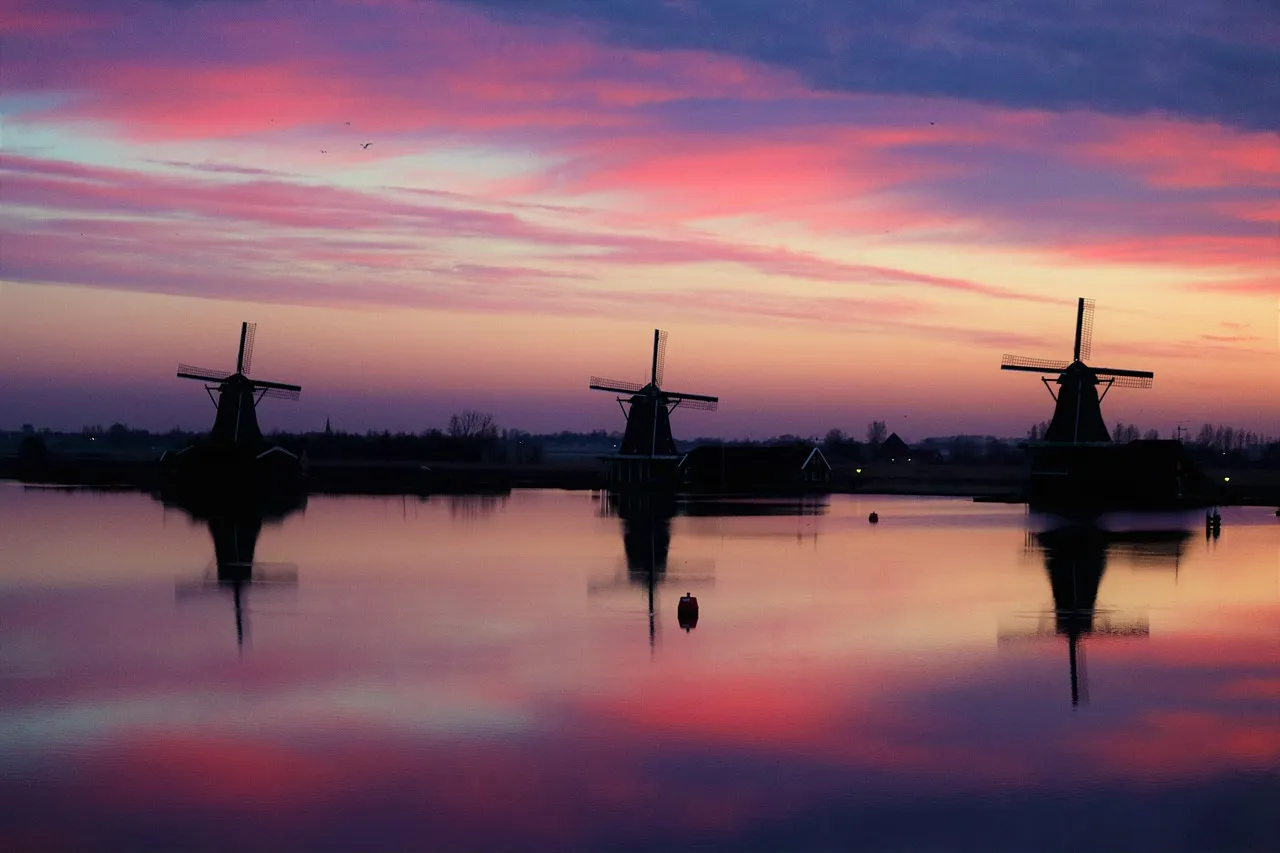
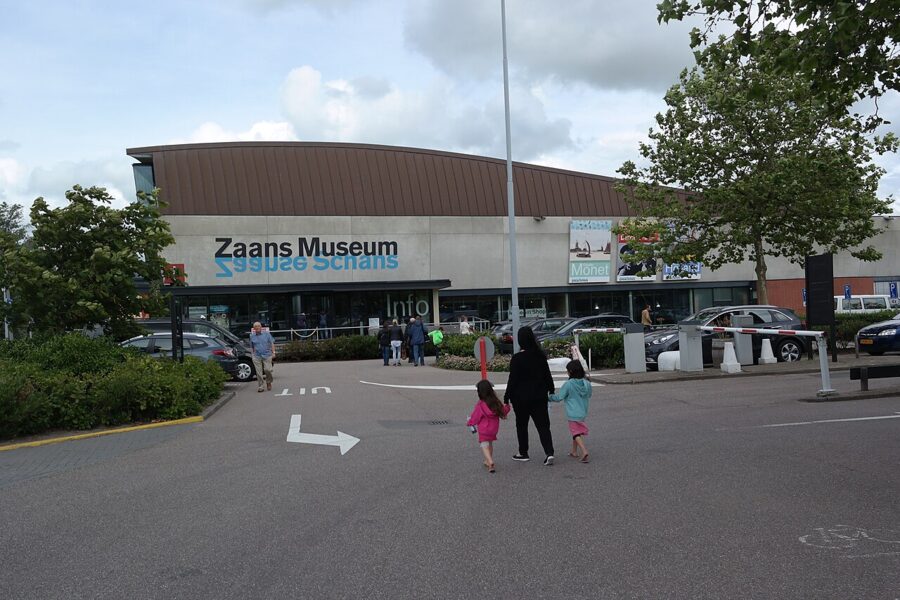
The first mill doors on the Kalverringdijk open between 09:00 and 09:30, and the coach park beside the Zaans Museum charges €55 (about US$63) for every tour bus that pulls in after them. Those two numbers tell you most of what you need to know about the Zaanse Schans. In 2024 the place counted about 2.6 million visits, most of them squeezed into the same hours on the same narrow dike, between the same eight or nine windmills.
So is it worth the trip? Yes, on two conditions. Arrive before 10:00 or after 15:00, and go inside at least one working mill, because the row of mills looks like a postcard from the path but only makes sense when you stand next to the machinery while the sails drive it. If all you want is the photo, at midday, from behind a tour group, you can skip it and lose nothing.
The village itself costs nothing to enter, it is 17 minutes from Amsterdam Centraal by train, and three hours covers it at a sensible pace. What follows is the order I would use it in: what the place is, what you pay for and what you don’t, the mills one by one, the museum, the clog and cheese stops, how to get there, and Zaandam, which you pass through on the way and which deserves an hour of its own.

What the Zaanse Schans is, and what it is not
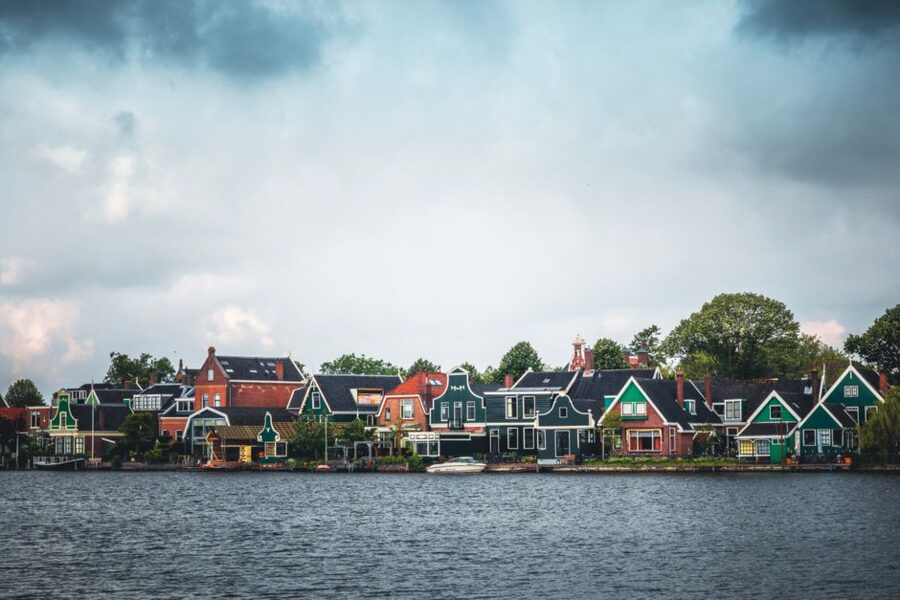
It is not an old village that happened to survive. The Zaanse Schans is a neighborhood of Zaanstad that was put together on purpose, in the Kalverpolder on the east bank of the Zaan, opposite the old village of Zaandijk. After the Second World War, factories and new housing were sweeping away the wooden houses and mills of the Zaan region, and a group of local people, among them the architect Jaap Schipper, pushed for a place to move the best of them to. The plan was approved in 1956, and from 1963 houses arrived on flatbed trucks, were set on concrete foundations and restored.
People were meant to live in them, and they still do: the national monuments service made it a condition that the houses be lived in. The tourists came anyway. Between 1970 and 1974 the plan was extended with a restaurant, warehouses and some replica buildings for shops and cafés, and by 1976 the Zaanse Schans was a destination. It became a protected village view in 2010.
The name is older than any of that. A schans is a redoubt, and Diederik Sonoy, a governor serving William of Orange, had one built here in 1574 to hold off Spanish troops. Nothing of it is left to see.
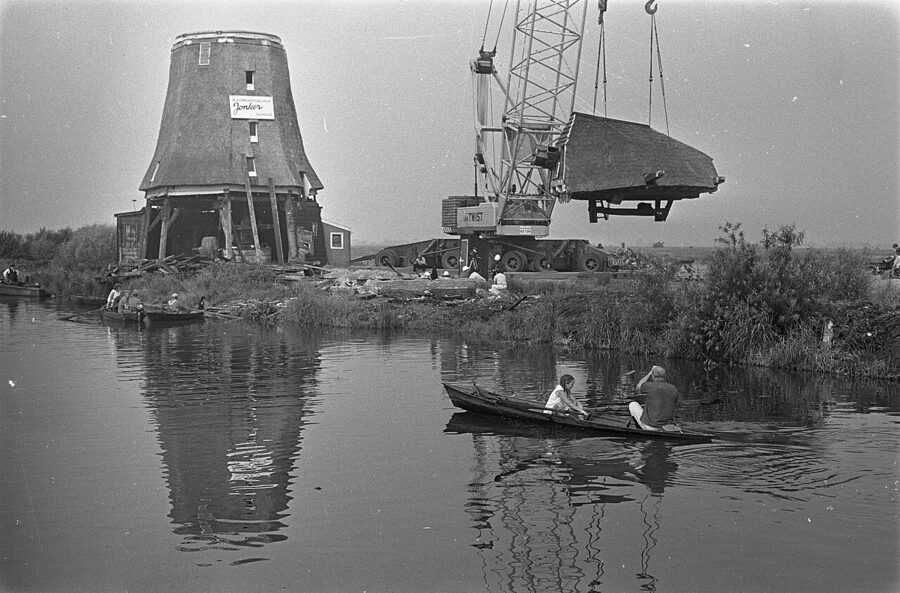
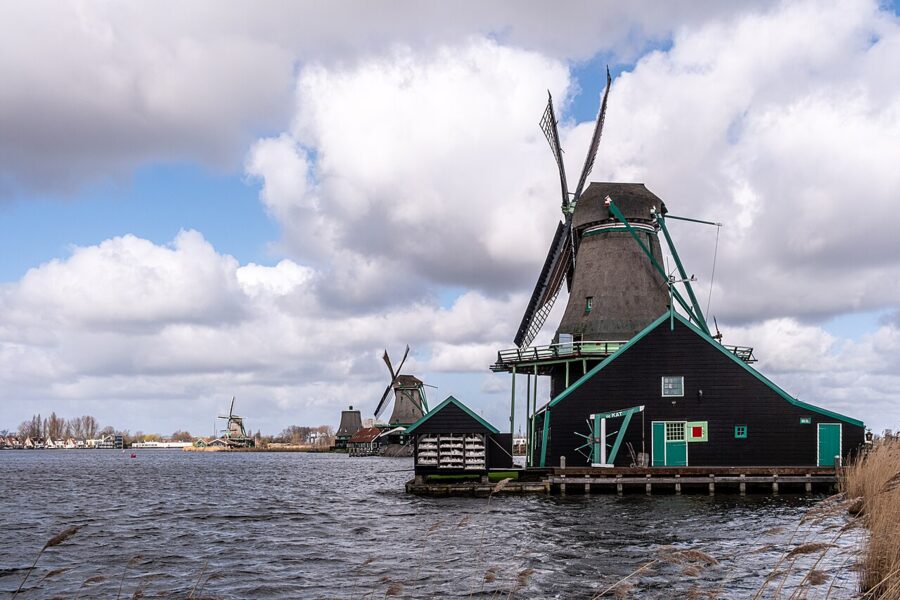
The mills tell the bigger story. The Zaan region grew into the largest industrial area in Europe, and at its height around 600 windmills turned along the river at the same time, sawing timber for shipyards, pressing oil, grinding spices, pigments, flour and paper pulp. A few of the mills on the dike stand where they always stood; most were moved here, piece by piece, as the towns around them grew.
The entrance fee in 2026, and what it covers
As of November 2026 there is no fee to walk into the Zaanse Schans. The dike, the paths, the shops, the cheese farm and the clog workshop are free, 365 days a year. You pay for the inside of the mills and museums, for the car park and for the toilets.
The simplest way to pay is the Zaanse Schans Ticket: €29.50 (about US$34) for adults, €20 for children aged 4 to 17, free under four. It gets you into two windmills of your choice that are open that day, the Windmill Museum, the Zaans Museum with the Verkade Experience, Museum Zaanse Tijd (the clock museum) and a digital audio tour, plus 10 percent off at De Kraai, the pancake restaurant. The Cooperage, the Weaver’s House and the Kalverringdijk Heritage Chambers are also on the ticket, but as of November 2026 all three are temporarily closed. Buy it online for a specific date, then swap the e-ticket for a paper card at the Zaans Museum, Museum Zaanse Tijd or the Windmill Museum; that card is scanned at every door.
If you only want the mills, the mill society De Zaansche Molen sells cheaper tickets of its own at the mill doors. Its price list as of November 2026:
| Ticket | Adult | Age 4–17 | What it covers |
|---|---|---|---|
| One windmill | €7.50 | €3.75 | Entry to a single mill |
| All-in-One (De Zaansche Molen) | €15 | €7.50 | Windmill Museum and every mill open that day |
| Windmill Museum only | €10 | €5 | The Molenmuseum |
| Zaanse Schans Ticket | €29.50 | €20 | Two mills, the museums and the audio tour |
| Car park, per visit | €15 | Cars; coaches pay €55 |
The arithmetic is easy. If the mills are what you came for, the €15 All-in-One beats the big ticket and gets you into more of them.
If you want the Zaans Museum as well, the Zaanse Schans Ticket starts to pay. A Museumkaart gets you into the participating museums free but not into the windmills; an I amsterdam City Card covers the mills and the Windmill Museum. If you are collecting museums in Amsterdam too, the Museumkaart and the City Card are compared under Amsterdam’s museums.
Card is king here. The Zaanse Schans Ticket, the car park and the toilets take only debit or credit cards, the Zaans Museum takes nothing else, and only a few places still accept cash.

The fee that keeps not arriving
You may have read that the Zaanse Schans now charges every visitor €17.50. It doesn’t, and it may never. On 22 May 2025 the Zaanstad council voted for a compulsory ticket of €17.50 (about US$20) for tourists from April 2026, free for residents of Zaanstad and Wormerland and with no fence around the village. The condition was that the cycle path along the Kalverringdijk be moved first, and in January 2026 the town pushed the start back to April 2027.
Then the politics turned. After the 2026 municipal elections the new coalition proposed shelving the compulsory ticket, the plan to close the area to the public and the cycle path move until at least the end of 2029, and replacing them with a voluntary contribution trial from March 2027. The council was due to vote on that on 26 November 2026. Whichever way it went, nothing changes for a visit this winter: entry to the village is free, and you pay only for what you go into.
The mills one by one
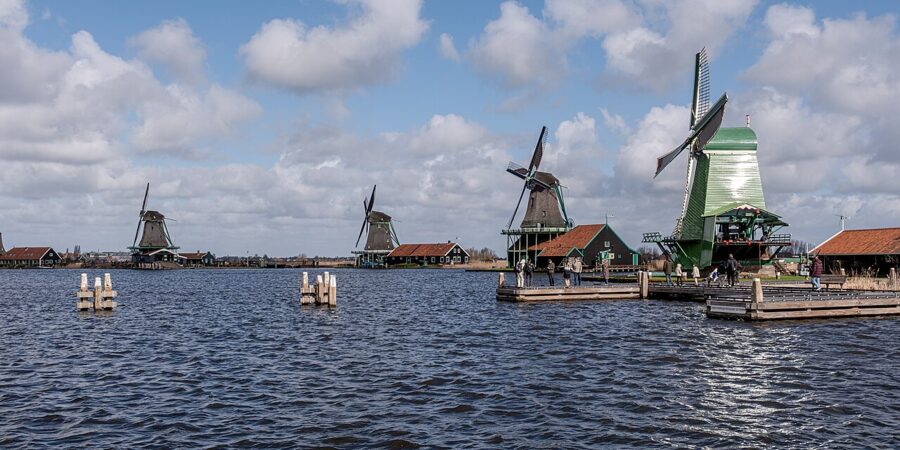
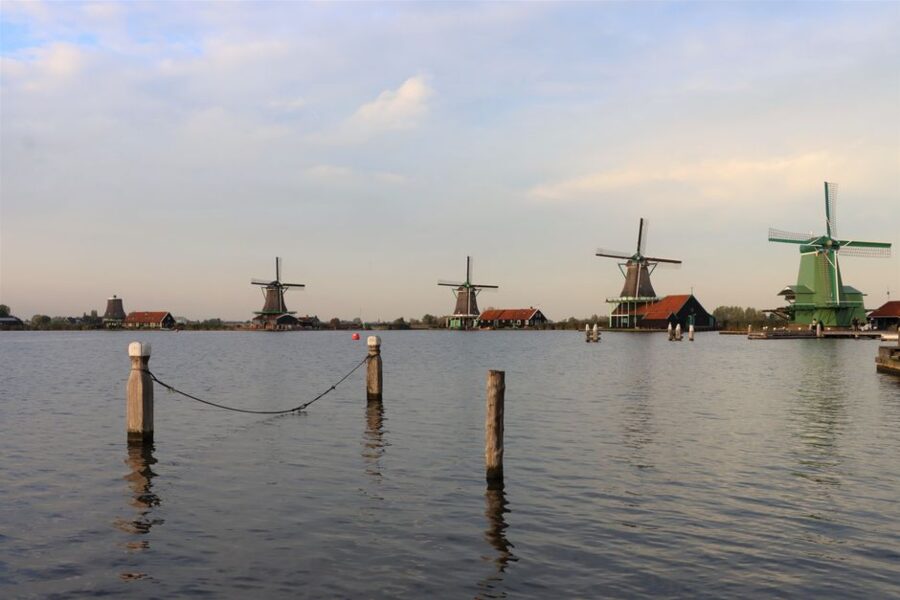
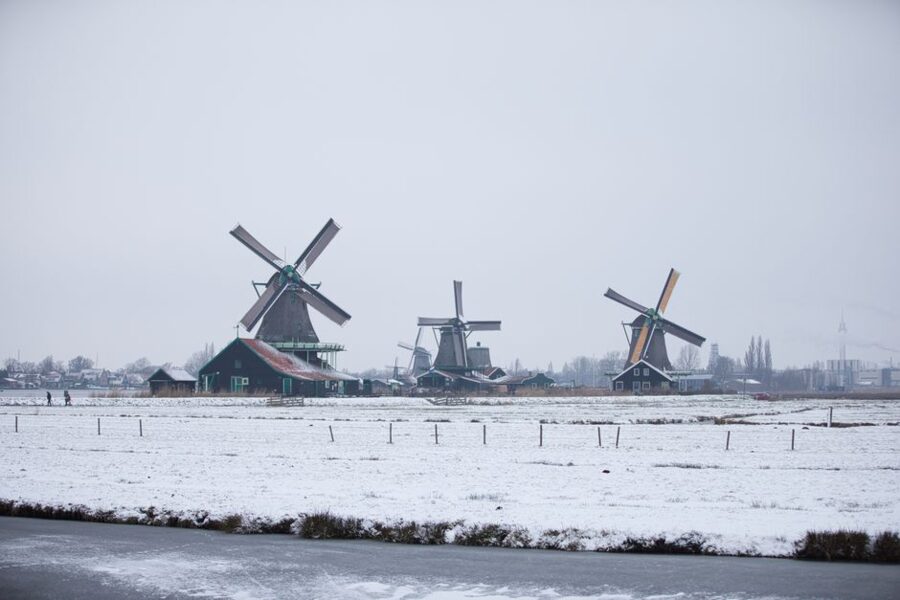
The working mills stand in a line along the Kalverringdijk, numbered like houses, and you meet them in this order if you walk north from the Zaans Museum. Not all of them open every day, and in winter most are shut. On a weekday in late November 2026 the open ones were De Kat, Het Jonge Schaap and the shop in De Huisman; the rest open with the season, by appointment or not at all. The official opening calendar shows the day’s list, and it is worth checking before you choose your two mills.
De Huisman, the spice mill
You smell De Huisman before you reach it: cinnamon, ground by wind. The mill is a marriage of three buildings. The octagonal body, cap and sails come from an old mustard and snuff mill called De Huisman, the grinding gear from a small spice mill called Het Indisch Welvaren, and the warehouse was once called De Haan. Both mills stood on the Blauwe Pad in Zaandam until urban renewal pushed them out in the 1950s.
Downstairs is a spice and souvenir shop, open daily from 10:00 to 17:00 and free to walk into. A look at the machinery upstairs is a paid tour for small groups, arranged on the spot.

De Gekroonde Poelenburg, the paltrok
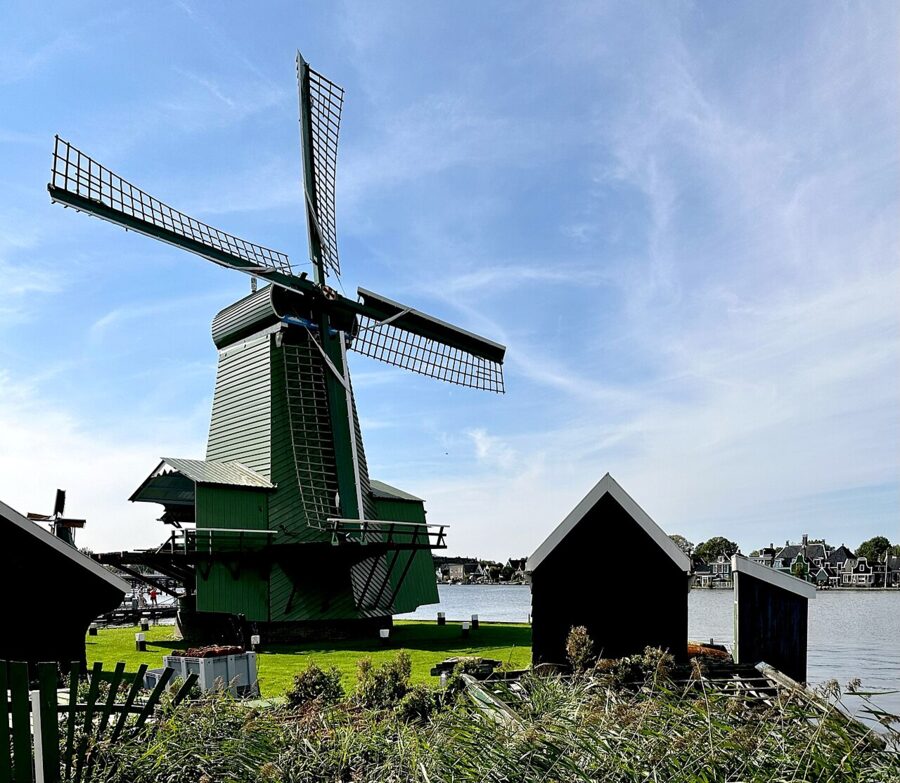
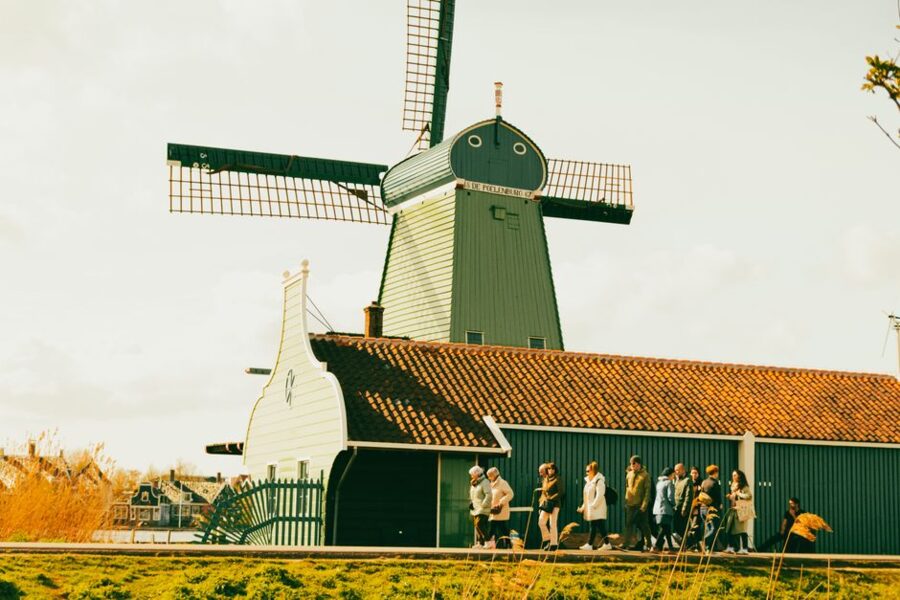
This is a paltrok, a sawmill whose whole body turns on a ring at ground level to face the wind. The Zaan region once had more than 200 of them; two are left, this one and De Held Jozua in Zaandam. It was built around 1866 or 1867, had to make way for the new Poelenburg housing estate in 1960 and arrived on the Schans in 1963. It opens on request only, so for most visitors it is a mill to look at.

De Kat, the paint mill
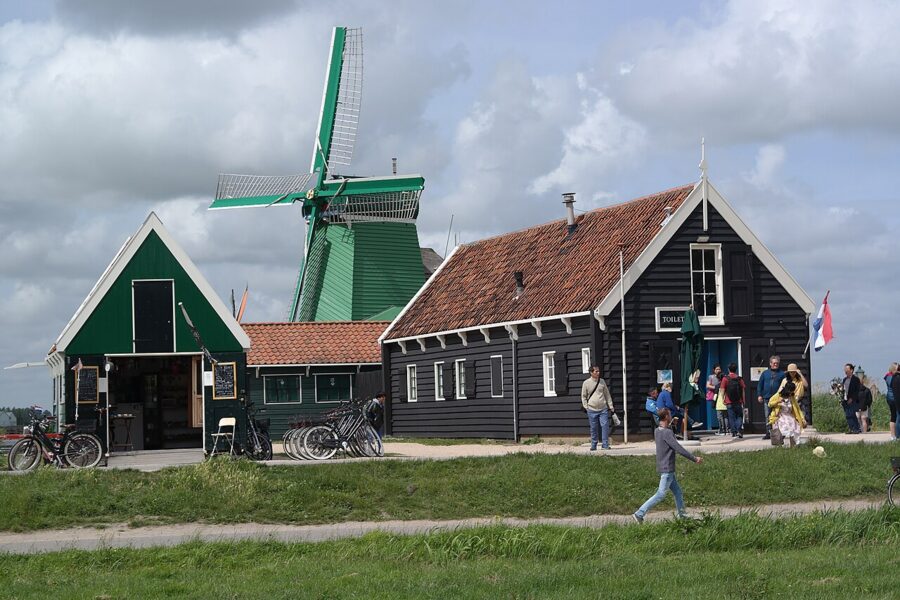
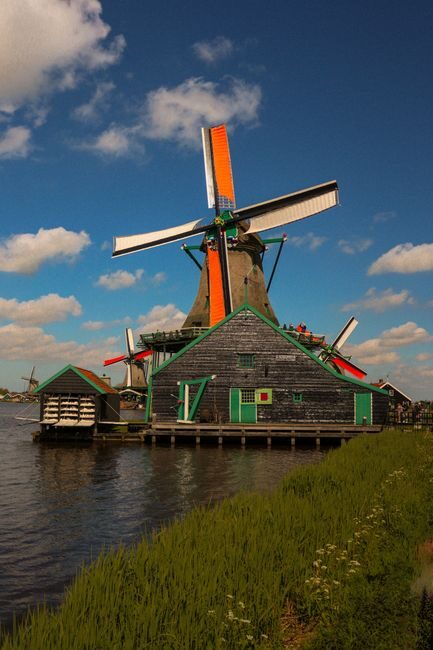
If you only go into one mill, make it De Kat. It is a paint mill still at work, grinding chalk, minerals and pigments under heavy edge runner stones, and its colors still go to artists, restorers and museums around the world. It opens daily, from 09:00 or 09:30 until 16:30 as of November 2026, except over Christmas and New Year.
The mill is two mills in one. A building permit for a paint mill called De Kat on this spot dates from 11 January 1646; it burned in 1782, was rebuilt, and was cut down to its base in 1904. In 1959 the upper body of the mill De Duinjager, a snuff mill of 1696 that had to make way for new streets, was lifted onto De Kat’s old base.
De Zoeker, the oil mill
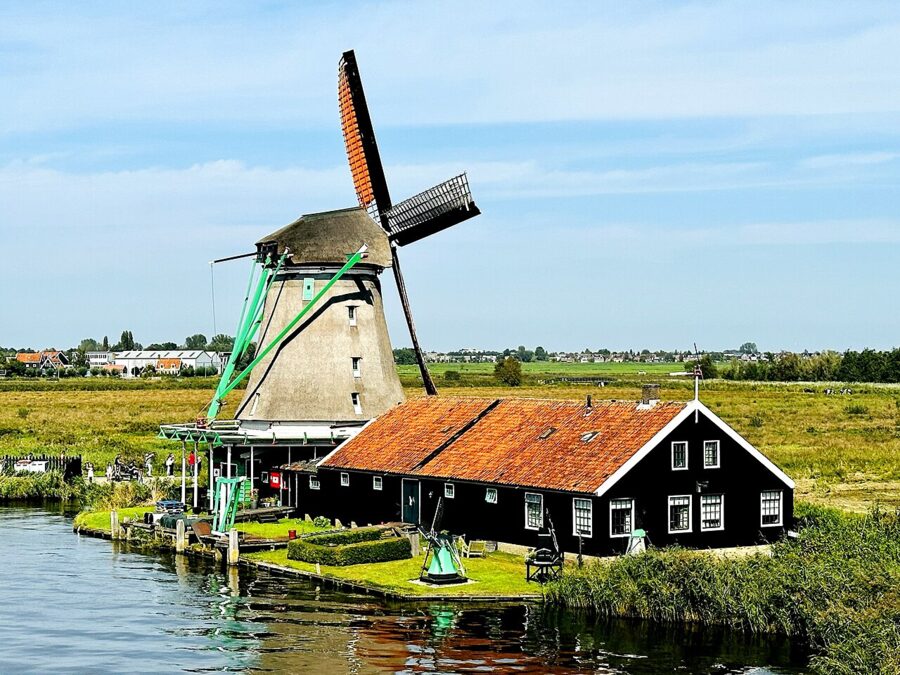
De Zoeker was built in 1672 by the Zaandijk millwright Claas Pietersz. Baas, possibly on the body of an older drainage mill. When a whirlwind damaged it in 1925, local mill lovers led by Frans Mars founded De Zaansche Molen to save it, and that society still runs several of the mills on the dike. The mill moved to the Schans in 1968.
It presses oil from seeds with pestles that hit like a pile driver, and it is loud. From November to February it is closed except to booked groups.

Het Jonge Schaap, the sawmill
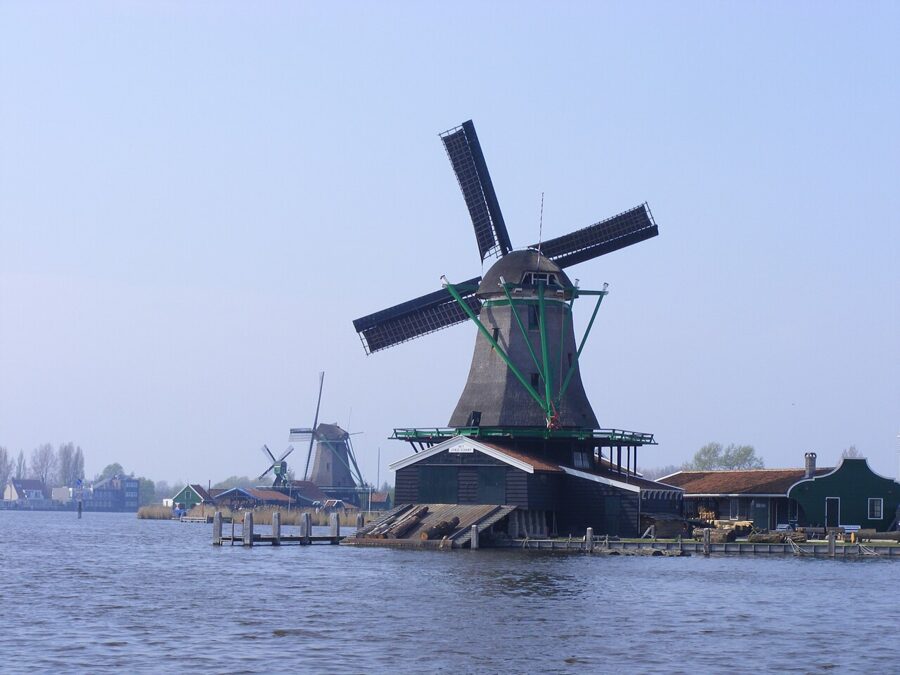
Het Jonge Schaap looks ancient and is not. The original sawmill stood west of Zaandam station until it was demolished in 1942, but before it came down a mill expert from Alkmaar, Anton Sipman, measured every part of it. From his drawings the mill was rebuilt here: the first pile went into the ground on 24 September 2005, and it opened on 27 September 2007.
It is open daily from 09:30 to 16:30, and when the wind is up you can follow a whole tree trunk through the long frame saws until it comes out as planks. It is also the mill to choose if you need step-free access: there is a ramp and a lift.

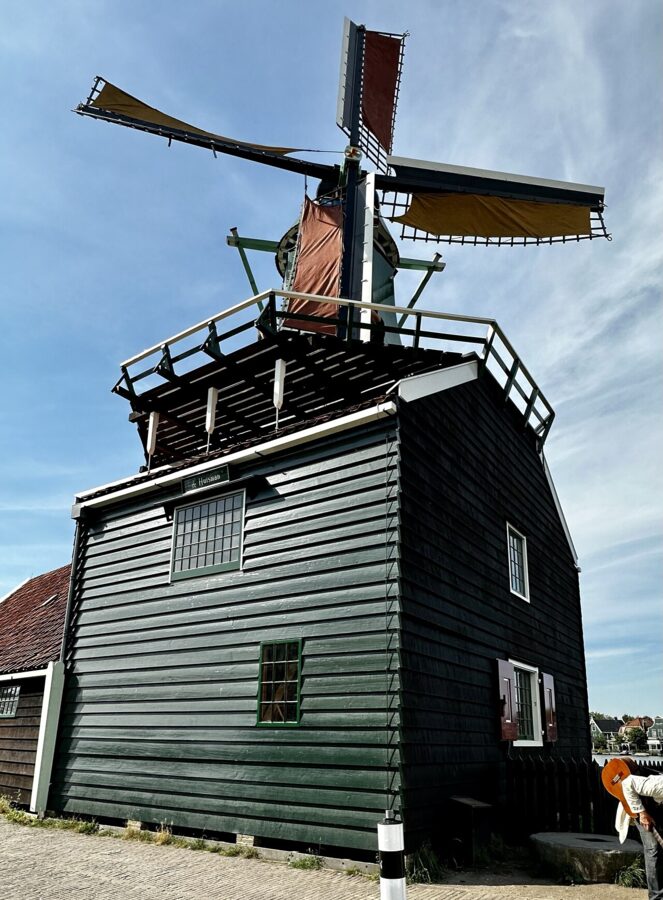
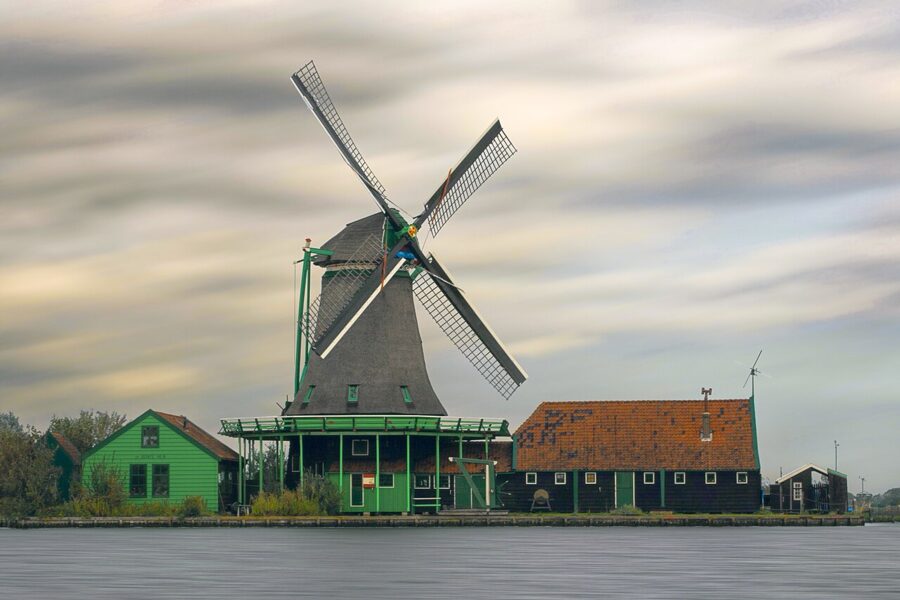
De Os, Het Klaverblad and De Bonte Hen
Walk on and you pass a dark mill body with no cap and no sails. That is De Os, built in 1649 as an oil mill and one of the oldest industrial mills in the region; its cap and sails came off when it could no longer run on wind, and it is now a private home. Next comes Het Klaverblad, a small sawmill for slats that one man, Ru Pos, spent decades building with his own hands after buying the plot in 1973. It is often closed.
At the end stands De Bonte Hen, an oil mill on a site used since around 1693. The old mill was taken down to its base in the 1930s, and the present one was rebuilt on that base in 1975. From March to October it opens Thursday to Sunday, 10:00 to 17:00; in winter it is closed.



The ones you will probably miss
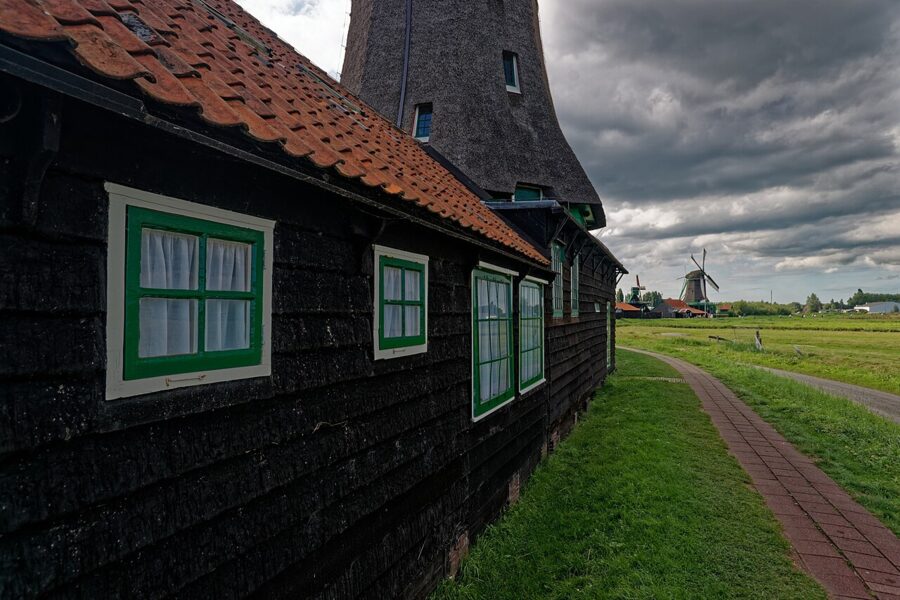
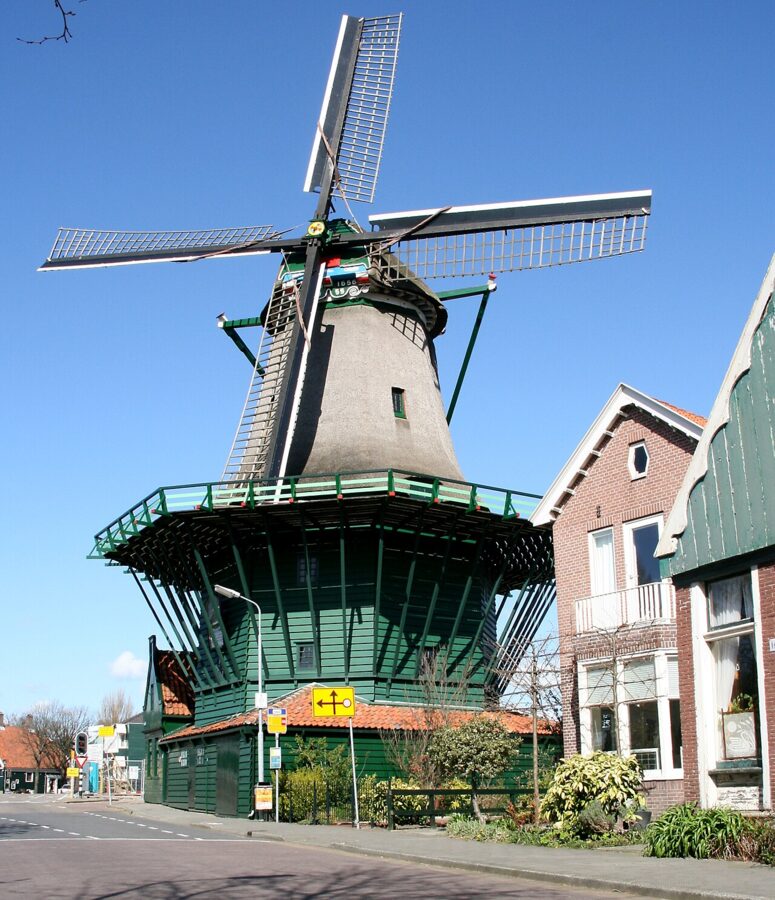
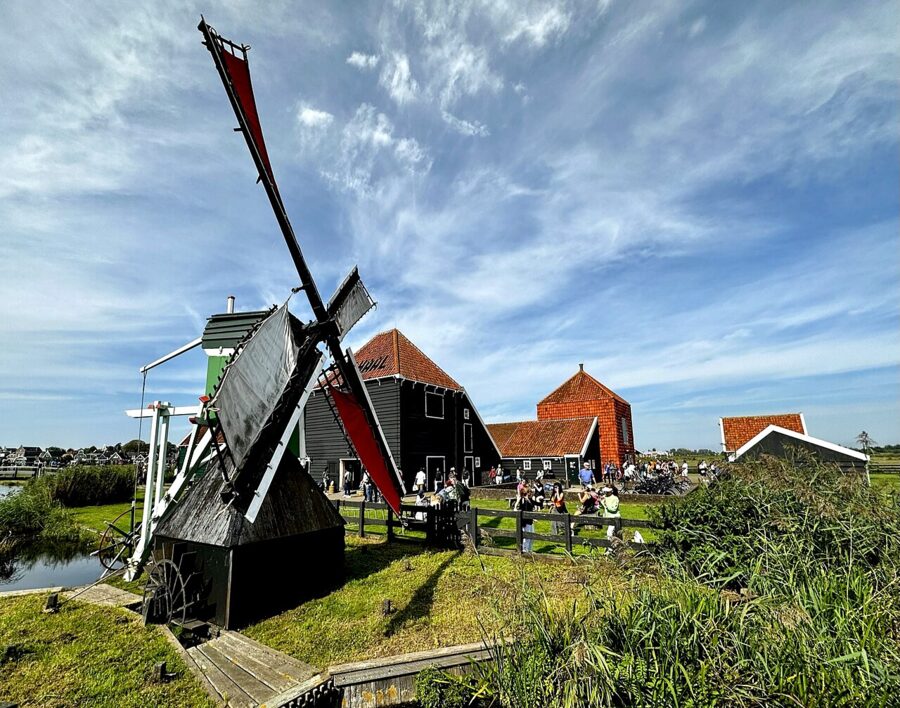
De Ooievaar, an oil mill built in Assendelft in 1622 and moved to the Zaan in 1669, stands a short walk away on the Diederik Sonoyweg and is closed to the public. Across the river in Zaandijk, the flour mill De Bleeke Dood opens on Fridays from June to October. Its name means pale death; the village watermill at the other end of Zaandijk was called Het Leven, life, so the villagers lived between the two. Two tiny mills hide among the big ones: De Hadel, which keeps water moving in the ditches, and De Windhond, which ground worn millstones into sand for polishing.


The Zaans Museum and the Verkade Experience
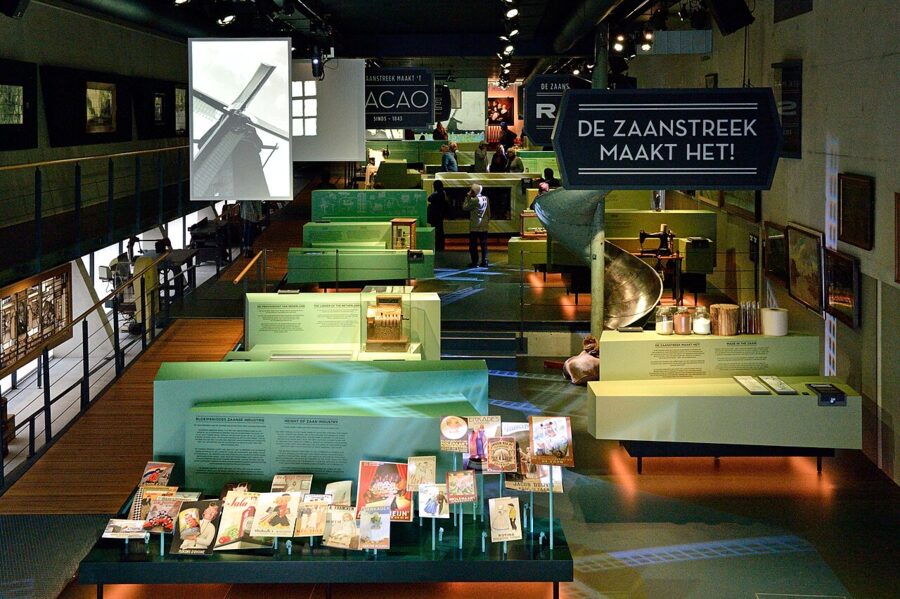
The low curved building by the car park is the Zaans Museum, opened in 1998, and it is also the information desk, the lost and found and the place to collect your paper ticket. The museum is open daily from 10:00 to 17:00 (16:00 on 5, 24, 26 and 31 December; closed on 25 December and 1 January), and it takes cards only. It is on the Zaanse Schans Ticket and free with a Museumkaart.
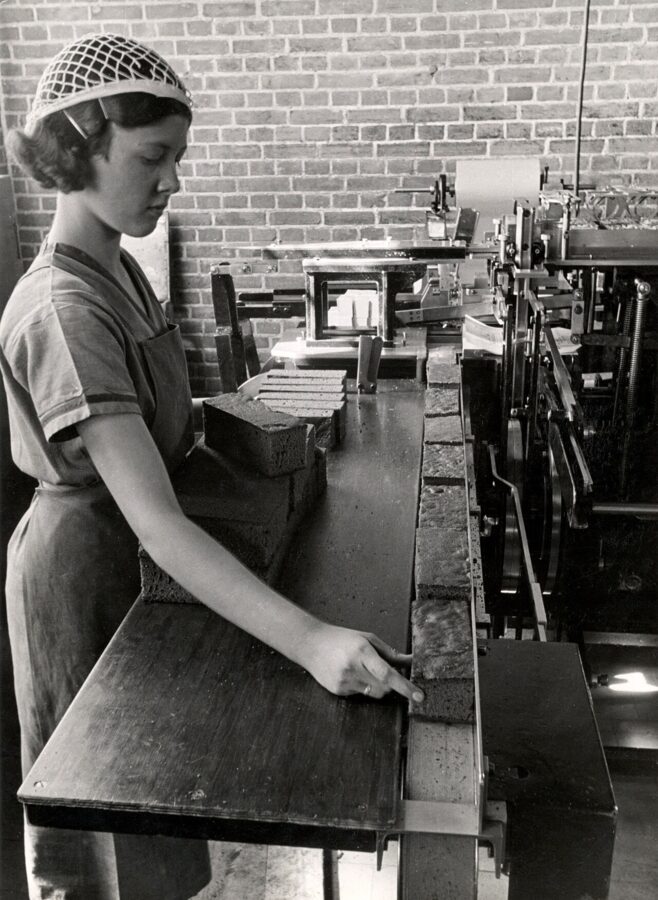
The part everyone remembers is the Verkade Experience, added in 2009: the machines of the Zaandam biscuit and chocolate factory of the early 20th century, working at full steam. Children can design a wrapper and wrap their own chocolate bar on a small packing machine. The rest of the museum is the region’s working life, from mills to the big Zaan companies, and it is better than its reputation as a rainy-day stop.

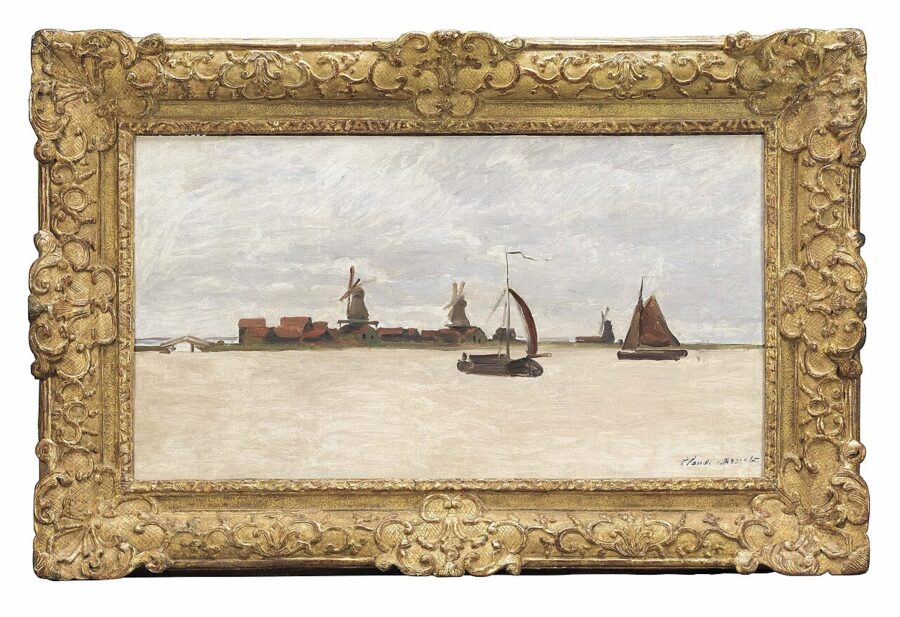
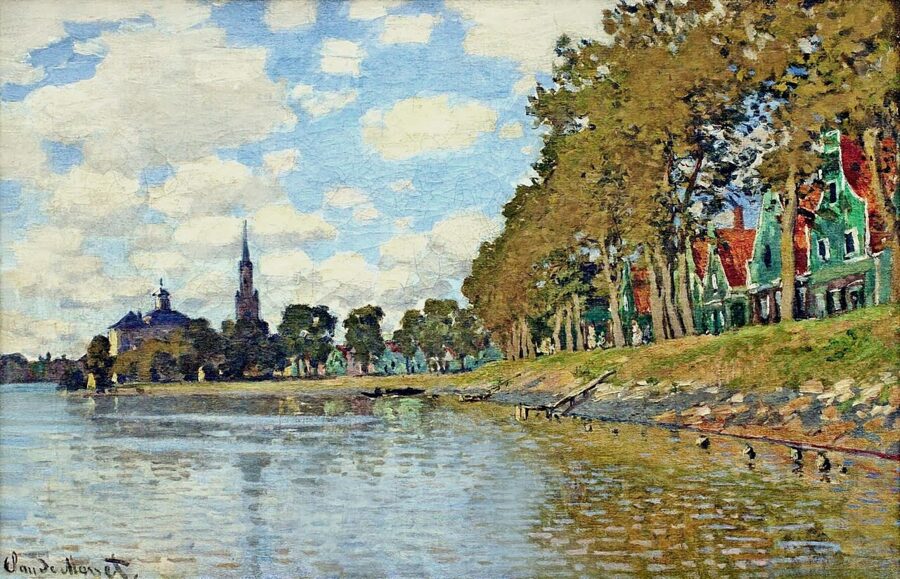
Two things in the museum are worth seeking out. Claude Monet spent the summer of 1871 in Zaandam and made 25 paintings and 9 sketches there; in 2015 the museum bought one of them, De Voorzaan en de Westerhem, and it hangs in the permanent display. And until 6 September 2027 the exhibition Wooden Dreams tells how the Zaanse Schans itself was put together, which explains much of what you see outside. A paper-cut show by Geertje Aalders, inspired by the Verkade picture albums, runs until 2 May 2027.


The Windmill Museum, run by De Zaansche Molen, is the other museum on the ticket. It has an 11-meter panorama of the mills at Oost-Zaandam around 1800 and a model with the 1,100 mills that have stood in the Zaan region, and a playground next door where every toy explains a part of a mill. From November to February it opens 11:00 to 16:00, otherwise 10:00 to 17:00.
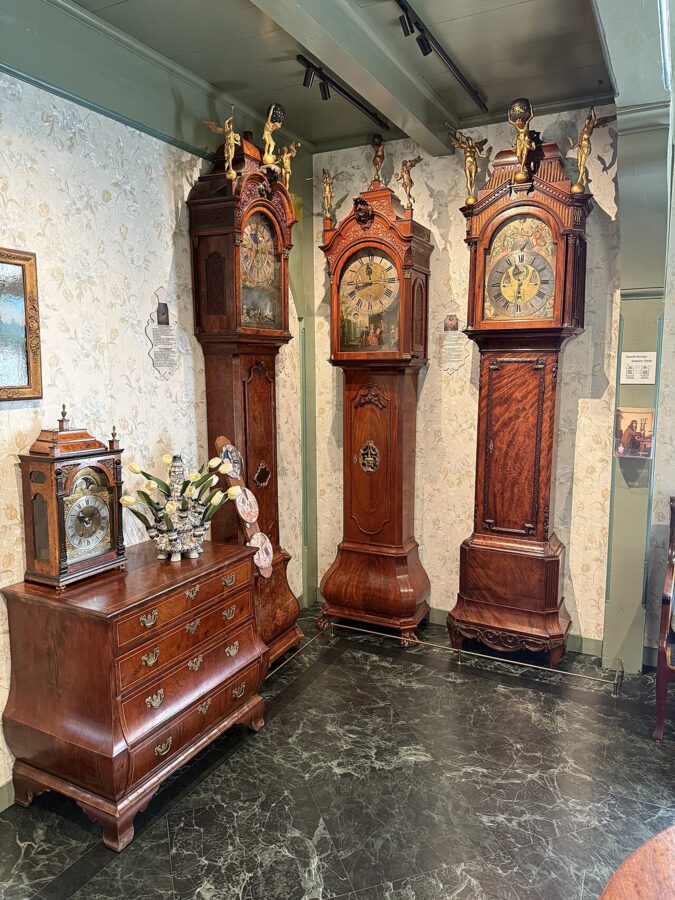
Museum Zaanse Tijd, the third museum on the ticket, is about clocks: Dutch longcase, wall and table clocks, a musical wall clock of 1685 that plays on bells, and a turret clock from around 1520. It stays open through the winter, except on Mondays in January. If clocks leave you cold, this is the one to drop.

Clogs, cheese and the shops: skip or not
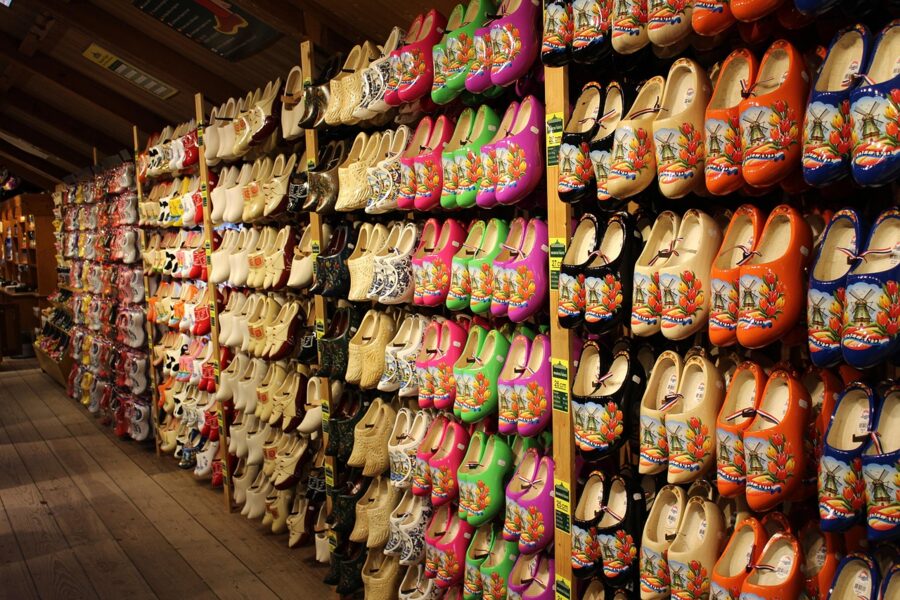
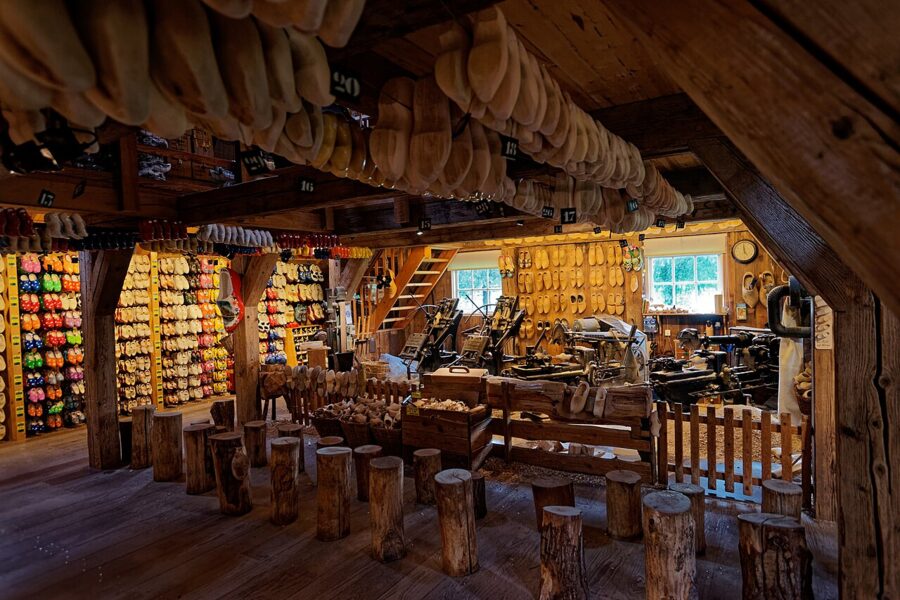
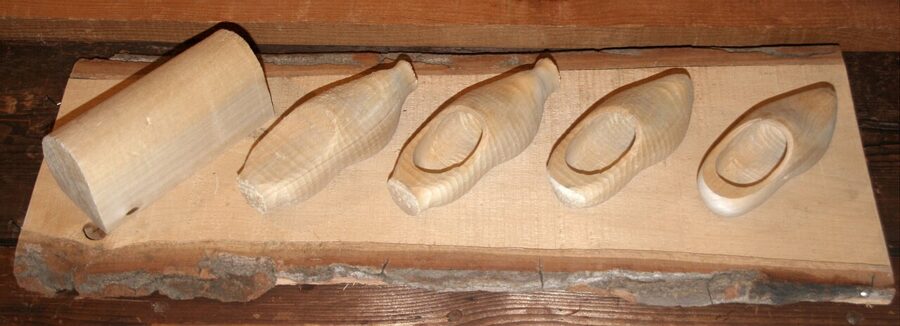
The free stops are where the coach groups go, and they make no secret of what they are: demonstrations that end in a shop. At the Wooden Shoe Workshop you can watch a block of wood turned into a clog on the machines, all day long, and look at a collection of regional, Sunday and wedding clogs. Watch once. It is worth the few minutes, and there is no charge to watch.


Cheese Farm Catharina Hoeve shows the process from milk churn to cheese wheel, and the tasting is free. Buy only what you would carry home anyway: the same kinds of farmhouse cheese are sold all over Amsterdam, and Dutch food in the city is the better hunting ground. Taste, then decide.
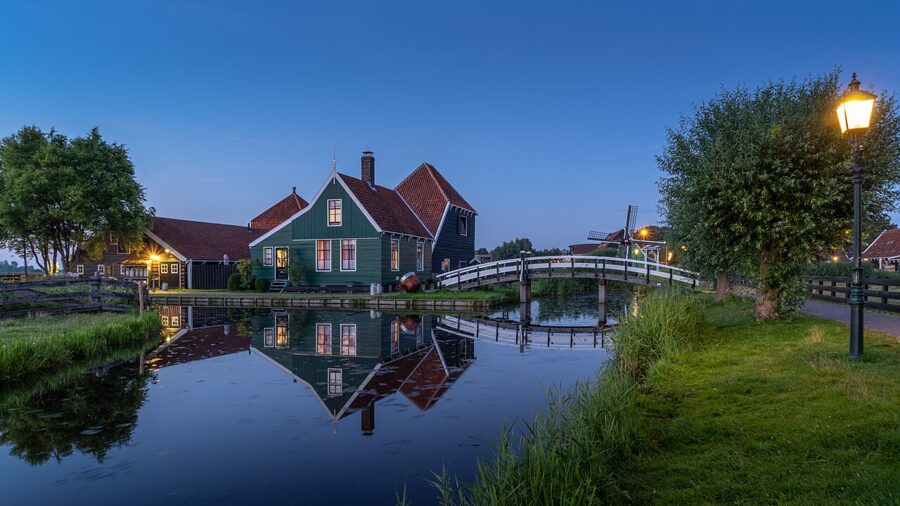
Two stops are less obvious and better. Blik op Cacao follows the cacao bean all the way to the chocolate bar, the way it has been done in the Zaan region for decades, and at the Tweekoppige Phoenix distillery you can watch liqueurs being made and taste them. For food, De Kraai does pancakes (10 percent off with the Zaanse Schans Ticket), D’Swarte Walvis does a proper lunch with a view of the river, and the museum café is the quiet option.
Getting there from Amsterdam
By train
The train is the fastest way. Take the Sprinter, the stopping train, from Amsterdam Centraal to Zaandijk Zaanse Schans, two stops past Zaandam: about 17 minutes. Tap in and out with a contactless bank card or buy a ticket in the NS app. From Schiphol, change at Amsterdam Sloterdijk; the whole trip takes about half an hour.
From the station it is about a kilometer on foot, 15 minutes. Follow the Zaanse Schans signs toward the river and cross the big bridge over the Zaan; the mills come into view along the far bank as you cross, which is the moment the walk pays for itself.
By bus
The Zaanse Schans Express, bus 800, runs from Amsterdam Centraal to the stop next to the Zaans Museum in about 24 minutes, every 15 minutes between 09:00 and 17:00. It is a regional MeerPlus bus, so check in with a contactless card. Bus 801 also stops there, running via Zaandam and on to Volendam. A combination ticket with the return bus trip and a Zaanse Schans Ticket costs €39.50 for adults, €30 for ages 12 to 17 and €18 for ages 4 to 11.
By bike, boat or car
On an electric bike it takes about 40 minutes from central Amsterdam. Cross the IJ on one of the free ferries from behind Centraal (F3 to Buiksloterweg or F4 to NDSM) and plan the rest with a cycle route planner; the way runs north through Zaandam. You may ride on the Kalverringdijk, which is a cycle path as well as the main footpath, so ring and slow down, but not on the paths inside the village. Park free at the east entrance on Schansend, where there are two charging points for e-bikes, or at the west entrance where the Kalverringdijk starts.
From 1 April to 1 October a bike taxi runs between the station and the Schans, daily from 10:00 to 12:00 and 14:00 to 16:00. From May to September a volunteer-run ferry crosses the Zaan between the Kalverringdijk and Zaandijk, five minutes, €1.50 for adults and free up to age 10. The Windmillhopper, an open boat for up to 12 with a guide, makes a 25-minute trip past the mills every half hour from ‘t Glop, the square by De Huisman, except on Thursdays.
By car, aim for Schansend 7. Parking is €15 a visit, card only, with no hourly rate and no way back in without paying again; parking on the verges is banned. There is no space for motorhomes.

Zaandam on the way
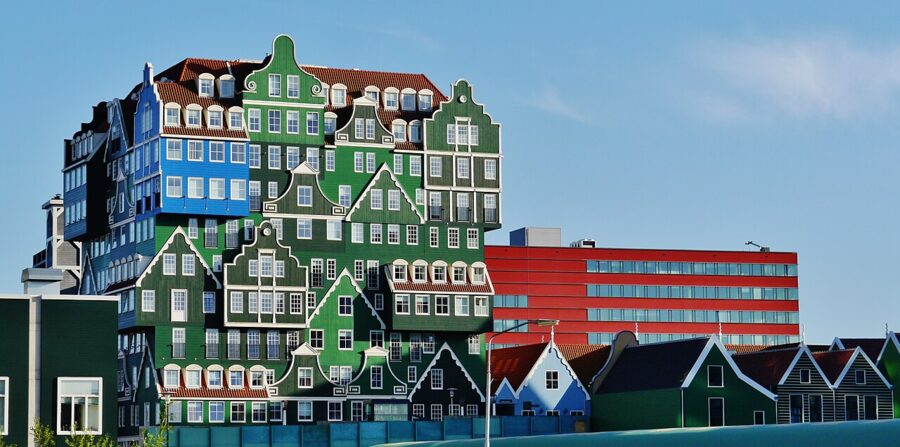
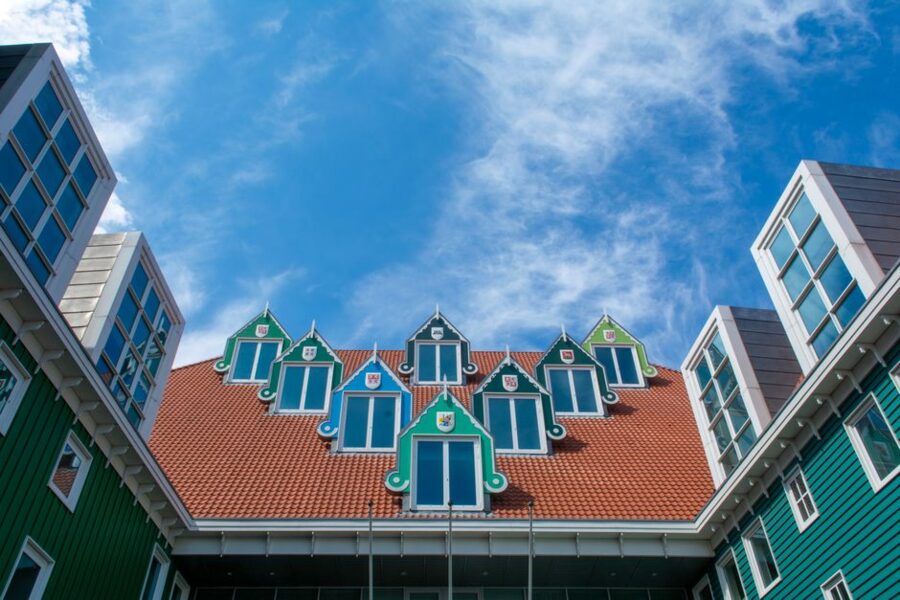
The train stops at Zaandam first, and the town is worth getting off for, either on the way out or on the way back. You cannot miss why: next to the station stands the Inntel Hotels Amsterdam Zaandam, opened in 2010 to a design by Wilfried van Winden, its facade made of nearly seventy Zaan-style house fronts in four shades of green, stacked on top of each other. It is part of Inverdan, the rebuilding of the town center that also gave Zaandam a town hall in the same oversized Zaan style, opened in 2012 beside the station.

From the station, walk down the Gedempte Gracht, the old town canal that was filled in in 1858 and has since been dug out again, to the Dam, then keep to the right-hand side into the Krimp. At the end of the Krimp, about 15 minutes from the station, is the Czar Peter House.
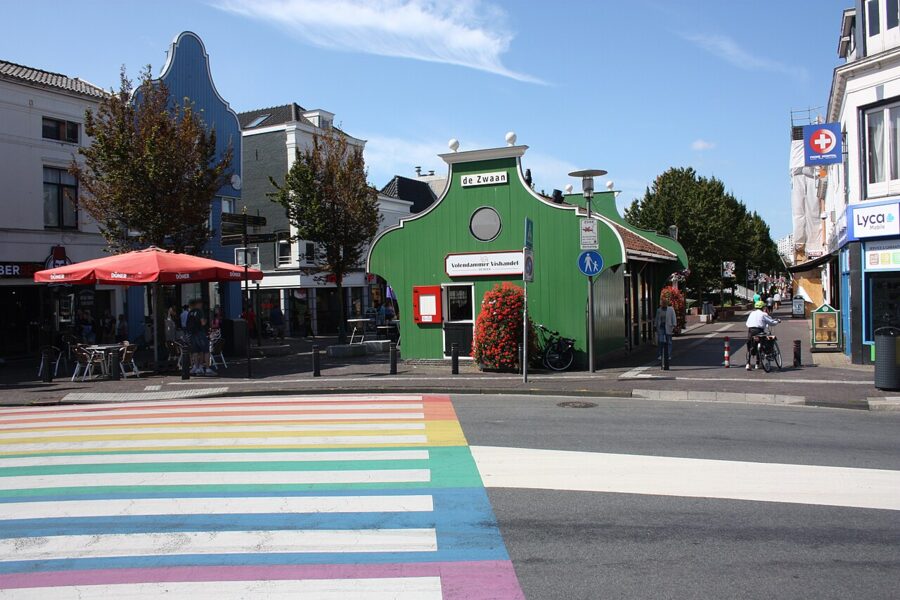

The Czar Peter House
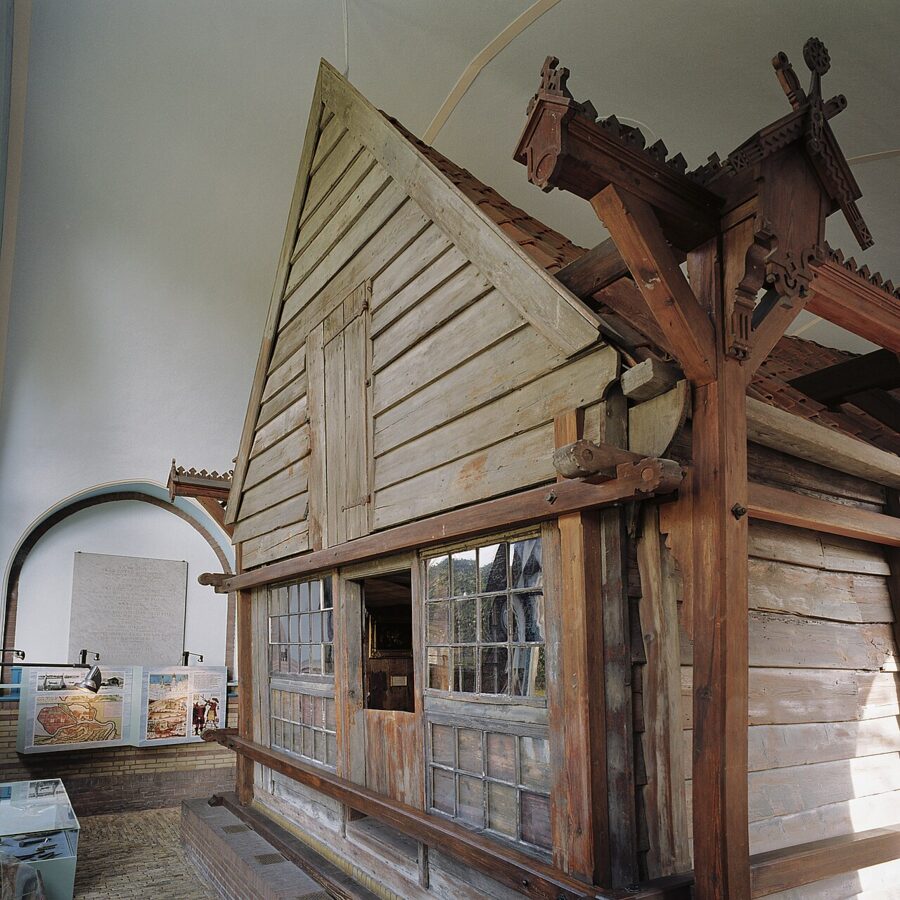
Peter the Great came to Zaandam in August 1697, aged 25 and traveling under a false name, to learn shipbuilding. He rented a small wooden worker’s house from Gerrit Kist, a smith who had worked in Russia, and stayed eight days before the crowds following a two-meter-tall Russian drove him to Amsterdam. The house, built in 1632 from old ship’s timber, is one of the oldest wooden houses in the country. Nicholas II paid for the brick shell that has protected it since 1895.
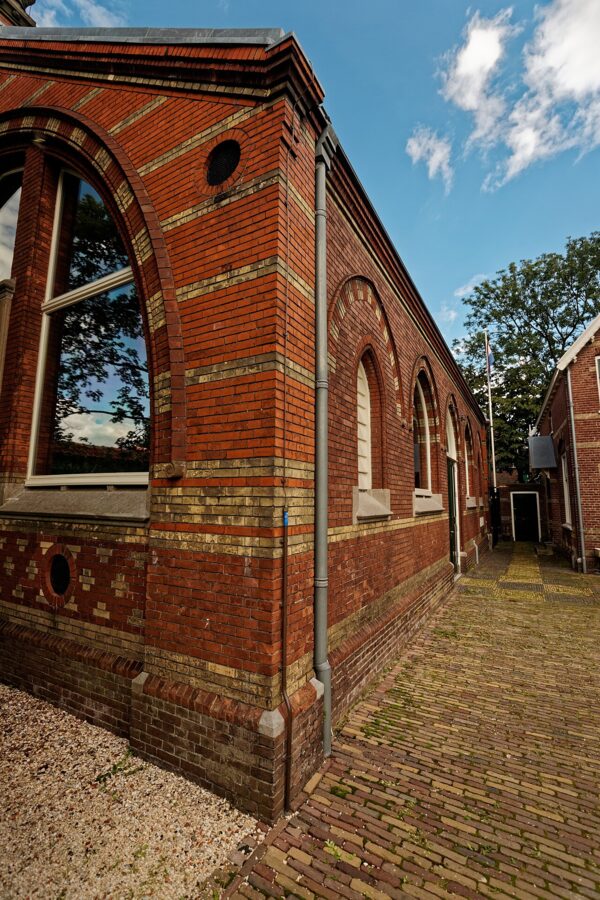

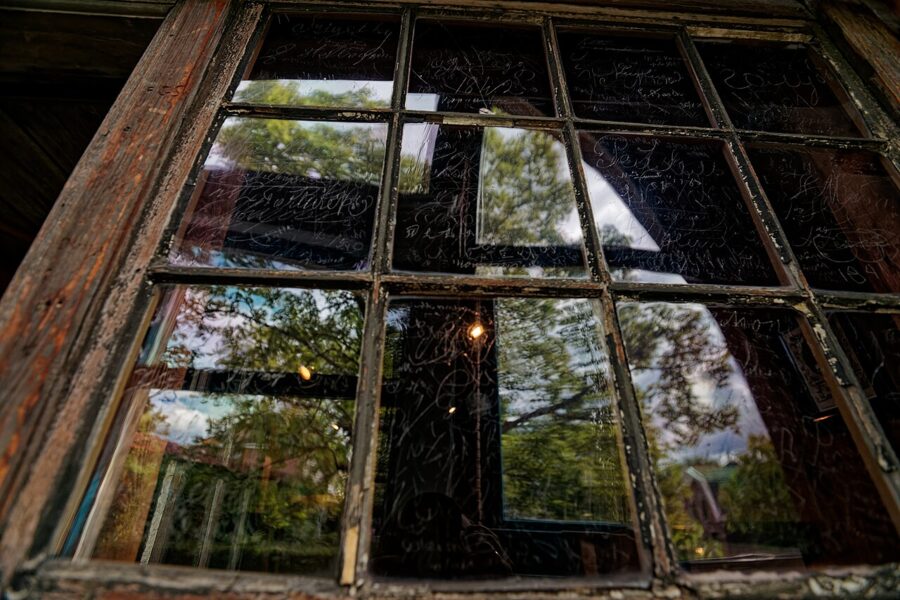
The Czar Peter House at Krimp 23 is open Tuesday to Sunday from 10:00 to 17:00, with shorter hours around Christmas. Adults pay €7 (about US$8), children 4 to 17 €3.50, and the Museumkaart and I amsterdam City Card are accepted; cards only at the door. Inside are the box bed, the tiled hearth, portraits of Peter and Catherine I, and signatures scratched into the walls and windows by Romanovs and Dutch royals. The wooden house itself is not accessible by wheelchair.


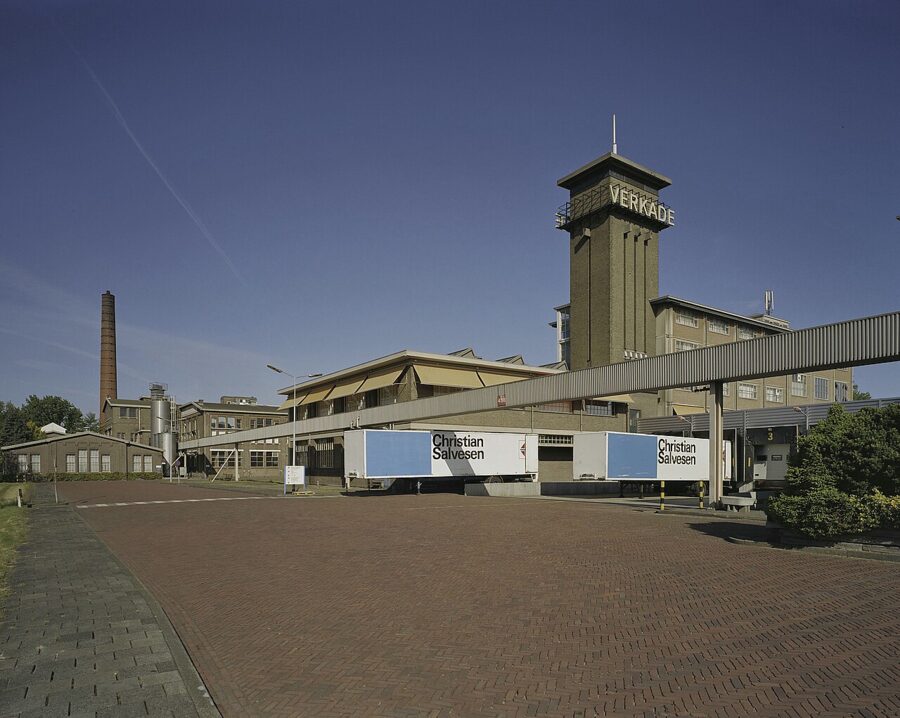
Monet stayed in Zaandam for four months in 1871 and painted the town as well as the mills; one of the results, now in the Musée d’Orsay in Paris, shows the houses along the water behind a row of trees. The former Verkade biscuit works stand on the Westzijde, the long street on the west bank, now a listed monument. Off the same street, on the Simon de Witstraat, Ronald Bonkerk tattooed for years, a story told in my piece on Bonkerk Tattoo.

Crowds, hours and accessibility
Most mills, museums and workshops open from about 09:00 to about 17:00, and there are no evening openings. The information desk in the Zaans Museum keeps 09:00 to 17:00, and most sites close between 16:30 and 18:00, so arrive before 16:00 if you want to get inside anything. The village paths stay open after the sites close, and a walk along the dike at dusk costs nothing and is quiet.
The crowds follow a pattern. The quietest times are early morning and late afternoon, weekdays beat weekends, and October to February is low season. The busiest stretch runs from the day Keukenhof opens in spring to the end of May, when many tours do the tulips and the windmills in one day. The paths are narrow, and on a summer weekend they jam.
Pickpockets work the crowds. In January 2025 police arrested a group on the Schans, and an appeal court later gave one of them a prison sentence; the town and the businesses have since agreed on extra measures, including private security. Keep bags zipped and in front of you on the dike, as you would on the Damrak.
A few rules. The houses are private homes, so stay out of gardens and off doorsteps, and drones are banned over the Schans and the Kalverpolder. Dogs are welcome on a lead outdoors but not in most museums and mills unless they are assistance dogs. Toilets, at De Bezem on the Schipperplein by the east entrance and by the jetty on the Kalverringdijk, charge a small fee by card.
Accessibility is mixed, because the paths and bridges are 17th- and 18th-century in shape. There are low-threshold bridges, accessible toilets at the Schipperplein, on the Kalverringdijk and in the Zaans Museum, and reserved parking near the museum. The museum has a lift to every floor, lends a few wheelchairs if you book ahead, and lets carers in free. Of the mills, Het Jonge Schaap is the one with step-free access, by ramp or lift.
If you have a second day out to spend, Haarlem makes a good contrast, and my list of things to do in Amsterdam has the rest. For the Zaanse Schans itself, the plan is short: take the Sprinter from Centraal before nine, cross the bridge as the first mill doors open, buy the €15 mill ticket at De Kat, and be back on the Gedempte Gracht in Zaandam for lunch as the coaches pull in.