

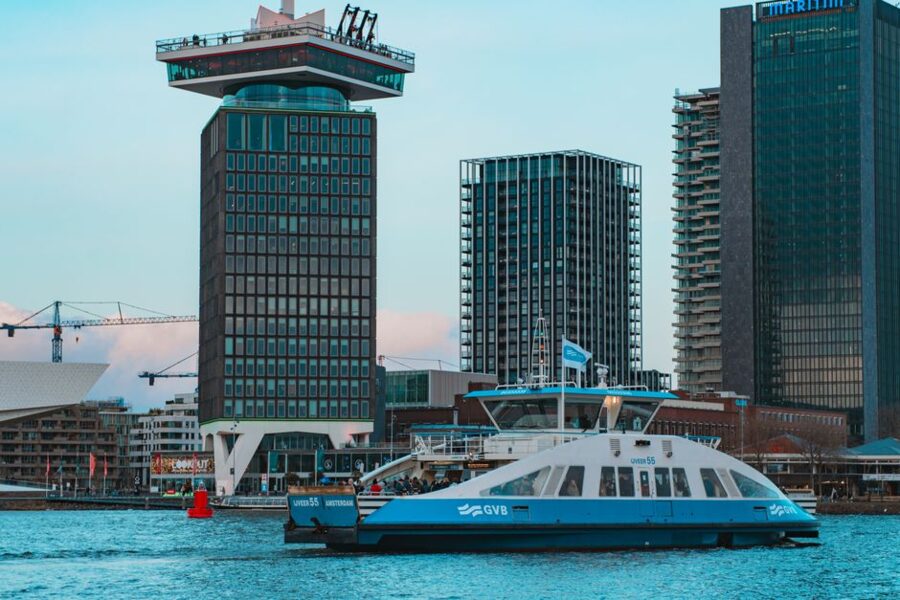
The best free ride in Amsterdam leaves from the back of Centraal Station. The F3 ferry crosses the IJ to Noord around the clock, takes under five minutes, and nobody asks you for a ticket. Walk out of the front of the same station and the Damrak hands you the opposite deal: souvenir shops, waffle counters and a ten-minute shuffle to the Dam, the street every first-timer walks first and the one I would walk last.
Most of what is worth doing here works like that ferry. You turn up, it runs, and it is cheap or free: the canals, the markets, the parks, the brown cafés, the walk through the Jordaan on a Monday morning. A short list does not work that way. The Anne Frank House sells every ticket online and nothing at the door, the Rijksmuseum and the Van Gogh Museum want a booked start time from everyone, and on a December weekend the evening canal boats fill up before the festival lights come on.
That leaves a simple plan for a first visit: book three things before you fly, leave the rest to the weather, and spend the hours you save in the neighborhoods, where people still live. Prices and hours below are as of late November 2026, the day after the Amsterdam Light Festival switched on and a month before the tourist tax goes up again.
Contents13 parts


Book three things, leave the rest to the day
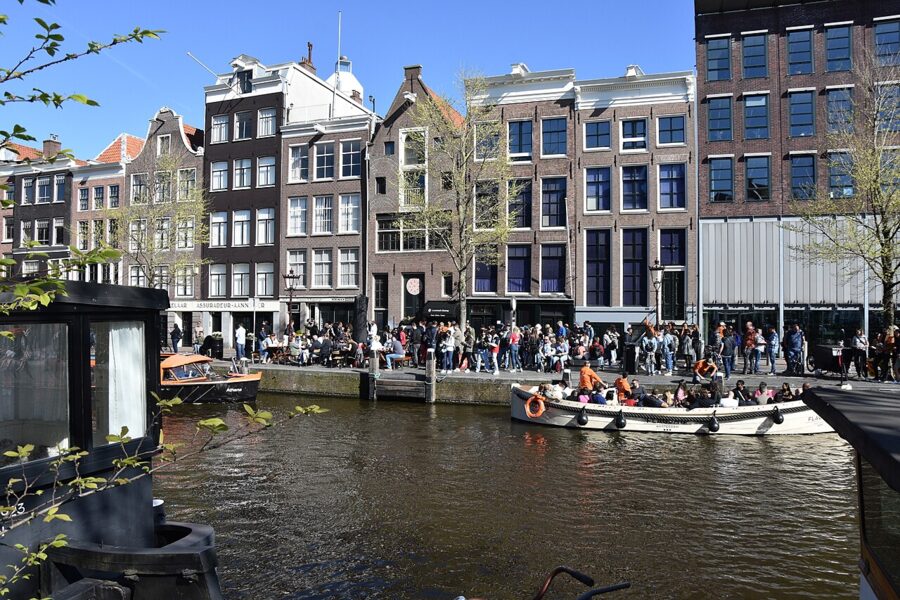
The Anne Frank House releases tickets every Tuesday at 10:00 Amsterdam time for visits six weeks later, and those are the only tickets there are. An adult pays €16.50 (about US$19), €17 (about US$20) from 2027, including a €1 booking fee, and ages 10 to 17 pay €7 (about US$8). The house is open daily 09:00–22:00, which rescues more late planners than any other fact about it: the evening slots go last. The museum’s ticket page is the only legitimate seller.
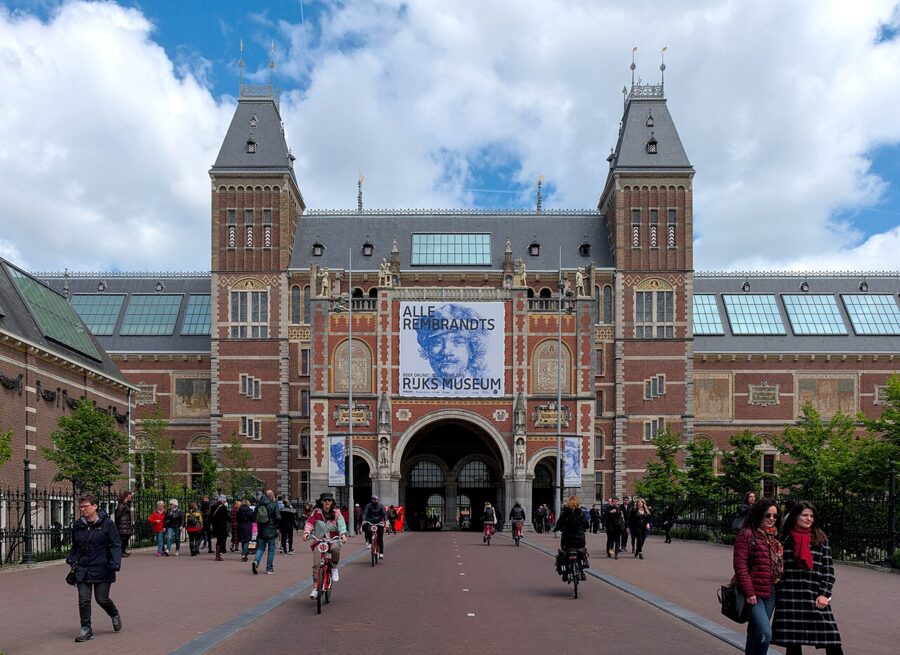
The Rijksmuseum is open every day of the year 09:00–17:00 and charges €25 (about US$29), rising to €26.50 on 1 January 2027, with anyone 18 or under free. Everyone needs a start time, Museumkaart holders and children included. The museum’s own advice is that it is quietest before 11:00 and after 15:30, and on Tuesdays and Wednesdays.
The Van Gogh Museum sells online only, every ticket has a start time, and it also charges €25, going to €26 from 1 January 2027, with under-18s free. Through 18 December it is open 09:00–17:00 with Fridays until 21:00, and the museum’s calendar moves the closing hour around the holidays. It has not accepted the I amsterdam City Card since 2022, which surprises people who bought the card for it.

Beyond those three, booking ahead mostly saves money rather than a wasted trip. The A’DAM Lookout charges €2 less online, the Heineken Experience sells its tickets online, and canal boats are cheaper on the operators’ websites than at the kiosks. Everything else in this city, from the Begijnhof to the Albert Cuypmarkt, you can decide on the morning.
| Book ahead | How far | Adult price (as of November 2026) |
|---|---|---|
| Anne Frank House | Six weeks: Tuesdays at 10:00 | €16.50 (€17 from 2027) |
| Rijksmuseum | As soon as dates are fixed | €25 (€26.50 from 2027) |
| Van Gogh Museum | As soon as dates are fixed | €25 (€26 from 2027) |
| Evening canal boats, December | A few days | Evening boats from €15.50, festival boats from €22.50, plus €2.70 levy |
| Heineken Experience | A day or two | €24.95 |
The canals, and how to see them
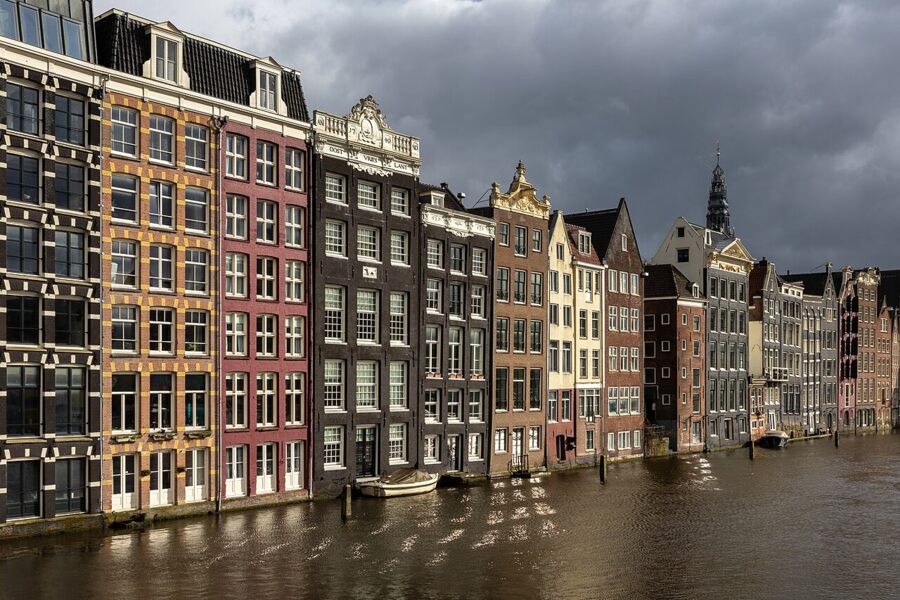
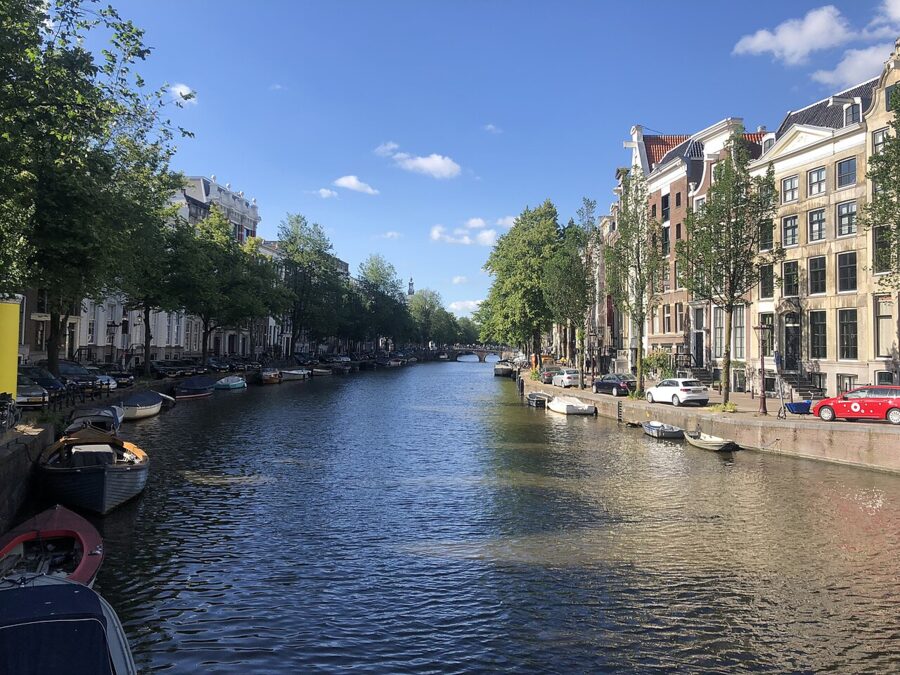
The ring of canals around the old center was dug in the 17th century in a planned arc, the Singel innermost, then the Herengracht, the Keizersgracht and the Prinsengracht, with the Jordaan built for workers on the far side. UNESCO listed the canal ring in 2010. You can see the best of it free, on foot, in about two hours.
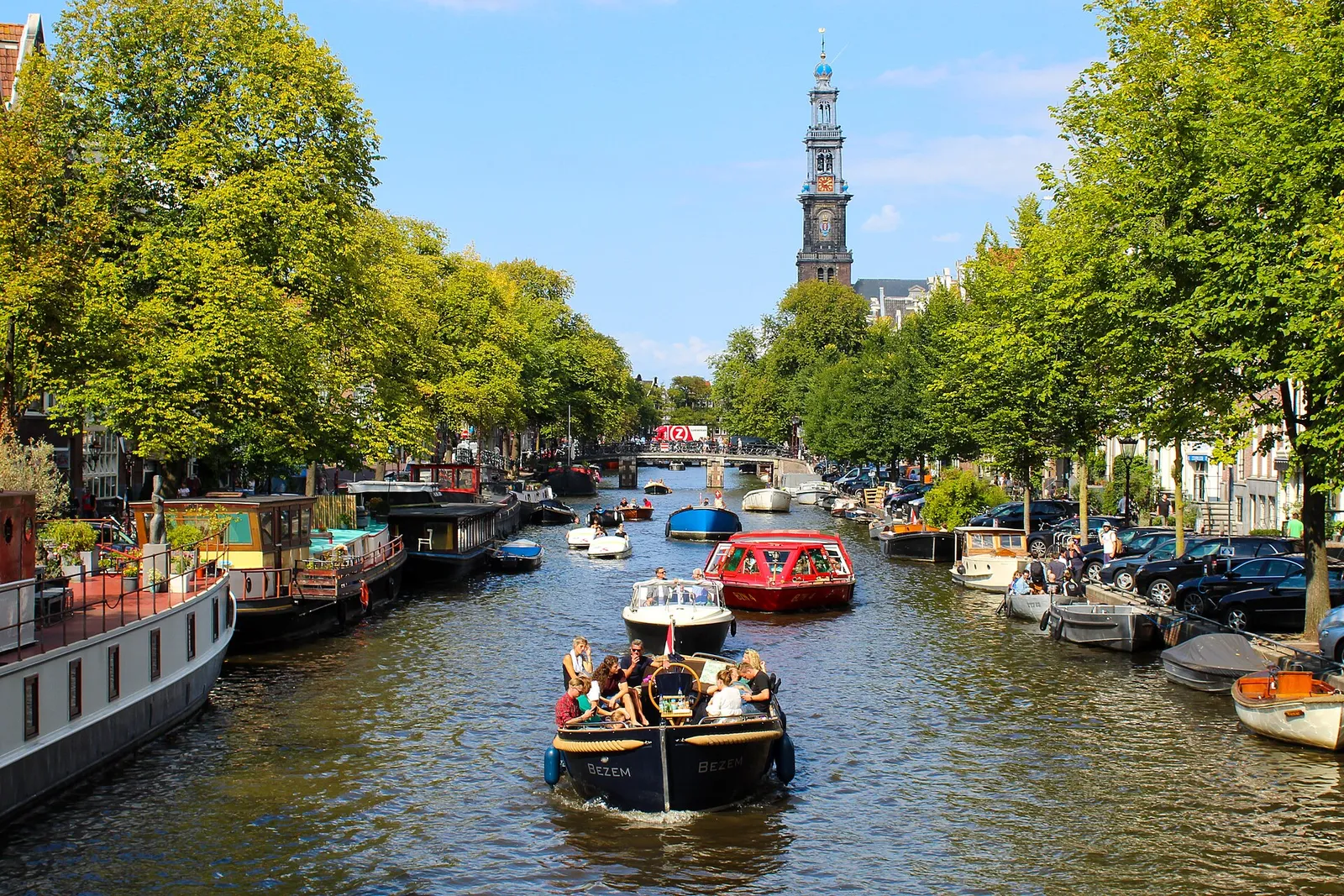
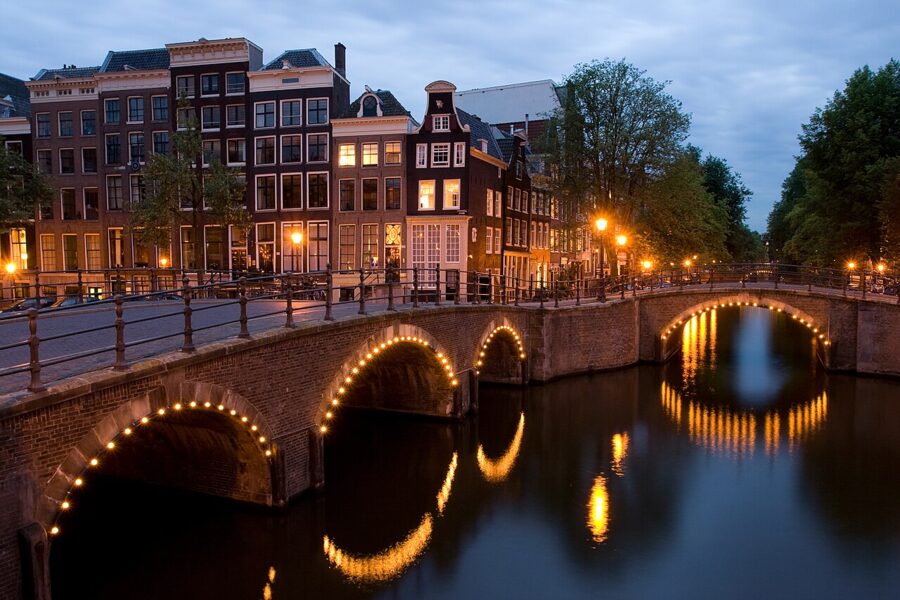
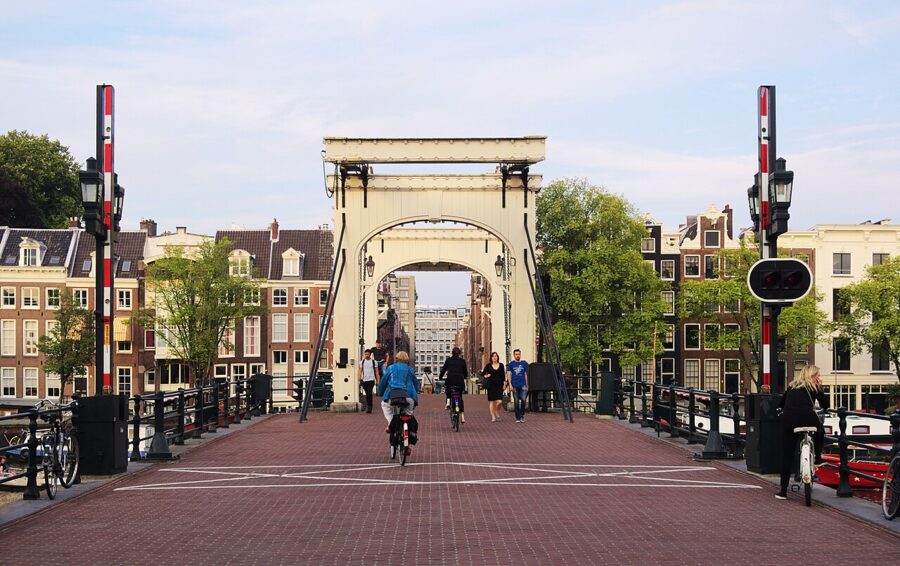
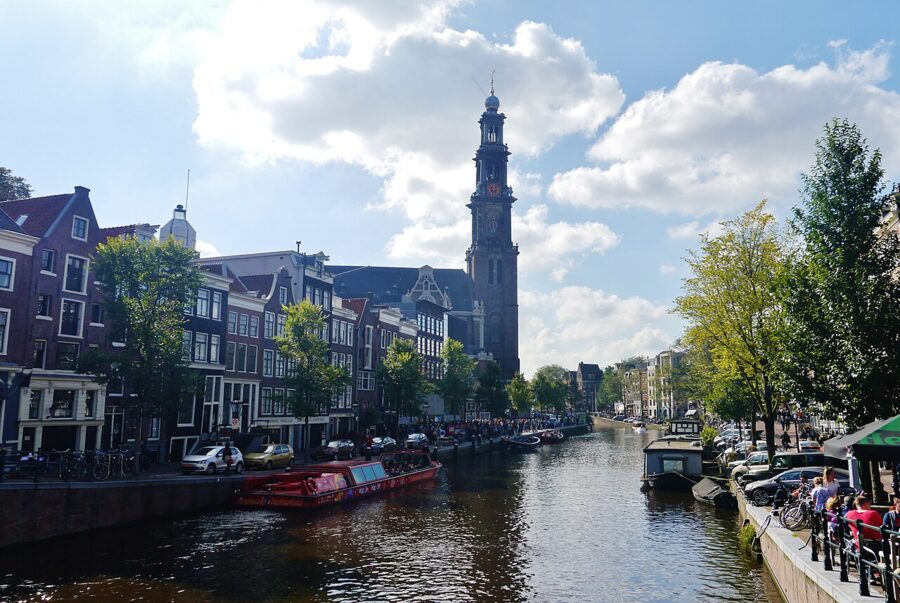
Walk the Herengracht between the Leidsestraat and the Vijzelstraat for the Golden Bend, where the richest merchants built in stone instead of brick. Then stand on the bridge where the Reguliersgracht leaves the Herengracht, where a row of arched bridges lines up one behind the other down the canal, and finish on the Prinsengracht by the Westerkerk. Go early or at dusk: the light is better, and the bikes are fewer.

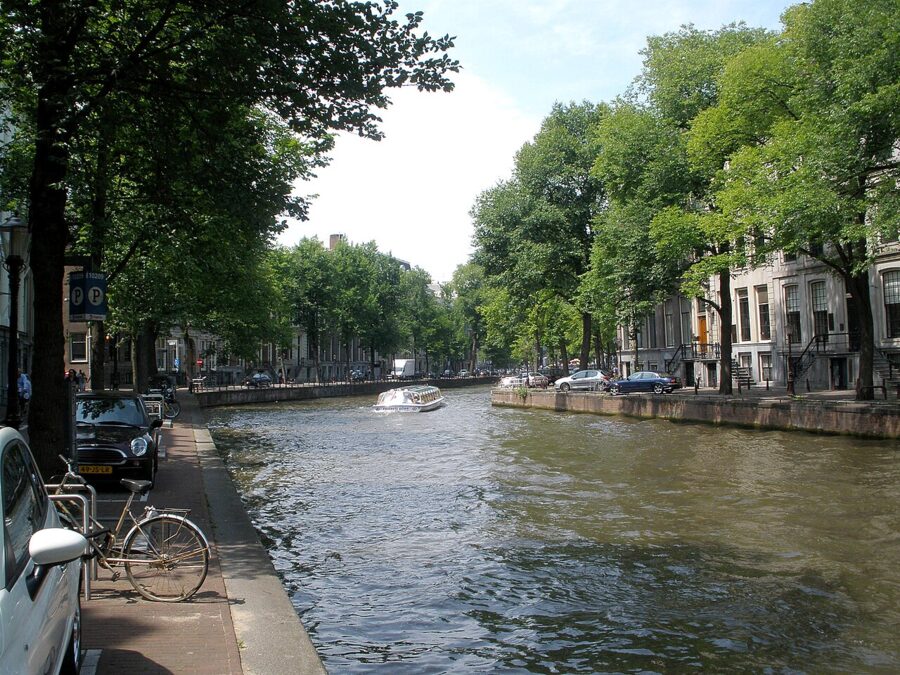
From the water, the cheapest way is a big glass-roofed boat with an audio guide: one hour from the quay opposite Centraal costs €13.50 (about US$16) online, plus a city levy of €2.70 (about US$3) a passenger that most operators add at checkout. Small open boats with a skipper who talks start at about €19.40 (about US$23). Every passenger boat on the canals has had to be emission-free since 1 January 2025, so the diesel hum has gone. The canal cruises guide compares the operators, piers and evening boats.
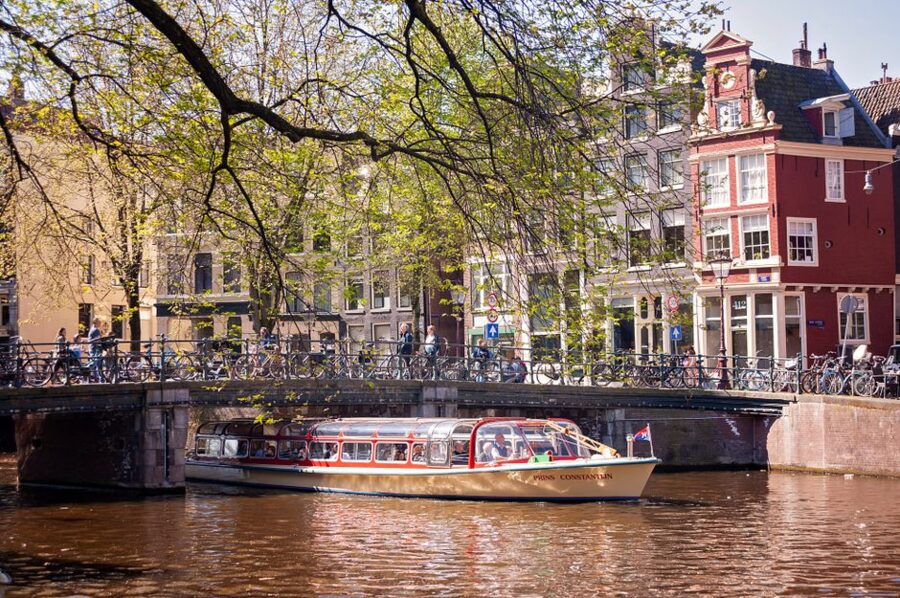
Renting a small electric boat and steering it yourself is legal without a license, because the rental boats are built to stay under the national limits of 15 meters and 20 km/h. On the canals the speed limit is 6 km/h. Split six ways, a self-drive boat costs about the same per head as a guided one, and on a warm evening it is the best fun the city sells to a group.

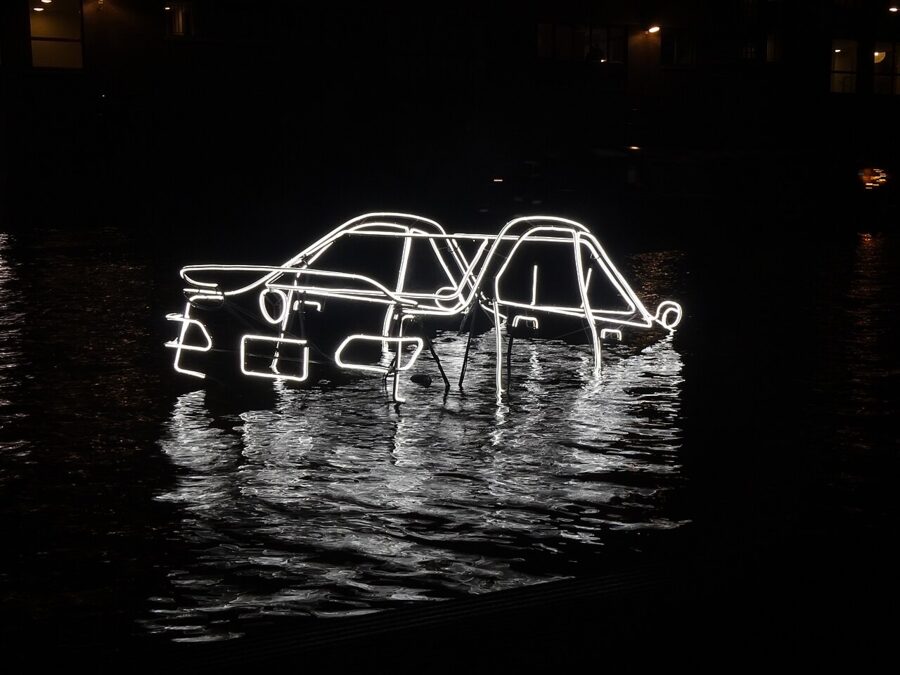
Until 17 January 2027 the Amsterdam Light Festival puts about 20 light artworks along a route through the center, lit daily 16:30–23:00. You can walk much of the route, but the festival boats leaving after dark are the ones that sell out.
The museums, one paragraph each
The full list, with every price, card and late night, is in the Amsterdam museums guide. In short, these are the ones I would go to, roughly in order.
Rijksmuseum. The national museum of Dutch art and history, built in 1885 and reopened in 2013 after a ten-year renovation. Go straight to the Gallery of Honour for Rembrandt’s The Night Watch and the Vermeers, then wander. Budget three hours and you will still skip whole wings.
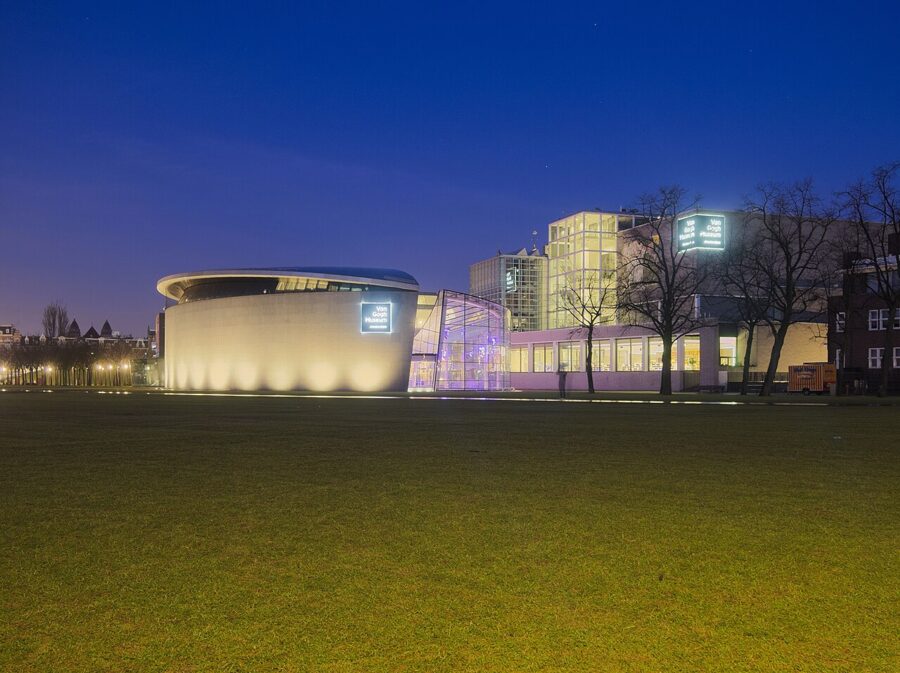
Van Gogh Museum. The largest collection of Van Gogh’s work anywhere, arranged so you follow his life from the dark Dutch years to the last months in France. Two hours is enough. Friday evenings until 21:00 are calmer than weekend middays.

Anne Frank House. The rooms behind the bookcase where Anne Frank, her family and four others hid from July 1942 until their arrest in August 1944. The visit takes about an hour and the rooms are bare, as Otto Frank wanted them. No photos inside.
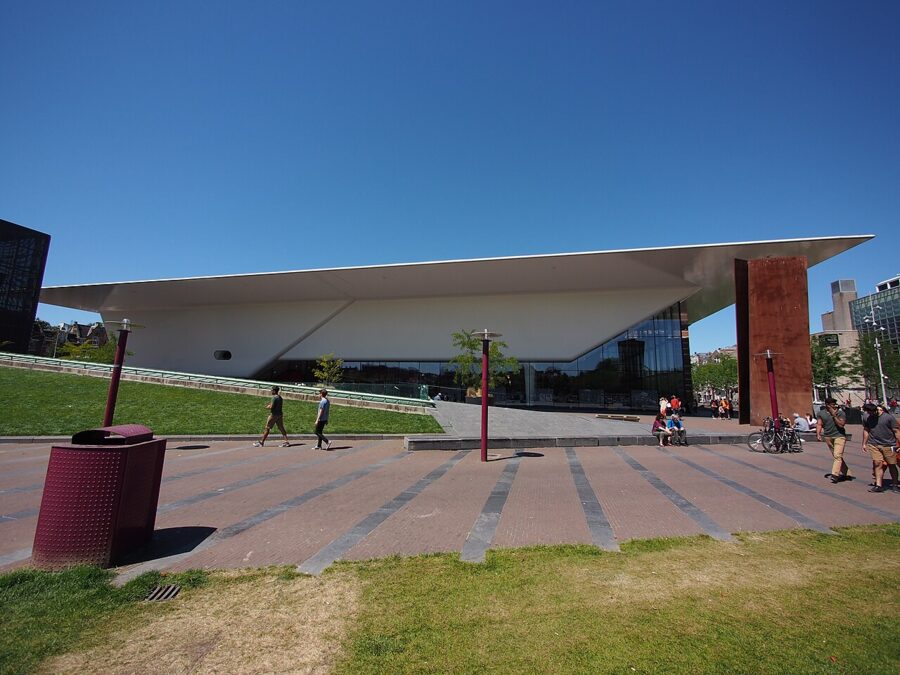
Stedelijk. Modern art and design on the Museumplein, from Mondrian and Malevich to now, in a brick building of 1895 with a white 2012 wing everyone calls the bathtub. Adults pay €22.50 (about US$26), daily 10:00–18:00, and it is the museum least likely to be full.
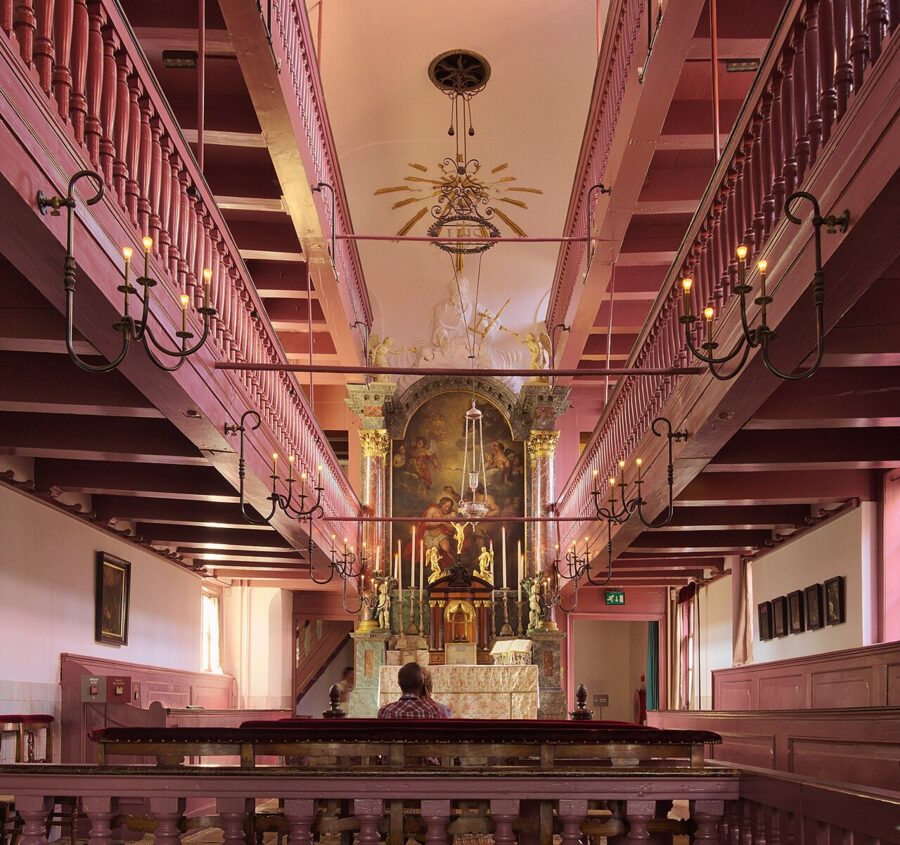
Our Lord in the Attic. A canal house in De Wallen with a complete Catholic church built across its top floors in the 1660s, when Catholic worship was banned in public. Adults pay €18 (about US$21), daily from 10:00. It is the best small museum in the city.

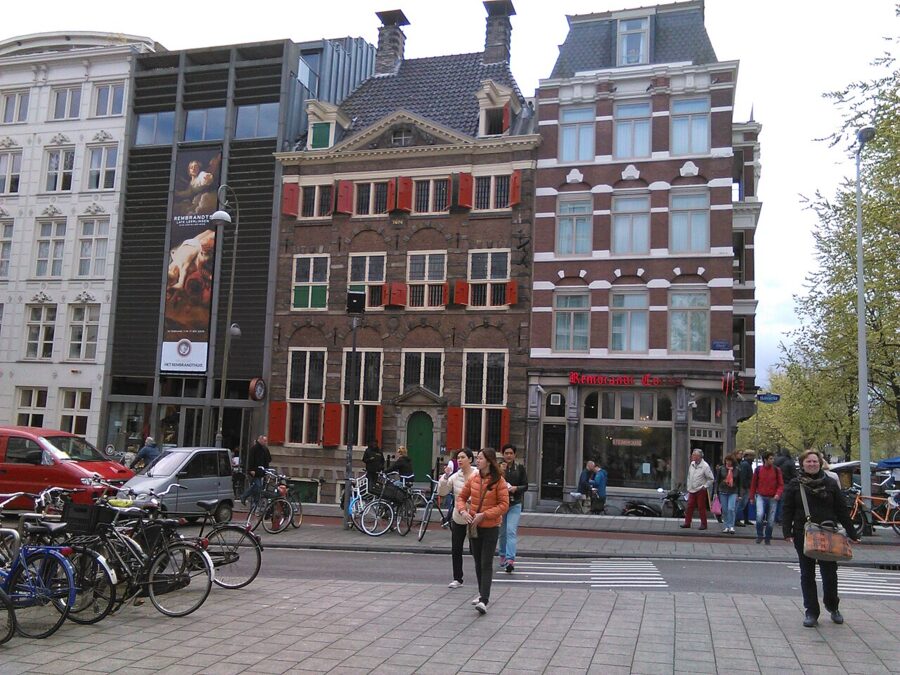
Rembrandt House. The house on the Jodenbreestraat where Rembrandt lived and worked from 1639 until his bankruptcy, refurnished from the inventory taken when he lost it. Adults pay €23.50 (about US$27), or €19.50 from 15:00 to 17:00.

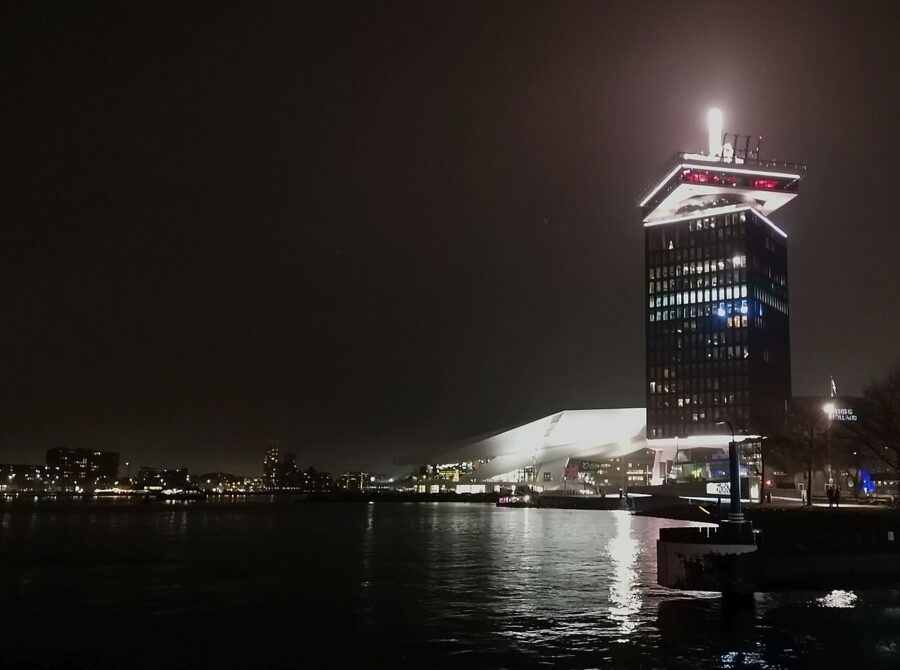
NEMO and Eye. NEMO, the green hull over the harbor east of Centraal, is a hands-on science museum at €21.50 (about US$25) for everyone over three, with a roof terrace that is free Tuesday to Sunday. Eye, the film museum on the far bank of the IJ, is the white building you see from the F3; its exhibition costs €16.50 and the café terrace is open to anyone.

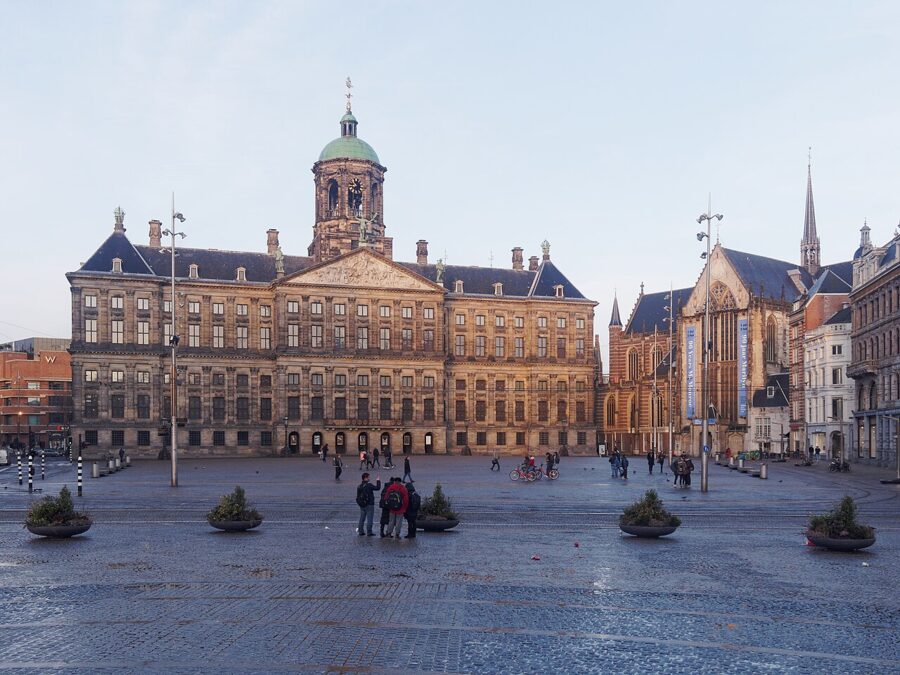
One that catches people out: the Amsterdam Museum’s main building, the old orphanage off the Kalverstraat, closed in September 2026 for a renovation that runs to 2030. The Royal Palace on the Dam opens on more than 230 days a year and closes for state occasions; it is shut until 2 December and open again from then until 3 January, per the palace’s own visitor page.
On cards: the Museumkaart costs €75 (about US$87) and gives a visitor from abroad a temporary card good for three visits in 31 days, and the I amsterdam City Card costs €67 (about US$78) for 24 hours with transport included. Do the sums for your own list; for three big museums in two days, single tickets usually win.
The neighborhoods
The old center: the Dam, the Begijnhof and the Spui
The Dam is where the city began, at a dam across the Amstel, and the square is still the city’s stage: the Royal Palace, built as the town hall in the 1650s, the Nieuwe Kerk beside it, where Dutch monarchs are inaugurated, and the National Monument to the dead of the Second World War opposite. Look at it for ten minutes, then leave by the Kalverstraat or, better, by the side streets.

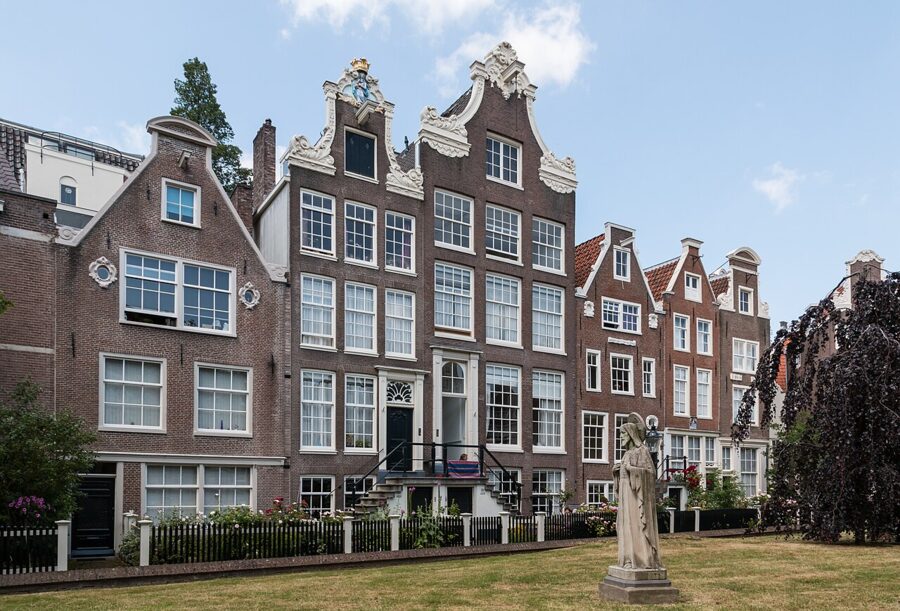
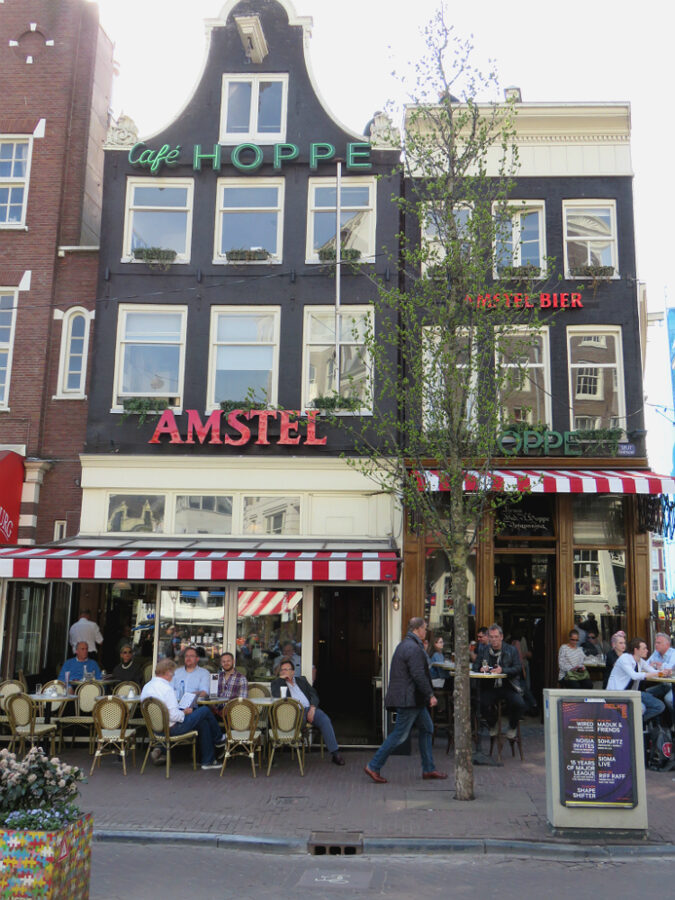
Ten minutes south, through an arched door off the Spui, the Begijnhof is a courtyard of almshouses around a lawn, built for the beguines, unmarried Catholic women who lived here in a community without taking vows. It is a residential courtyard, not a museum, so keep your voice down and stay off the grass. The Spui outside has the bookshops and Café Hoppe, which has poured beer since 1670.

De Wallen and the Red Light District
East of the Dam, around the Oude Kerk, is De Wallen, the oldest part of the city and the heart of the Red Light District. The windows are legal, licensed and fewer every decade, and the plan to move part of the trade to an erotic center in the south was dropped by the new city government in June 2026. Go in the early evening, between dusk and about 22:00, when it is busy but calm.
The rules here are the ones that cost money. No photos or video of the windows, ever. No cannabis smoking in the street since 25 May 2023, with a €100 (about US$116) fine after a warning, and no drinking in the street either. On Friday and Saturday nights the bars in the core of the district admit nobody after 01:00 and close at 02:00, under a decision that runs to 1 April 2027; the windows themselves work to 06:00.
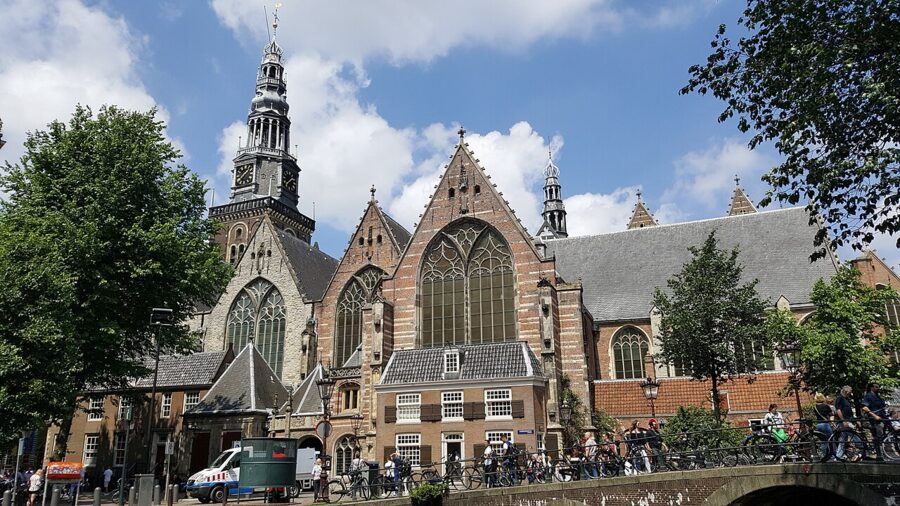
By day the same streets are something else: the Oude Kerk opens at 10:00 except on Sunday, the Zeedijk runs north with the city’s Chinatown, and the Nieuwmarkt has the metro and the cafés. Lunch there is better and cheaper than anything on the Damrak.
The Jordaan and the Nine Streets
The Jordaan, west of the Prinsengracht, was built in the 17th century for workers and immigrants and now holds some of the most sought-after addresses in the city. Its charm is that it is small-scale and lived in: narrow canals, the Noorderkerk and the Westerkerk, bars where the conversation is in Dutch. Walk the Egelantiersgracht and the Bloemgracht, look for the hofjes, the almshouse courtyards behind street doors, and stop for a drink on the water.

Café ‘t Smalle on the Egelantiersgracht, open from the afternoon according to its own site, is the brown café with the terrace on the water that everyone photographs, and it deserves it. Order a jenever and a plate of bitterballen and sit as close to the canal as they let you.
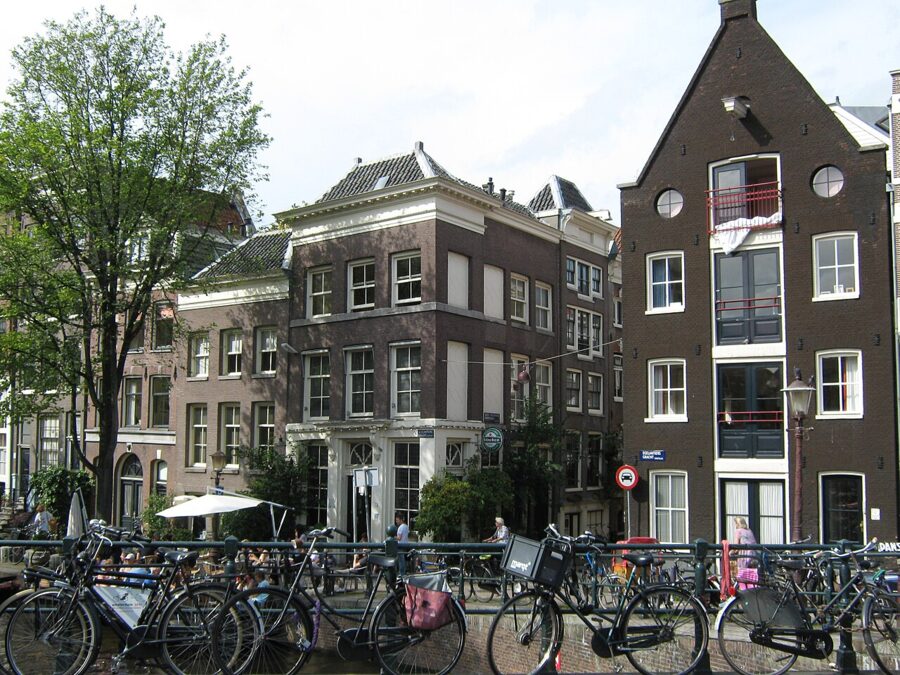

Between the Jordaan and the Dam, the Nine Streets (De 9 Straatjes) cross the canal ring with small shops, vintage clothing and cafés. They get busy by early afternoon on Saturday, so go on a weekday morning, then cross back into the Jordaan for lunch.

De Pijp
South of the canal ring, De Pijp was a 19th-century working-class district of long, narrow streets and is now the city’s best area for eating. The Albert Cuypmarkt runs down its spine, the Sarphatipark gives it a green middle, and the side streets are full of Surinamese, Turkish and Indonesian kitchens. The Heineken Experience is on its northern edge, in the old brewery on the Stadhouderskade. Take metro 52 to De Pijp; the station comes up in the market.
Noord
Amsterdam-Noord, across the IJ, was shipyards and factories and is now where the city puts its new energy. The F3 ferry to Buiksloterweg lands you between Eye and the A’DAM Tower, whose Lookout charges €16.50 (about US$19) online or €18.50 at the desk, with the swing over the edge €7.50 (about US$9) extra, as of the Lookout’s ticket page. It opens daily from 11:00.
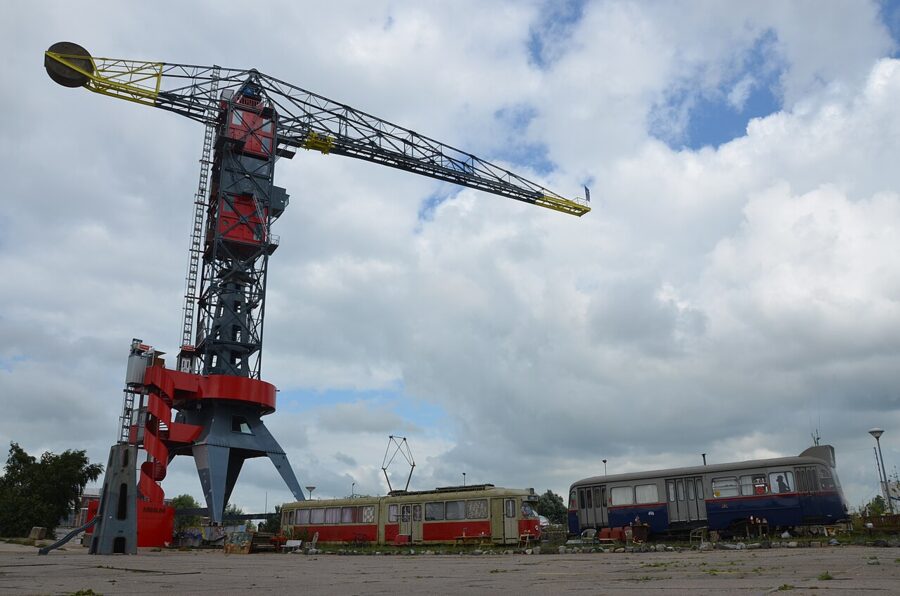
The F4 takes just under fifteen minutes from Centraal to the NDSM wharf, an old shipyard of studios, street art and waterside restaurants. One weekend a month the IJ-Hallen flea market fills its sheds, 09:00–16:30; the next dates on the market’s site are 12–13 December 2026 and 9–10 and 23–24 January 2027, and entry is €6.50 (about US$8).

The east: the Plantage and a windmill
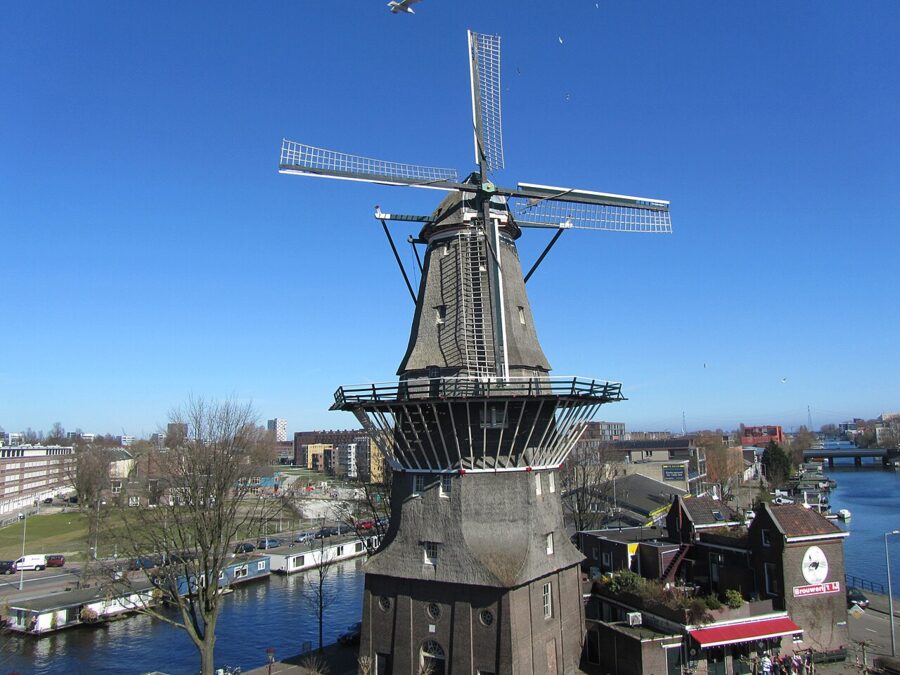
East of the center, the leafy Plantage holds the Artis zoo, the Hortus Botanicus and the Jewish Cultural Quarter around the Waterlooplein. Keep walking east along the water and you reach De Gooyer, a windmill on the Funenkade, and under it Brouwerij ‘t IJ, whose tasting room at Funenkade 7 is open daily until 22:00. A beer at the foot of a windmill is about as Dutch an afternoon as the city has.

The squares
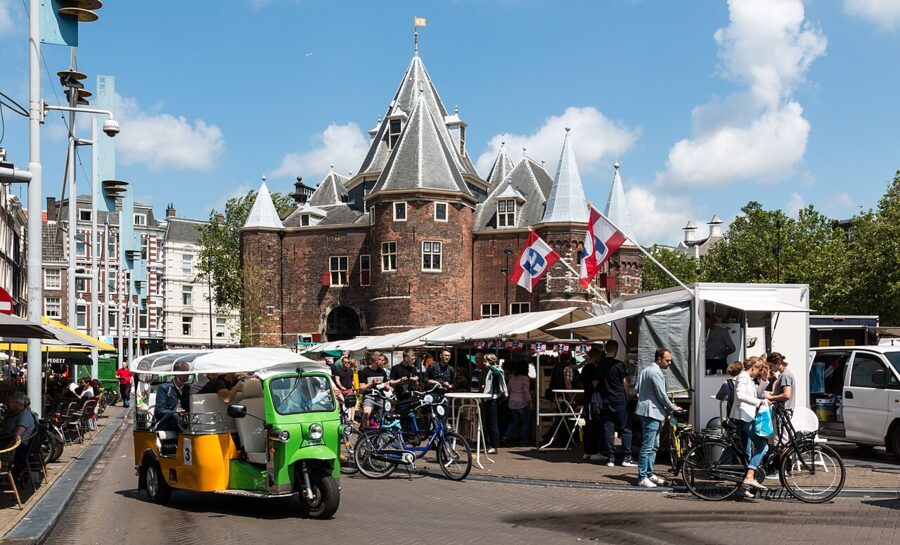
Amsterdam’s squares divide neatly by time of day. The Dam is for a look, the Museumplein for a picnic between museums, the Spui for books and a beer, and the Nieuwmarkt, around the 15th-century Waag, for lunch outside with the metro under your feet.

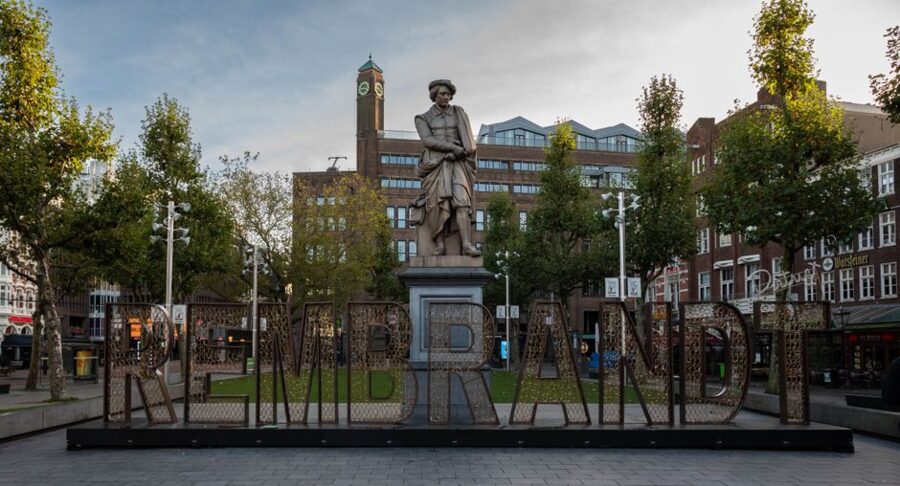
The Leidseplein and the Rembrandtplein are the two nightlife squares, the first with theaters and music halls, the second with clubs and big cafés.
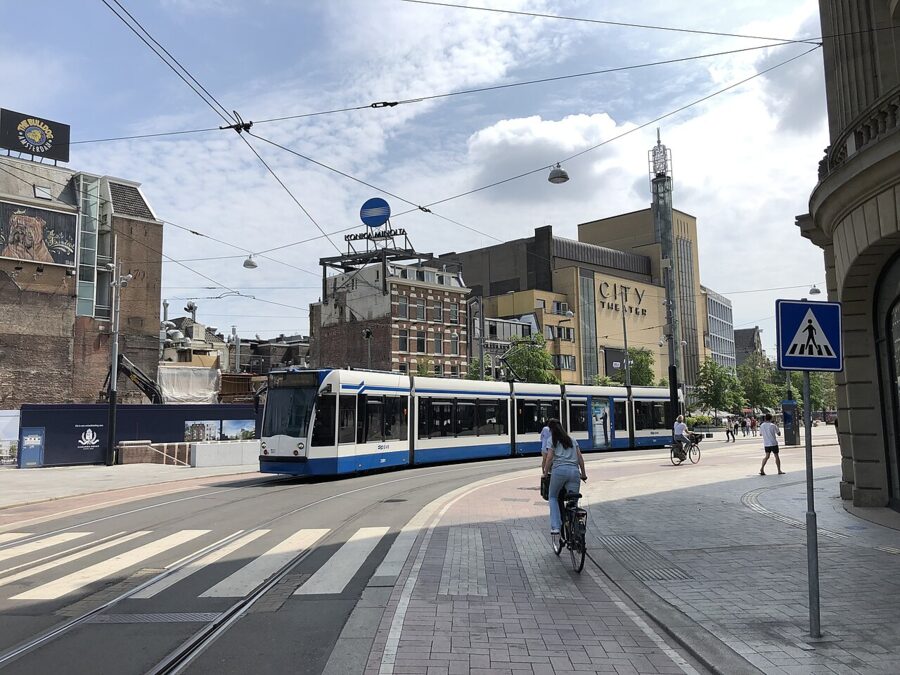

The Leidseplein has the Stadsschouwburg, the city theater, and around the corner the Melkweg and Paradiso, the music halls, both of which add a membership of €4.50 (about US$5) a month to most tickets. Until 3 January 2027 the middle of the Rembrandtplein is a skating rink with chalets, €15 (about US$17) with skates.
Markets
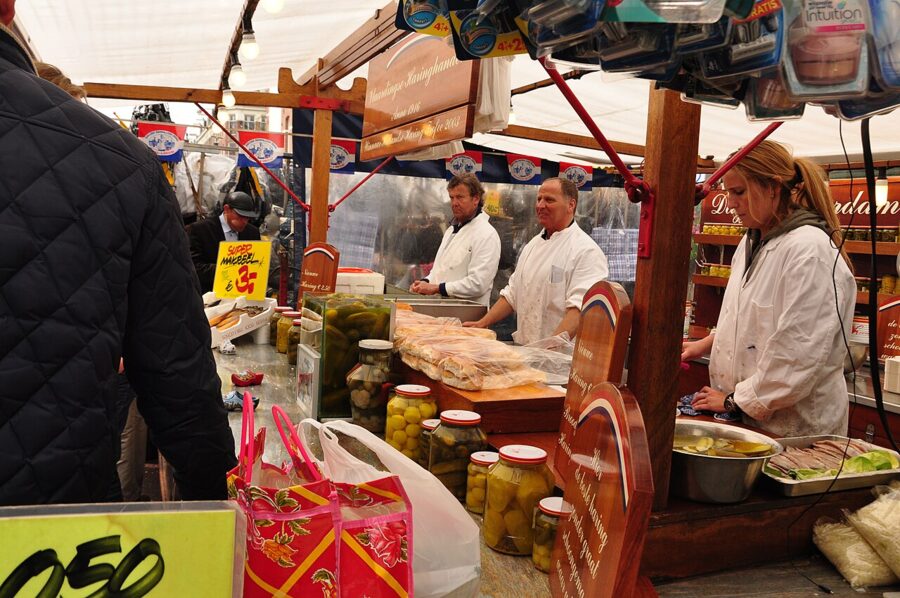
The Albert Cuypmarkt in De Pijp runs Monday to Saturday, roughly 09:30–17:00, with about 260 stalls of fruit, fish, cheese, fabrics and phone cases; eat a herring or a fresh stroopwafel at a stall and keep walking.

The Noordermarkt in the Jordaan has a flea and fabric market on Monday mornings, 09:00–14:00, and an organic farmers’ market on Saturdays, 09:00–16:00, with the apple pie at café Winkel on the corner.
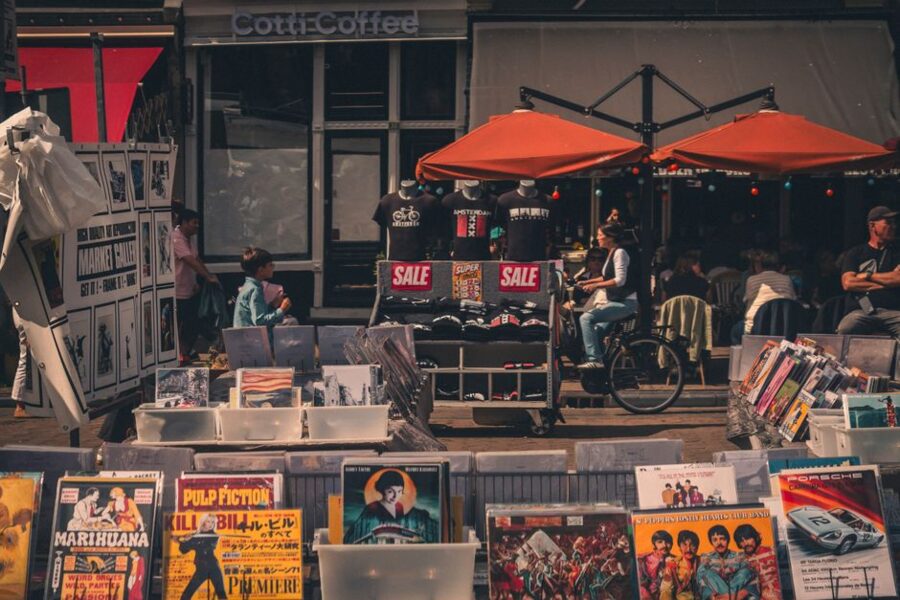
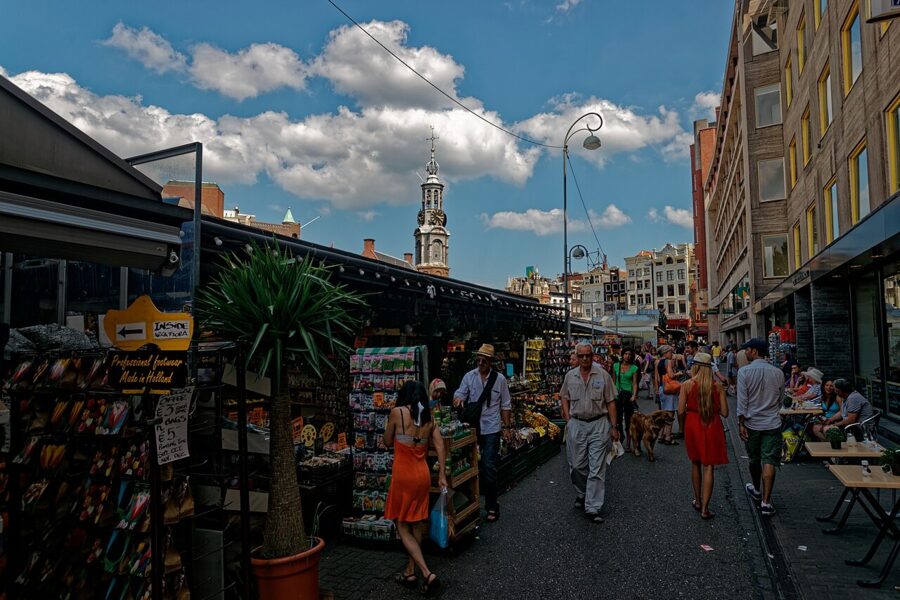
The Waterlooplein flea market, by the metro of the same name, trades Monday to Saturday and is the best known, though thinner than it was. The Bloemenmarkt (flower market) on the Singel is mostly bulbs and souvenirs now; buy bulbs only if you have checked your own country’s import rules. For a big weekend rummage, take the ferry to the IJ-Hallen.

Parks
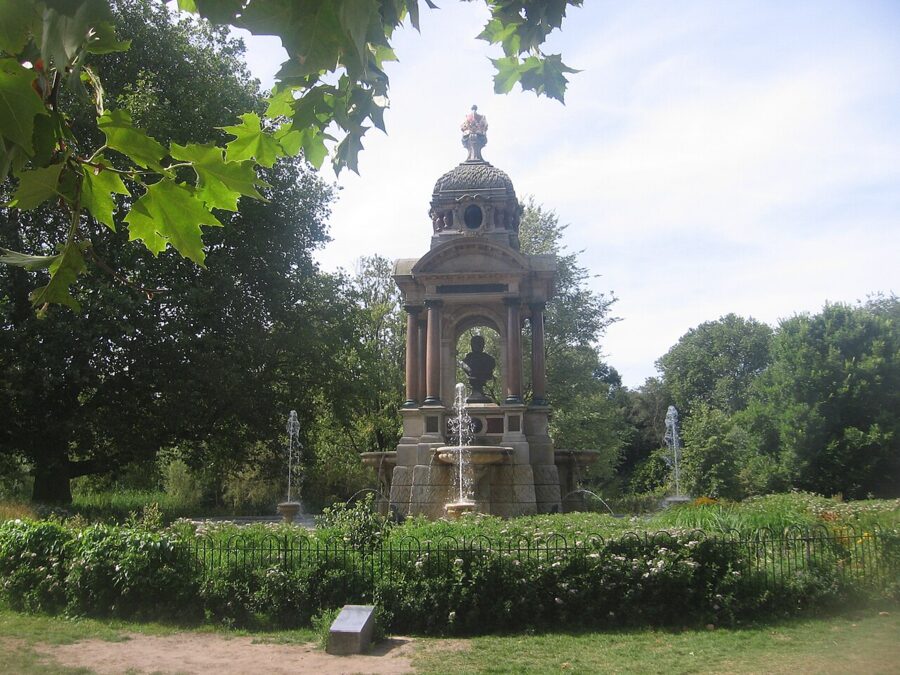
The Vondelpark, laid out in 1865 just off the Museumplein, is the city’s back garden: long lawns, ponds, cycle paths, an open-air theater in summer and cafés along the way. Since 11 May 2026 fatbikes, the pedal-assisted bikes with fat tires, may not be ridden in the park, and the fine is €115 (about US$135). On a sunny Sunday the whole of Oud-West seems to be in it.
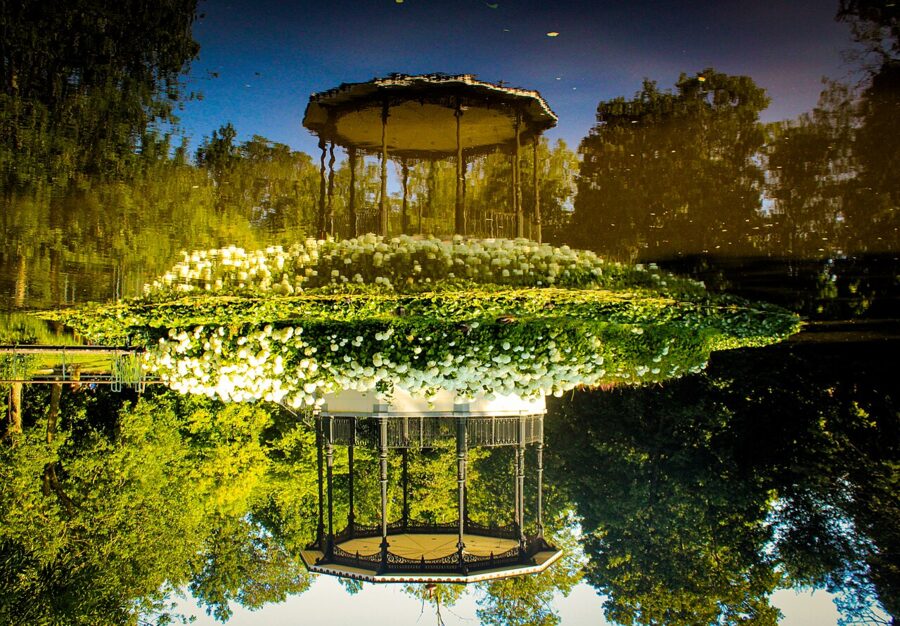

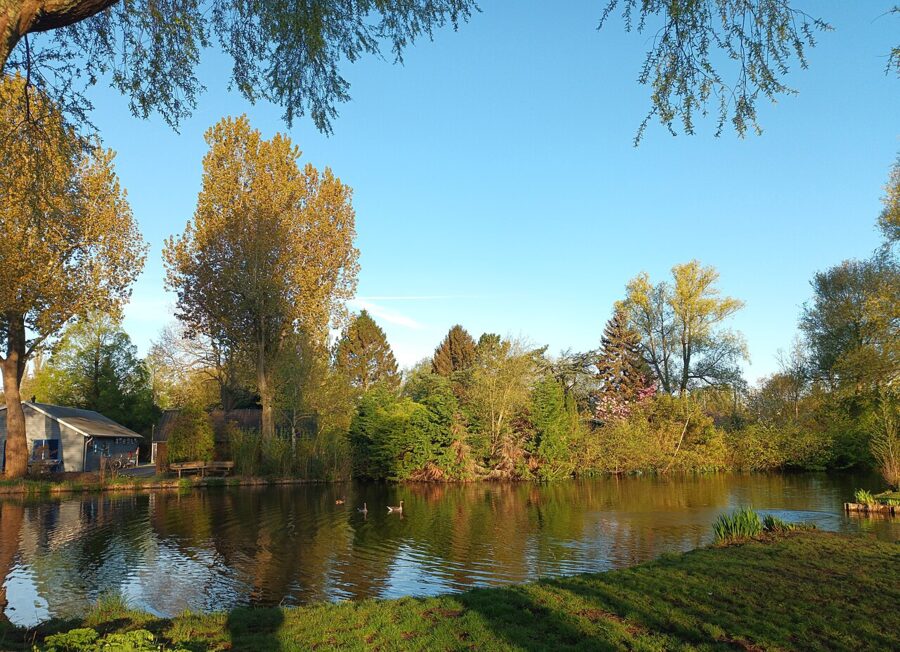
Smaller and quieter, the Sarphatipark in De Pijp and the Westerpark beyond the Jordaan are where to sit when the Vondelpark is full. Two free extras: the Rijksmuseum gardens, open 09:00–18:00 without a ticket, and the roof of NEMO, with the best free view over the harbor.

Food
Dutch food is better than its reputation, as long as you eat what the Dutch eat: bitterballen with mustard alongside a beer, raw herring from a stall, poffertjes, apple pie with whipped cream, Indonesian rijsttafel, and a broodje kroket at the end of a night. The Dutch food guide covers what to order and where.
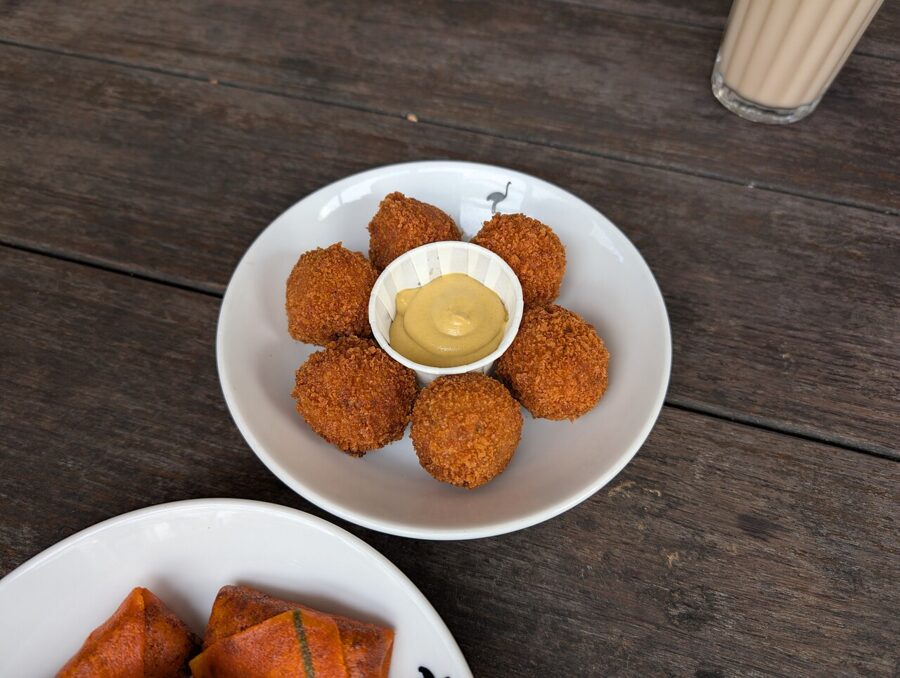
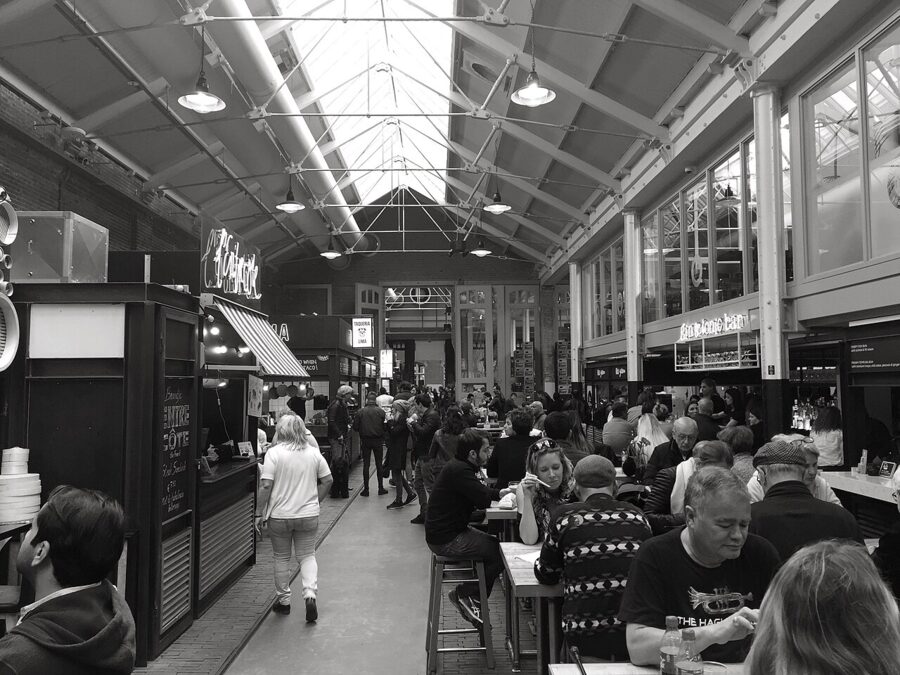
For variety under one roof, the Foodhallen in a converted tram depot in Oud-West is open daily 12:00–23:00 with stalls from dim sum to Dutch croquettes. On the Zeedijk, Nam Kee has served Cantonese food since 1981. Skip the restaurants on the Damrak and the Rembrandtplein that show photos of the dishes outside, and eat a street or two away.

Nightlife and coffeeshops
An Amsterdam night starts with the borrel, the after-work drink, in a brown café from about 17:00, carries on through dinner, and only reaches the clubs around 23:00. Café hours in the center are typically 01:00 in the week and 02:00 at weekends, and the big clubs on the Leidseplein and the Rembrandtplein run to 04:00 or 05:00. The nightlife guide has the clubs, the late bars and the night buses; Proeflokaal Arendsnest on the Herengracht pours only Dutch beer from 52 taps.

The coffeeshops are tolerated, not legal. You need to be 18 or over with a passport or ID card, the national limit is five grams a day, and no tobacco may be smoked indoors, including in a joint. The city published 166 tolerated addresses in March 2026, and in June 2026 the new coalition ruled out a residents-only rule, so visitors are still served. Smoke inside or on the shop’s terrace, not in the street in the old center, where the €100 fine applies.
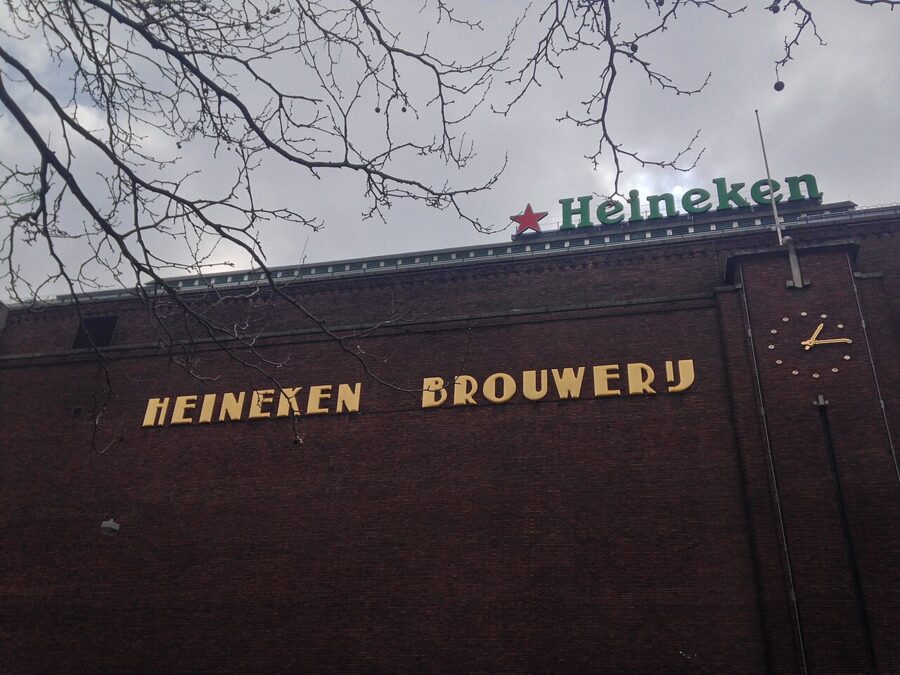
Beer lovers who want the brand rather than a brown café can go to the Heineken Experience, the old brewery on the Stadhouderskade, where the self-guided tour costs €24.95 (about US$29) as of November 2026, and €29.95 with the rooftop bar and two drinks.

Day trips
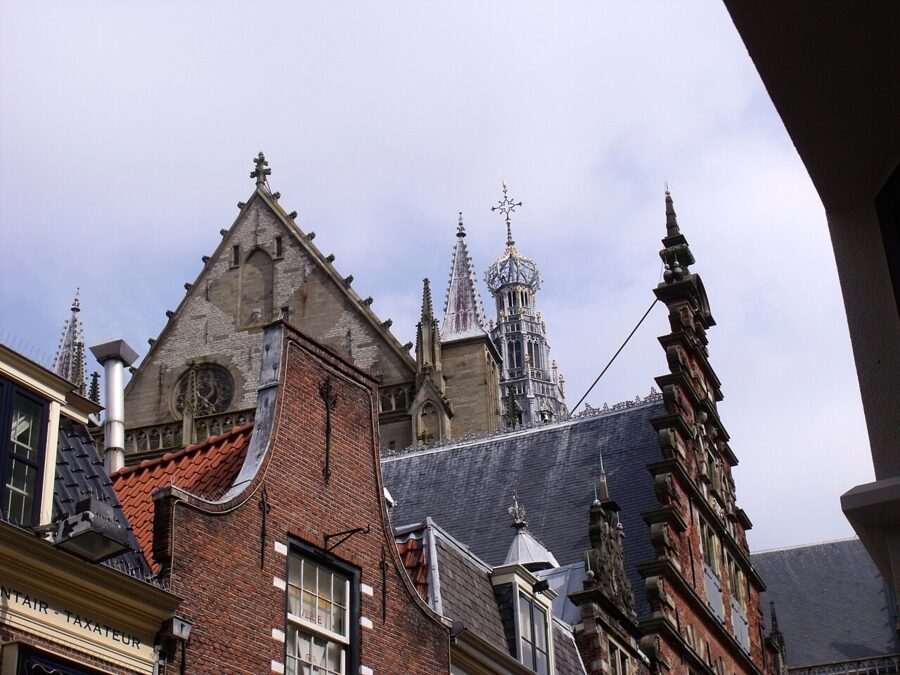
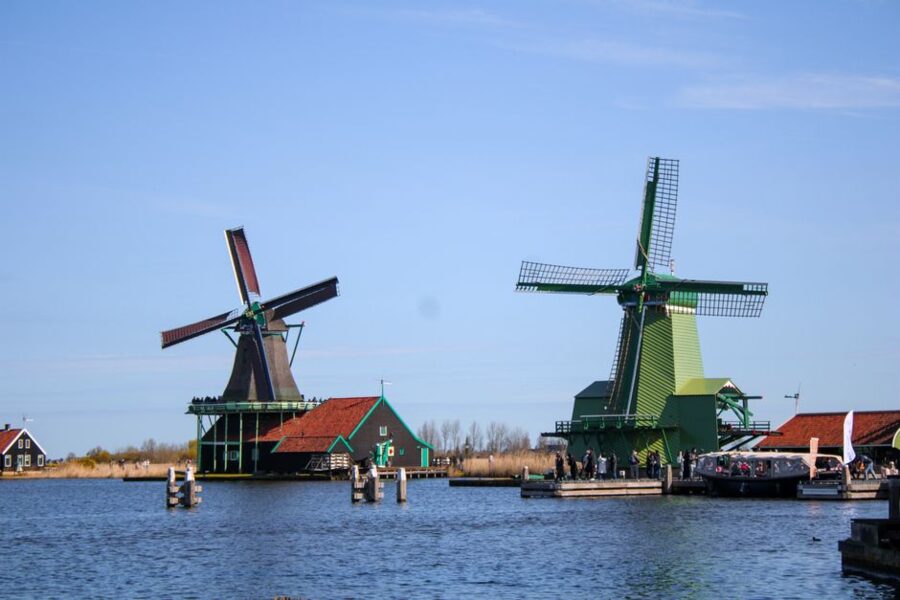
Haarlem is about 15 minutes by train from Centraal and has the old center Amsterdam would have if it had kept its scale: the Grote Markt, the Sint-Bavokerk with its organ, the Frans Hals Museum. The Zaanse Schans, a collection of working windmills and wooden houses on the Zaan, is under 20 minutes by train to Zaandijk Zaanse Schans and a walk across the bridge; go early, before the coaches.

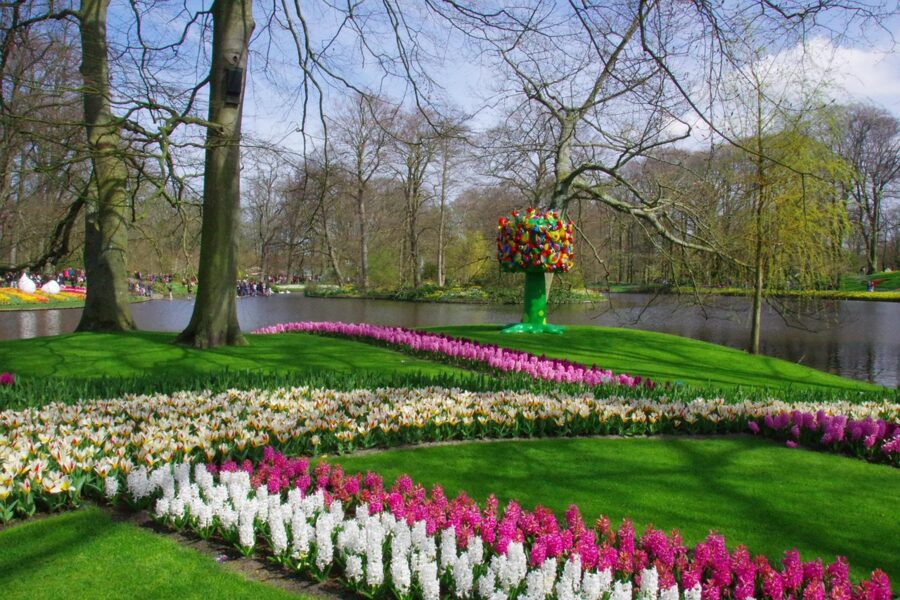
Keukenhof, the bulb garden in Lisse, opens only in spring: from 18 March to 9 May 2027, daily 08:00–19:00, per Keukenhof’s own site, with the bulb fields around it flowering in the same weeks. Book a combination ticket with the bus rather than trying to improvise one in April.
When to go, and what it costs
April and May bring tulips and long evenings, and King’s Day on 27 April, a Tuesday in 2027, turns the whole city orange. Summer is warm and crowded, autumn is wet and cheaper, and December has the Light Festival and short days. The Amsterdam weather guide goes month by month.
Is it expensive? Yes, and getting more so. Hotel rooms carry 21 percent VAT since January 2026, and the city adds a tourist tax of 12.5 percent of the room price, which the council voted in November to raise to 16 percent from January 2027, as NL Times reported. Museums run €15 to €25, a canal boat from €13.50, and the free things (the ferries, the parks, the canal walks, the NEMO roof, the Rijksmuseum gardens) are some of the best things.
On getting around: tap a contactless bank card or phone in and out on the tram, bus and metro, and walk the rest. The center is small enough that almost everything above is a walk of under half an hour from the Dam.
One, two or three days
One day
Rijksmuseum at 09:00, straight to the Gallery of Honour. Walk through the Vondelpark and back across the Leidseplein, then up the canal ring on foot: the Golden Bend, the Reguliersgracht bridges, the Nine Streets. Anne Frank House in an evening slot, then a drink at ‘t Smalle and a walk through De Wallen on the way to dinner on the Zeedijk.

Two days
Day one as above, without the evening. Day two: Van Gogh Museum in the morning, lunch on the Albert Cuypmarkt, an hour on a canal boat in the afternoon, and the Anne Frank House after dark. Finish on the Leidseplein or the Rembrandtplein if you want a late night.
Three days
Add a slow day. Take the F3 ferry to Noord for the A’DAM Lookout and Eye, ride the F4 to NDSM, then come back for Our Lord in the Attic and the Oude Kerk. Or give the third day to Haarlem or the Zaanse Schans, leaving by train after breakfast and back in time for dinner in the Jordaan.
What to skip, and the rules that catch people out
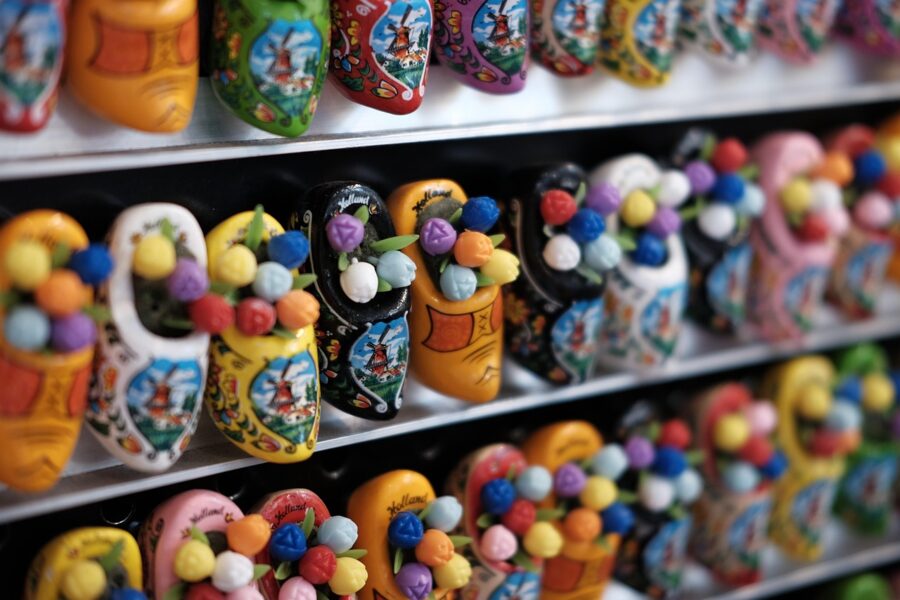
Skip the Damrak and the restaurants on the main squares, the wax museum on the Dam, the cheese and “museum” shops near Centraal that are shops first, and anything sold to you by a man on a bridge after dark: the drugs offered in the street are often fake, and buying them is itself an offense. The Bloemenmarkt is fine for a walk-through and poor for flowers. The Sex Museum and the Erotic Museum are twenty minutes of curiosity, no more.
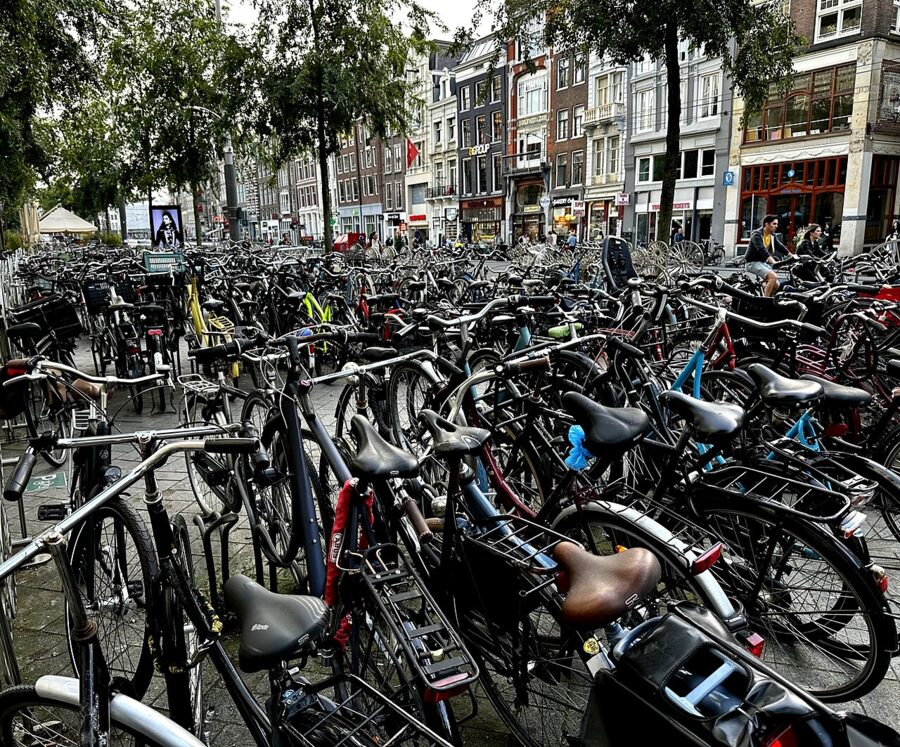
The rules that cost people money are mostly about bicycles and behavior. The red asphalt paths are bike lanes, not pavements, and cyclists will not slow down for you; look both ways at every one. If you rent a bike, lock it to something fixed, use lights after dark, and never ride two abreast through the old center at rush hour.

In the old center: no cannabis or alcohol in the street, no photos of the windows, no urinating in public (a fine of €150, about US$174), and quiet after the bars close. The three crosses on every bollard are the Amsterdam XXX symbol from the city’s coat of arms, not a sign about the nightlife.
Then go back to where this started. Book the Anne Frank House on the Tuesday six weeks out, take the Rijksmuseum’s 09:00 slot, and on your first free hour walk through Centraal to the back, where the F3 is loading for Noord and nobody will ask you for a ticket.