
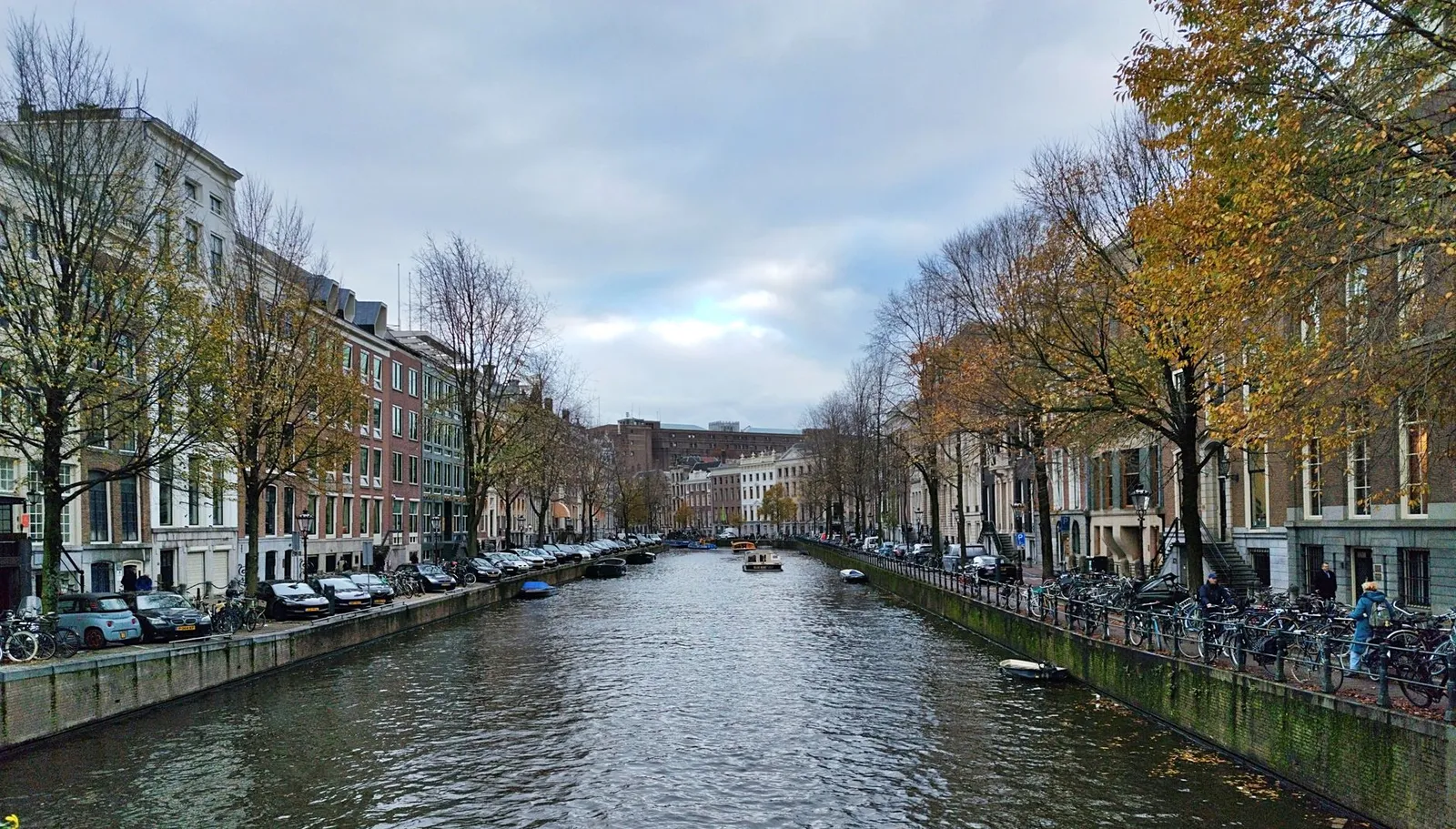
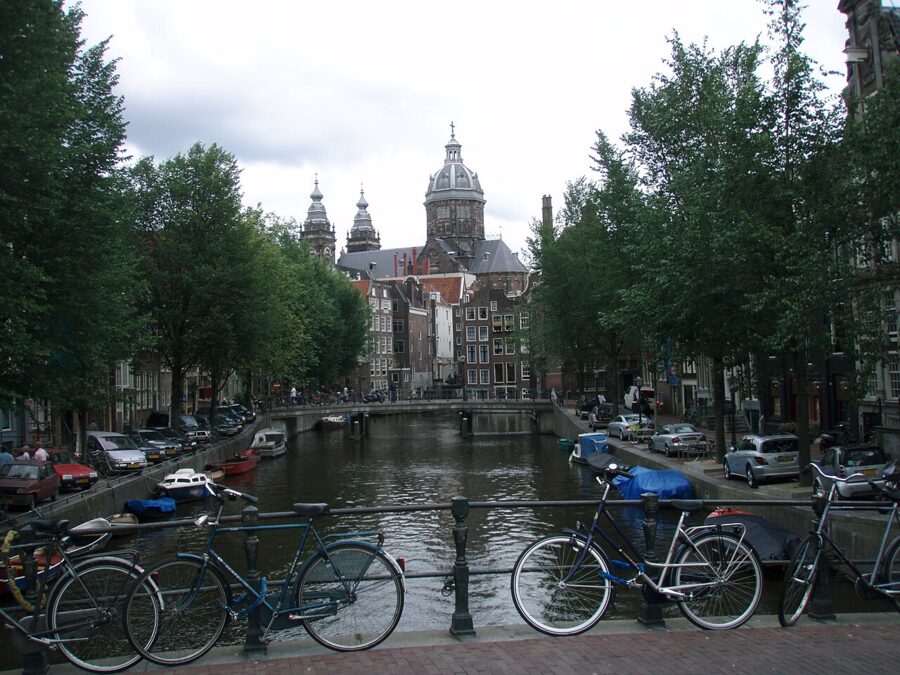
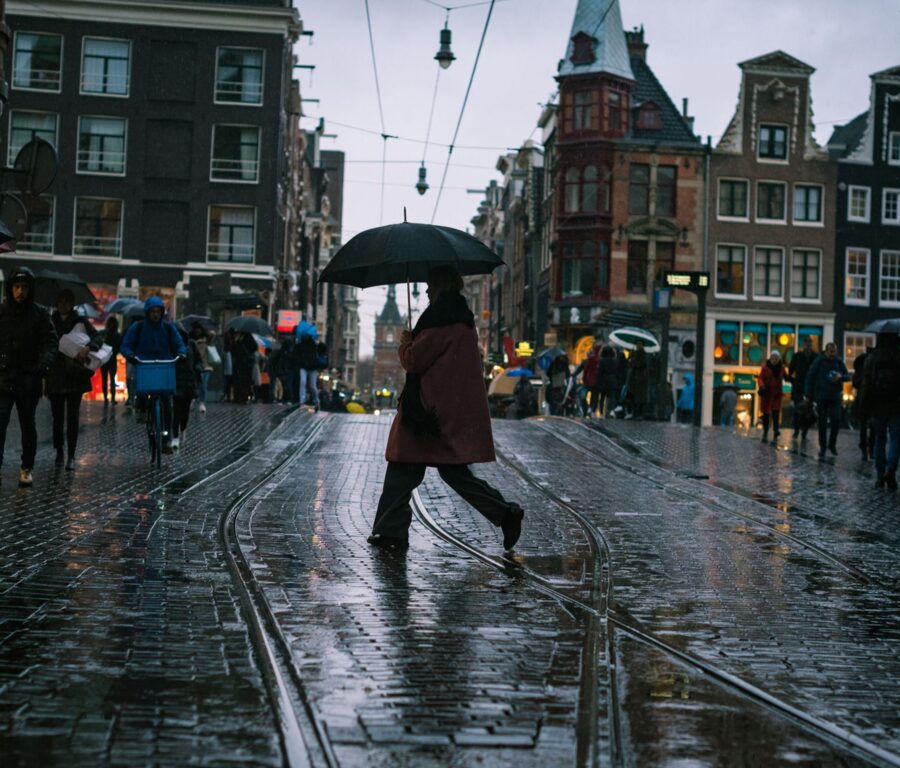
The rain in Amsterdam mostly arrives thin and sideways. It blows in off the North Sea as a drizzle that never quite commits to being a downpour, and the cyclist on the bridge ahead of you rides straight through it with no hood up, because by the next canal it will probably have stopped.
The numbers back that up. Schiphol, the official weather station for the city, records measurable rain on about half the days of the year, yet the rain itself falls for only around 650 hours, roughly one hour in thirteen. Averaged over 1991 to 2020, the warmest month, July, peaks at 22.5°C (73°F), the coldest, January, at 6.2°C (43°F), and the weather rarely strays far from those marks for long.
So the real question is not whether it will rain while you are here. It is what each month gives you in exchange: tulips and King’s Day in April, daylight until after ten at night in June, the canal ring almost to yourself on a cold blue morning in February. What follows is the year month by month, with the numbers, the events, the crowds and the hotel squeeze, and what to do when the sky closes in.


Two things the long-term averages hide. Schiphol sits in open polder southwest of the city, so it is windier than the streets of the center, where the gables break up the gusts. And the last ten years have run warmer than the thirty-year normal: between 2016 and 2025 the average August high at Schiphol was 23.2°C instead of 22.4°C, February’s was 8.4°C instead of 6.9°C, and the station logged about 1,950 hours of sunshine a year instead of 1,780.
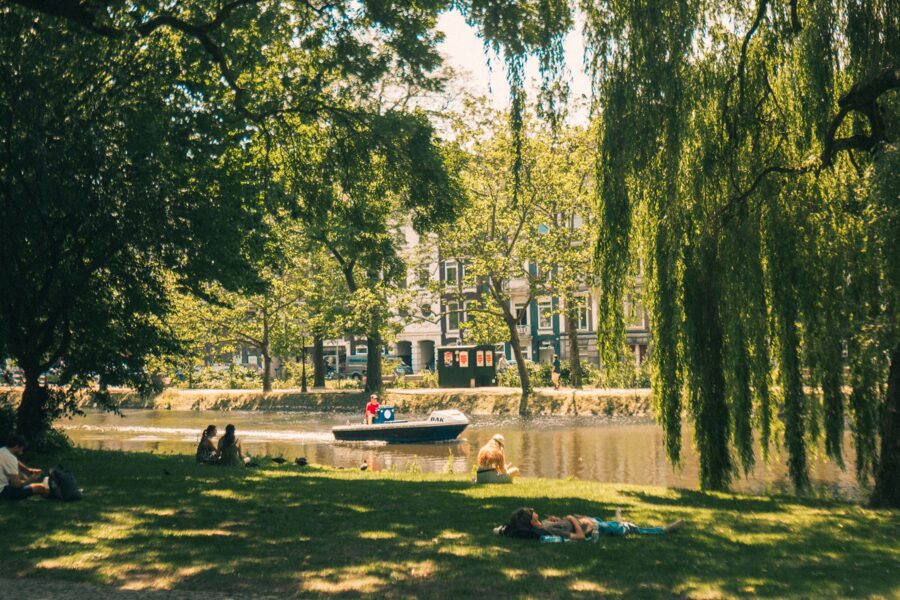
The winter version is darker, quieter and colder than most first-timers expect, with sunrise around 08:45 and sunset before 16:30 in late December. It is also when the city is at its most local, and when hotel rooms are easiest to find.
When to go: the short answer
If I had one week to choose, it would be the second half of May or the first half of June. The sun is up for 15 to 17 hours a day, May is on average the sunniest month of the year at Schiphol, highs sit around 18°C to 20°C, and you get about nine wet days a month instead of the thirteen or fourteen of late autumn. The catch is that everyone else knows this too, and hotel rates reflect it.
April is the month for tulips and for King’s Day, but it is still cool, around 14°C at best, and the nights before and after 27 April are among the most expensive of the year. September is the value pick: still around 19°C, most of the summer crowds gone, though the rain is already climbing back toward its autumn peak. July and August are the warmest and the busiest, with the heaviest showers. November to February is cold, gray and short of daylight, and it is when you will find the emptiest museums and the lowest room prices, with the Amsterdam Light Festival as the reason to go in the darkest weeks.
Whatever the month, two taxes sit on top of a room price. VAT on hotel rooms in the Netherlands went from 9 to 21 percent on 1 January 2026, and the city charges a tourist tax of 12.5 percent of the room price, which the council voted in November 2026 to raise to 16 percent from January 2027, with 20 percent the stated aim for later years. For neighborhoods and hotels, see where to stay in Amsterdam.
Amsterdam weather by month: the numbers
The table gives the averages for 1991 to 2020 from the KNMI daily observations at Schiphol, the Dutch weather service’s station for Amsterdam. Rain days are days with at least 1 mm. Daylight is the time from sunrise to sunset on the 15th of the month; sunshine is the hours of actual sun the station measured.
| Month | High °C (°F) | Low °C (°F) | Rain (mm) | Rain days | Sunshine (hours) | Daylight (hours) |
|---|---|---|---|---|---|---|
| January | 6.2 (43) | 1.2 (34) | 67 | 12 | 69 | 8.2 |
| February | 6.9 (44) | 1.0 (34) | 55 | 11 | 94 | 9.9 |
| March | 10.1 (50) | 2.8 (37) | 52 | 10 | 146 | 11.8 |
| April | 14.3 (58) | 5.2 (41) | 40 | 9 | 198 | 13.9 |
| May | 17.8 (64) | 8.6 (48) | 54 | 9 | 231 | 15.7 |
| June | 20.3 (69) | 11.3 (52) | 65 | 10 | 217 | 16.8 |
| July | 22.5 (73) | 13.4 (56) | 82 | 11 | 225 | 16.4 |
| August | 22.4 (72) | 13.4 (56) | 99 | 12 | 204 | 14.8 |
| September | 19.2 (67) | 11.0 (52) | 84 | 11 | 154 | 12.8 |
| October | 14.7 (59) | 7.8 (46) | 87 | 12 | 117 | 10.8 |
| November | 10.0 (50) | 4.5 (40) | 85 | 13 | 67 | 8.8 |
| December | 6.9 (44) | 1.9 (35) | 82 | 14 | 58 | 7.7 |
| Year | 14.3 (58) | 6.8 (44) | 850 | 133 | 1,780 |
Read the rain columns together. August has the most rain by volume, 99 mm, but it comes in short, heavy showers and thunderstorms. December has less water and more wet days, 14 of them, because winter rain is mostly long, light drizzle. April is the driest month on both counts.
Wind is the column the table leaves out. The average daily wind speed at Schiphol runs from about 15 km/h in August to about 22 km/h in January, and on more than half of all days it blows from somewhere between south and west, straight off the sea. Gusts of 72 km/h or more happen on about five days in an average January and fewer than one a month from April to September.
Spring: March to May
Spring is when the city wakes up and the terraces come back out, often a week or two before the weather really justifies it. The light changes fastest now: from under ten hours of daylight in mid-February to more than fifteen and a half by mid-May.
March
March averages 10°C by day and 3°C at night, and it still has about six frost nights on average. It can bring a hail shower and a sunny terrace afternoon in the same week, so pack for both. By late March highs usually reach double figures. Crowds are moderate until Easter, which falls on 28 March in 2027, and the bulb season starts: Keukenhof, the bulb garden at Lisse, opens on 18 March 2027.
April
April is the driest month, about 40 mm, with nearly 200 hours of sunshine and highs around 14°C. It is not warm. A jacket you can zip up is still the right call, especially on the water.
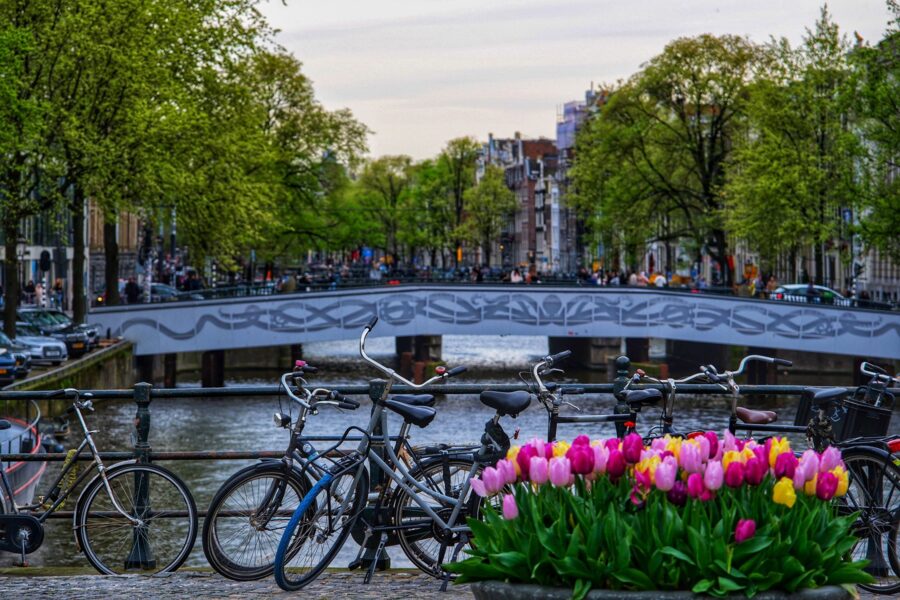
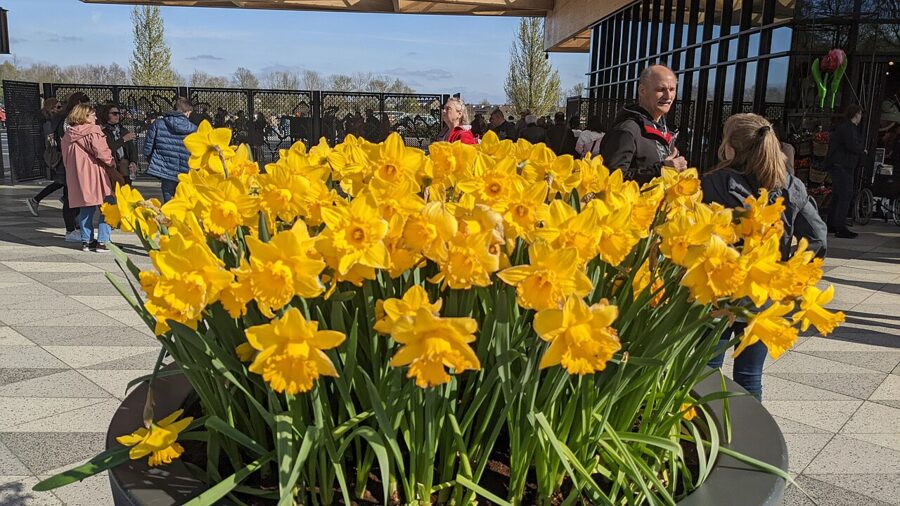
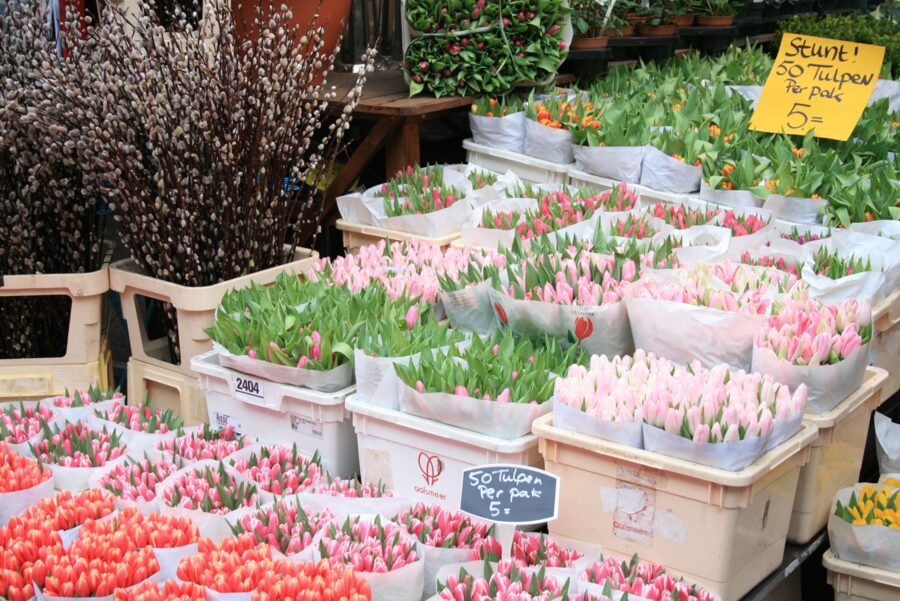
It is also tulip month. Keukenhof runs from 18 March to 9 May 2027, open 08:00 to 19:00 with last entry at 18:15, and the tulips usually peak around the middle of April, earlier after a mild March. The Bloemenmarkt, the flower market on the Singel, sells bulbs all year, but in spring buy cut tulips instead: bulbs bought out of season mostly fail to flower once you plant them at home.

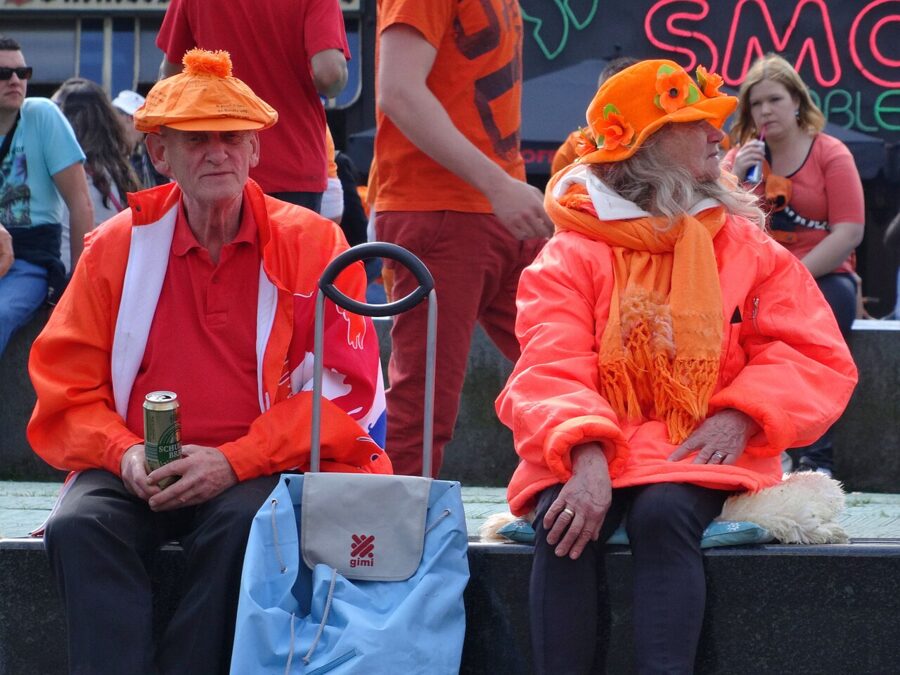
Then there is King’s Day, on Tuesday 27 April in 2027, when the whole city wears orange. The streets become one long flea market, the canals fill with party boats, and the center is packed from early morning. Many museums close for the day (the museum guide lists which), and the Anne Frank House closes at 17:00. Book a room for King’s Day as early as you can, and expect to pay far more than the week before or after.

May
May is the sunniest month on the long-term average, about 230 hours, with highs near 18°C and only nine wet days. Sunset slides from about 21:00 to past 21:45 over the month, and evenings on a canal-side terrace become a real option.
Two dates change the mood. On 4 May, Remembrance Day, the country falls silent for two minutes at 20:00, with the national ceremony on the Dam; on 5 May, Liberation Day, it celebrates. The long weekends of Ascension (Thursday 6 May 2027) and Whitsun (Whit Monday 17 May 2027) bring Dutch visitors into the city on top of everyone else.
Summer: June to August
Summer in Amsterdam is mild by southern European standards and long on daylight. It is also the most crowded season, and the most expensive one for rooms outside King’s Day and the big festival weekends.
June
June averages 20°C by day and 11°C at night. Around the solstice the sun rises at about 05:18 and sets at 22:06, and the sky stays light for a good while after that. It is the best month for the parks: the Vondelpark fills with picnics on any dry evening, and its open-air theater puts on free shows most weekends from May to September.


July
July is the warmest month, with average highs of 22.5°C. Real heat is rare but not unheard of: over 1991 to 2020 Schiphol averaged about one and a half days a year at 30°C or more in July, and its record is 36.4°C (about 98°F), set on 26 July 2019. Many smaller hotels in old canal houses have no air conditioning, so if you are booking for July or August, ask.
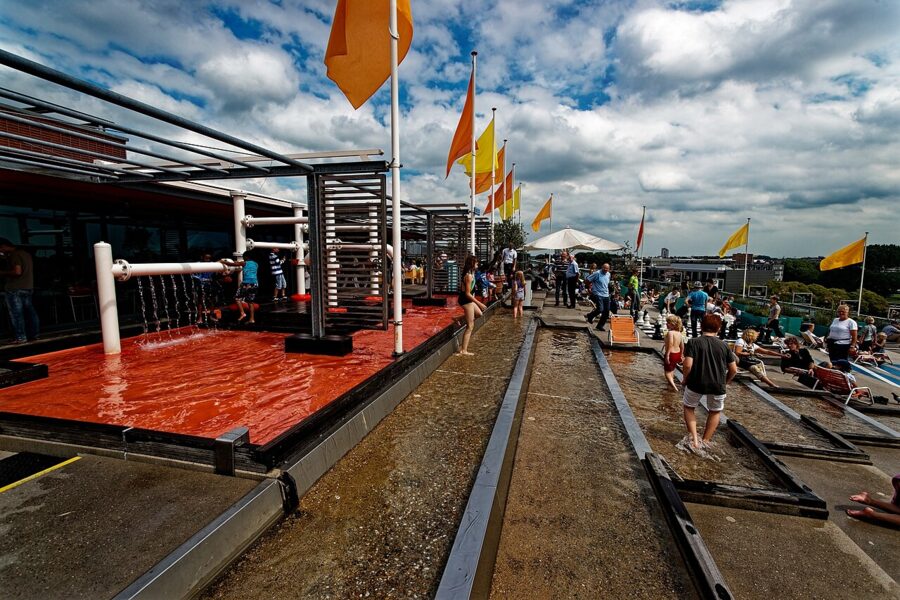
On a hot day the water is where the city goes. The roof of NEMO, the science museum by the Oosterdok, is a free public square with a view over the old center, open Tuesday to Sunday 10:00 to 17:30 as of November 2026.

August
August is the wettest month by volume, 99 mm, almost all of it in showers and thunderstorms that come through hard and leave within the hour. A typical August day can be bright, then drenched for twenty minutes, then bright again. Rain falls about two and a half times as hard per hour in August as it does in February.

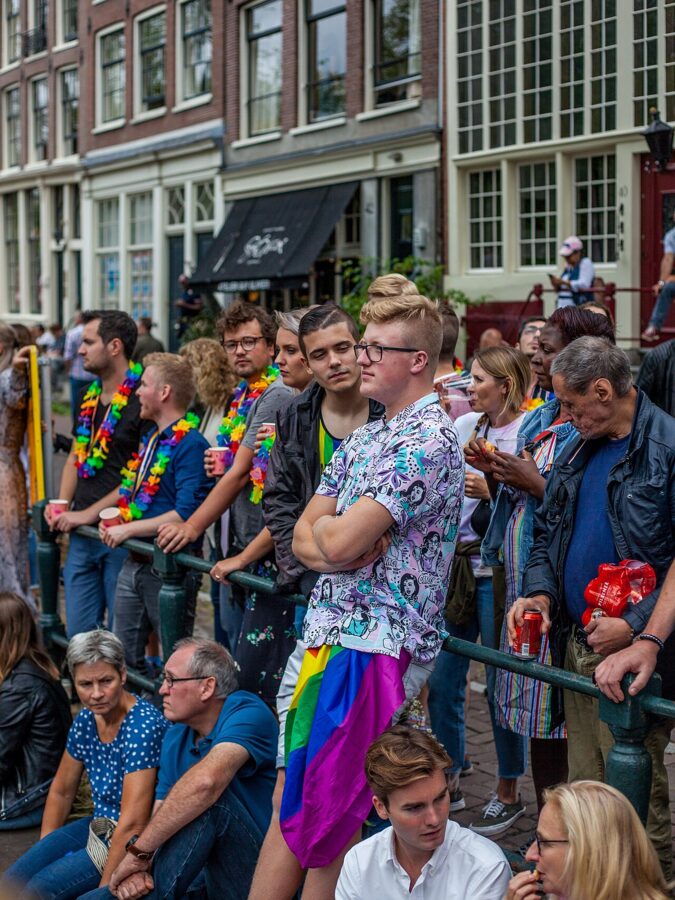
Pride Amsterdam runs from 31 July to 8 August 2027, and its Canal Parade of decorated boats sails on Saturday 7 August. The banks along the route are packed hours ahead, and the city’s hotels are as full that week as at any time of year.

Autumn: September to November
Autumn is when the rain comes back in earnest and the wind picks up. It is also when the city feels most like itself again after the summer crowds.
September
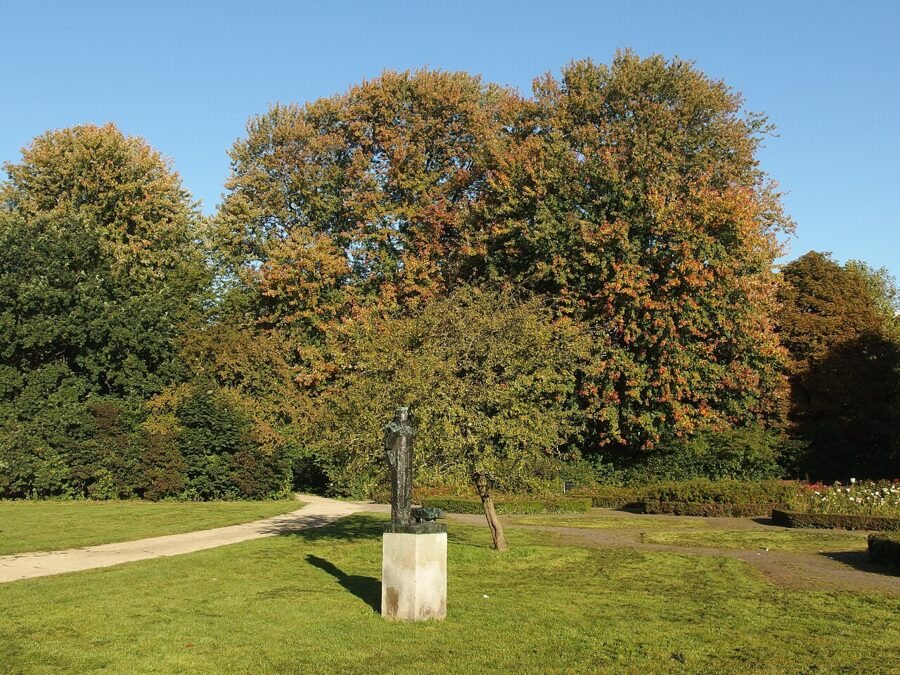
September averages 19°C by day and 11°C at night, with about 150 hours of sunshine. It rains more than in July, about 84 mm, but the summer queues have gone and room rates ease. If you want warm days without the August crush, this is the month.
October
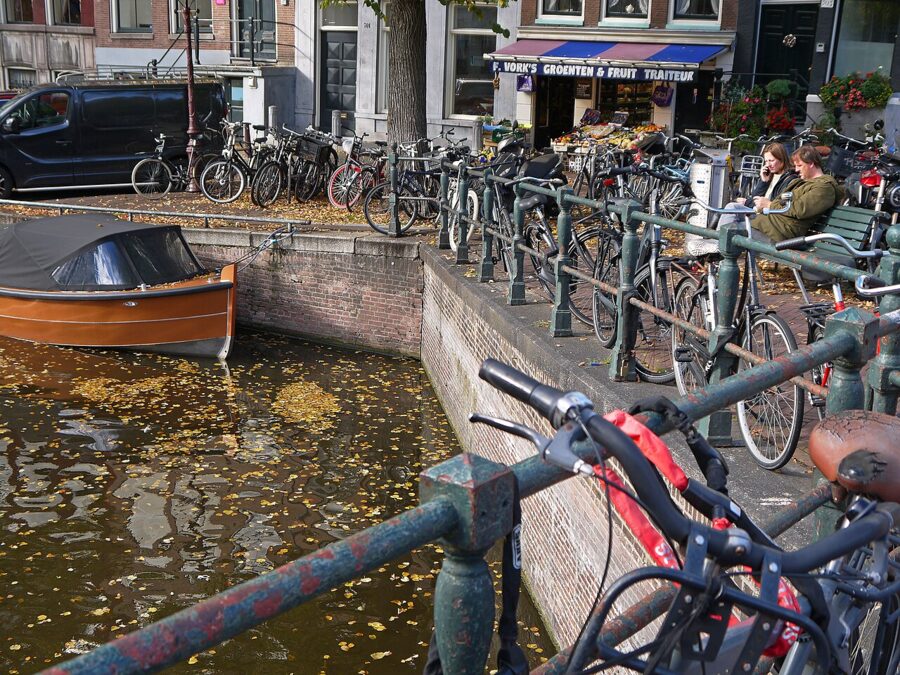
October brings the first real autumn storms, about twelve wet days and 87 mm of rain, with highs dropping to around 15°C. The clocks go back on the last Sunday of the month, 31 October in 2027, and the evenings suddenly close in an hour earlier.
The Amsterdam Dance Event, the electronic music conference and festival, takes over clubs and hotels for five days in the second half of the month: the 2026 edition ran from Wednesday 21 to Sunday 25 October, and the 2027 dates had not been announced by the end of November 2026. Room prices that week jump, so check the dates before you book. The clubs themselves are in the guide to Amsterdam nightlife.

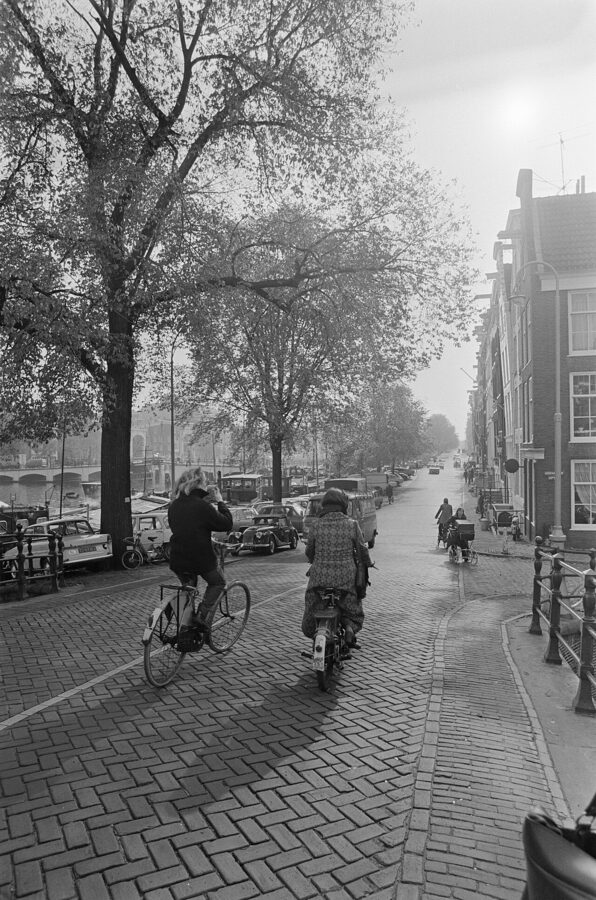
November
November is gray. It averages 10°C by day and 4.5°C at night, has about 13 wet days and only 67 hours of sunshine, and by the end of the month there are fewer than nine hours from sunrise to sunset. Museums are calmer, hotels are cheaper, and the brown cafés are at their best.
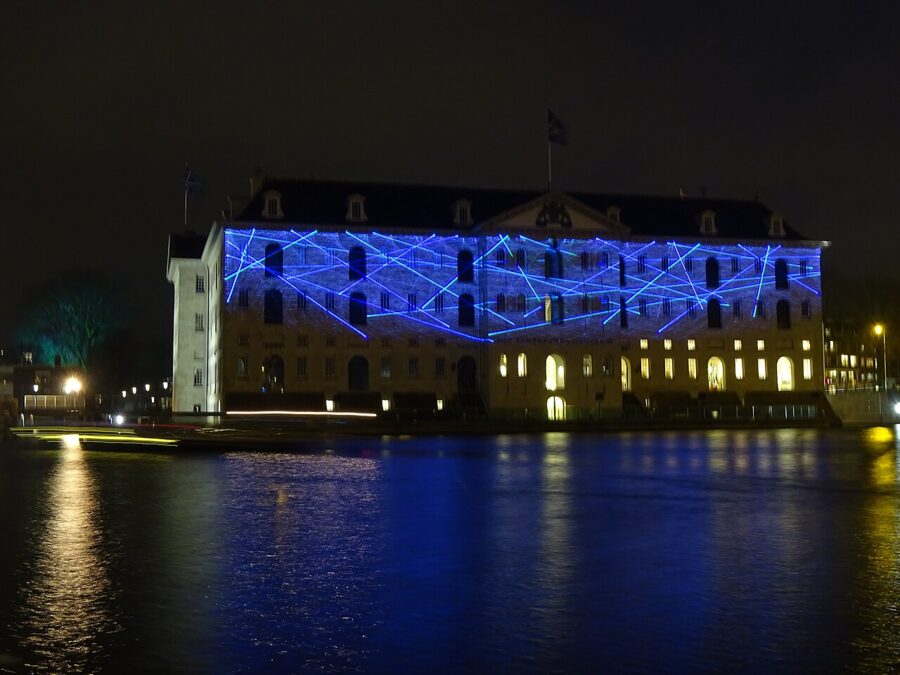
It ends with the Amsterdam Light Festival, which in its 2026–2027 edition runs from 26 November 2026 to 17 January 2027, with 19 light artworks around the center. The lights are on every day from 16:30 to 23:00, switching off at 21:00 on 31 December. Most of the works are placed to be seen from the water, and the canal cruises run heated, glass-roofed boats for it.
Winter: December to February
Winter is mild for northern Europe and damp rather than snowy. Frost nights are common, days that stay below freezing are not, and the wind makes 4°C feel a lot colder than it sounds.
December
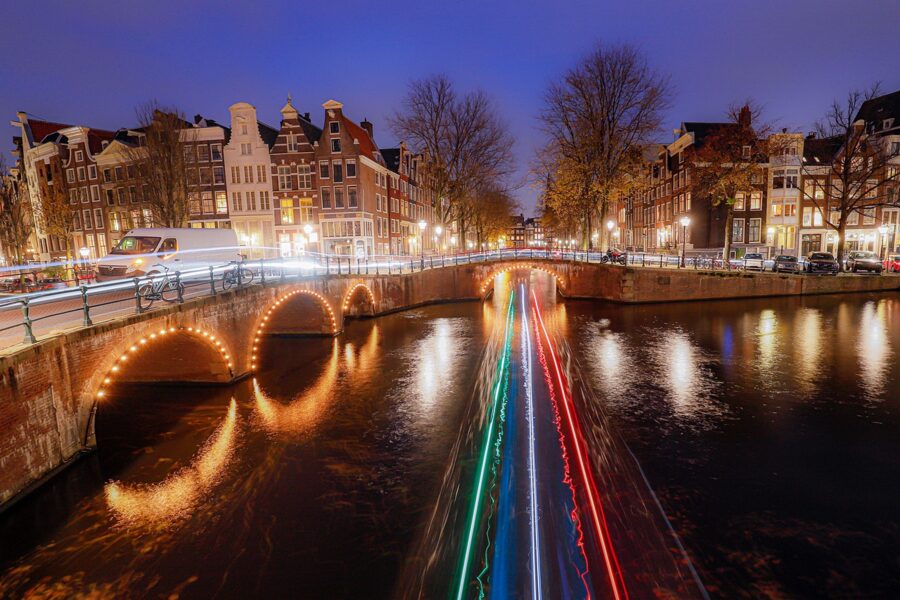
December is the darkest month. On the 21st the sun rises around 08:48 and sets around 16:29, and Schiphol averages only 58 hours of sunshine for the whole month. It has the most wet days of the year, about 14, mostly drizzle. The Light Festival and the decorated canal houses make up for a lot of it.
New Year’s Eve 2026–2027 is the first under the national ban on consumer fireworks: the Safe New Year’s Act took effect on 1 August 2026, so private citizens may no longer buy, keep or set off fireworks, apart from small novelty items. Professional displays can still go ahead. Check museum hours over the holidays, as many close or shorten them on 24, 25 and 31 December and 1 January.
January
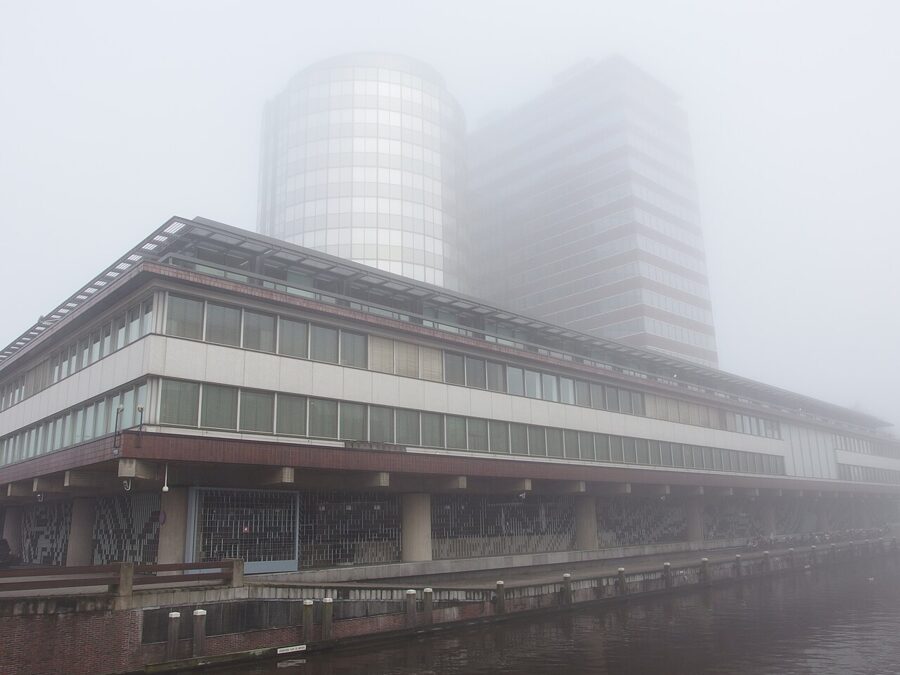
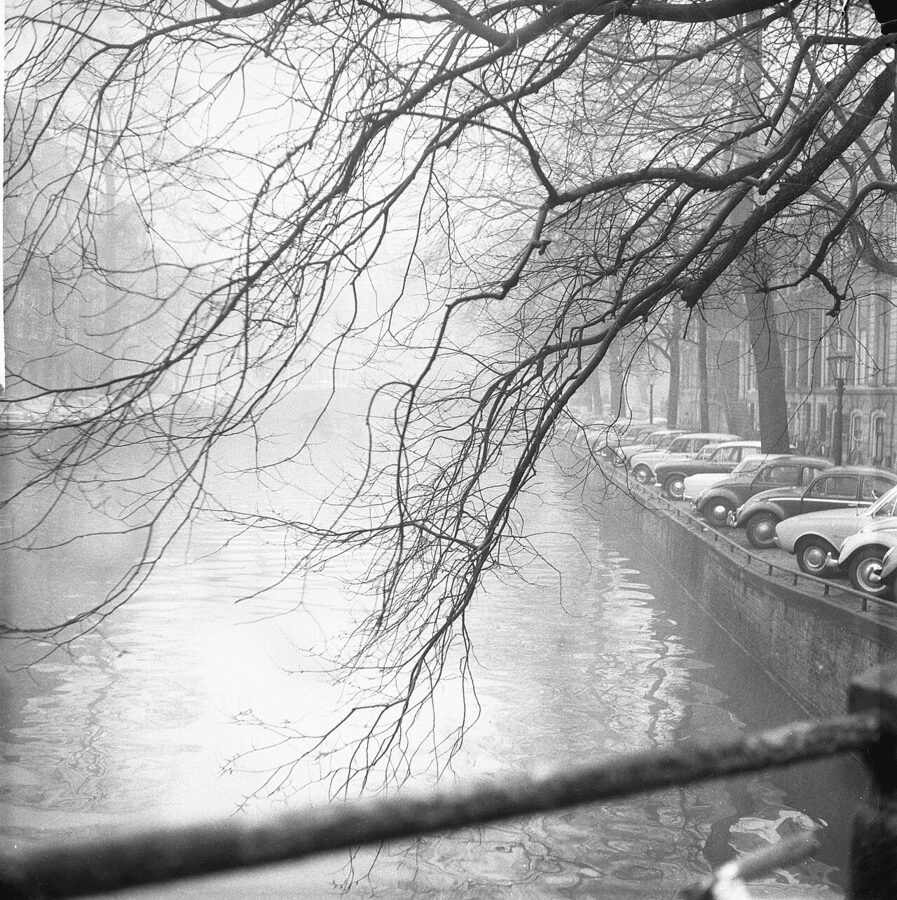
January is the coldest month, 6.2°C by day and 1.2°C at night, with about eleven frost nights and two or three days that stay below freezing. It is also the windiest, with an average daily wind speed of about 22 km/h at Schiphol. Fog sits on the canals some mornings and burns off by noon, or does not.
After the Light Festival closes on 17 January, this is the quietest stretch of the year. If you can live with short days and a cold wind, it is the time to see the big museums with room to move.

February
February is almost as cold as January, though a little drier and sunnier. It is also storm season: winter gales off the North Sea can stop trams and ferries and close parks, and snow, when it comes, rarely stays more than a few days.
The big exception in recent memory came on 7 February 2021, when storm Darcy brought a code red warning for snow across the whole country, the first nationwide code red since 2012. GVB stopped its trams, metros and buses in Amsterdam for the day, and at Schiphol the temperature stayed below freezing all day on six of the seven days from 7 to 13 February.
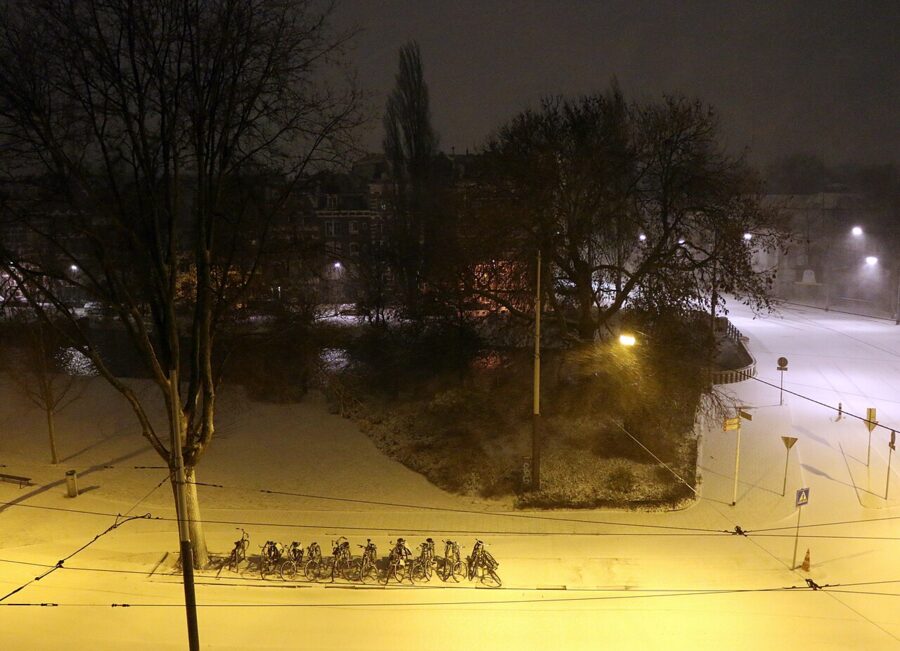

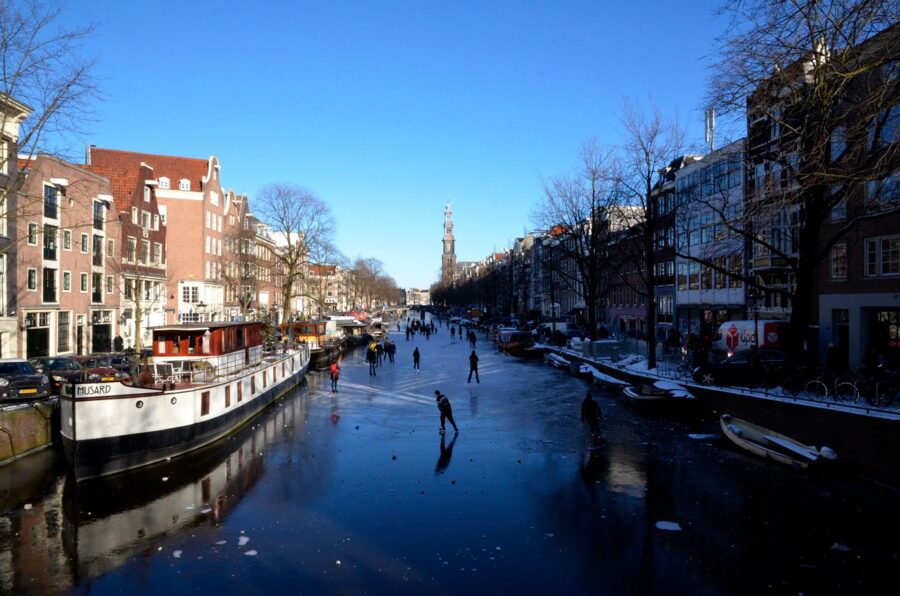
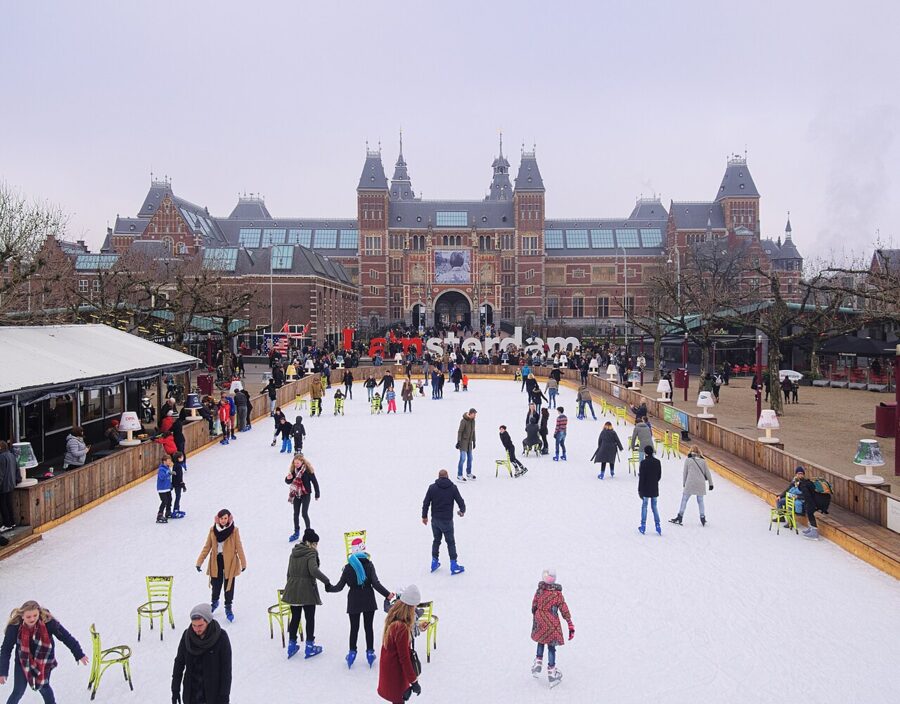
A cold spell like that is what it takes for the canals to freeze hard enough to skate on, and it does not happen most winters. In some years the pond in front of the Rijksmuseum on the Museumplein is turned into an ice rink instead.

How it actually rains here
Schiphol gets about 850 mm of rain in a normal year, which is less than you might think for a city with this reputation. What it has is frequency: at least a little rain falls on about half the days of the year, and it spreads itself out across the year rather than arriving in a wet season. Recent years have been wetter than the normal, with 2023 and 2024 both topping 1,000 mm at the station.
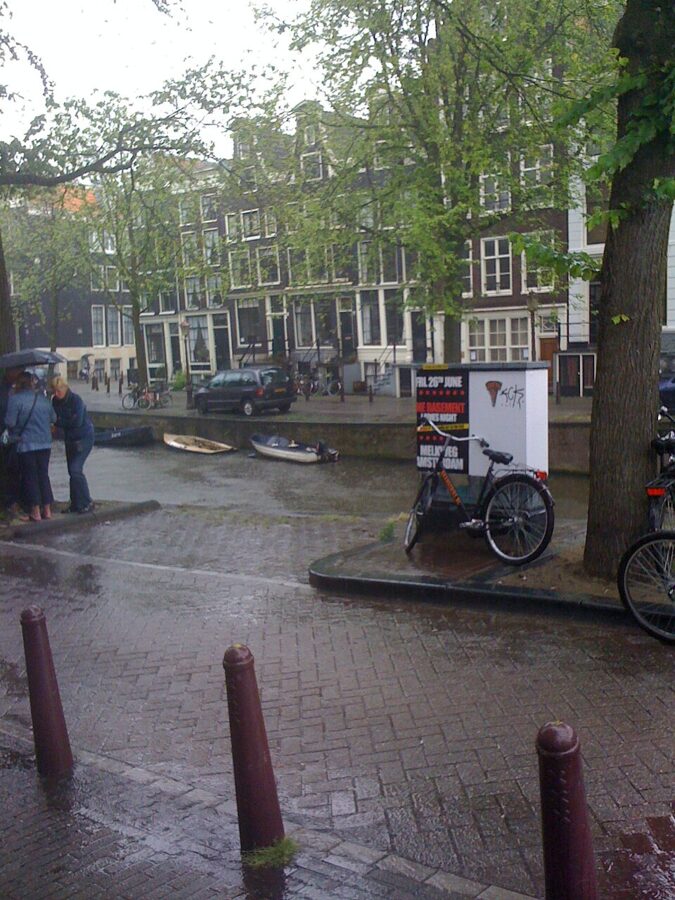

The pattern changes with the seasons. Winter rain is long and light, a gray drizzle that can last half a day and barely registers on a gauge. Summer rain is short and heavy, a shower that empties the streets for twenty minutes and then moves on. The wettest single day in the Schiphol record was 8 September 2017, with 67 mm.
The Dutch way of dealing with it is the rain radar. Buienradar shows where the showers are and when the next one reaches your street, usually to within ten minutes, and the sensible thing on a showery day is to check it, wait out the downpour over a coffee, and go when it passes. It is free to use in a browser.
Wind, and cycling in it
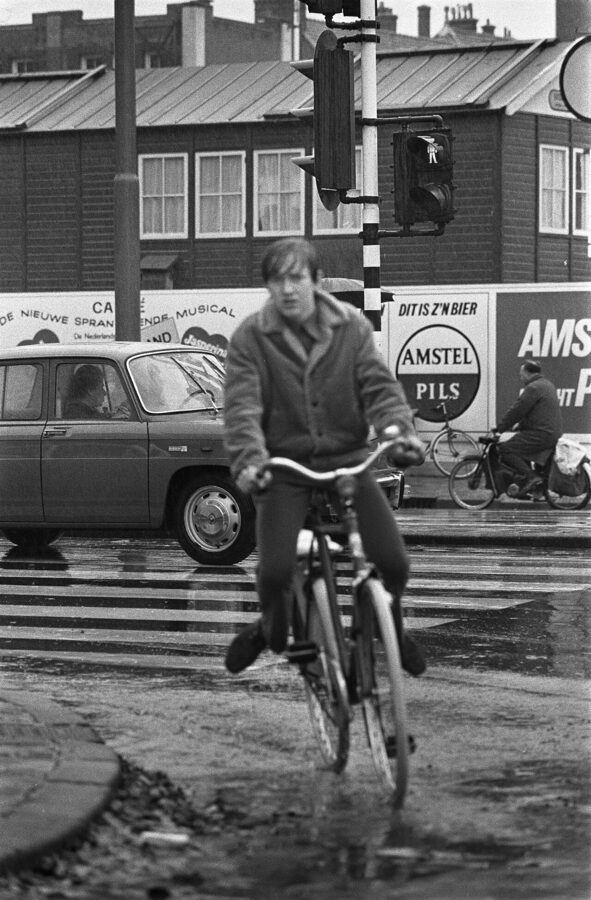
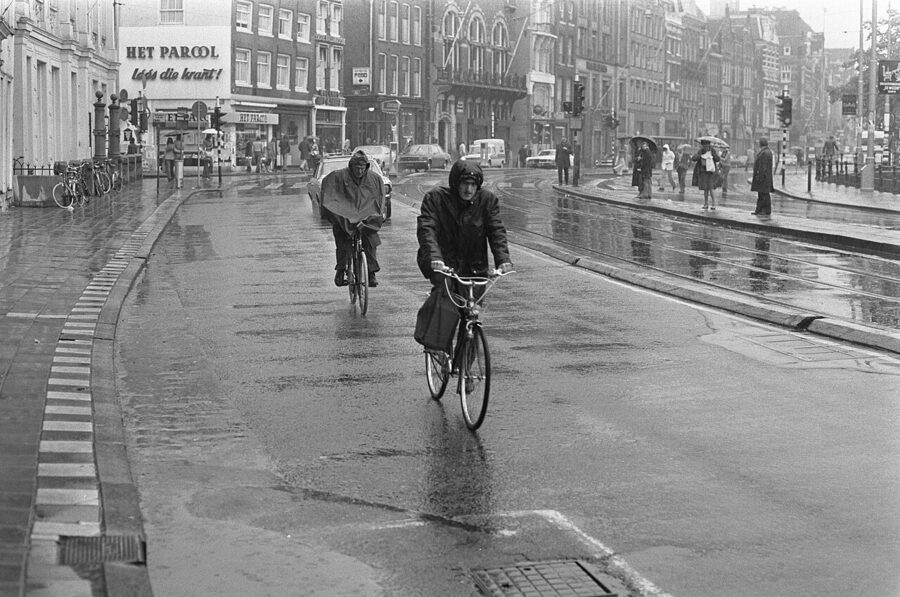
Wind matters more than rain for anyone on a bike, and Amsterdam gets plenty of it. The prevailing direction is southwest to west, so the classic complaint is riding into it on the way home. A light drizzle with no wind is pleasant on a bike; the same drizzle with a 40 km/h headwind is not.
Locals cope with rain trousers, a proper rain jacket or a cycling poncho, and no umbrella. An umbrella is technically legal on a bike, but in any wind it is a bad idea, and holding a phone while cycling has been illegal since 1 July 2019. Cobbles and the metal plates on bridges are slick when wet, so brake earlier than you would on asphalt.
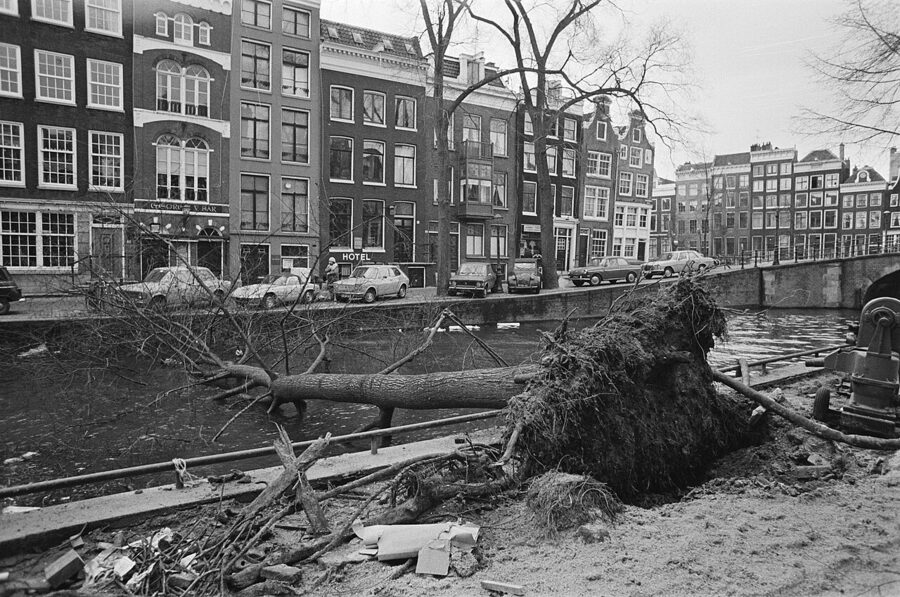
When KNMI issues an orange or red weather warning for wind, take it seriously. Trams, metros and the ferries across the IJ can be suspended, trees come down, and cycling becomes dangerous. Those warnings are most common from October to March.
What to pack
The short version is layers, a waterproof with a hood, and shoes that cope with wet cobbles. By season:
- Spring (March to May): a warm sweater and a windproof, waterproof jacket. Days can reach 18°C in May, but mornings and evenings on the water are cold. Sunglasses for April and May, when the sun is out more than at any other time of year.
- Summer (June to August): light clothes, a thin sweater or jacket for the evenings, when it drops to around 13°C, and a packable rain shell for the showers. Sunscreen: the long days add up.
- Autumn (September to November): a proper rain jacket, water-resistant shoes, and a warm layer from October on. An umbrella, if you bring one, should be a sturdy one.
- Winter (December to February): a warm, windproof coat, hat, gloves and scarf. The temperature is rarely far below freezing, but the wind and the damp make it feel colder. Waterproof shoes with grip for wet or icy streets.
Whatever the season, a hood beats an umbrella. The wind turns umbrellas inside out on every bridge, and you will need your hands for bags, maps and tram doors.
When the weather turns: plans for a wet day
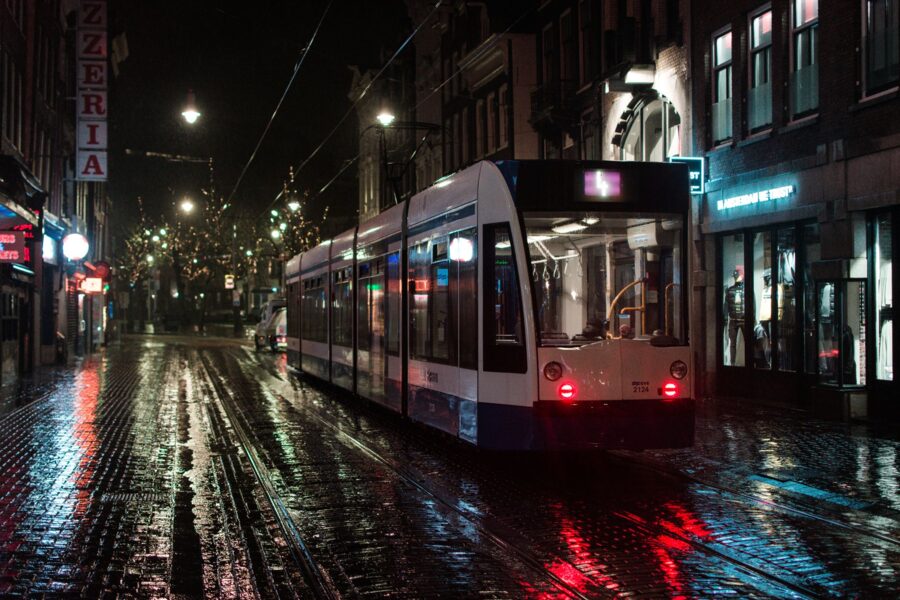
Amsterdam does rainy days well, because it has so many of them. The museums are the obvious answer: the Rijksmuseum and the Van Gogh Museum face each other across the Museumplein, and the museum guide covers the rest. Book timed tickets ahead for both of the big ones, and for the Anne Frank House, whose tickets go fast.
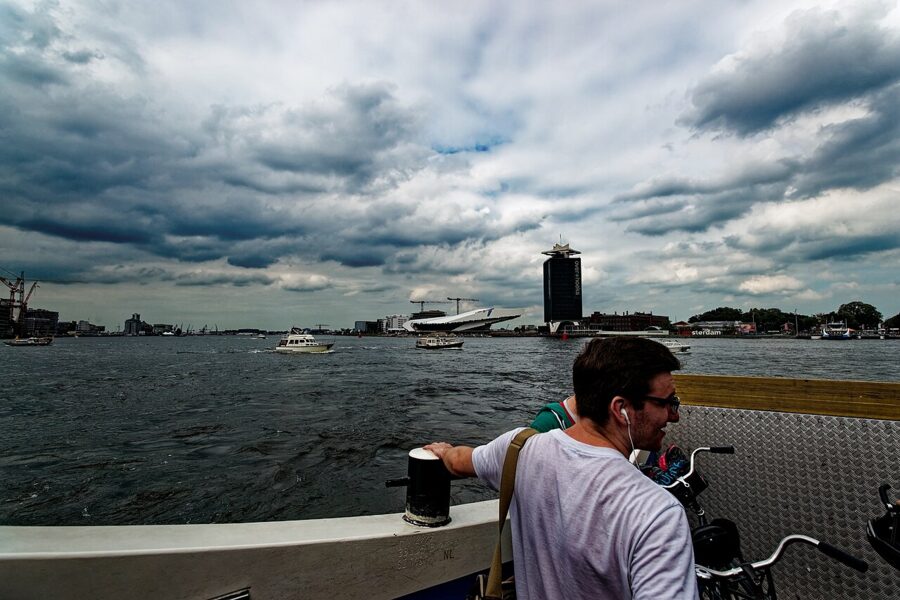
East of Centraal, NEMO and the Scheepvaartmuseum face each other across the Oosterdok, about a ten-minute walk from the station, and between them fill a wet day with children. From the back of Centraal the free GVB ferry F3 crosses the IJ to Buiksloterweg, next to Eye, the film museum, where you can see an exhibition and stay for a film.

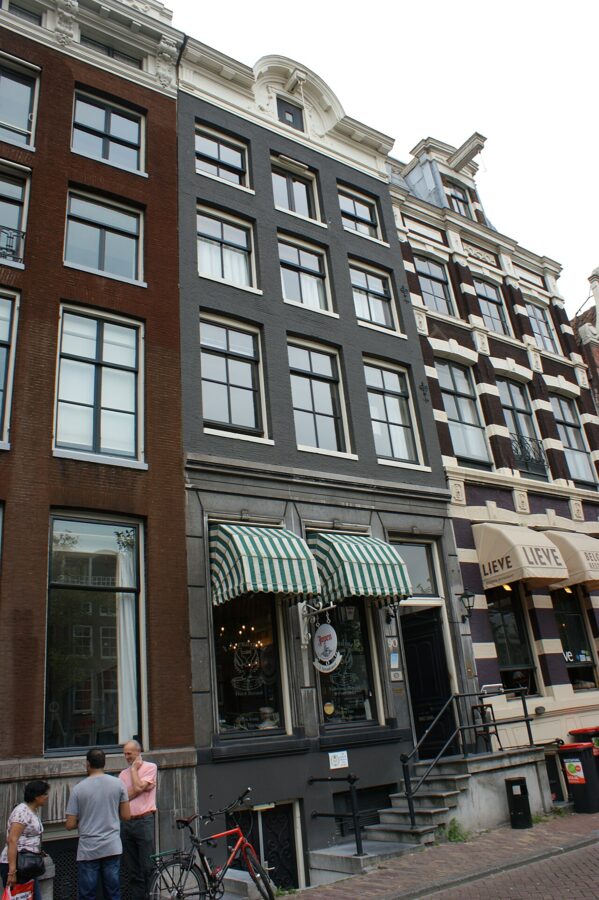
For the Heineken Experience and other indoor attractions, I would book a slot ahead on a wet day rather than turn up. Or do what the Dutch do and sit it out in a brown café, the dark, wood-paneled bars that have been the city’s living rooms for centuries. Proeflokaal Arendsnest at Herengracht 90 pours only Dutch beer from 52 taps, which is reason enough to wait for a shower to pass. A plate of Dutch food, pea soup or bitterballen, completes the picture.

A canal cruise is not a write-off in bad weather either. The glass-roofed, heated boats run all year, and a gray day with half-empty boats can be a better trip than a sunny Saturday. On a clear day, use the light for the places that need it: the Vondelpark, the Zaanse Schans windmills, a day in Haarlem, or tulips at Keukenhof in season. For the full list, see things to do in Amsterdam.
Pack the hood, keep the rain radar open on your phone, and when the drizzle starts on the bridge, do what the cyclist ahead of you does: keep going. By the next canal it will probably have stopped.