

The Intercity to Vlissingen leaves Amsterdam Centraal, stops once at Sloterdijk, and fifteen minutes later lets you off under an iron train shed on the oldest railway line in the country. You walk down the steps into the only art nouveau station in the Netherlands, out through the doors marked Centrum, and a quarter of an hour on foot later you are standing on the Grote Markt with a Gothic church the size of a cathedral in front of you and a Renaissance meat hall beside it.
That is the whole case for Haarlem, really. It is a full city of about 170,000 people, the capital of North Holland, with the world’s largest collection of paintings by Frans Hals and the oldest museum in the country. And the ride from Amsterdam Centraal takes less time than many tram rides across Amsterdam itself.
What it does not do is open everything on the same day. The two big museums close on Mondays, the church closes on Sundays, the Corrie ten Boom House runs on guided tours that fill months ahead, and from November to February the windmill keeps short hours. Pick the day first, book the one thing that needs booking, and the rest of Haarlem takes care of itself.
Contents11 parts
Why Haarlem, and which day to go
There are other day trips from Amsterdam, and each does one thing. The Zaanse Schans is a row of working windmills, very good at being exactly that and very busy for it. Keukenhof is the flower garden, open only in spring. Haarlem is the one to choose when you want a living Dutch city at walking pace: a market square, a church with a famous organ, two first-class museums, about twenty almshouse courtyards, a working windmill, shopping streets with no chain-store sameness, and the North Sea beach ten minutes further down the line.
It is also the easiest of the lot. No bus transfer, no coach tour, no timed entry for the city itself. If you are already working through the list of things to do in Amsterdam and want one day out, I would put Haarlem first and the windmill villages second.
The day of the week decides how good the trip is. This is how the main sights line up as of November 2026:
| Sight | Monday | Tuesday to Saturday | Sunday |
|---|---|---|---|
| Grote of St.-Bavokerk | Open 10:00–17:00 | Open 10:00–17:00 | Closed |
| Teylers Museum | Closed | Open 10:00–17:00 | Open 10:00–17:00 |
| Frans Hals Museum | Closed | Open 11:00–17:00 (10:00 during Hals-Rembrandt) | Open |
| Corrie ten Boom House | Closed | Guided tours, booked | Closed |
| Molen De Adriaan | Open | Open (afternoons only Tue–Thu in winter) | Open |
| Hofjes with a gate | Most open 10:00–17:00 | Most open 10:00–17:00 | Closed |
Tuesday to Saturday is the answer, and Saturday adds the market on the Grote Markt. A Monday still works if you build it around the church, the windmill and the hofjes. A Sunday gives you both museums but no church, no Ten Boom House and no gated courtyards, so I would not choose one.
Season matters less than in most places, because the best of Haarlem is indoors or in courtyards. Spring and summer bring the beach into play and longer windmill hours; winter brings the Christmas market and darker museum rooms. Check the Amsterdam weather the night before: it is the same sky, and on the coast it comes with more wind.
The train, the station and the walk in
NS runs trains from Amsterdam Centraal to Haarlem all day. The Intercity takes 15 minutes with one stop at Sloterdijk; the Sprinter takes 18 or 19 minutes with three stops. Between them there are several departures an hour, so there is no need to plan around a timetable. A single second-class ticket costs €5.50 (about US$6) as of late 2026.
You do not need to buy a ticket at all. Tap in at the gate with a contactless bank card or phone, tap out at Haarlem with the same card, and the fare is charged to it. The one rule is to use the same card both ends.
If you have an OV-chipkaart from the trams in Amsterdam, that works too. Check the NS journey planner on the day for engineering works.
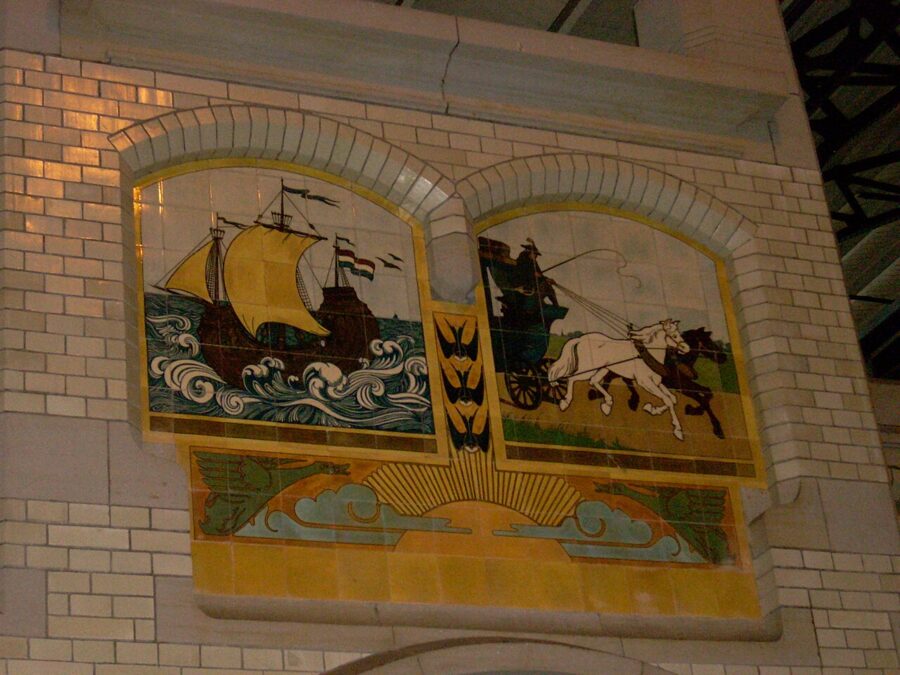
The railway is part of the story here. The first train in the Netherlands ran between Amsterdam and Haarlem in September 1839, and the present station building went up between 1906 and 1908 to a design by Dirk Margadant. It is the only station in the country built in art nouveau style, with tiled panels on the walls and the old waiting rooms set on the island platform between the tracks. Film crews like it: the platform played Amsterdam Centraal in Ocean’s Twelve.
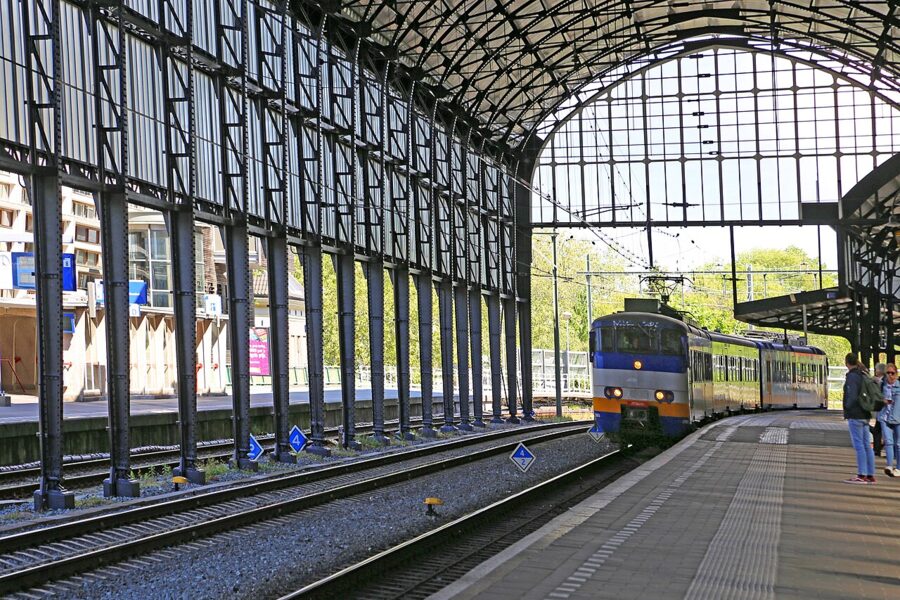

Leave by the south exit, signed Centrum, and turn right. Straight ahead is the Kruisweg; turn left onto it and keep going. The street changes its name to Kruisstraat and then Barteljorisstraat, but it is one straight line into the old center, and it ends at the Grote Markt. Walking it takes about 15 minutes at a normal pace.
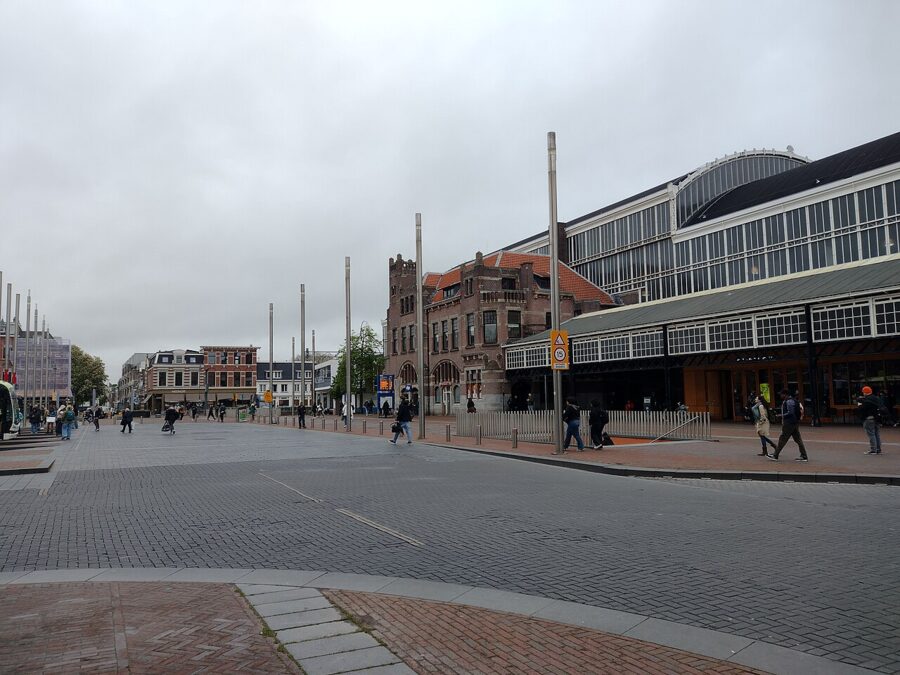

The city center is small enough to cover entirely on foot. From the Grote Markt it is five to ten minutes to Teylers Museum on the Spaarne, about ten to the Frans Hals Museum and a little more to the windmill. A bike is pleasant but unnecessary; if you bring one, the station and the edges of the center have free guarded bike parking.
The Grote Markt
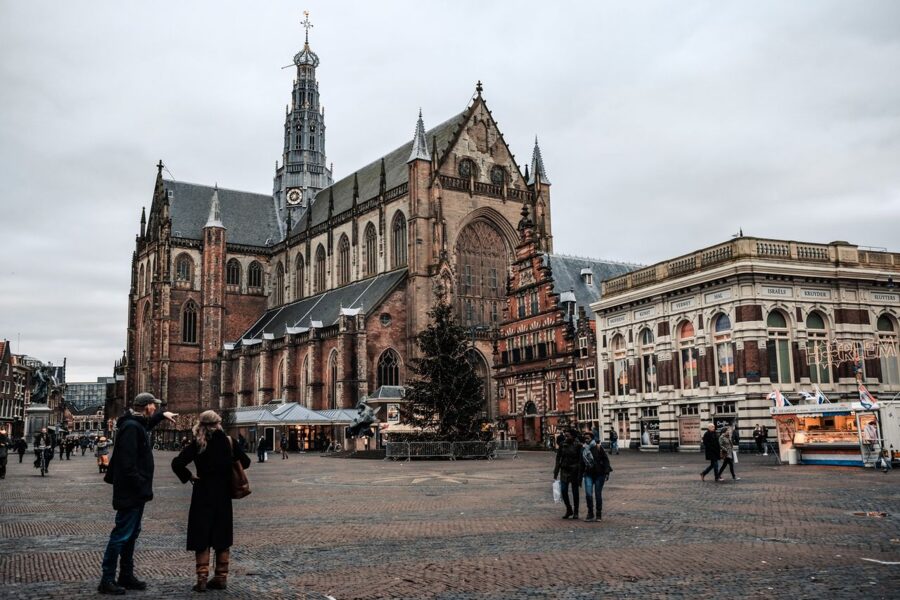
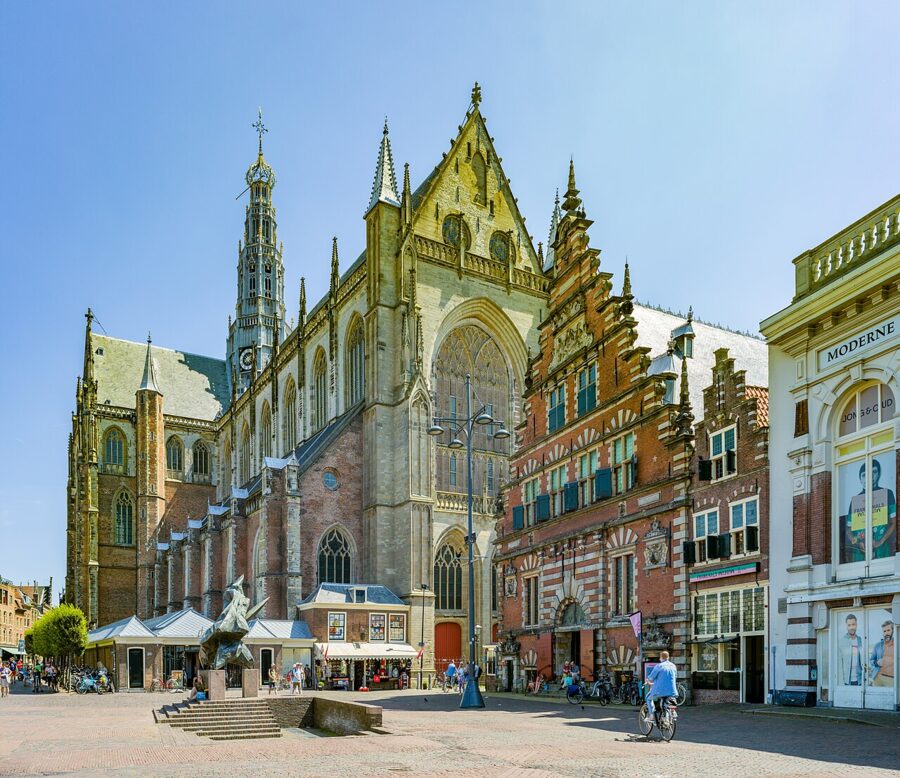
Haarlem’s main square was called ‘t Sant when it was still unpaved, and it has been the center of the city’s trade and celebrations since the Middle Ages. Today it is a wide square ringed with café terraces, with the church on one side, the city hall on the other, and a cluster of old guild and market buildings in between.


The city hall, the Stadhuis, sits on the site of a hunting lodge of the Counts of Holland. The oldest parts date from around 1370, a wing by Lieven de Key was added in the 1620s and the facade was redone in classical style a few years later. Its tower was taken down in 1772 and only rebuilt in 1913. It is a working city hall rather than a sight, though the Gravenzaal, hung with painted panels of the Counts of Holland, opens on Open Monument Days in September and for weddings.
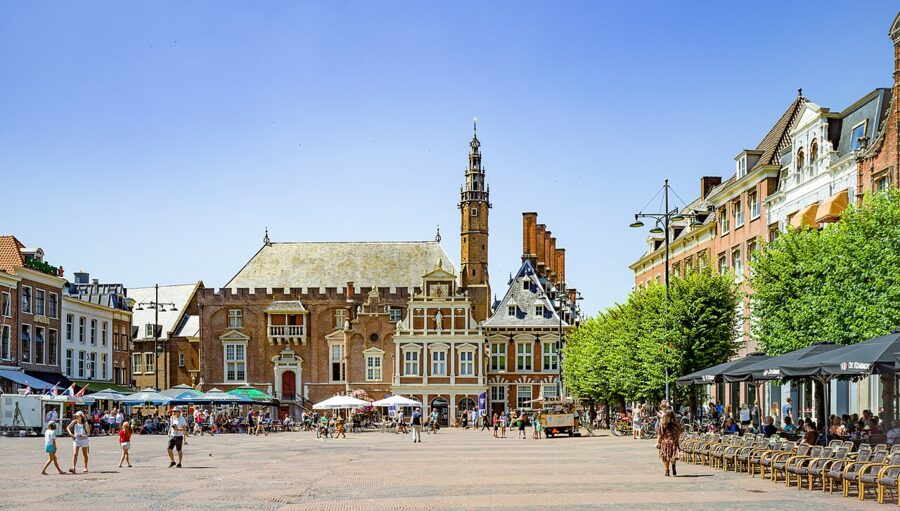

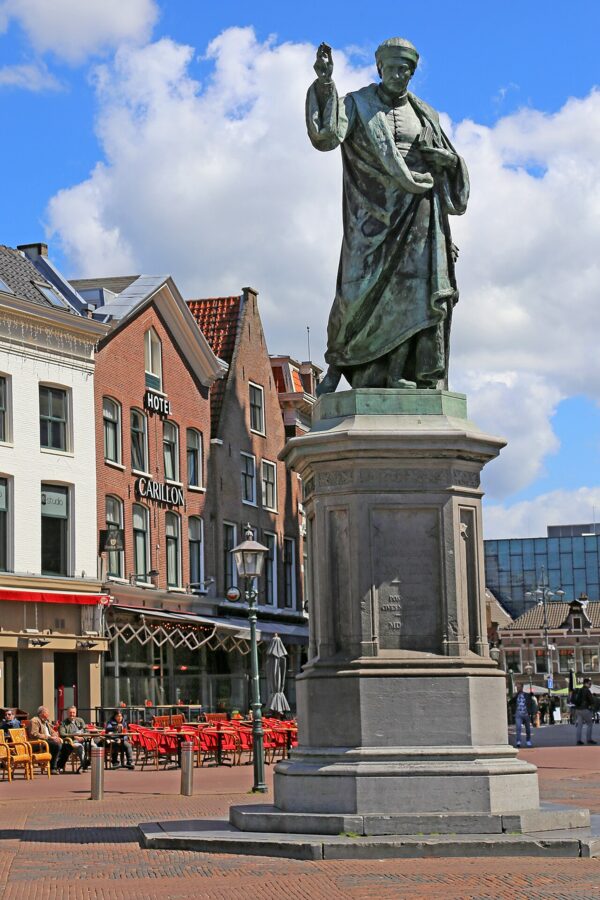
In the middle of the square stands a statue of Laurens Janszoon Coster. Haarlem long claimed him as the inventor of printing, ahead of Gutenberg; historians do not agree, and Haarlem does not much care. Every evening between 21:00 and 21:30 the two small bells in the church’s top lantern, nicknamed the Damiaatjes, ring out a curfew that once told the city gates to close.

St Bavo and the Müller organ
The Grote of St.-Bavokerk, usually just the Grote Kerk, was built between 1370 and 1520 as a Catholic church and taken over by the Protestants in 1578, the year Calvinists stormed it and wrecked the interior. That is why the inside is so bare and so bright: pale stone, a wooden vault, about four hundred gravestones in the floor and hardly anything else to block the light. The crossing tower, of lead-covered wood, rises about 78 meters.
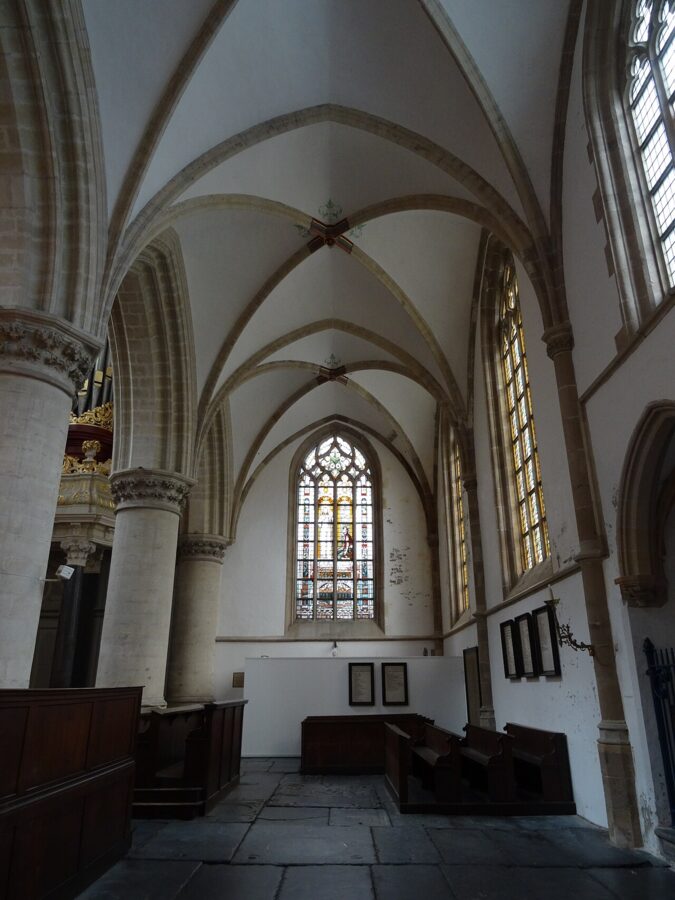

Frans Hals is buried under the choir. So are the church painter Pieter Saenredam and Pieter Teyler, whose money built the museum down the road. Look for the cannonball lodged in the inner wall from the Spanish siege of 1573, the carved choir stalls of 1512 and the brass choir screen.
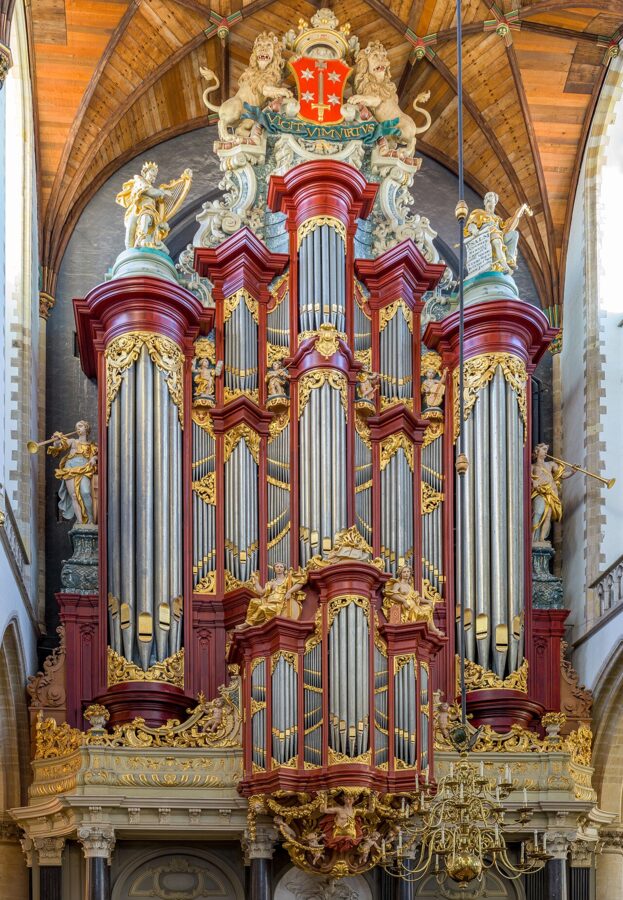
Then turn around. The organ that fills the end wall of the nave was built between 1735 and 1738 by Christian Müller, with a gilded case by Jan van Logteren, and when it was finished it was the largest in the world. It has about five thousand pipes, from pencil-sized to more than ten meters long. Handel played it, Mendelssohn played it, and in 1766 a ten-year-old Mozart played it.

The church is open to sightseeing Monday to Saturday, 10:00–17:00, and closed on Sundays and public holidays. Tickets are sold at the desk inside the entrance at Grote Markt 22, on the north side: €4 (about US$5) for adults as of 2026, €2 for ages 13 to 16, and free for children up to 12 with their family. On Saturdays a public guided tour starts at 14:00 for €7 including entry, with an English one at the same time from mid-May to the start of October; tower climbs are a separate tour at €9.
To hear the organ, come between late May and early October, when the city runs weekly concerts on it on Tuesday evenings and Thursday afternoons. Tickets go through the city’s concert organization with a reservation fee of €4 each; the church’s concert page lists the program once it is out. Outside that season, lunchtime student recitals and other concerts turn up in the church calendar.
The Vleeshal and the rest of the square
The building with the stepped, carved gable in front of the church is the Vleeshal, the meat hall. Lieven de Key designed it, the first stone was laid in 1602, and the butchers moved in at the end of 1604, grumbling about a rent five times what they had paid in the old hall. The rules inside banned slaughtering, dogs, strolling and children’s games. Look up at the gables for the carved heads of oxen and rams, which tell you what was sold below.
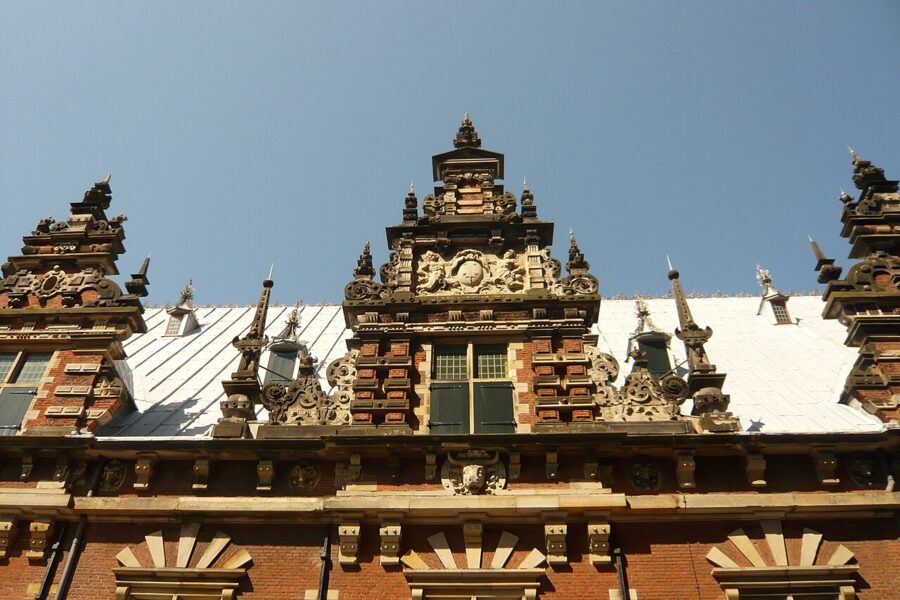

For decades the Vleeshal and its neighbors, the little Vishuisje and the 1880 Verweyhal, made up the Frans Hals Museum’s second location, HAL, which showed modern and contemporary art. That ended in August 2025. As of late 2026 the museum lists only its main building on the Groot Heiligland, so admire the Vleeshal from outside and do not plan on going in.
The Hoofdwacht, the old guardhouse, and the Vishal, the former fish hall, also face the square. On the north side, the Brinkmann building was a grand café from 1881 and later a cinema; today part of it is shops and the rest has been under conversion to apartments since 2020.
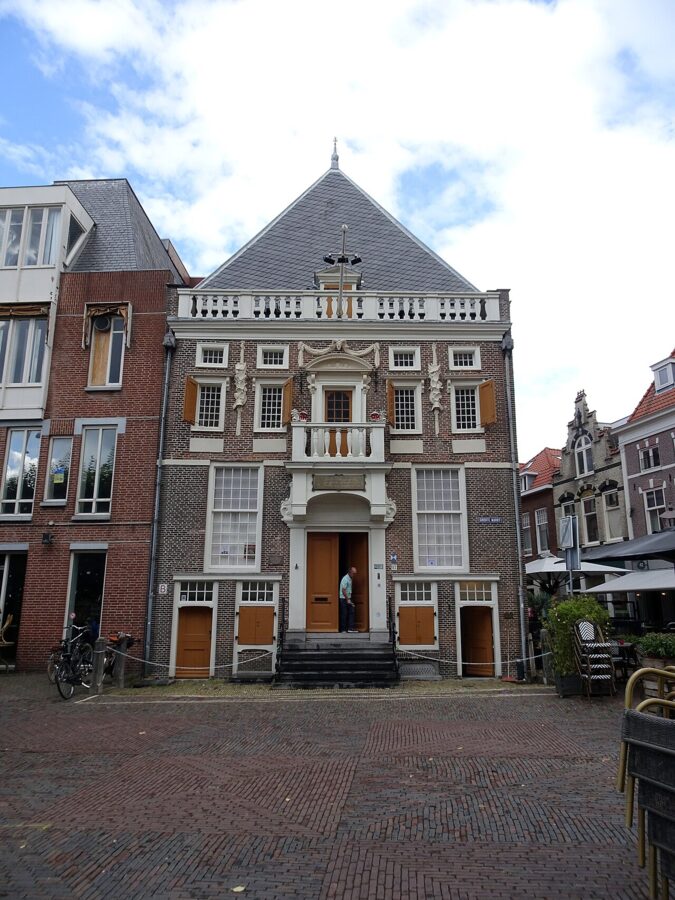

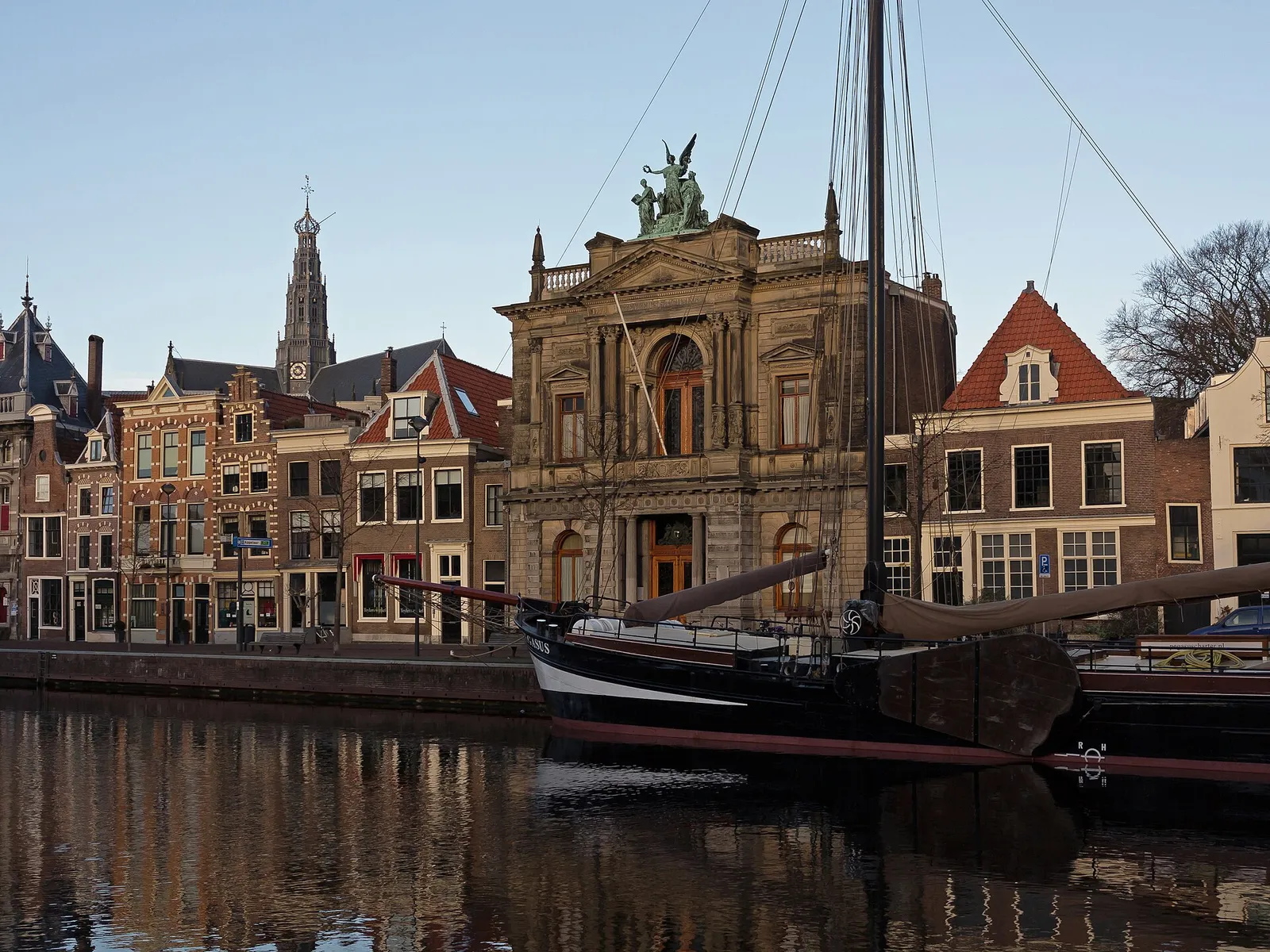
Teylers Museum
Pieter Teyler van der Hulst was a Haarlem cloth and silk manufacturer turned banker who died in 1778 leaving about two million guilders and instructions that his money should go to art and science. His friends built a “book and art room” in the garden behind his house on the Damstraat, and in 1784 it opened to the public. It has been open ever since, which is why the museum calls itself the first and oldest in the Netherlands.
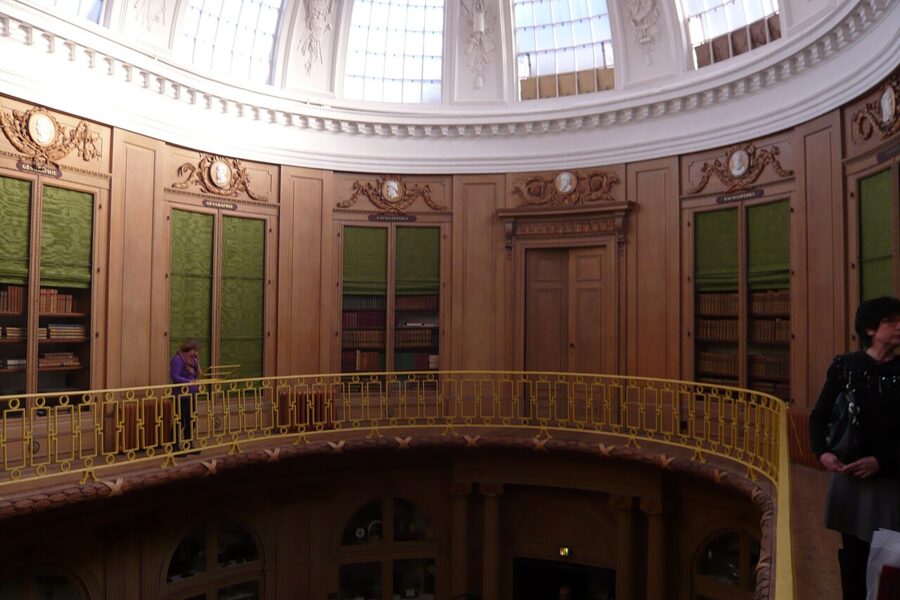
That first room, the Oval Room by the architect Leendert Viervant, is the reason to come. It is a two-story oval with a gallery, a skylight, and cases of minerals, fossils and scientific instruments arranged much as they were in the 18th century. Experiments were run here under the first director, Martinus van Marum, with instruments like the Large Electrostatic Generator, which is still in the collection.

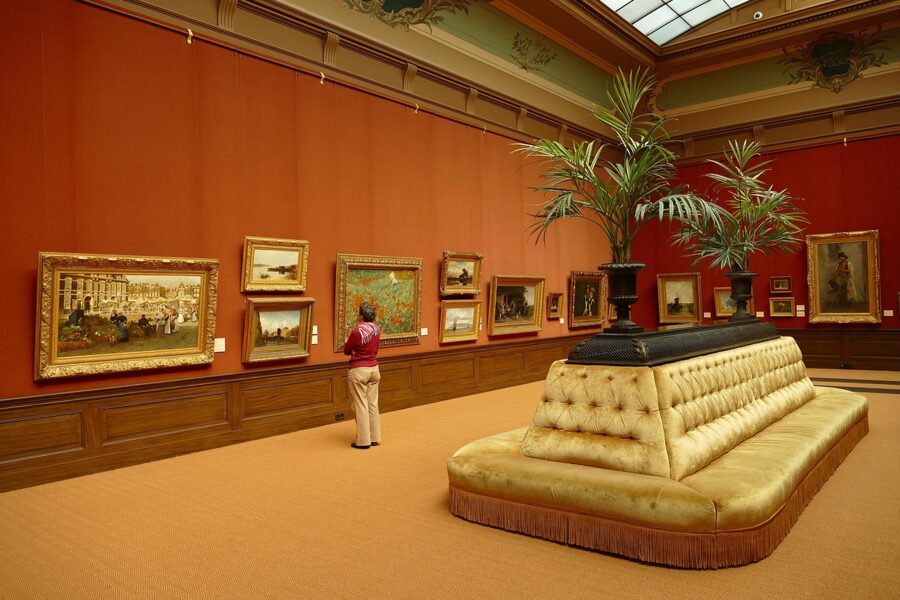
In 1885 a new wing opened on the Spaarne side, with a domed entrance hall, two fossil rooms, an instrument room, a library and a lecture hall. The cast-iron grilles you walk over in the entrance hall were the floor heating. Two picture galleries hold 19th-century Dutch painting under daylight from glass roofs, which also means the rooms are dark on a gray winter afternoon.
Teylers also owns 22 drawings by Michelangelo and a large collection of prints and drawings by Rembrandt, Raphael and Goltzius. They are too fragile to show permanently, so the First Painting Room has precise replicas you can look through by hand, and the originals come out now and then for exhibitions. The museum is open about its founder’s money, too: research it commissioned found that a small part of Teyler’s investments were tied to plantations and the slave trade, and it publishes the findings.
If you have been to Science Center NEMO in Amsterdam, this is the opposite approach to science: nothing to press, everything behind glass, the instruments shown as they were made. Teylers will not demonstrate them for fear of wearing them out. It is a museum of how people in the 18th and 19th centuries thought the world worked, and it is a better day out than that sounds.
Practical details as of November 2026, from Teylers Museum:
- Spaarne 16, five to ten minutes’ walk from the Grote Markt.
- Tuesday to Sunday 10:00–17:00, closed on Mondays, 1 January and 25 December; some public holidays fall on a Monday and open anyway.
- Adults €18.50 (about US$21), ages 18 to 24 €9.25, ages 6 to 17 €2.50, under 6 free; free with a Museumkaart.
- Booking a time online is recommended, and the desk still sells tickets on the day.
- Coats go in the attended cloakroom and bags bigger than A4 are not allowed in the galleries. Photos without flash are fine.
- The multimedia tour takes about 50 minutes; give the whole museum 90 minutes to two hours. The café inside needs a museum ticket; the shop does not.
Frans Hals Museum
The Frans Hals Museum holds the largest collection of paintings by Frans Hals anywhere, in a building he knew. It is the old Oudemannenhuis on the Groot Heiligland, an almshouse for elderly men built in the early 17th century around a courtyard garden, later an orphanage, and since 14 May 1913 the city’s art museum. Large parts were rebuilt in the old style after the city bought it in 1908, and you would struggle to tell which parts.
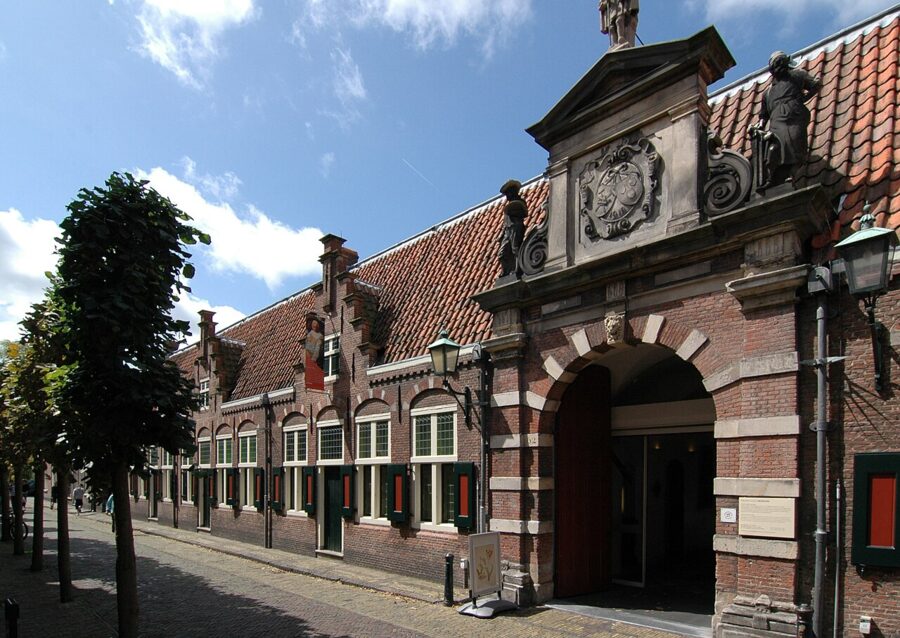

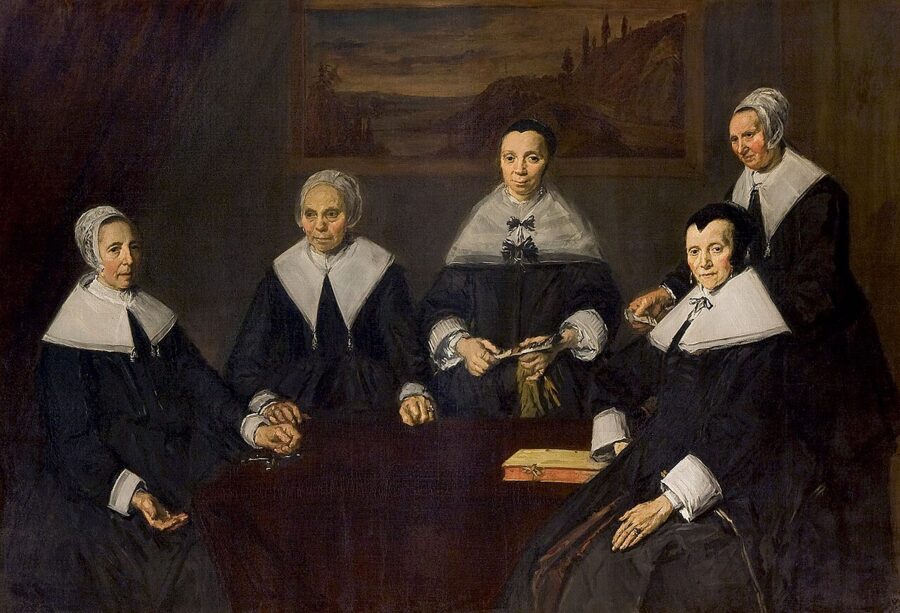
Hals was born in Antwerp around 1582, came to Haarlem as a child when his family fled Spanish rule, and painted here until he died in 1666. The museum has his big civic guard group portraits, painted for the militia clubhouses and moved to the city hall for safekeeping when the militias were disbanded in 1797. It also has the two late masterpieces he painted in his eighties for the governors of this very building.
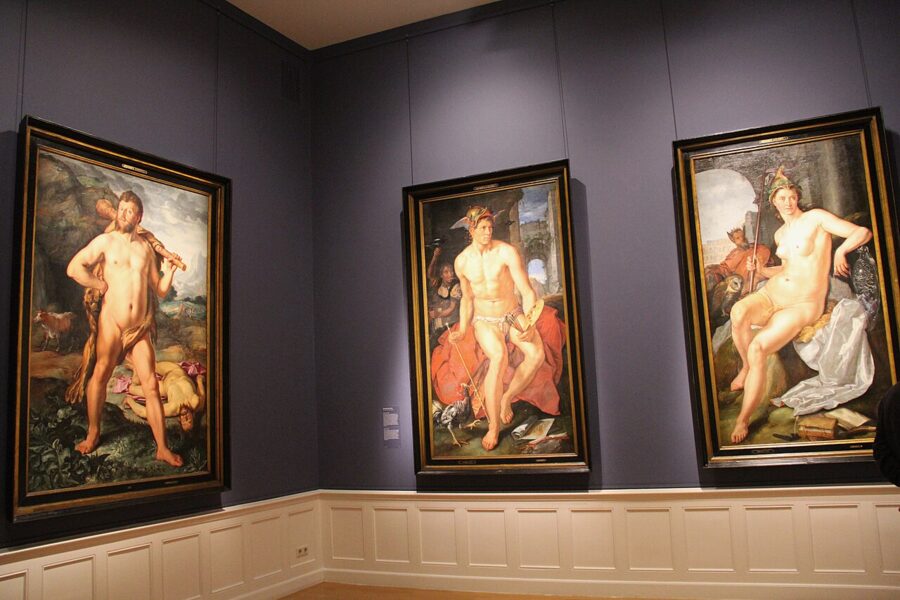
Do not skip the other rooms. The collection covers Haarlem’s whole school: Judith Leyster, Cornelis van Haarlem, Hendrick Goltzius, Jacob van Ruisdael, Maarten van Heemskerck, Jan van Scorel. It also covers modern and contemporary art from about 1880 to today, with Isaac Israëls and Charley Toorop among them, and a doll’s house that children make straight for.
Until 28 February 2027 the museum’s main exhibition is Hals-Rembrandt, which hangs nineteen paintings by the two portraitists side by side. Five come from the Rijksmuseum, including Rembrandt’s The Syndics of 1662, shown next to Hals’s regents. For the run of the show, online booking is compulsory and the museum opens at 10:00 instead of 11:00. After the show closes, check the museum’s ticket page for the booking rules then in force.
The museum is also moving. In October 2025 Haarlem’s council decided to rehouse it in De Egelantier, a 19th-century former hospital on the Gasthuisvest, with the move planned for 2030–2032. For now, everything is on the Groot Heiligland.
Practical details as of November 2026, from the Frans Hals Museum:
- Groot Heiligland 62, a 20-minute walk from the station; from the Grote Markt take the Grote Houtstraat south to the Gedempte Oude Gracht, turn left, and it is the second street on the right.
- Tuesday to Sunday 11:00–17:00 (10:00–17:00 during Hals-Rembrandt). Open on Easter Monday, Whit Monday and 28 December; closed 1 January, 27 April and 25 December; closes at 16:00 on 24 and 31 December.
- Adults €18.50 (about US$21), ages 19 to 24 €9, free to age 18 and with a Museumkaart.
- Café Cleeff is inside the museum. Bike parking is at the Houtstraat racks, a few minutes’ walk away.
Both big museums are free with the Museumkaart, the Dutch annual museum pass that also covers most of Amsterdam’s museums. Two adult tickets here already come to €37 (about US$43), so if you are seeing several museums on the trip, do the arithmetic.
Corrie ten Boom House
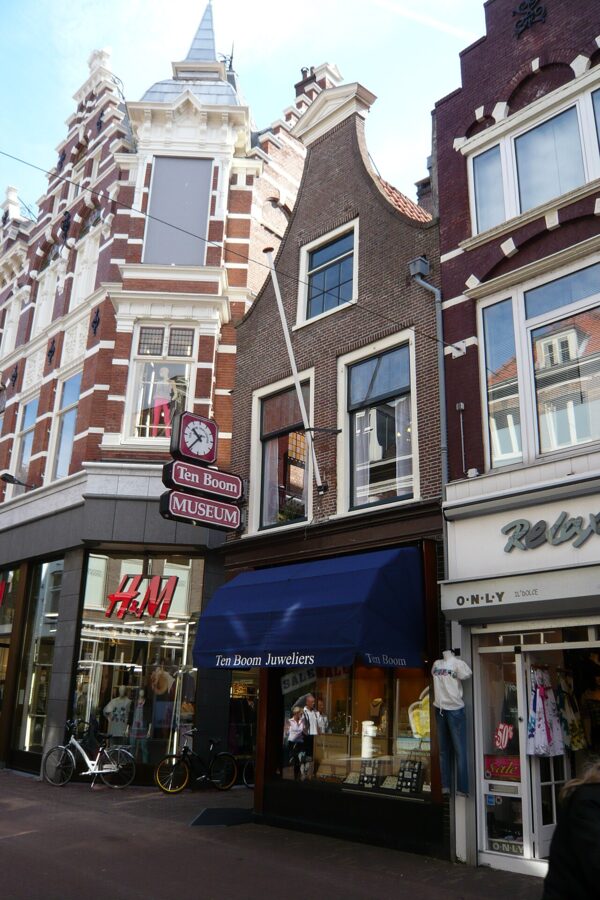
Barteljorisstraat 19, on the street you walk in on from the station, was a watchmaker’s shop with the Ten Boom family living above it from 1837. During the German occupation, Casper ten Boom and his unmarried daughters Betsie and Corrie made the house a refuge for Jews and members of the resistance, and a false wall was built in Corrie’s bedroom to hide them behind. On 28 February 1944 the Gestapo raided the house and arrested the family; the six people in the hiding place were never found.

Casper and Betsie died in captivity. Corrie survived, wrote about it in The Hiding Place, and spent the rest of her life traveling and speaking; the house opened as a museum in 1988, five years after her death. You see the family rooms set up as they were in wartime, the hiding place itself with a hole cut in the rebuilt wall so you can look in, and an exhibition on the top floor.
Entry is free and works only by guided tour, Tuesday to Saturday. English tours start at 10:00, 12:00 and 14:00, take about 75 minutes and hold 12 people, and the museum advises booking three or four months ahead. Tours are in one language only, so do not book a Dutch tour and hope for translation: the museum cancels those bookings. Turn up 10 to 15 minutes early and wait outside, because there is no room to wait in the house.
Some rules to know: photos are allowed only in the hiding place, the recommended minimum age is 10, and the steep, winding stairs make the house unsuitable for wheelchairs or anyone who struggles with stairs. The museum is closed on Sundays and Mondays, on 1 January, King’s Day (27 April), Ascension Day, and 25 and 26 December. A donation box stands in the dining room at the end. If every tour is full, the museum’s virtual tour online is the next best thing, and the Anne Frank House in Amsterdam tells the other side of the same years.
The hofjes: Haarlem’s almshouse courtyards
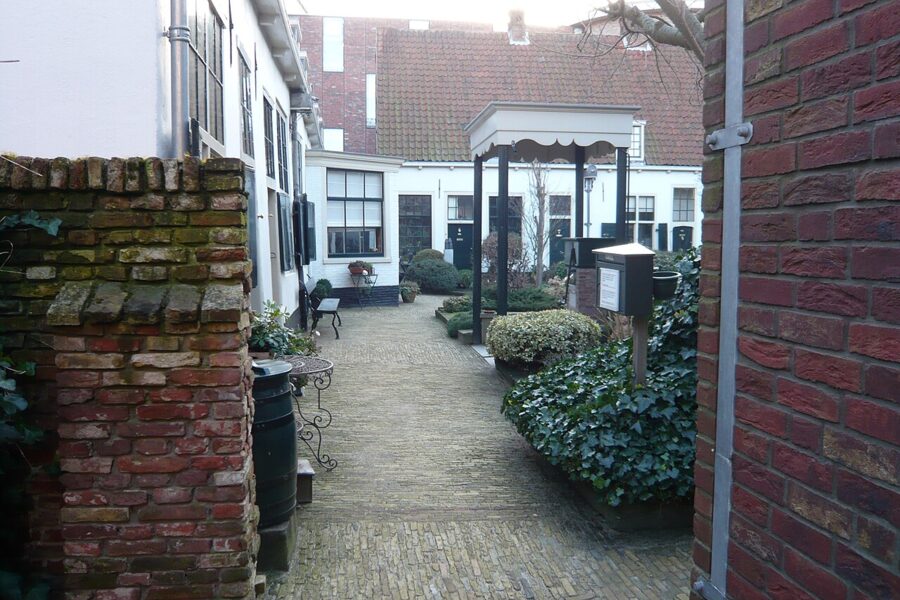
Haarlem once had about forty hofjes: rows of small houses built around an enclosed garden by rich, often childless citizens as homes for poor elderly women. About twenty historic ones survive, plus two modern additions from around 2001, and every one is still lived in. The usual pattern is an unremarkable door on a busy street, a passage, and then sudden quiet, grass, a water pump and a ring of tiny front doors.
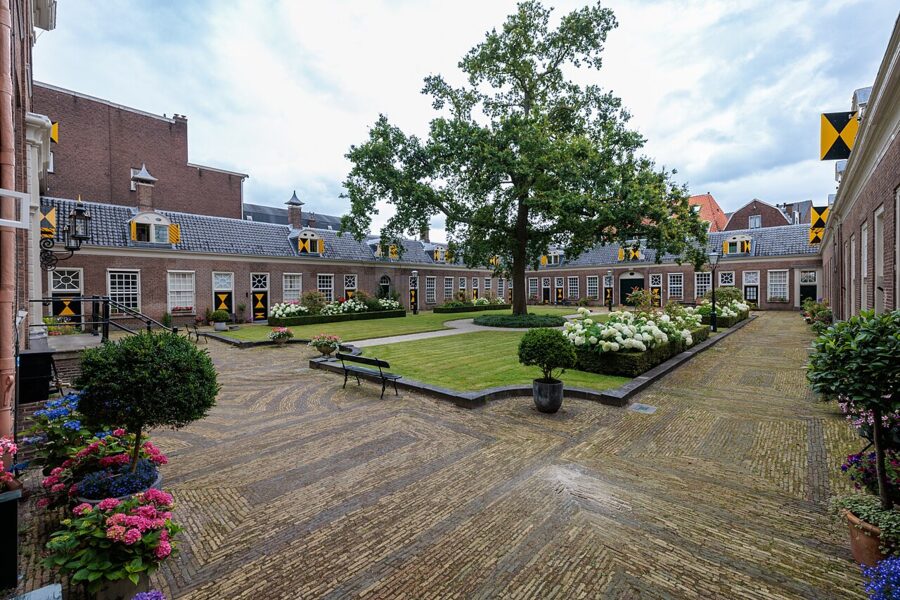

The rules matter more than the map. These are homes, not museums, and some hofjes have cut back or stopped visits because of the crowds. Many are open 10:00–17:00, but the ones with a gate are closed on Sundays.
Go in small numbers, keep your voice down, stay on the paths and never look in through the windows. If a door is locked, it is locked.
A few that welcome you, as of late 2026:
- Hofje van Bakenes (Bakenesserkamer), Wijde Appelaarsteeg: founded by Dirck van Bakenes in 1395, the oldest hofje still standing in the Netherlands. Monday to Saturday 10:00–17:00.
- Proveniershof, through the gate at Grote Houtstraat 140: on the site of a convent, later the St George militia’s shooting ground, an old people’s home since 1706. 67 houses, 38 of them round the garden; open daily 10:00–17:00, free.
- Hofje van Staats, a few minutes from the station: Monday to Saturday 10:00–17:00.
- In den Groenen Tuin, founded 1616: weekdays 10:00–12:00, after ringing the bell.
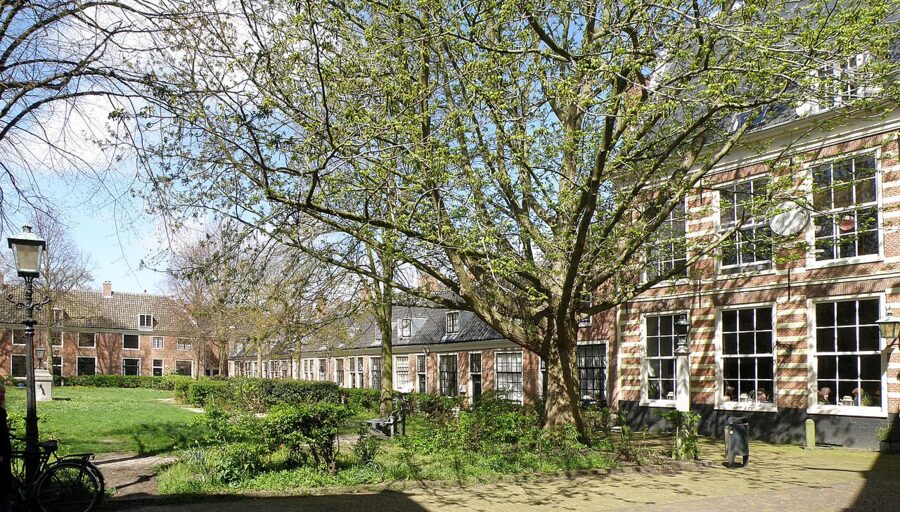
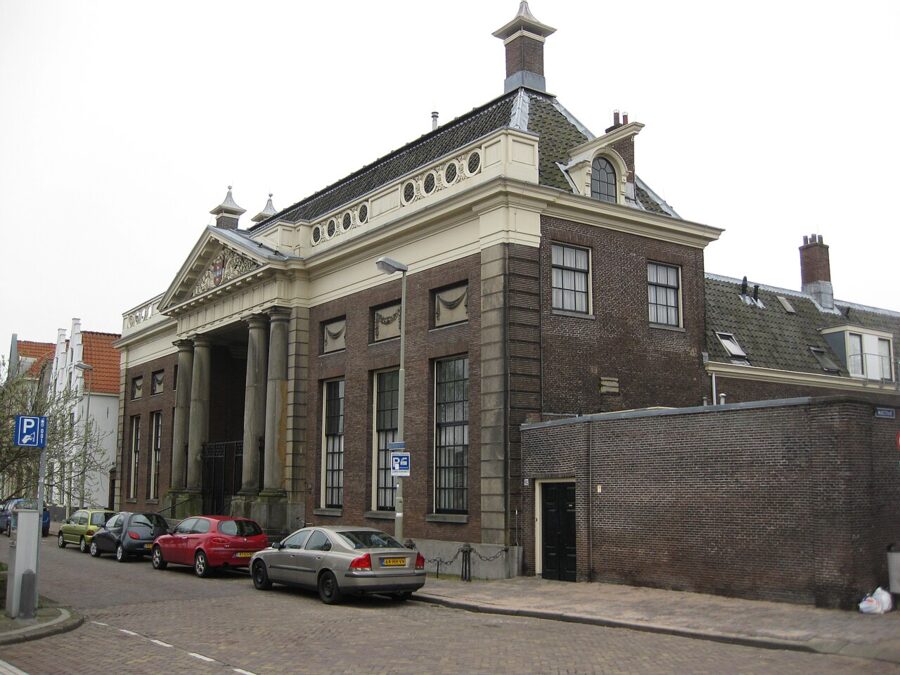
The Hofje van Loo is closed to individuals but lost its gate to a street widening long ago, so you can see into it from the pavement. The Teylers Hofje on the Koudenhorn, home to single women since 1787 and designed by the architect of the Oval Room, has a grand entrance you can admire from outside. For a proper round, the Haarlem hofjes walk covers 5.8 kilometers past more than twenty of them, with directions you can follow on a phone.


Molen De Adriaan and the Spaarne
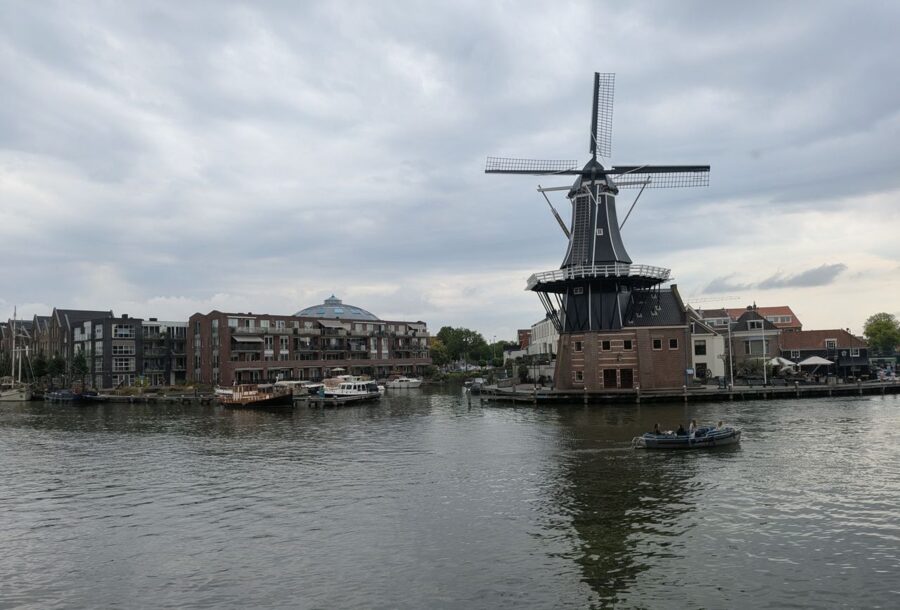
De Adriaan opened on 19 May 1779 on the foundations of the Goe Vrouwtoren, part of the city’s old defenses, which lifted it high enough to catch the wind. Over the years it ground tuff stone, shells and oak bark, then tobacco, then grain, until a storm damaged it in 1930 and a fire destroyed it on 23 April 1932. In 1963 the city took over the site together with a duty to rebuild, and then forgot about it. In 1996 the chairman of a foundation set up to rebuild the mill found that clause in the archives, and the new mill was finished in April 2002.
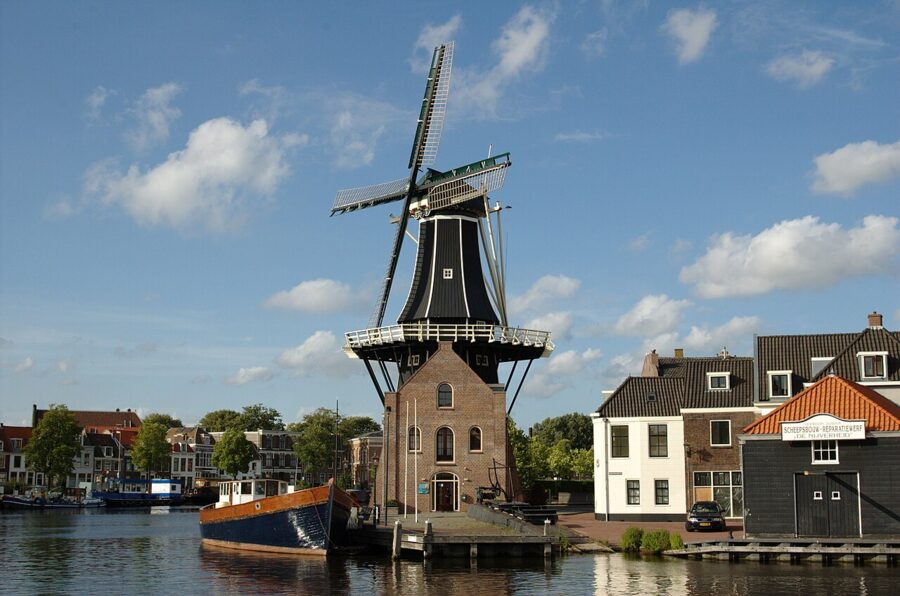

You can only go in on a 45-minute guided tour. On the ground floor there is a panorama of Haarlem around 1800 and a small shop, then videos on the next floor, then steeper and narrower stairs up to the machinery and the stage, with the view over the Spaarne and the rooftops. Only 12 tickets are sold per half hour, so buy online on a busy day.
- Papentorenvest 1-A, on the Spaarne, about ten minutes’ walk from the Grote Markt.
- 1 March to 1 November: daily 10:30–17:00.
- 1 November to 1 March: Monday 10:30–16:30, Tuesday to Thursday 13:00–16:30, Friday to Sunday 10:30–16:30.
- The last tour starts half an hour before closing; weather and volunteer numbers can change the hours.
- Adults and anyone 12 and over €7.50 (about US$9), ages 5 to 12 €3.50. No children under 5, no dogs, and the Museumkaart is not valid.
- Only the ground floor is wheelchair accessible.
De Adriaan is a single, well-explained mill in a city. If windmills are the point of your trip, the Zaanse Schans has a row of them; if you want one and a city around it, this is the better day.
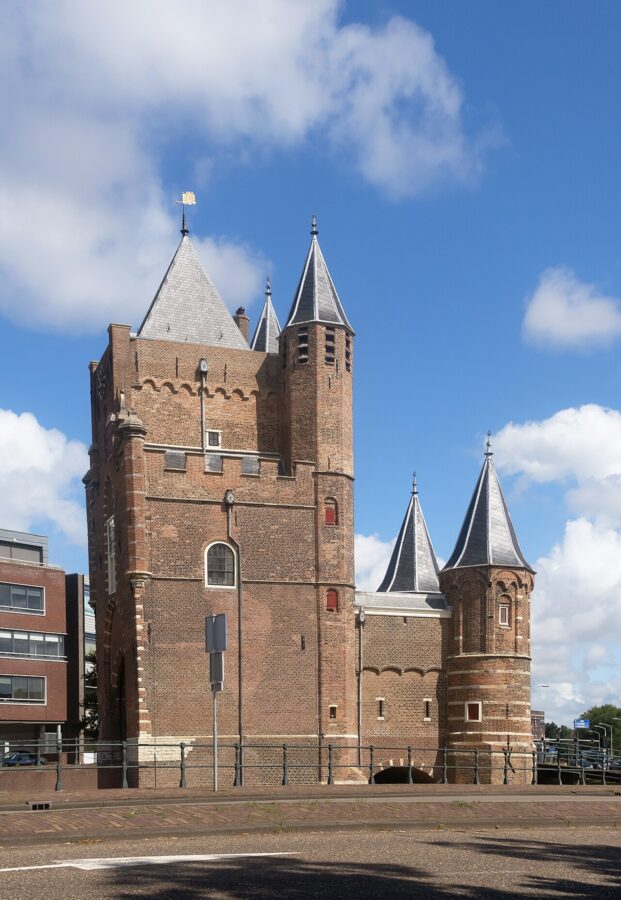
From the mill it is a short walk across the river and east to the Amsterdamse Poort, the last of the city’s medieval gates. It was built in the 14th century on the old road to Amsterdam and survived the Spanish siege of 1572–73 with little damage. You can only admire it from outside, but it makes a good loop: mill, gate, then back along the Spaarne past Teylers to the center.

Eating, drinking and shopping
Haarlem eats well, and its center has far fewer tourist-menu traps than the streets around the Damrak. The densest clusters of restaurants and cafés are around the Grote Markt and its neighbors, the Oude Groenmarkt, the Klokhuisplein and the Riviervismarkt, and along the Lange Veerstraat and the Warmoesstraat. On a dry day the terraces on the Grote Markt are the obvious lunch; for the museums, both have cafés inside.
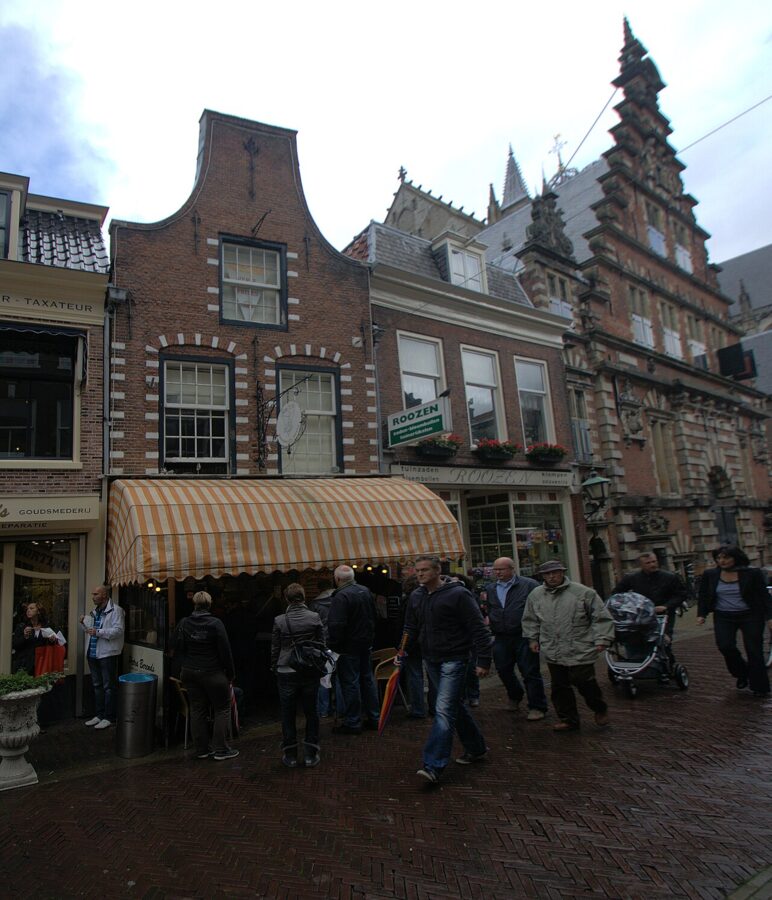
Two places I would name, both open as of November 2026. De Haerlemsche Vlaamse, a hole-in-the-wall at Spekstraat 3 beside the Vleeshal, has been cutting fresh Flemish-style fries every day for about 25 years in a building dated 1653. They come in a paper bag with a choice of 19 sauces and a beef-stew topping that has its own following; there is often a queue at lunch. Fries are the plainest of Dutch food, and a bag of these is the cheapest good lunch in the center.

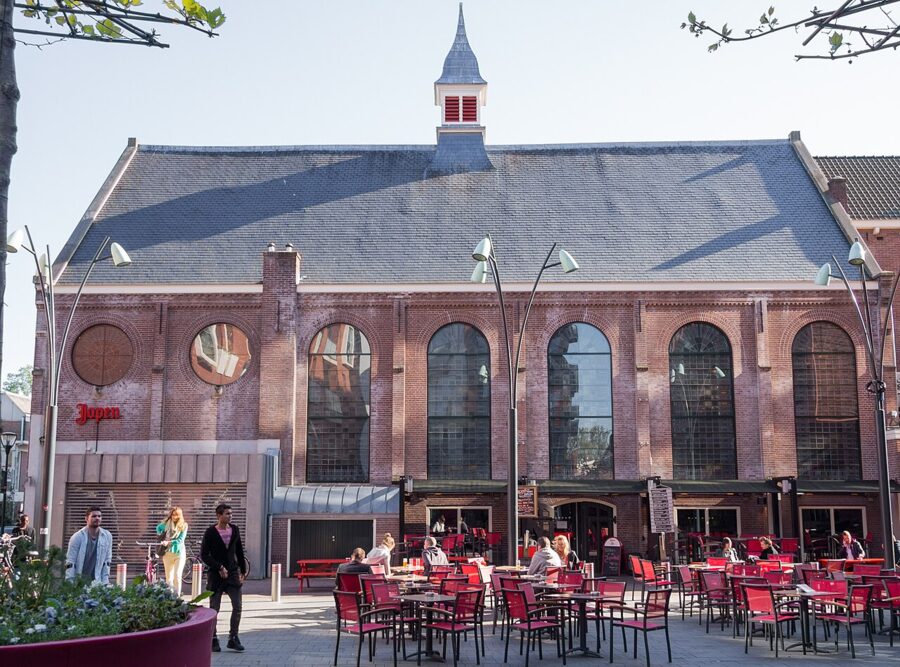
The other is the Jopenkerk, at Gedempte Voldersgracht 2, a 1910 church that the Haarlem brewery Jopen restored and turned into a brewery with a grand café in 2010. The café is open every day and the beer is brewed in copper kettles in front of you, with a restaurant on a mezzanine above them. Order a few small bottles and ask for tasting glasses to make your own flight; in Amsterdam, Proeflokaal Arendsnest pours Jopen too.

After the Heineken Experience, which is a brand show in a former brewery, a working local brewery in a church is a useful comparison. The beer is better too.
Shopping is the other thing people come for, and the place to go is the Gouden Straatjes, the “golden streets” that run off the Grote Markt: the Zijlstraat, Koningstraat, Gierstraat, Schagchelstraat, Kleine Houtstraat, Anegang and Warmoesstraat. The point is independent shops in old buildings: concept stores, vintage, craft workshops, wine shops, delicatessens, chocolate. The Kleine Houtstraat has twice been voted the nicest shopping street in the Netherlands.
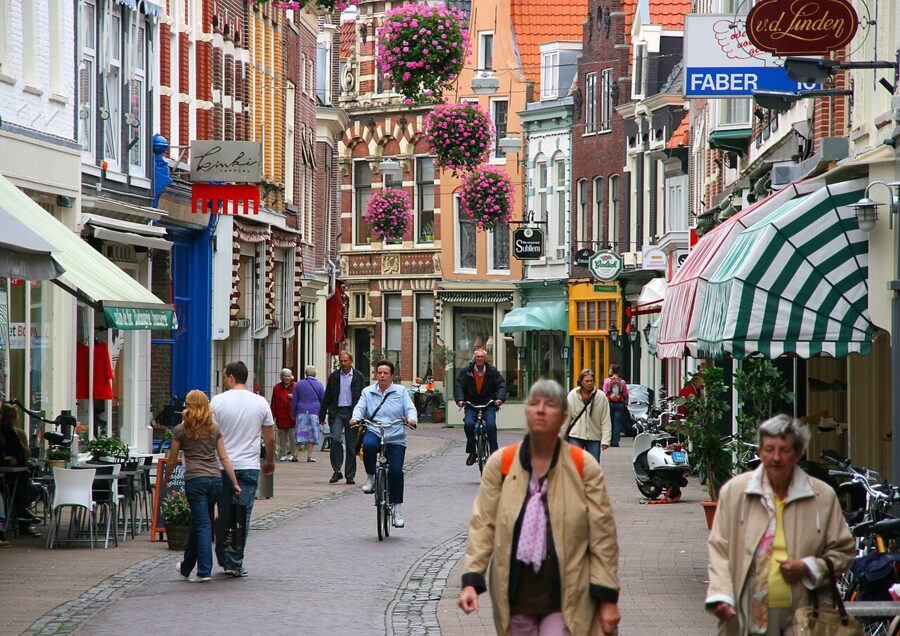

A few that the city’s own Gouden Straatjes directory lists in late 2026: the drugstore A.J. van der Pigge on the Gierstraat, in business since 1849; Wijnkoperij Okhuysen, a wine merchant on the same street; and the silk lampshade studio of Hennie Lasschuit in a 17th-century building at Kleine Houtstraat 46. For the high-street chains, the Grote Houtstraat runs south from the Grote Markt.
Opening hours are up to each shop, so check before you cross town for one. The big event of the shopping year is the Christmas market, from Friday 11 to Sunday 13 December 2026, with nearly 350 stalls across a dozen spots in the center (10:30–20:00 Friday and Saturday, 10:30–19:00 Sunday). Friday is the quietest day, and on the weekend it is better to come by train than try to park.
Zandvoort and the dunes
Haarlem sits a few kilometers inland from the North Sea, and the train keeps going. Sprinters run from Haarlem to Zandvoort aan Zee in about 10 minutes, with one stop at Overveen; off-season they run every half hour, and some run through from Amsterdam Centraal. Zandvoort’s station is about 400 meters from the beach, and the same tap-in, tap-out card covers it.
Check the journey planner before you plan on it. The line closes for engineering works now and then, and in early December 2026 NS ran replacement buses from the Kennemerplein side of Haarlem station, which take about 27 minutes instead of 10.
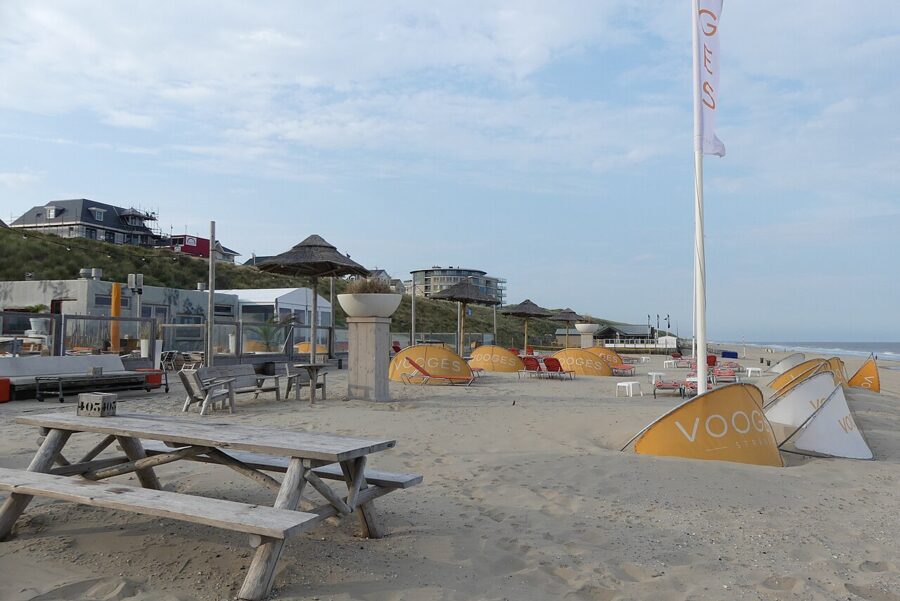

Zandvoort itself is a busy, mostly modern resort, and nobody goes for the architecture. You go for the wide beach, the sea air and a walk along the tide line, and on a warm day it is the beach most people from Amsterdam reach by train. In winter it is a bracing hour, then back to Haarlem for dinner.
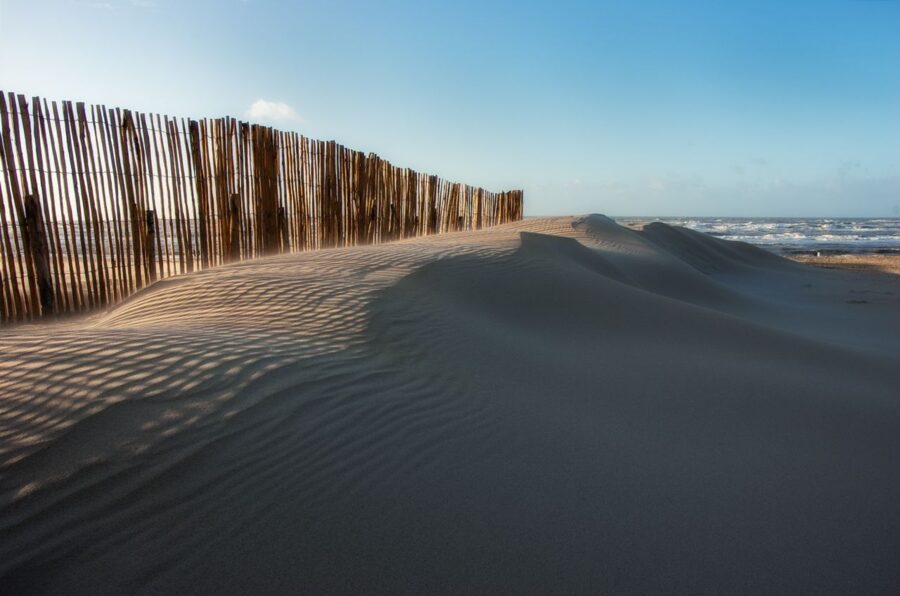
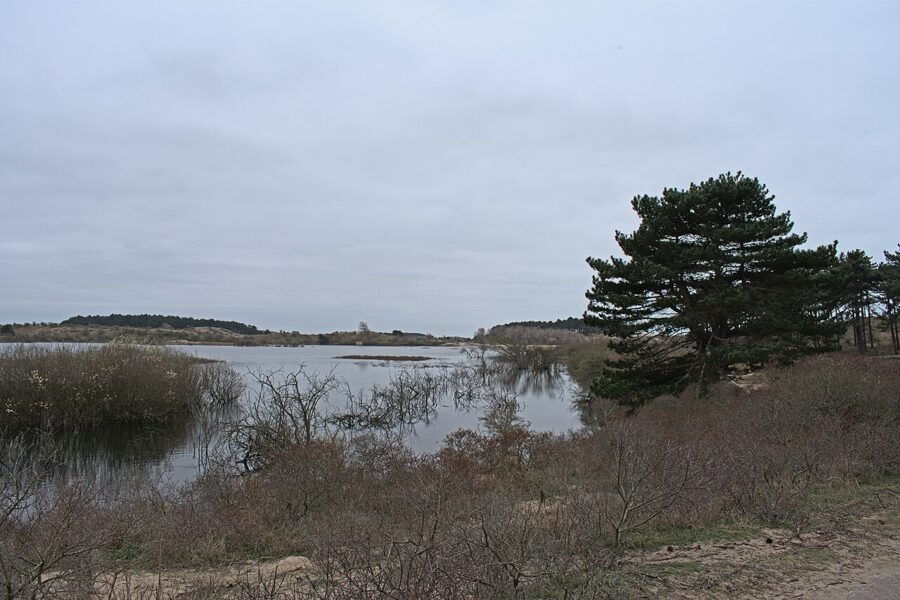
The better half-day, to my mind, is the dunes between Haarlem and the sea. The Kennemerduinen, part of the Zuid-Kennemerland National Park, fill the country between Overveen and the coast: dune valleys, woods, small lakes and trails, with horses grazing parts of it.

If the weather is good, a sensible combination is Haarlem in the morning, the train to Zandvoort for the late afternoon on the beach, and back via Haarlem for dinner. The museums close at 17:00 anyway.
A day in Haarlem, planned
This is the day I would plan for a Tuesday to Saturday, with the Corrie ten Boom tour booked well ahead:
| Time | What |
|---|---|
| Before 09:30 | Train from Amsterdam Centraal; walk Kruisweg, Kruisstraat and Barteljorisstraat to the Grote Markt. |
| 10:00 | Grote of St.-Bavokerk as it opens; the Vleeshal and the square. |
| 11:00 | Teylers Museum, a few minutes away on the Spaarne. |
| 11:50 | Line up outside the Corrie ten Boom House for the 12:00 English tour. |
| 13:15 | Lunch near the Grote Markt; fries from the Spekstraat if you like. |
| 14:15 | Frans Hals Museum, by way of the Proveniershof off the Grote Houtstraat. |
| 16:00 | Molen De Adriaan for the last tour of the day (last one at 16:00 in winter, 16:30 in summer). |
| 17:00 | The Gouden Straatjes, a drink at the Jopenkerk, dinner, and any train back. |
That is a full day, and something can go. If you only have half a day, do the Grote Markt and St Bavo and one of the two museums: Teylers if you like strange old rooms, the Frans Hals Museum if you like paintings. If the Ten Boom tours are sold out, use that slot for the hofjes. On a Monday, swap the museums for the hofjes and the windmill; on a summer Tuesday, stay on for the organ concert in the evening.
Costs for that full day as of late 2026, per adult: €5.50 each way on the train, €4 for St Bavo, €18.50 each for the two museums, free for the Ten Boom House (leave a donation) and €7.50 for the windmill. That is €59.50 (about US$69) before lunch, or €22.50 with a Museumkaart covering both museums.
Then take the train back from that art nouveau platform. Fifteen minutes later you are at Amsterdam Centraal, and the Damrak crowds will look different after a day in a city that does the same things at half the volume.