

Since 1 January 2026 a night in an Amsterdam hotel bed has carried 21 percent VAT instead of 9, and the city adds its own tourist tax of 12.5 percent of the room price on top. A room priced at €200 (about US$232) including VAT picks up another €20.66 at checkout. On 12 November the city council voted to raise its share to 16 percent from January 2027.
None of that money buys you a better street, and the street is the decision that matters. The old city inside the Singelgracht is small enough to cross on foot in under an hour, and the train from Schiphol reaches Centraal in 16 minutes, so almost any address looks central on a map. What changes from one neighborhood to the next is what happens under your window at 01:30 on a Saturday, how many flights of canal-house stairs stand between you and the bed, and whether the corner shop sells souvenir clogs or bread.
The city is not making room for more beds either. No new hotels are being approved, no existing hotel may add a bed, and Amsterdam counted 23.7 million tourist nights in 2025 against a ceiling of 20 million it set itself. Pick the neighborhood first, then the hotel, and book early.
Contents12 parts
- Three questions before you book
- The old center and De Wallen
- The canal ring and the Nine Streets
- The Jordaan and the Haarlemmerbuurt
- The Museum Quarter and Oud-Zuid
- De Pijp
- Plantage, the Amstel and Oost
- Noord, across the IJ
- Zuid, Zuidoost and the edges
- What a night costs in 2026
- Hotels, hostels, B&Bs, holiday rentals and houseboats
- Getting in from Schiphol


Three questions before you book
Answer these three and the map sorts itself out.
What can you spend? The canal ring and the old center are the dearest addresses, Oud-Zuid close behind. De Pijp, Oost and Noord cost less for the same standard of room, and Zuidoost, Sloterdijk and the towns past the city boundary cost less again. Hostels are the only way to sleep in the center cheaply, and even they are not cheap.
How well do you sleep? Light sleepers should keep away from De Wallen, the Leidseplein and the Rembrandtplein, the three places where the city still drinks after midnight. The quietest well-placed beds are in Oud-Zuid, the Plantage and the residential stretches of the Jordaan, where the loudest thing after 23:00 is a bicycle bell.
What did you come for? Museums point to the Museum Quarter, food and markets to De Pijp. Canals, old houses and brown cafés point to the canal ring and the Jordaan. Nightlife points to the center, but a bed ten minutes’ walk from the noise is better than one above it.
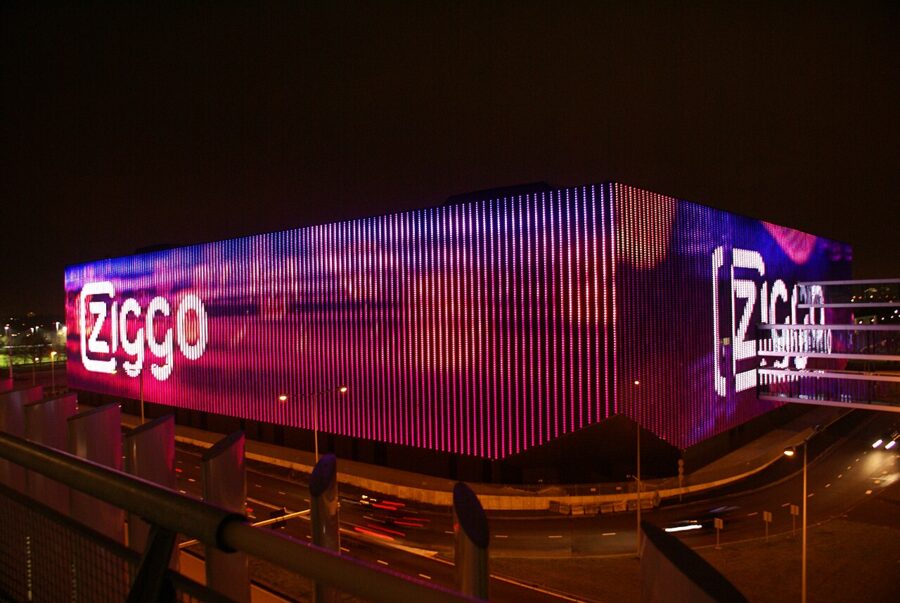
A concert at the Johan Cruijff ArenA or the Ziggo Dome is the one good reason to sleep in Zuidoost.
| If you want | Stay in | Avoid |
|---|---|---|
| A first visit of two or three nights, everything on foot | Canal ring, Jordaan | Zuidoost, the airport |
| Museums and a quiet night | Museum Quarter, Oud-Zuid | De Wallen |
| Food, markets, a week’s stay | De Pijp, Oost | The Damrak |
| Nightlife on the doorstep | Edges of the old center, near the Leidseplein | Rooms facing the squares themselves |
| Space for less money | Noord, Oost | The Nine Streets |
| A concert or a match | Zuidoost, Zuid | Noord (a train and a ferry at midnight) |
The old center and De Wallen
The old center is the oval of streets between Centraal Station, the Dam and the Amstel: the Damrak, the Nieuwendijk, the Warmoesstraat, the Zeedijk and the Nieuwmarkt, with De Wallen on the canals east of the Damrak. Everything is in walking distance, which is the case for staying here, and everyone else knows that too, which is the case against. The train from the airport stops at the end of the street, and the Dam, the Royal Palace and the Bloemenmarkt are minutes away.
At night the old center is two places. The western half around the Spuistraat and the Nieuwezijds Voorburgwal quietens down like any shopping district. The eastern half is the Red Light District, where the windows stay lit until 06:00 and the streets fill from about 21:00 to 01:00 on weekends. Bars in the core of the district must stop letting people in at 01:00 and close at 02:00 on weekend nights under a decision that runs to 1 April 2027, and the mayor’s own figures show the streets emptying fast after that.
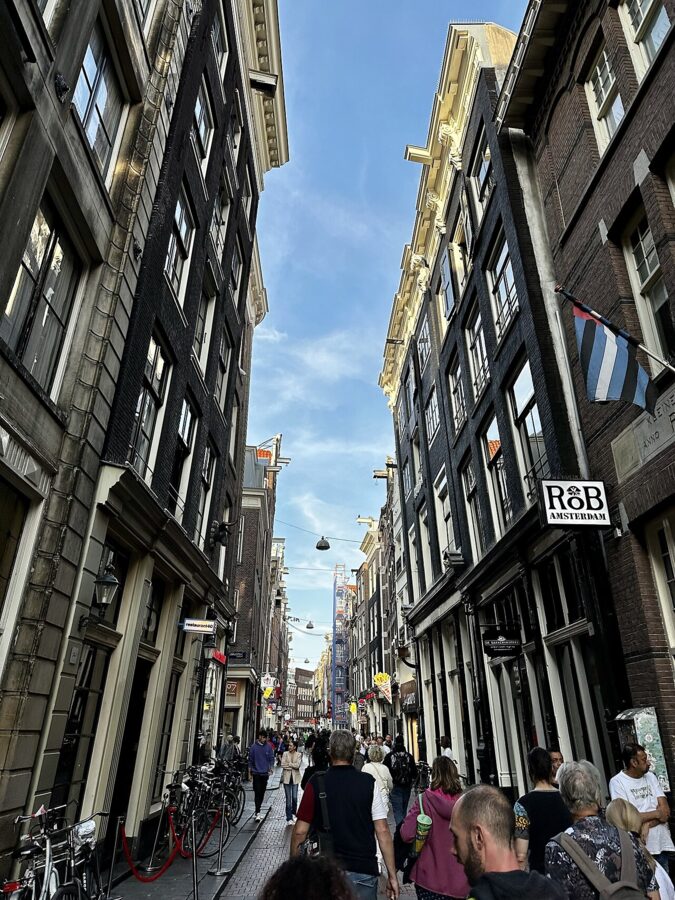

Emptying fast is not the same as quiet. Hotel rooms on the Warmoesstraat, the Damstraat and the canals of the Wallen face streets where people shout, sing and wheel suitcases over cobbles until the small hours. Since May 2023 nobody may smoke cannabis in the street in the old center, with a €100 (about US$116) fine after a warning, and drinking in the street is banned too; the tolerance policy behind the coffeeshops has its own guide. The rules have made the nights calmer, not a front room on the Oudezijds Achterburgwal a good place to sleep.
The Warmoesstraat will be worse for a while. The city expects to start rebuilding the street in January 2027 and to spend about two years on it, and the businesses there are still asking how deliveries, rubbish collection and access will work while it lasts. A hotel on the street can tell you which stretch is being dug in which month.
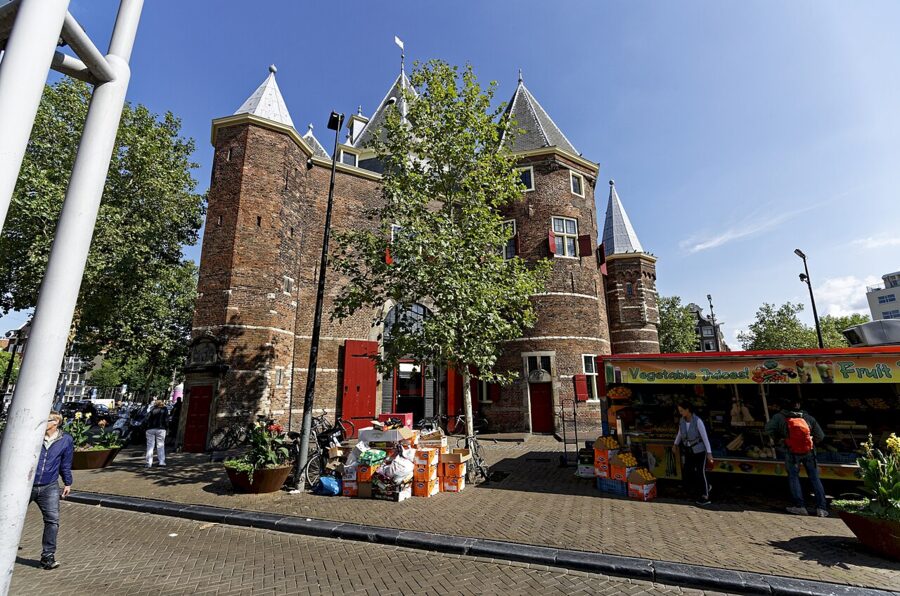

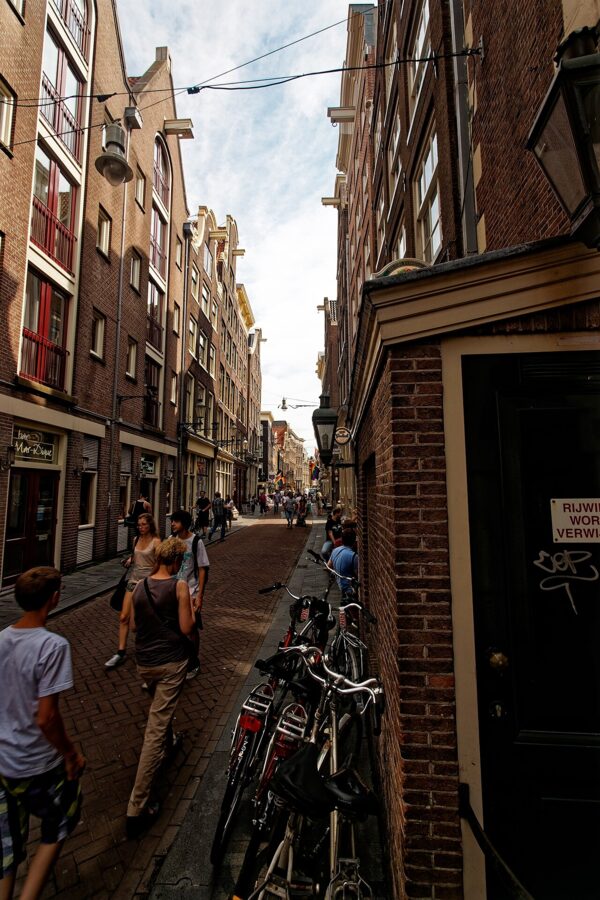

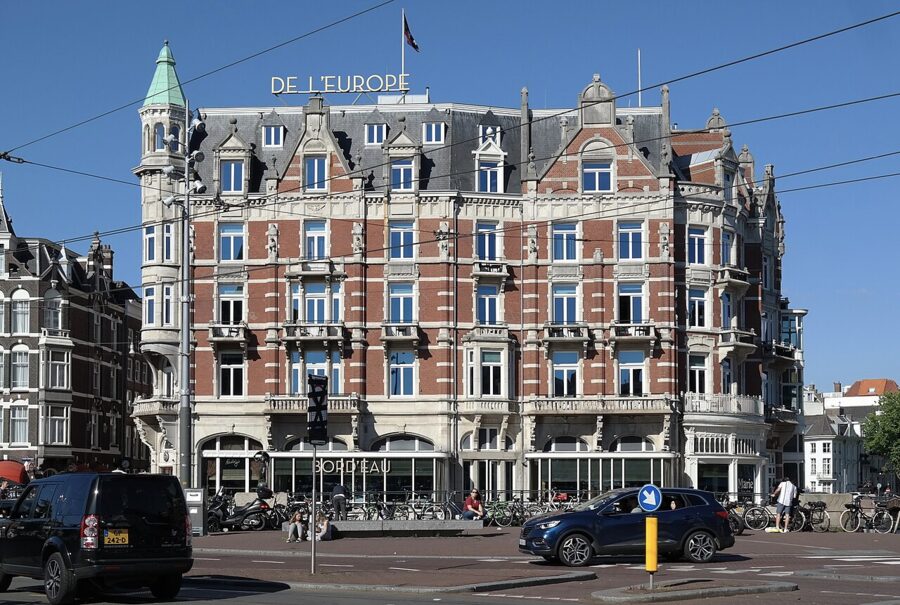
Who it suits: a short first visit, an early train, a night out you intend to walk home from. Two hotels on this site show the range. Hotel Sint Nicolaas is a small hotel a few minutes’ walk from Centraal, and Hotel de l’Europe is the grand hotel on the Amstel by the Munttoren, at the opposite end of the old center and of the price scale. The best rooms in the area face the water: the Amstel, the Oudeschans or the Oosterdok, not the shopping streets.

Who should not stay here: light sleepers, anyone traveling with young children who go to bed at eight, and anyone who has come for canals and quiet. For those, the same money buys a room three canals west.
The canal ring and the Nine Streets
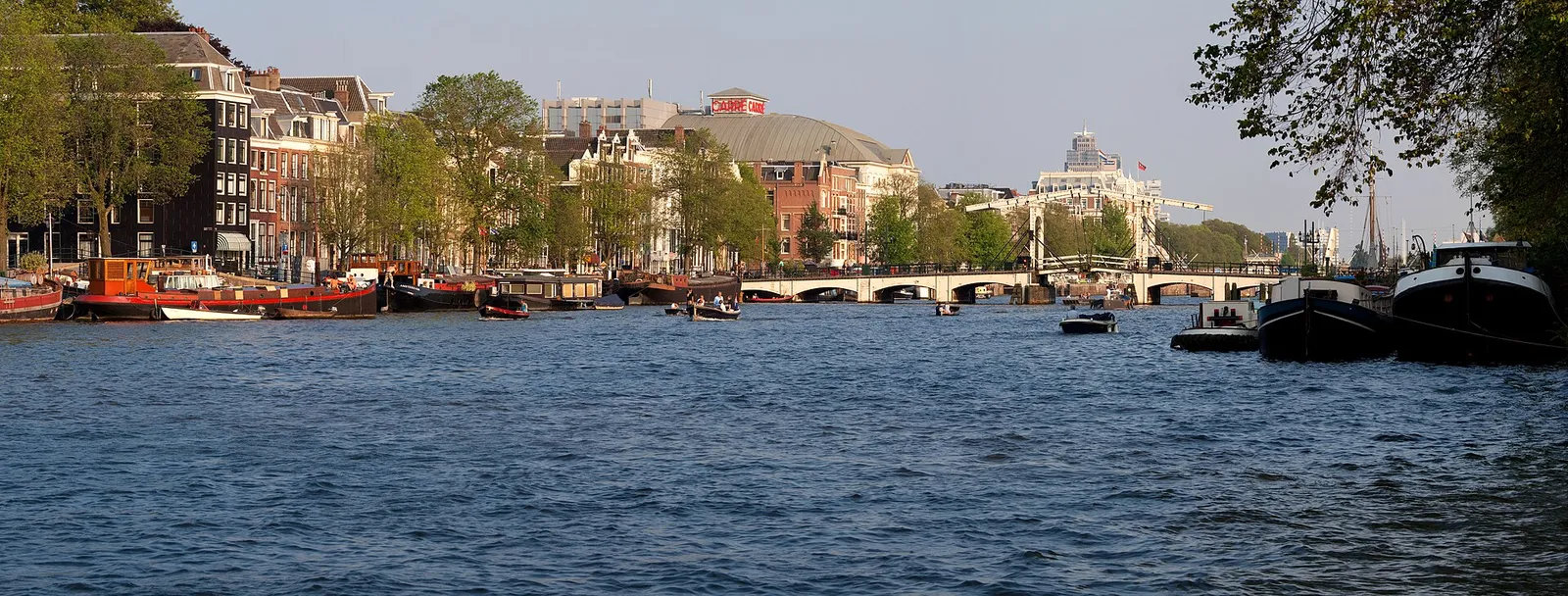
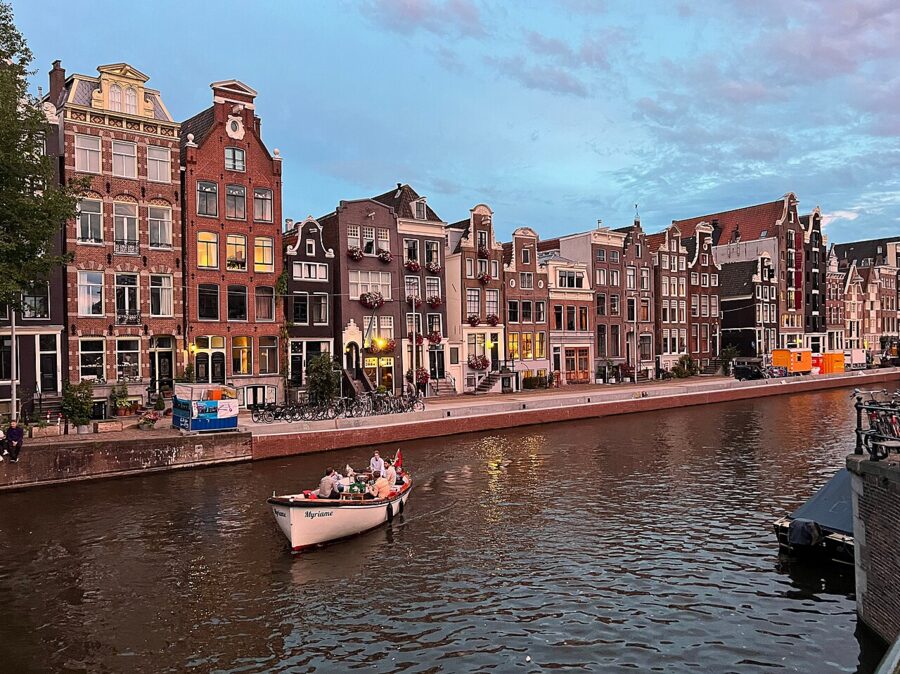
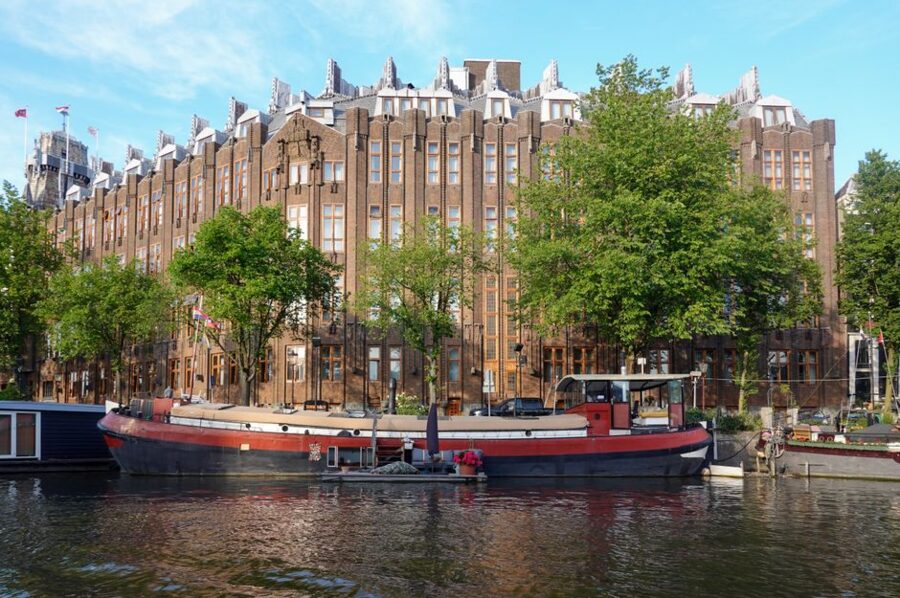
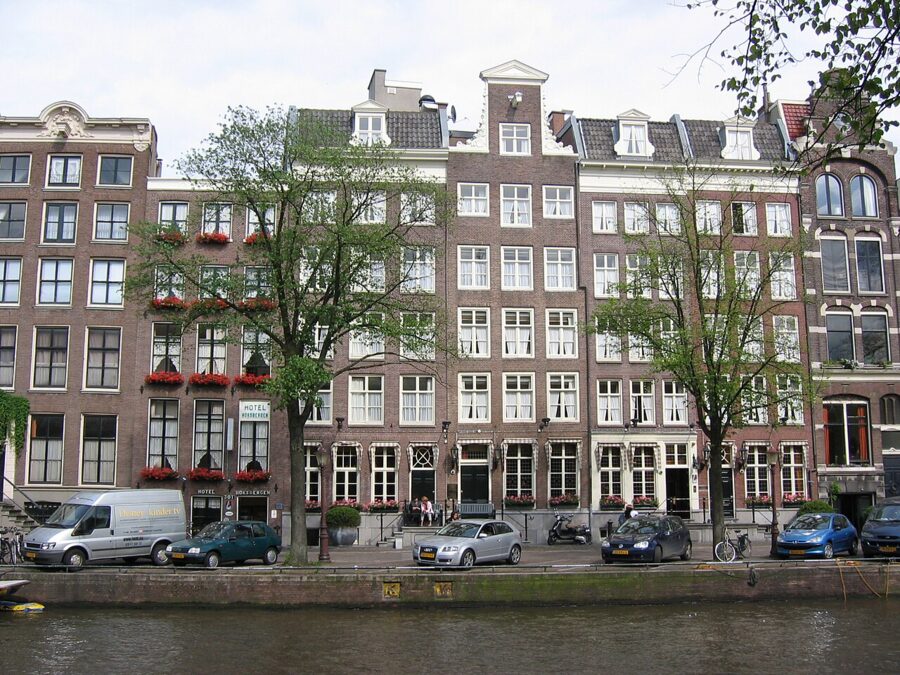
The Grachtengordel is the half-moon of the Singel, the Herengracht, the Keizersgracht and the Prinsengracht, dug in the seventeenth century for the merchants who had outgrown the old town, and on the UNESCO World Heritage list since 2010. Most of its houses are still houses, and many of its hotels occupy two or three of them knocked together. Expect a steep staircase, a small room with a big window, and a view that makes up for both.
The Negen Straatjes (Nine Streets) are the short cross streets that cut between the canals from the Raadhuisstraat down to the Leidsegracht: small shops, galleries, cafés and lunch rooms on the ground floors, apartments above. This is the most pleasant part of the city to come home to, and the ring around it is quiet at night except where it meets the two party squares at its southern edge.
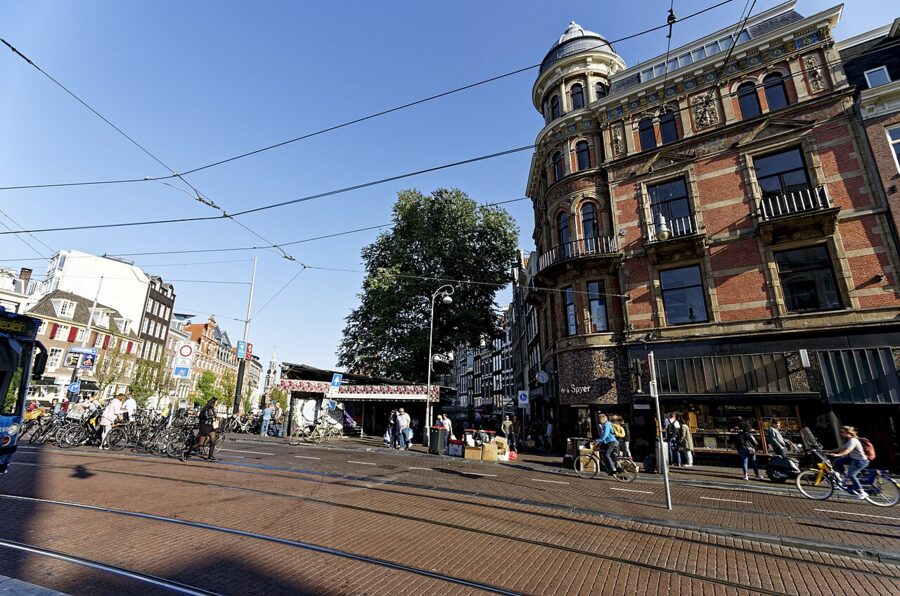

Hotel Estheréa fills canal houses at Singel 303–309, a short walk from the Dam and the Bloemenmarkt. Hotel Nadia is a small family-run two-star on the corner of the Raadhuisstraat, where the street crosses the canals at the top of the Nine Streets; it has no elevator, so ask for a low floor if stairs are a problem. A beer at Proeflokaal Arendsnest on the Herengracht, which pours only Dutch beer, is about as loud as an evening here gets.


The Leidseplein and the Rembrandtplein
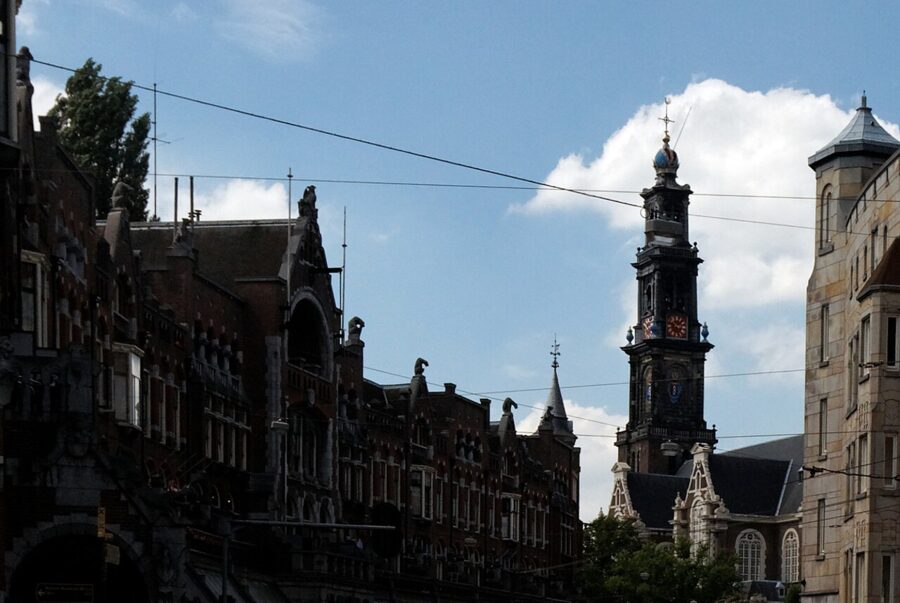
The ring has two noisy corners. The Leidseplein, at the southwest end, is clubs, theaters and terraces, with the Stadsschouwburg on its north side and the Melkweg and Paradiso around the corner. The Rembrandtplein, east of the Amstel bend, is bars, cafés and dance floors around a statue. Both run late and both are where the night buses stop when the trams finish around 00:30, as the nightlife guide explains.
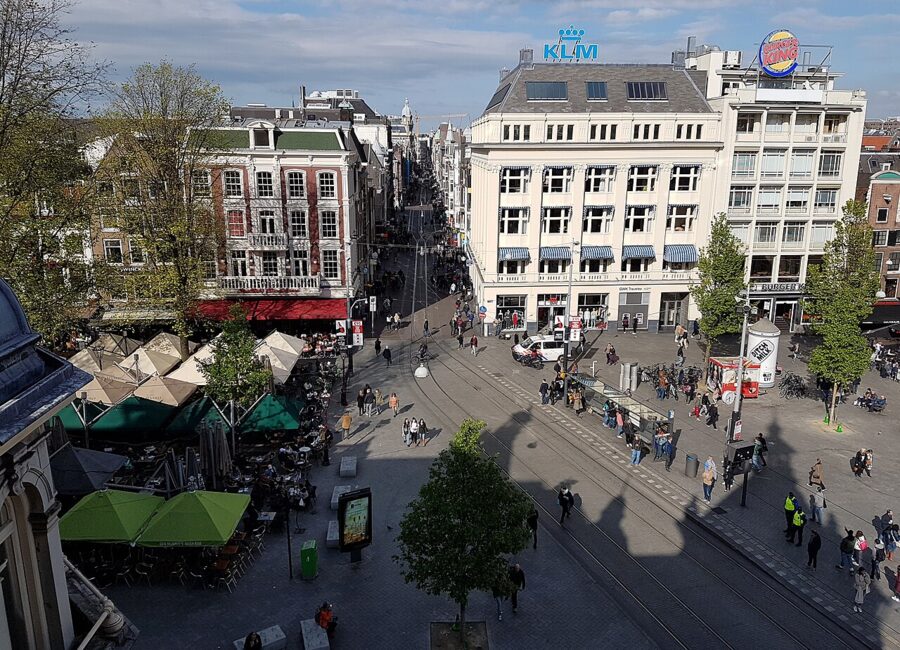

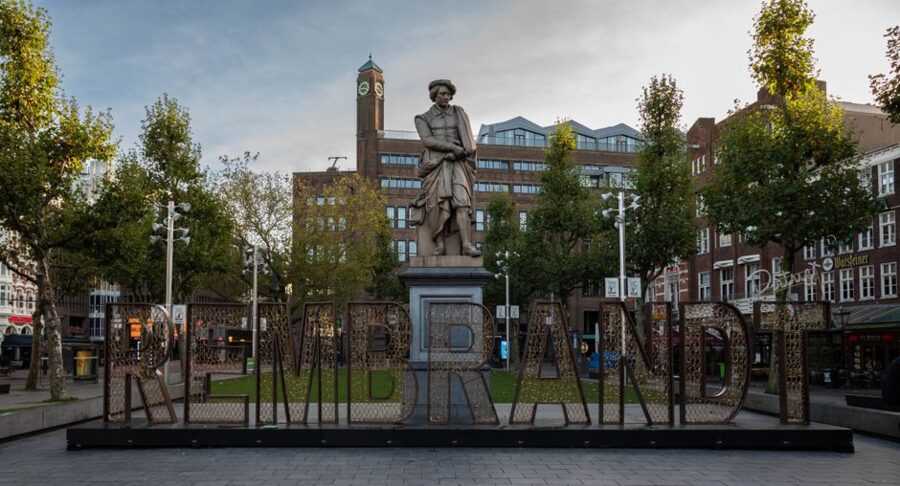
Staying on either square only makes sense if the night is the point. Amsterdam Hostel Leidseplein is a budget bed on the square’s doorstep, for anyone who wants exactly that. A room two canals away, on the Keizersgracht or the Prinsengracht, gets you there in five minutes and back to a quiet street.
Getting around: metro 52 stops at Rokin and Vijzelgracht on the eastern side of the ring, and trams cross it on the main streets running out from the Dam. From Centraal it is a 15 to 25 minute walk to most of the ring, which is how most people do it once.
Who it suits: a first visit, couples, anyone who wants the postcard outside the window. Who should not: anyone with a heavy suitcase and a bad knee, and anyone on a tight budget. Three of the eight districts where holiday rentals are now capped at 15 nights a year, Grachtengordel-West, Grachtengordel-Zuid and De Weteringschans, lie in or along the ring, so legal private rentals here are scarcer than they were.
The Jordaan and the Haarlemmerbuurt
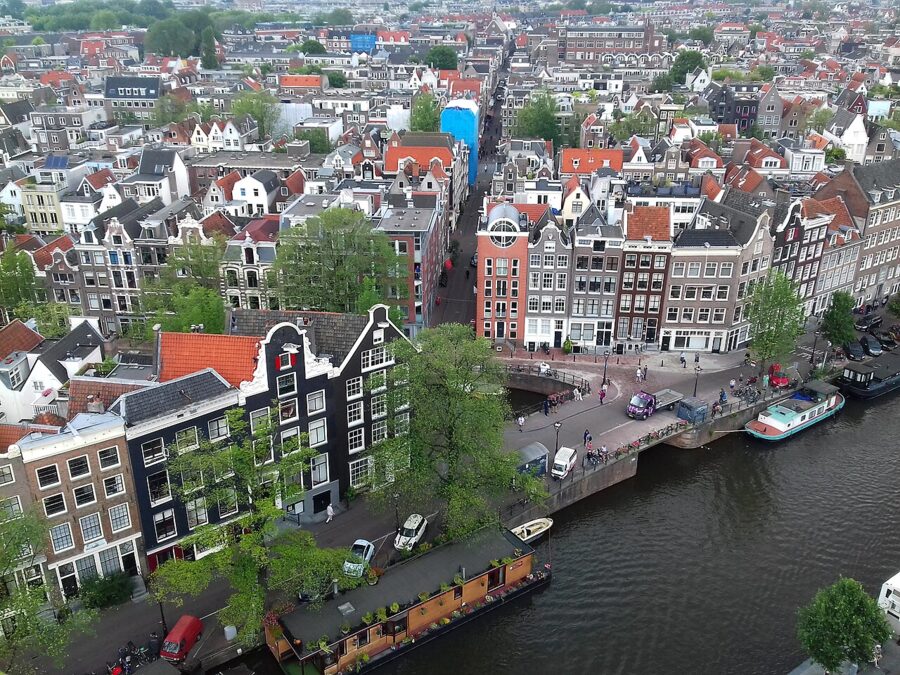
West of the Prinsengracht, the Jordaan was built for the craftsmen, workshops and newcomers the canal ring had no room for. The houses are lower and plainer than on the big canals, the streets are named after flowers and trees, and the small canals, the Bloemgracht, the Egelantiersgracht and the Lauriergracht, are the quietest water in the center. The working class has long since been priced out. What remains is a very pretty residential district with brown cafés on its corners.
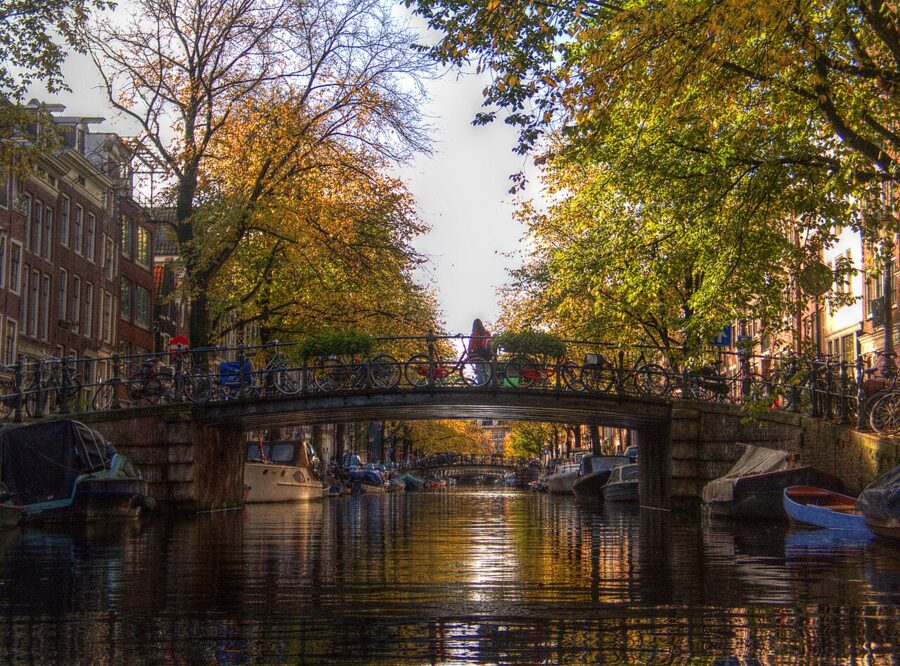

At night it is quiet in the residential streets and lively in a mild way along the Westerstraat, the Rozengracht and around the Noordermarkt, where the cafés have terraces. The Noordermarkt holds its flea market on Monday mornings and its organic farmers’ market on Saturdays, and the Anne Frank House is on the Prinsengracht at the Jordaan’s eastern edge.
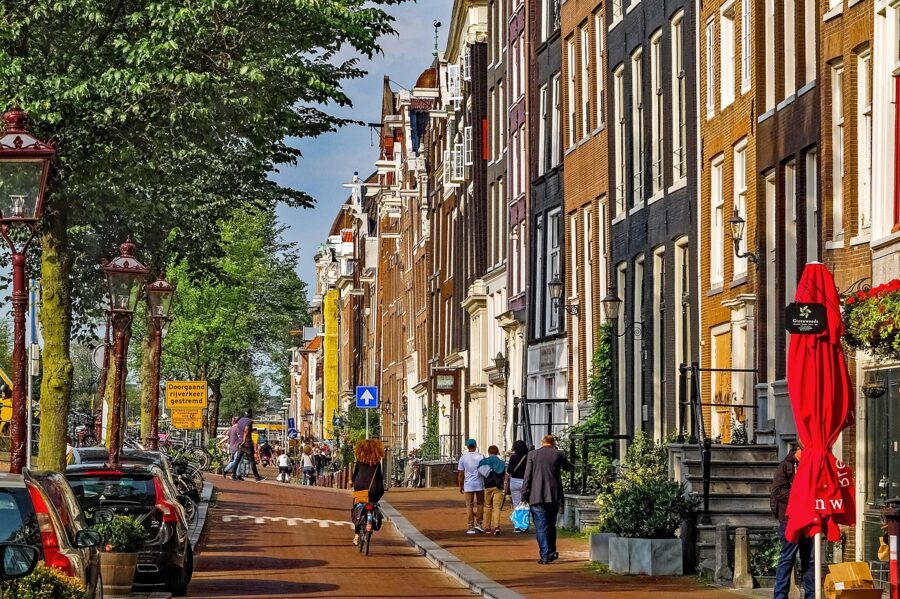
North of the Jordaan, across the Brouwersgracht, the Haarlemmerbuurt runs along the Haarlemmerstraat and the Haarlemmerdijk, one long shopping street of delis, bakeries, coffee bars and lunch places that ends at the Haarlemmerpoort. It starts within ten minutes’ walk of Centraal, which makes it the most practical part of this side of town for an early train, and it has fewer of the souvenir shops that line the Damrak.
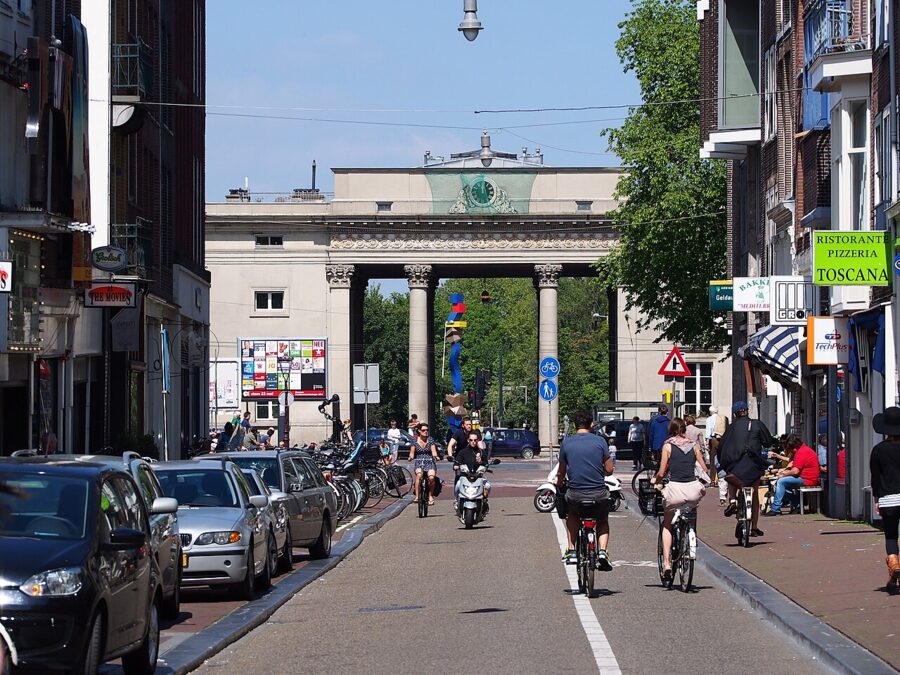
There is no metro. Trams run along the edges of the Jordaan, and Centraal is 10 to 20 minutes on foot depending on which end you are in. Prices sit just below the canal ring and well above De Pijp. The Jordaan and the Haarlemmerbuurt are both on the 15-night list for holiday rentals since 1 April 2026, so the flats offered there are fewer and must show a registration number.
Who it suits: couples, repeat visitors, anyone who wants the city to feel lived in. Who should not: people who want a big modern room with an elevator and a bar downstairs.
The Museum Quarter and Oud-Zuid
South of the Singelgracht the city changes gear. Oud-Zuid was built from the end of the nineteenth century for the well-off, with wide streets, big brick houses and the Vondelpark down the middle, and the Museumkwartier at its eastern end holds the Rijksmuseum, the Van Gogh Museum, the Stedelijk and the Concertgebouw around one long lawn. The guide to Amsterdam’s museums covers the tickets and times.
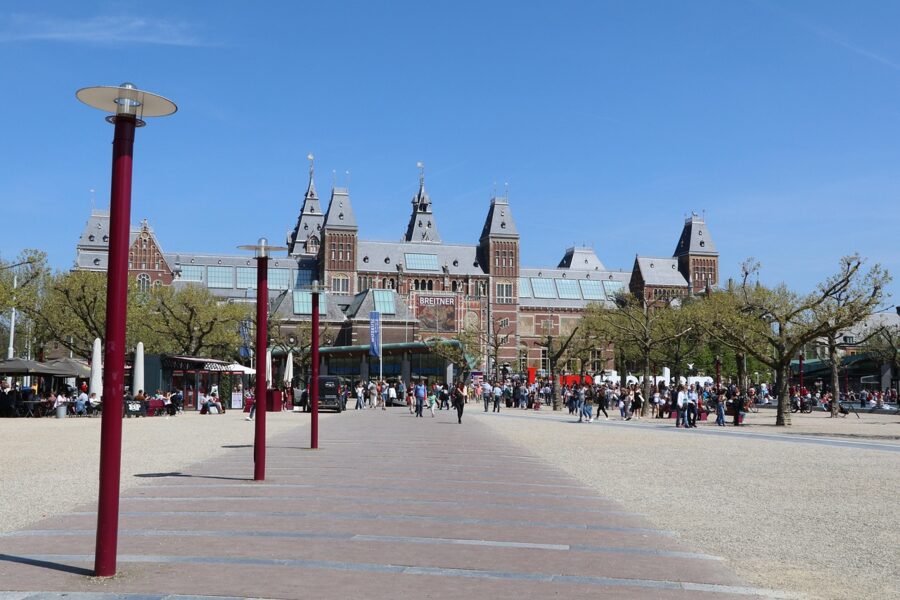
At night it is the calmest well-placed part of the city. The P.C. Hooftstraat is designer shops that are shut by evening, the side streets are residential, and the nearest noise is the Leidseplein, about ten minutes’ walk away.
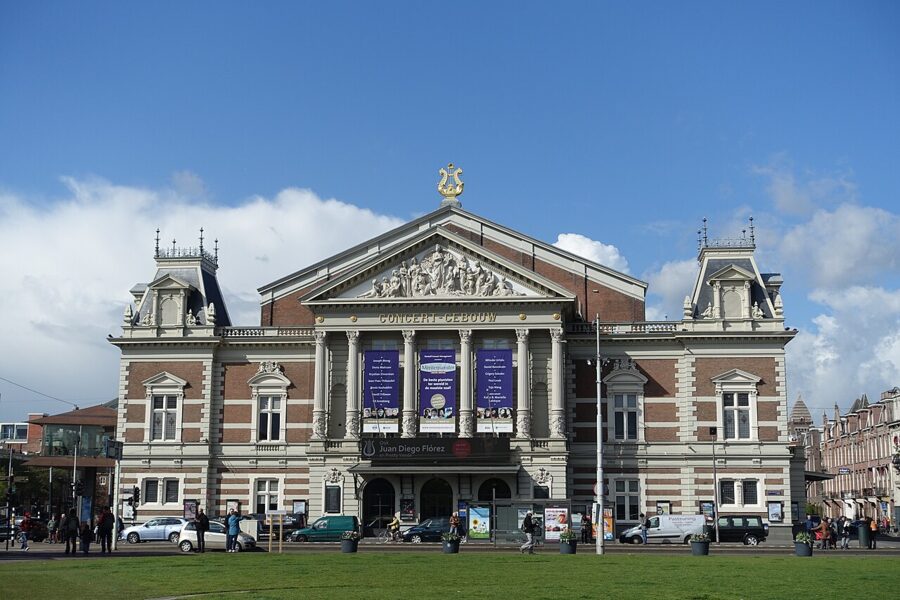

The Apollo Museumhotel at the corner of the P.C. Hooftstraat now trades as the Leonardo Hotel Amsterdam Museum Quarter, and by its own measure stands 200 meters from the Rijksmuseum and 260 from the Vondelpark.
Rooms here tend to be larger than in the canal houses, and many hotels have elevators. They are not cheap, but they are cheaper than the canals for the same standard, and prices drop a long way out of season. Hotel Aadam Wilhelmina, on the Koninginneweg west of the park, was quoting €70 for a Tuesday in January 2027 and €188 for a Saturday in late April.
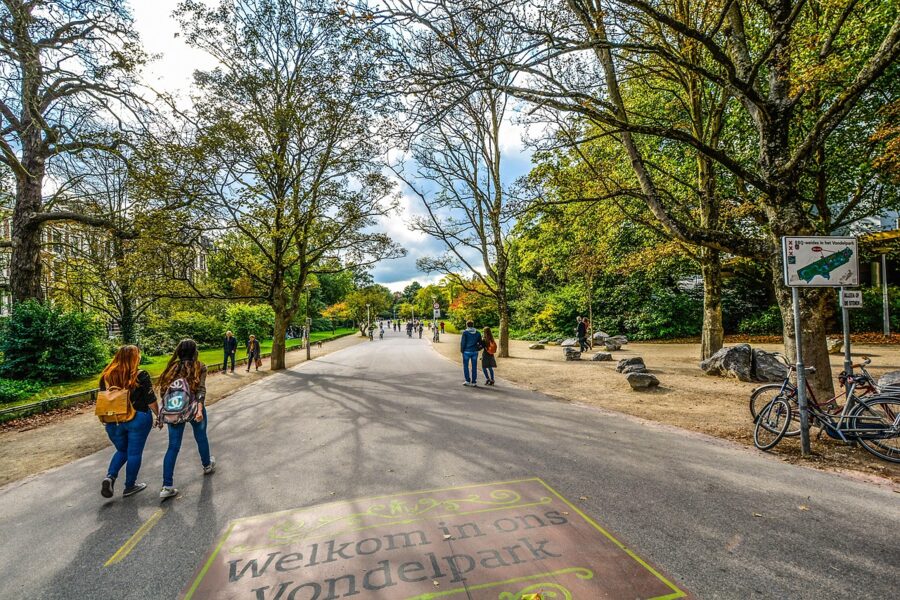
Getting there: bus 397 from Schiphol stops at the Museumplein and the Rijksmuseum without a change, which makes this the easiest district to reach from the airport with luggage. Trams stop at Museumplein, and metro 52 stops at Vijzelgracht, under ten minutes’ walk from the Rijksmuseum.
Who it suits: museum trips, families, anyone who wants a quiet street and a park for a morning run. Who should not: anyone who wants old canals outside the window or a bar on the corner at midnight.
De Pijp
De Pijp was thrown up quickly in the late nineteenth century as housing for workers, in long straight streets of four-story blocks named after painters: Ferdinand Bol, Gerard Dou, Jan Steen, Van Ostade. It filled up with students, migrants and artists in the twentieth century and with restaurants in the twenty-first, and it is now the place most Amsterdammers would send a friend who asks where to eat.
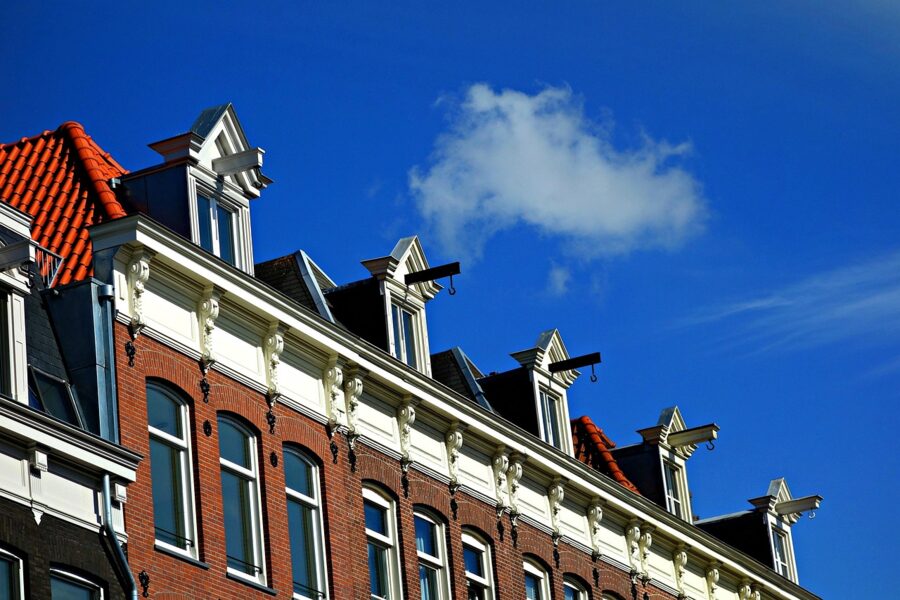
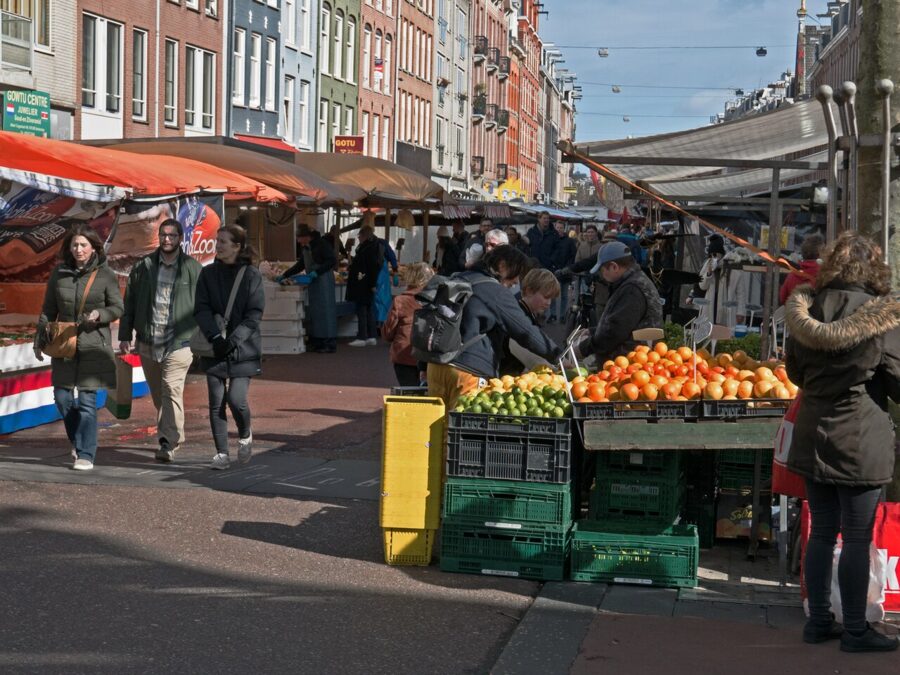
The Albert Cuypmarkt runs down the middle of it, Monday to Saturday from 09:30 to 17:00, and the cafés, Surinamese and Indonesian places, bakeries and bars spread out on both sides. The Sarphatipark gives you somewhere green at the end of the street. At night the main streets have bars and restaurants open late, but this is a neighborhood that goes out to dinner rather than to clubs, and the side streets are residential.
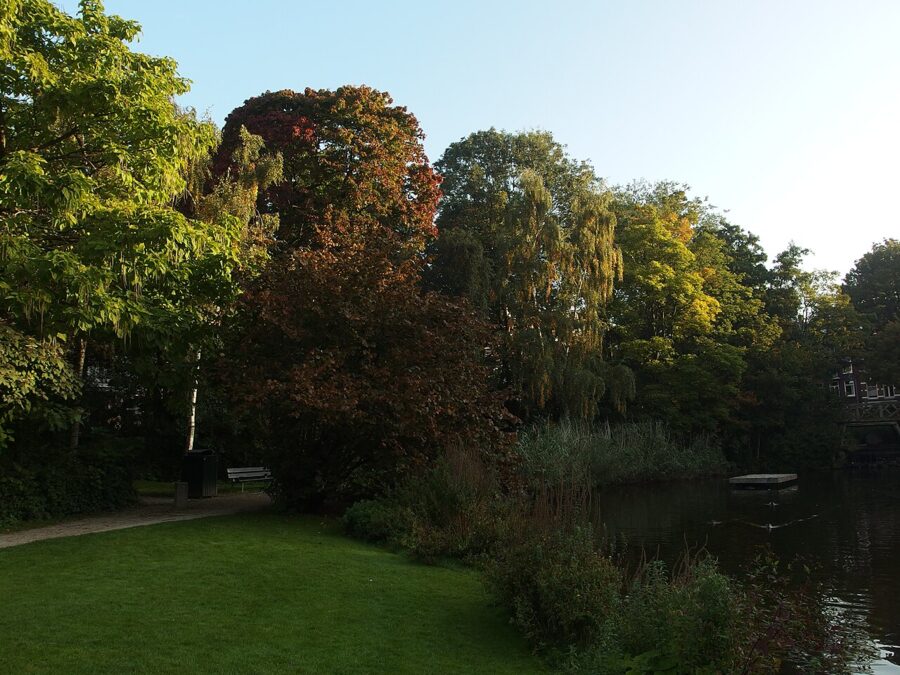

Metro 52 stops at De Pijp, three stops from Centraal and two from Amsterdam Zuid, and the Rijksmuseum is a 15-minute walk across the Singelgracht. The Bicycle Hotel is a budget address in the middle of the neighborhood. Prices are a notch below the canal ring and Oud-Zuid, though the Oude Pijp, the northern half, is now on the 15-night list for holiday rentals too.
Who it suits: a stay of four nights or more, food trips, couples and friends who want to eat out every night. Who should not: anyone who wants a canal view, or a hotel with grand public rooms.
Plantage, the Amstel and Oost
East of the old center, across the Amstel, the Plantage was laid out as pleasure gardens in the seventeenth century, built up in the nineteenth, and still feels green. Artis zoo, the Hortus Botanicus and the Wertheimpark sit among wide streets of villas and apartment blocks, with the Waterlooplein market and the old Jewish quarter on its western edge. It is the quietest part of the center, and one of the least visited.
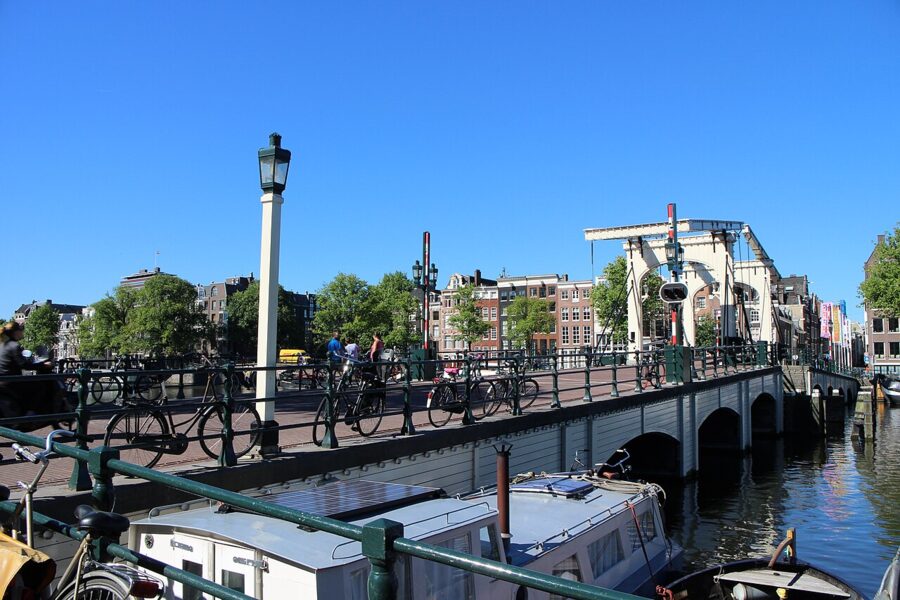

The old The Bridge Hotel on the Amstel near the Magere Brug has closed; its buildings are being turned into a larger hotel, Amstel 111, due to open in 2027. The stretch between the canal ring and the Plantage is still a good base: the Rembrandtplein is a short walk one way and Artis the other, and metro 51, 53 and 54 stop at Waterlooplein and Weesperplein.
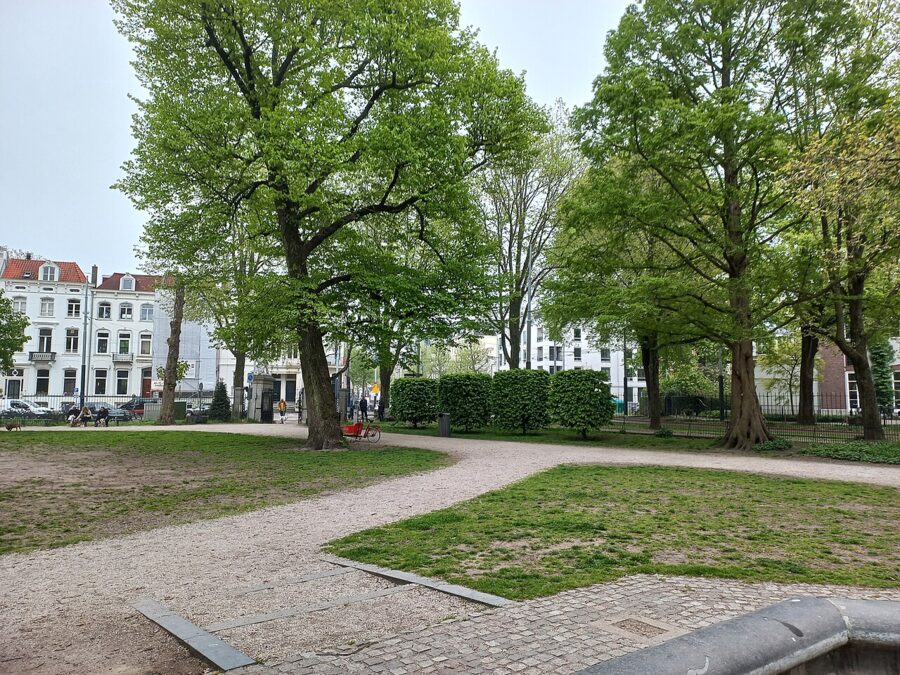

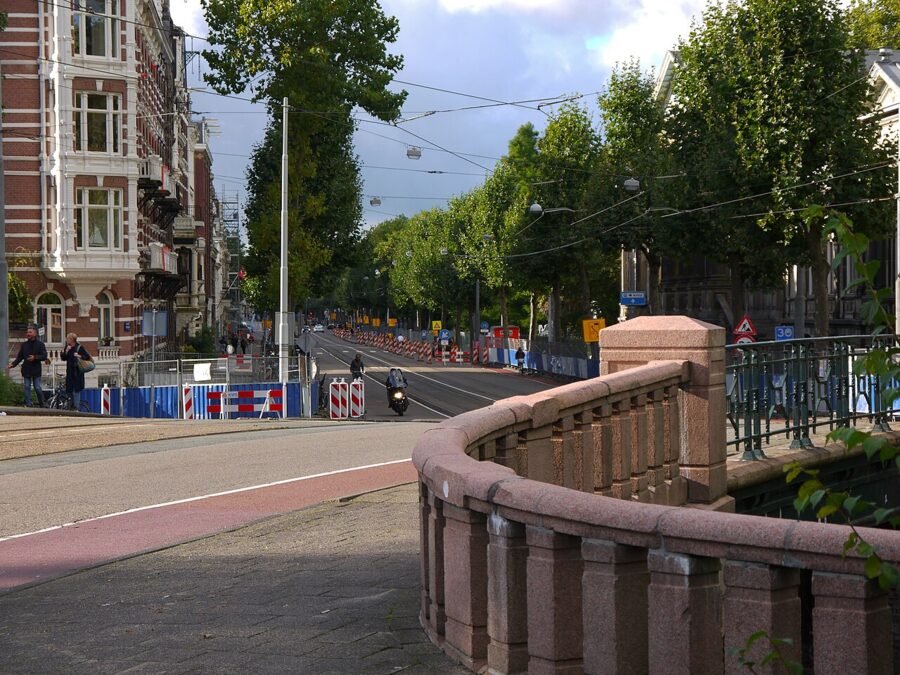
Further east, Oost is a big residential district of nineteenth- and twentieth-century blocks around the Oosterpark, with the Dappermarkt, a run of neighborhood cafés and restaurants, and hotels that cost less than anything inside the canal ring. North of it, the Eastern Docklands turned old harbor islands into a district of modern apartments and waterside paths, with the Oosterdok and NEMO at the end nearest the center.
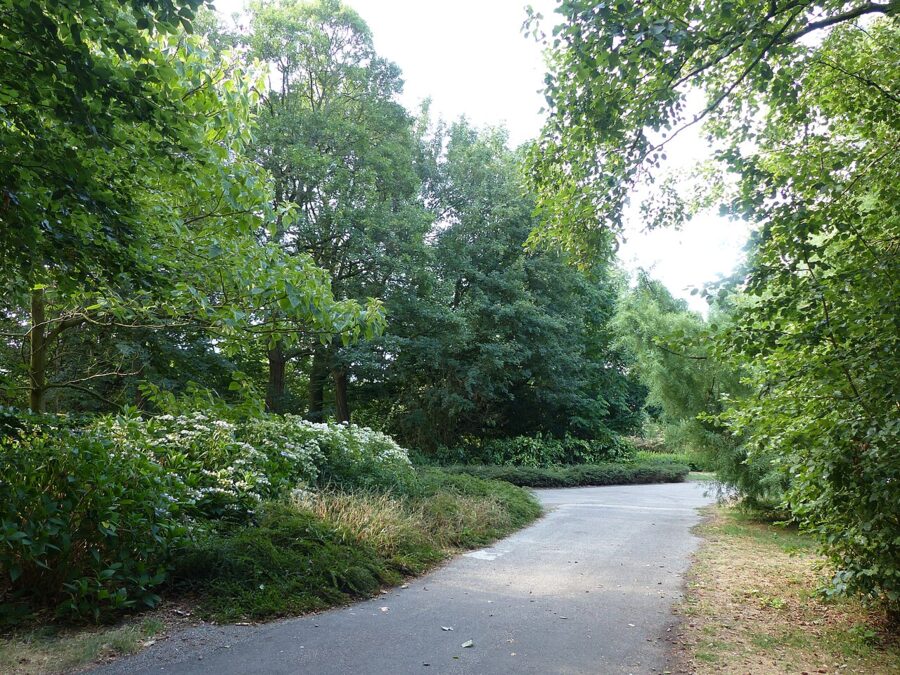

Getting around: trams run into the center from Oost in 10 to 15 minutes, Amsterdam Muiderpoort and Amsterdam Amstel stations have NS trains, and Amstel and Wibautstraat have the metro. Who it suits: anyone staying a week, families, people who want a park and a normal Amsterdam street. Who should not: a first-timer with two nights who wants to walk everywhere.
Noord, across the IJ
Behind Centraal Station the free GVB ferries cross the IJ to Amsterdam-Noord. Ferry F3 to Buiksloterweg runs around the clock and takes a few minutes, F2 goes to the IJplein, and F4 runs further west to the NDSM shipyard and keeps going into the night. Metro 52 also crosses under the water to Noorderpark and Noord. The guide to Amsterdam Noord covers what is on the other side.
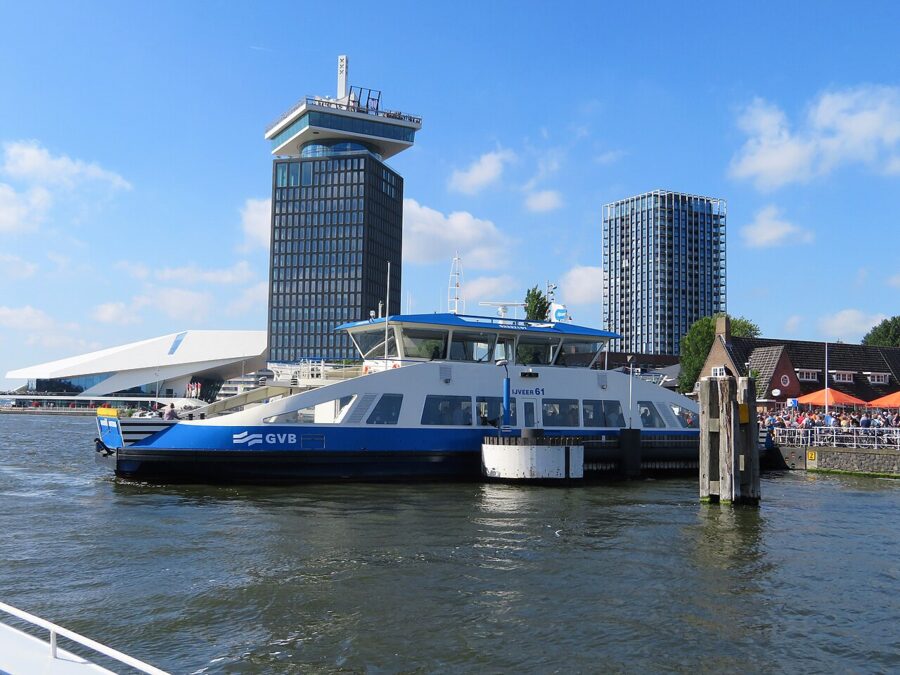



Noord was shipyards and factories until the 1980s and is now flats, studios, the Eye Filmmuseum and the A’DAM Toren at the Buiksloterweg landing, and old dike villages further out. The hotels are mostly newer and bigger than in the center, and they usually cost less: on the same Tuesday night in April 2027, Bob W Amsterdam Noord was quoting €103 and De Roode Leeuw on the Damrak €277.
At night Noord is quiet except around the NDSM and the A’DAM Toren. The catch is the crossing: in rain, at 02:00, with a ferry or a metro to wait for, a room on the north bank feels further from the center than it looks. Who it suits: anyone happy to trade a few minutes for space and price, repeat visitors, anyone going to a festival or event in Noord. Who should not: a first-timer who wants to step out of the door onto a canal.
Zuid, Zuidoost and the edges
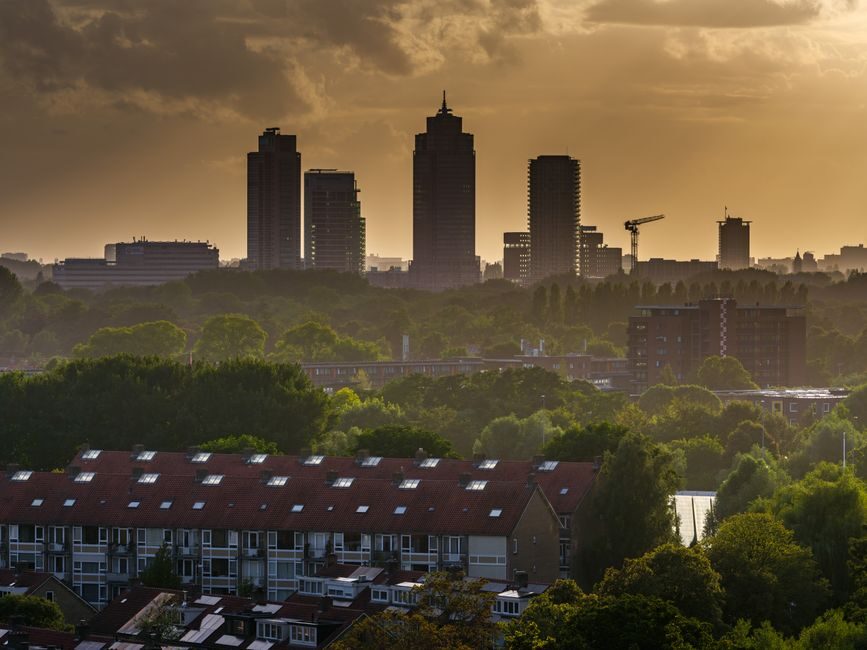
Amsterdam Zuid, around the station of that name, is the Zuidas business district: office towers, the RAI convention center one metro stop away, and a lot of business hotels. They price for weekday business demand and can be cheaper at weekends, and the station is six minutes from Schiphol by train. Metro 52 runs from Zuid through De Pijp and the canal ring to Centraal.
Zuidoost is the Bijlmer and the arenas: the Johan Cruijff ArenA, the Ziggo Dome and AFAS Live all stand around Amsterdam Bijlmer ArenA station, which has NS trains and metro 50 and 54. On a concert night, staying here saves a crush on the trains back. Hostelle, a women-only hostel on the Bijlmerplein, is still taking bookings and is a short walk from the station. Away from event nights the area has little to keep you, and the center is 15 to 20 minutes away by metro or train.

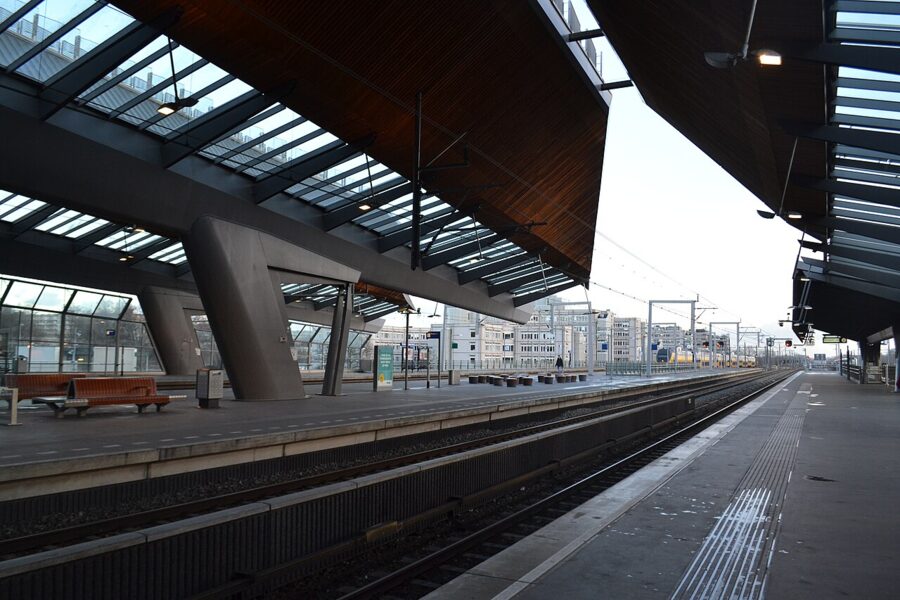

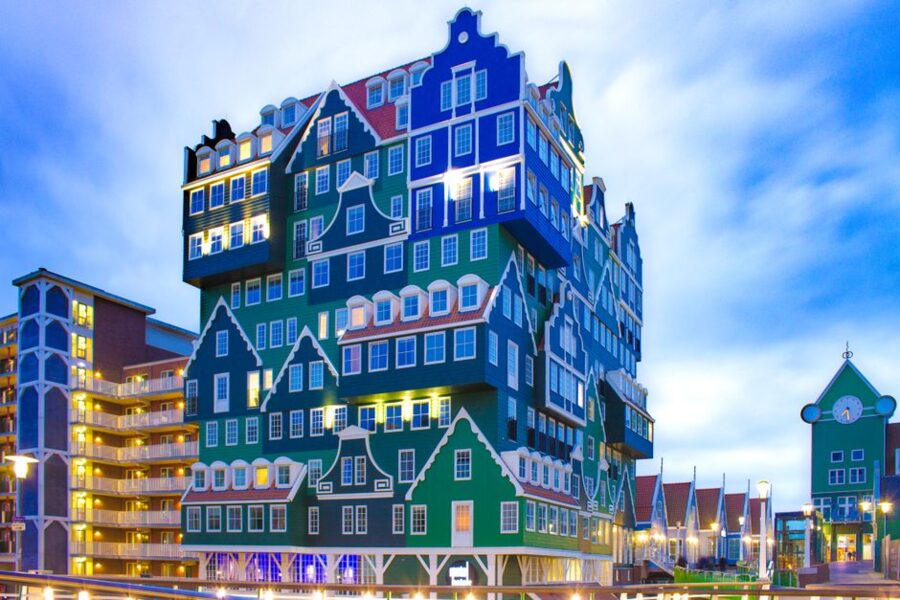
Further out, Sloterdijk in the west is an interchange station with chain hotels around it, a few minutes by train from Centraal. Hotels near Schiphol suit an early flight and nothing else. Towns past the city boundary set their own tourist tax, so a hotel in Amstelveen, Zaandam or Diemen is charged at that town’s rate rather than Amsterdam’s 12.5 percent; Zaandam is also where Bonkerk Tattoo works. Check the last train back before you book any of them.
What a night costs in 2026
Amsterdam hotel prices swing hard by season and by day of the week. Spring is the dear time: tulip season, the long weekends of April and May, and King’s Day on 27 April. Autumn midweek, the congress season, is the other expensive time. Midwinter, apart from Christmas and New Year, is cheap by Amsterdam standards, and summer midweek has softened: the hotel data firm CoStar forecast that falling room rates in 2026 would be concentrated in the summer months, as the new VAT bites into leisure demand.
For a sense of the range, these are the rates offered on 27 November 2026 for one night in a double room, across the first page of a hotel search for the whole city. They include hotels on the edges and in Zaandam, so the center runs higher.
| Night (2026–2027) | Cheapest offered | Middle of the list | Dearest offered |
|---|---|---|---|
| Tuesday 19 January | €35 | about €75 (about US$87) | €199 |
| Tuesday 20 April | €84 | about €135 | €438 |
| Saturday 24 April | €112 | about €185 | €415 |
| Tuesday 13 July | €67 | about €120 | €317 |
| Tuesday 12 October | €76 | about €165 | €944 |
| New Year’s Eve, 31 December | €166 | about €280 (about US$325) | €1,192 |
The same hotel can double. De Roode Leeuw on the Damrak was offering €142 for a Tuesday in January, €277 for a Tuesday in April and €219 for a Tuesday in July. The cheap January nights are real, and so is the €1,000 New Year’s Eve.
The tourist tax and the VAT, as of 2026
Amsterdam’s tourist tax is 12.5 percent of the price of the night, calculated on the room price before VAT, with no ceiling. It applies to hotels, B&Bs, holiday rentals, campsites and boats alike. On top of it, the national VAT on accommodation rose from 9 to 21 percent on 1 January 2026; breakfast, the sauna and the pool stay at 9 percent, which is why some hotels said they would move part of the price from the room to breakfast.
The city council decided on 12 November 2026 to raise the tourist tax to 16 percent from 2027, and the governing coalition’s stated aim is 20 percent by 2031. On a €200 room that is €26.45 of city tax a night from January, against €20.66 now. Check whether the price you are shown includes it; some booking pages add it as a separate line at the end. Cruise and river-cruise passengers who stop for the day pay a separate day-tourist tax of €15 (about US$17) per person in 2026.
Why Amsterdam hotels cost what they do
The city has spent a decade trying to reduce the number of people who sleep in it. Its tourism bylaw, the Verordening op toerisme in balans, sets a ceiling of 20 million tourist nights a year and obliges the city to act when the count goes over. The count was 23.7 million in 2025, up from 22.9 million the year before.
The 2024 hotel policy stopped new hotels in almost the whole city, and since November 2024 a bed stop has barred existing hotels from adding rooms or beds. The last projects that already had permission are still opening, but the supply is close to fixed while demand is not. Add the tax rises and the squeeze on private rentals below, and the price of a room in a busy week makes sense, even if it does not feel fair.
Hotels, hostels, B&Bs, holiday rentals and houseboats
Hotels are most of the market and the simplest choice. Canal-house hotels trade elevators and space for setting; newer hotels in Oost, Noord and Zuid have both, with less to look at. Hostels range from party dorms near the Leidseplein to quieter places with private rooms. They are the only cheap beds in the center, and on busy weekends they fill as early as the hotels.
Holiday rentals: what the rules mean for you
Renting someone’s flat is legal in Amsterdam, within limits that are among the strictest in Europe. Under the city’s housing bylaw, the host must live in the flat and be registered there, may let it to at most four people, must report every stay to the city in advance, and must show a registration number in every listing. The whole home can be let for no more than 30 nights a year.
Since 1 April 2026 the cap is 15 nights in eight districts: Burgwallen-Nieuwe Zijde, De Weteringschans, Grachtengordel-West, Grachtengordel-Zuid, the Haarlemmerbuurt, the Jordaan, Nieuwmarkt/Lastage and the Oude Pijp. The city has said it will go further, up to banning holiday rentals in a district, if complaints there do not fall.
For you this means three things. A listing without a registration number is illegal, and a host offering a flat for a week in July in the Jordaan may already have used up the year’s nights. A flat that is plainly nobody’s home, with a key box and a cleaning schedule, is not allowed under these rules. And a party of five or more cannot legally rent a single home.
B&Bs
A B&B in Amsterdam is a room in someone’s home, not a small hotel. The host must live there and stay the night while guests are in, the guest part may be at most 40 percent of the flat, and no more than four guests may stay at once. Each district has a quota of B&B permits, so a good one in the center books up well ahead.
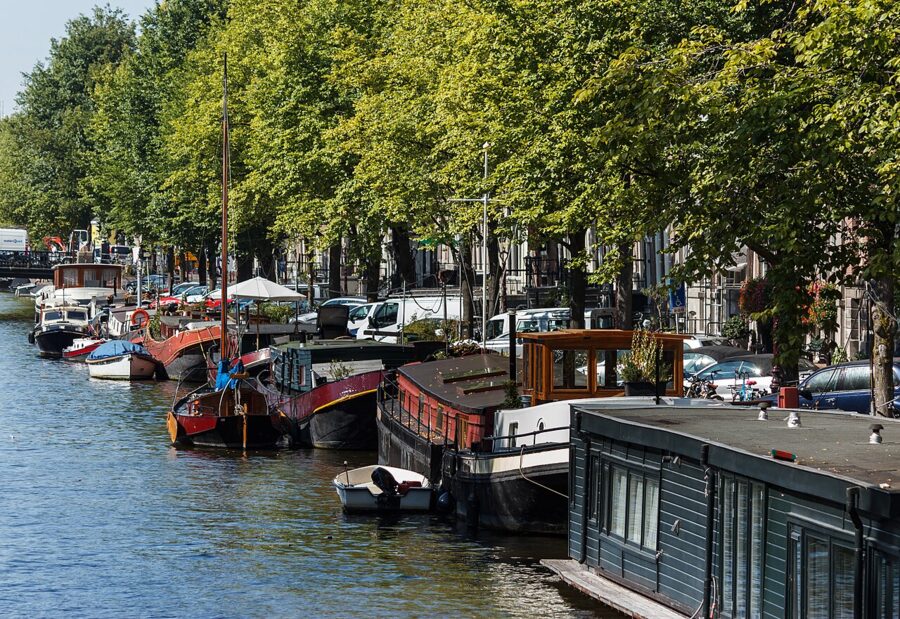

Houseboats
A night on a houseboat is the one stay you cannot get anywhere else, and the canals have plenty of them. Most of the city’s houseboats are permanent homes on fixed moorings, connected to water and power, and in law they are homes like any other. A houseboat let as a holiday rental follows the same 30-night or 15-night rule, and a houseboat with a B&B room needs the same permit and the same host on board.
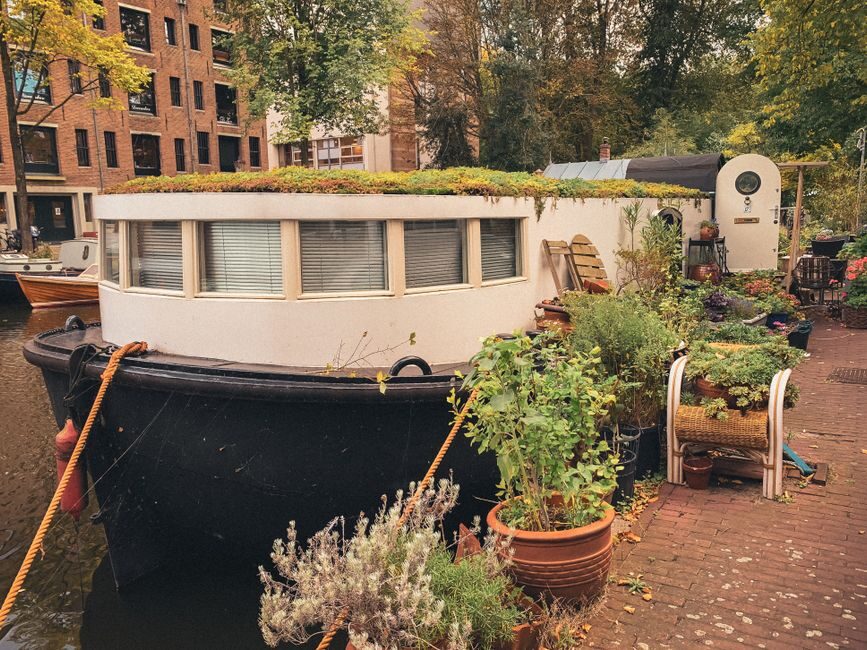
Expect less space than in a flat, low ceilings, a ladder or steep steps, and some movement when a tour boat passes. The city is rebuilding many old quay walls, and the bylaw already provides for about 190 houseboats with B&Bs that will have to move to temporary moorings for around two years while the work is done, so check where the boat will actually be. If you only want to see inside one, the Houseboat Museum on the Prinsengracht is in the museum guide, and the canal cruises pass hundreds.
Getting in from Schiphol
Schiphol has its own station under the arrivals hall, and NS trains run to Amsterdam Centraal in 16 to 18 minutes, several times an hour through the day. A second-class single costs €5.50 (about US$6.40) as of late November 2026 when you tap in and out with a contactless bank card, an OV-chipkaart or an e-ticket; a single-use paper chipcard from the machine costs €1.60 more. Average NS fares rise by 4.7 percent in January 2027.
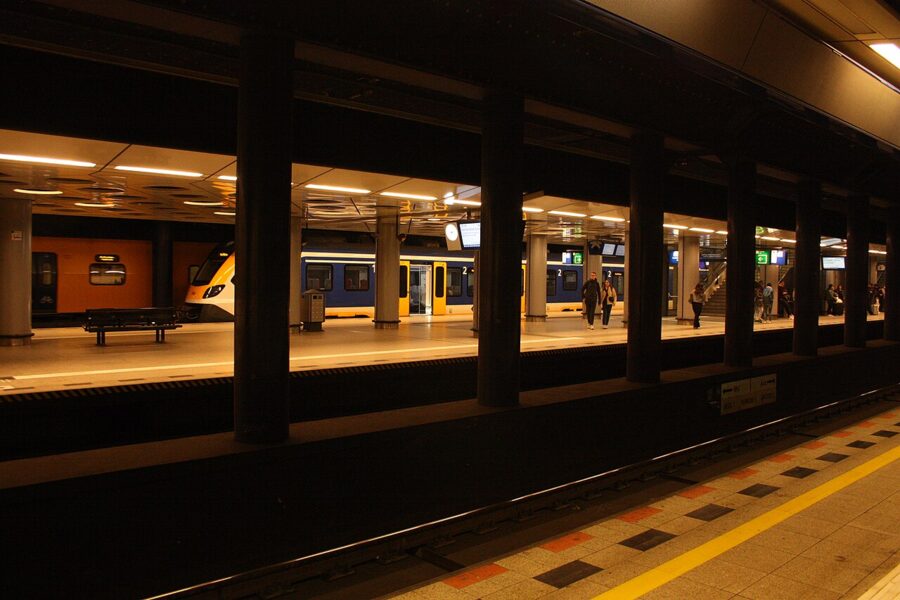

For the south of the city, the train to Amsterdam Zuid takes six or seven minutes and costs €3.70 (about US$4.30). From Zuid, metro 52 runs north through De Pijp, Vijzelgracht and Rokin to Centraal, and metro 50 and 51 run to other parts of the city. For the Museum Quarter and the Leidseplein, Connexxion bus 397, the Amsterdam Airport Express, leaves stop B17 about every ten minutes and costs €6.50 (about US$7.50) single, paid by card, not cash. The same ticket is valid on the N97 night bus.
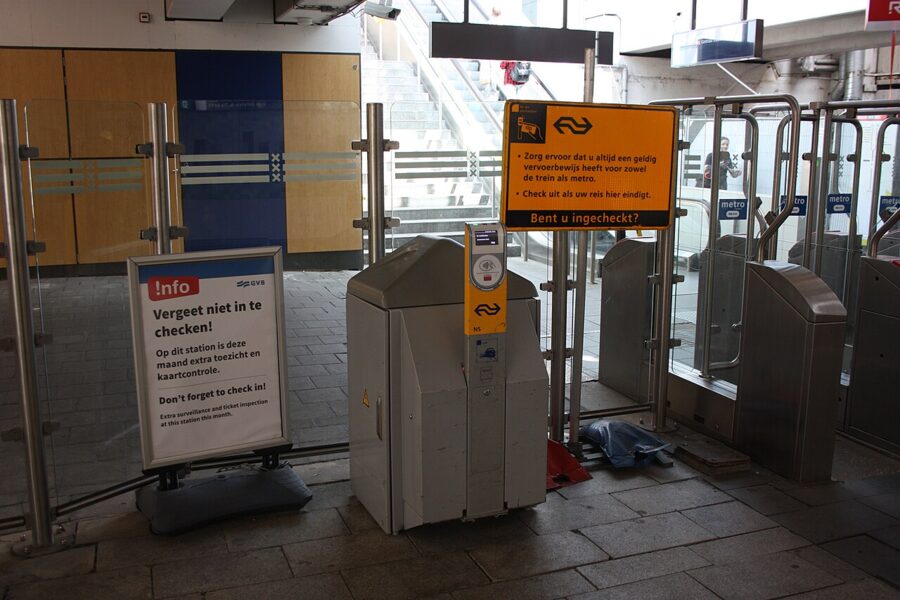

Late arrivals are covered. NS runs night trains between Schiphol and Centraal through the night, about once an hour, at the same fare, and the N97 night bus covers the airport route after the 397 stops. From Centraal the GVB night buses run until about 07:00, and ferry F3 to Noord keeps going all night.
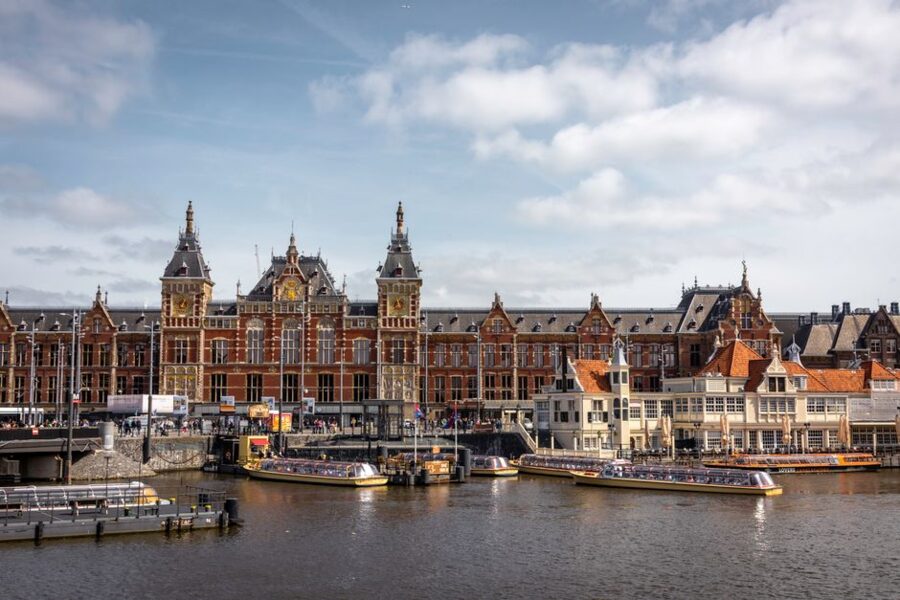
| Staying in | From Schiphol | Last leg |
|---|---|---|
| Old center, De Wallen | Train to Centraal | On foot, 5 to 15 minutes |
| Canal ring, Nine Streets | Train to Centraal | On foot or tram; metro 52 to Rokin or Vijzelgracht |
| Jordaan, Haarlemmerbuurt | Train to Centraal | On foot, 10 to 20 minutes |
| Leidseplein | Bus 397 | Stop Leidseplein |
| Museum Quarter, Oud-Zuid | Bus 397, or train to Zuid | Stop Museumplein or Rijksmuseum |
| De Pijp | Train to Zuid | Metro 52 to De Pijp |
| Plantage, Oost | Train to Centraal or Zuid | Metro 51, 53 or 54 to Waterlooplein or Weesperplein; NS to Muiderpoort or Amstel |
| Noord | Train to Centraal | Ferry F3, F2 or F4, or metro 52 to Noorderpark or Noord |
| Zuid, Zuidas | Train to Zuid | On foot |
| Zuidoost | Train to Bijlmer ArenA | On foot |
So go back to the €220.66 room. Spend it on a canal-house room on the Keizersgracht or a quiet street in Oud-Zuid, not on a front room above the Warmoesstraat, book it before the spring weekends sell out, and take the train from Schiphol: the 16 minutes to Centraal or the six to Zuid, depending on which side of the city you chose.