
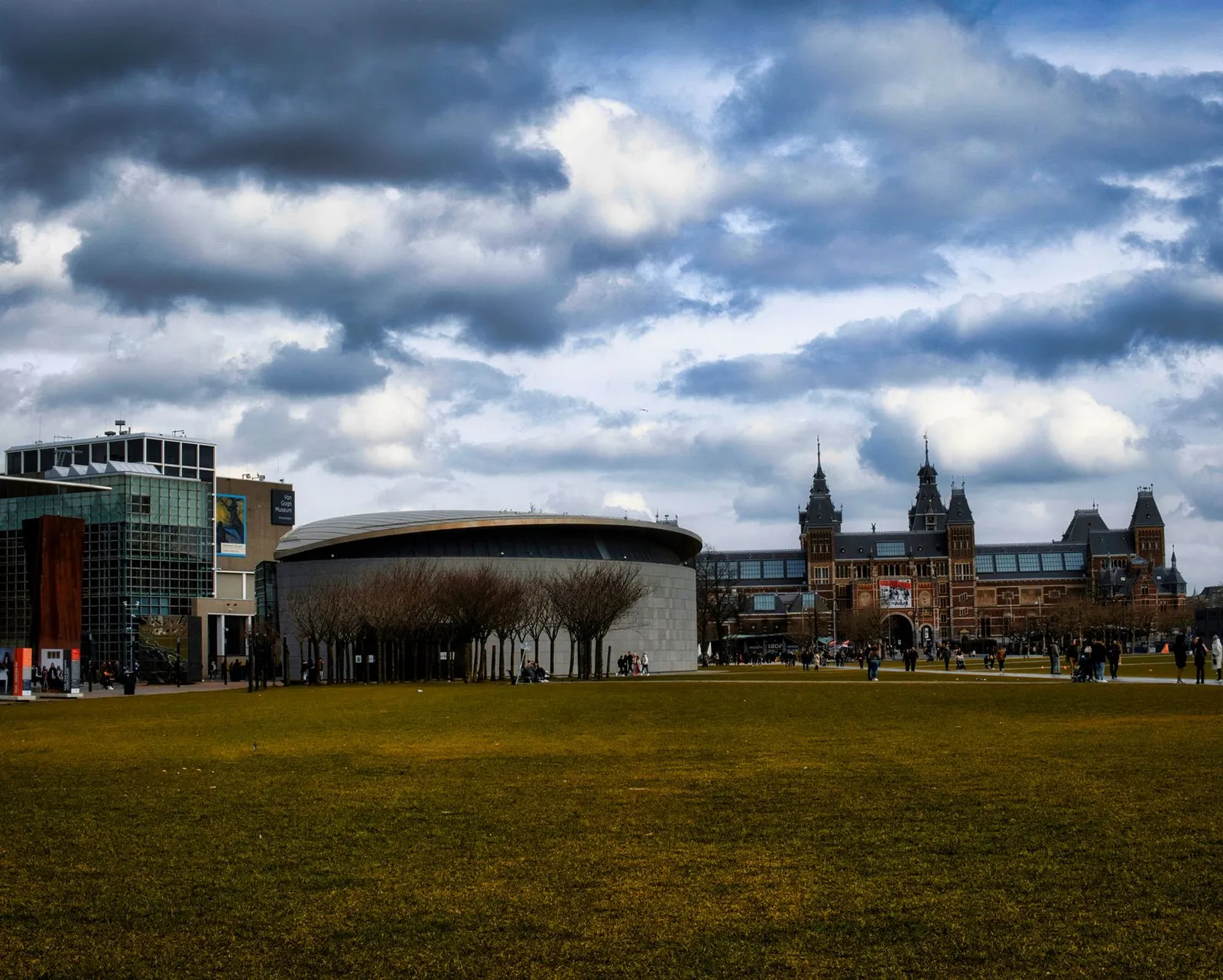
There is no ticket window at the Van Gogh Museum. The glass hall on the Museumplein has scanners, lockers, a shop and a café, and the one thing it will not do is sell you a way in. Every ticket is sold online with a start time printed on it, and when a day is gone, it is gone.
That makes this the easiest of Amsterdam’s big museums to plan and the easiest to miss. An adult pays €25 (about US$29) as of late 2026, rising to €26 (about US$30) on 1 January 2027; anyone under 18 goes in free, but still needs a free ticket with a time on it. Holders of the Dutch Museumkaart pay nothing and book all the same. Turn up without a booked ticket and you will not get in: the museum itself says there is no point coming if the online slots are sold out.
What you are booking is the largest collection of Vincent van Gogh’s work anywhere: more than 200 paintings, about 500 drawings and almost all of his letters, kept together because his family refused to sell the core of it. The paintings are hung in the order he made them, from the dark farm kitchens of Nuenen to the wheatfields of Auvers. Book the slot, then give it two to three hours.
Contents9 parts
- Tickets: online only, with a start time
- Opening hours, Friday nights and the quiet slots
- The building: Rietveld, Kurokawa and a glass hall
- Why the paintings are here at all
- The collection, from the self-portraits upward
- What is on now
- Inside: bags, photos, food and access
- Getting there
- Van Gogh Museum or Rijksmuseum, and the rest of the square


Tickets: online only, with a start time
Every ticket is bought online, either from the museum’s own ticket shop or from one of the five resellers it names: Tours & Tickets, GetYourGuide, Tiqets, Musement and Klook. The museum warns, in plain words, that criminals are active and that other platforms may sell invalid tickets. A resale marketplace is not on that list. Like the Anne Frank House, the museum sells nothing at the door.
The ticket holds a start time. You cannot go in earlier than the time you booked, and you have half an hour after it to arrive. Once inside you can stay until closing. Tickets are non-refundable, but up to 48 hours before your slot the museum will try to move you to another date or time if one is free; you ask through its contact form rather than rebooking yourself.
| Ticket (as of November 2026) | Price | Notes |
|---|---|---|
| Adult | €25 (€26 from 1 January 2027) | Shop lists it as “from €25”; includes the exhibitions |
| Under 18 | Free | Free ticket with a start time still required |
| Student (EU/EEA institution) | €16 (about US$19) | Valid until 31 December 2026; bring proof of enrolment |
| CJP (Dutch youth culture card) | €11 (about US$13) | Show the card at the door |
| Museumkaart, ICOM, Rembrandt card, Amsterdam Stadspas, VriendenLoterij VIP-KAART | Free | Book online; show the card with the e-ticket |
| Companion of a visitor who needs assistance | Free | Book with the main ticket; the audio tour is included |
| Audio tour | €3.75 (about US$4); €2 for ages 13 to 17 | Add it when you book |
The museum’s Dutch ticket page is the fullest list of prices and discount cards, including the 2027 rise. There is no surcharge for exhibitions, and no ticket that covers only the exhibition: one ticket opens the whole building. There are no senior or teacher discounts.
The Museumkaart works; the City Card does not
The Museumkaart, the Dutch annual museum pass, gets you in free, but only with a reserved free ticket with a start time; without one you will not get through the door. The card costs €75 (about US$87) for an adult as of late 2026, and bought by someone without a Dutch address it works as a temporary card with a cap on visits, which the Amsterdam museums guide sets out in full. The I amsterdam City Card is no use here at all: the Van Gogh Museum has not taken it since June 2022.
Is there any way in when it is sold out?
Not for most people. There is no waiting list and no door sale; cancelled tickets simply drop back into the booking system, so checking again on the morning itself can turn up a slot. The only people who walk in without a timed ticket are members of the museum’s paying supporters’ circles, who show their card at the entrance.
Opening hours, Friday nights and the quiet slots
The museum opens every day of the year, but its hours shift with the season, so check the official hours page for your date. This is the schedule it published for the coming months, as of late November 2026.
| Dates | Hours |
|---|---|
| 2–30 November 2026 | 09:00–17:00, Fridays to 21:00 (not 27 November) |
| 1–18 December | 09:00–17:00, Fridays to 21:00 |
| 19–23 December | 09:00–18:00 |
| 24, 25 and 26 December | 09:00–17:00 |
| 27–30 December | 09:00–18:00 |
| 31 December | 09:00–17:00 |
| 1 January 2027 | 11:00–18:00 |
| 2–10 January | 09:00–18:00, Fridays to 21:00 |
| 11 January–12 February | 09:00–17:00, Fridays to 21:00 |
| 13 February–30 September | 09:00–18:00, Fridays to 21:00 (with exceptions below) |
The museum’s own advice for a calmer visit is to take one of the first or last start times of the day. The Friday evening slots are the other good bet, except on the handful of Fridays given over to the Vincent on Friday party (below). For the paintings without a wall of phones in front of them, take the 09:00 slot, walk straight past the shop and go up.

Vincent on Friday
Vincent on Friday is the museum’s evening event: live music, DJs, talks and workshops, with performances in the atrium and sometimes in the galleries. It turned ten in 2026, and the anniversary edition on 27 November runs from 19:30 to 23:30, with the ordinary Friday late opening dropped that day. The hours page lists the 2027 Fridays on which the normal evening opening gives way to it in the same way: 26 February, 26 March, 28 May, 30 July and 24 September.
It is a night out, not a quiet look at the paintings, and the museum says as much on its page for sensory-sensitive guests. If you want the pictures, book an ordinary Friday.
The building: Rietveld, Kurokawa and a glass hall
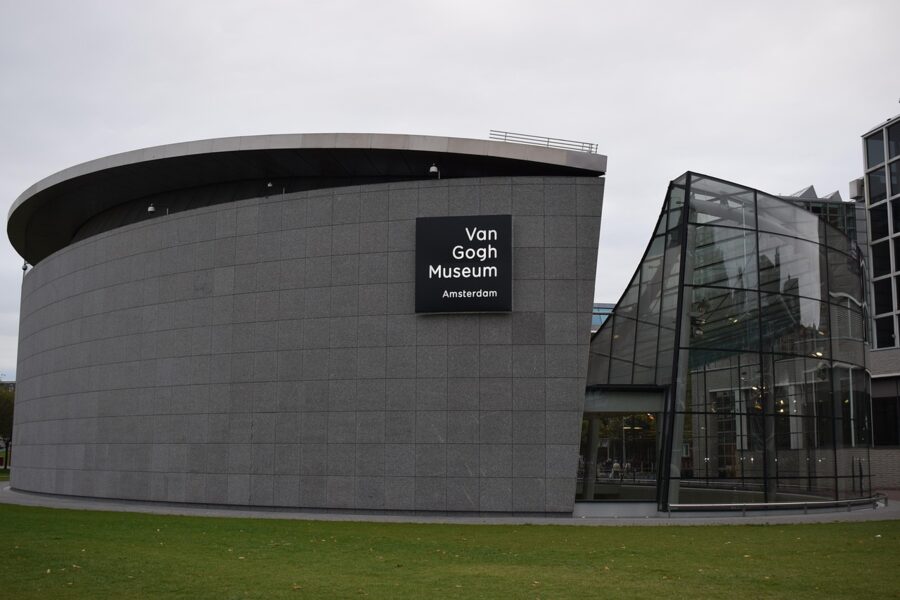
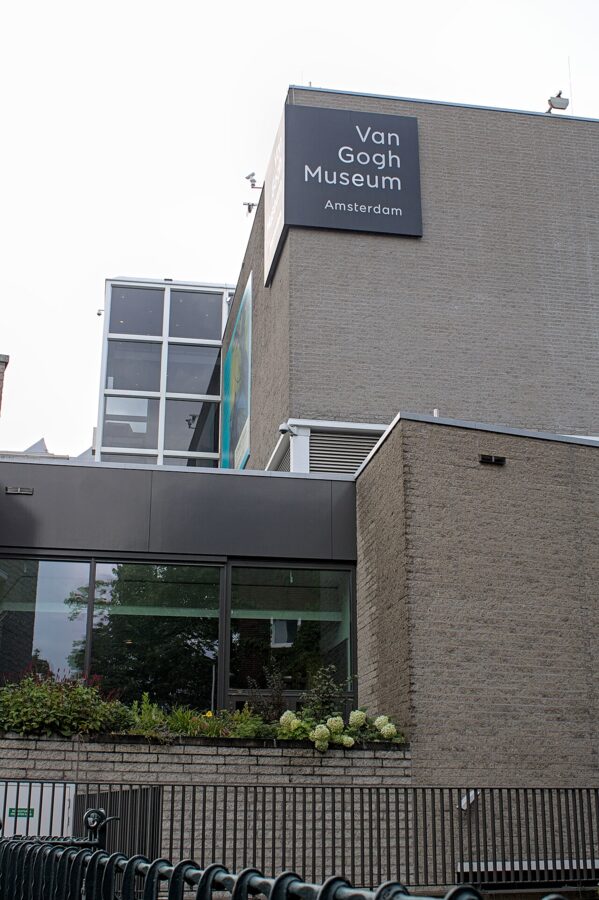
The museum is two buildings joined by a third. The main one, on the Paulus Potterstraat side, was designed by Gerrit Rietveld, the Dutch architect and furniture designer, who was commissioned by the state in 1963 and died the following year. His partners Joan van Dillen and J. van Tricht worked up his sketch, building started in 1969, and Queen Juliana opened the museum on 2 June 1973.

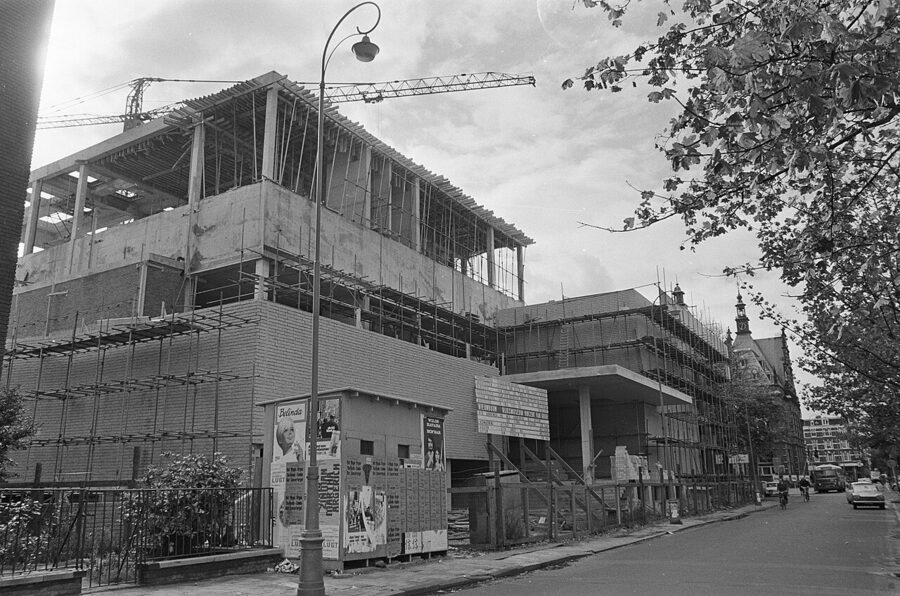
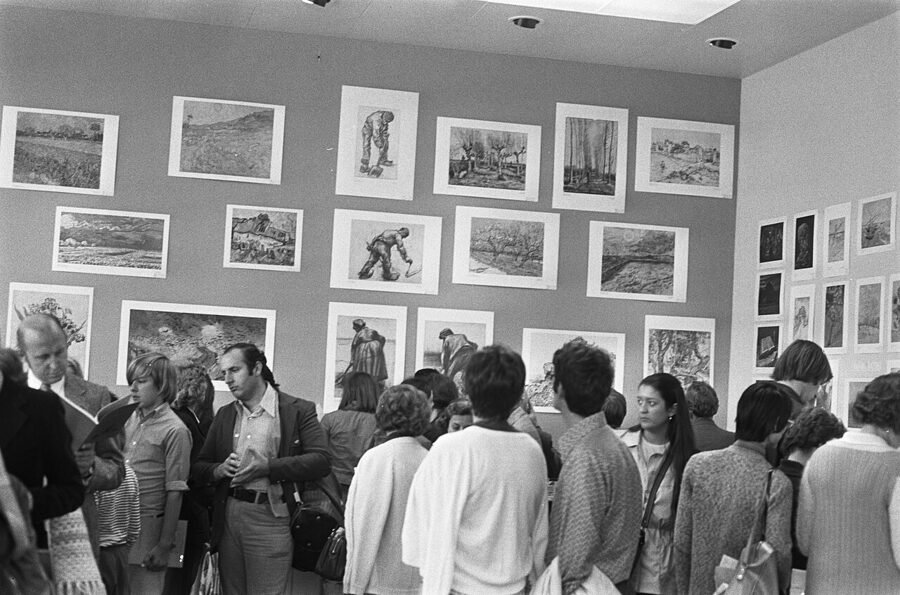
Skeptics in 1973 wondered whether anyone would come to a museum for a single painter. Less than two months after the opening, 100,000 people had been through, and the museum now counts close to two million a year. The building that was meant to hold everything soon held too little.
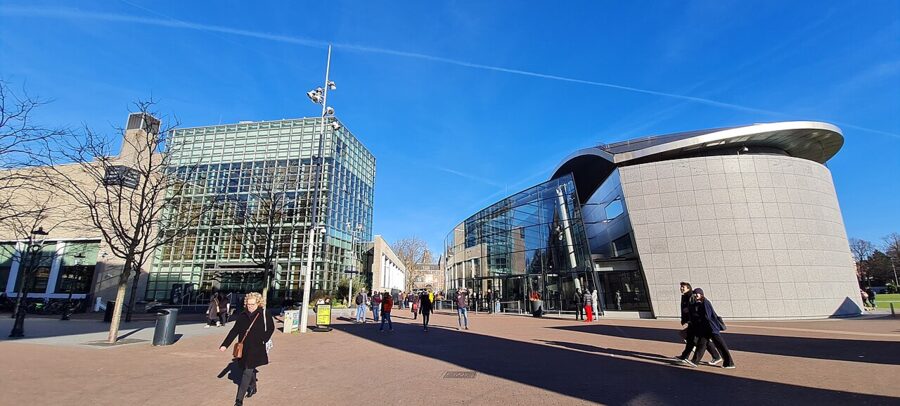
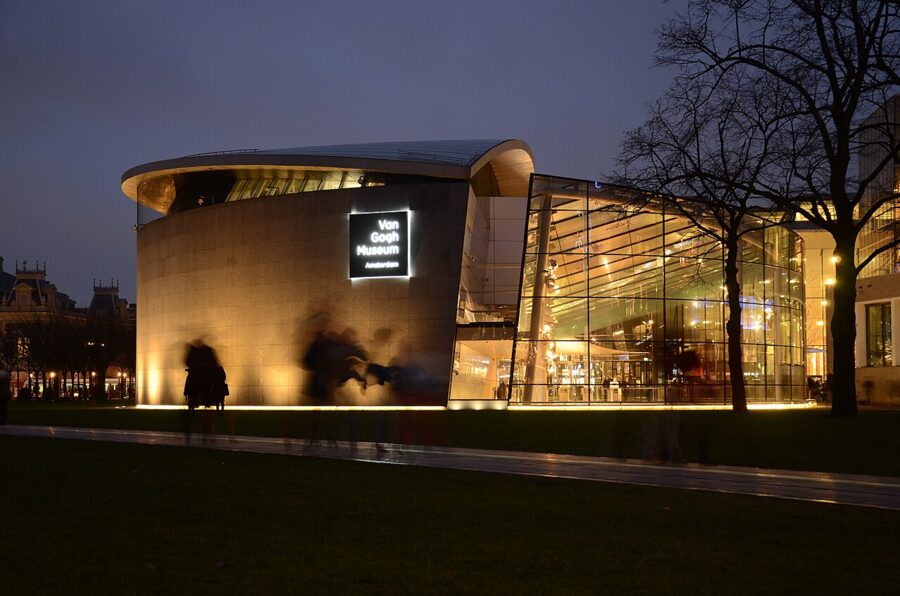
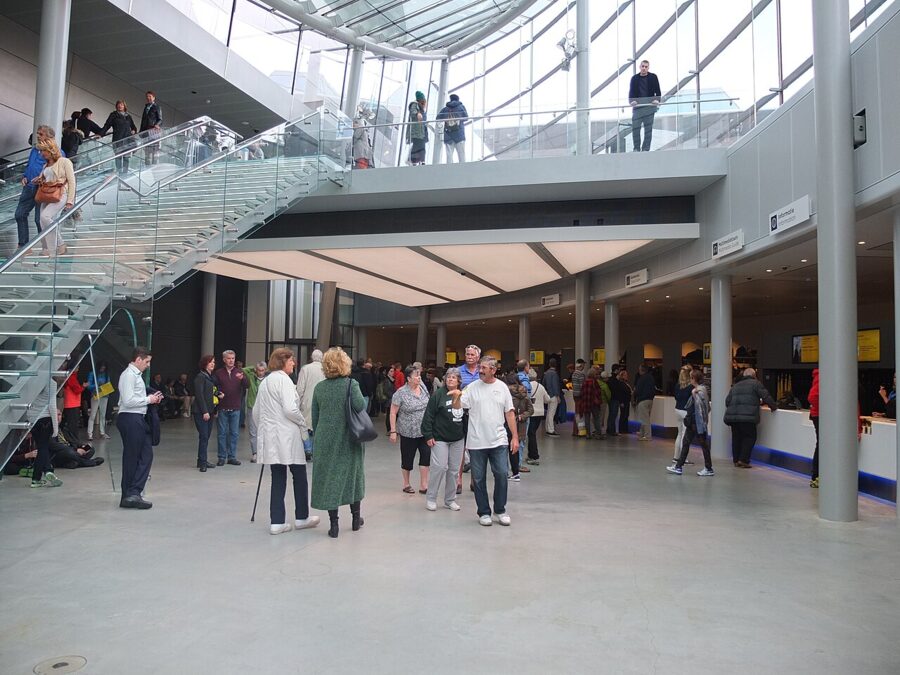
Room for exhibitions came with the wing by the Japanese architect Kisho Kurokawa, opened in 1999 and paid for by a gift through The Japan Foundation from the Tokyo insurer Yasuda. It is an oval, clad in stone and titanium and sunk halfway into the Museumplein, and since then the Rietveld building has held only the permanent collection. On 5 September 2015 the glass entrance hall by Hans van Heeswijk Architects opened between the two, and the main entrance moved to the Museumplein side.
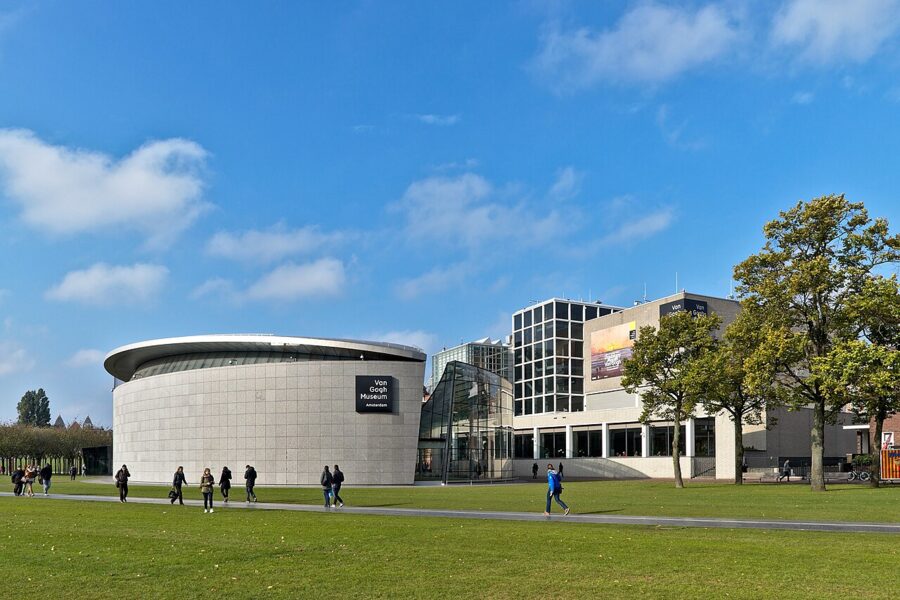

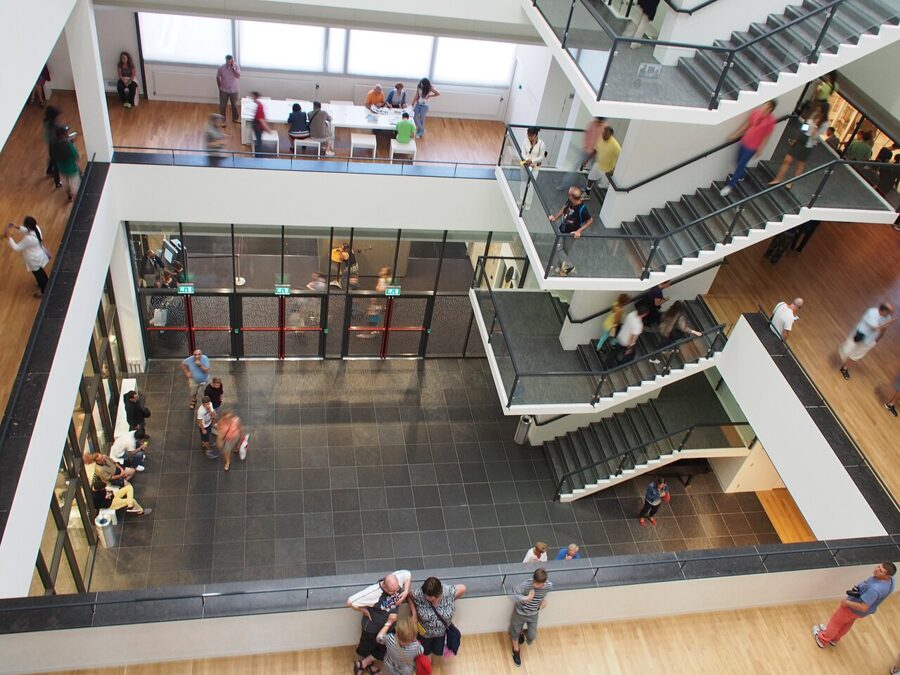

The renovation, from 2028
After fifty years of heavy use the building is worn out, and in August 2025 the museum warned it might have to close unless the state paid more toward a renovation costed at €104 million. The dispute went to mediation, and on 8 October 2026 the museum and the Ministry of Education, Culture and Science announced a settlement that secures its future. The work is planned to start in autumn 2028, mostly behind the scenes. The museum will stay partly open throughout, and the permanent collection will remain on view.
Why the paintings are here at all
Van Gogh sold very little in his lifetime, and when he died in Auvers-sur-Oise in July 1890, his work passed to his brother Theo, the Paris art dealer who had kept him going. Theo died six months later. That left his widow, Jo van Gogh-Bonger, aged 28, with a baby son and a flat full of paintings by a brother-in-law hardly anyone wanted.
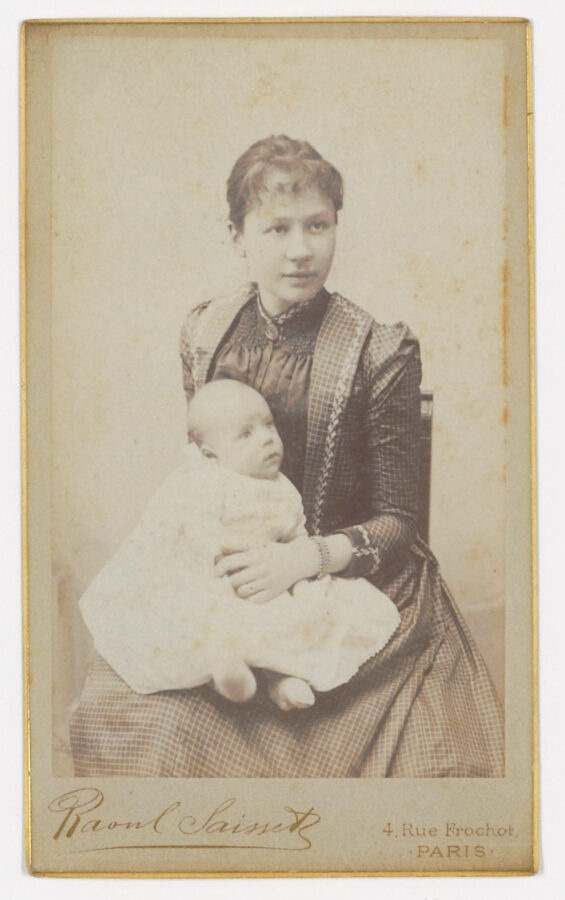
Jo is the reason you know his name. She moved to Bussum, ran a guesthouse, sold work carefully to public collections around the world and, in 1905, mounted a retrospective of more than 480 works at the Stedelijk Museum, after which his prices climbed fast. In 1914 she published his letters to Theo, the source that still shapes how he is read. Between 1891 and her death in 1925 she sold nearly 200 works, and the museum tells her story in full as the woman who made Vincent famous.
She also knew what not to sell, and her son, the engineer Vincent Willem, sold nothing more after 1925. He lent the collection to the Stedelijk, most of it sat out the war in a bunker in the dunes near Castricum, and in 1962 transferred all of it to a new Vincent van Gogh Foundation. In return the state promised to build and run a museum and treat the collection “as if it were state property”, the clause that the 2025 quarrel over the renovation came back to.
The collection, from the self-portraits upward
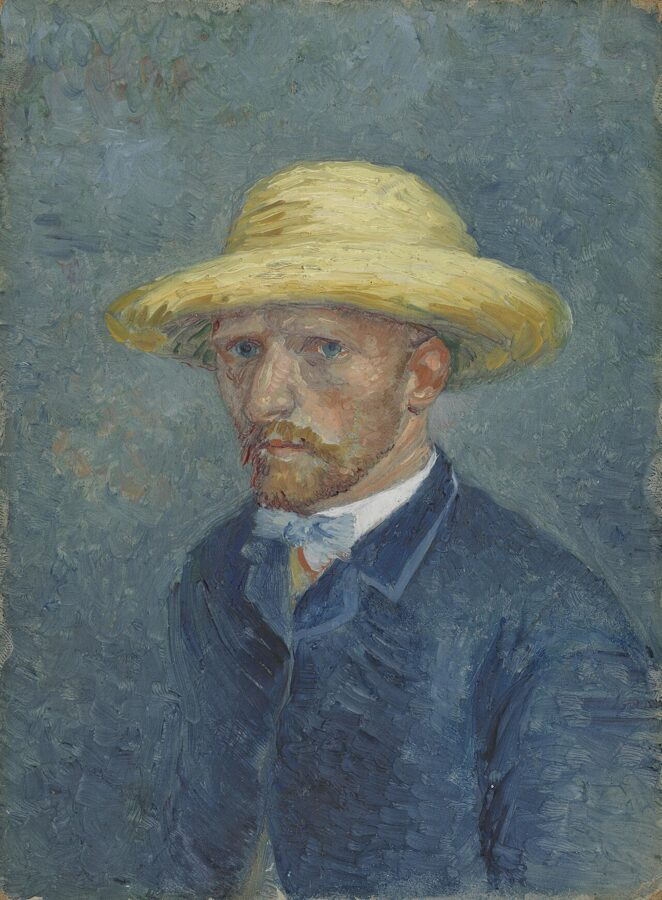
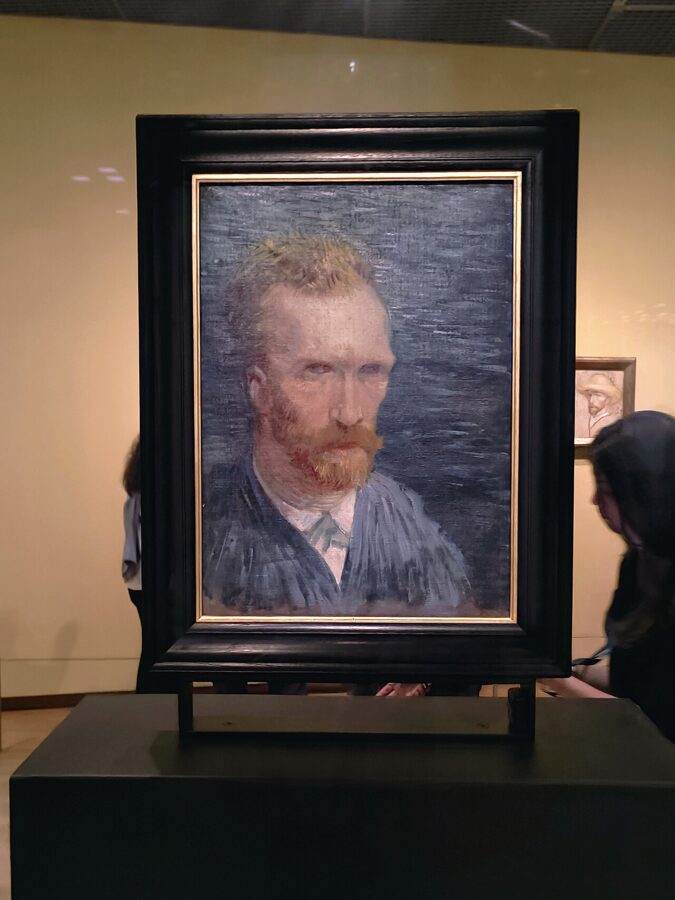
The permanent display tells his life in order, one floor after another. Floor 0 opens with the self-portraits, several of them in free-standing glass cases, and the climb through the building follows him from the Netherlands to Paris, Arles, Saint-Rémy and Auvers, with the art of his friends and the painters he admired hung among his own. The museum rehangs, lends works out and takes pictures off the wall for conservation, so the floor a painting sits on is not fixed: the online collection’s “on view” filter is the reliable check before you go.

The Dutch years: The Potato Eaters
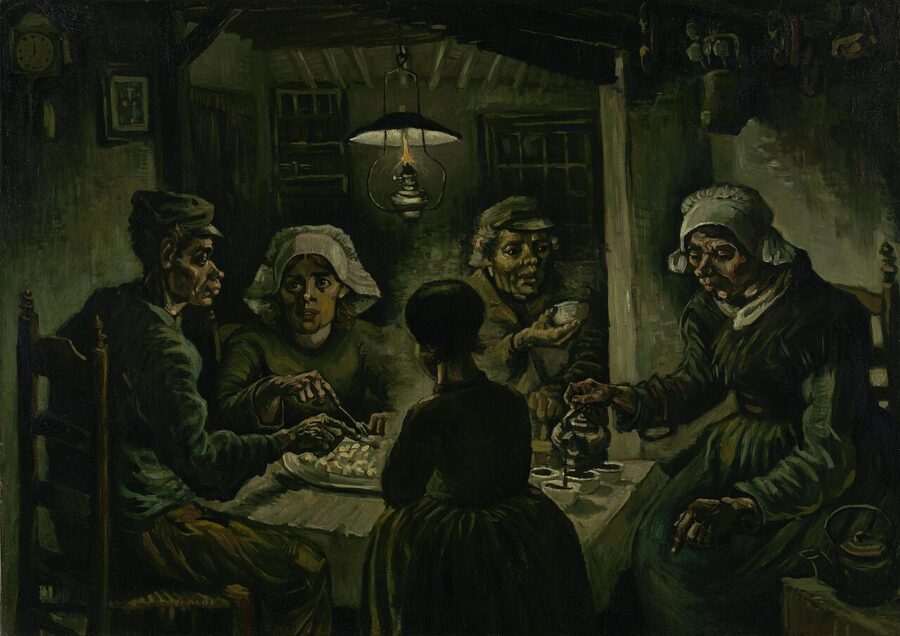
Van Gogh decided to become an artist at 27, after working for an art dealer, as a schoolmaster in England and as a lay preacher in the Belgian coal district. In 1883 he moved back in with his parents in the village of Nuenen in Brabant and spent two years drawing and painting weavers and farm laborers. The Potato Eaters of April and May 1885 was his showpiece, a deliberately hard composition of five figures around a lamp.
Paris: the palette goes bright
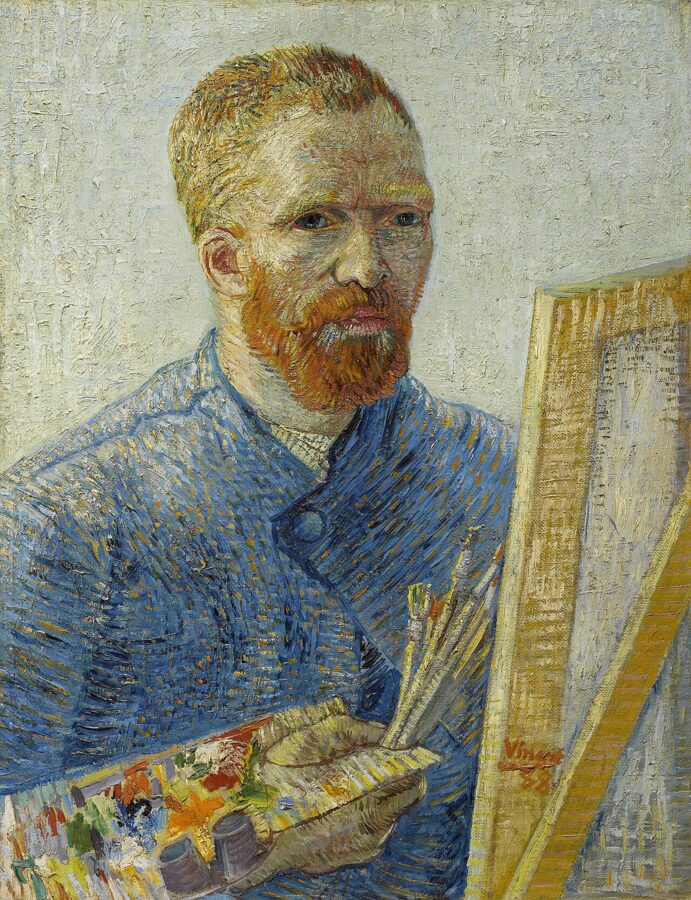
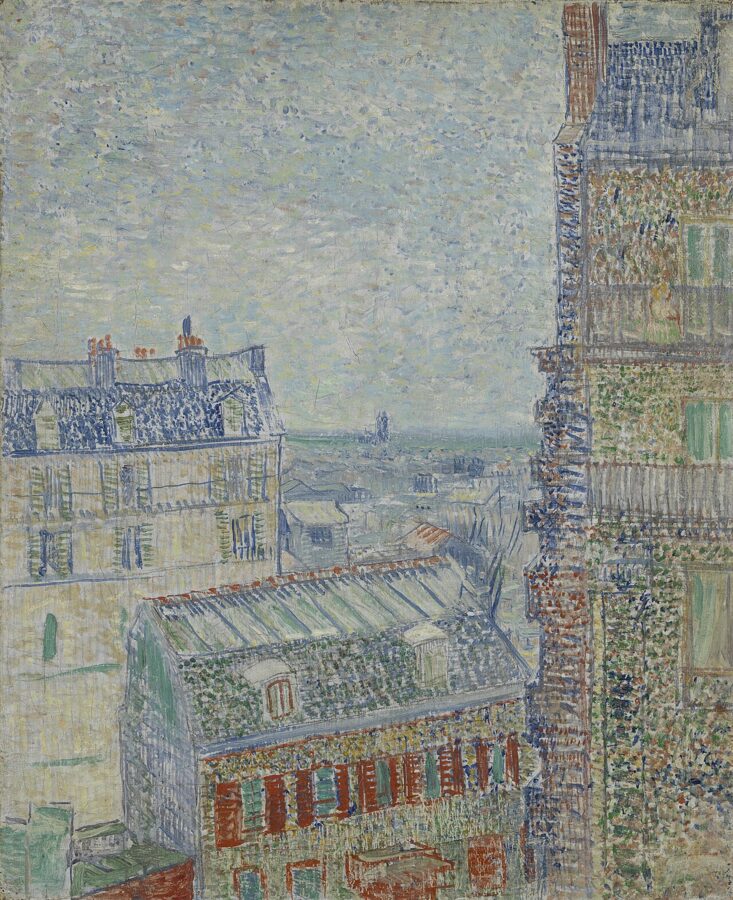
In 1886 he moved in with Theo in Paris, met the modern painters of the day, Toulouse-Lautrec and Émile Bernard among them, and his color changed within months. The rooms for these two years are full of experiments: flowers, views over the city, small dots borrowed from the Pointillists, and self-portraits. The Paris period ends with Self-Portrait as a Painter, the last picture he made in the city before he left, worn out, for the south.
Arles: Sunflowers, The Yellow House and The Bedroom
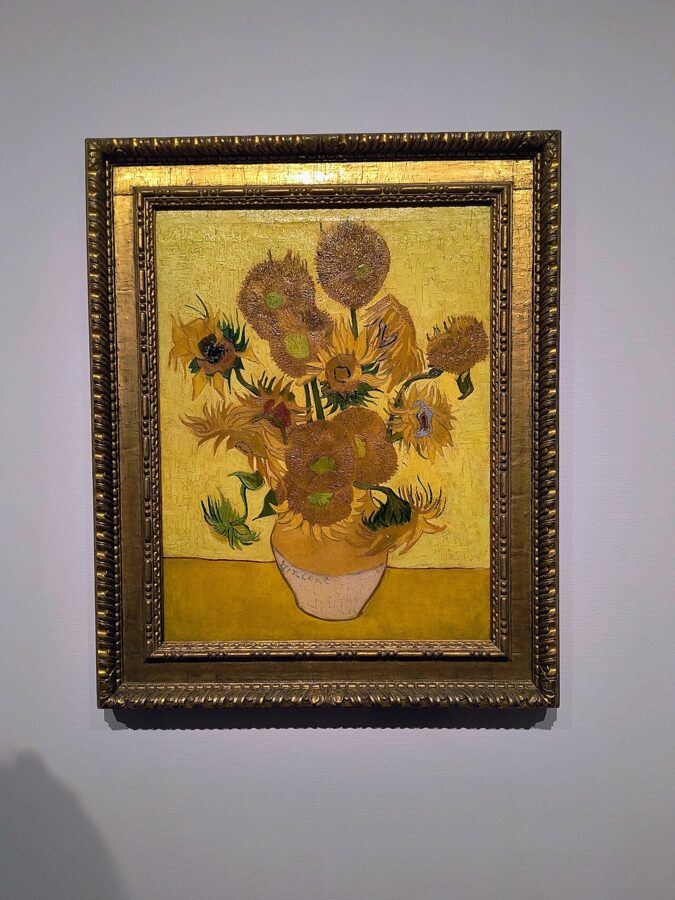
Early in 1888 he went south to Arles, and this is the stretch of the museum that people queue for. In May he rented four rooms in a yellow corner house on the Place Lamartine, planning a studio where painters would live and work together; Paul Gauguin was the first to move in, in late October, and the last. The first two sunflower canvases went up on the walls of Gauguin’s room.
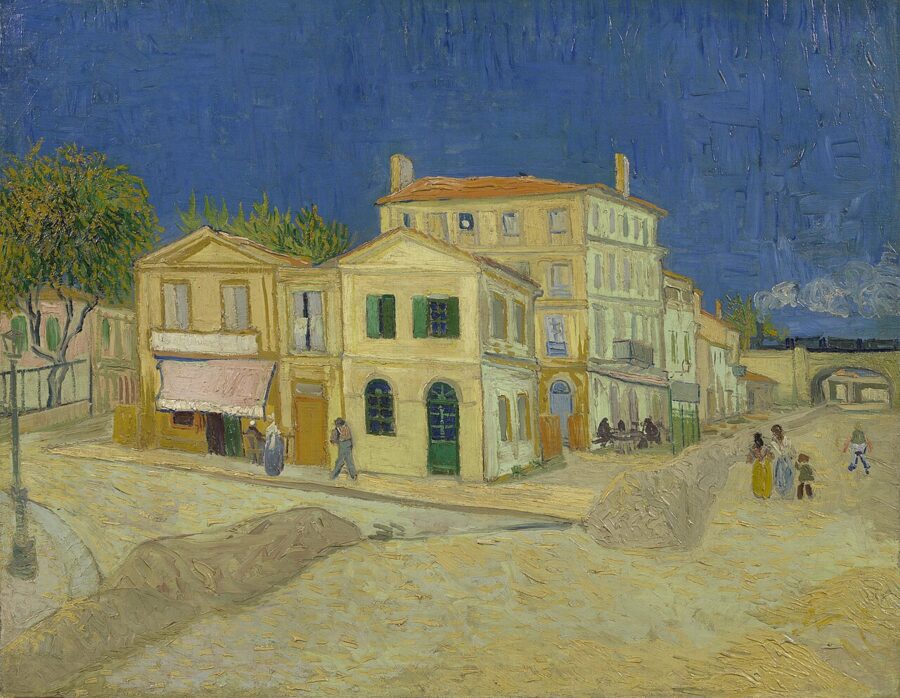
The Bedroom is his own room in that house, painted in October 1888 to express rest. Look at the walls: they are blue now, but research has shown they were purple, and the red pigment has faded out of them. The skewed back wall is not a mistake; the corner of the room really was crooked.
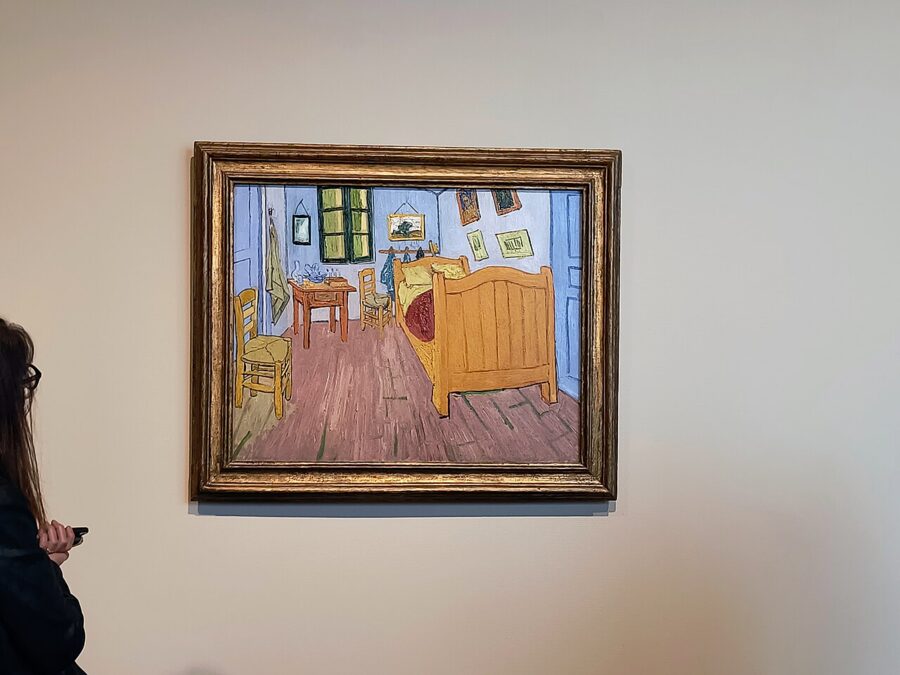

Two months after the bedroom, the arrangement with Gauguin ended in the episode everyone has heard of: a quarrel, a razor and his own ear cut off at the Yellow House in December 1888. The museum covers the ear, the illness and his death in a section of its own, built from letters, documents and what research can actually show.
Saint-Rémy: Almond Blossom and Irises
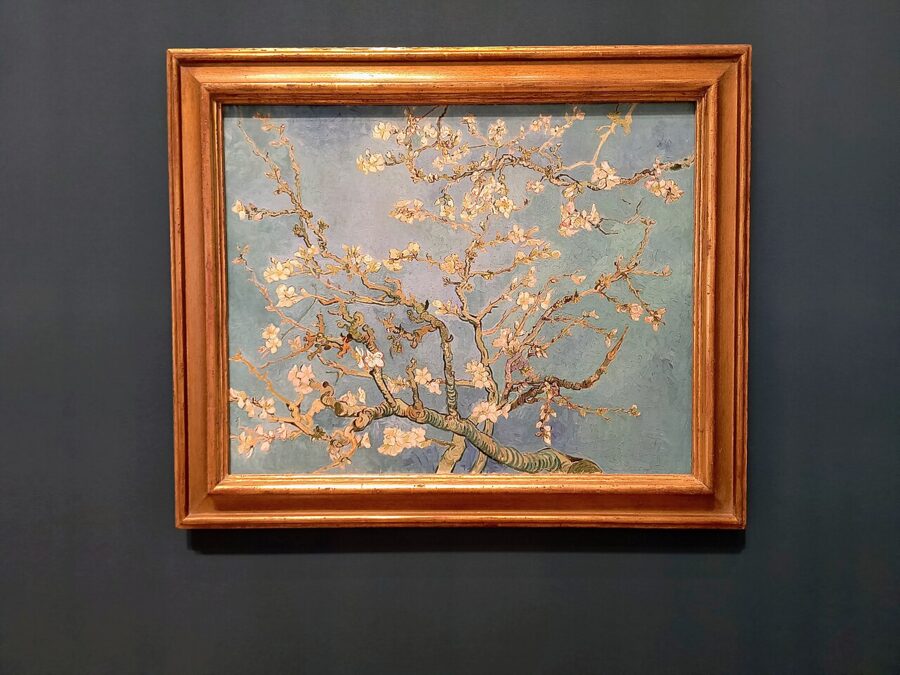
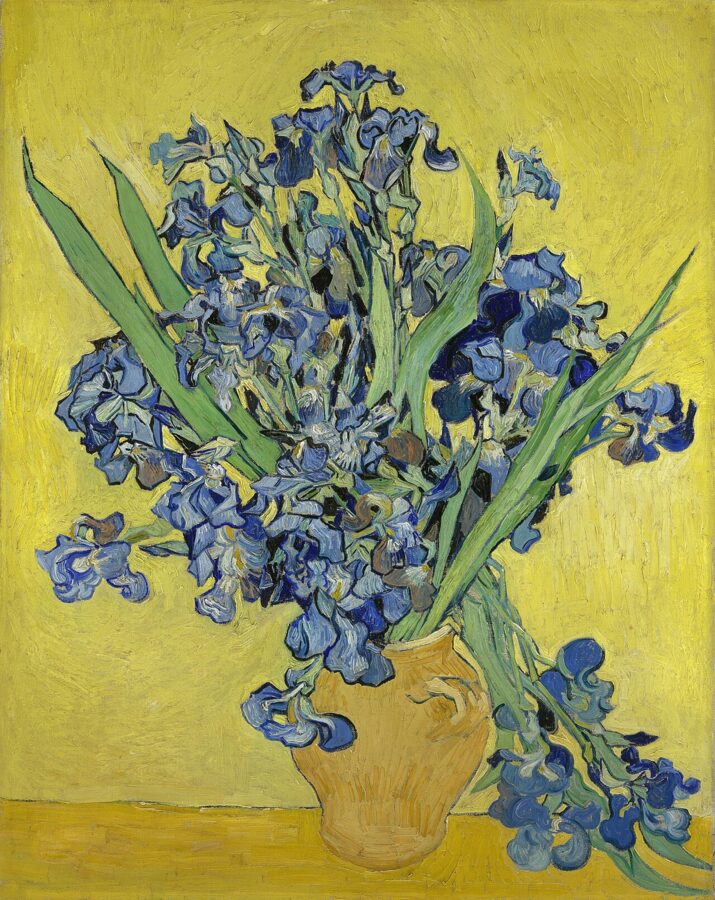
In May 1889 he had himself admitted to the asylum of Saint-Paul-de-Mausole at Saint-Rémy-de-Provence, where he stayed a year and made about 150 paintings, working in the walled garden on good days. In January 1890 a letter arrived: Theo and Jo had a son and had named him Vincent. His answer was Almond Blossom, branches of white blossom against a blue sky, to hang in their bedroom.

Auvers: Wheatfield with Crows and Tree Roots
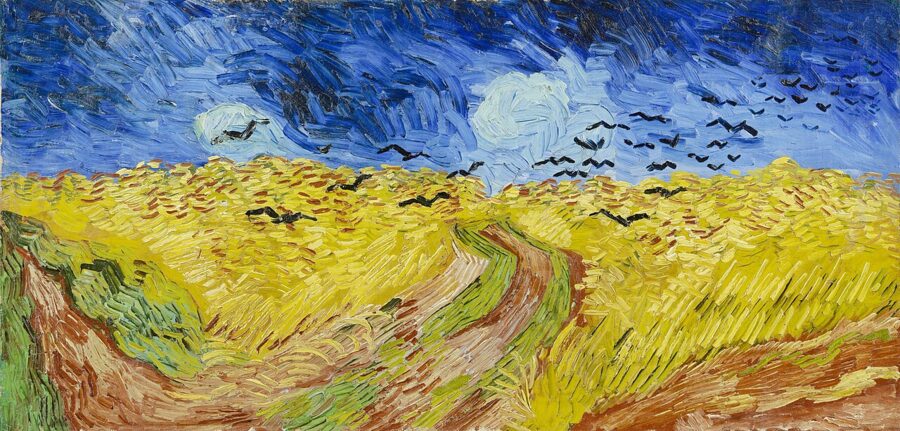
In May 1890 he moved north to Auvers-sur-Oise, near Paris, where Dr Paul Gachet could keep an eye on him, and painted almost a picture a day. He wrote to Theo that his wheatfields under stormy skies were meant to express “sadness, extreme loneliness”. On 27 July he shot himself in a field and died two days later at the Auberge Ravoux, with Theo beside him.
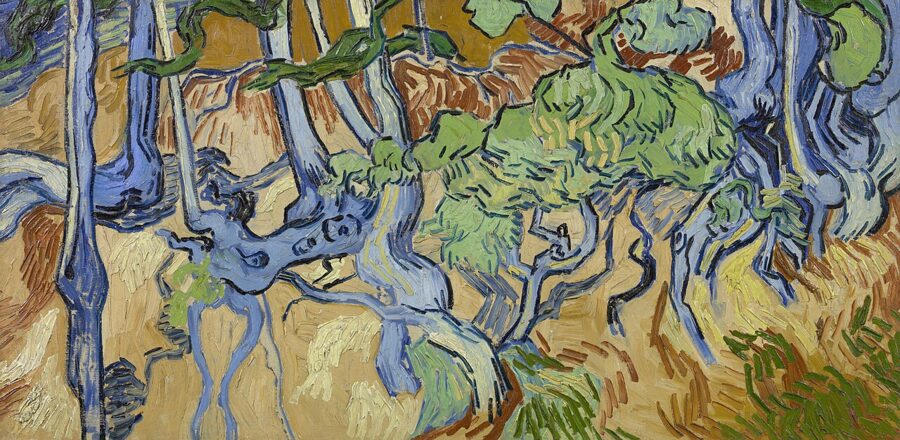
If you are coming for Wheatfield with Crows, know before you book: as of late November 2026 the museum lists it as undergoing conservation treatment and not on display. It is not, whatever you have read, his last painting. That is probably Tree Roots, left unfinished, which is on view.
What is not here
The Starry Night is in the Museum of Modern Art in New York, and Café Terrace at Night is at the Kröller-Müller Museum in Otterlo, in the east of the country. The Rijksmuseum across the square owns a few Van Goghs of its own, including a self-portrait in a gray felt hat. And the immersive projection shows that tour under his name have no original paintings at all; the only real Van Gogh museum in Amsterdam is this one.
What is on now
The exhibitions are in the Kurokawa wing and are included in the ticket. Through the winter there are two, and the next big one is announced.
- Whistler. Dandy and Disruptor, until 10 January 2027: the first retrospective in the Netherlands of James McNeill Whistler, made with Tate Britain. Van Gogh admired his etchings and mentioned the famous portrait of Whistler’s mother in a letter to his sister.
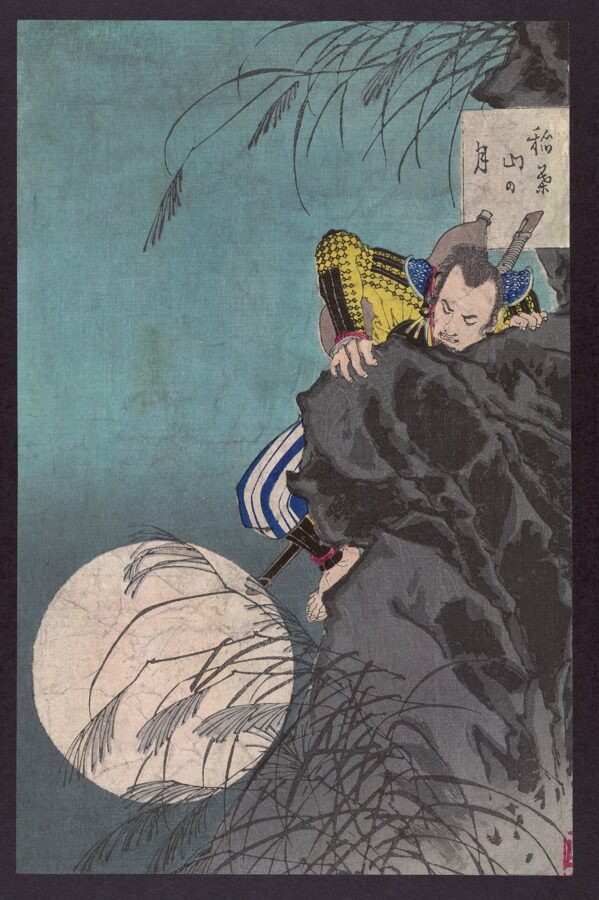
- Yoshitoshi. Master of the Moon, until 4 January 2027: all one hundred prints of Tsukioka Yoshitoshi’s One Hundred Aspects of the Moon, from the estate of the collector Elise Wessels. Van Gogh owned five Yoshitoshi prints himself.
- Eva Gonzalès. A New Perspective, 12 February to 20 June 2027: the first museum retrospective of Manet’s only pupil, who died at 36, made with the Petit Palais in Paris.
From 19 December 2026 to 3 January 2027 the museum runs a Christmas holiday program for families, with free painting workshops and a treasure hunt; children still need their free timed tickets. The 50-minute guided tour of the masterpieces costs €7.50 (about US$9) on top of admission, €10 from 1 January 2027, with at most twelve people per group.
Inside: bags, photos, food and access
The house rules are short and enforced. Coats, handbags, small backpacks up to 45 x 25 x 25 cm and umbrellas go in self-service lockers that lock with a code you choose. Anything larger, and wheeled suitcases or trolleys of any size, can get you turned away, and the museum will not store them; leave luggage at your hotel or at one of the luggage points around the Museumplein. E-bike batteries over 100Wh are banned, and bags may be screened at the door.

Photos are allowed, without flash, lamps, tripod or selfie stick, and only for personal use. Filming is not. The museum is cashless throughout, including the cafés and shops, and you cannot bring your own food or drink inside.
For food there is Bistro Vincent, a restaurant in the Rietveld building on the first floor that opens at 10:00, with dishes drawn from the Netherlands, France and Japan; up to ten people can walk in without a reservation. Two cafés, one in the atrium and one next to the shop in the Rietveld building, keep museum hours. All of it is behind the ticket check, as are the shops.
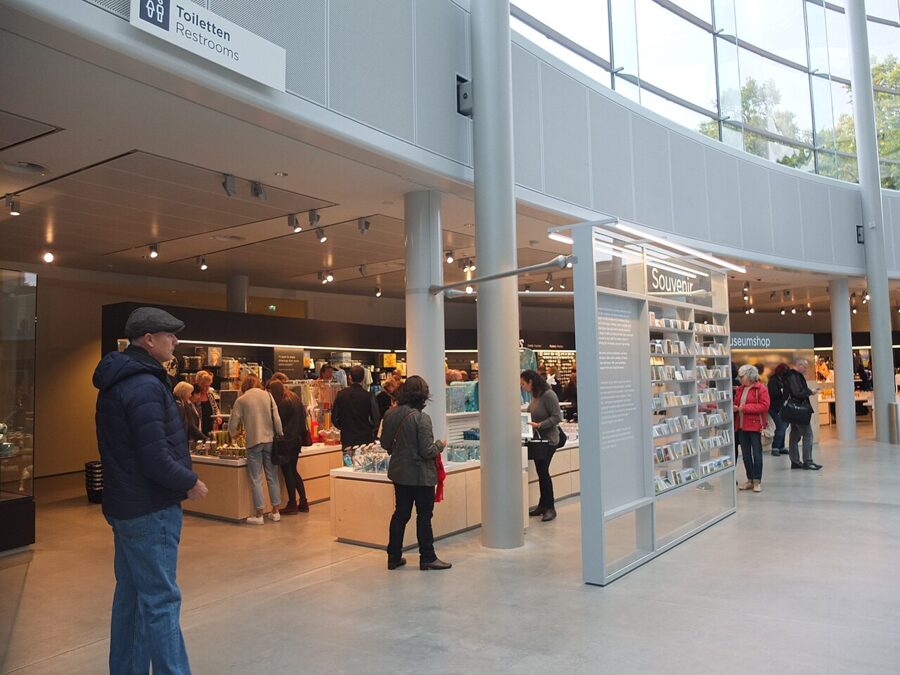

Access is good. The building is barrier-free and has lifts; wheelchairs and folding seats can be borrowed if you email ahead, adapted toilets are on the ground floor, and a disabled parking space is in front of the museum at Paulus Potterstraat 7. Anyone who cannot get around on their own brings a companion free, and the museum lends EnChroma glasses for red-green color blindness, which it says work for about 80 percent of people with that condition. Details are on its accessibility pages.
Getting there
The museum is at Museumplein 6, in Amsterdam-Zuid. The two nearest tram stops are Museumplein and Concertgebouw; trams from Centraal Station run to the Museumplein stop, through the center and past Leidseplein. Another way from Centraal is metro 52 (the Noord/Zuidlijn) to De Pijp and a tram from there to Concertgebouw. From Amsterdam Zuid station there is a tram to Concertgebouw too, and from Amstel station another.
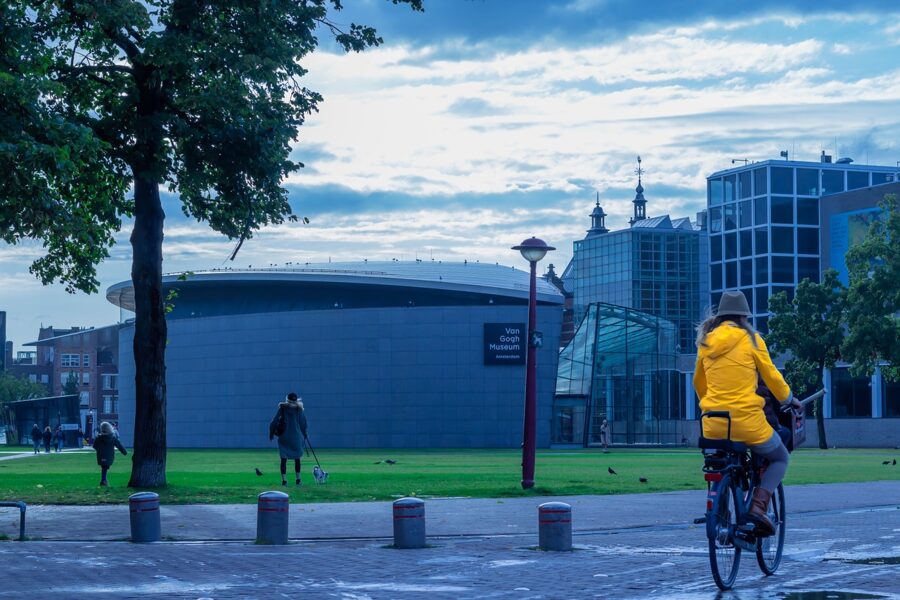
On foot from Leidseplein it is about a kilometer. Drivers can use the Q-Park under the Museumplein, entered from the Van Baerlestraat next to the Albert Heijn supermarket, and street parking around the square is paid. The museum’s own visitor FAQ has the rest, down to the iLost site for anything you leave behind.
Van Gogh Museum or Rijksmuseum, and the rest of the square
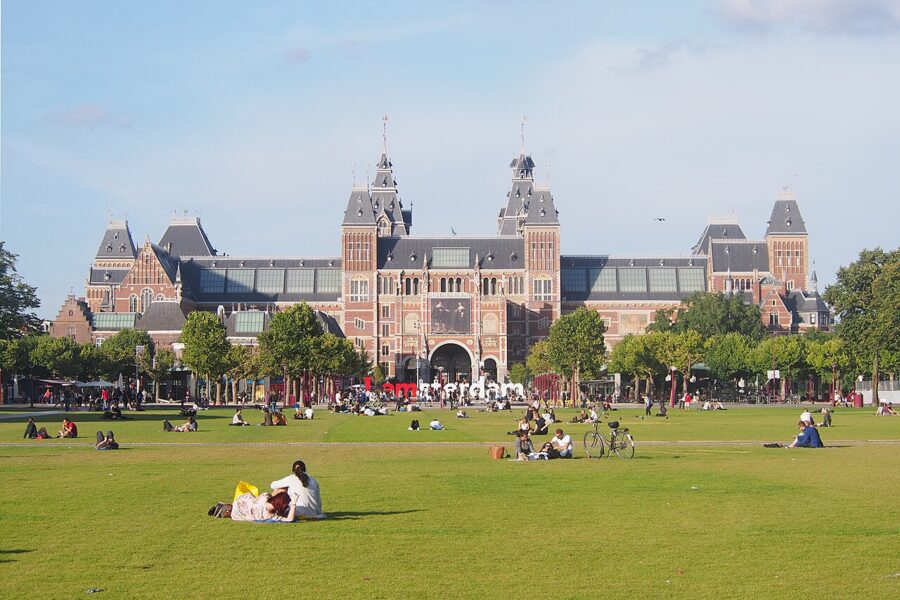
They are not rivals. The Rijksmuseum is the whole of Dutch art and history in one building, Rembrandt, Vermeer and The Night Watch included; the Van Gogh Museum is one man’s life, start to finish, and no single-artist museum does it better. If you have one morning, pick by what you care about. If you have a day, do both: book the Rijksmuseum early, walk across the grass for lunch, and take an afternoon slot here.

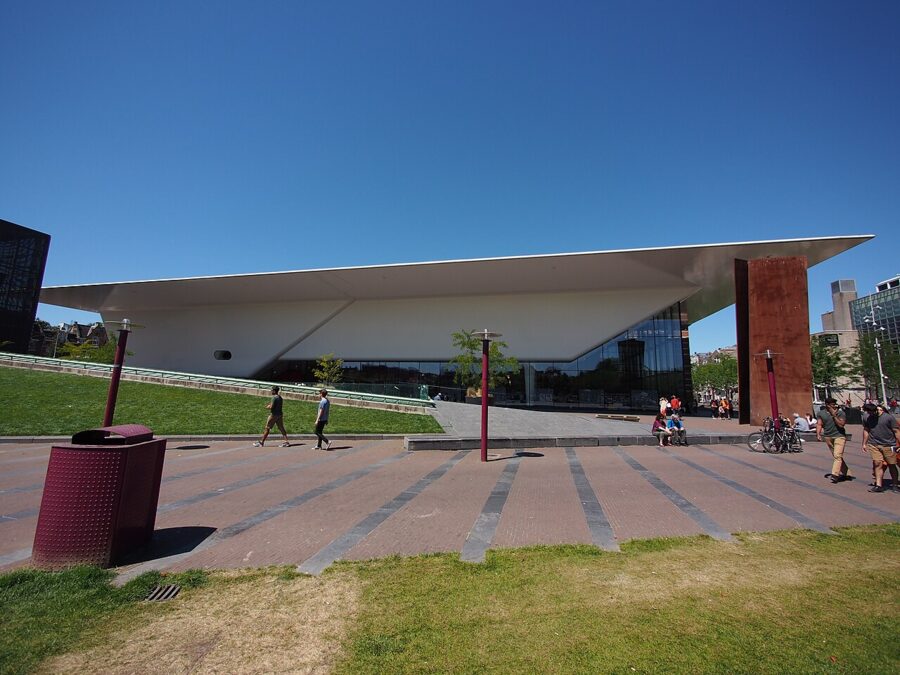
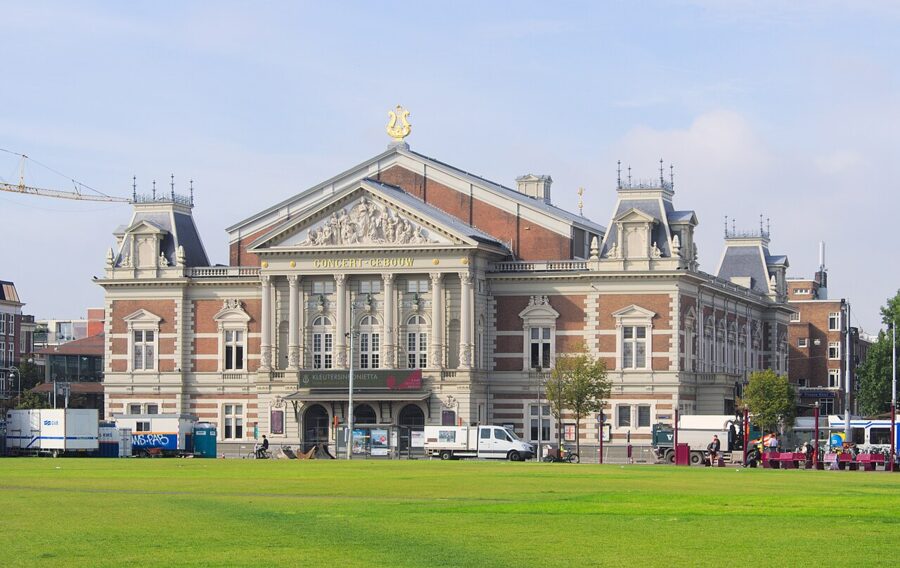
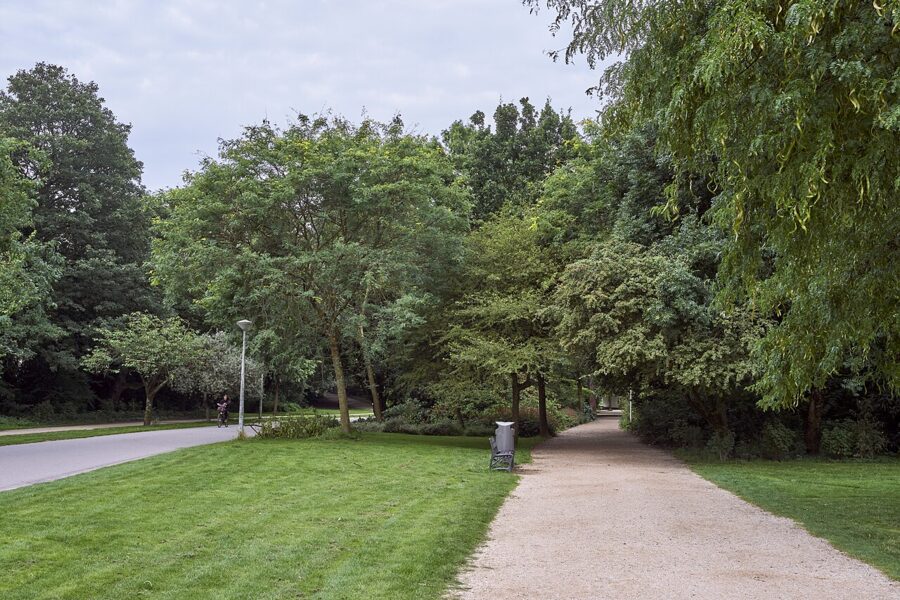
Next door on the Paulus Potterstraat is the Stedelijk, the city’s museum of modern art and design, in an 1895 brick building with a white 2012 wing locals call the bathtub; it is the museum that looked after the Van Goghs for decades before this one was built. Beyond it the Concertgebouw closes the far end of the square. The Vondelpark starts just west of the Van Baerlestraat, and after two or three hours of Van Gogh a lap of its ponds is the right way to come down.


For the rest of the city, the list of things to do in Amsterdam picks up where the Museumplein ends. Slots go whatever the forecast, so book first and check the Amsterdam weather afterward. And if the paintings leave you wanting a beer, the Heineken Experience is a walk east along the Stadhouderskade.
So: no window, no door sale, no City Card. Book the 09:00 slot online the moment your dates are fixed, check that the painting you came for is on the wall, take the tram to Museumplein, and go in through the glass hall to the self-portraits waiting on floor 0.