
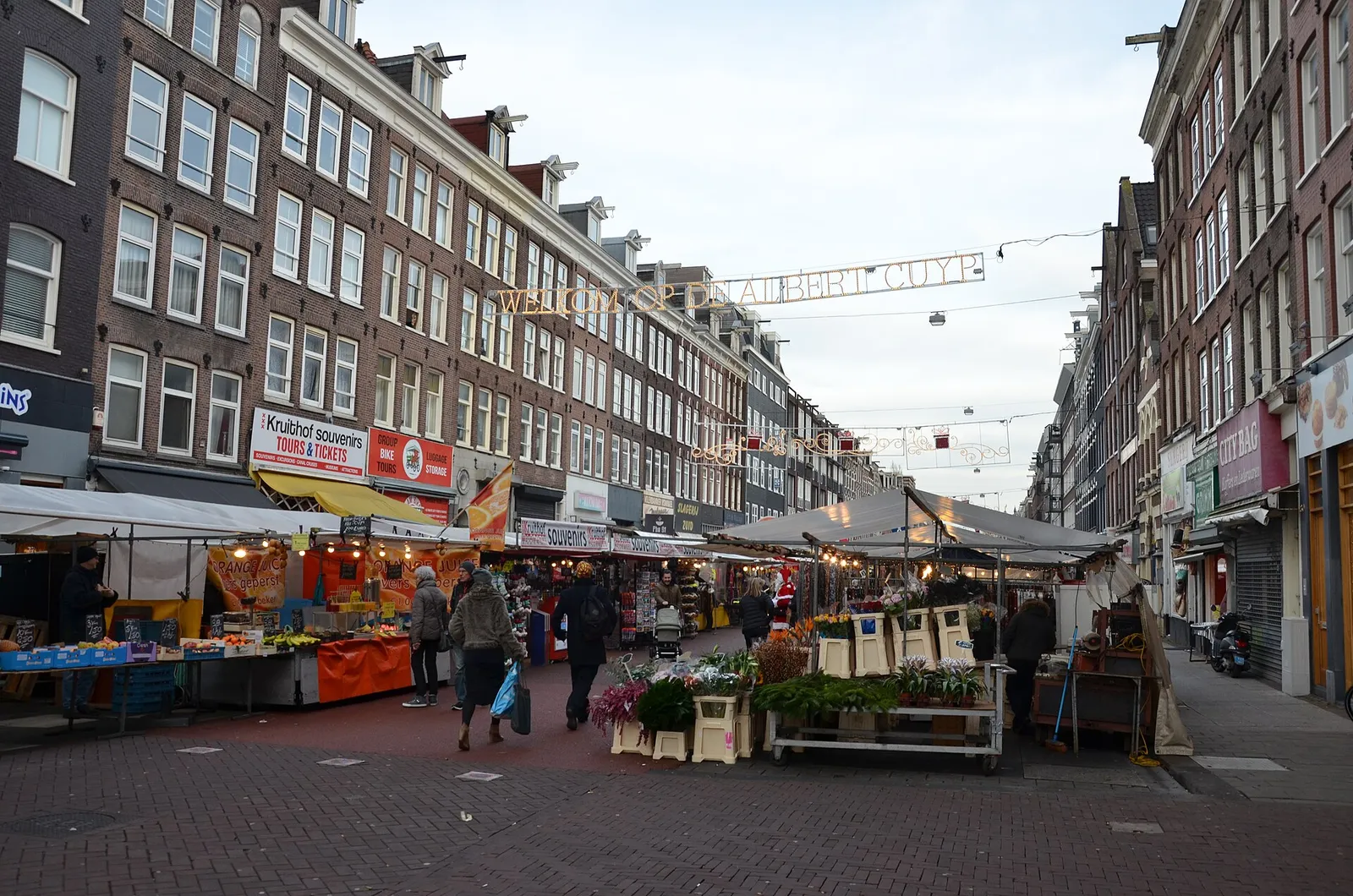

At half past nine the awnings go up along the Albert Cuypstraat, the fish stalls lay out their herring on ice, and the first grey heron lands on a stall roof and waits. By eleven the street is a slow river of shopping bags. By five the stalls are folded onto trailers, the street sweepers come through, and the cafés on the corners put their chairs out for the evening shift.
That is the rhythm of De Pijp, the 19th-century workers’ district just south of the canal ring, and it is the reason to come. There is no great museum here and no canal with a famous name. What it has is about 35,000 people living in long brick streets named after Golden Age painters, the biggest daily market in the country, a small park with a domed monument in the middle, and a restaurant on nearly every corner.
Metro 52 gets you there from Centraal in three stops. Come hungry, come in the morning if you want the market, and stay into the evening if you want to see how the city spends a weeknight when nobody is putting on a show for anyone.

Is it worth your time? If you want to eat well, yes, and more than once. A morning on the market, lunch from a Surinamese counter, an hour in the Sarphatipark and a beer on a square will fill a day without a ticket in it. If you have one day in Amsterdam and want canal houses, the Jordaan is prettier and older, and the canal ring is where the postcards come from.
The difference between the two neighborhoods is the one Amsterdammers argue about. The Jordaan is 17th-century, crooked and quiet, and has become expensive and a little museum-like. De Pijp is 1870s and later, built on a grid, louder, younger and more mixed, and it is where people who live here go out to dinner.
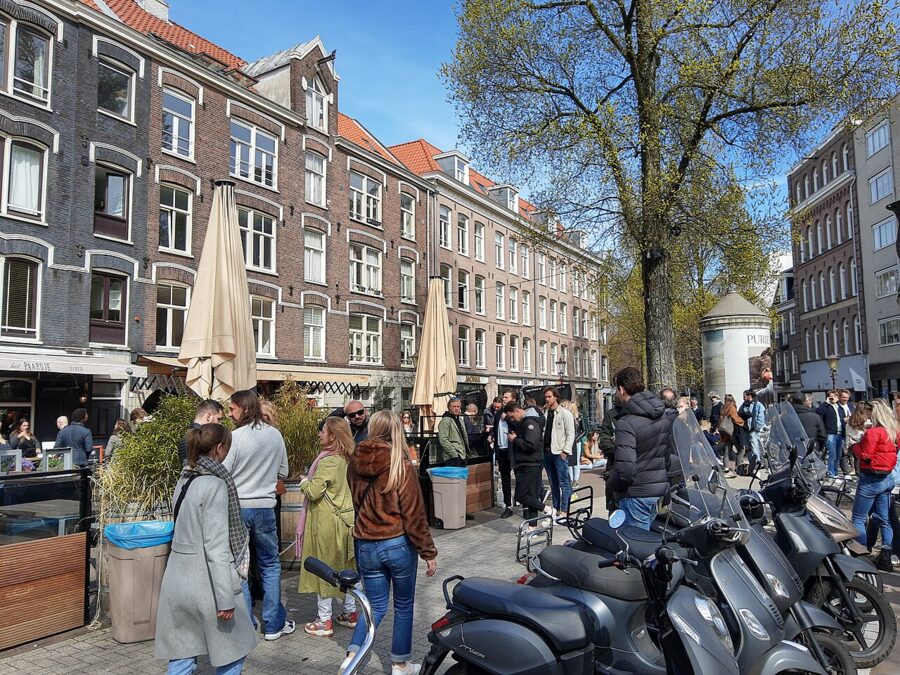

The northern half, the Oude Pijp between the Stadhouderskade and the Ceintuurbaan, is where almost everything you come for is: the market, the Gerard Douplein, the Heineken brewery, the Sarphatipark. South of the Ceintuurbaan the Nieuwe Pijp is quieter, more residential and built a generation later. The whole district runs from the Boerenwetering canal in the west to the Amstel in the east, and you can walk across it in twenty minutes.

Built fast and cheap: the history of De Pijp
Until the 1870s this was polder outside the city’s outer canal, the Singelgracht, crossed by drainage ditches and lined with sawmills. The mills stood along the Zaagmolensloot, the sawmill ditch, which was later filled in and became the Albert Cuypstraat. That is why the market street is so much wider than the streets around it.
The first plan was grand. In 1866 the young city engineer Jacob van Niftrik drew a new district with broad streets, villas in the south and a central railway station roughly where the Sarphatipark is now, with the line running along today’s Ceintuurbaan. The city council turned it down: buying out every plot and every sawmill would have cost too much and taken too long.
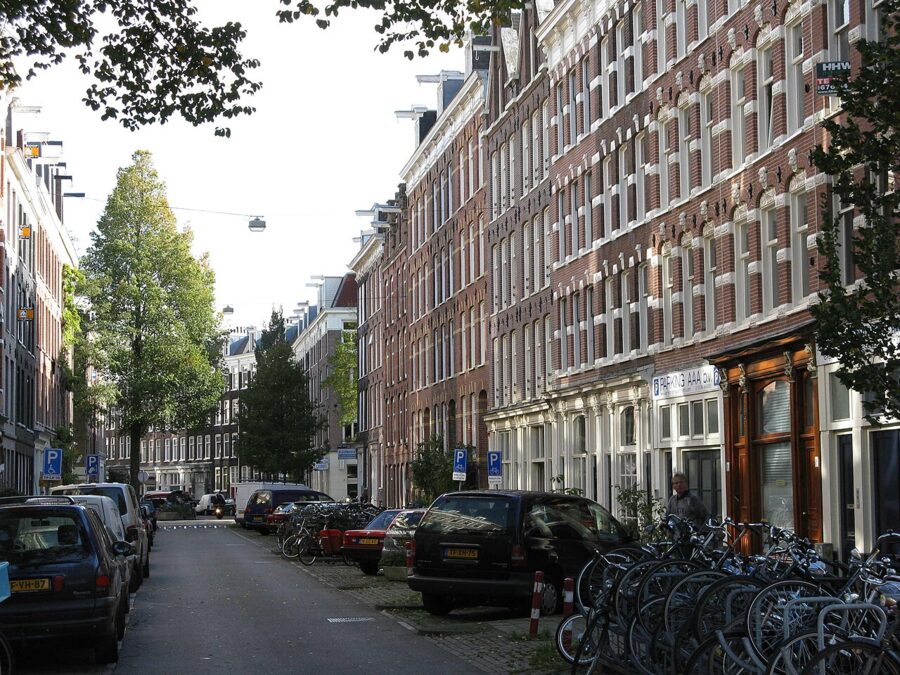
Jan Kalff, the director of public works, drew a cheaper plan in 1876. He raised the ground by about a meter and a half and laid sewers, but he kept the old pattern of ditches as the pattern of streets and left the building to the market. The market was mostly small builders working on borrowed money who wanted a quick return, and they filled the plots as fast and as cheaply as they could.
The Dutch have a word for what they built: revolutiebouw, jerry-building. Houses were known to collapse. The result was the long, straight, four-story streets you see today, better than the slums of the old Jordaan but nothing like the boulevards Van Niftrik had imagined, and with no squares or parks in the plan at all.
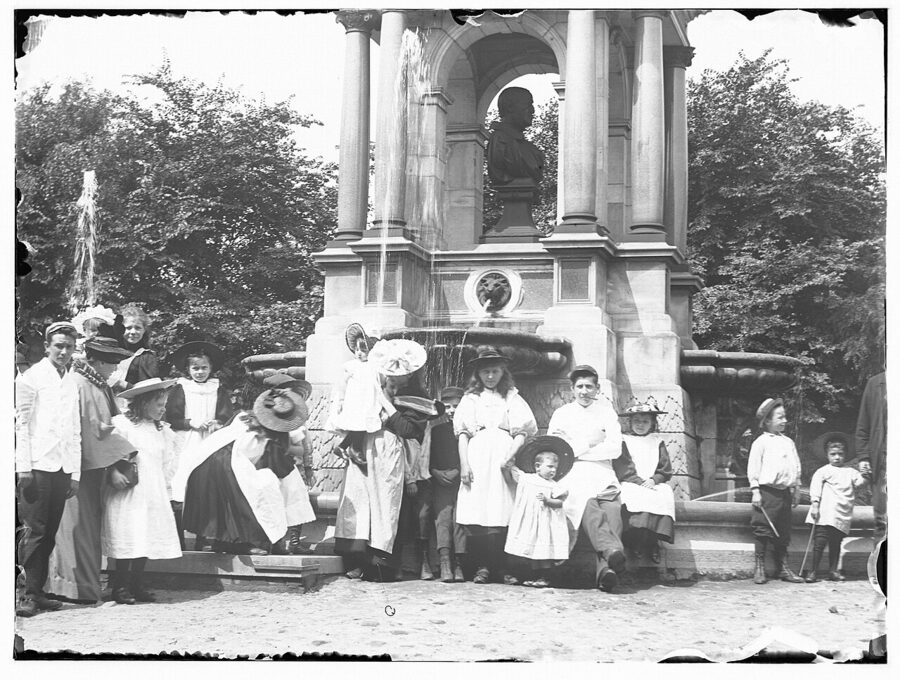
The name and the painters
Officially the area was buurt YY. Amsterdam in the 19th century was divided into 50 districts labeled A to Z and then AA to ZZ, and this one came near the end. The nickname De Pijp, the pipe, was in use almost at once, and nobody is quite sure where it came from.
The oldest explanation, printed in the Amsterdamsche Courant in 1892, says you could see it between eight and nine in the morning, when crowds of workers poured out of the long streets toward the offices of the old town like smoke from a row of pipes. Another theory is plainer: in Dutch a pijp can also be a long straight ditch, and the name may have passed from a polder ditch to a narrow street and then to the whole district.
The street names are easier. When the Ferdinand Bolstraat got its name in 1872, the city started naming the new streets after Dutch artists, mostly painters of the Golden Age: Albert Cuyp, Gerard Dou, Frans Hals, Jan Steen, Van Ostade, Van der Helst. The exceptions are later. The Diamantbuurt in the south is named after gemstones, and a handful of streets carry the names of women painters of the early 20th century, among them Marie Heineken.
Workers, artists, migrants, students
The first residents worked in the brewery on the Stadhouderskade, the diamond-cutting works and the workshops of the city. Artists followed the low rents: Piet Mondrian lived and painted on the first floor of Sarphatipark 42 from 1908 to 1911, his last address in the Netherlands before Paris. Jacob Israël de Haan set his 1904 novel Pijpelijntjes here, and the singer André Hazes was born in the district.
From the 1960s the cheap rooms filled with new arrivals, among them guest workers from Morocco and Turkey and later many Surinamese, who brought the shops and the kitchens that still define the neighborhood. In the 1970s and 1980s the city renewed the worst housing block by block, students and young professionals moved in, and De Pijp began its slow turn into one of the most expensive places in Amsterdam to rent a flat.
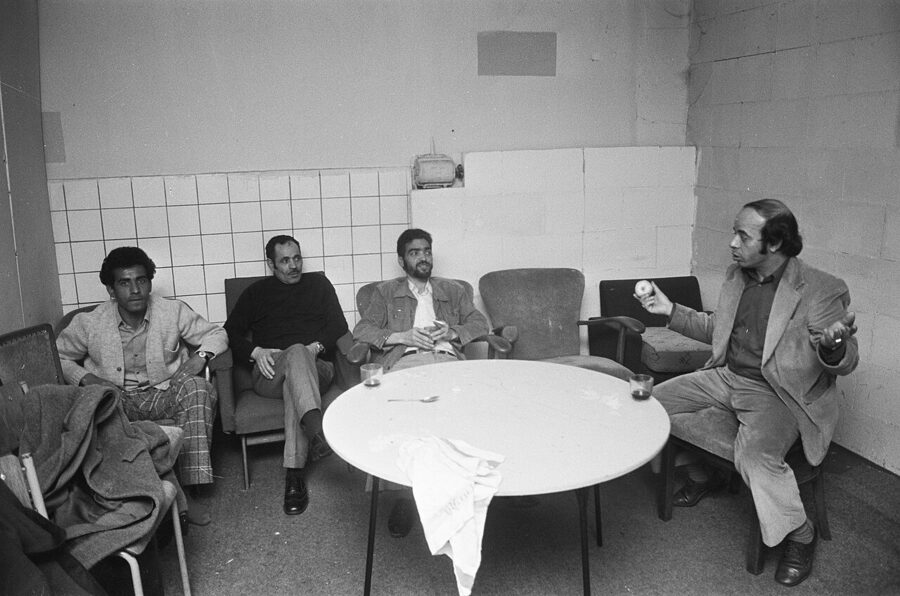
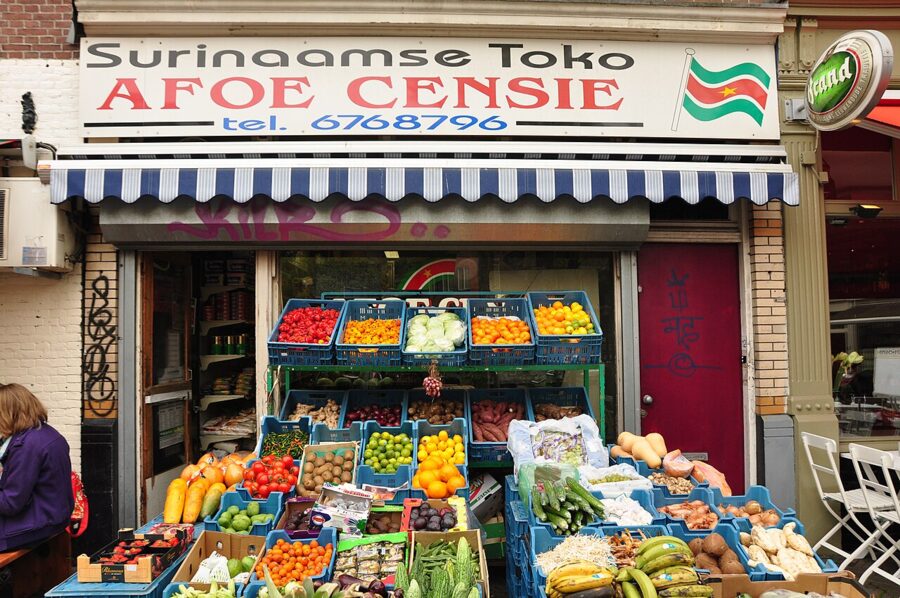
Today about a quarter of the residents have at least one parent born outside Europe and the other Western countries, and the mix shows in the shops: halal butchers next to wine bars, a Surinamese toko next to a Scandinavian bakery. Some of the old shops have gone as the rents climbed, and plenty of residents will tell you so.

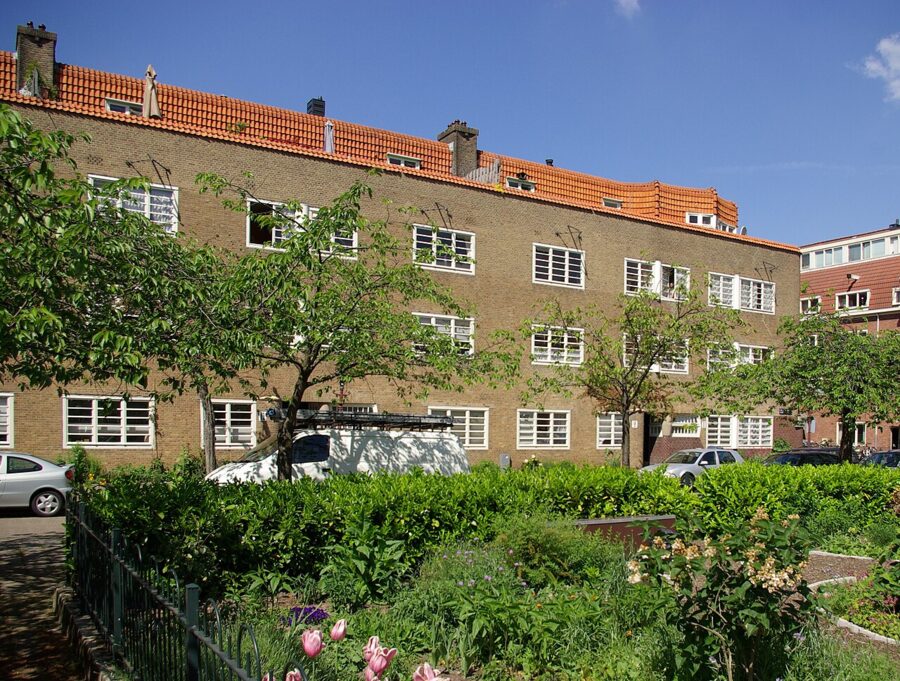
South of the Ceintuurbaan the story changes. That part was built in the 1910s and 1920s under the city’s Plan Zuid, and some of it, around the Pieter Lodewijk Takstraat and the Burgemeester Tellegenstraat, is the housing complex De Dageraad, one of the showpieces of the Amsterdam School, with brick that curves around the corners like folded cloth.

The Albert Cuypmarkt
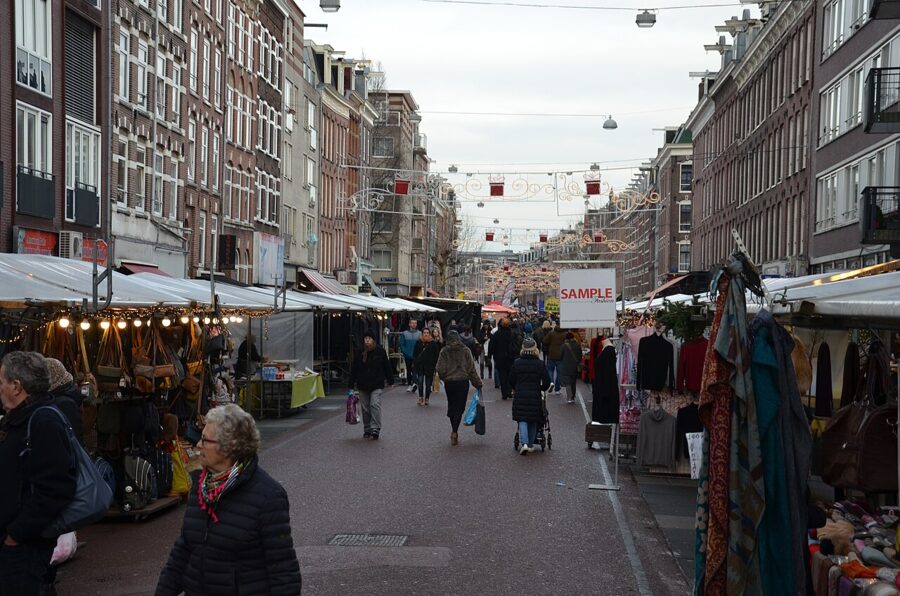
The market started as a loose crowd of street sellers and handcarts. In 1905 the city made it an official market, at first only on Saturday evenings, and in 1912 it became a daily one. It now has about 260 stalls and runs Monday to Saturday from 09:30 to 17:00, closed on Sundays and public holidays, according to the market’s own site as of November 2026.
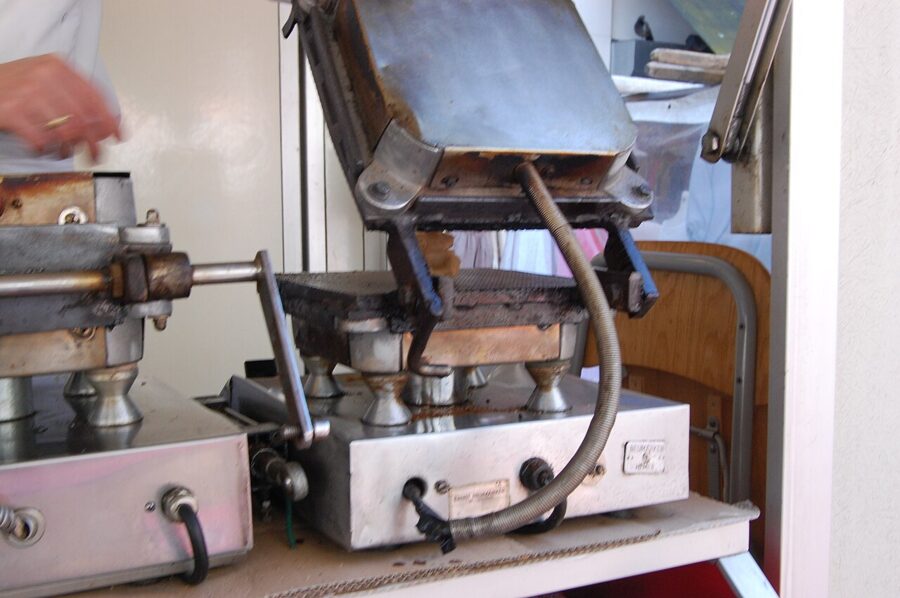
The The stalls and the snacks of the Albert Cuypmarkt are worth a morning of their own. In short: go between opening and lunchtime, eat a herring or a stroopwafel standing up, and expect phone cases and cheap socks between the cheese and the fruit. It is a market where people do their shopping, not a food hall, and that is why it is good.
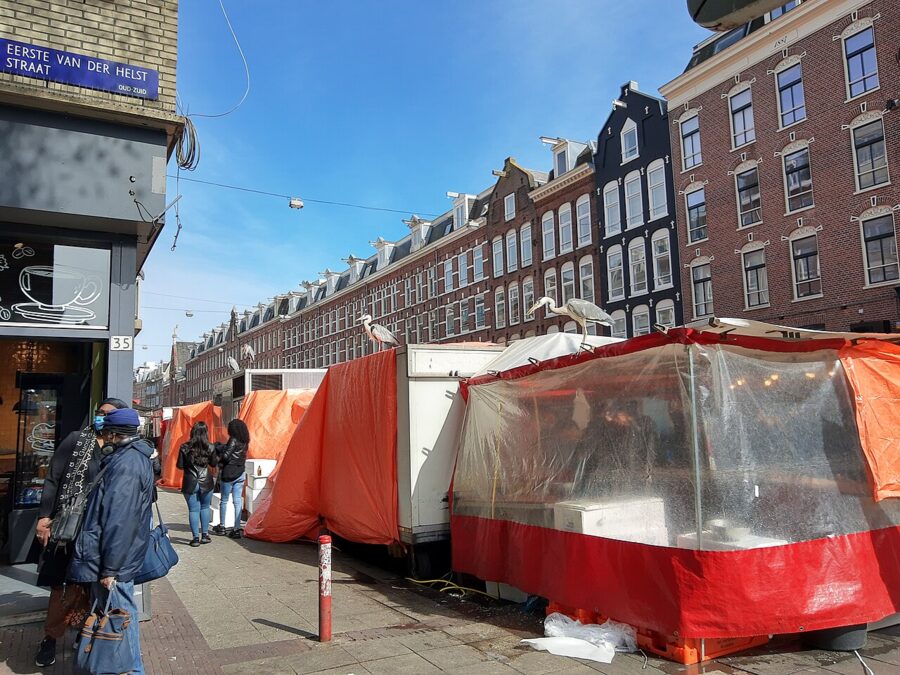

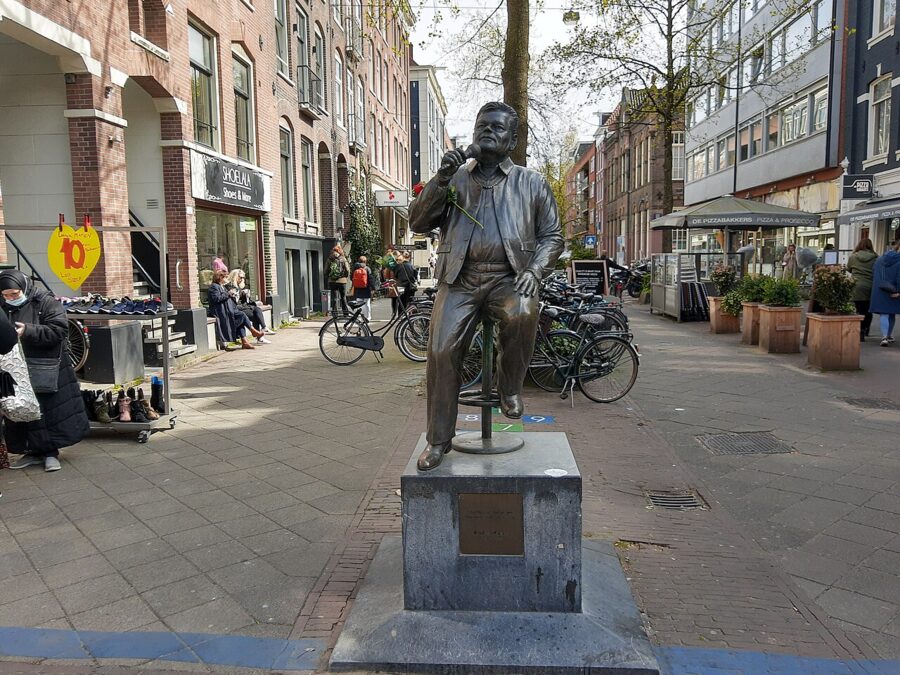
At the corner of the Eerste Sweelinckstraat, halfway along the market, stands a bronze of André Hazes, the singer of tearful Amsterdam ballads, who grew up in De Pijp. As a boy in 1959 he was singing on this market when the comedian Johnny Kraaijkamp heard him, and the rest of his career followed from there. The statue went up in 2005, a year after his death, and his fans still leave flowers on it.


The Sarphatipark and the Sarphati monument
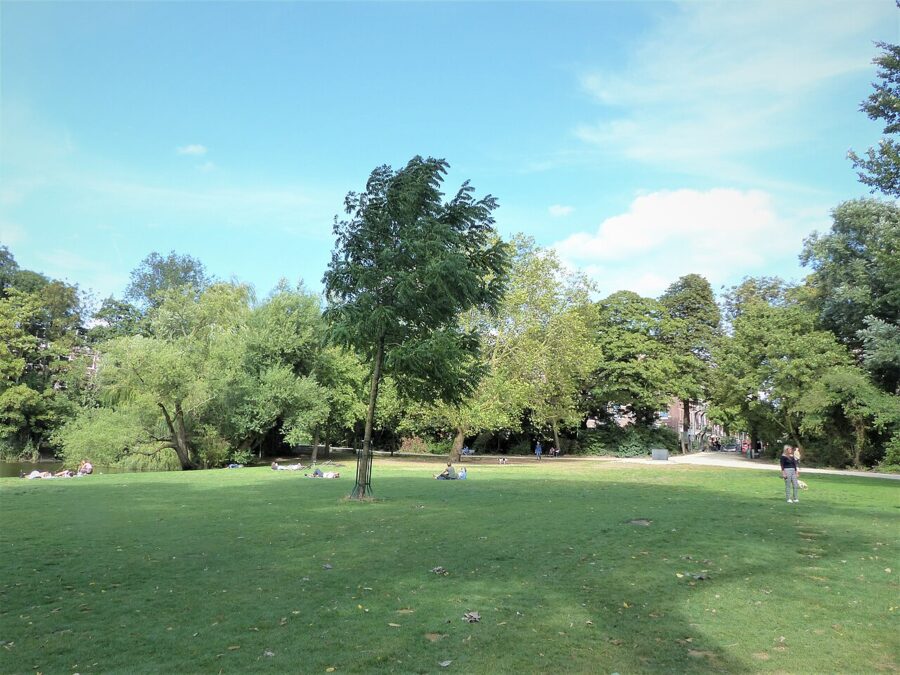
Kalff’s plan had no park in it. The Sarphatipark was added later, laid out from 1885 to a design by Van Niftrik in the informal English garden style, with winding paths, ponds and lawns on 4.5 hectares. It was named after Samuel Sarphati, the Jewish doctor, planner and benefactor who had first proposed it and who died in 1866, nearly two decades before the park was dug.
The streets around it were raised; the park was not. It still lies at the old polder level, below the rest of De Pijp, which is why it floods after heavy rain and why the houses around it seem to look down into it. The apartment blocks on its edges date from around 1890 and are more richly decorated than the housing in the rest of the district.
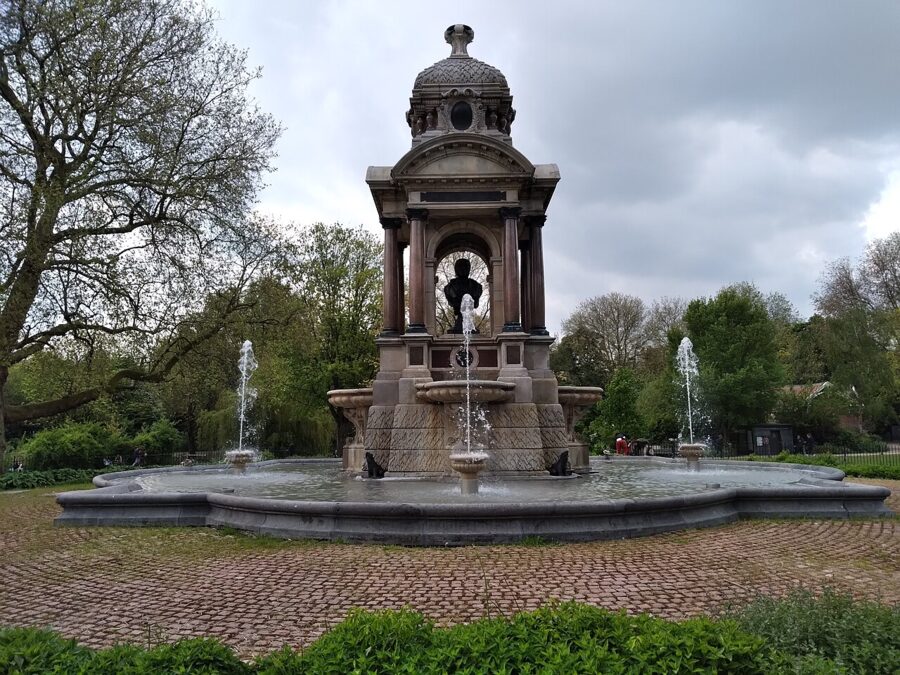

The monument went up in 1886, designed by Jacobus Roeland de Kruijff, with a bust of Sarphati by Sara Strackée-van Bosse. In August 1942 the German occupiers renamed the park after the philosopher Gerard Bolland, because Sarphati was Jewish, and took the bust out of the monument. The name and the bust came back on 18 May 1945.
Go in the late afternoon, when the lawns fill with people who live in the surrounding flats and have no garden of their own. The park is small enough to walk around in ten minutes and calm enough to lie in for an hour. On the north side, at number 34, Scandinavian Embassy pours coffee from Scandinavian specialty roasters with homemade pastries, open weekdays 08:00 to 17:00 and weekends from 09:00 according to its own site.

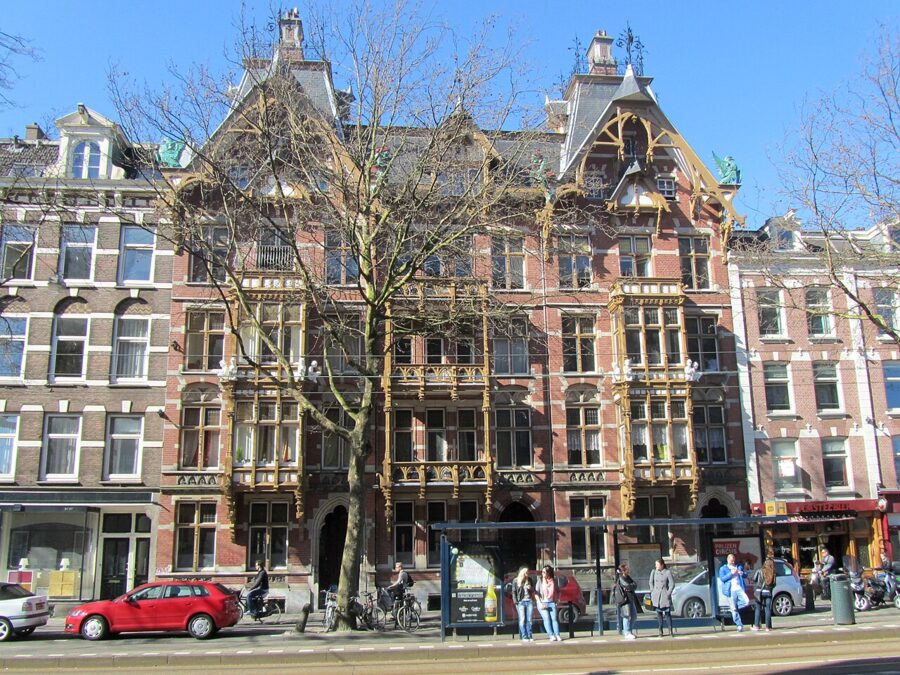
One more building is worth the short walk east along the Ceintuurbaan toward the Amstel. At numbers 251 to 255 stands the Huis met de Kabouters, the house with the gnomes, built in 1884 and a national monument since 1984. Two gnomes two and a half meters tall sit at the roofline throwing a ball to each other; local legend says they actually throw it, either at midnight, or on New Year’s Eve, or only on 29 February.

Where to eat in De Pijp
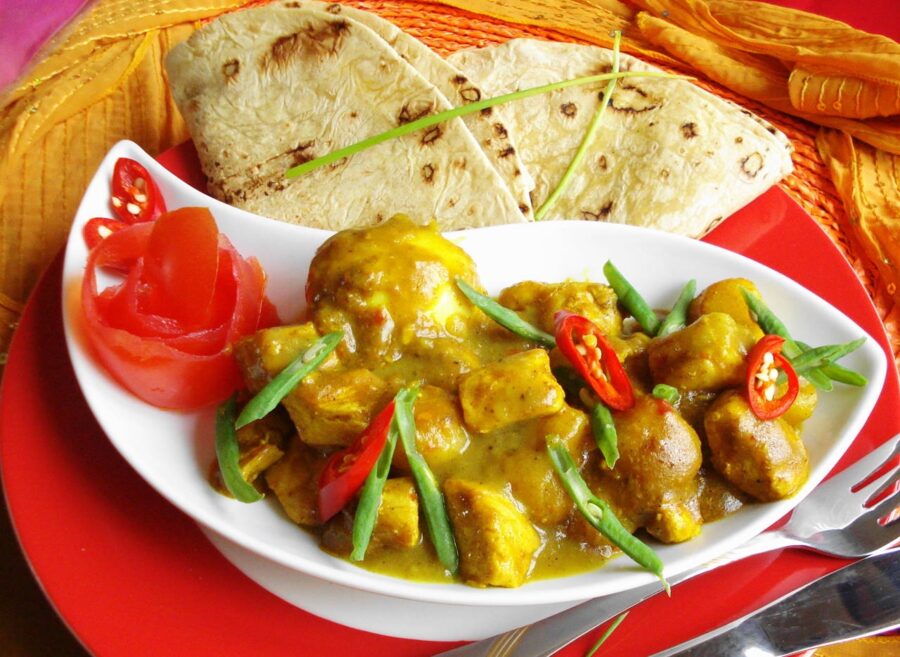
The food is the main event, and the local specialty is not Dutch. Surinam, the former Dutch colony on the north coast of South America, sent tens of thousands of people to the Netherlands around its independence in 1975, and its cooking is a mix of everything that went into the country: Hindustani roti, Javanese noodles and soups, Creole stews, Chinese roast pork. De Pijp has some of the best of it in the city.
Surinamese and Javanese kitchens
Spang Makandra on the Gerard Doustraat is the old reference for Javanese-Surinamese cooking: saoto soup, tjauwmin noodles with tempeh, and Indo rames, a rice plate with a little of everything. Warung Mini van Wou has two branches in De Pijp, at Van Woustraat 19 and Ceintuurbaan 205, and is known for pitjil, a cold vegetable salad in peanut sauce, and telo, fried cassava. Roopram Roti, at Van Woustraat 37, is a roti specialist.
On the market street itself, New Fusion at Albert Cuypstraat 47 cooks the Chinese side of Surinamese food: moksi meti, a plate of mixed roast meats over rice, char siu pork, crispy prawns, bami and nasi. These places are listed in the city’s own guide to Surinamese restaurants, updated in November 2026. They are counters and small rooms rather than restaurants in the white-tablecloth sense, and they are cheap.

Indonesian food and the rijsttafel
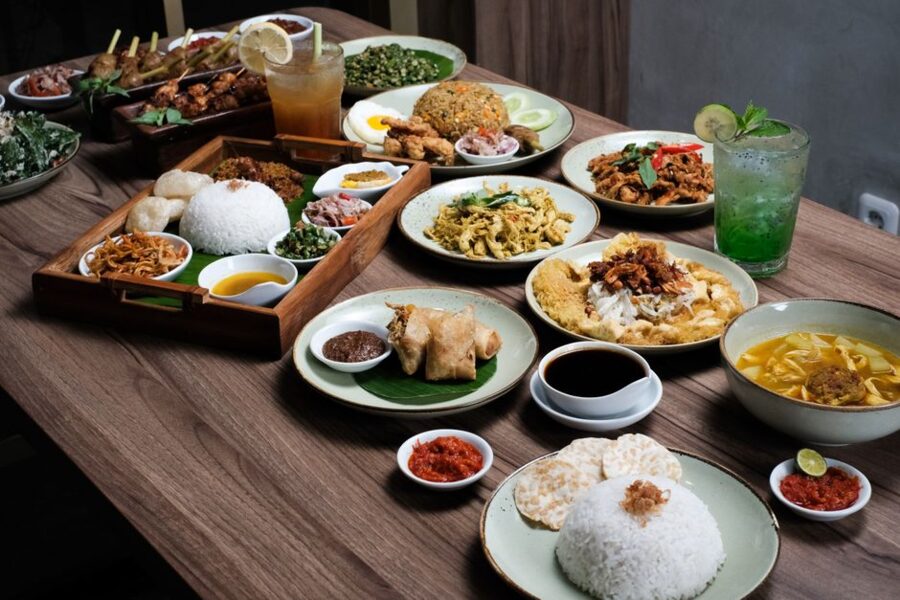
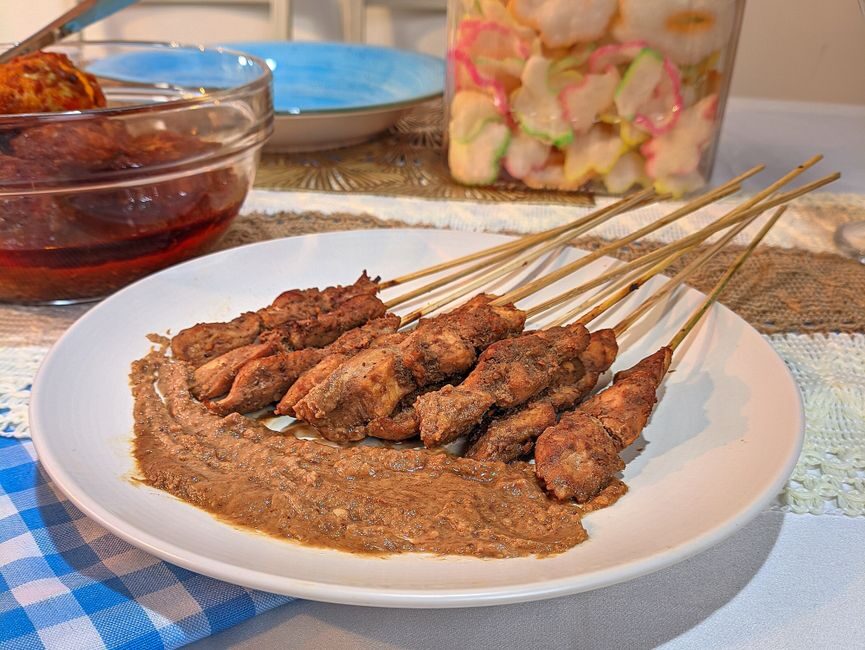
Indonesia, the larger colony, gave the Dutch the rijsttafel, the rice table: a dozen or more small dishes around a bowl of rice, a colonial banquet that is now more Dutch than Indonesian. Dèsa at Ceintuurbaan 103-H serves a classic one for €29.90 (about US$35) per person, minimum two people, with chicken satay, spicy chicken rica-rica, beef rendang, gado-gado and the rest. It opens every day for dinner from 17:00 to 21:30, as listed on the restaurant’s menu page in November 2026.
For something newer, Omahe at Ruysdaelkade 251 calls itself an Indonesian brasserie and cooks the classics with a modern hand: saoto ayam, chicken soup with lemongrass, fish in a sweet-sour pesmol sauce, prawns Jimbaran style from Bali, and a pandan crème brûlée to finish. It is open Tuesday to Sunday from 17:00 to 22:00, and since 23 November it closes on Mondays for the winter, according to its website.
Brunch and coffee
De Pijp is the brunch capital of the city, which is a mixed blessing: on a Saturday the good places have a line by ten. Bakers & Roasters at Eerste Jacob van Campenstraat 54 does New Zealand and Brazilian brunch plates, takes no reservations in De Pijp (you can join a virtual waitlist), and is open 08:30 to 15:00 on weekdays and to 16:00 at weekends, per its site. Little Collins, a Melbourne-style brunch room on the Eerste Sweelinckstraat by the park, is the other name everyone gives you.
Next door to Little Collins, at Eerste Sweelinckstraat 23, BRIO is its evening sibling: Italian-leaning plates and a serious wine list, dinner Wednesday to Saturday from 17:30, per the restaurant’s site. For the top end, the Hotel Okura on the southern edge of De Pijp has Ciel Bleu, which kept its two Michelin stars in the 2026 guide.
Bars and a night out
De Pijp goes out to dinner and then to a bar; it does not go clubbing. The terraces of the Gerard Douplein and the Marie Heinekenplein fill on any warm evening, and the side streets have a brown café on half the corners. The nightlife guide covers the late end of the neighborhood: Café Eddy Bar on the Gerard Doustraat, where André Hazes used to drink and sometimes worked behind the bar, and the Friday dance floor at Huis van iemand anders on the Van Woustraat.
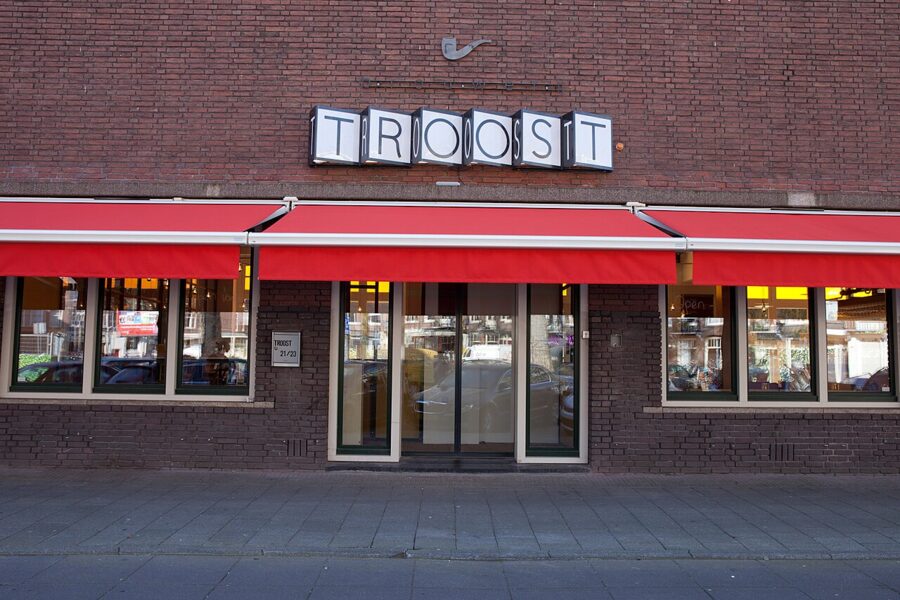
For beer, Brouwerij Troost has its De Pijp brewpub in a former convent building on the Cornelis Troostplein, where the Ferdinand Bolstraat crosses into the Nieuwe Pijp. The brewpub at number 21 opens at 16:00 on weekdays and noon at weekends, and stays open until 01:00 Monday to Thursday and 03:00 on Friday and Saturday, according to the brewery’s site. It pours its own beers, and the room is big enough that you can usually find a seat.

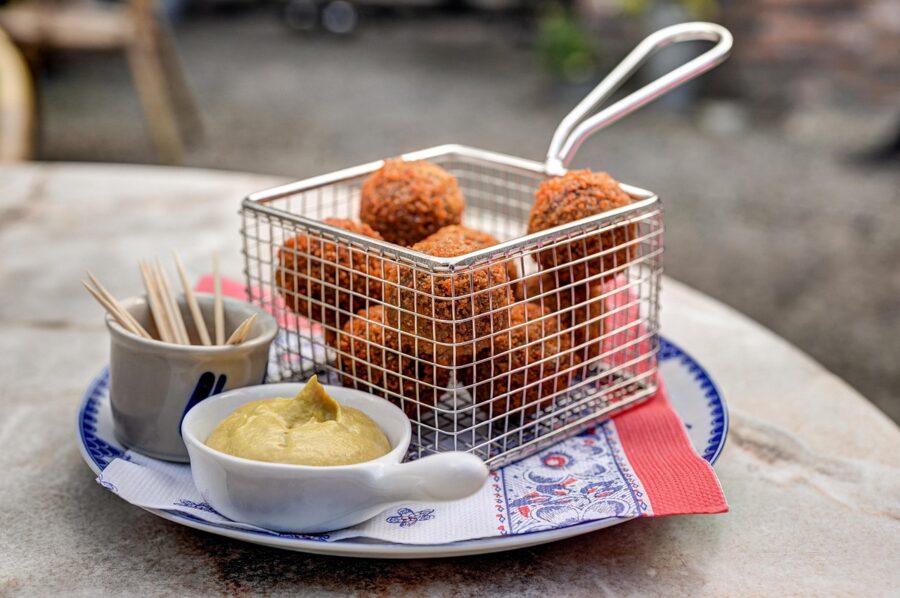
Closer to the market, Café Gollem at Daniël Stalpertstraat 74 is the De Pijp branch of a small group of Amsterdam beer cafés whose first bar opened in 1974. It has 14 taps with a rotating list, according to the group’s site, and the kind of crowd that wants to talk about what is in the glass.
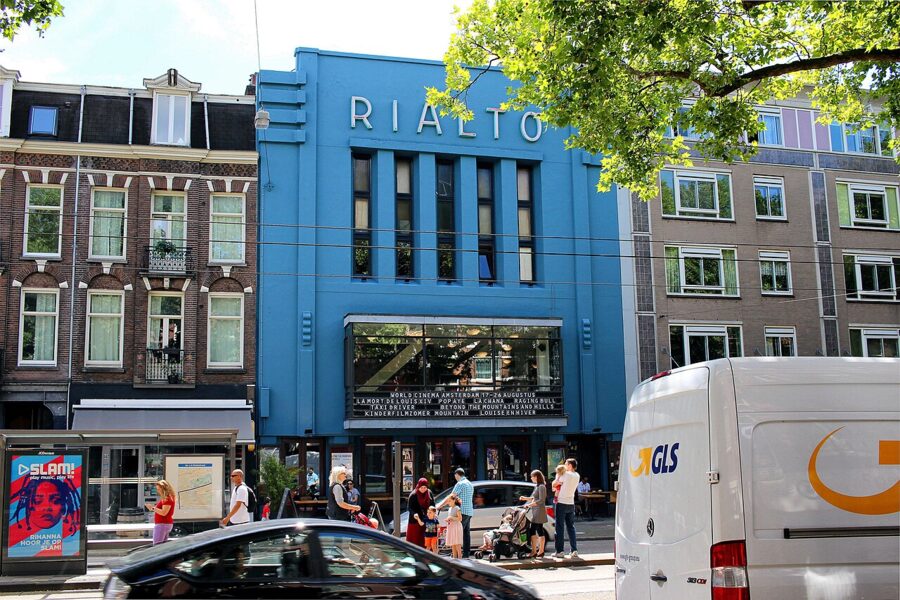
For a rainy evening, Rialto De Pijp on the Ceintuurbaan has been a cinema since the 1920s and shows arthouse and international films behind its blue Art Deco front. Check the program on Rialto’s site for the language and subtitles of each film before you buy a ticket.

The Heineken Experience and the Ruysdaelkade
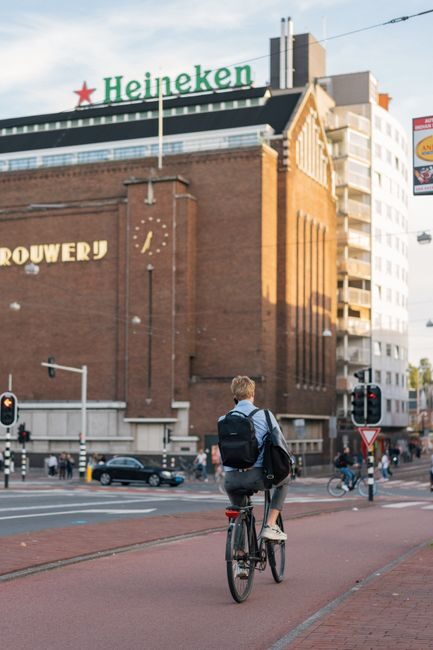
The big red-brick block on the Stadhouderskade, at the northern edge of De Pijp, is the brewery Heineken built in 1867, its first in Amsterdam. Beer was brewed here until 1988. Part of the complex was then demolished and the rest opened as a visitor center in 1991, renamed the Heineken Experience in 2001 and rebuilt as the attraction it is now in 2008.
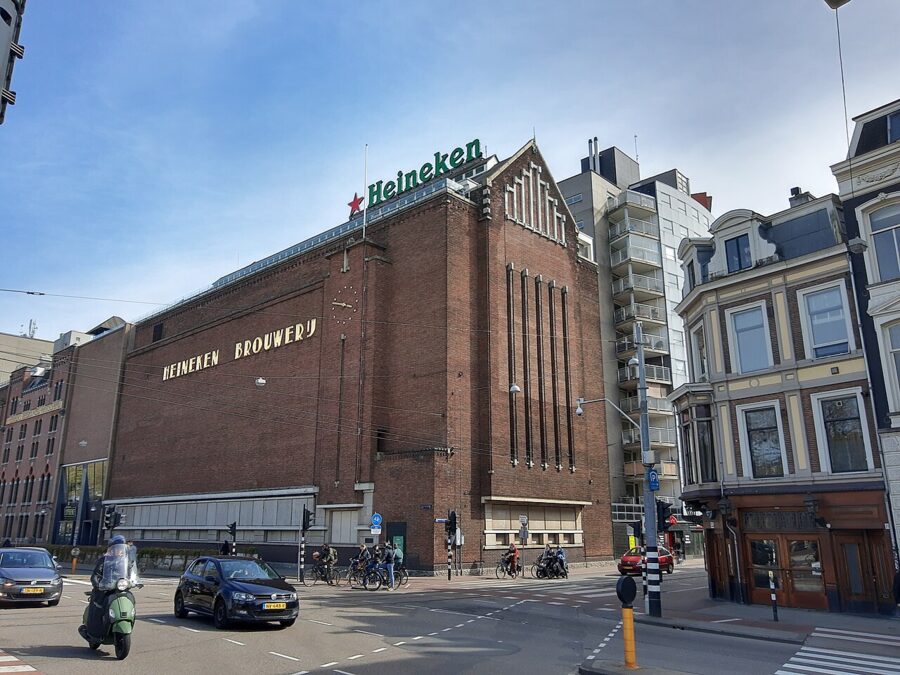

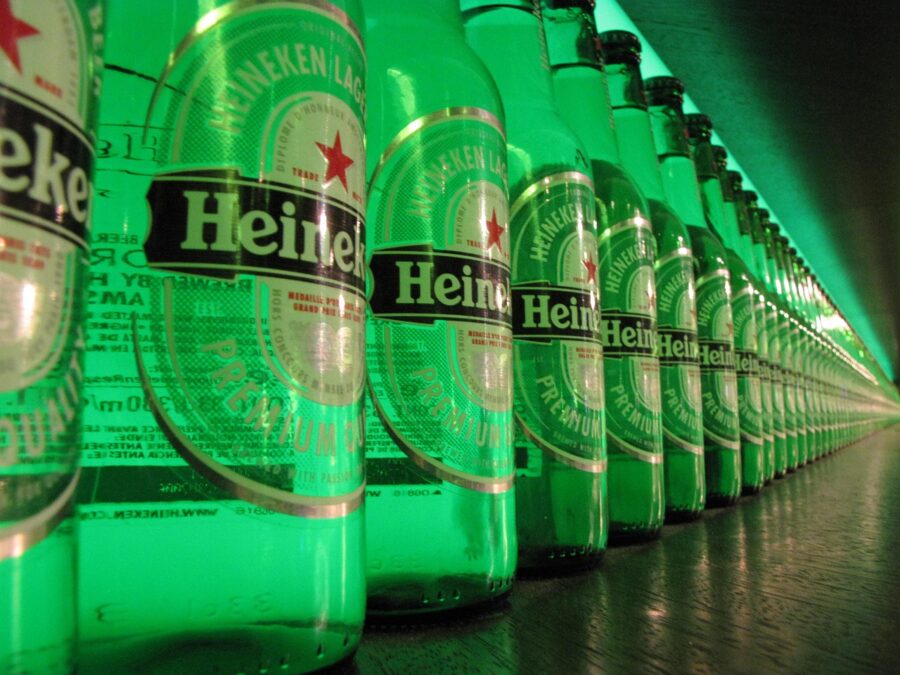
It is a brand tour, not a working brewery, and it makes no secret of it: interactive rooms, the old copper kettles, a lot of green bottles and a beer at the end. As of November 2026 the standard Heineken Tour costs €24.95 (about US$29) online, takes about an hour and a half and includes one beer; the Tour plus Rooftop ticket costs €29.95 and includes two drinks and the roof bar. Prices are from the Heineken Experience’s own pages.
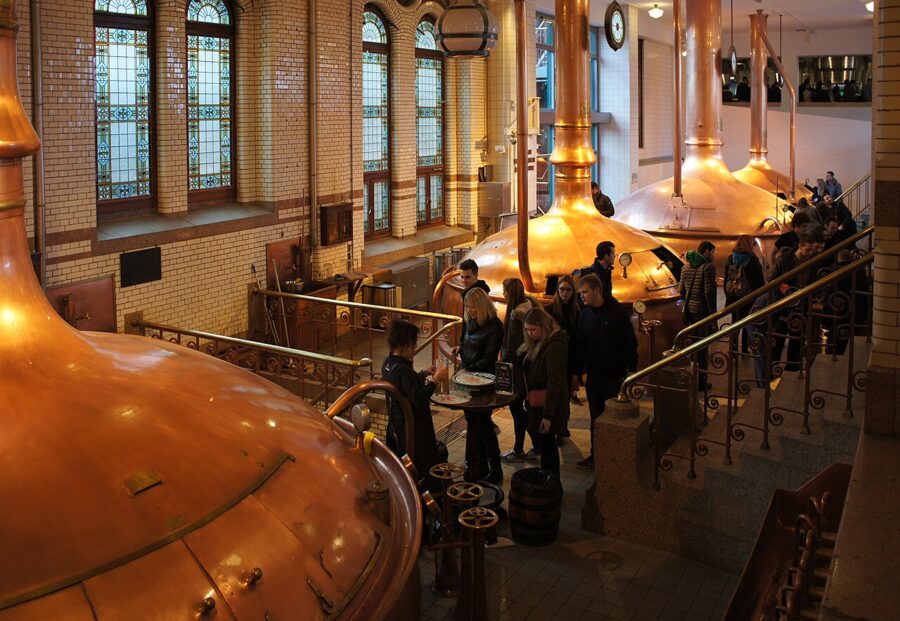

Three rules catch people out. Children are not allowed in at all, not even with an adult. You may be asked for ID at the door, since the drinking age in the Netherlands is 18. And the free lockers only take bags up to about 32 by 23 by 49 centimeters, so suitcases have to go to a luggage store such as the one on the Marie Heinekenplein.
Opening hours as of November 2026 are 10:30 to 19:30 from Monday to Thursday and on Sunday, with last entry at 17:15, and 10:30 to 21:00 on Friday and Saturday, last entry 18:45. Walk-up tickets are limited, so book a slot. If you came for beer rather than branding, my advice is to skip it and spend the money at Troost or Gollem, but if you are curious about how a family firm became a global brand, it is a well-made 90 minutes.
The round square behind the brewery, the Marie Heinekenplein, was built on the old loading yard after it was demolished in 1988. It could not simply be called Heineken Square, because Amsterdam does not name streets after companies or living people, so in 1994 the district named it after Marie Heineken, a painter from the brewing family, which also fit the painters’ theme of the streets around it. It is now a ring of bars with terraces around a fountain.
The Ruysdaelkade
The western edge of De Pijp is a quay along the Boerenwetering canal, the Ruysdaelkade, named in 1872 after the 17th-century Ruisdael family of painters. Its northern end has the oldest houses on the quay, townhouses built in the 1870s for the well-to-do with a view across the water toward the Rijksmuseum; the painter Carel Willink lived and worked at number 15 from 1935 until his death in 1983, and a bust of him stands in the little green behind the old pumping station.
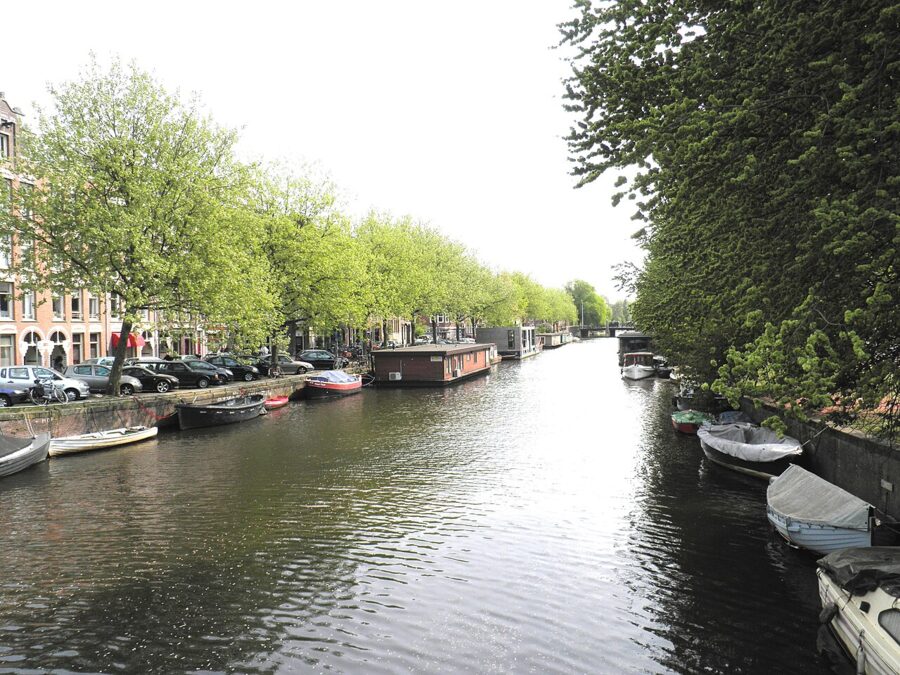

Between the Albert Cuypstraat and the Govert Flinckstraat, a short stretch of the quay is one of the city’s three window prostitution areas, much smaller and quieter than the one in the old center described in the Red Light District guide. The same rules apply: walk past if you like, but no photos of the windows and no lingering in front of them.
Staying in De Pijp
De Pijp is a good base if you plan to eat out every night and do not mind a metro ride or a 15-minute walk to the museums. The streets are residential, the main ones are busy until late, and the side streets go quiet early. It costs less than the canal ring for the same standard of room, and the where to stay in Amsterdam guide sets it against the other neighborhoods.
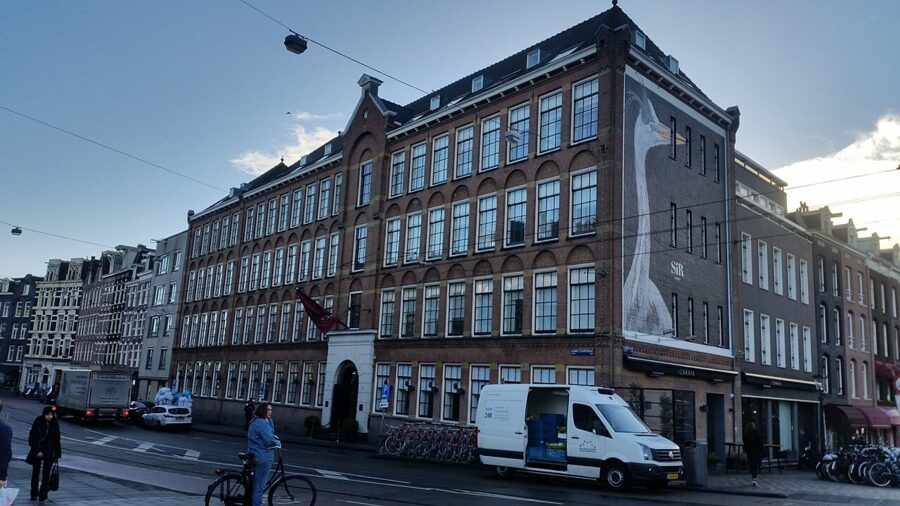
For a budget room in the middle of things, the Bicycle Hotel is on the Van Ostadestraat, a block south of the park. At the canal end of the market street, Sir Albert Hotel at Albert Cuypstraat 2-6, per its own site, fills the former Moppes diamond factory, a reminder that diamond cutting was once a big employer here.

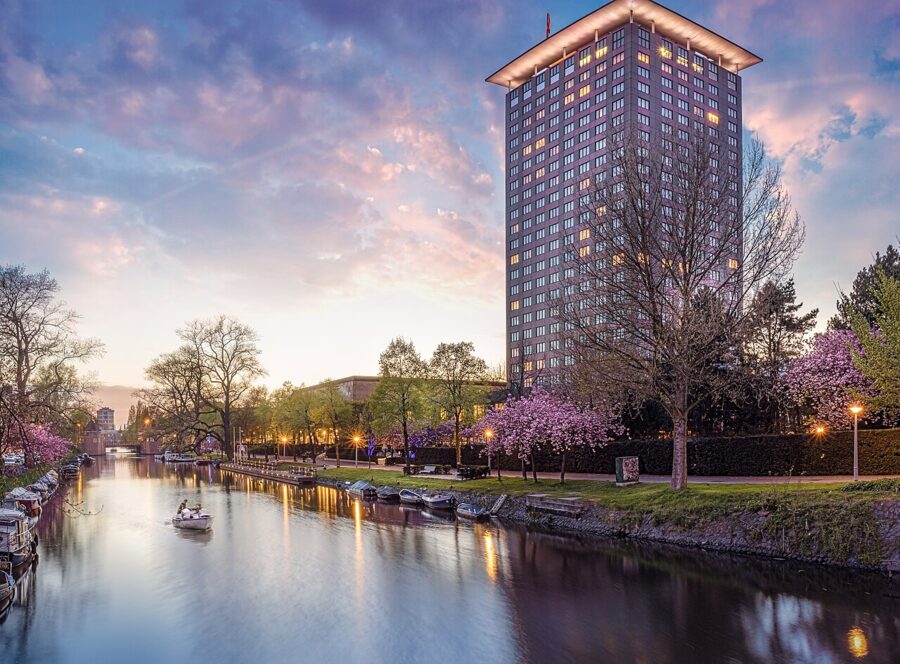
At the far end of the scale, the Hotel Okura at Ferdinand Bolstraat 333, by the Amstelkanaal on the southern edge of the district, opened in 1969 as a tower hotel with Japanese restaurants and Ciel Bleu at the top; details are on the hotel’s site.

If you are looking at holiday rentals, the rules are strict. Since 1 April 2026 a whole flat in the Oude Pijp, the northern half of the district, may be rented to visitors for no more than 15 nights a year, against 30 in most of the city, and every legal listing must show a registration number. Hotels add Amsterdam’s tourist tax of 12.5 percent of the room price as of 2026, rising to 16 percent in 2027.
Getting to De Pijp
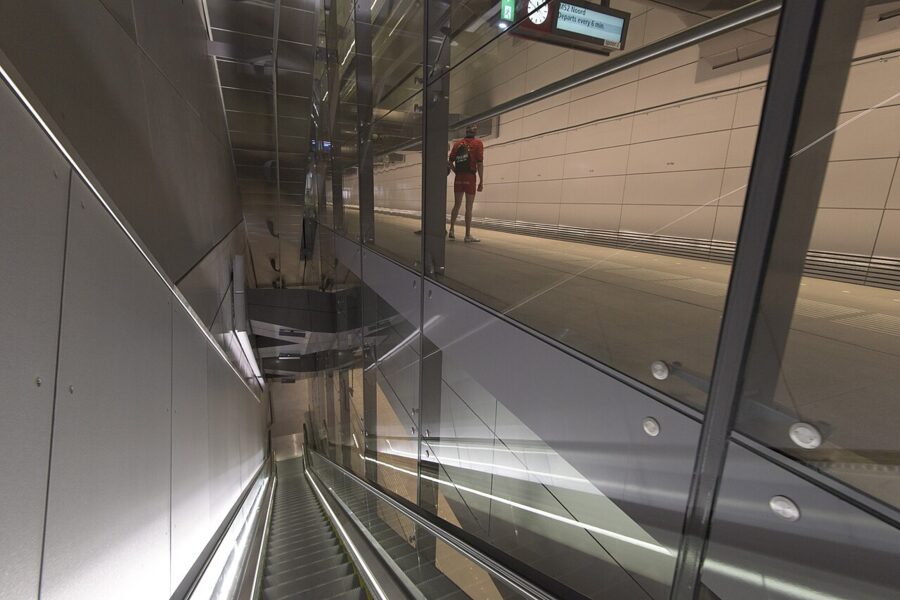
Metro 52, the Noord/Zuidlijn, stops at station De Pijp, deep under the Ferdinand Bolstraat between the Albert Cuypstraat and the Ceintuurbaan. It is three stops from Centraal, by way of Rokin and Vijzelgracht, and two from Amsterdam Zuid, by way of Europaplein. The station opened with the line in 2018.

A GVB one-hour ticket costs €3.40 (about US$4) as of late November 2026 when you tap in and out with a contactless bank card. From Schiphol, take the train to Amsterdam Zuid, six or seven minutes, and change to metro 52 toward Noord; there is no need to ride into Centraal and back out.

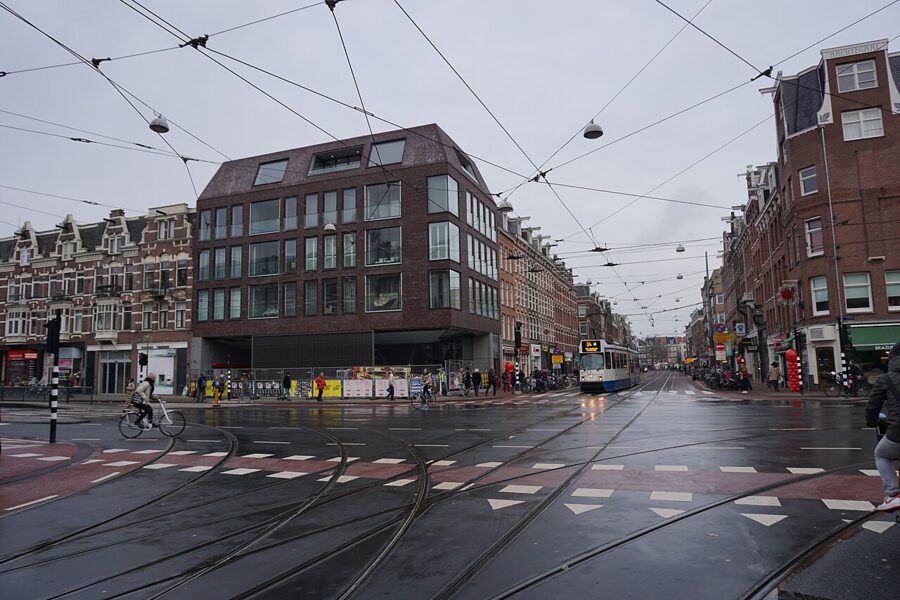
Several tram lines also cross the district; GVB redrew the tram network on 29 March 2026, so check the GVB app for the line and stop nearest your address. On foot, the market is about 15 minutes from the Rijksmuseum across the Boerenwetering, and about half an hour from the Dam. On a bike it is ten minutes from anywhere in the center, and there are racks on every corner and rarely a free space in them.
So: take metro 52 to De Pijp, come up at the Albert Cuypstraat exit before eleven, and let the heron have the end of your herring. Walk the market to the Van Woustraat, sit in the Sarphatipark through the afternoon, and when the stalls fold up at five, find a table on the Gerard Douplein and stay for dinner.