
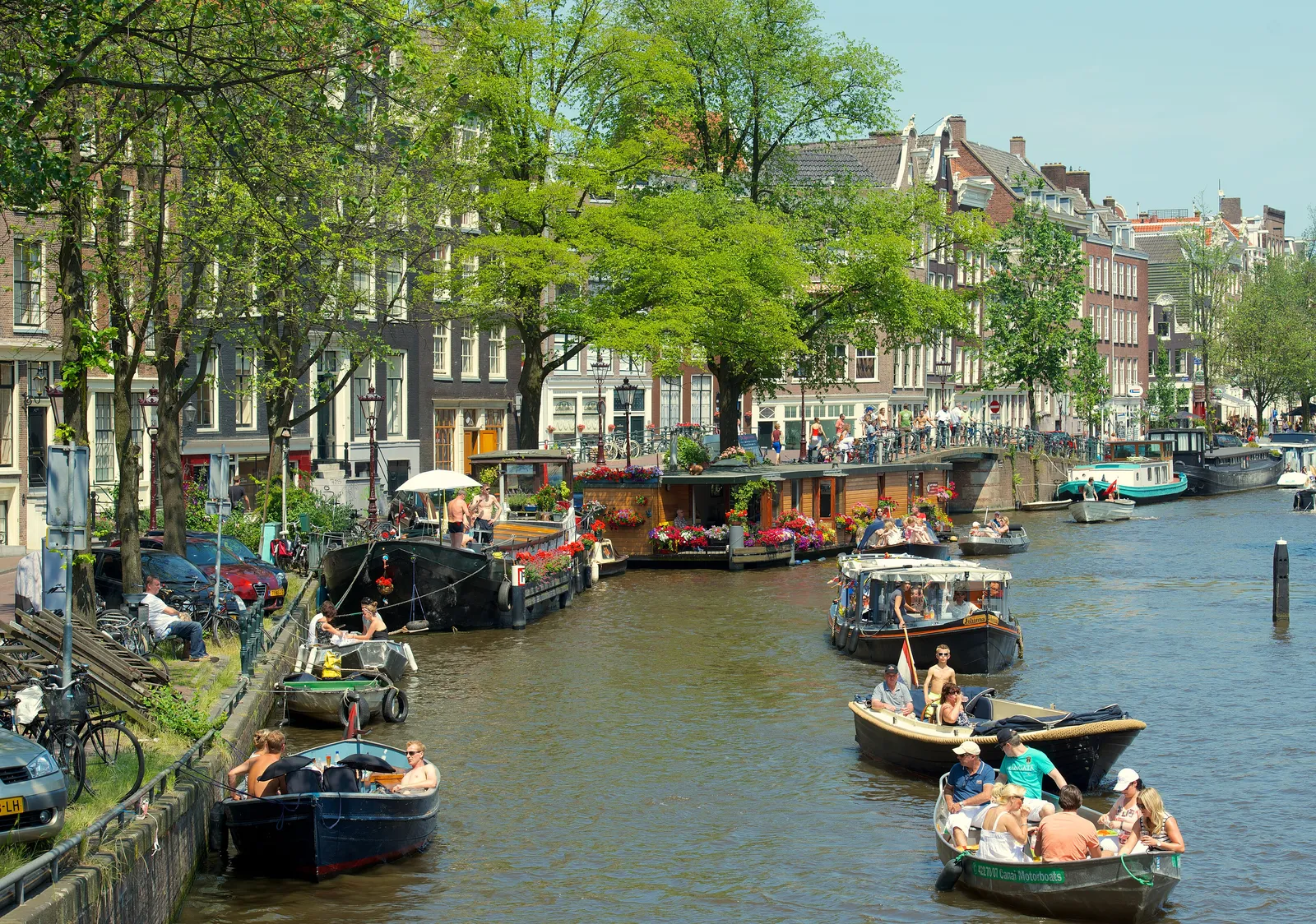

Eleven canals were dug through the Jordaan in the seventeenth century, and five of them still hold water.
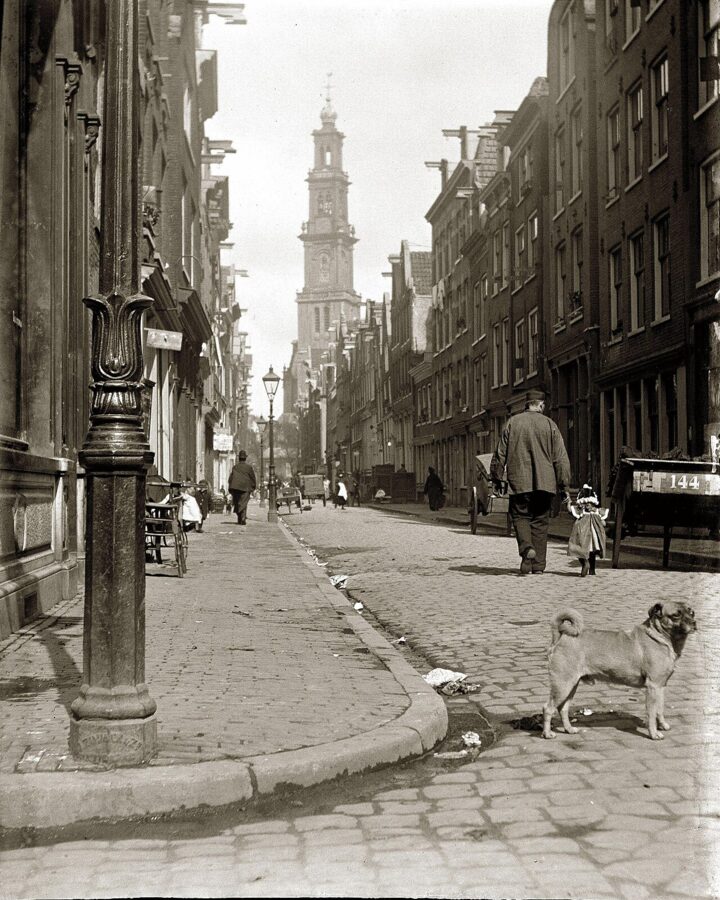
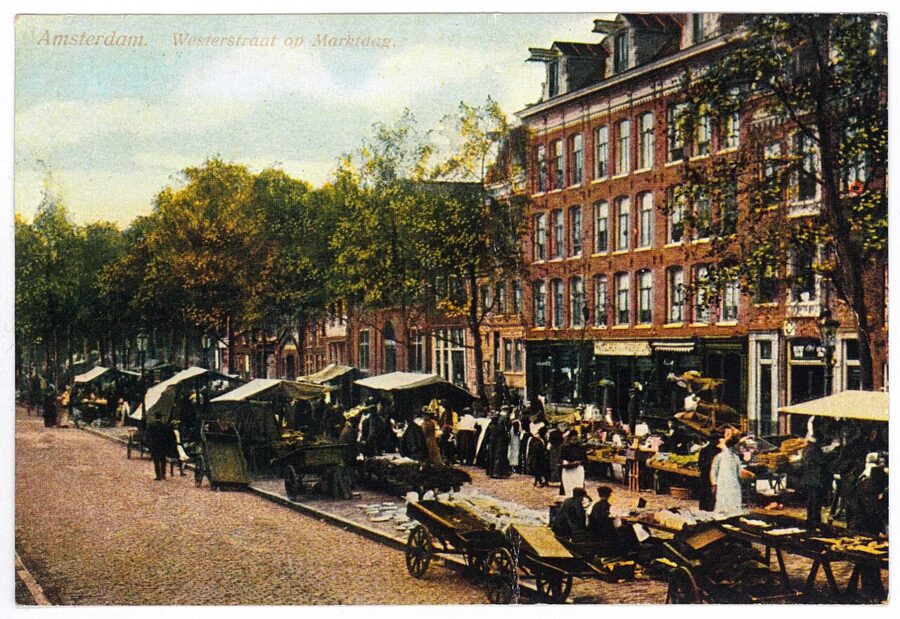
The other six were filled in between 1857 and 1895, because they stank and because the carts needed the room, and they became the streets where the neighborhood now shops and drinks: the Westerstraat, the Lindengracht, the Rozengracht, the Elandsgracht, the Willemsstraat and the Palmgracht. Keep that in mind and the place starts to make sense: the wide streets were water, and the narrow ones were always narrow.
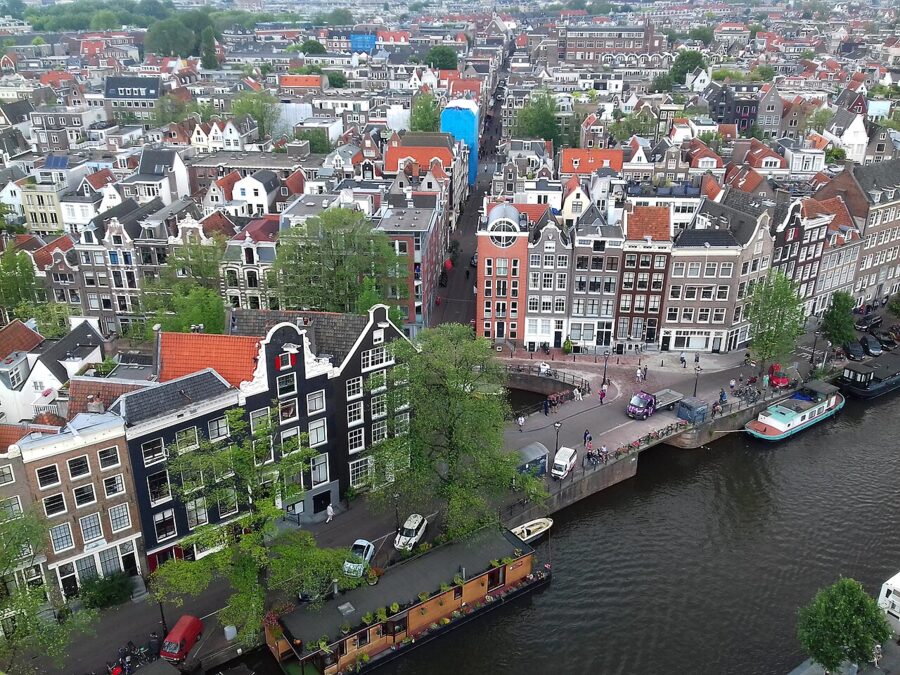
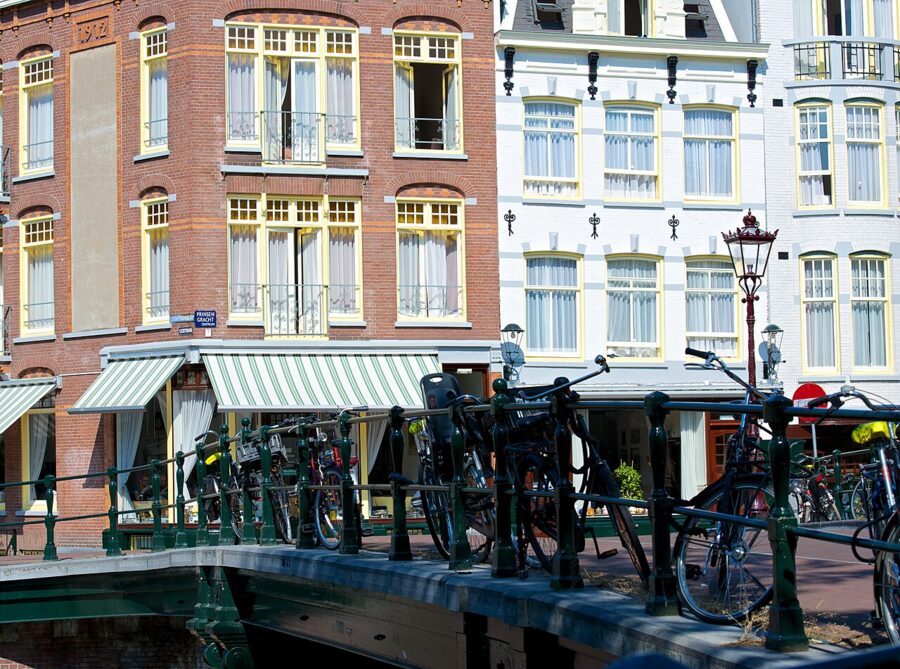
The other thing to know is older still. The Jordaan’s streets follow the drainage ditches of the farmland that lay west of the town around 1100, while the grand canals next door were laid out fresh, in a half-circle. So the whole district sits at a slant to the Prinsengracht. Its bridges miss the bridges opposite, its corner houses are built to awkward angles, and when you cross from the canal ring into the Jordaan you can feel the street plan change under your feet.
It was built for the workshops, the dyers and tanners, and the people the merchants on the big canals needed but did not want next door. Today it is one of the most expensive places to live in the country, and away from a handful of streets it is still mostly homes. Give it half a day: the markets at the north end on a Monday or Saturday morning, the small canals and the hofjes (almshouse courtyards) in the middle, and a brown café before the evening crowd arrives.
Contents11 parts
- The Jordaan in half a day
- How a district for the poor got its shape
- The canals and streets worth walking
- The hofjes, and how to visit them
- Markets: Monday and Saturday
- Brown cafés and the Jordaan song
- Where to eat
- Small museums and sights
- A walk through the Jordaan
- Getting there and getting around
- Staying in the Jordaan



The Jordaan in half a day
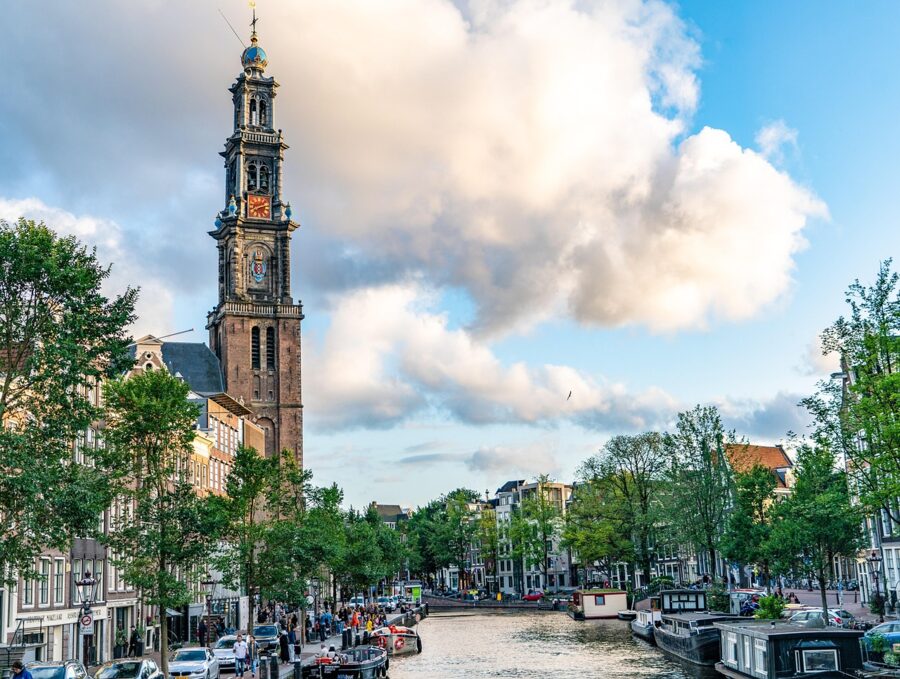
The Jordaan is the wedge of streets west of the Prinsengracht. The Brouwersgracht closes it to the north, the Leidsegracht to the south, and the old city moat, the Singelgracht, to the west, with the Lijnbaansgracht running just inside it. About 19,500 people lived here in 2023. It is part of the city center, not a suburb: from the Dam to the Westerkerk on the Jordaan’s eastern edge is a walk of about ten minutes, and from Centraal Station to the Noordermarkt about a quarter of an hour.
The name is said “yor-DAHN”, with the stress at the end. Amsterdammers often say “de Jordaan”, and the people who grew up here are Jordanezen.
Which half day you get depends on when you come, because three things here keep short hours: the markets, the hofjes and the small museums.
| When | What is on | Plan |
|---|---|---|
| Monday morning | Flea and textile market on the Noordermarkt, fabric market on the Westerstraat | Markets from 09:00, then the hofjes on the Lindengracht and the Karthuizersstraat, lunch on the Westerstraat |
| Saturday | Organic farmers’ market on the Noordermarkt, general market on the Lindengracht | Eat your way round the markets, then walk south through the small canals; expect crowds after 11:00 |
| Tuesday to Friday | No markets; hofjes and side streets at their quietest | The full walk below, with the Theo Thijssen Museum from Thursday |
| Evening, any day | Brown cafés and restaurants | Walk the canals at dusk, eat at 19:00, sing at Lowietje or De Twee Zwaantjes later |
What I would skip: the Westermarkt end of the Rozengracht, a building site until 2027, and any guided “Jordaan tour” that leads a group of twenty into a courtyard where people live. You need neither. The district is small enough to walk in an afternoon and confusing enough that getting a little lost is part of it.
How a district for the poor got its shape
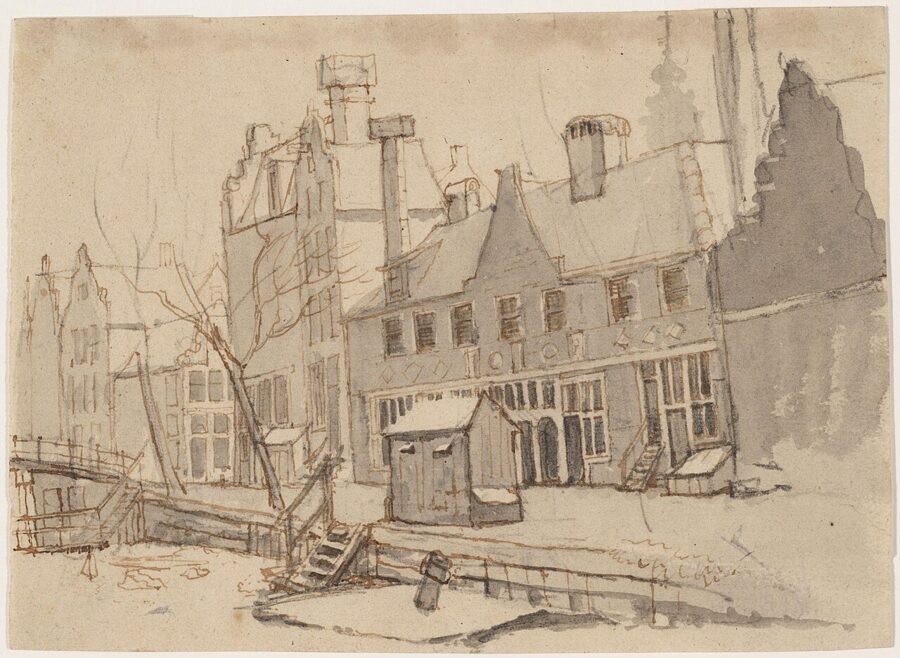
On 5 March 1613 the city decided to dig the Herengracht, the Keizersgracht and the Prinsengracht in arcs around the old town, starting from the Brouwersgracht. The land beyond the outer canal was taken inside the new walls in the same expansion, but it was not given the same treatment. When it was built it was called Het Nieuwe Werck, the new works, and it was left largely to industry and to the people who worked in it.
The trades can still be read off the map. In 1623 the burgomasters sent the cloth dyers to the Bloemgracht, blue dyers on the south side and color dyers on the north, with the ones who burned peat pushed to the far end because of the smoke. Tanners worked hides, elk among them, on the Elandsgracht, and the next canal south is the Looiersgracht, tanners’ canal. Most of the rest were named after flowers and trees: rose, laurel, lime, palm, carnation, marigold and eglantine.
Where the name comes from
Nobody agrees, and the most popular answer is probably wrong.
Guides like to say that “Jordaan” is the French jardin, garden, brought by Huguenot refugees, and point to the flower names. No source confirms it. The name first turns up in 1718, in a poem in praise of gin, and there it refers to the Prinsengracht. By 1733 texts speak of the neighborhood “behind the Jordaan”.
So the likeliest story is that the Prinsengracht was nicknamed after the river Jordan, and the name then slid across the water to the streets beyond. The old joke went that a respectable burgher would never cross the Jordan. Other theories, from a family called Jourdain to a garbled form of “jurisdiction”, have their supporters too.
Alleys, forts and cellars
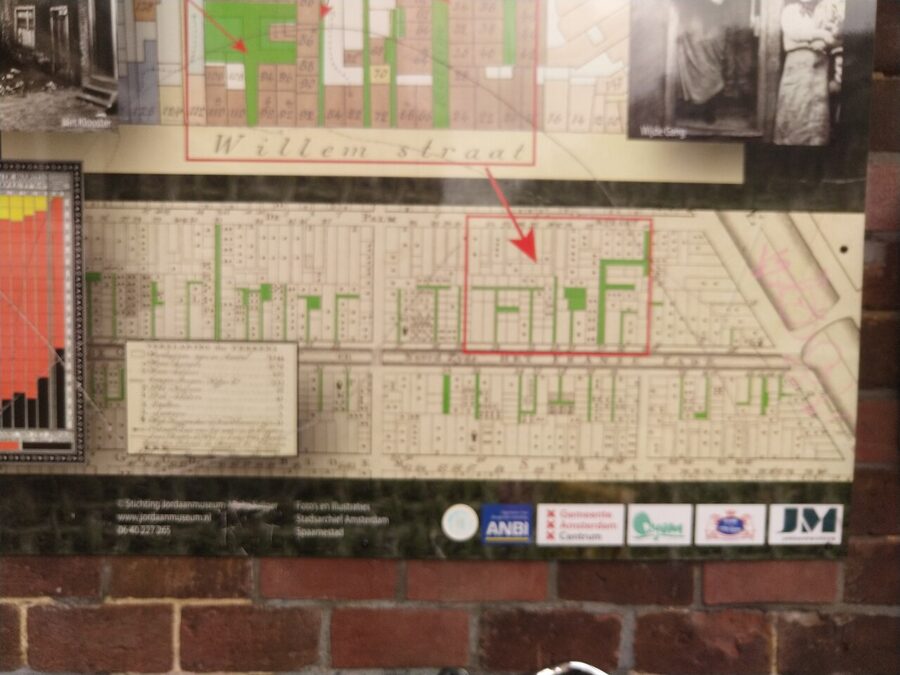
Behind the street fronts the Jordaan was a warren. In 1775 the street that is now the Willemsstraat, then called the Franse Pad, had 57 alleys, the gangen, leading to back yards built over with cottages. Locals called these yards and alleys forts. For centuries most Jordanezen lived in them, not on the streets you walk today.
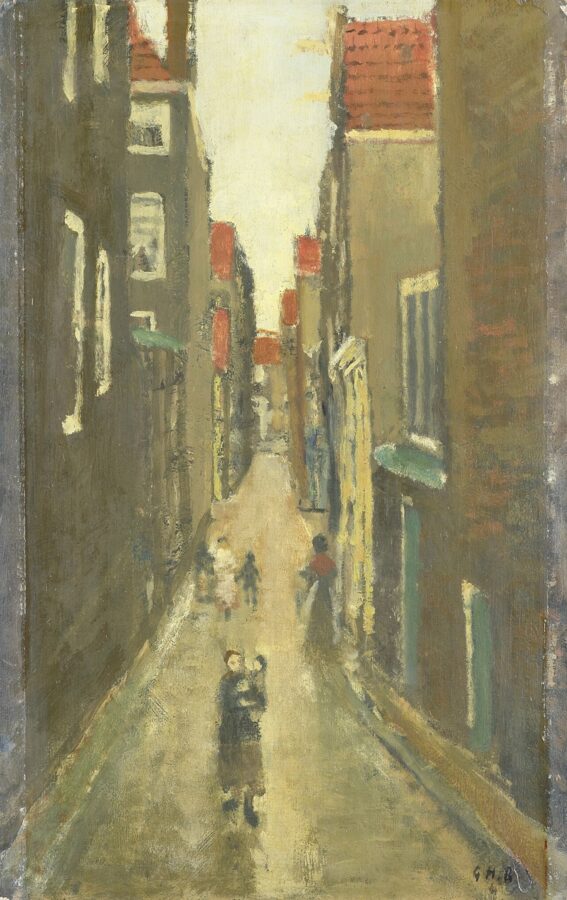
In the 19th century the forts became slums. Two-story houses were knocked down and replaced with four-story blocks, which only took more light and air away from the alleys behind. Large families rented single rooms or lived in cellars where the groundwater seeped up through the floor, and epidemics came through regularly. The worst conditions were in the narrow Tuinstraat and Goudsbloemstraat and in the alleys around the Goudsbloemgracht.

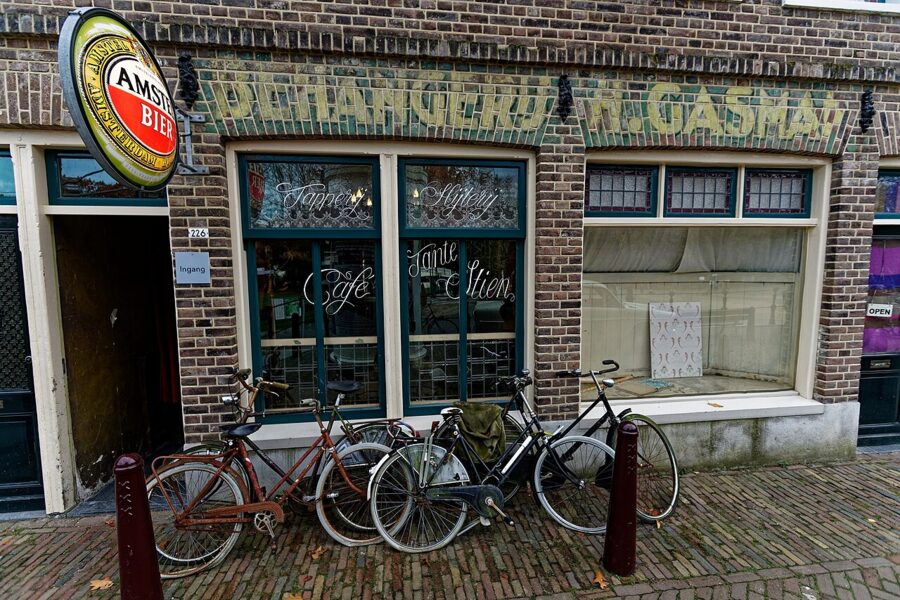
One of the oldest of those alleys did survive, just not here. The workers’ cottages of the Pottenbakkersgang, off the Westerstraat, were taken apart in 2002 and rebuilt at the Netherlands Open Air Museum in Arnhem, where a little piece of the Jordaan, café included, opened in 2011.

The Eel Riot and the riot of 1934
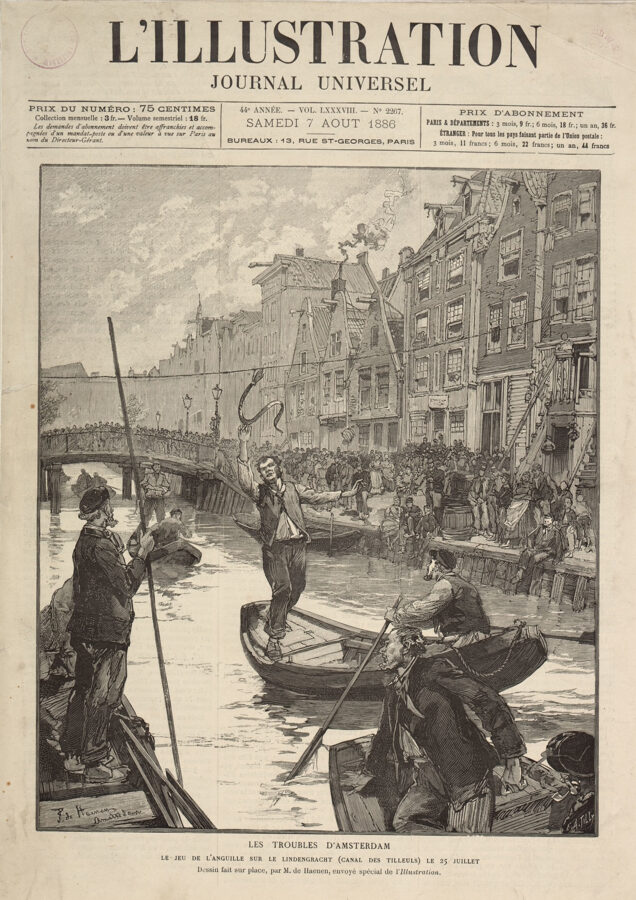
The Jordaan has a long record of fighting the city, and two riots stand out. On Sunday 25 July 1886 a crowd gathered at the Zaterdagse Brug over the Lindengracht for palingtrekken, eel-pulling: a live eel hung from a rope over the canal, and men in boats tried to snatch it as they passed beneath. The game had been banned as cruel. Police cut the rope, the crowd turned on them, and one officer was dragged into a cellar and beaten.
The next day an armed crowd besieged the police station on the Noordermarkt. Barricades went up, people pelted the police from the rooftops, and the army was called in and fired live rounds. Sources put the dead at between 26 and 28; there is no official list.
The second riot came out of the Depression. From 1 July 1934 the government cut unemployment benefit by about ten percent.
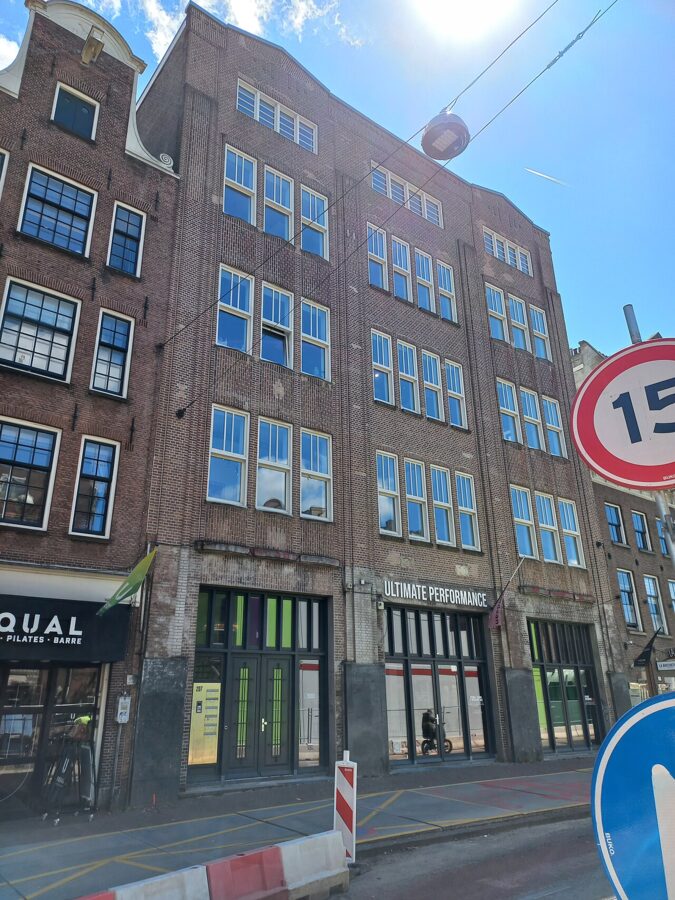
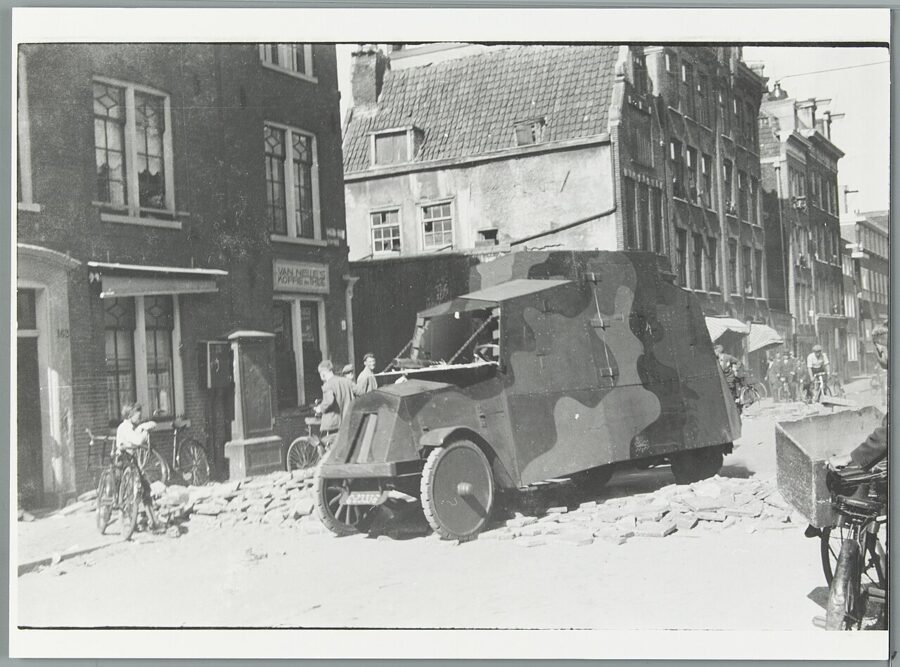
On the evening of 4 July a protest meeting in De Harmonie, at Rozengracht 207-213, spilled into the street. The next day residents tore up the paving, built barricades and tried to set bridges on fire, and the city called in the army. The first death fell on the Lindengracht on 5 July. The police chief’s report that November counted five dead and 56 seriously injured.
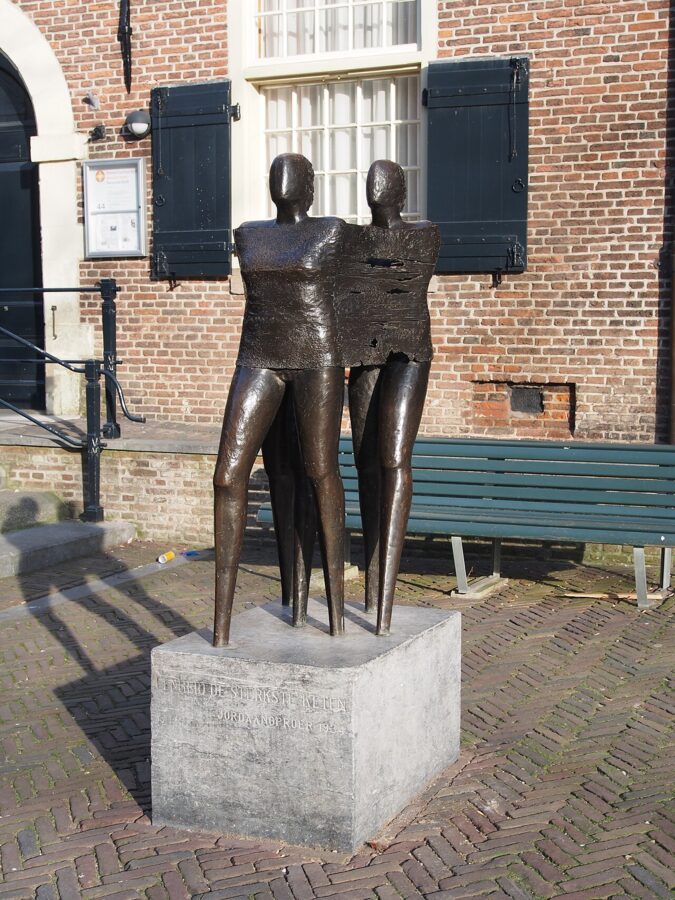
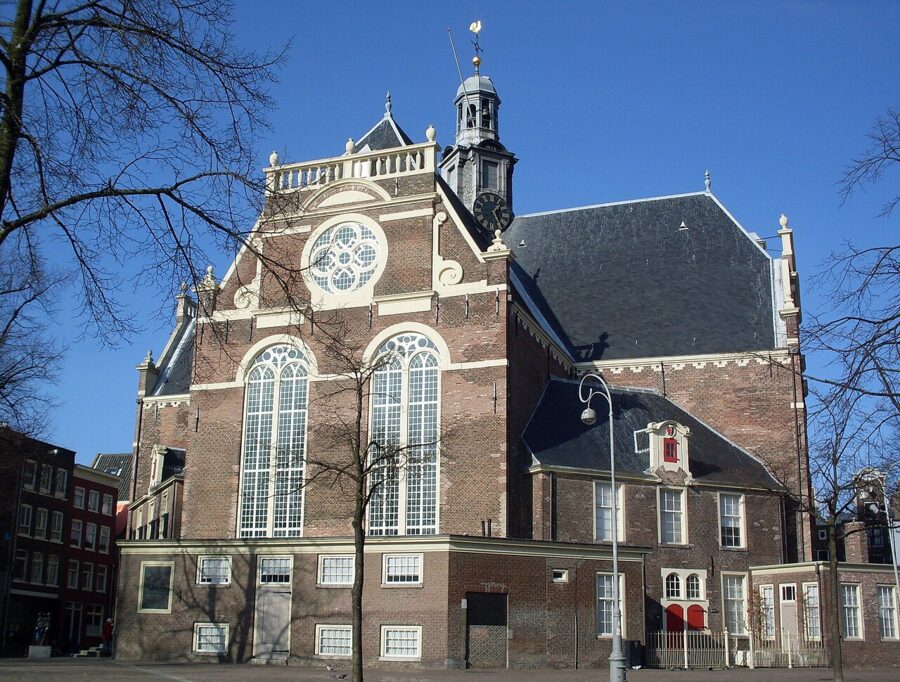
The women of the Jordaan are remembered for it. A bronze by Sofie Hupkens, three women joined by a broad band, has stood at the entrance of the Noorderkerk since 1987, with the title Eenheid de sterkste keten, “unity the strongest chain”.
Saved by people moving out
After the war much of the Jordaan was falling down. Many houses had been built on poor foundations meant to last about fifty years, and in the 1950s the city drew up plans for wholesale demolition and new blocks. The plans met loud opposition, and the renewal that followed kept the old street pattern, though plenty of old houses still went for cheaper serial building.
At the same time the Jordanezen were leaving, for more space in the new western garden suburbs, in Noord, or out of town in Purmerend and Almere. From the 1970s students, artists and single people moved into the neglected houses. In 1972 the Jordaan became a protected cityscape, and the fight to restore one hofje in that decade, the Claes Claesz Anslohofje, changed how the city thought about the whole district.
By the end of the century the money had found it. In 2011 more than two-thirds of the Jordaan’s homes held a single person and only 13 percent of households had children living at home. Still, in the same count more than one home in four was social housing, which is why the man at the next table in a brown café may well have been born round the corner.
The canals and streets worth walking
The Brouwersgracht and the top of the Prinsengracht
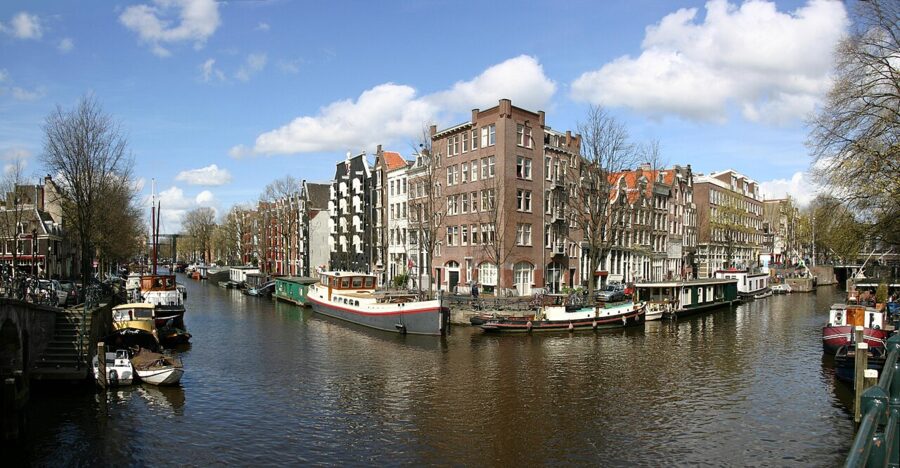
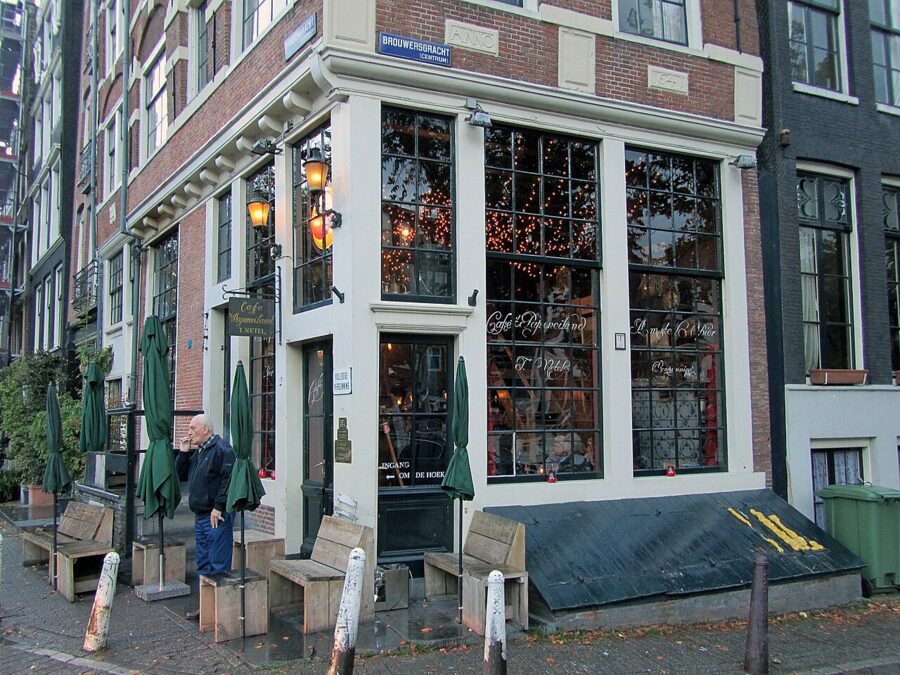
Start at the north end, where the Prinsengracht meets the Brouwersgracht, the brewers’ canal that forms the Jordaan’s northern edge. Its old warehouses, with their big shutters, are mostly flats now, and in 2007 readers of Het Parool voted it the most beautiful street in Amsterdam. On the corner at Prinsengracht 2 is Café ‘t Papeneiland, a brown café in a house from 1642 that has poured beer since 1896; its apple pie and its rivalry with Winkel 43 are covered in the Noordermarkt flea market guide.


The Egelantiersgracht
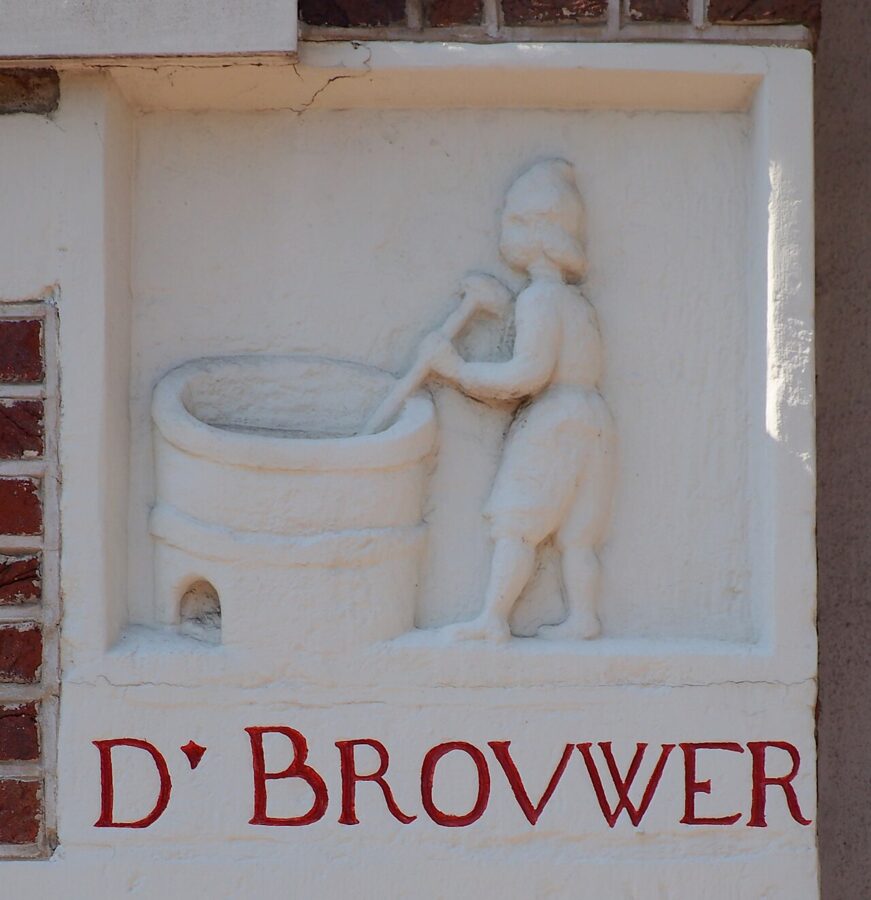
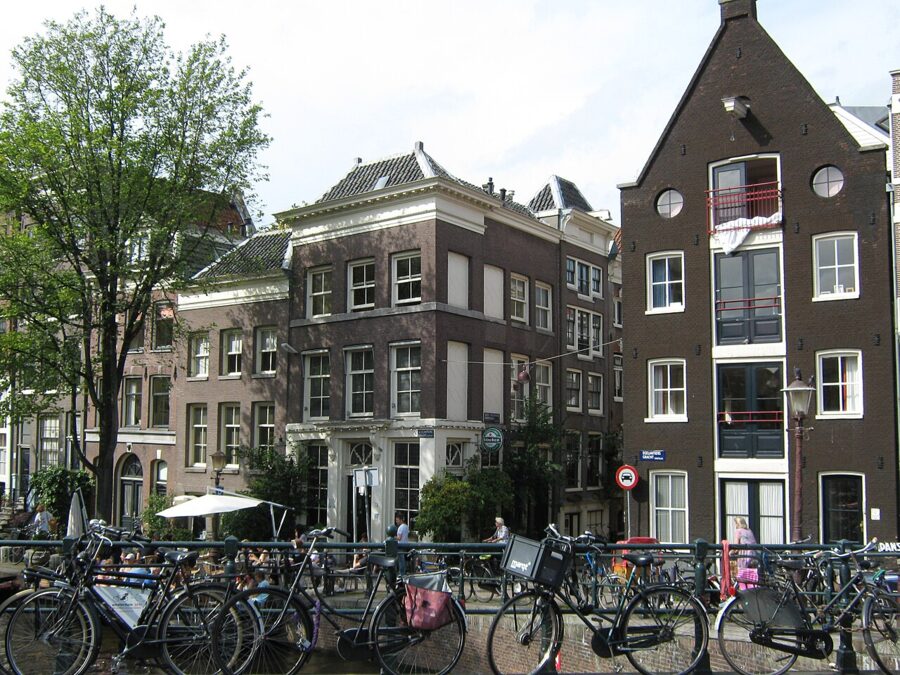
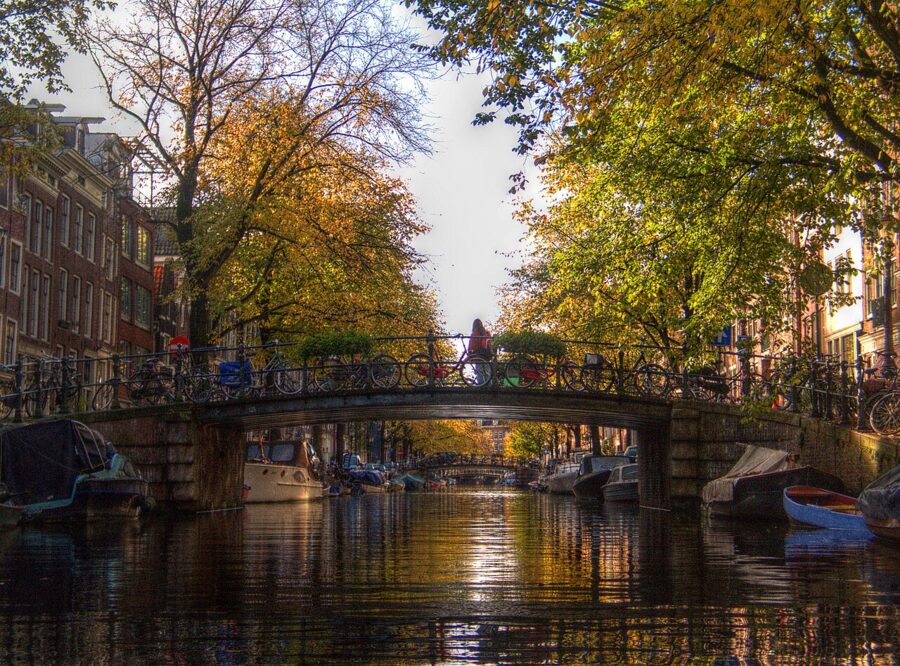
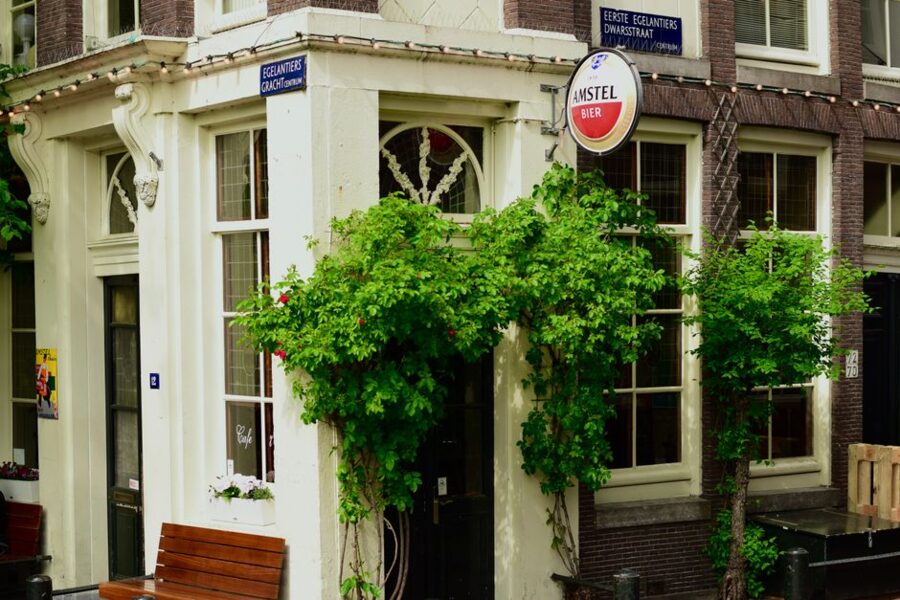
The Egelantiersgracht is the one to see if you see only one. It runs from the Prinsengracht to the Lijnbaansgracht with water all the way, and its houses are smaller than those on the Bloemgracht one canal south, many built for craftsmen. Fifty-six of them are national monuments. Look for number 8, from 1649, a plain example of Amsterdam Renaissance building with a gable stone of its own.
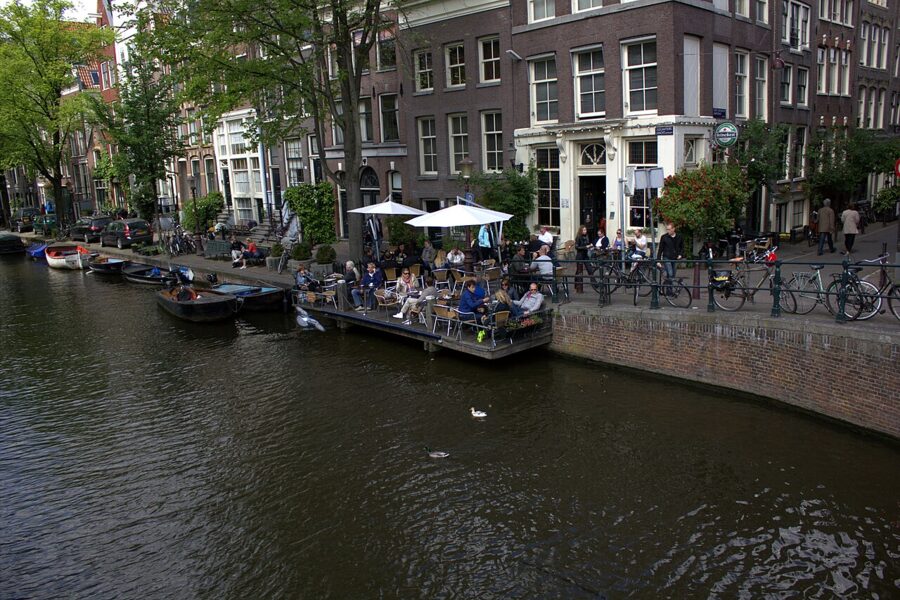
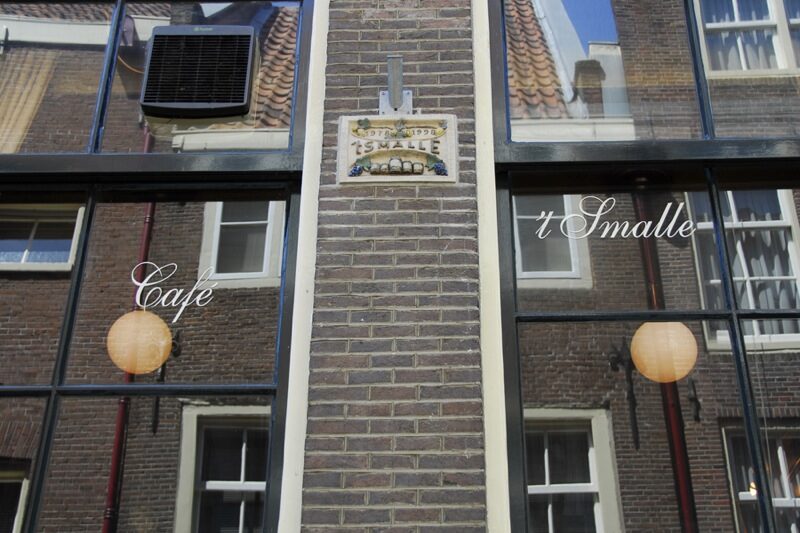
At number 12 is Café ‘t Smalle, in a building that was a distillery in the 1780s, with a terrace on a little platform over the water that is full from the first warm afternoon of spring. Further along, the Hilletjesbrug crosses the canal, and at numbers 105 to 141 is the Sint Andrieshofje, the oldest surviving hofje in the Jordaan.


The Bloemgracht
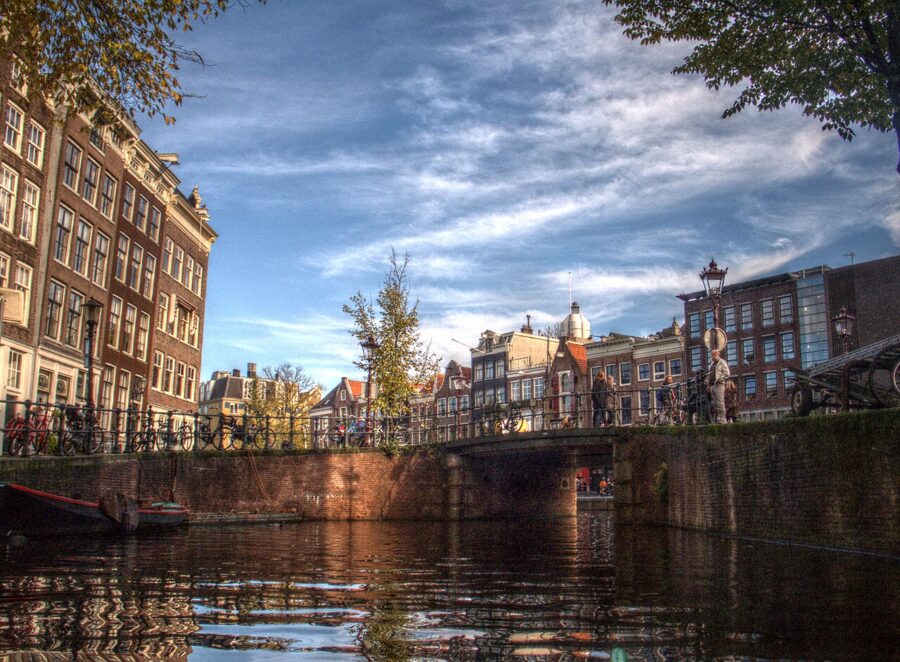
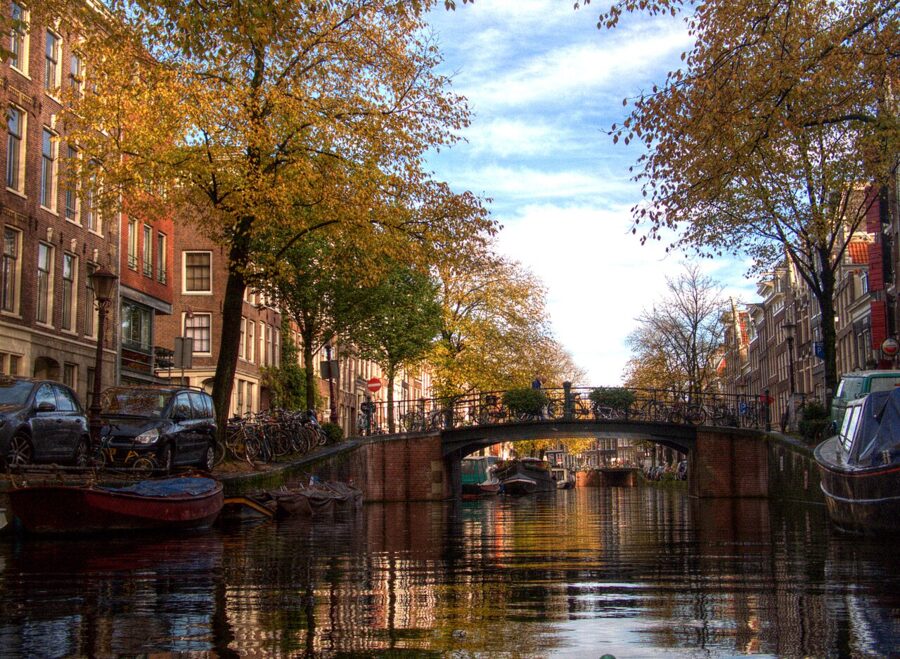
The Bloemgracht was named after a bastion called De Bloem, where a windmill stood from 1614. It has 105 national monuments, more than any other canal in the Jordaan, and it was where the money in the district was, such as it was. The dyers were sent here in 1623, and from 1635 Willem Blaeu ran his map-making workshop on this canal. His son Joan produced the Atlas Maior, the great atlas of the 17th century, here.
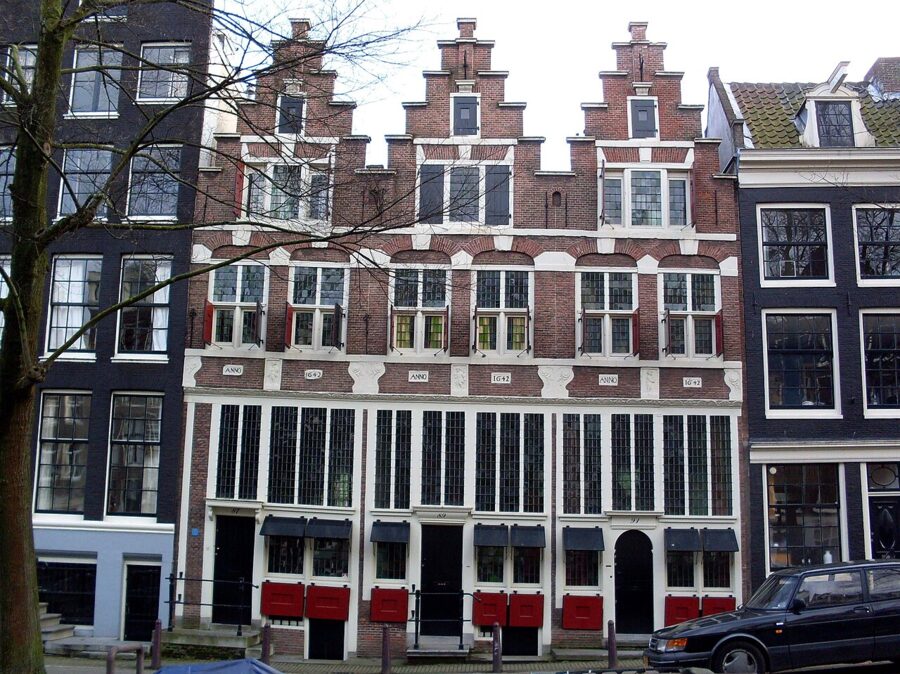
The best-known houses are De Drie Hendricken at numbers 87 to 91, three stepped gables of 1642 with gable stones of a townsman, a countryman and a seaman. They do not record the jobs of the first owners; the figures stand for town life, country life and the sea. Two of the bridges carry names from the books of Theo Thijssen, the Jordaan schoolteacher and writer: the Kees de jongenbrug at the Prinsengracht end and the Rosa Overbeekbrug at the Tweede Leliedwarsstraat.


The Lindengracht and the Westerstraat
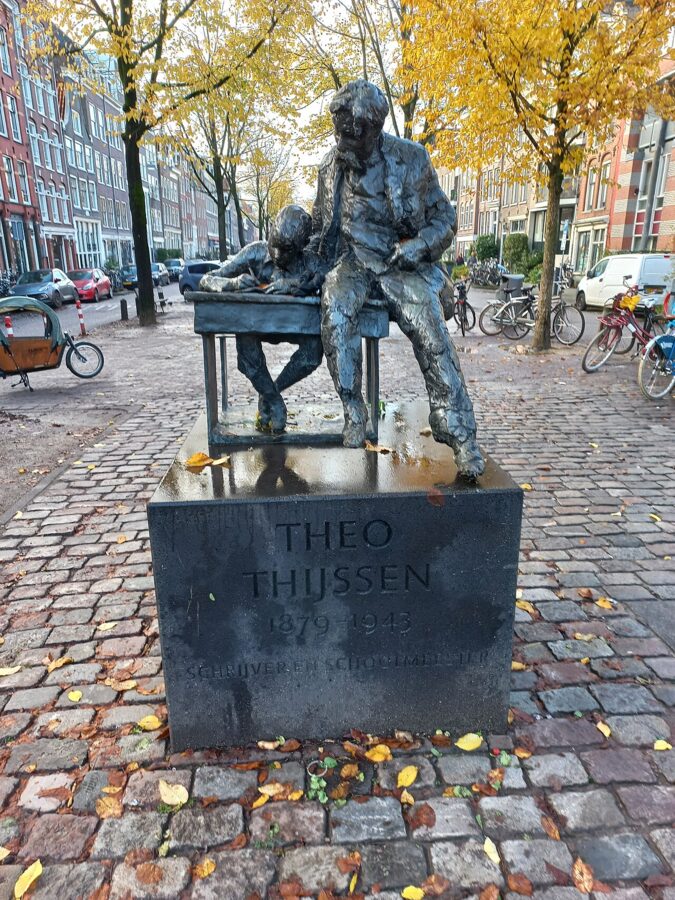
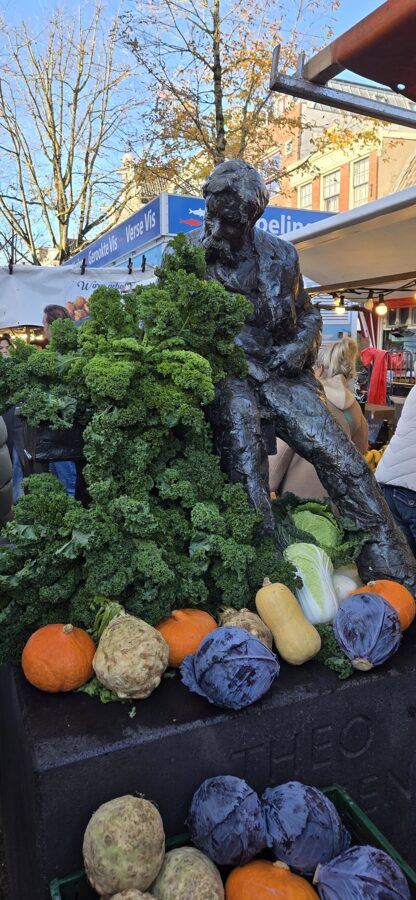
The two broad streets of the northern Jordaan were canals until 1895 and 1861. The Lindengracht runs from the Brouwersgracht to the Lijnbaansgracht and carries the Saturday market. At its Brouwersgracht end stands Hans Bayens’ 1979 bronze of Theo Thijssen, and further along, at numbers 206 to 220, reliefs on the house fronts show the trades of the workmen they were built for in 1896, one of the early pushes for decent housing in the Jordaan.
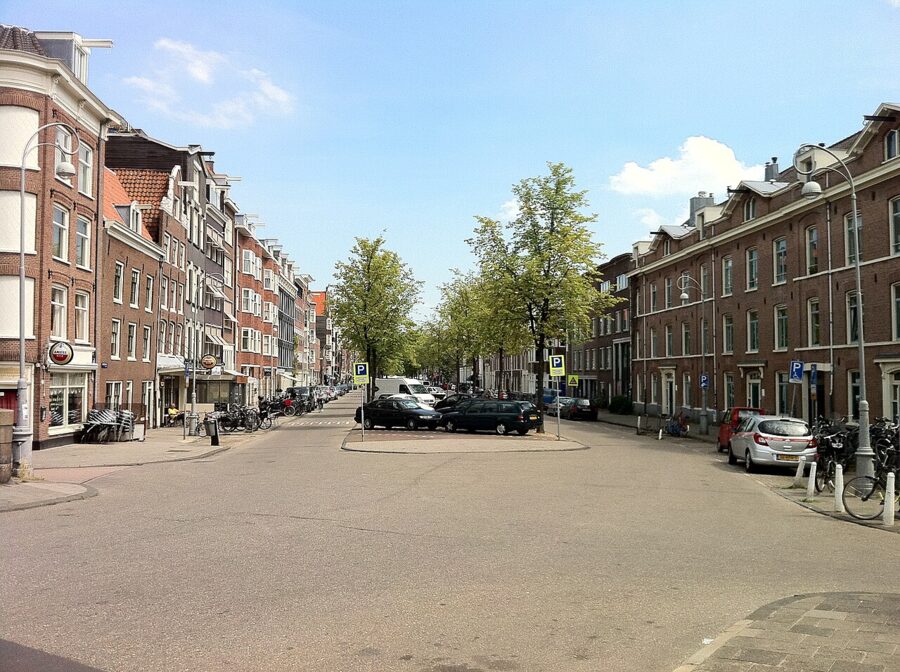
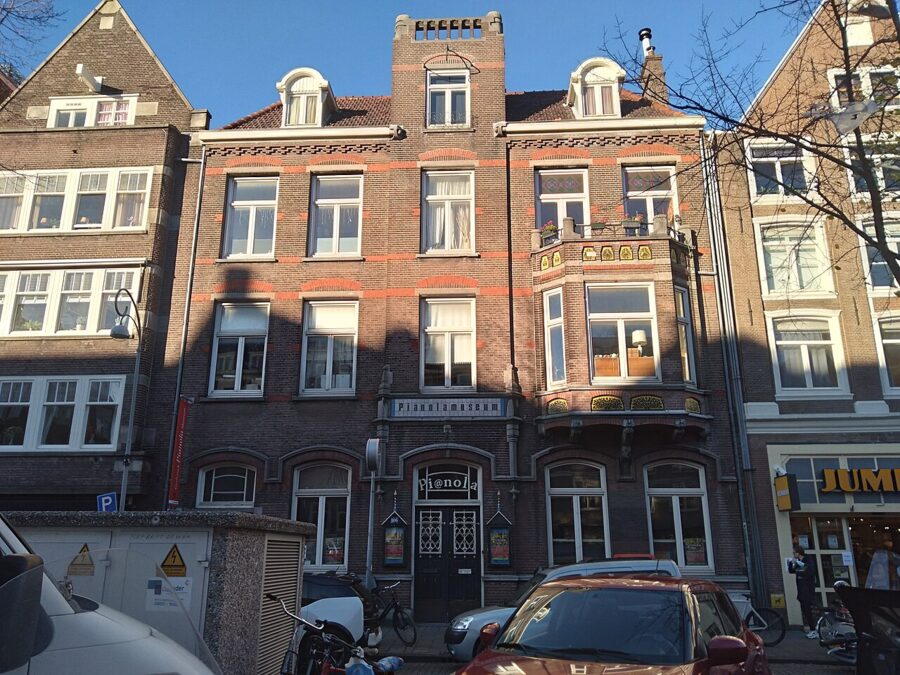
The Westerstraat was the Anjeliersgracht, the carnation canal, and no one is quite sure why it was renamed Westerstraat when it runs east to the Noordermarkt; the obvious name, Noorderstraat, was already taken. It is the busiest street in the Jordaan for eating out, has the fabric market on Monday mornings, and has one odd museum: the Pianola Museum at number 106, in a police station of 1905.

The Rozengracht
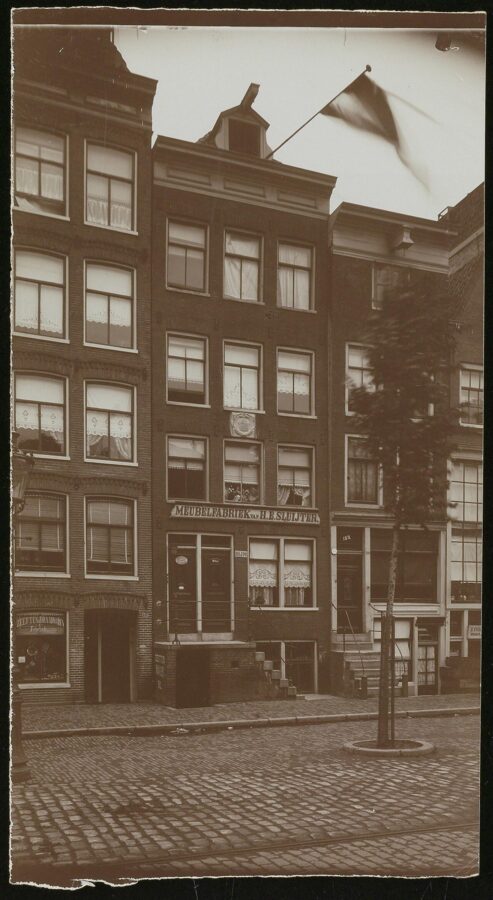
The Rozengracht is the Jordaan’s main road, filled in around 1890 and widened into the route west out of the center. It is the least pleasant street in the district to walk, and at the moment the worst, because it is being rebuilt together with the Westermarkt and the Raadhuisstraat, and the trams that normally run along it are diverted until early 2027.
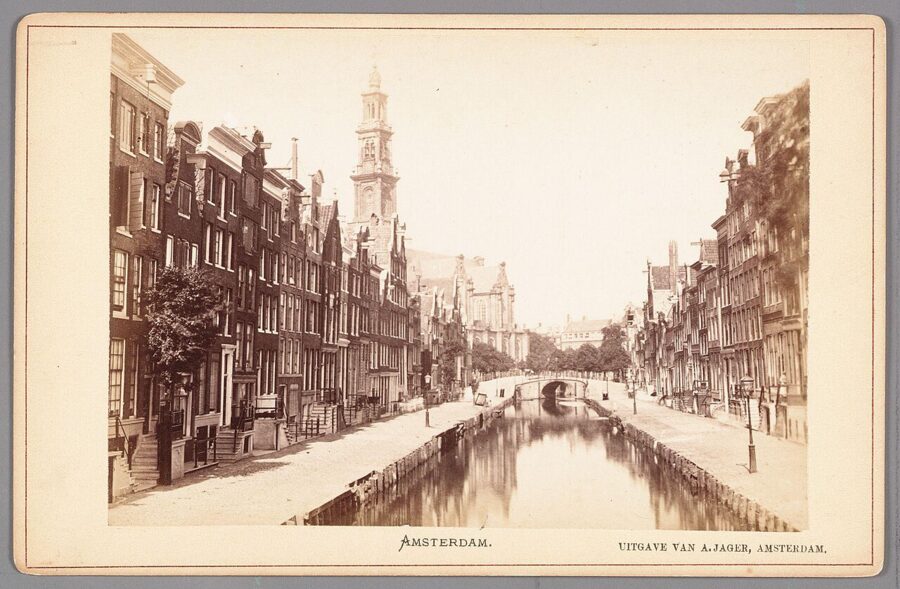
It is still worth a detour for one address. Rembrandt spent the last thirteen years of his life, from 1656 to 1669, in a rented house on the Rozengracht near the Lijnbaansgracht, after his bankruptcy cost him the house on the Breestraat. A stone on the front of the present house at number 184, placed in 1919, marks the spot. He is buried in an unmarked grave in the Westerkerk at the street’s other end.
The dwarsstraten
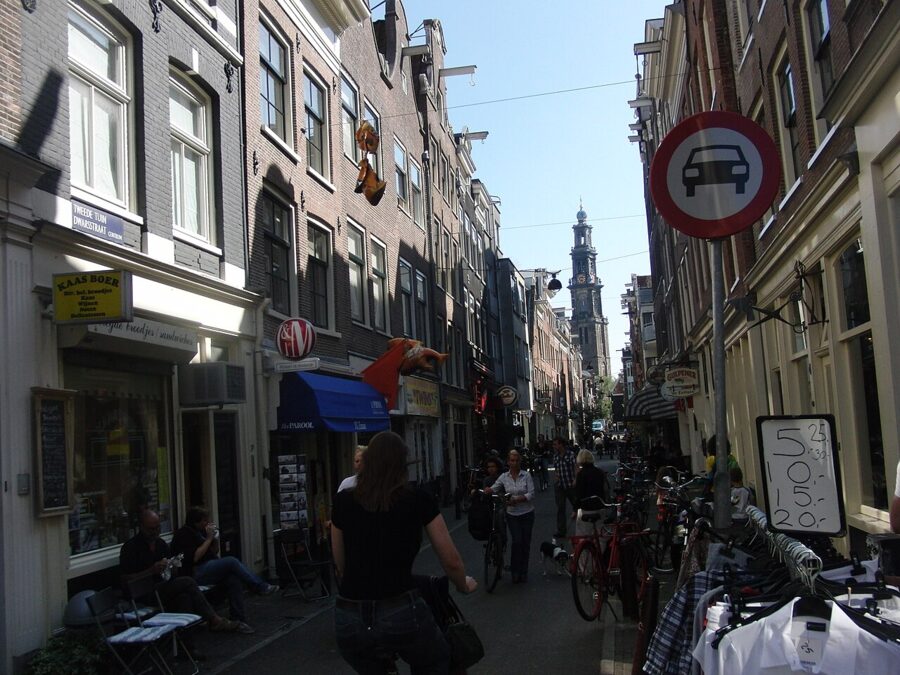
The best walking in the Jordaan is often not on the canals at all but in the dwarsstraten, the short cross streets that link them. The Eerste and Tweede Egelantiersdwarsstraat and the Tweede Tuindwarsstraat have the densest run of small shops, delis and cafés. The Leliedwarsstraten south of the Bloemgracht are quieter, and the Eerste Leliedwarsstraat has the Theo Thijssen Museum at number 16, in the house where he was born.

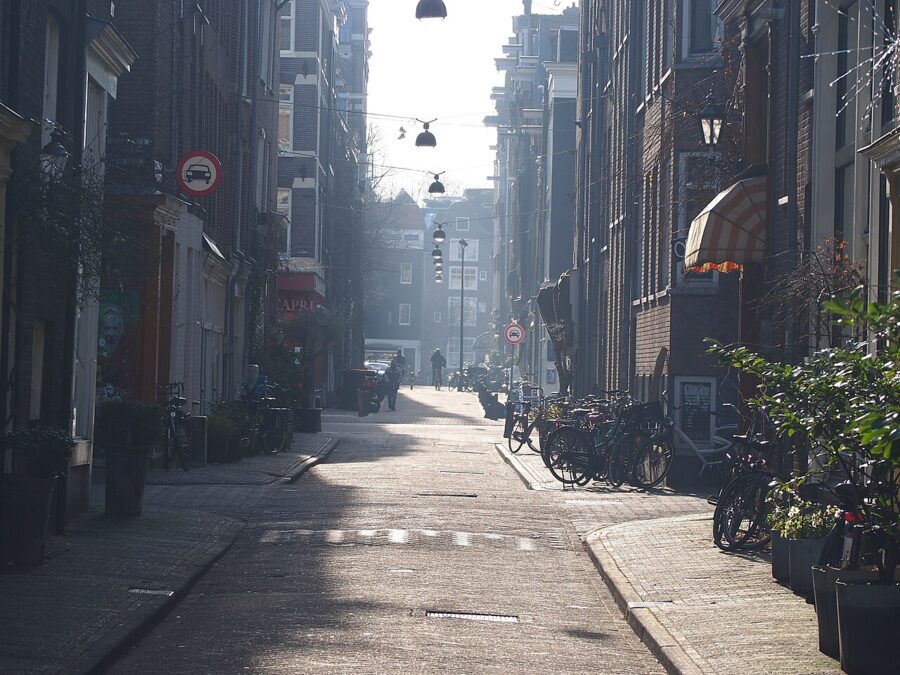
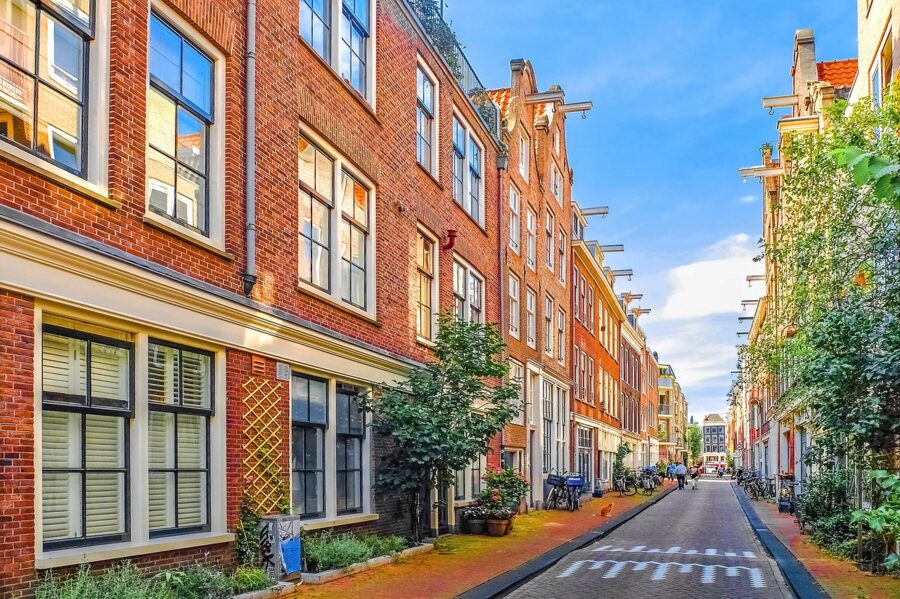
North of the Westerstraat the streets get narrower and more residential. The Tuinstraat, the Goudsbloemstraat and their cross streets were the worst slums of the 19th century and are now some of the quietest streets in the center. Walk them on a weekday and you will mostly meet people carrying shopping.
South of the Rozengracht
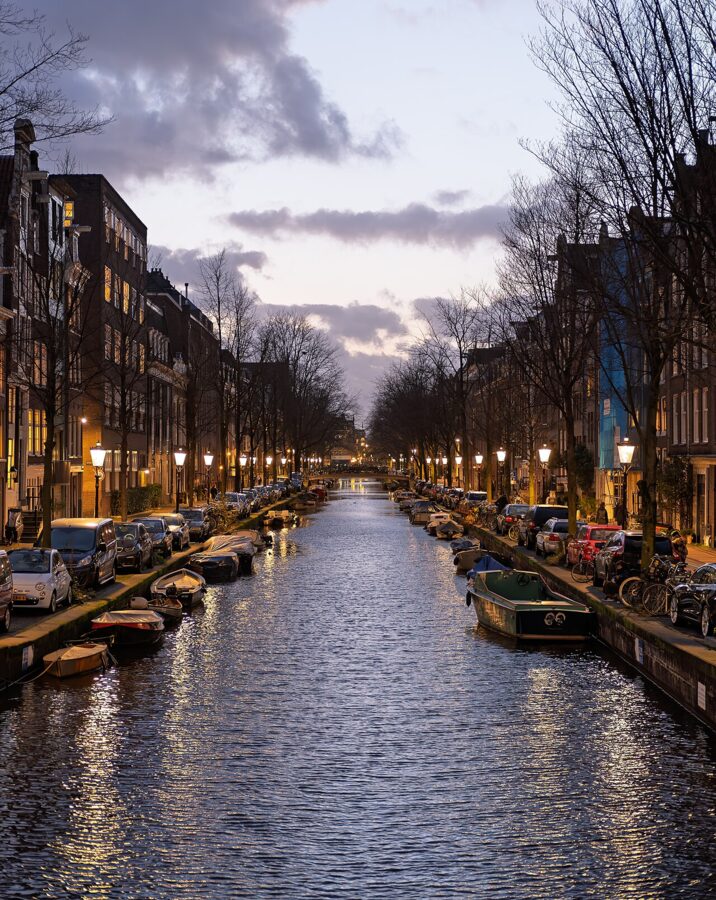
The southern Jordaan is calmer and a little grander. The Lauriergracht and the Looiersgracht still have water; the Elandsgracht was filled in in 1891 and now has a strip of benches, planters and a playground down its middle. At the Prinsengracht end of the Elandsgracht is the Johnny Jordaanplein, the little square with the singers’ statues, and a few steps away the Houseboat Museum is moored in the Prinsengracht.


The hofjes, and how to visit them
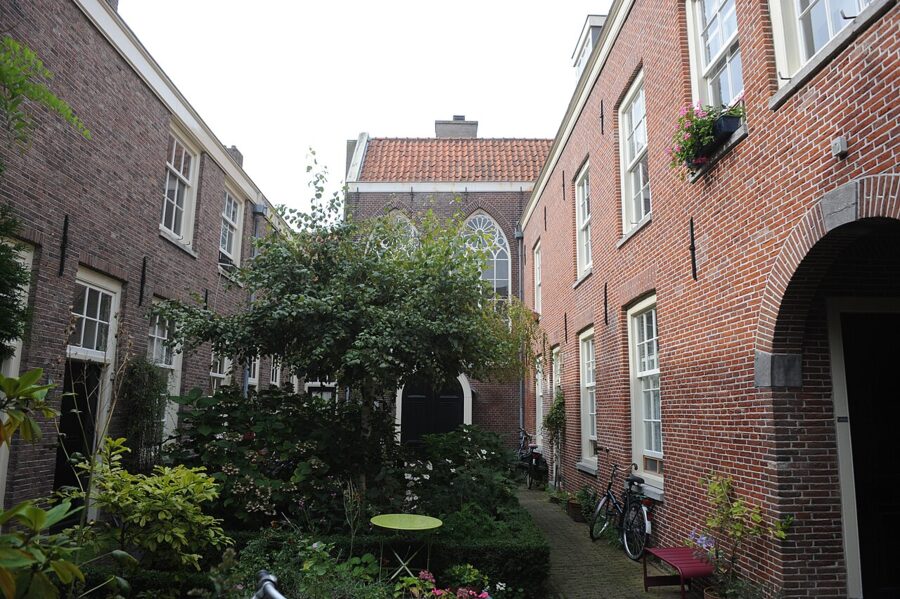
A hofje is a ring of small houses round a courtyard garden, reached through a single door from the street. Wealthy citizens, the city’s poor-relief boards and church congregations founded them from the early 17th century as free homes for poor, single, elderly people, nearly always women and often of one faith. The Jordaan counted nineteen surviving hofjes in 2017, and others give a higher figure depending on what they count. Most are still lived in, now often by students and young people renting small social-housing flats.
That is the thing to understand before you go in: these are people’s front gardens. The rules are simple.
- Go in only if the door or gate is open. A shut door means closed; do not ring, push or wait for a resident to let you in behind them.
- Weekday daytime is when you are most likely to find them open. Many close their doors in the evening and some at weekends, and where a gate shows times, those are the ones that count.
- Come alone or in twos and threes. Guided groups belong on the street outside; some hofjes ask for no groups at all.
- Keep your voice down, stay on the path, and do not photograph into windows or sit on residents’ benches.
- No bikes, no food, no smoking, and leave straight away if a resident asks.
Follow those and you will be welcome enough. The residents’ patience is the only thing that keeps these doors open, and a door that is locked because of noise tends to stay locked. The Begijnhof in the old center, the best known of all, has its own visiting rules.
Sint Andrieshofje, Egelantiersgracht 105-141
The oldest surviving hofje in the Jordaan, from the 1610s; sources give 1614 for the foundation and 1617 for the buildings. It is the one most guidebooks send you to, so it is also the one where good manners matter most, and the one most likely to have its door shut on a busy weekend.
Claes Claesz Hofje, Eerste Egelantiersdwarsstraat
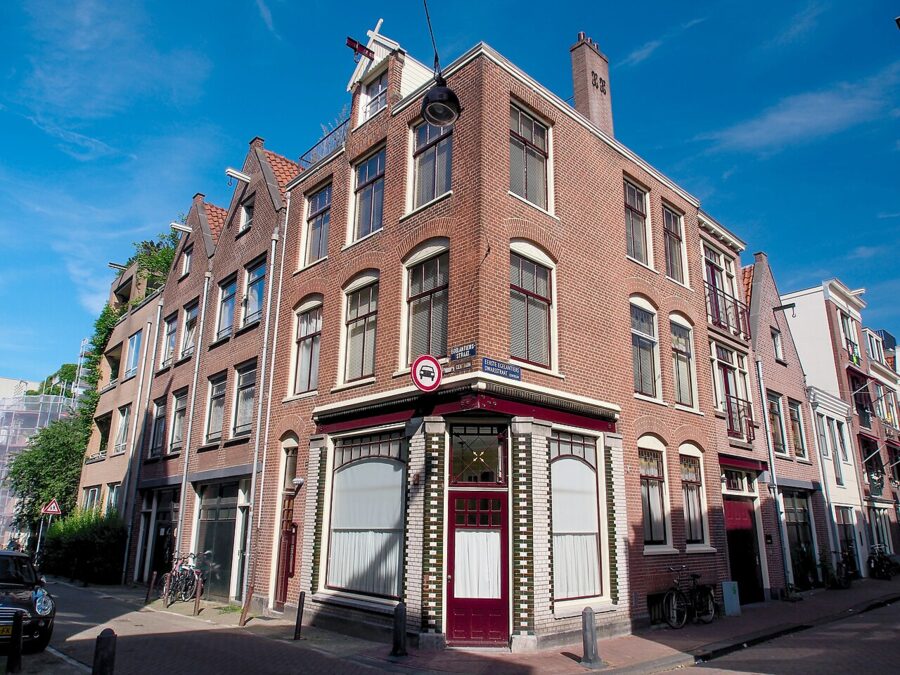
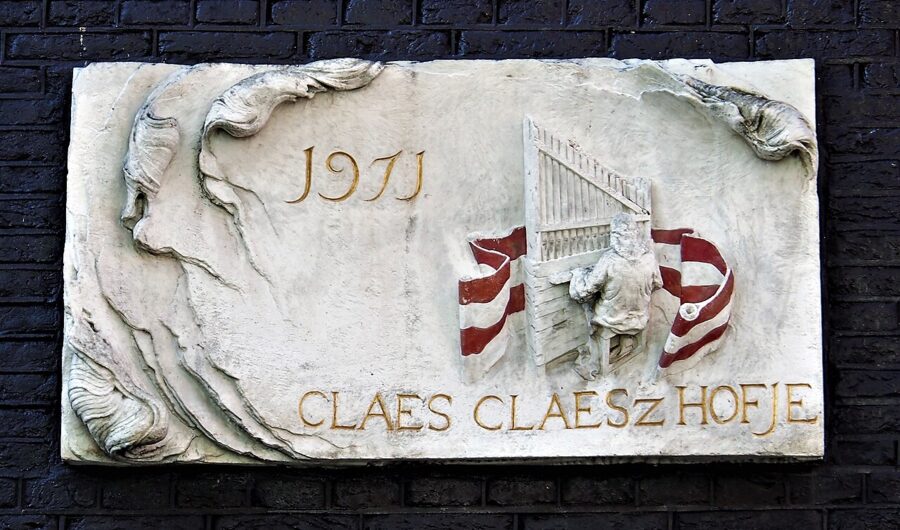
A cluster of small courtyards and passages between the Egelantiersstraat and the Tuinstraat. Its core is the almshouse founded in 1616 by Claes Claesz Anslo and his wife, for household servants who had grown too old to work. In the 1970s the campaign to restore it rather than tear it down became a turning point for the whole Jordaan. The entrance is on the Eerste Egelantiersdwarsstraat; the old doorway on the Egelantiersstraat is kept closed.
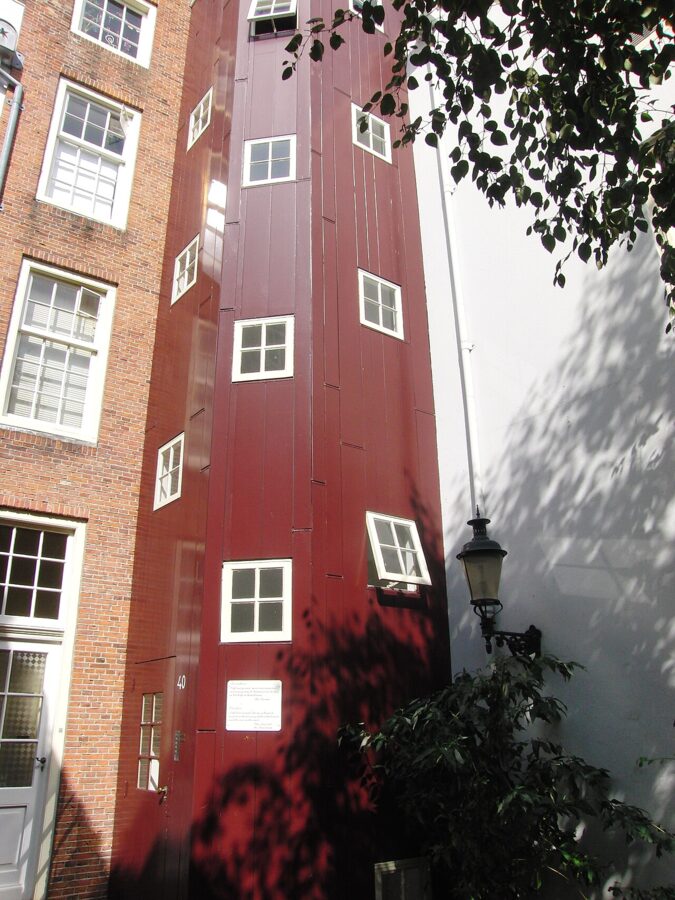

Karthuizerhof, Karthuizersstraat
The biggest and the most likely to impress. Its proper name is the Huiszittenweduwenhof, the widows’ court of the poor-relief officers, and it was built in 1650 to a design by the city architect Daniël Stalpaert: four long wings of 104 small upstairs and downstairs homes round a large courtyard. It stands on the site of a Carthusian monastery founded in 1394, which gave the street its name. After its elderly residents left in 1973 it was squatted, with the city’s tacit blessing, and since a renovation in 1986 its 65 homes are rented as social housing.
Inside, look for the two 17th-century water pumps, with spouts in the shape of a fish head and a grotesque mask, and the old Amsterdam emblem of a cog ship over the gate. Outside, the white wooden drying racks under the upper windows gave the Karthuizersstraat its nickname, the Droogstokkenstraatje.
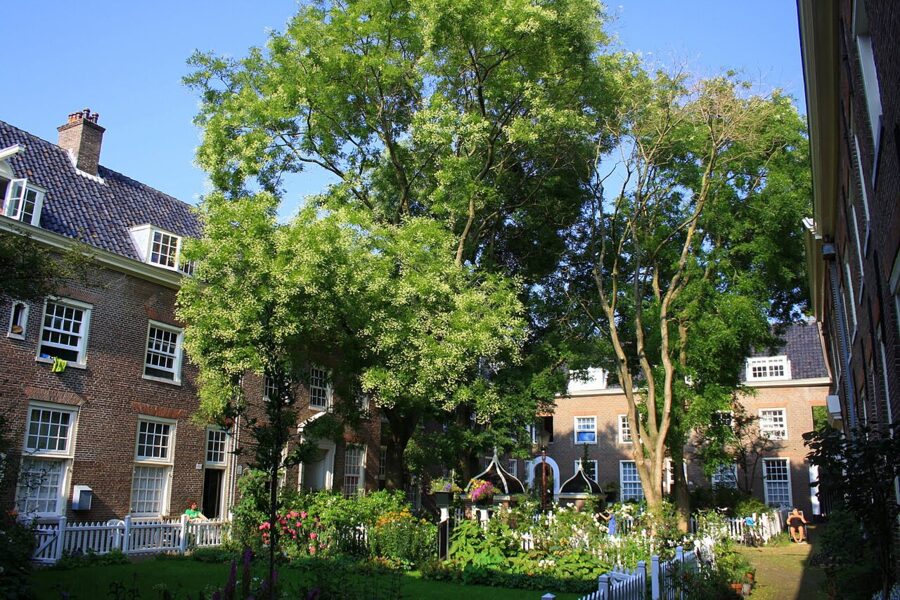

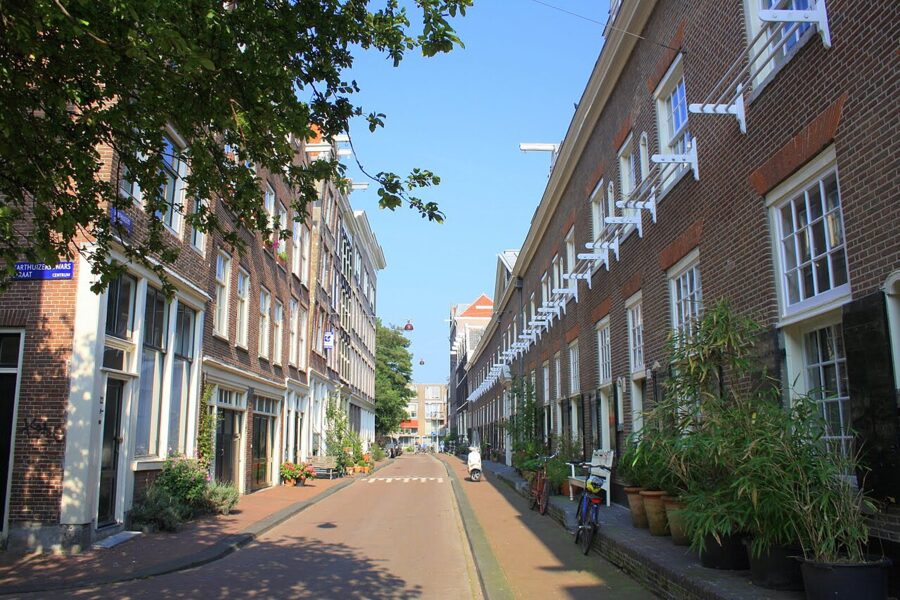

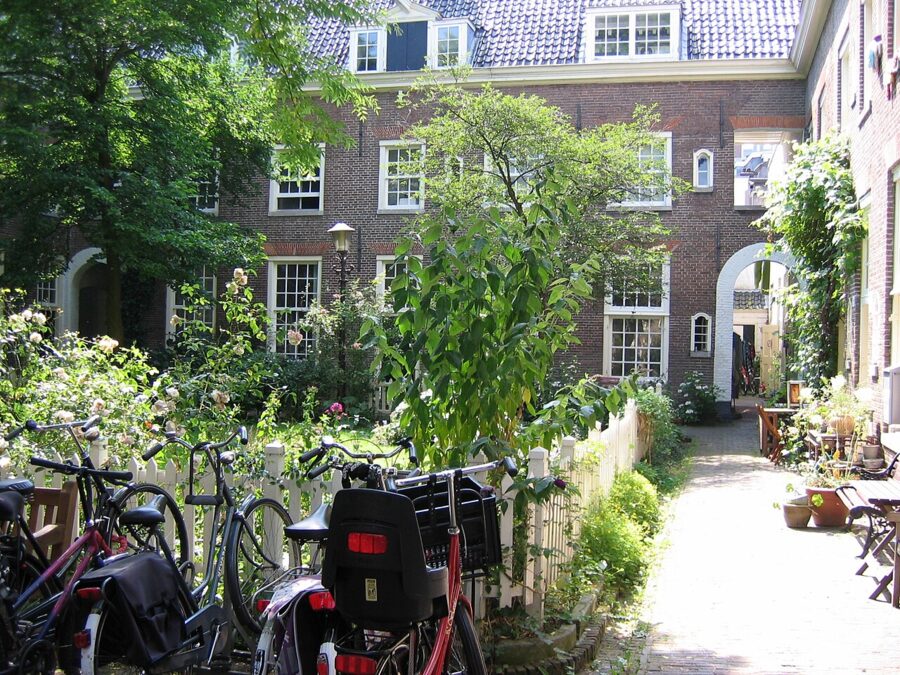

Hofje De Zeven Keurvorsten, Tuinstraat
Founded around 1645 by Cornelis Martensz Pronck, a gunpowder maker, with seven houses on the Tuinstraat for poor, elderly Catholic women “of unblemished conduct”, as the first rules put it. Seven more houses went up behind them in 1724, making a courtyard. Where the name, the Seven Electors, came from nobody knows; it may have started as a jibe by Protestant neighbors. The history of the place is spelled out on a chronogram inside.

On the Lindengracht and the Palmgracht
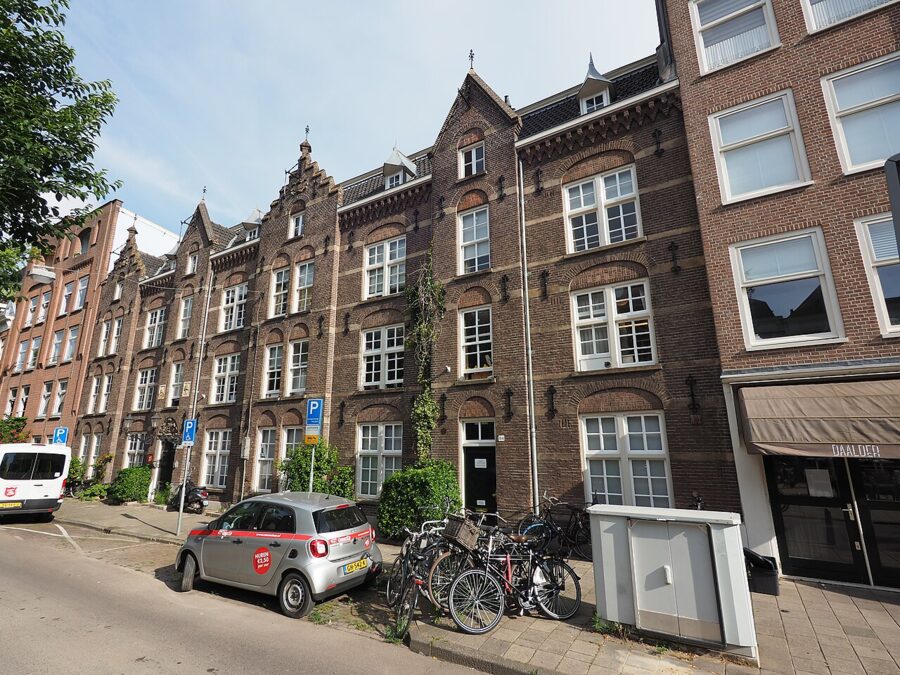
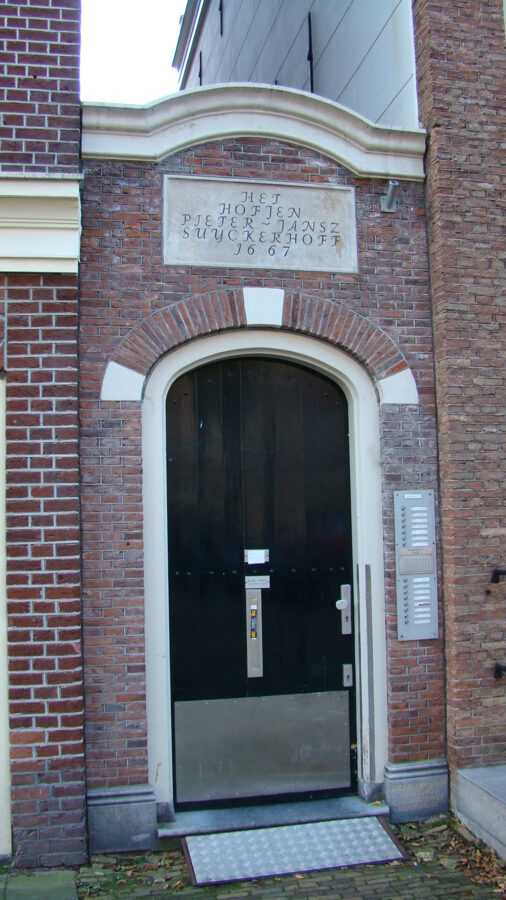
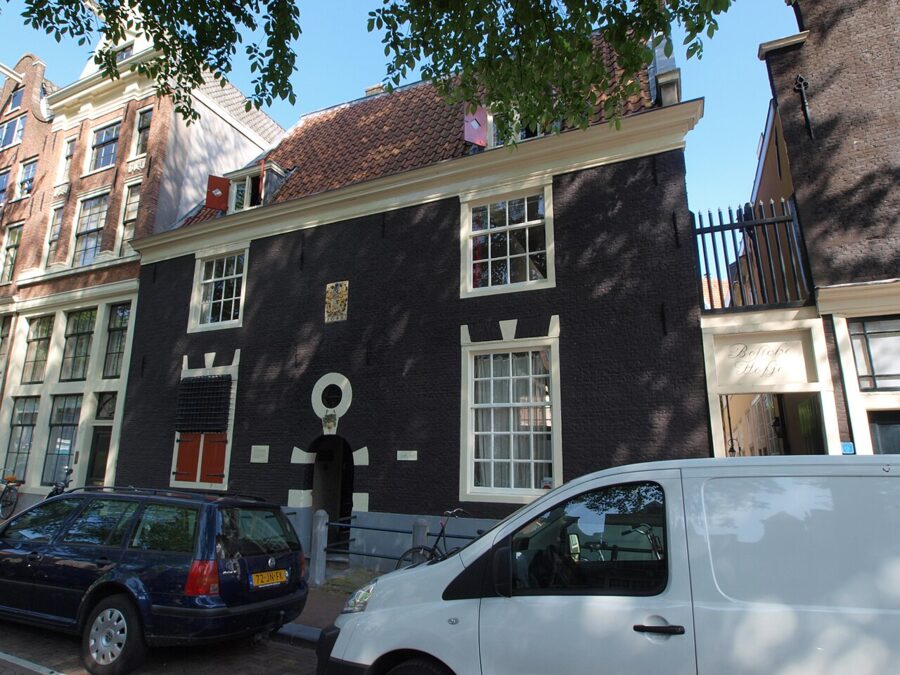
Two more are on the Lindengracht itself: the Lindenhofje at numbers 94 to 112, from 1616 and one of the oldest in the city, and the Suyckerhofje at 149 to 163, from 1667. On the Palmgracht, at the northern tip of the Jordaan, the Raepenhofje sits behind a modest door. Treat all three as you would the others: if the door is open, look in quietly; if it is shut, walk on.
Markets: Monday and Saturday
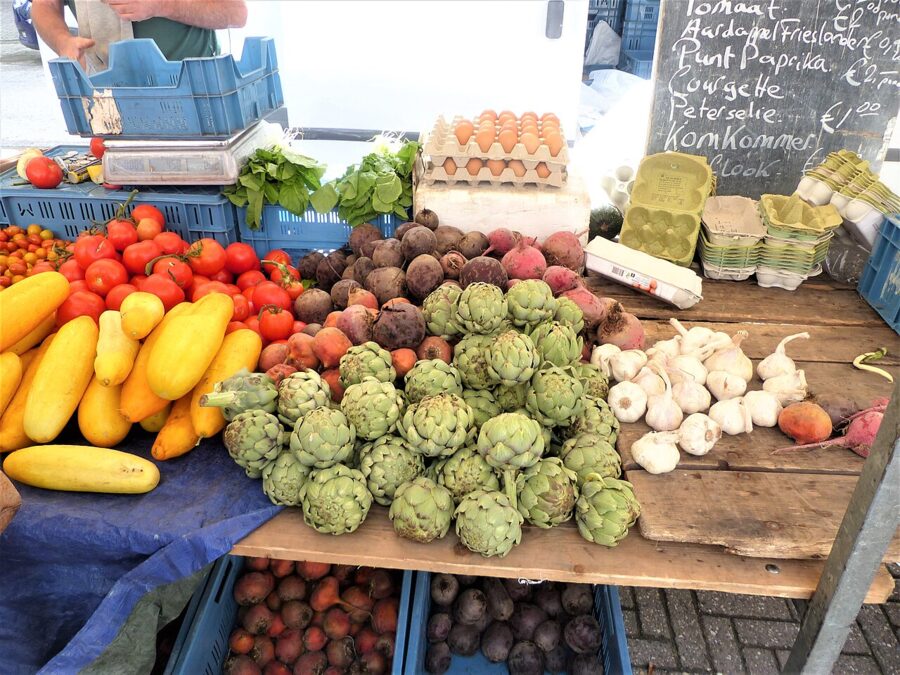
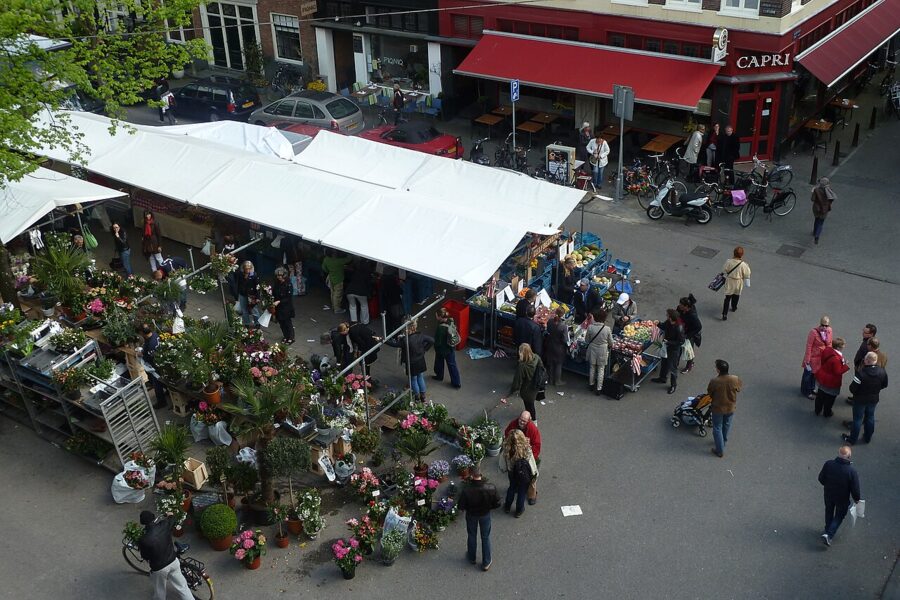
The Jordaan’s markets all sit at its north end and keep two days a week. On Monday mornings the Noordermarkt holds its flea market of vintage clothing, textiles, prints and brocante, and the lapjesmarkt, the fabric market, runs up the Westerstraat. On Saturdays the Noordermarkt holds an organic farmers’ market, the Boerenmarkt, from 09:00 to 16:00, and the Lindengracht fills with a long general market of more than 200 stalls. Sources give its closing time as 16:00 or 17:00, so come before mid-afternoon.
The Noordermarkt guide has the hours, the public holidays and what to buy at each. The short version: Monday for things to take home, Saturday for lunch. On Tuesday to Friday the square is just a church, some lime trees and a café terrace.




Brown cafés and the Jordaan song
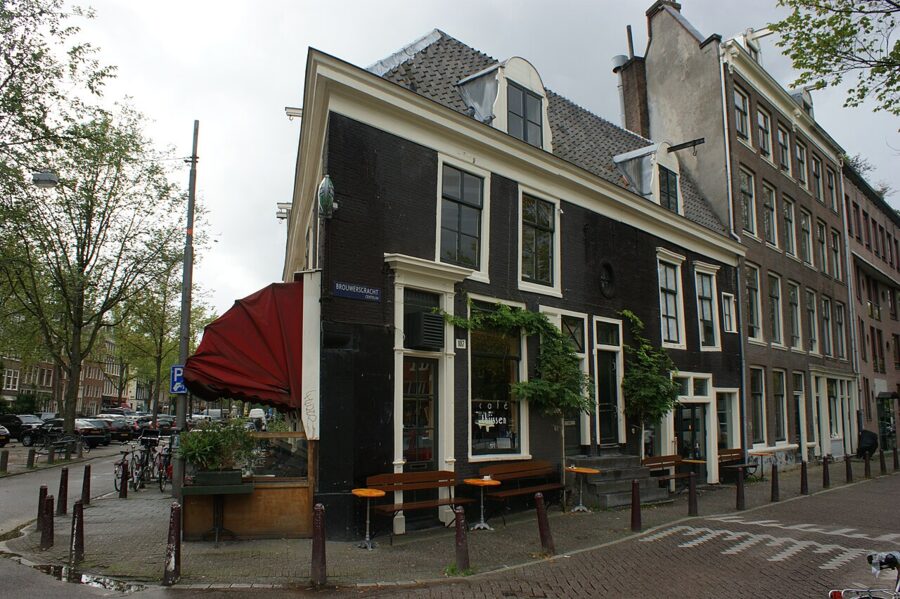
The Jordaan does not do clubs. It does long evenings in small, dark rooms, and a fair number of them end in singing. A brown café, a bruin café, is the Amsterdam pub, named for the wood and the walls; the nightlife guide explains how they work and where else to find them. These are the ones in the Jordaan I would send you to, all trading as of 2026.
- Café ‘t Smalle, Egelantiersgracht 12. The canalside one, in an 18th-century distillery building, with the terrace on the water. Busy and worth it.
- Café ‘t Papeneiland, Prinsengracht 2. The corner café from 1642, best after the market.
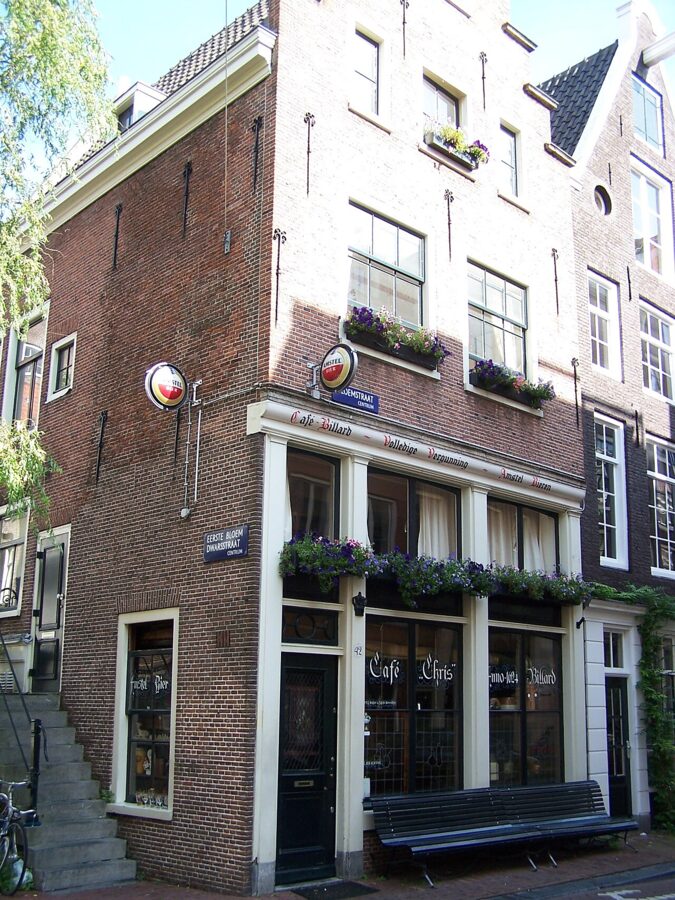
- Café Chris, Bloemstraat 42. A corner bar that dates itself to 1624, when it started as a beer house, and is billed as the oldest café in the Jordaan.
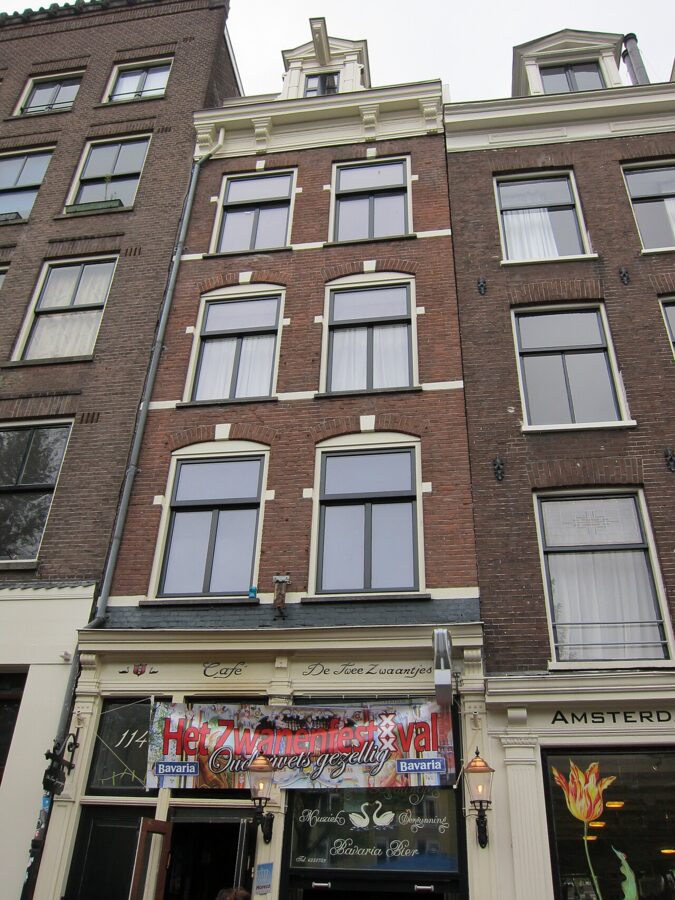
- Café De Twee Zwaantjes, Prinsengracht 114. A café since 1921, where the evenings are given over to singing along to Dutch-language songs, with a terrace that looks at the Westertoren. Open Monday to Thursday and Sunday 12:00-01:00 and Friday and Saturday 12:00-03:00, as of November 2026.
- Café Lowietje, Derde Goudsbloemdwarsstraat 2. Open since 1954 and barely changed, it played the detectives’ local in the television series Baantjer, and the stools they sat on are still at the bar. Live Amsterdam singers at weekends.
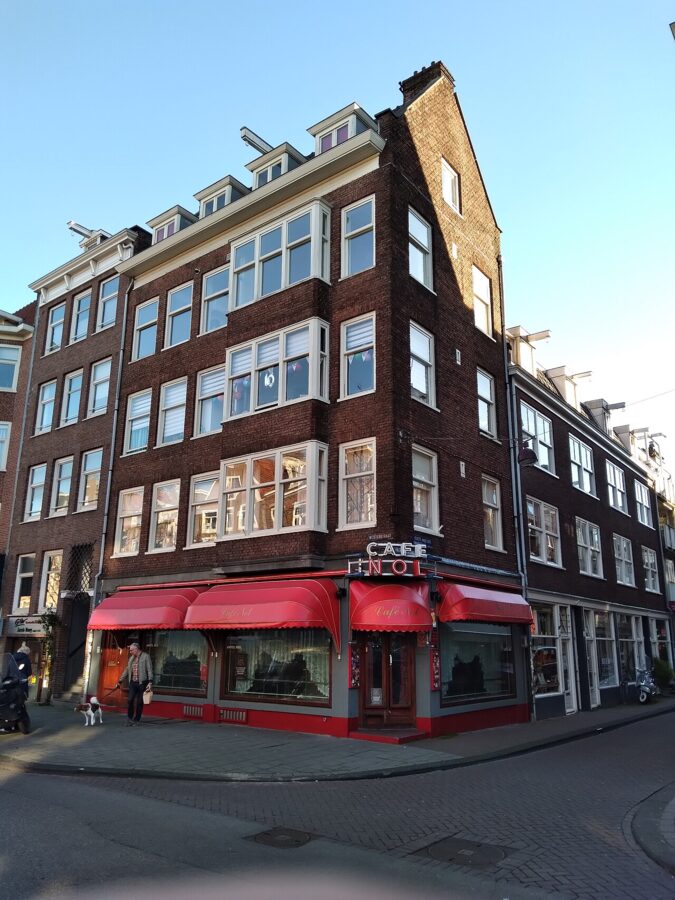
- Café Nol, Westerstraat 109. A family-run sing-along bar with a neon front and the motto “Café Nol, altijd lol” (always fun).
- Café Thijssen, Brouwersgracht 107. On the corner of the Lindengracht, named after the writer, and the place for coffee before the Saturday market: it opens at 07:30 on Saturdays and 08:00 the rest of the week.




Johnny Jordaan, Tante Leen and the levenslied
The music those cafés play has a name, the levenslied, the “song of life”: sentimental, melodramatic, sung loud, about love, mothers, drink and, in this neighborhood, the Jordaan itself. It grew out of real poverty and painted a romantic picture of it, and the Jordaan produced more of its singers than anywhere else in the country.
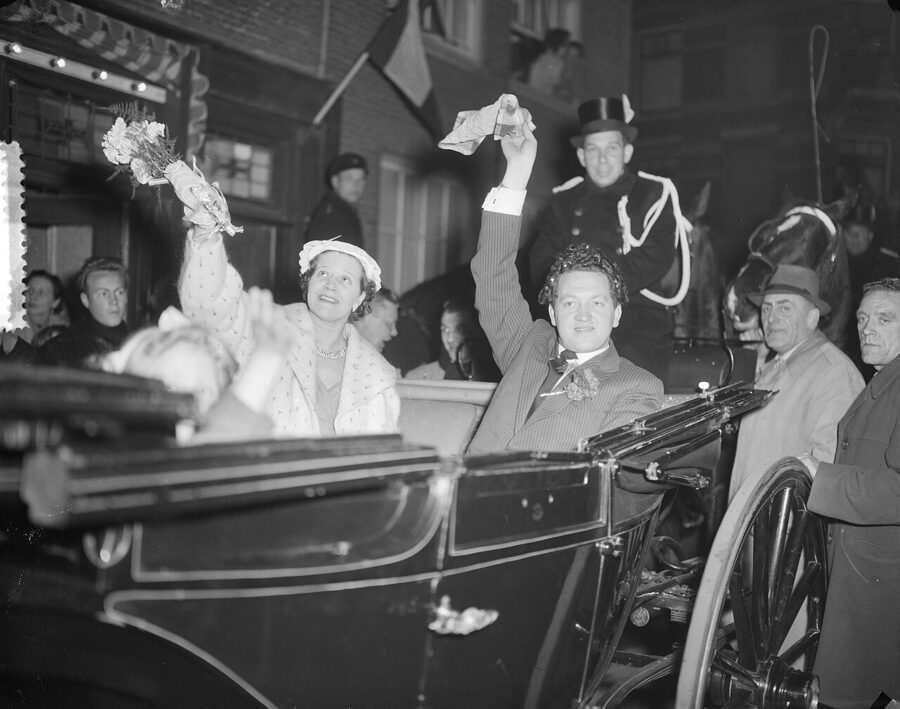
The biggest was Johnny Jordaan, born Johannes van Musscher in 1924 and raised on the corner of the Rozenstraat and the Lijnbaansgracht. With his cousin Carel Verbrugge, later famous as Willy Alberti, he sang on the street and in cafés from the age of eight to bring money home. In 1955 he won a record company’s contest for the “best voices of the Jordaan”, and his first single, De Parel van de Jordaan, broke Dutch sales records. Some broadcasters would not play him until 1961; one thought his songs too vulgar for its working-class listeners.
Second in the same contest was Tante Leen, Helena Kok-Polder, a cleaner and shrimp peeler who first went on stage at 43. Her biggest hit, Oh, Johnny, in 1956, was addressed to him. In 1968 she was asked to sing for the Netherlands at the Eurovision Song Contest and turned it down because she would not sing in English.
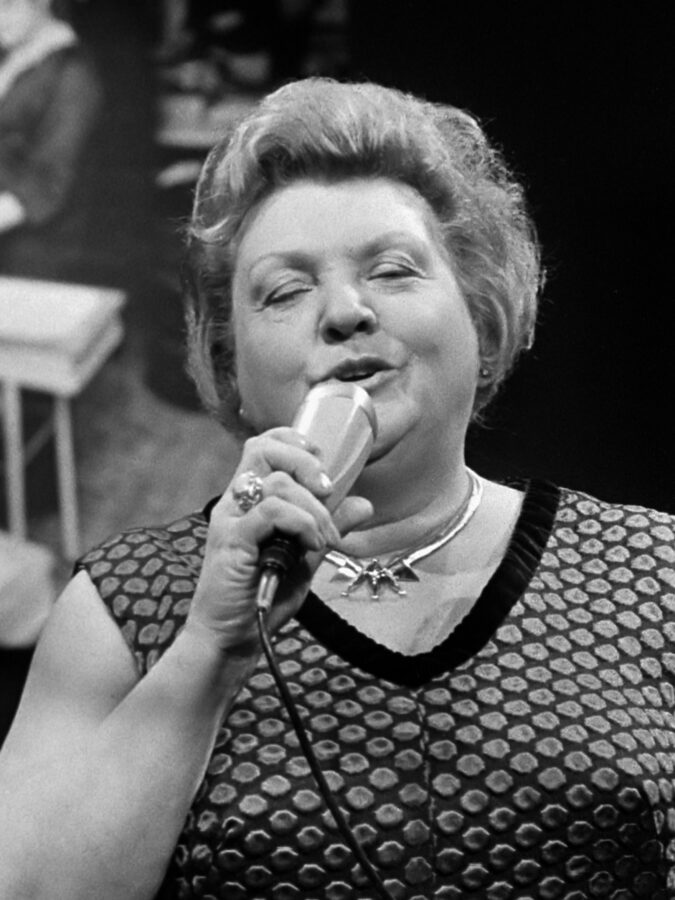
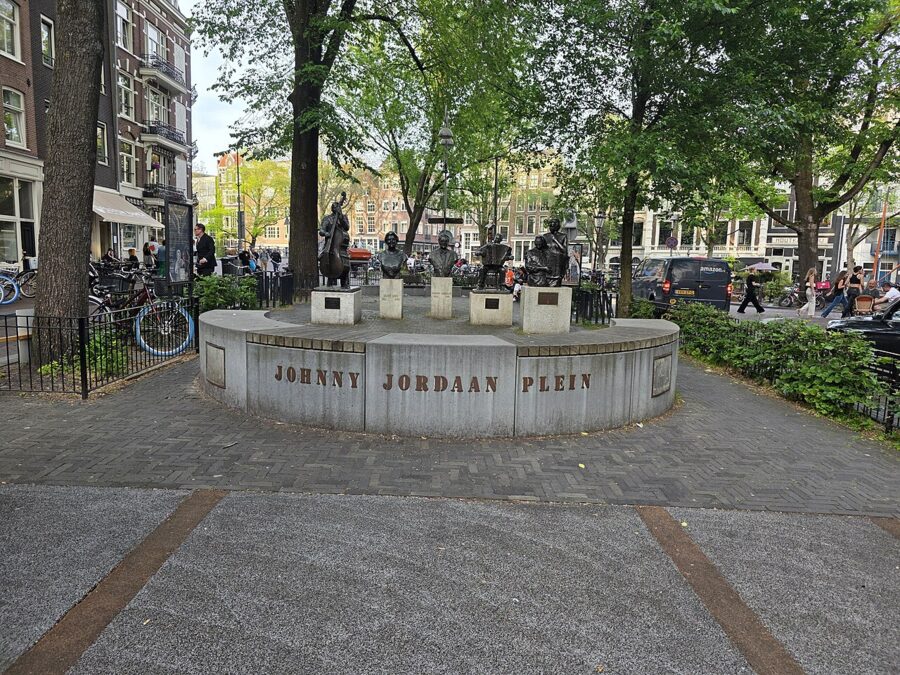

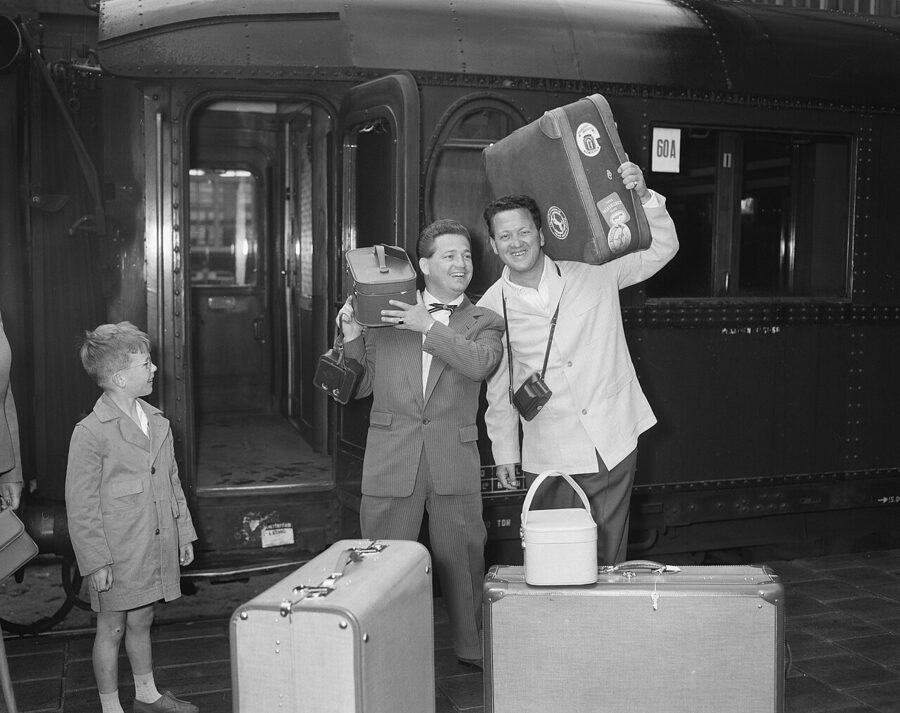
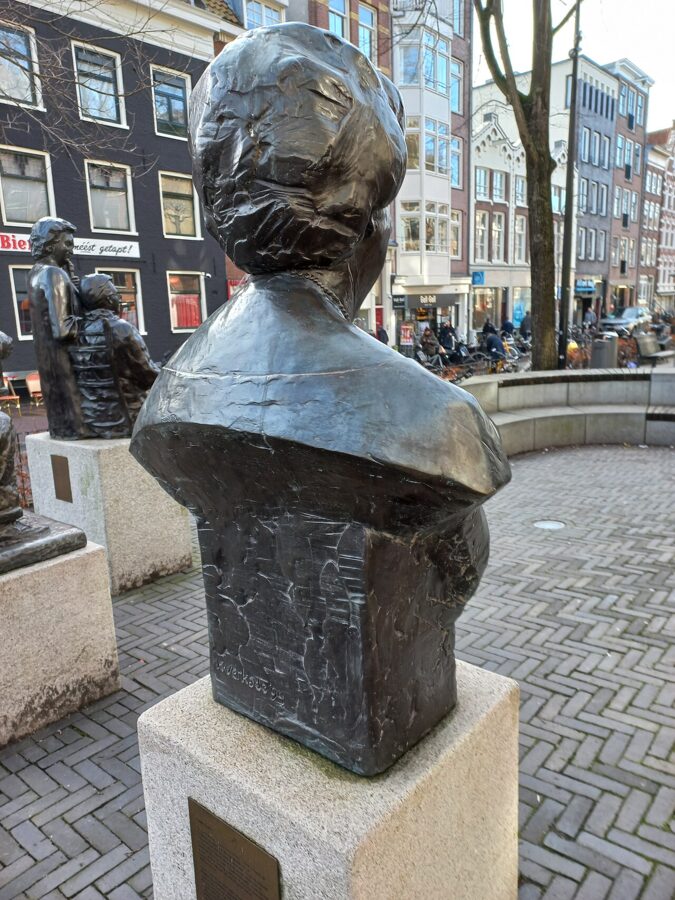
Their statues stand on the Johnny Jordaanplein, with the accordionist Johnny Meijer, the singer Manke Nelis and the duo Jan and Mien Froger. The song everyone knows is Aan de voet van die oude Wester, “at the foot of that old Westertoren”, recorded by Willy Alberti and Johnny Jordaan among others; in 2024 a jury picked it as one of the ten best songs ever written about Amsterdam. The Jordaan Festival, a neighborhood music festival held since 1975 around the Elandsgracht, skipped 2024, and its website was offline in November 2026, so ask in a café whether and when it is on.
Where to eat
Eating in the Jordaan is better than eating almost anywhere else in the center, because it is a neighborhood people live in and expect to be fed properly. Book for dinner at the weekend. These were all open as of November 2026.
- Winkel 43, Noordermarkt 43. The apple pie, tall, crisp and served with a heap of whipped cream, costs €8 (about US$9). Go early on a Saturday or come on a Monday.
- Moeders, Rozengracht 251. Dutch home cooking in a room hung with photographs of customers’ mothers; bring one of yours and they will put it on the wall. Open daily from 17:00, kitchen until 22:00. There are only 38 seats and bookings are taken on the website only.
- Eetcafé De Reiger, Nieuwe Leliestraat 34. A brown café that serves classic dishes, with three courses from €30 (about US$35). The café opens at 16:00 and the kitchen at 17:00, and part of the room is kept free for walk-ins.
- Daalder, Lindengracht 90. Fine dining from the chef-owner Dennis Huwaë, back on the Lindengracht where the restaurant began: a six-course menu at €145 (about US$168), or à la carte. Dinner Thursday to Monday from 17:30.
- Toscanini, Lindengracht 75. The street’s long-standing Italian, with a large open kitchen. Phone ahead; it is often full.
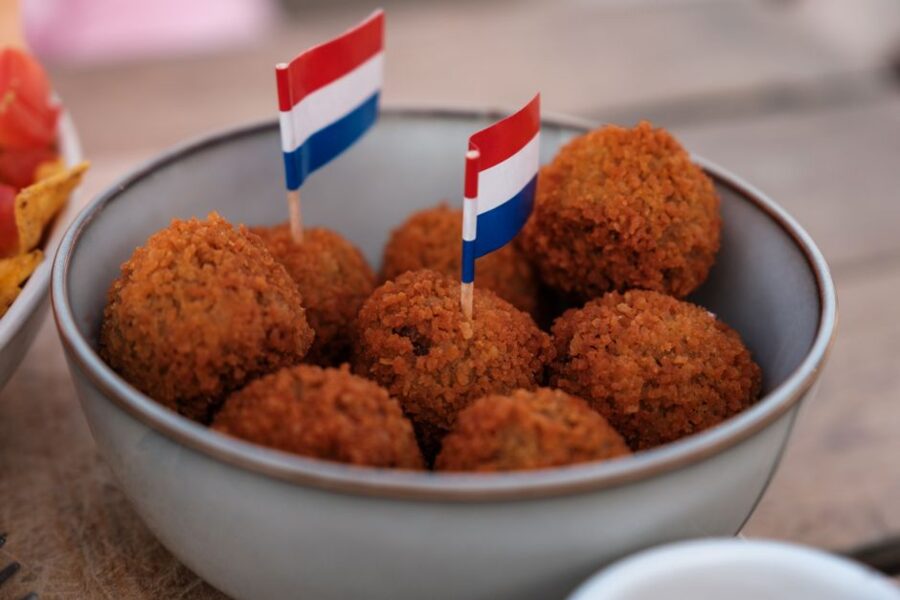
For a cheap lunch, eat at the Saturday markets. For a snack with your beer, any brown café will bring you bitterballen.

Small museums and sights
The big sights stand on the edge. The Anne Frank House is on the far side of the Prinsengracht, and the Westerkerk beside it, with the tallest church tower in the city and Rembrandt’s lost grave inside. The Jordaan’s own museums are small, and two of them are good.
The Theo Thijssen Museum, Eerste Leliedwarsstraat 16, is in the house where Thijssen was born on 16 June 1879; the front room, his father’s shoemaker’s workshop and shop, is now the entrance. Visitors are received at Thijssen’s own dining table from the 1930s, which serves as the desk. Open Thursday to Sunday 12:00-17:00, as of November 2026. The house was rebuilt in its original form between 1991 and 1995 after the city had planned to demolish it.
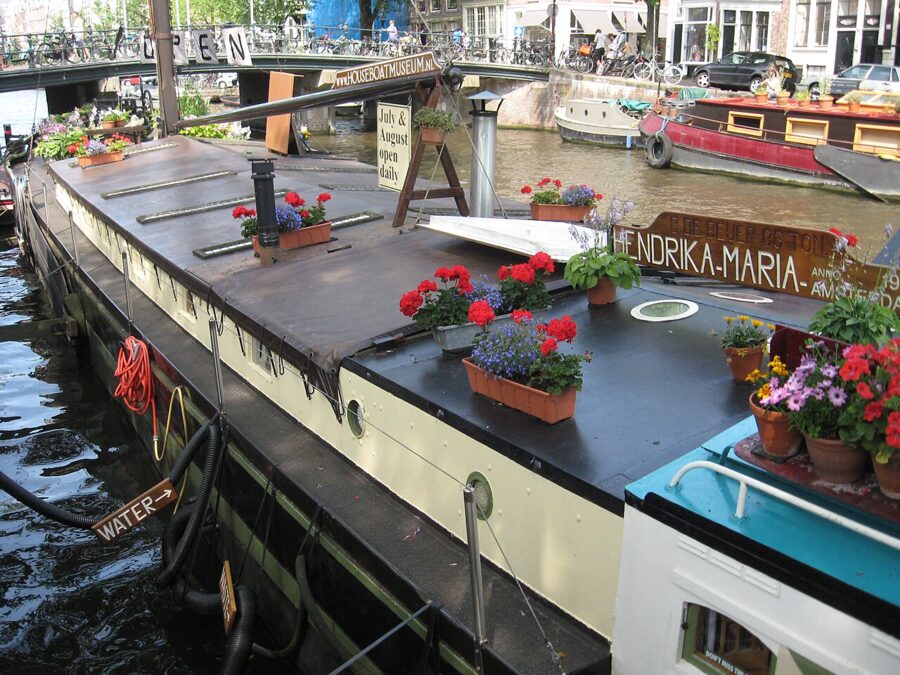
The Houseboat Museum is the Hendrika Maria, a cargo ship built in 1914, moored on the Prinsengracht near the Elandsgracht and fitted out as a home. It answers the questions everyone asks while walking the canals: where the water comes from, where the waste goes, and whether it is damp. It is. Check its hours on its website before going.

The Pianola Museum at Westerstraat 106 has run since 1994 in a former police station and owns more than 100 player pianos and an archive of over 35,000 music rolls. It is best on a concert evening; check its program. On the Prinsengracht at number 116 the Amsterdam Tulip Museum is open daily 10:00-18:00.

Cannabis is sold at 1e Hulp on the Marnixstraat, on the Jordaan’s western edge, and at Grey Area on the Oude Leliestraat, ten minutes east across the canals; the rules are in the coffeeshop guide. Remember that people live above every street here, and smoke or drink accordingly.
A walk through the Jordaan
This route runs north to south, takes about three hours at a stroll with stops, and ends at the Westerkerk, ten minutes from the Dam.
- From Centraal Station walk west along the Haarlemmerstraat to the Brouwersgracht and the corner of the Prinsengracht, with Café ‘t Papeneiland on it (15 minutes).
- Go south a few steps to the Noordermarkt and the Noorderkerk, with the 1934 monument by the church door. On a Monday or Saturday, browse the market here.
- Walk back to the Brouwersgracht and turn into the Lindengracht at the Theo Thijssen statue. Look for the Lindenhofje at number 94 and the Suyckerhofje at 149.
- Walk west along the Lindengracht and turn left down the Tweede Lindendwarsstraat to the Karthuizersstraat and the Karthuizerhof, then cut through to the Westerstraat.
- Take the Tweede Anjeliersdwarsstraat and the Tweede Tuindwarsstraat south, past the shops, to the Tuinstraat. Look for the Hofje De Zeven Keurvorsten at numbers 197-225.
- Walk east along the Tuinstraat to the Eerste Egelantiersdwarsstraat for the Claes Claesz Hofje, then come out on the Egelantiersgracht. Walk it to the Prinsengracht end, past the Sint Andrieshofje and Café ‘t Smalle.
- Cross to the Bloemgracht for De Drie Hendricken and the two Thijssen bridges, then cross the Rozengracht and continue south down the Lauriergracht.
- Turn left along the Elandsgracht to the Johnny Jordaanplein and the Houseboat Museum on the Prinsengracht.
- Walk north up the Prinsengracht to the Westerkerk, or stop at De Twee Zwaantjes at number 114 on the way.
Getting there and getting around
On foot is the best way, and from most of the center it is the only way that makes sense. From Centraal Station it is about 15 minutes to the Noordermarkt via the Haarlemmerstraat and 20 minutes to the Westerkerk. From the Dam, where most trams from Centraal stop, walk west behind the Royal Palace and across the canals, about ten minutes.
Trams are awkward until early 2027. The Westermarkt stop by the Westerkerk is closed for roadworks, and the line that usually runs along the Rozengracht through the middle of the Jordaan is diverted while the Rozengracht, the Westermarkt and the Raadhuisstraat are rebuilt. Trams still run along the Marnixstraat on the Jordaan’s western edge, with stops at Elandsgracht, Rozengracht and Marnixplein. There is no metro; the nearest station, Rokin on metro 52, is about fifteen minutes away on foot.
By bike the Jordaan is easy, but the side streets are narrow and the residents’ bikes take up every railing. Lock up on a wide street such as the Westerstraat or the Lindengracht, never against a market stall or across a hofje door. By car, don’t.
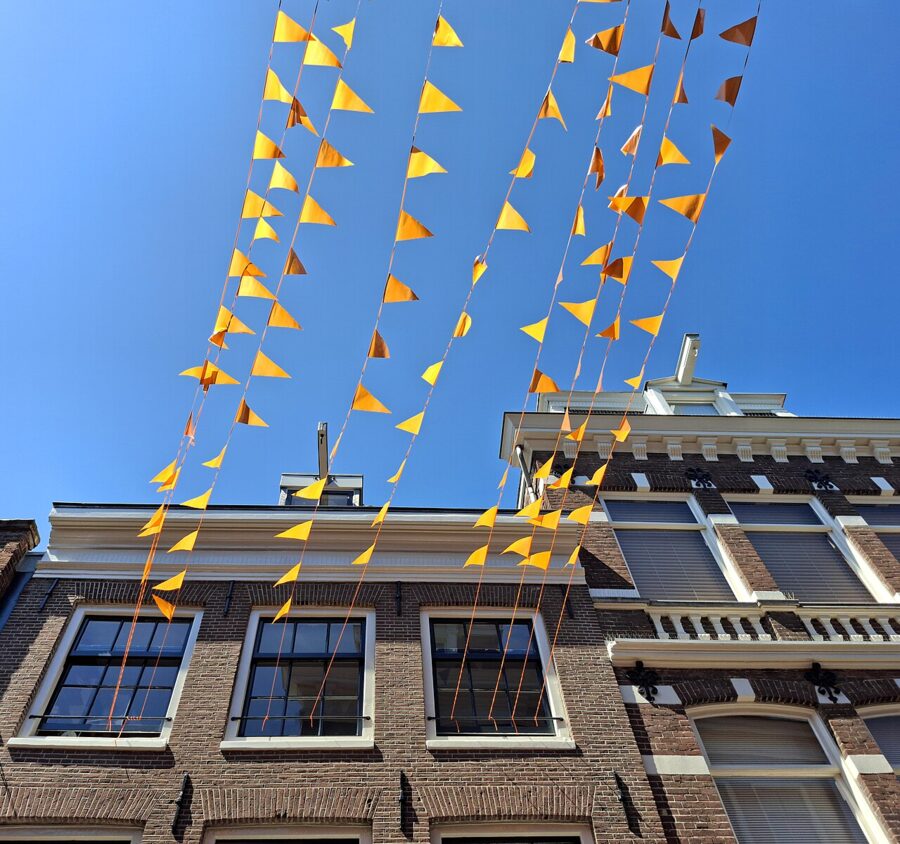
The Jordaan is also one of the places where King’s Day is loudest, with music and outdoor bars at cafés such as ‘t Smalle and De Twee Zwaantjes, so plan accordingly if you are here on 27 April.

Staying in the Jordaan
The Jordaan is one of the quietest well-placed places to sleep in the center, with the canal ring next door and almost no nightlife after midnight. Hotels are few and small, and the where to stay guide compares it with the other districts. If you are thinking of a holiday flat, note that since 1 April 2026 homes in the Jordaan may be rented to tourists for no more than 15 nights a year, and every listing must show a registration number. If you would rather see the district from the water, the canal cruises along the Prinsengracht pass its whole eastern edge.
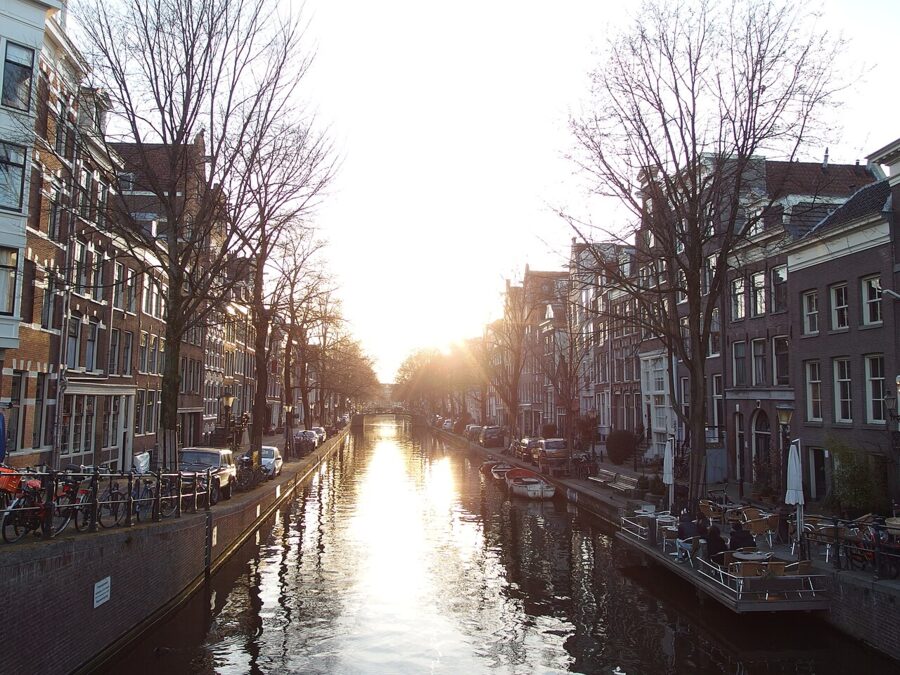

So walk it the way the water went. Start at the Brouwersgracht on a Monday or Saturday morning, follow the filled-in canals south through the markets, slip into whichever hofje has its door open, and finish on the Egelantiersgracht with a beer at ‘t Smalle as the light goes.