
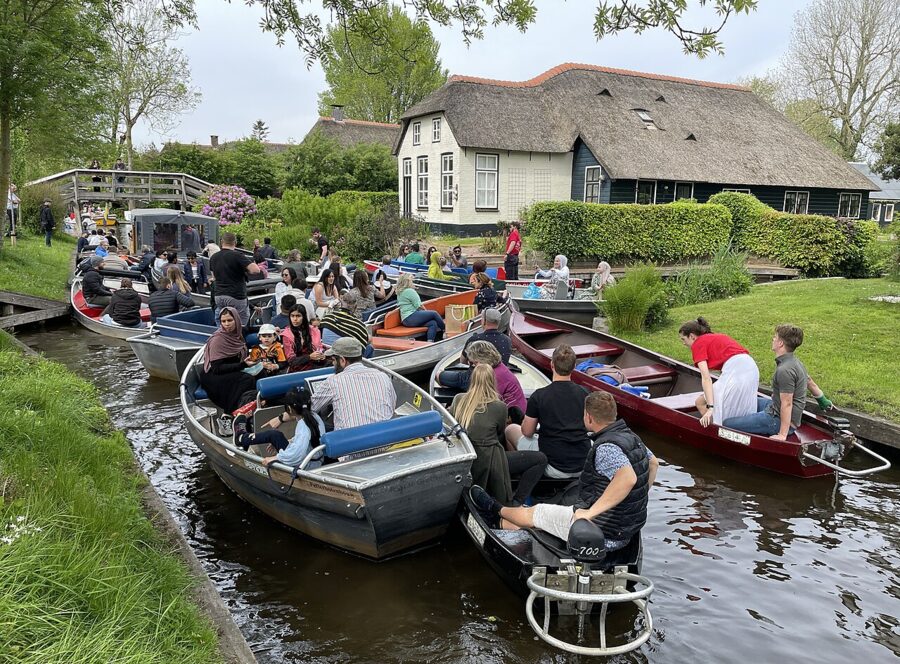
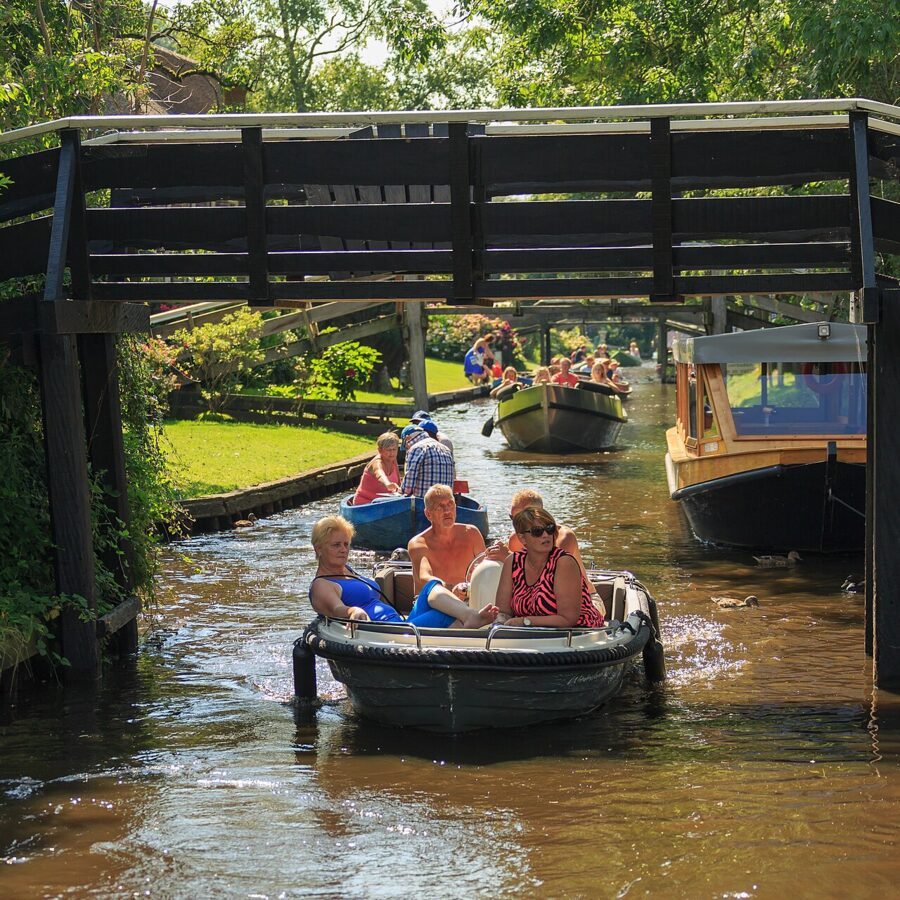
On Thursday 7 August 2025, nearly 47,000 people walked into the center of Giethoorn, a village where fewer than 3,000 live. Nine days later a camera on the main canal counted 1,652 boats in a single day, the most since counting began. Those are the photographs nobody posts: whisper boats nose to tail under the footbridges, a tour boat waiting with its engine humming, a queue on the path for the one spot where a thatched farmhouse sits alone on its island.
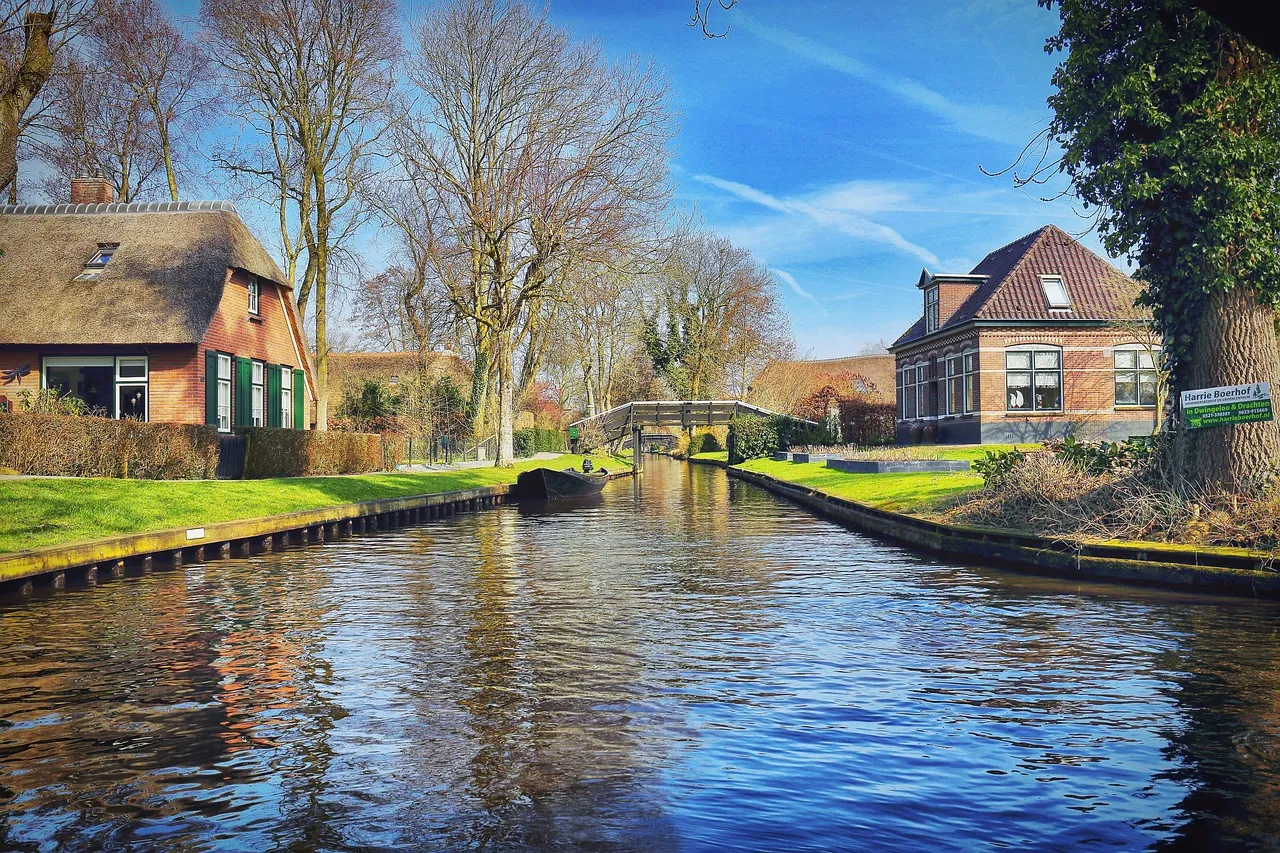
Come back on a Monday morning in May, or a weekday in late November, and the same canal is green water, a heron and the knock of one boat against its mooring. Giethoorn is not overrated. It is badly timed by almost everyone who goes, and from Amsterdam that matters more than anywhere else, because the trip is about two hours each way and the coach tours deliver you at exactly the wrong hour.
So the decision comes first, and it is a short one. Go if you can arrive before ten or stay past four, preferably on a weekday outside July and August. Skip it on a sunny Saturday in August, and skip it if half a day is all you have: two hours out and two back for an hour on a crowded canal is a poor trade when the canals of Amsterdam are outside your door.

Everything below assumes you are going by train and bus, which is cheaper than any tour and the only way to control your timing without a car. The prices, timetables and rules are as of November 2026, and several of them changed this year.

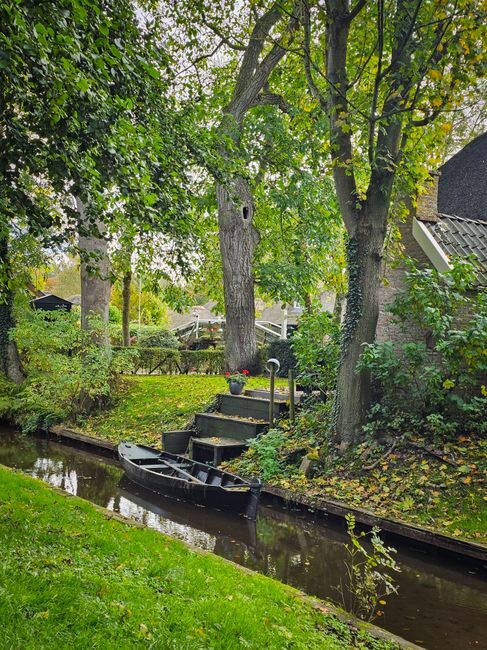
One more thing before the details: Giethoorn is a working village, not an open-air museum, and it has had enough of being treated like one. The gardens, the bridges and most of the jetties belong to someone. Walk the public path, sail the public water, and leave the private footbridges to the people whose front doors they lead to.
Is Giethoorn worth the trip from Amsterdam?
Yes, with conditions. Nothing else in the Netherlands looks like it: a village laid out along a single canal, every farmhouse on its own patch of grass reached by its own bridge, and thatch on almost every roof. The village information site suggests four to six hours for a relaxed visit, and I agree. Two hours on the water and two on foot, plus lunch, fills a day well.
What spoils it is the hour. Most day-trippers are in the village between half past ten and half past three, and the canal is busiest between 11:00 and 16:00 every day of the season. The busiest days of 2025 all fell in the first half of August, plus Whitsun weekend. Before 10:00 and after 16:00 the village is a different place, and can be a cheaper one: at least one rental company knocks up to 20 percent off early and late starts.
April, May, September and early October are the months to aim for. July and August are for people who do not mind company. Winter is quiet and grey, with fewer boats but the heated tour boats still running, and on a clear frosty morning it is the best Giethoorn there is. The canals last froze hard enough to skate on in February 2021, so do not plan around ice.
If you only have a day or two in the city, the closer water villages are easier. Volendam and Marken are a short bus ride from Centraal and give you wooden houses and harbor views without a train change. Giethoorn is for the third or fourth day, or for an overnight stay.
How far is it, and how long does it take?
Giethoorn is in the northwest corner of Overijssel, about 90 km from Amsterdam as the crow flies and about 115 km by road. By car it is roughly an hour and a half. By train and bus it takes two hours or a little more door to door, depending on the connection at Steenwijk.
Getting there by train and bus
There is no station in Giethoorn. You take the train to Steenwijk, about 8 km away, and a bus from the forecourt into the village. It is easy once you know the two things that trip people up: which train stops at Steenwijk, and which bus runs in which months.
The train to Steenwijk
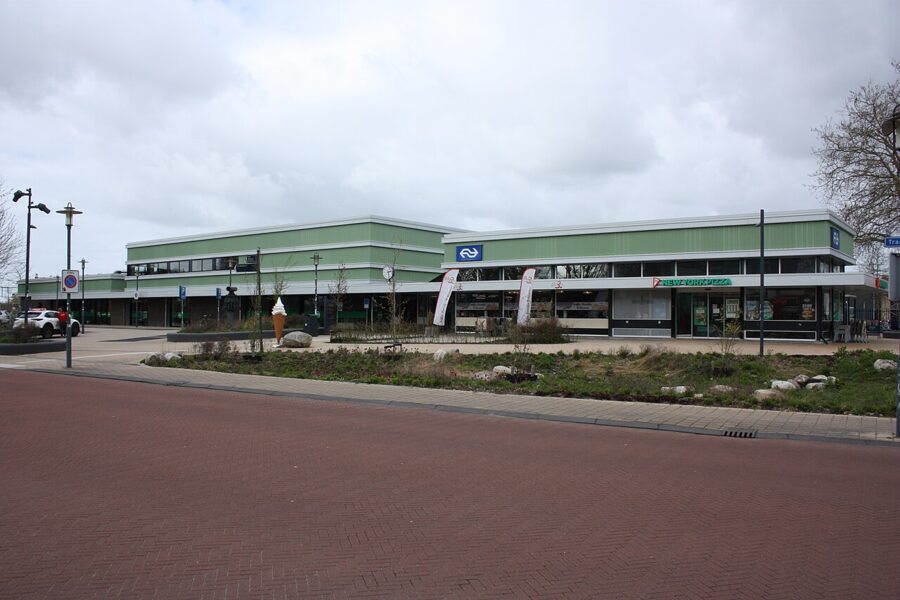

From Amsterdam Centraal, the simplest route is the train to Almere Centrum and a change there onto the intercity to Leeuwarden, which stops at Steenwijk. From Amsterdam Zuid, which metro 52 (Noord/Zuidlijn) reaches from Centraal, a direct intercity to Leeuwarden runs once an hour, and the other hourly train needs a change at Zwolle. The village’s own public transport page warns about the same trap I would: at Zwolle, the intercity to Groningen does not stop at Steenwijk, the one to Leeuwarden does.
The ride takes about an hour and forty minutes. A single second-class e-ticket from Amsterdam Centraal to Steenwijk costs €29 (about US$34) without a discount card, as of November 2026, so a return is €58. You can also check in at the gates with a contactless bank card instead of buying a ticket. Check the NS planner on the day, because the national timetable changes every December.
Bus 70 and the Giethoorn Express
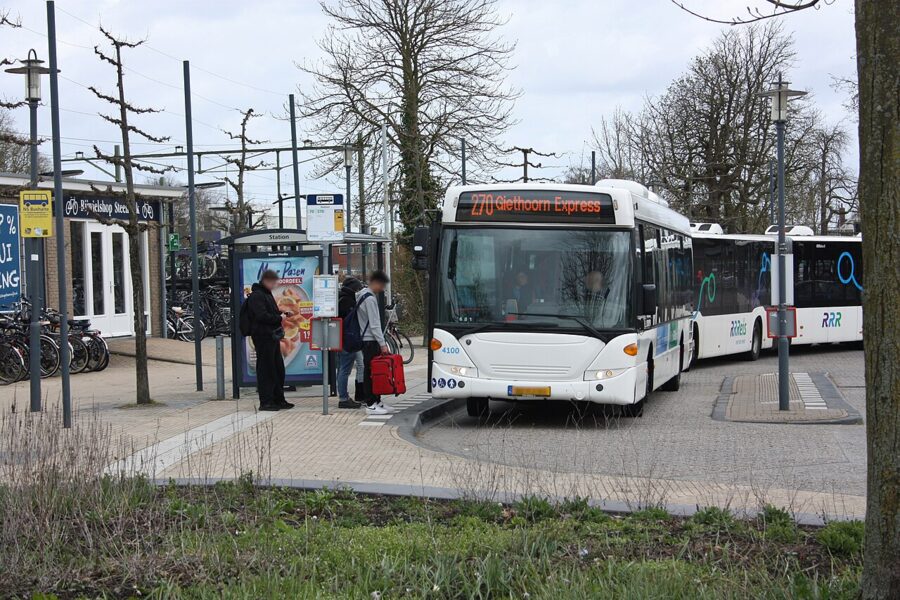

Bus 70 runs from Steenwijk station via Giethoorn to Zwartsluis all year, once an hour. From April to October bus 270, the Giethoorn Express, runs as well, also hourly and by a faster road, so in season there is a bus every half hour, weekends and public holidays included. The Giethoorn Express was set up because line 70 was always packed.
The ride to the village takes about 15 minutes. Get off at Hylkemaweg-Giethoorn Centrum for the middle of the village, or at Hollands Venetië for the southern end; both are a few minutes’ walk from the canal. You cannot buy a ticket or pay cash on board. Tap in and out with a contactless bank card or an OV-chipkaart, and do not forget to tap out.

In winter, with only line 70, the hourly gap matters. Plan the last bus back to Steenwijk before you rent anything, and if you miss it, the taxi to the station is expensive for a ten-minute ride.
Driving and parking
The center is car-free, so you park at the edge. Along the Beulakerweg (N334) blue signs marked P-route Giethoorn divide the village into three zones: South in purple, Center in green and Middle in yellow, each with numbered car parks, most of them at a business such as a boat rental company or a restaurant.
A digital parking guidance system was due to go live in May 2026 to steer cars away from the residential streets. You cannot reserve a space, but booking a boat usually tells you where to park, and most car parks are free. The parking map lists them zone by zone.
Coach tours from Amsterdam
Coach day trips leave from Amsterdam-Noord in the morning. As of 2026, coach-only seats start at about €39 (about US$45), and packages with a one-hour canal tour run to about €59. They take care of the timetable and that is all.
Departures between 08:45 and 10:45 put you in the village from late morning to mid-afternoon, which is the crowd, to the hour. If you go by tour, take the earliest departure and spend the first hour on foot.
The village: one canal, three neighborhoods
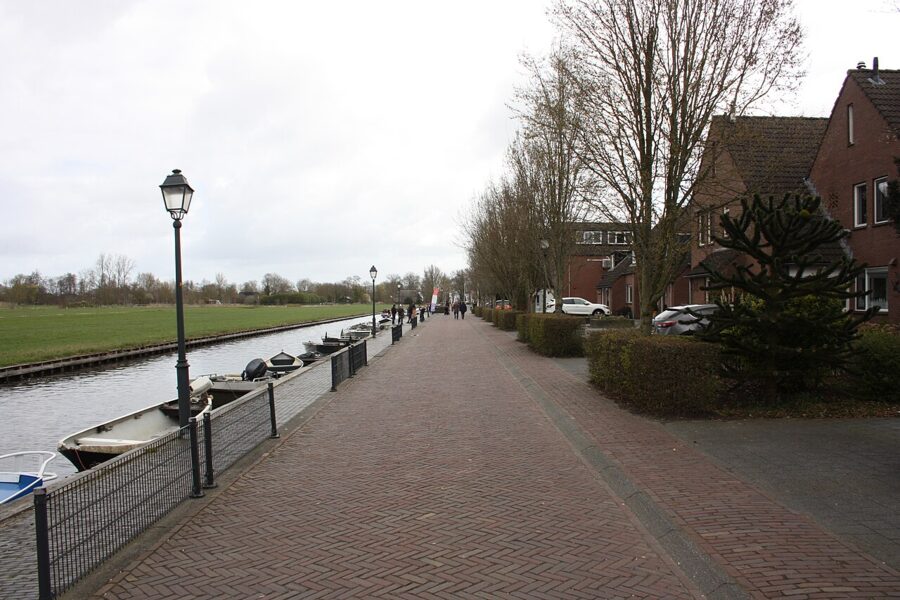
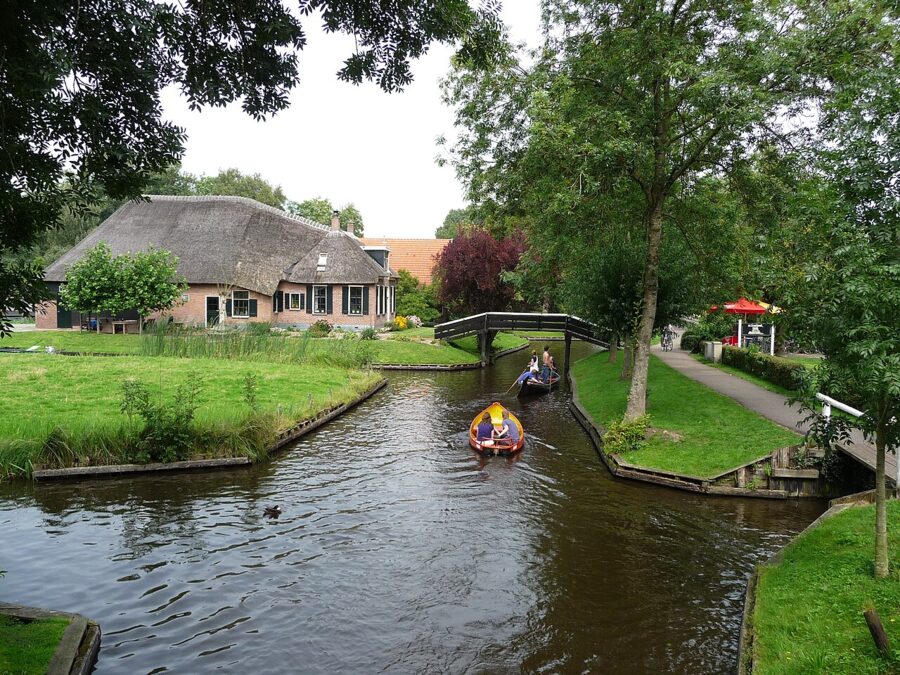
Giethoorn is long and thin. Three neighborhoods sit in a staggered line along the Dorpsgracht, the village canal: the Noordeinde in the north, the Middenbuurt and the Zuideinde in the south, where the canal empties into the open water. The only through route on land in the old village is a paved path for walkers and cyclists, broken only where the Kerkweg crosses. Residents reckon about four in five people never leave the stretch around the Binnenpad, which is a reason to walk further.
Walking the Dorpsgracht
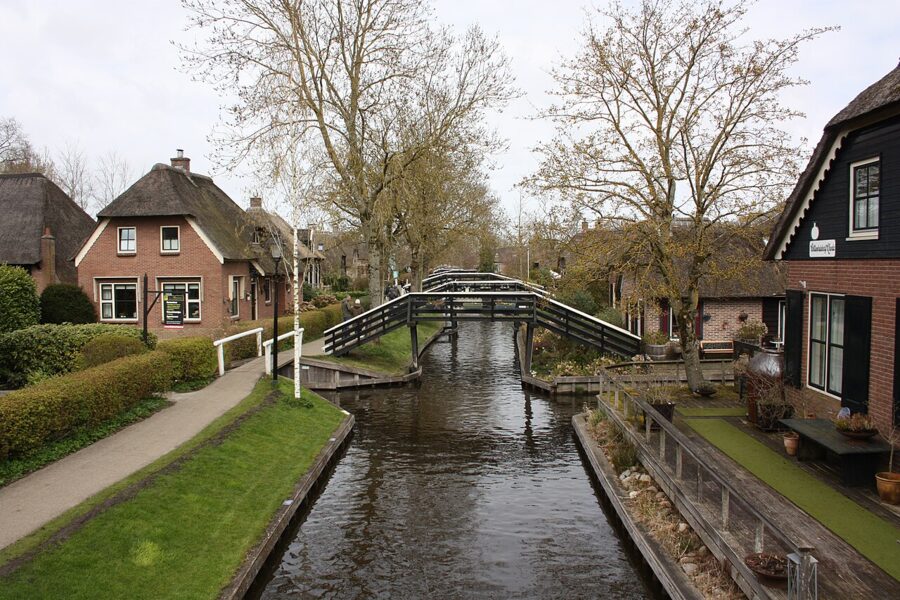
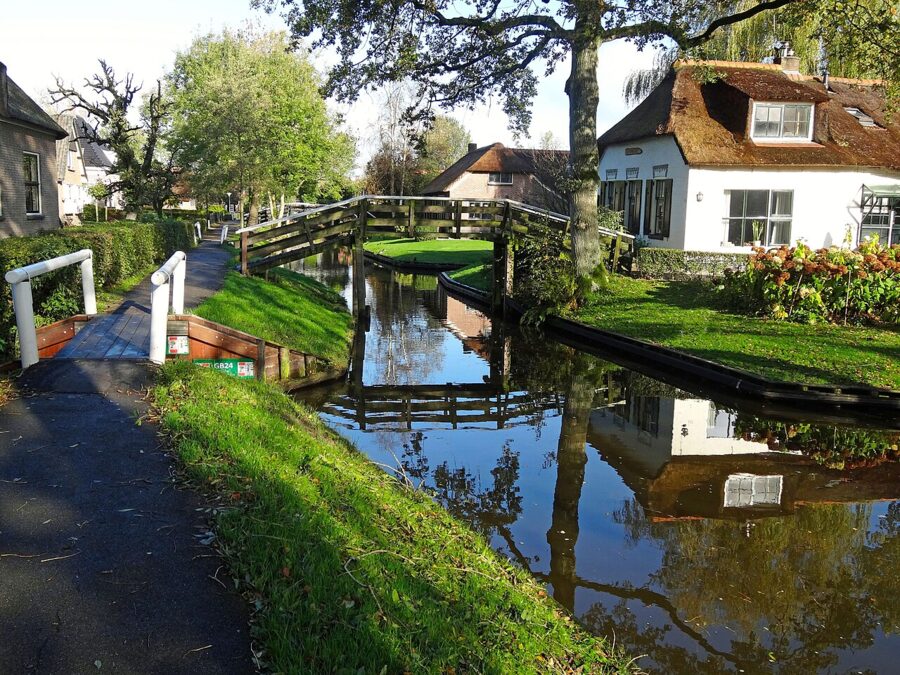
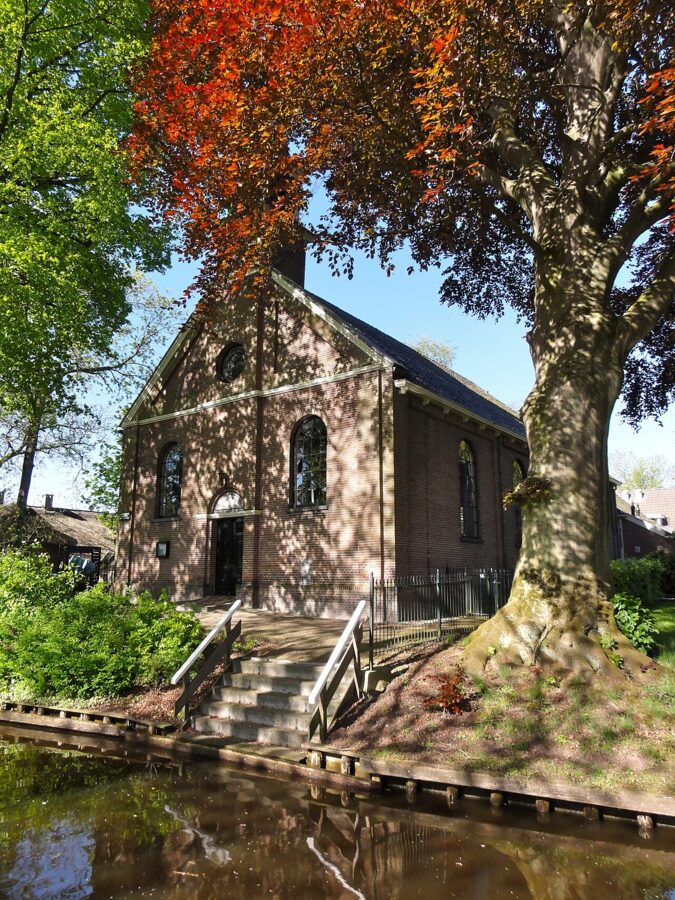
Start at the Hylkemaweg, where the bus stops, and walk onto the Binnenpad. The path runs beside the canal past the museum and the little Mennonite church, then north through the Middenbuurt, where the farmhouses grow further apart and the shops thin out. Turn back south past the bus stop and the path along the canal becomes the Zuiderpad, lined with boat rental companies and terraces down toward the Zuideinde, where the canal runs out into open water.

The village’s waymarked network includes a 3.5 km loop, Rondje Giethoorn, for anyone who wants a marked route, and longer walks into the surrounding country start from the same paths. Do the walk early. At 09:30 you share the path with dog walkers and a delivery bike; at 13:00 you queue behind groups stopped for photographs on bridges they are not supposed to stand on.
Farms on islands
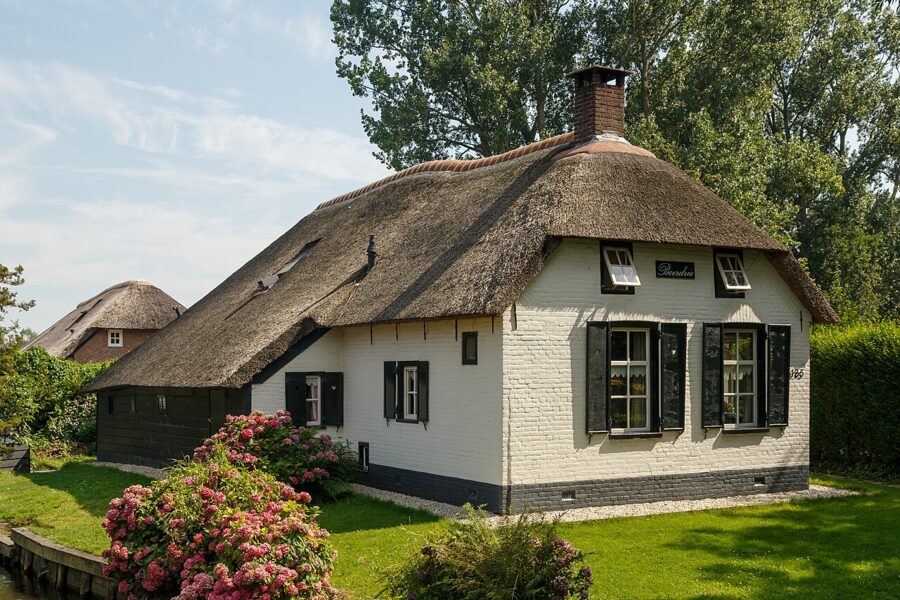
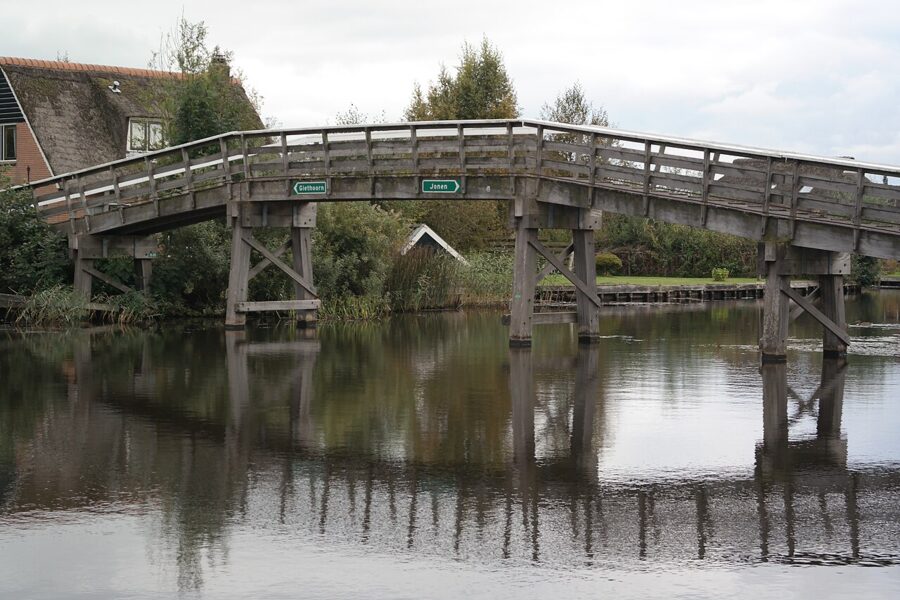
The typical Giethoorn farmhouse is the bultrugboerderij, the humpback farm: the barn behind the house is taller than the house itself, so the roofline rises in a hump. Hay came in by water, which is also why the bridges over the canal are so high: a man standing in a punter, or a flat boat piled with hay, had to pass underneath.

Most of the houses you see date from the 18th and 19th centuries, rebuilt and modernized many times since. Many are protected monuments. Some are holiday rentals, and the rest are homes with children, washing lines and parcel deliveries, which is worth remembering when a camera lens hovers over a hedge.

Peat, goat horns and a 1958 comedy
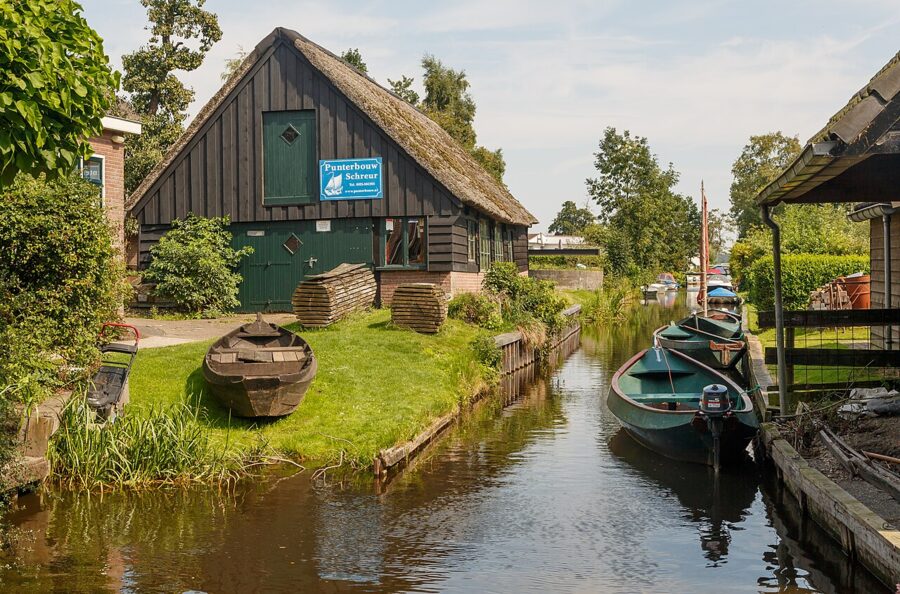
Giethoorn was a peat-digging settlement. The first written mention dates from 1225, and the story everyone tells is that its founders found hundreds of goat horns in the ground, left by animals drowned in the great flood of 1170, and named the place Geytenhorn. Linguists prefer a duller reading, in which hoorn means a corner of land jutting into water. The goat horn is on the village coat of arms either way.
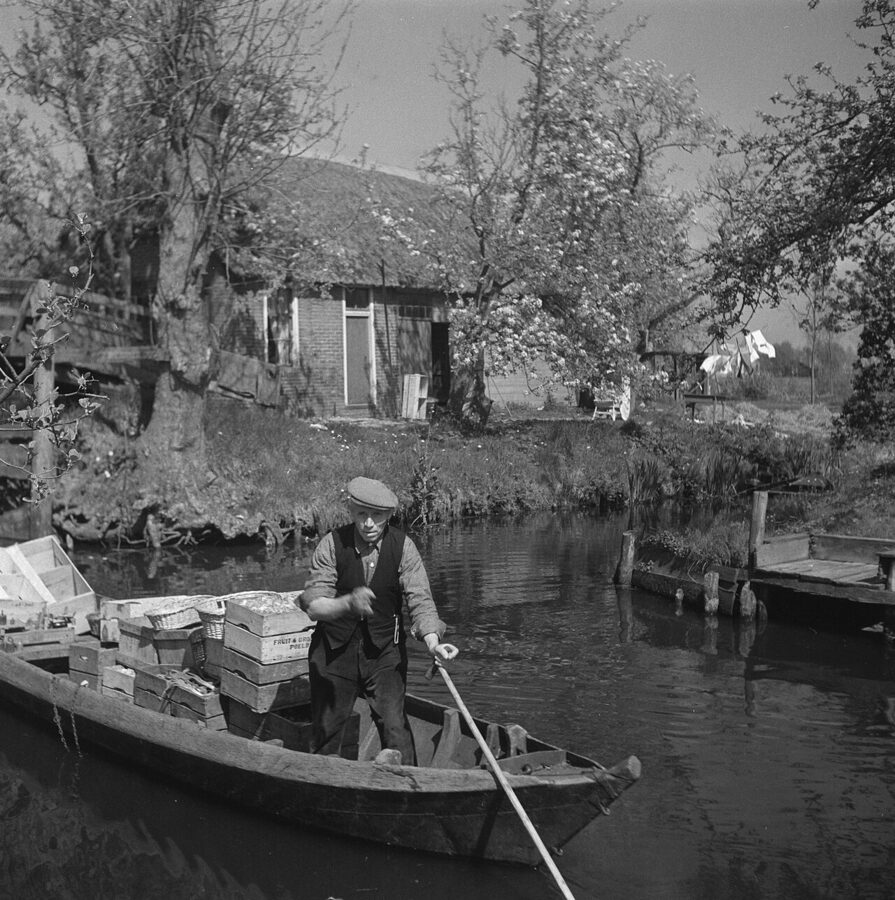
Peat cutting left long strips of land between flooded pits, and over the centuries the village crept east as the diggings advanced, settling on the present Dorpsgracht in the 17th century. Around 1750 Giethoorn switched from peat to livestock farming. Storm floods in 1775, 1776 and 1825 washed away the thin ridges between the pits and made the Bovenwijde lake, which is why it is barely a meter deep.
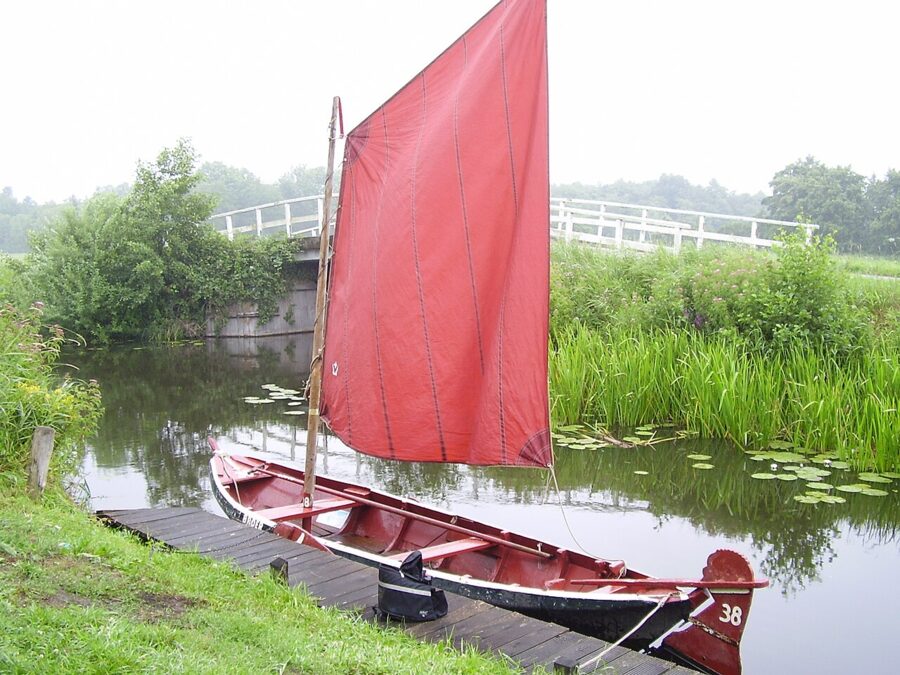

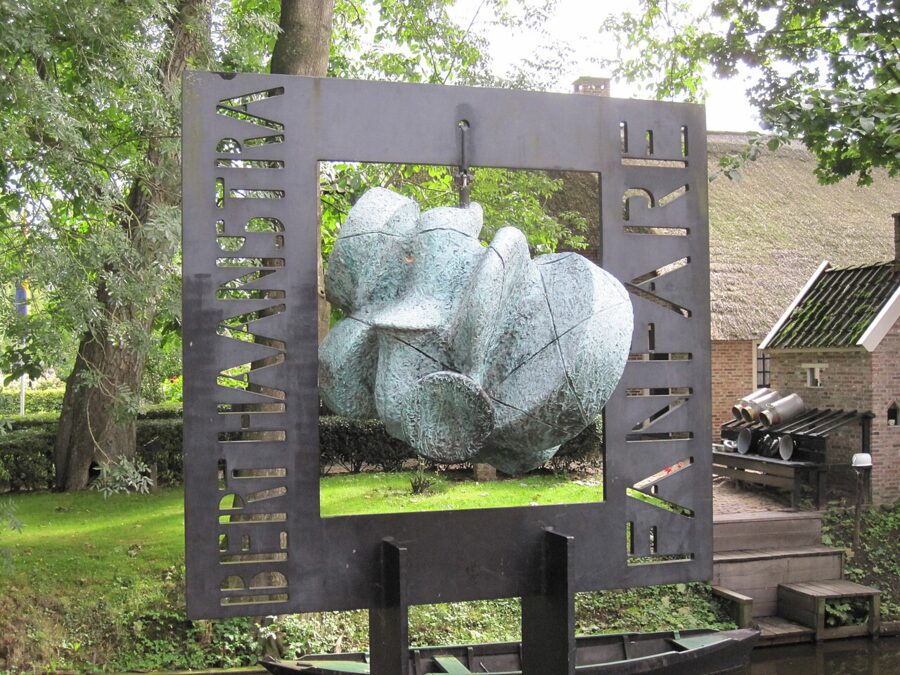
Fame arrived with a film. Bert Haanstra shot Fanfare here in 1958, a comedy about a village brass band and its new conductor, and around two million Dutch people saw it in cinemas. Domestic tourism followed, foreign tourism from the 1970s, and social media did the rest. Grand Café Fanfare on the Binnenpad still hangs its walls with stills and souvenirs from the film.

Museum Giethoorn ‘t Olde Maat Uus
If you see one thing indoors, see this. The museum occupies a protected farmhouse at Binnenpad 52 and tells the village’s story from peat and reed to fishing and tourism, with a new underground wing added in a renovation that reopened in 2017. Admission is €7.50 (about US$9) for adults and €2.50 for children aged 4 to 12, valid through 2026.
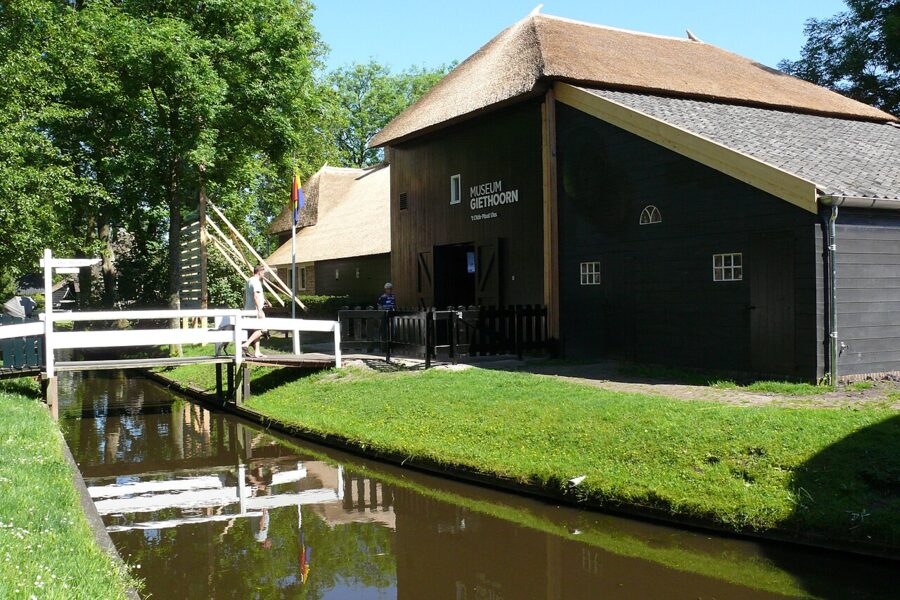

The opening hours are 11:00 to 17:00 daily from 1 April to 31 October, and 11:00 to 16:00 on Friday, Saturday, Sunday and Monday from November to March, daily in the Christmas and spring school holidays. It closes on Christmas Day, Boxing Day, New Year’s Eve and New Year’s Day. By bus, get off on the Hylkemaweg and walk along the water; by car, follow the green P2 signs to a free car park.

Whisper boats, canoes or a tour
You see Giethoorn properly from the water, where the houses face. The choice is between steering yourself in a small electric boat, paddling, or sitting in a covered tour boat while a skipper talks. More than 25 rental companies work in and around the village, and none of the self-drive boats needs a license.

Renting a whisper boat
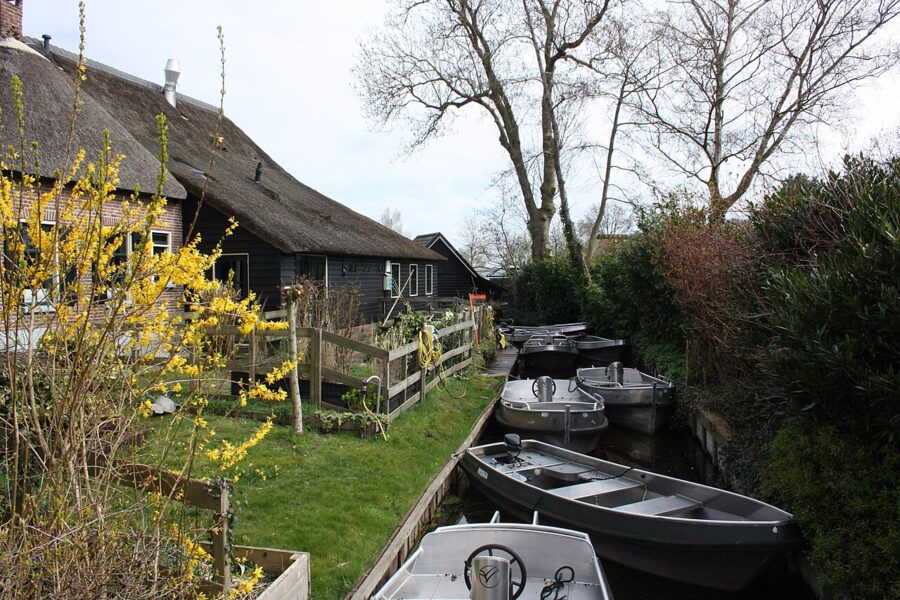
A fluisterboot, or whisper boat, is a small open boat with an electric motor so quiet it gave the type its name. You get a short briefing at the jetty, a route on paper or in an app, and the steering wheel. Two hours is the right length for the village canal and a loop over the Bovenwijde; most companies set a minimum of two to three hours anyway, and on a busy day the loop takes longer than you think.
Prices are per boat, not per person, and they vary by company, season, day and start time. Two examples from operators’ own price lists, as of November 2026:
| Boat | Company | Price (as of November 2026) |
|---|---|---|
| 4-person electric sloop | Boatrental Giethoorn, Zuiderpad 14A | from €24 an hour (about US$28) |
| 6-person electric sloop | Boatrental Giethoorn | from €32 an hour |
| 8-person electric sloop | Boatrental Giethoorn | from €40 an hour |
| 12-person electric sloop | Boatrental Giethoorn | from €48 an hour |
| 6-person electric sloop | Botenverhuur Giethoorn (Van den Heuvel), Binnenpad 47 | €35 an hour, €175 a day |
| 6-person wooden electric boat | Botenverhuur Giethoorn (Van den Heuvel) | €20 an hour, €100 a day |
| 1-person kayak | Botenverhuur Giethoorn (Van den Heuvel) | €15 a day |
| 2-person kayak or Canadian canoe | Botenverhuur Giethoorn (Van den Heuvel) | €20 a day |
| Children’s life jacket | Boatrental Giethoorn | €4.95 |
At Boatrental Giethoorn, the lowest rates are for weekday starts before noon or after 18:00, and Saturday and Sunday cost 20 percent more. The boats run from 09:00 until sunset, which means around 21:30 at midsummer and about 16:30 in winter, and you cannot take a rental boat out after dark. Botenverhuur Giethoorn on the Binnenpad is the place for a whole day on a budget.

Book ahead from May to September and on any sunny weekend, because walk-up boats can be gone before you arrive. In the late season it is the other way round: about nine in ten boats come out of the water for maintenance, so book even in November if you want one, and pick a dry day.
Canoes, kayaks and punts
A canoe is the cheapest way onto the water and the best way out of the village. Natuurmonumenten publishes canoe routes through the national park, including a red route through Giethoorn itself, and the quiet side waters away from the Dorpsgracht are where a paddle beats a motor. On the Dorpsgracht at peak hours a canoe is a small target among bigger boats, so save the village canal for early morning. Some companies also rent traditional punts, poled the old way; it looks easy, and it is not.
A tour with a skipper
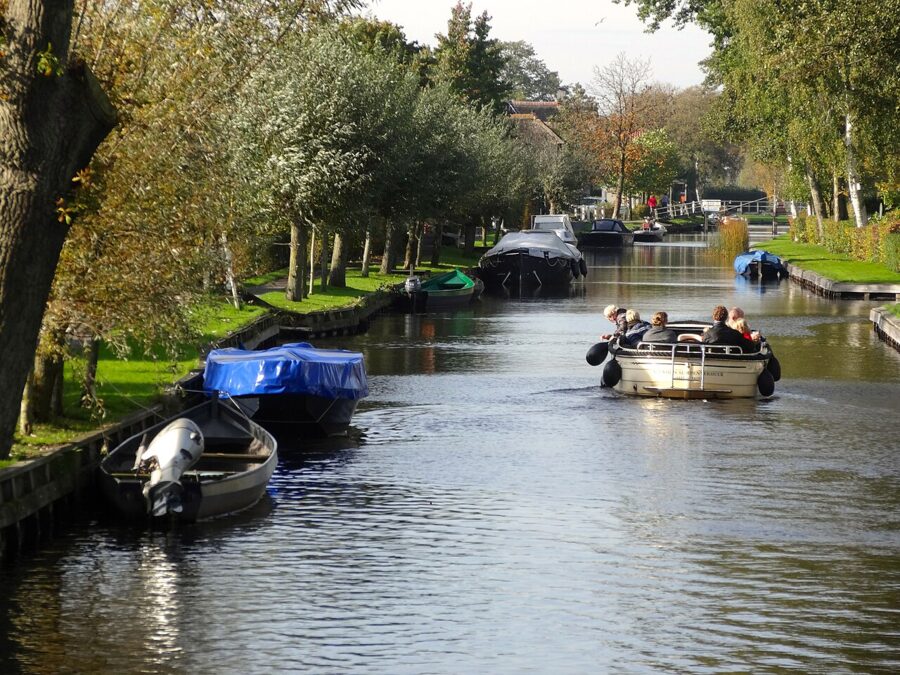
The covered tour boats take about an hour on a standard loop: down the village canal under the footbridges, past the farmhouses on the Binnenpad, out onto the Bovenwijde and back. The skipper talks in Dutch, English and German depending on who is aboard.
At Boatrental Giethoorn the one-hour tour costs €10 (about US$12) per person, with daily departures from the Ds. T.O. Hylkemaweg 7 jetty at 10:30, 12:00, 13:30 and 15:00, more in high season. The boats are heated, so they run all winter.
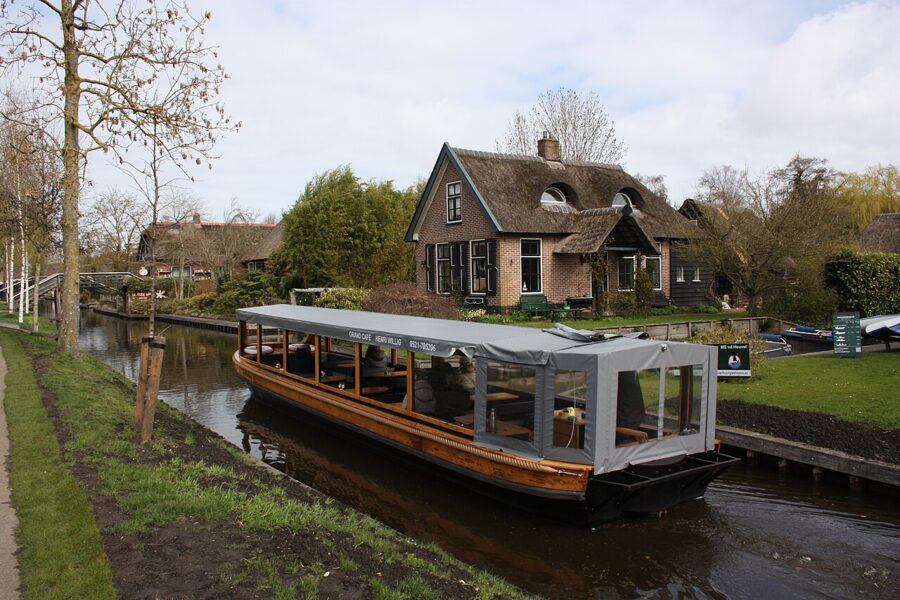

A tour is the better choice for a first visit in high season, when steering a hired boat through traffic is more stress than pleasure, and for anyone who cannot climb in and out of a small boat; at least one large tour boat has a lift for wheelchairs. Private boats with a skipper start at €80 at Boatrental Giethoorn and around €150 for a sloop elsewhere. The two-hour tours that continue into the national park are worth the extra hour if birds interest you at all.
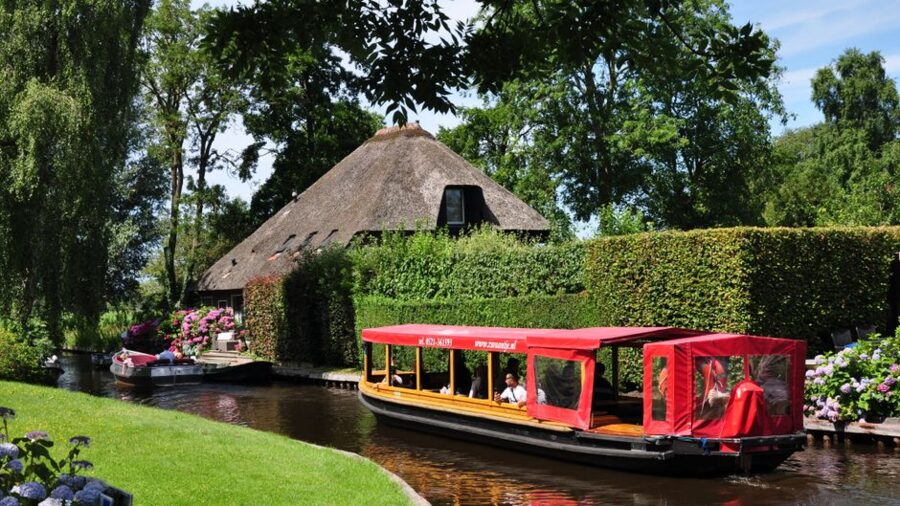
Compared with the canal cruises in Amsterdam, a Giethoorn tour is slower, shorter and cheaper, with more cows and fewer gables. The self-drive boats are the same idea as in the city, minus the 20-meter cruise boats and the tram bells.
The rules on the water
Rental companies explain the rules at the jetty, and the council has started enforcing them. These are the ones people break:
- The main stretch of the Dorpsgracht, between posts 1 and 5, is one-way. Follow the arrows or the app.
- The speed limit in the village canals is 6 km/h, and rental boats are capped at it.
- Tour boats always have right of way. Keep right on open water.
- Moor only at marked spots: never under or next to a bridge, and never against a private garden.
- The person steering drinks no alcohol. Passengers may.
- Minimum age at the helm is set by each company: 12 at one, 16 for boats booked through the village’s central booking site.
- On public holidays and in July and August, from 11:00 to 17:00, boats wider than 1.80 meters may not use the village canal between the Volkensvaart and the Molenvaart, the busiest stretch. Rental boats are built to fit.
Boatrental Giethoorn’s list of boating rules also covers swimming: not in the village canals, and on the Bovenwijde only from a moored boat with the motor off.
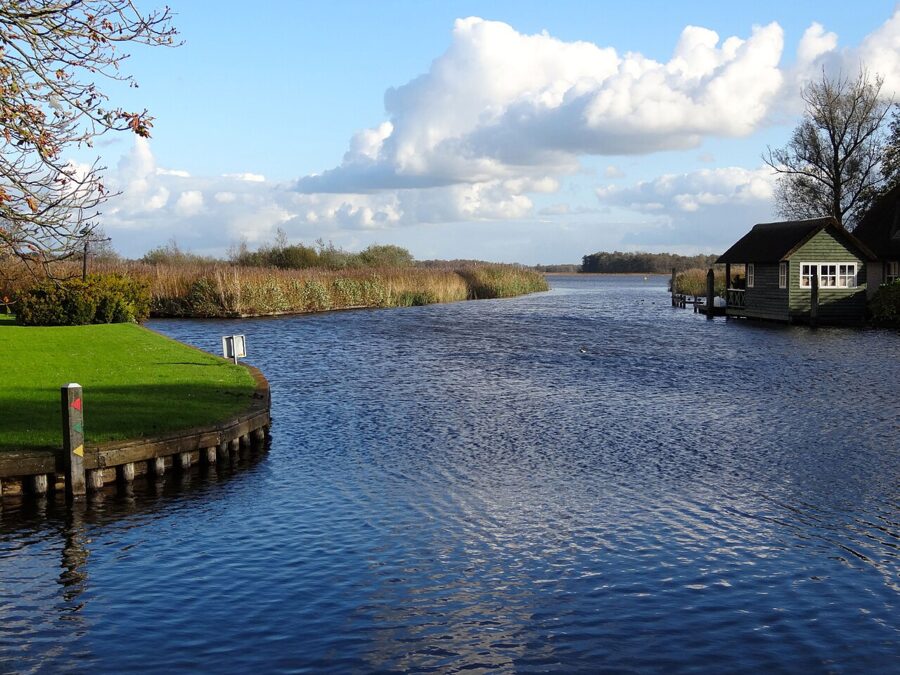
On the Bovenwijde you have room to relax and the wind to think about. In a strong wind the open water gets choppy for a small electric boat, so stay in the canals or turn back early.
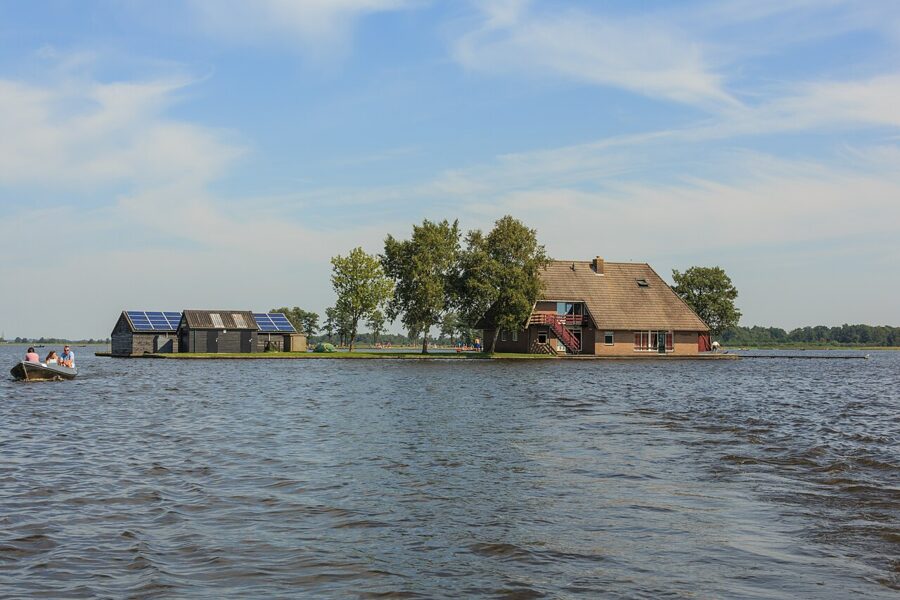

The crowds, and what the village is doing about them
The numbers are counted, at least when the cameras work. In 2025, the busiest season ever measured, 135,901 boats passed the council’s camera on the southern Dorpsgracht, 3 percent more than in 2024 and 10 percent more than in 2023. On 96 days more than 100 boats an hour went through, and on 27 days more than 170. August was the busiest month, with 30,400 passages.
Phone-location counts for the national park put the center of Giethoorn at 1.27 million unique visitors in 2025, making 4.4 million visits between them, and about 20 percent of the visits came from abroad. On 13 days the count passed 25,000. Saturdays are the busiest day on average, and in high season Mondays are the quietest.
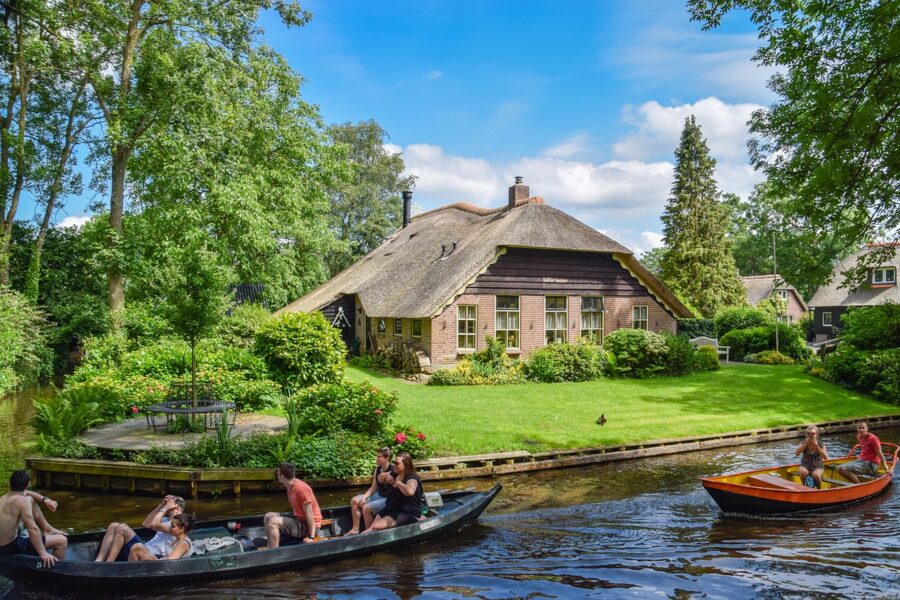
The residents’ association, ‘t Gieters Belang, has argued for years that the 2021 boating policy failed and wants a ceiling on rental boats. The council’s answer, in a March 2026 plan for 2026 and 2027, has four lines: unblock the waterways, enforce the rules, manage crowds with data, and inform people better. In practice that means checks on rental companies before the season, visible enforcement on peak days under a new enforcement protocol, new registration plates for boats from October 2026, the parking guidance system, and a public dashboard of counts. Studies and a review of the boating season run into 2027.
Two complications. The supplier of the counting cameras stopped work in May 2026, so the most recent figures stop there. And the boat companies have been fighting the council’s amusement levy, the vermakelijkhedenretributie, which the appeals court in Arnhem-Leeuwarden upheld in November 2026. Walking in remains free: there is no entry fee to the village.
What helps you is simple. Before setting off, Giethoorn Live shows traffic on the waterways. Go early or late, go midweek, and walk past the Binnenpad into the Middenbuurt and the Noordeinde, which most people never reach.
Weerribben-Wieden National Park
Giethoorn sits on the edge of Weerribben-Wieden, the largest continuous lowland peat bog in northwest Europe: nearly 11,000 hectares of lakes, reed beds, floating fen, hay meadows and swamp woodland. Like the village, it is man-made. Peat was dug here from the 15th century, the pits flooded into lakes, and what was left became reed land and pasture.
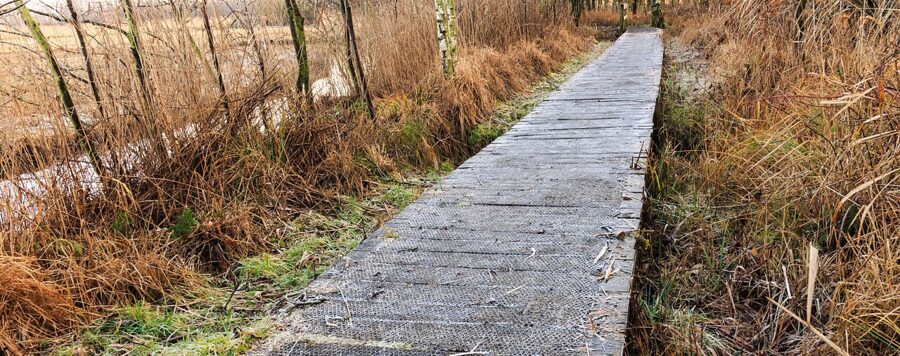

The park has held the European Diploma for protected areas since 1995. Between 140 and 150 bird species breed here, and in De Auken, a marsh north of Giethoorn, there is a colony of purple herons and spoonbills. Otters have come back. You will not see one from a tour boat at noon, but early in the morning from a canoe, you might.
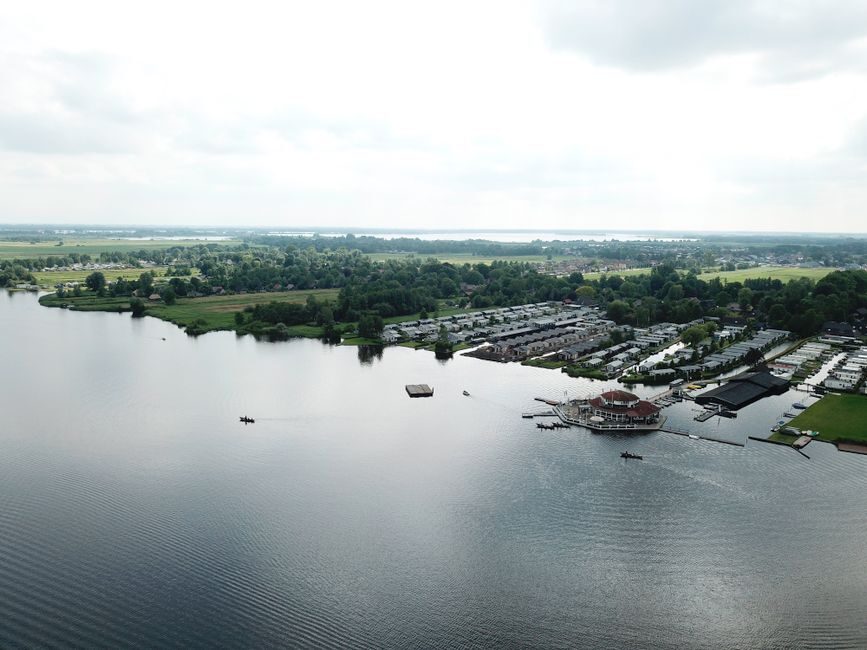
The park has two halves. De Wieden, south and east of Giethoorn, is the lakes, among them the Beulakerwijde and the Belterwijde, managed by Natuurmonumenten. De Weerribben, to the north, is a maze of narrow canals between reed fields, managed by Staatsbosbeheer, where every waterway eventually comes back to the Kalenbergergracht and getting lost for long is hard to do.
Visitor center De Wieden
Bezoekerscentrum De Wieden is in the first farmhouse on the Beulakerpad in Sint Jansklooster, a short drive south of Giethoorn. From April to October the open electric excursion boats Aalscholver and Zwarte Stern leave from its jetty, with a ranger or nature guide as skipper, on trips to the cormorant colony, the duck decoys and the drowned village of Beulake. In winter the center opens only a few afternoons a week, 12:00 to 16:00, so check the day before you drive out.
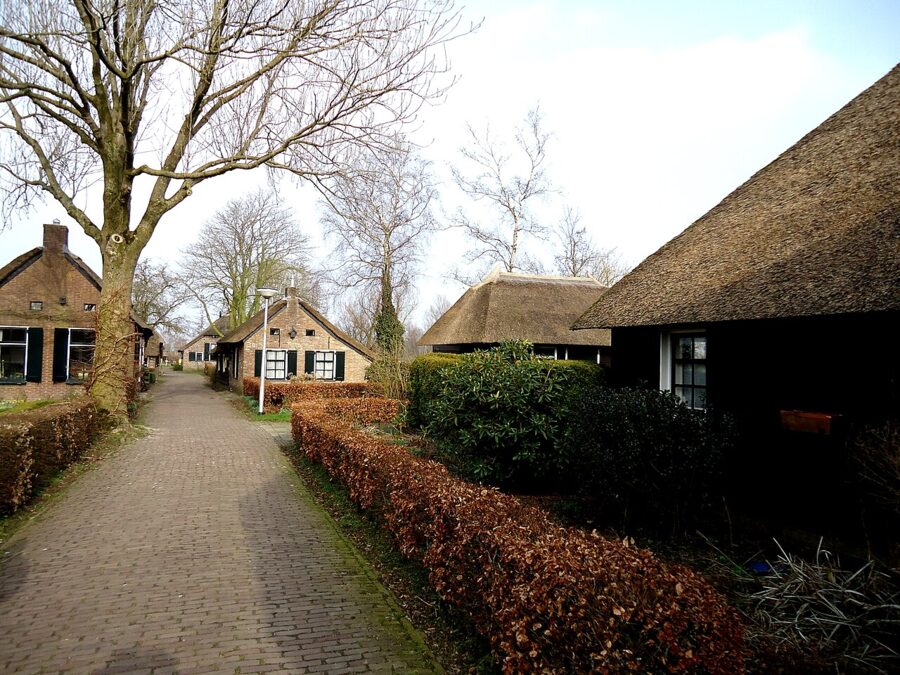

From the May school holiday through September, a waterbus runs twice a day between Sint Jansklooster, Giethoorn and Blokzijl, which makes a car-free day out of the park. Natuurmonumenten also looks after the Grote Otterskooi, at 30 hectares the largest duck decoy in Europe, which you can only see on a guided boat trip.
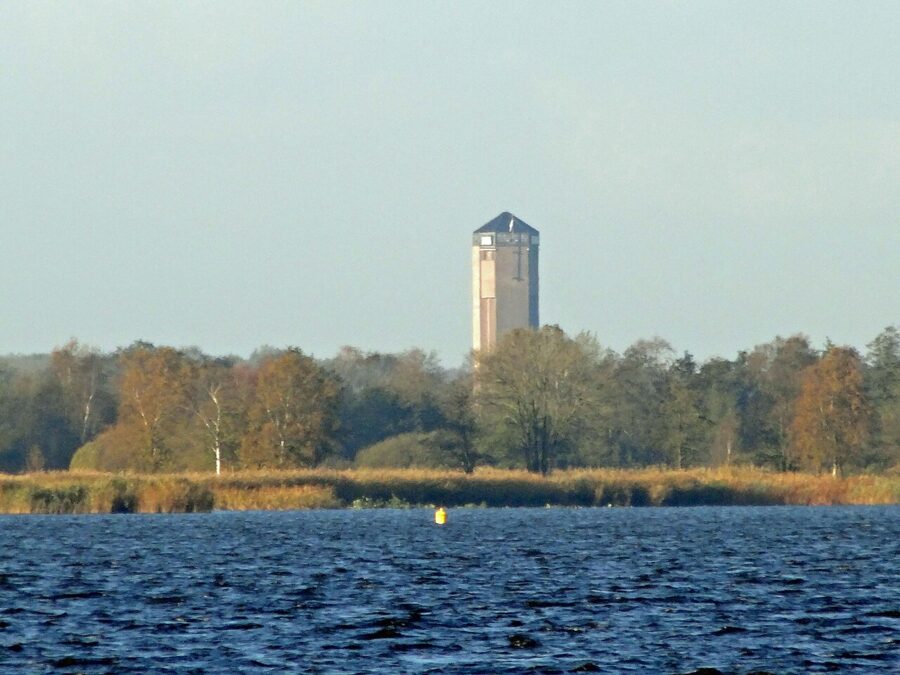
The Weerribben side
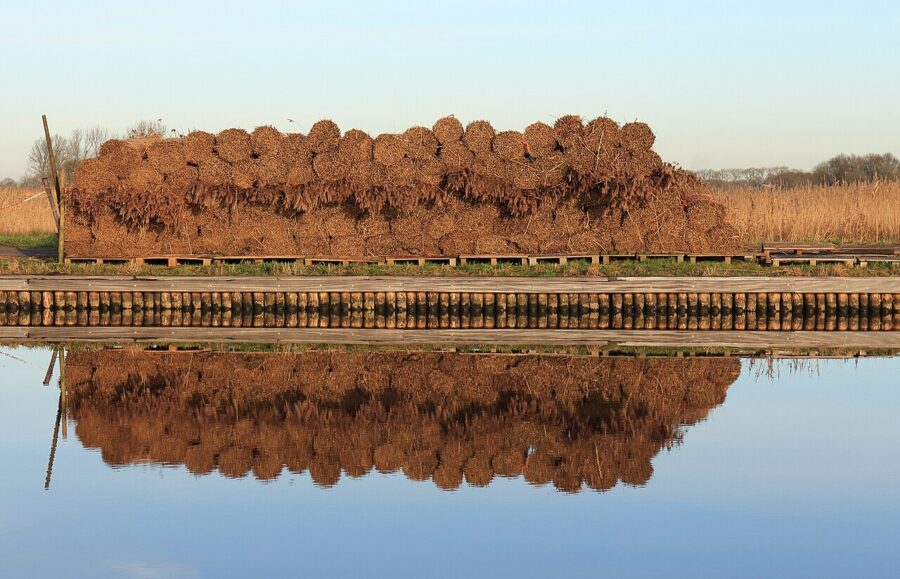
The Weerribben is canoe country. The European Wetland Center Weerribben is the starting point for covered boat tours, whisper boats and canoes, and reed is still cut here for the kind of roofs you saw in the village.

The quieter water villages
If Giethoorn is full, the park has smaller versions. Belt-Schutsloot, in De Wieden, is a canal village with a fraction of the boats, and Natuurmonumenten has a canoe route past it. Dwarsgracht, a hamlet near Giethoorn and a stop on one of the excursion boat routes, is farms and wooden bridges along a single waterway.

Cycling is the other way in. E-bikes can be rented through a shared-bike scheme with pick-up points in Giethoorn, Steenwijk and Blokzijl, paid by the quarter hour in its app, and the village information site lists cycle routes from 19 to 45 km, the longest through the water villages.

Staying overnight and eating
An overnight stay solves Giethoorn. The coaches leave by late afternoon, the last tour boats tie up, and the path goes quiet; the next morning you have the canal to yourself until about ten. Book four to six weeks ahead for summer weekends.
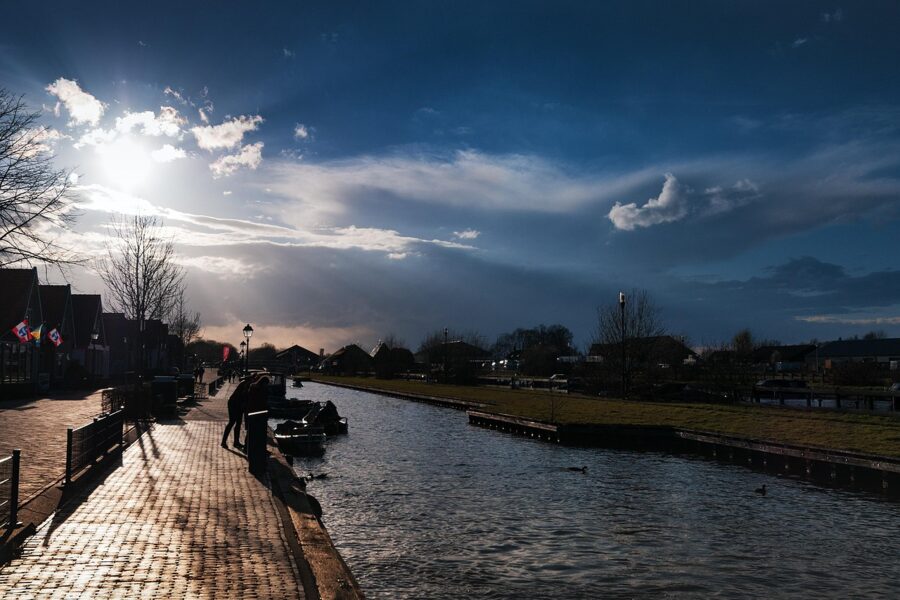
A few places, all shown open in 2026:
- Hotel De Harmonie sits on the Beulakerweg, in what it calls the quiet, old part of the village, with standard rooms and deluxe rooms that open onto a private waterside terrace, bike and e-bike rental, and a restaurant open daily from 09:00 to 21:00, kitchen from 12:00.
- Hotel Giethoorn, on the Petersteeg in Giethoorn-Zuid, is a few minutes’ walk from the boat rental companies on the Zuiderpad.
- The Black Sheep, a hostel in a converted farmhouse on the Zuiderpad, is the budget choice, with breakfast included.
- The former Hotel De Pergola on the Hylkemaweg is now the Old Art Hotel, themed on the Dutch Old Masters and partway through a rebuild that it expects to finish in spring 2027. Check what is open before you book.
Holiday homes, B&Bs and campsites fill the rest, many on the water. If you would rather sleep in the city and come out early, a hotel near Centraal or Zuid saves time on the first train; see where to stay in Amsterdam.
Where to eat
Food in Giethoorn is aimed at day-trippers and priced for them, and a lot of kitchens wind down in mid-afternoon. Pancakes on a canal-side terrace are the safe bet.
De Grachthof, a family-run restaurant with boat rental in the center, has a south-facing terrace on the Dorpsgracht and serves dinner until a last start of 19:30. Smit Giethoorn at Zuiderpad 58 combines a waterside restaurant with boat rental and stays open into the evening from Friday to Sunday. Grand Café Fanfare at Binnenpad 68 opens daily from 10:00.
One recent closure: the pancake house De Witte Hoeve on the Zuiderpad closed on 1 November 2026 after ten years, and its owners carry on at Fanfare. For a picnic, the Plus supermarket on the Eendrachtsplein is the only one in the village; eat it on the boat, and take the wrappers home.
The gondola parade
On the last Saturday of August the village holds its Gondelvaart, the oldest gondola parade in the Netherlands, 97 years old in 2026. Villagers build illuminated floats by hand, low enough to pass under the bridges, and after music boats and a children’s parade, twelve main gondolas sail the canal at night with the houses lit along the banks. The 2026 edition was on 29 August, with tickets sold in advance. It is the one summer evening when the crowd is the point.
Which brings it back to the hour. Take the train to Almere Centrum before eight, change for Steenwijk, catch the bus to Hylkemaweg-Giethoorn Centrum, and be walking the Binnenpad by ten, with a boat booked for 10:30 and the museum after lunch. By the time the coaches pull in, you are on the Bovenwijde, and the canal can have them.