
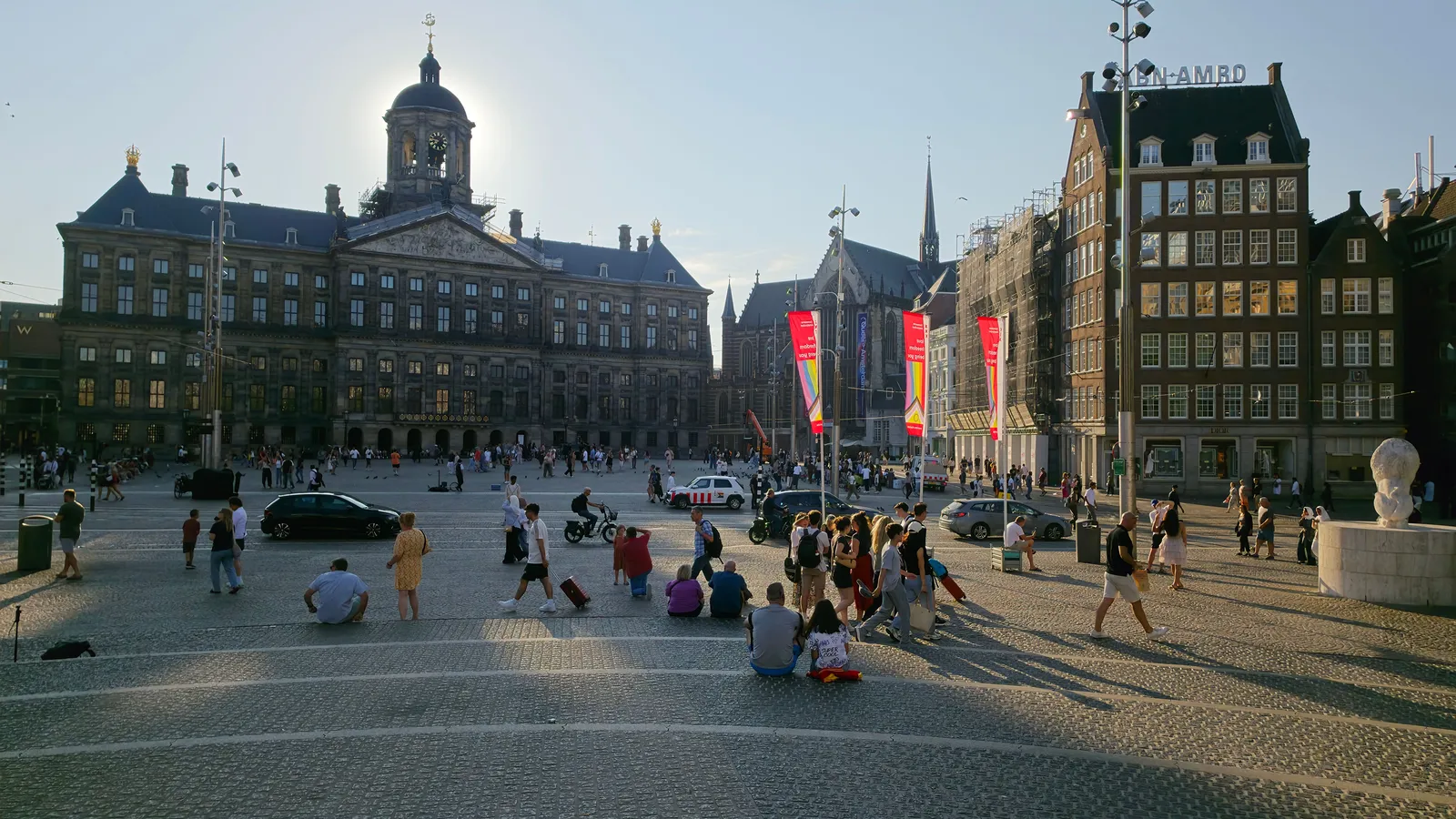
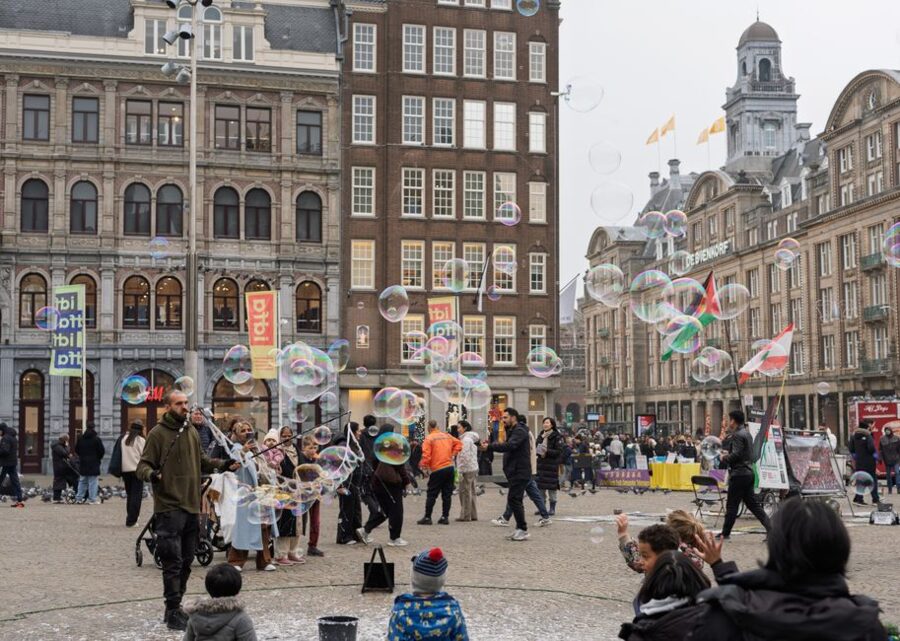
At 20:00 on 4 May the whole of the Netherlands falls silent for two minutes, and the Dam is where the King and Queen lay the first wreath. For the other 364 days the square is a crossroads: people coming down the Damrak from Centraal, trams cutting across the cobbles, pigeons, a man blowing soap bubbles the size of a car, and a queue outside a wax museum.
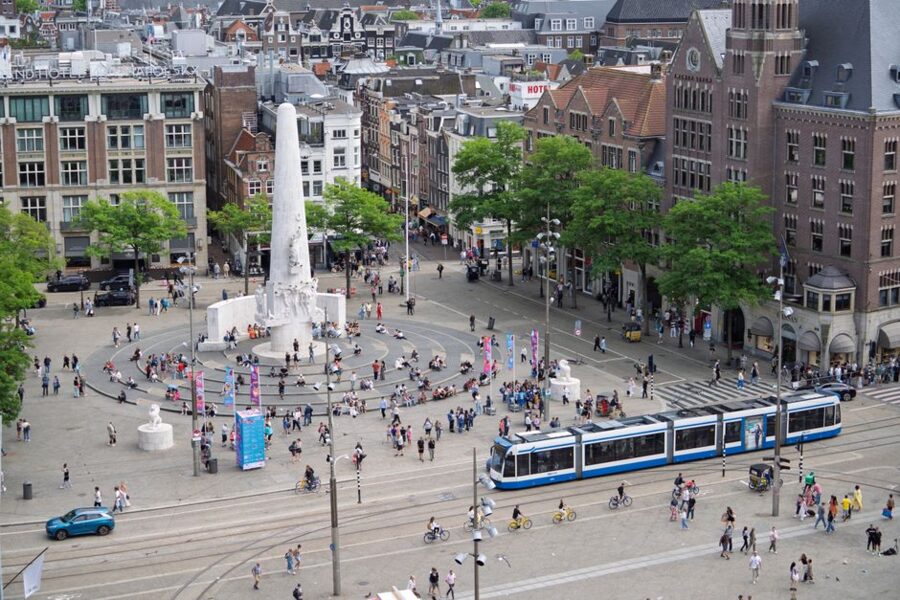
Most people cross it in five minutes on the way to somewhere else, and they are not wrong to. The Dam is not a pretty square. It is a big, windy, slightly scruffy rectangle of about 200 by 100 meters, where nothing quite matches because nothing was planned together, and the shops on its edges trade on the address.
But two of the buildings on it are among the most important in the country, and one of them is open to you for €13.50 (about US$16). The decision is simple. Give the Royal Palace an hour if it is open the day you are here, which is far from every day; step into the Nieuwe Kerk if the exhibition interests you; stand at the National Monument for ten minutes; and walk past the wax museum without breaking stride.
Contents7 parts


A dam in the Amstel, and a square on top of it
Yes, there is a dam, and you are standing on it. Sometime between 1204 and 1275, most likely in the decade before 1275, the people living along the two banks of the Amstel built a dam across the river where it met the IJ. It joined the settlement on the east bank, along today’s Warmoesstraat, to the one on the west bank, along the Nieuwendijk. A sluice in it let boats through and could be opened to flush the harbor clean, and that harbor is the Damrak, the street you walk down from the station.
The village took its name from the dam, Amstelredam, and the dam slowly grew wide enough to hold a market. The original dam was called the Middeldam; a second open space to its west, the Plaetse, joined it after 1390. Fish was landed and sold at the end by the Damrak until 1841, and the city weighed goods at a weigh house, the Waag, that stood on the square from 1341.
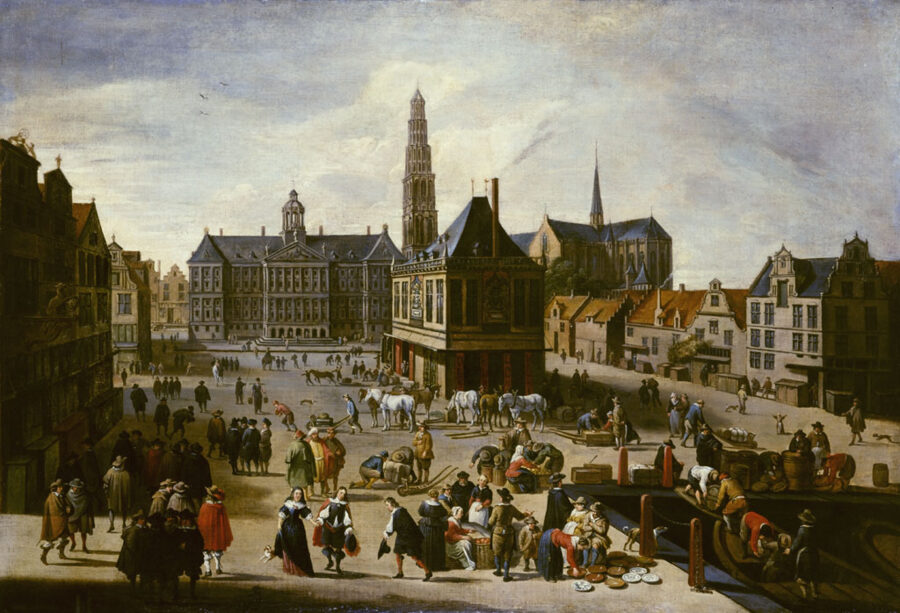
For four centuries this was also where the city governed, judged and punished. The old Gothic town hall stood on the west side of the Plaetse, and the city’s legal limits were measured from it, with boundary posts 7.3 kilometers away in every direction. Sentences were carried out on a scaffold built in front of it. The last public execution on the Dam was in 1854.
The town hall of 1655
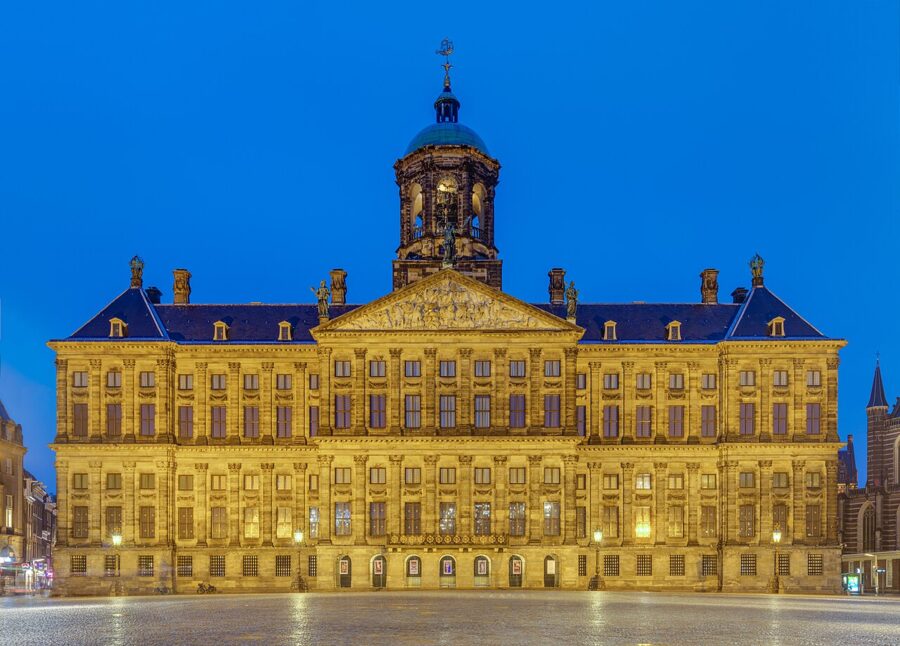
By the 1640s the old town hall was falling apart and Amsterdam was one of the richest cities in Europe. The Peace of Münster in 1648, which ended the war with Spain, tipped the council toward the most ambitious of the designs on the table. The first stone of Jacob van Campen’s new town hall was laid on 28 October 1648, and the building opened with a procession and a feast on 29 July 1655, still unfinished. The old one had burned down in 1652, while the new one was rising beside it.
The numbers were the point. The building stands on 13,659 wooden piles driven into the swamp, a figure Dutch schoolchildren learned as “the days of the year, one in front and a nine behind”. It cost about 8.5 million guilders, it was faced in pale sandstone from Bentheim, and it was among the largest secular buildings of its age. The poet Joost van den Vondel wrote 1,378 lines for the inauguration, and the people of the city called it the eighth wonder of the world.
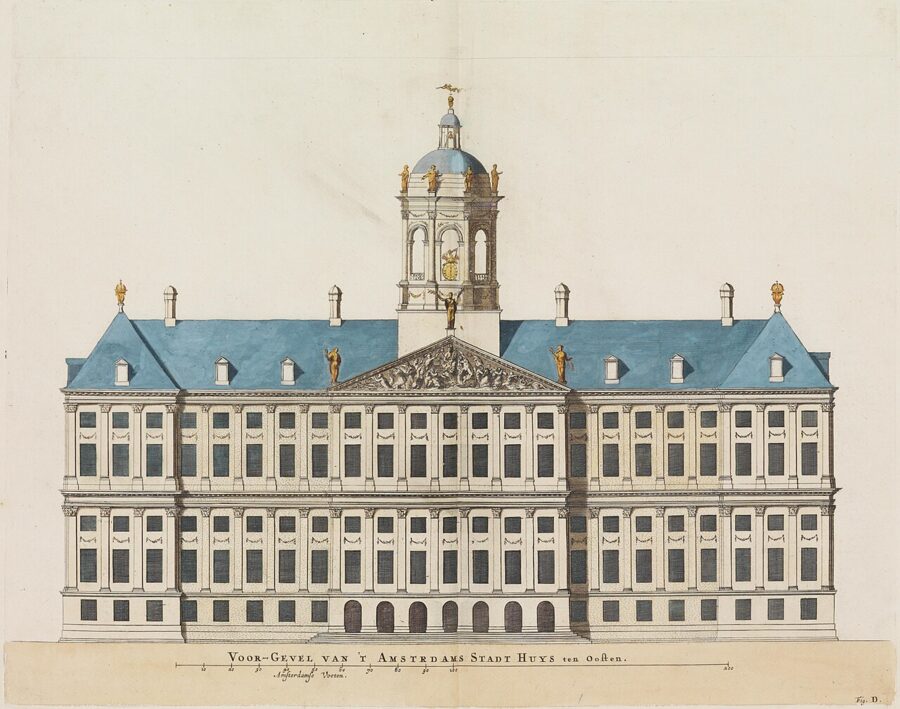
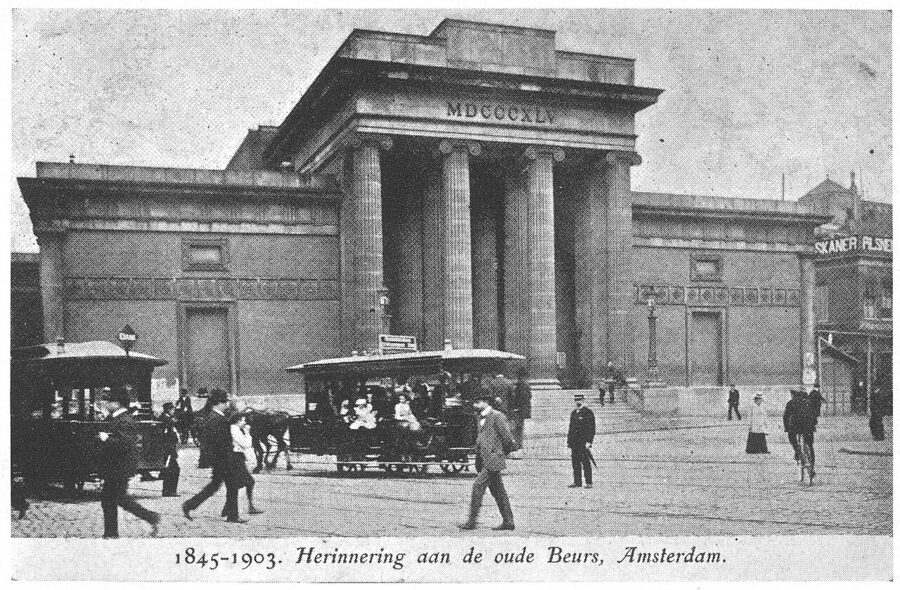
Van Campen fell out with the council in 1654, and the city architect Daniël Stalpaert finished the job. The building was done by 1665, the interiors not until the early 1700s. One detail gave the town its favorite joke: the palace has no grand entrance on the Dam, just seven small arches, and when a stock exchange later stood across the square, Amsterdammers called them a building without an entrance and an entrance without a building.
Louis Napoleon moves in
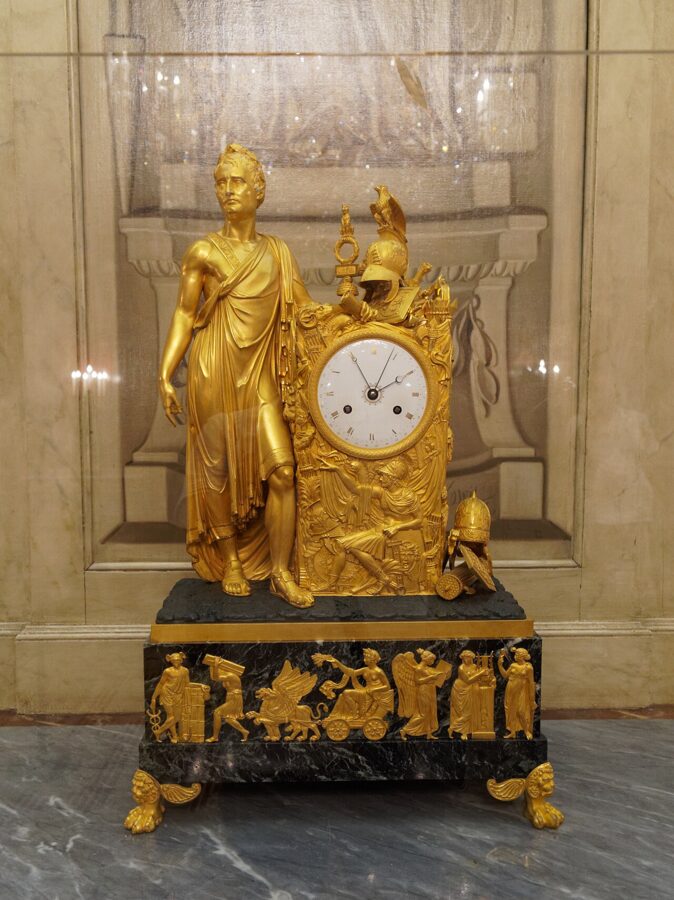
The building was the town hall for 153 years. In 1808 the city handed it to Louis Napoleon, the brother Napoleon had made King of Holland, and he turned it into a palace: wooden partitions in the galleries, a balcony on the front, and hundreds of pieces of Empire furniture. He also had the old Waag torn down, by most accounts because it spoiled his view. He installed a royal museum upstairs, the beginning of what became the Rijksmuseum.

When the French left, William I gave the building back to the city in December 1813. The council, worried about the cost of moving back and keen to keep the monarch tied to Amsterdam, let it lie, and the palace stayed royal. The state bought out the city’s remaining claims in 1936 for 10 million guilders, money the council meant for a new town hall that took another half-century to arrive. Two monarchs, Juliana in 1980 and Beatrix in 2013, signed their abdications here.
One more thing stood in front of the palace for most of the 19th century. From 1856 to 1914 a column carrying a statue of Concord, De Eendracht, stood on the Dam before the palace, and Amsterdammers called her Naatje van de Dam. She was taken away when the monument had decayed and the tram tracks were being moved, and the western half of the square became the open space it is now.
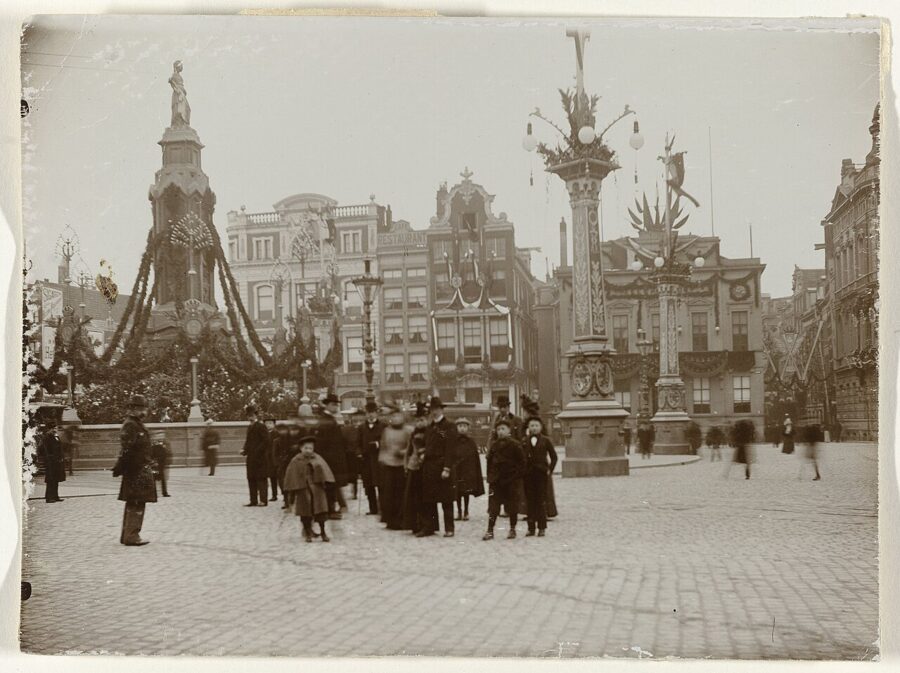
The Royal Palace: what you see and how to visit
The palace is the King’s official reception palace, not a home. He lives in The Hague and uses Amsterdam for state visits, receptions, award ceremonies and the occasional royal wedding, and when he is not using it, the foundation that runs the building opens it to the public. In 2026 that was more than 230 days, always from 10:00. The other days it is closed, sometimes for weeks at a stretch, so check before you build a morning around it.
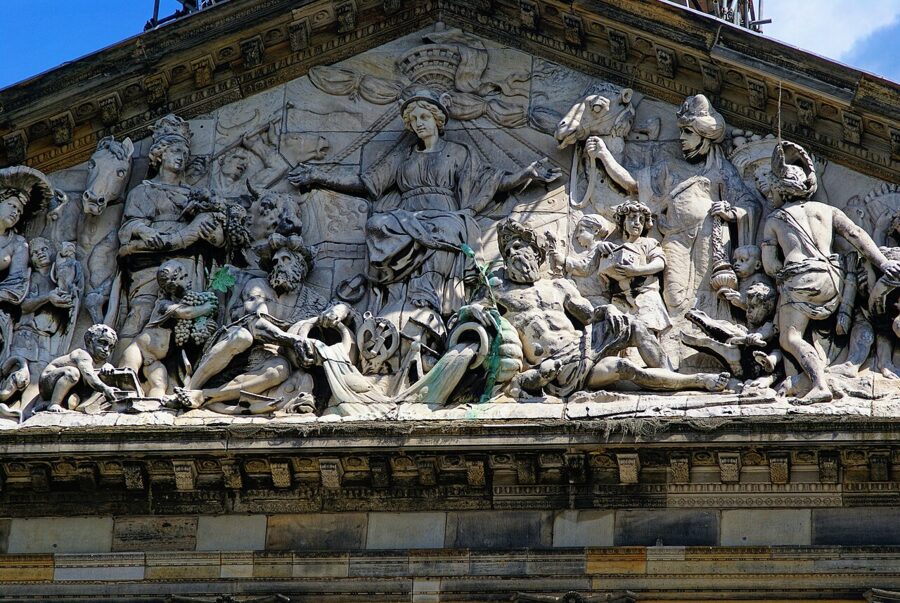

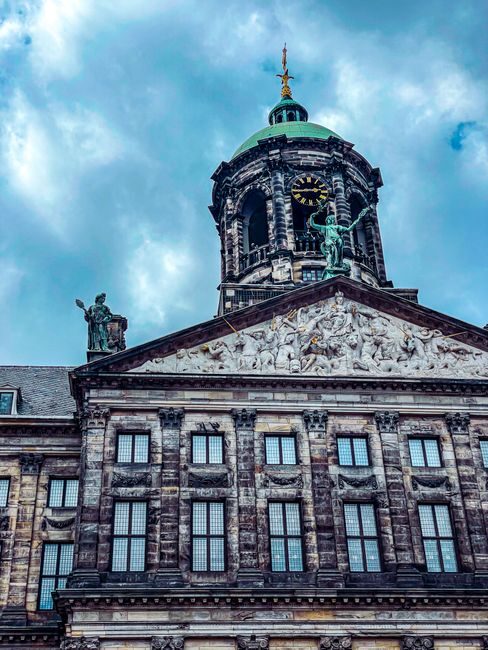
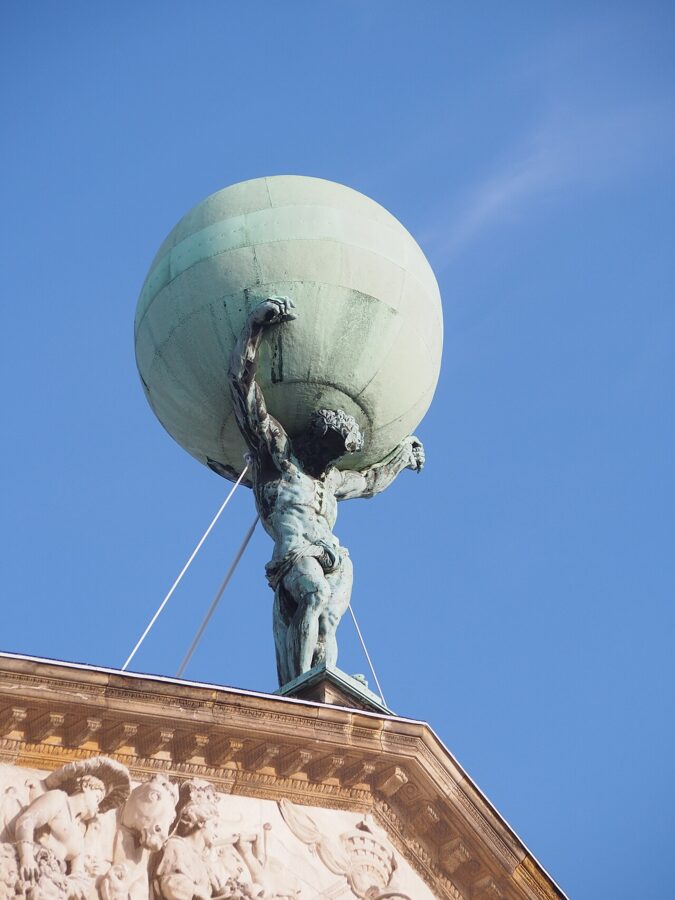
Before you go in, look up. The front pediment shows the Maid of Amsterdam, the city’s own personification, with the sea gods of four oceans bringing her their goods; its meaning, and the city arms on it, are covered in my piece on the Amsterdam XXX symbol. On top of the dome, which was built high enough to watch ships come in on the IJ, the weathervane is a cog, the medieval merchant ship that was the city’s emblem. On the rear pediment, facing the Nieuwezijds Voorburgwal, a bronze Atlas carries the heavens.

Opening days and tickets, as of November 2026
The palace is closed until 1 December 2026 for royal receptions. It reopens from 2 December to 3 January, then closes again from 4 January to 3 February 2027 and reopens on 4 February. The palace’s own opening calendar and ticket page runs about six months ahead and is the only thing to trust, because the closures move with the royal diary.
| Period | Hours |
|---|---|
| 2 to 20 December 2026 | 10:00–17:00 daily |
| 21 December 2026 to 3 January 2027 | 10:00–18:00 most days; 10:00–17:00 on 24, 26 and 31 December; closed 25 December and 1 January |
| 4 January to 3 February 2027 | Closed for royal receptions |
| 4 February to 21 March 2027 | 10:00–17:00, closed on some Mondays (8 February, 1 and 8 March) |
| From 22 March 2027 | 10:00–18:00 |
An adult ticket is €13.50 and includes the audio tour. Students pay €9 (about US$10), and anyone aged 17 or under gets in free, as do holders of the Museumkaart, the Amsterdam Stadspas or an ICOM card (prices as of November 2026). You can buy at the desk on the day, but the desk takes only cards, no cash, and online tickets are not refunded, though the confirmation email lets you move your visit to another slot.
The house rules catch people out. Bags bigger than 30 by 30 by 15 centimeters go to the free cloakroom, but large backpacks and suitcases are not accepted at all, and neither are umbrellas, helmets or back-carriers for babies. Photos and short phone videos are fine; tripods, selfie sticks and lights are not, and there is no café inside.
The entrance is on the Dam, at the right-hand end of the front, with a ramp, a lift inside and a wheelchair-accessible toilet. The palace says it is quieter before 11:00 and after 15:00, and on weekdays outside school holidays. A visit takes about an hour.
Inside: the Burgerzaal and the rooms around it
The open rooms are on the first floor, the main floor of the old town hall: the Burgerzaal (Citizens’ Hall), the throne room, the Balcony Room and the Moses Room, plus the Vierschaar on the ground floor. The free audio tour comes in versions of 45, 60 and 75 minutes and in eight languages, English among them. Take the 60.
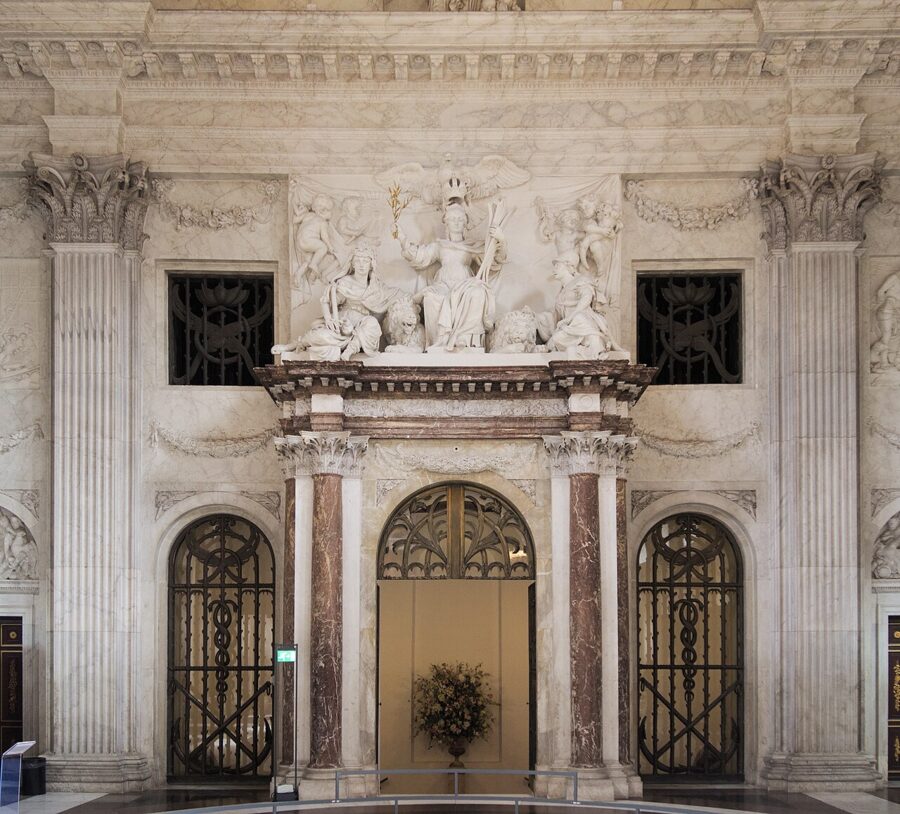

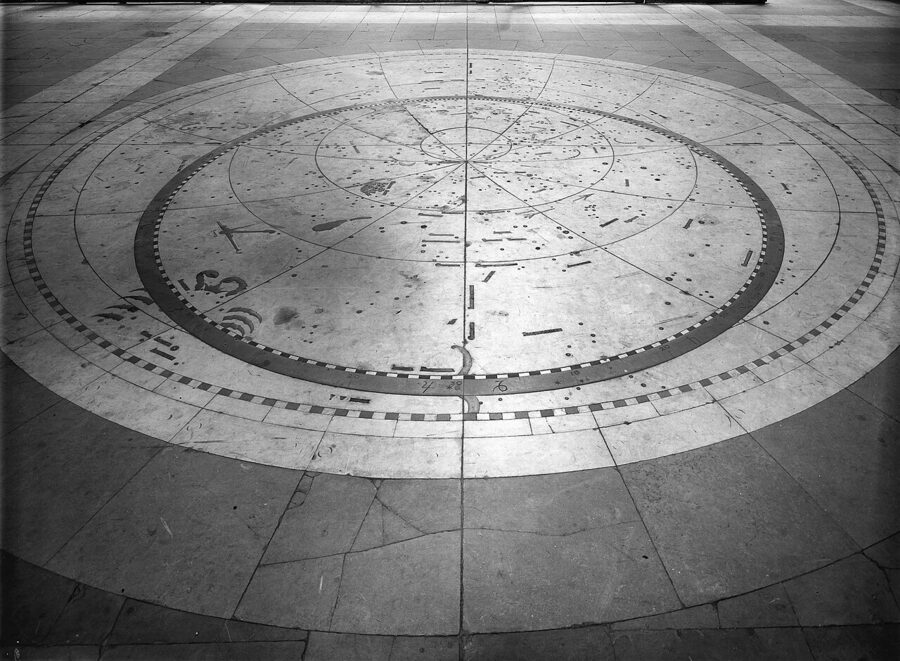
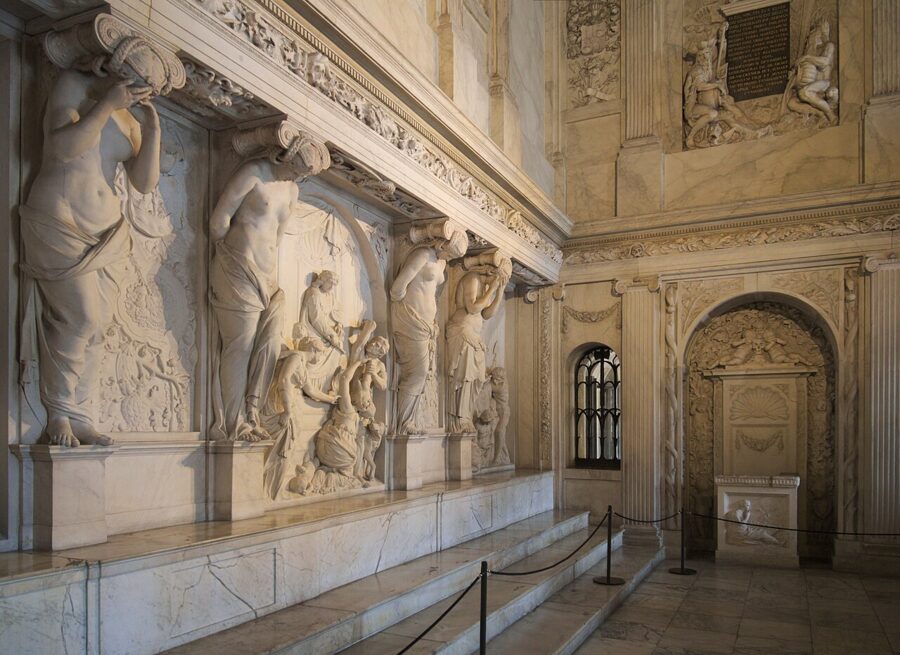
The Burgerzaal is the reason to go. It is a vast marble hall, built as a public space where any citizen could walk in. Set into the floor are two hemispheres of the world and a map of the northern sky, so that you walk across the globe the way the city’s ships did. At the far end Justice tramples Avarice, in the shape of King Midas with his donkey’s ears, and Envy, a Medusa with snakes for hair.

The crystal chandeliers are Louis Napoleon’s, first lit with oil lamps and electrified in 1937. The great paintings are by Rembrandt’s pupils, Govert Flinck and Ferdinand Bol. Rembrandt was asked for one too, the Conspiracy of the Batavians, and it came down again, rejected or withdrawn after a disagreement. His Night Watch did hang here for about a century: it was moved to the town hall around 1715 and cut down on all four sides to fit between two doors.
Pick up the free booklet Traces of Slavery opposite the audio-tour desk. Eleven writers point out the parts of the building, the paintings and the carving that tell the other half of the Golden Age story, and once you have read it you will see the sculpture differently.

The Nieuwe Kerk: exhibitions, coronations and a missing tower
The church next to the palace is new only by Amsterdam’s standards. It was the city’s second parish church, built because the Oude Kerk across the water could no longer hold the growing town, and consecrated in 1409 to Saint Catherine on land given by a burgher, Willem Eggert. That is why the old side of the city, De Wallen, is called the old side: it is the Oude Kerk‘s side of the Damrak.
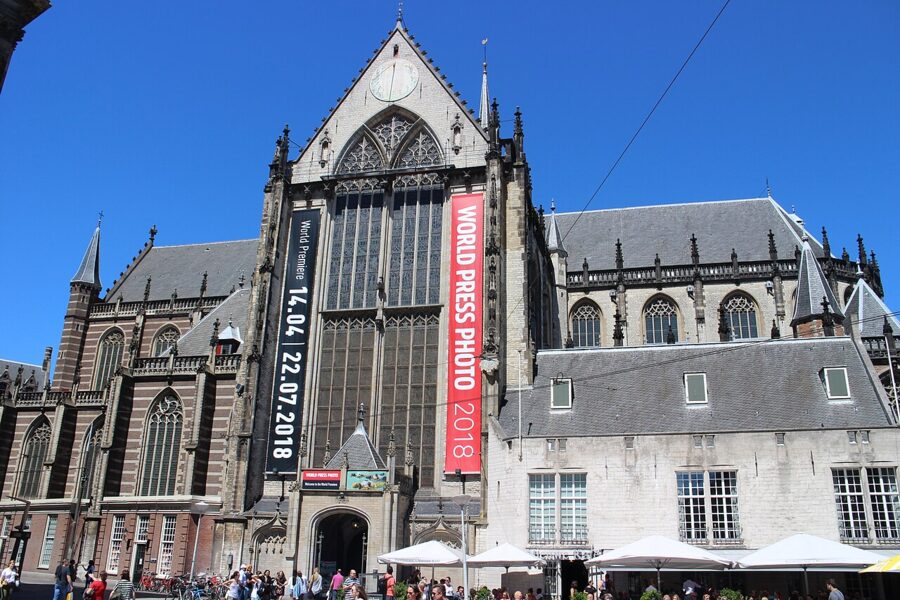

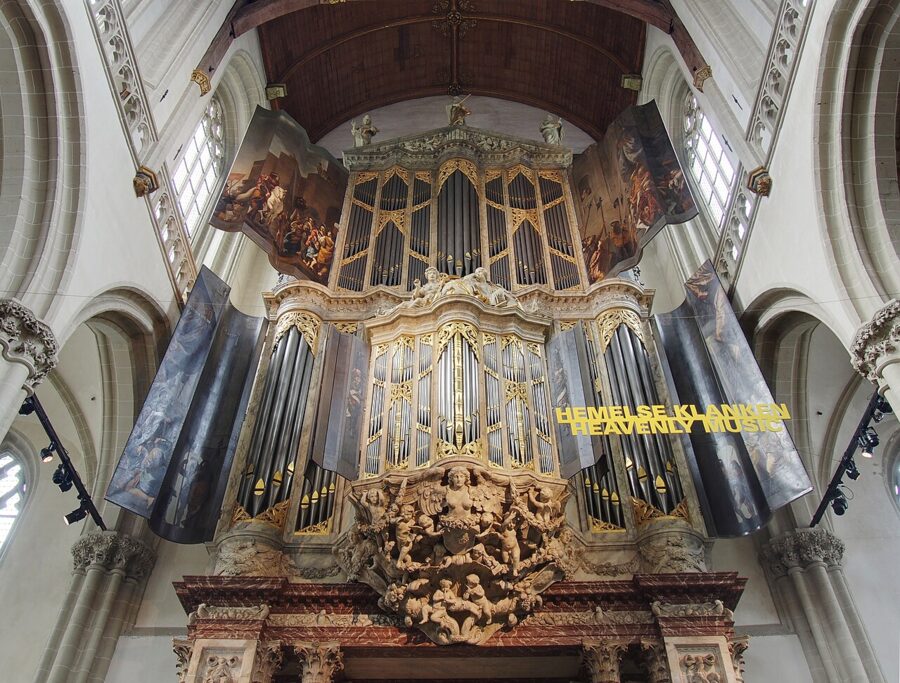
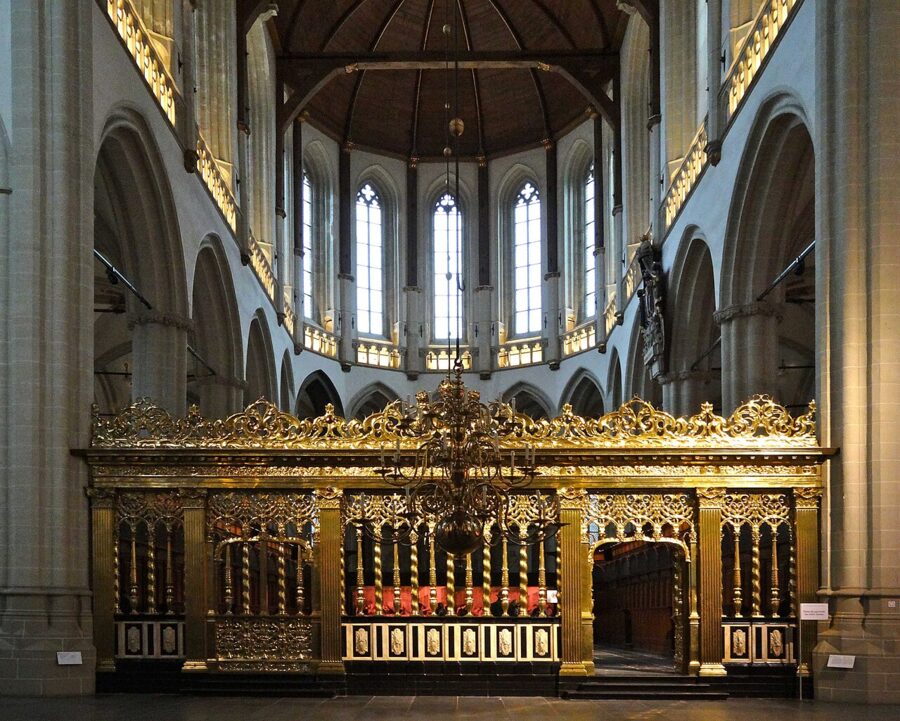
Fire went through it three times, worst on 11 January 1645, when plumbers working under the roof set it alight and the church was ablaze from end to end within half an hour. The interior you see is mostly the rebuilding that followed: a pulpit more than 13 meters tall, carved between 1649 and 1664, a brass choir screen from around 1650, and the main organ of 1655, whose case Jacob van Campen designed and which the church calls the largest historic organ in the country.

Look for the tower and you will not find one. The city laid foundations in 1565, tried again in 1646 with a Gothic design meant to top the Dom in Utrecht, drove 6,363 piles for it, and gave up in 1653 because the town hall next door had drained the treasury. The stump was demolished in 1783, which is why the church has a slender spire on its roof and nothing more.
The royal church, and the writers in the north transept
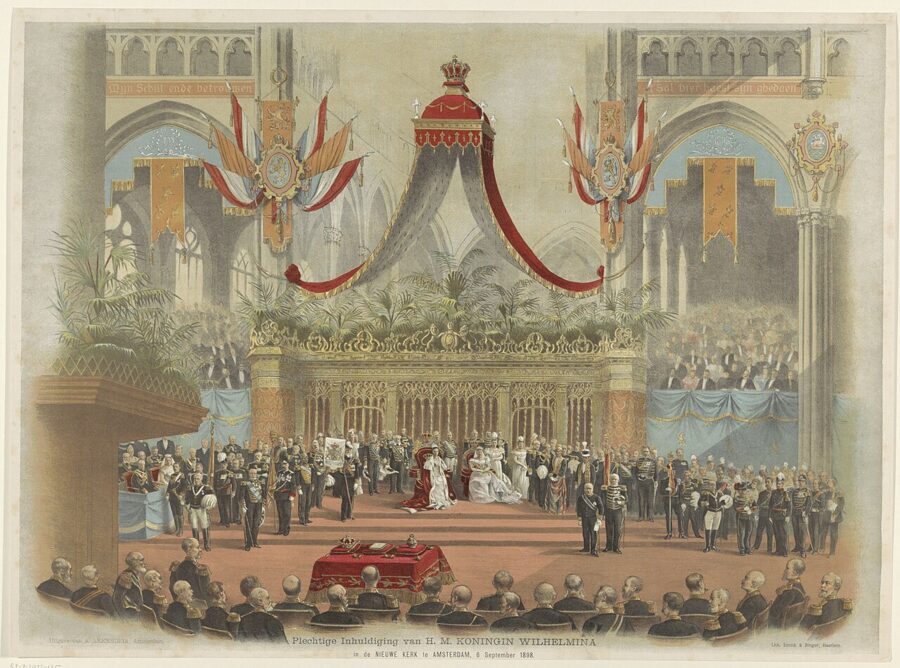
William I was sworn in here as sovereign prince in 1814, and every Dutch monarch since has walked over from the palace to take the oath on the constitution in front of the brass choir screen. Willem-Alexander was inaugurated on 30 April 2013, and his church wedding to Máxima Zorreguieta was here on 2 February 2002. The church sets this out on its page on the royal church.
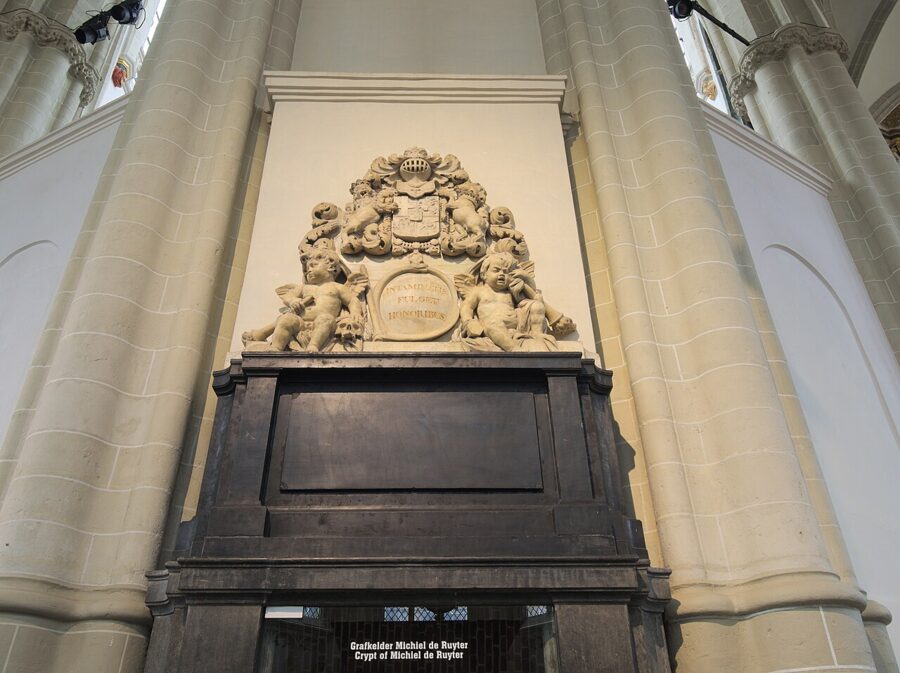

An estimated ten thousand people were buried under the floor, and you walk on their stones. Admiral Michiel de Ruyter lies in the choir, and the poet Vondel, who wrote the town hall’s inauguration poem, was carried in by fourteen poets in 1679. In the north transept the church adds one or two writers’ stones a year: Bredero and Annie M.G. Schmidt in 2025, and the Curaçao novelist Frank Martinus Arion on 9 October 2026.
Visiting the Nieuwe Kerk
You go in for the exhibition, and the building comes with it. Until 4 April 2027 the show is Queer Amsterdam, the Pink City, on the history of the city’s LGBTQIA+ community, staged in a building that once preached against it. The church is open daily from 10:00 to 17:00, with last entry at 16:30, and closed on 25 December and 1 January; in 2026 it also shut for King’s Day and from 3 to 5 May.
An adult ticket is €20 (about US$23); visitors aged 12 to 17 and students pay €13.50, and children under 12 go free, as do holders of the Museumkaart and the I amsterdam City Card (as of November 2026, from the church’s visit and ticket page). Time slots have a cap, so booking ahead is wise but not required, and the desk takes cards only. If the exhibition does not interest you, €20 is a lot for a look at the organ, and I would skip it.
The National Monument and 4 May
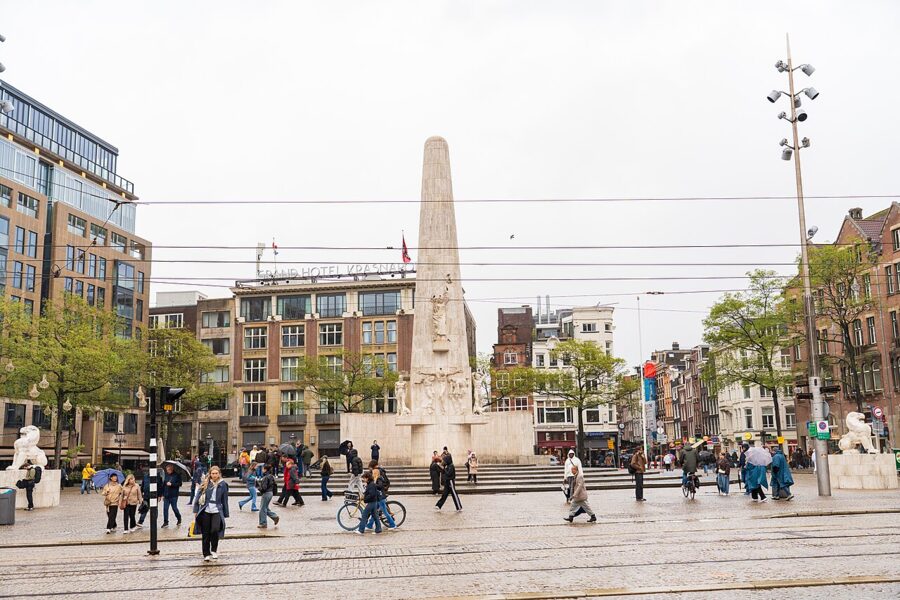
The white pillar on the east side of the square is the country’s memorial to its war dead. It stands 22 meters high, concrete clad in travertine, designed by the architect J.J.P. Oud with sculpture by John Rädecker, and it faces the palace. Queen Juliana unveiled it on 4 May 1956, a few months after Rädecker died; his son Jan Willem finished the work and made the two lions at the front.
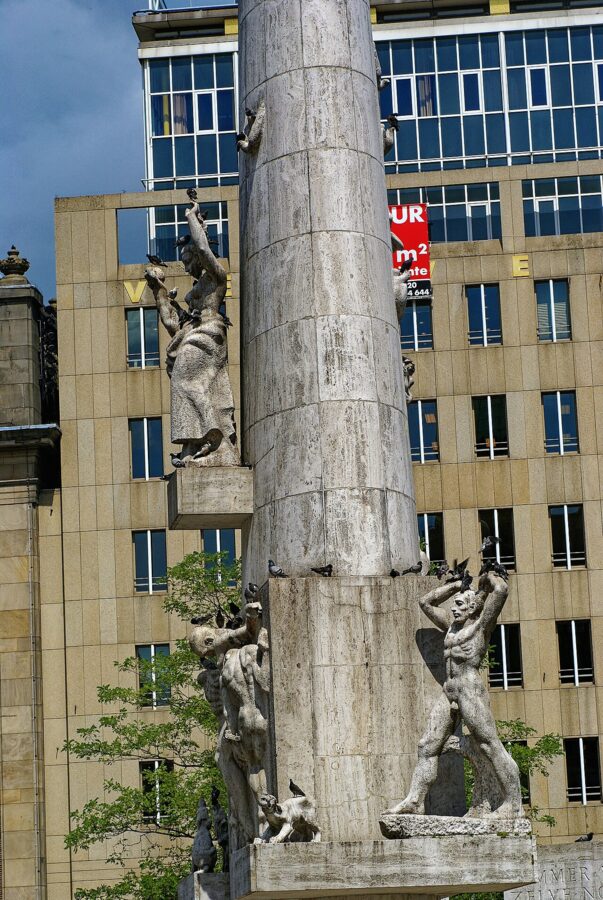

Read it from the bottom up. On the front, a crucified man and three chained men stand for the war; above them a woman holds a child, with doves rising beside her. On the sides, a man with two howling dogs stands for the resistance of the intellectuals and a man with arms raised and a snarling dog for the resistance of the workers. Behind the pillar, a curved wall holds urns of earth from execution sites and war cemeteries in each of the eleven provinces of the time and from the former Dutch East Indies, with a poem by Adriaan Roland Holst cut into the inside.
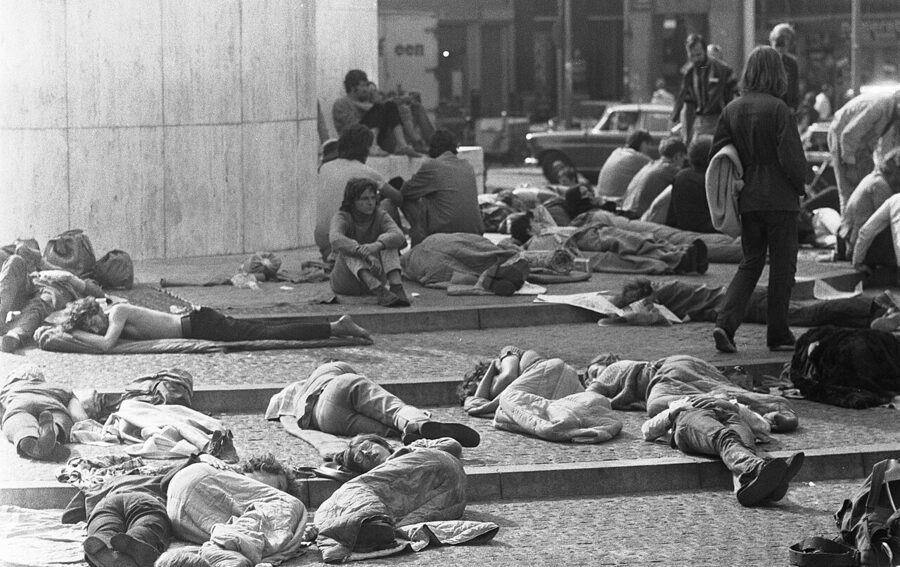
The steps were never meant as seating, though for a few summers they were a bedroom. In the late 1960s hundreds of young people slept in the open around the monument, to the fury of former resistance fighters. The city banned it on 24 August 1970, riots followed that night, and the next day a group of marines and navy men, acting on their own, cleared the square with belts and clubs, an illegal action that a large part of the country cheered.
The remembrance on 4 May
The Nationale Herdenking, the National Remembrance, has been held at the monument since 1961 and at 20:00 since 1988. At that hour the whole country keeps two minutes of silence, and on the Dam the King and Queen lay a wreath on behalf of the nation just before it. Survivors and their children and grandchildren then lay wreaths for the different groups of victims: those of the Second World War, of the colonial war in Indonesia, and of wars and peacekeeping missions since.
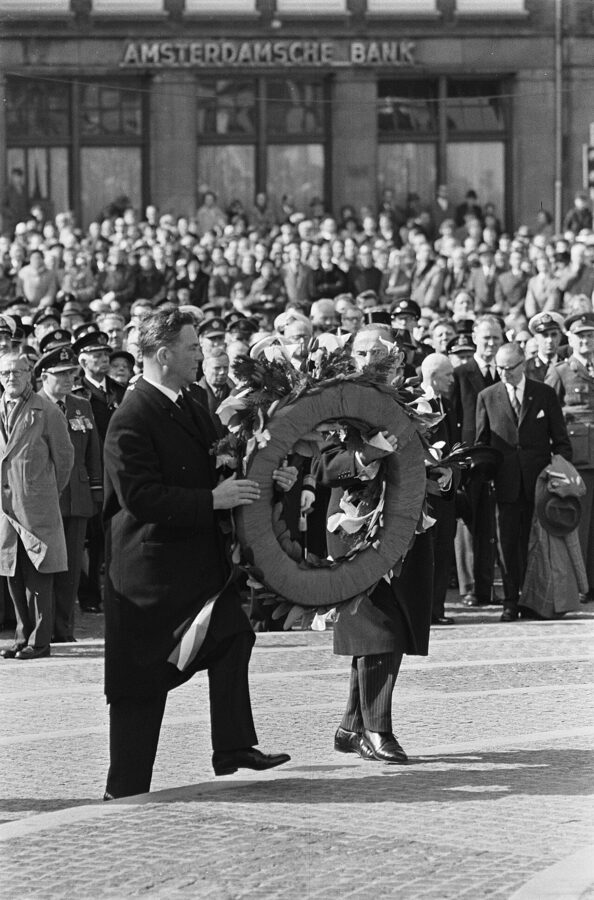
Before the ceremony outside, about 1,700 invited survivors and relatives gather in the Nieuwe Kerk, and in 2026 the church was closed to visitors from 3 to 5 May. The palace closes on 4 May too. If you are in Amsterdam that evening, note that shops close at 19:00 by law, and in 2026 the Bijenkorf and Rokin car parks were shut; and when 20:00 comes, stop where you are and say nothing for two minutes. The next day, 5 May, is Liberation Day and the mood flips.
7 May 1945: the shooting on the Dam
The war came back to the square two days after it ended. On 7 May 1945 thousands of people crowded the Dam to welcome the Canadian liberators, who were expected that day. At about three in the afternoon German navy soldiers in De Groote Club, the building on the corner of the Kalverstraat and the Paleisstraat, opened fire on the crowd.
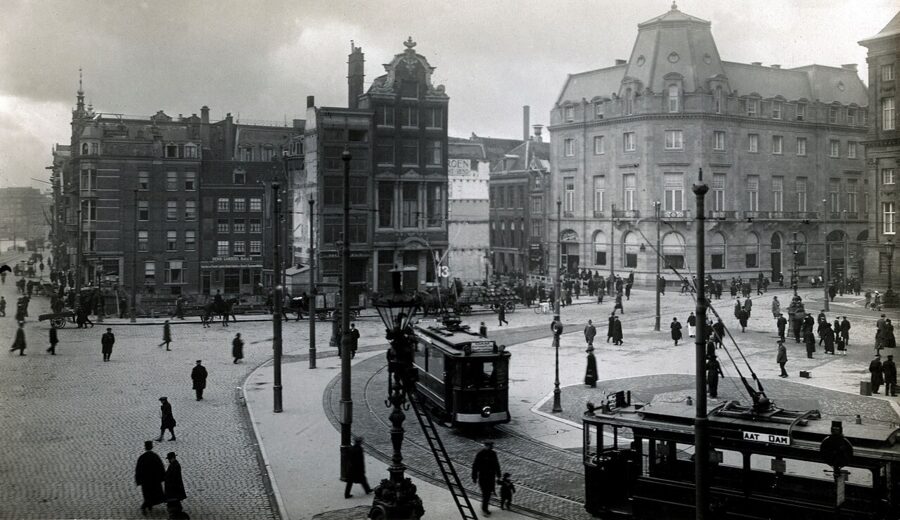
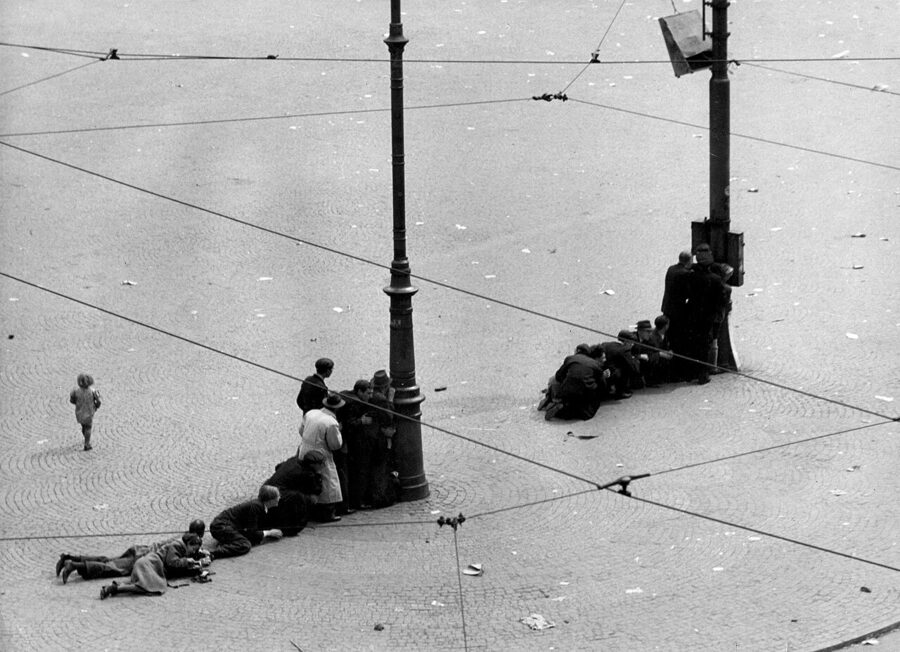
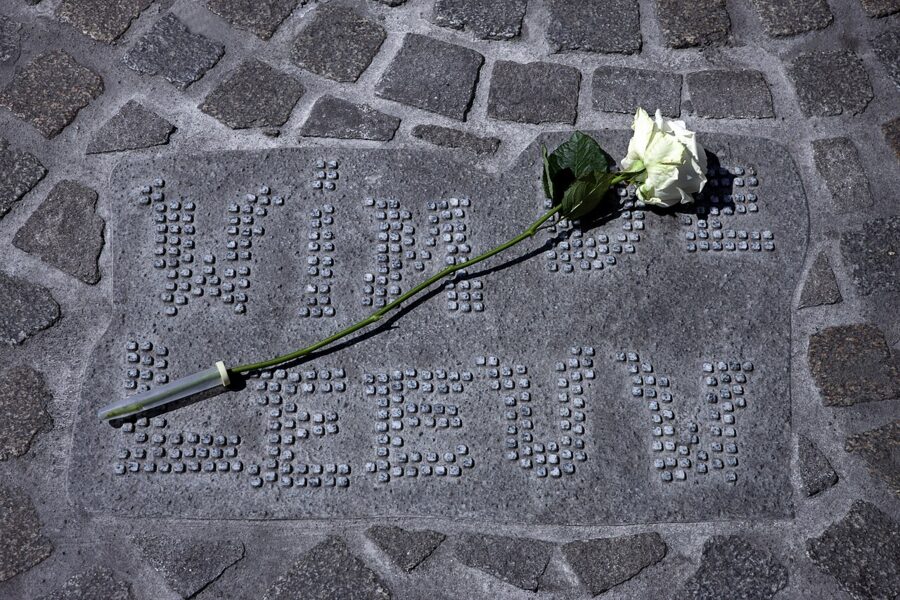
For decades the death toll was given as 22, the number most often printed in the papers of the time. Research that surfaced in 2013 put it at 32 at least, and possibly more, with 100 to 120 wounded. On 7 May 2016, 31 name stones were set into the paving of the Dam, and a 32nd was added a year later. Look down as you cross the square; most people walk straight over them.

The square today: pigeons, buskers, a store and a wax museum
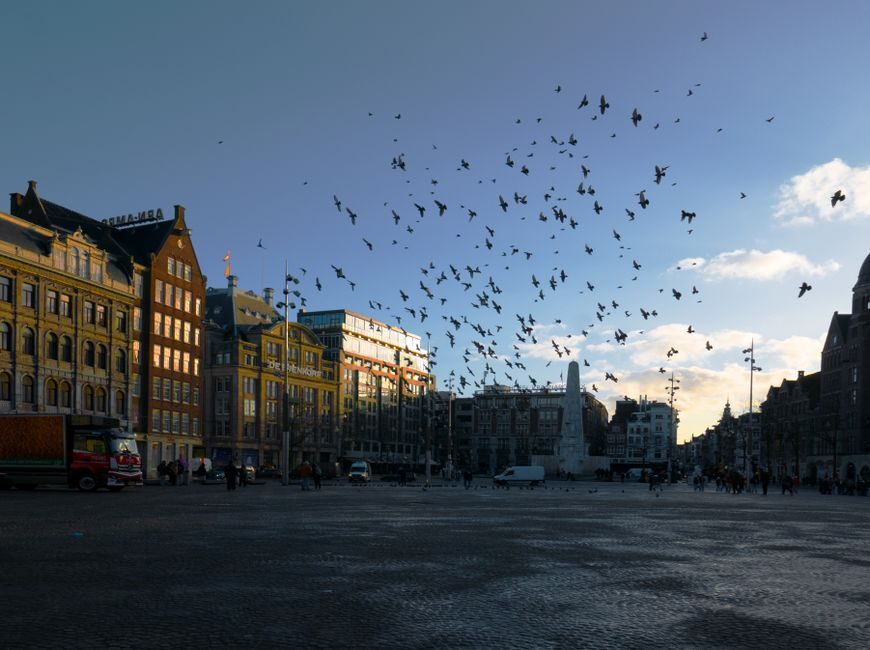
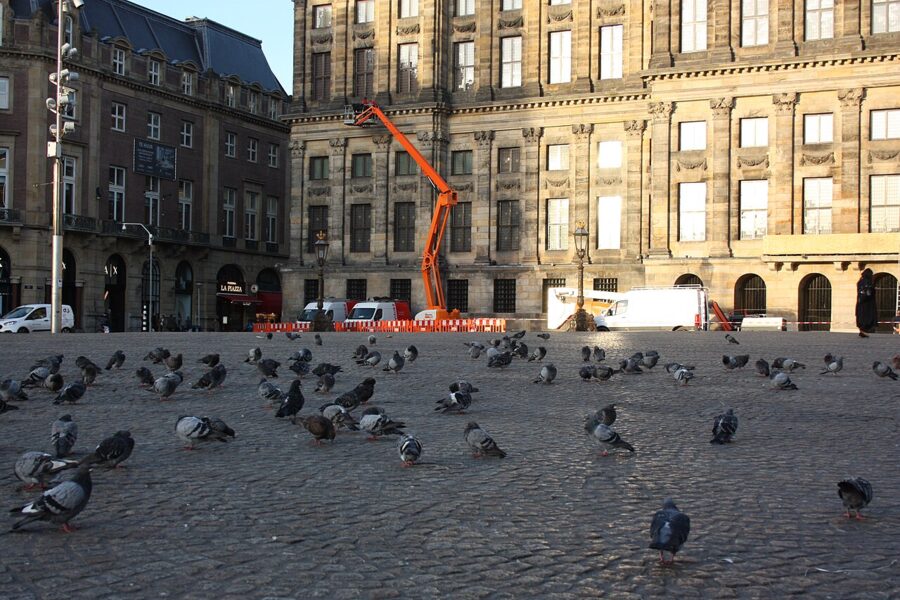
The rest of the Dam is a stage with no program. It was repaved in 2001, the asphalt replaced by cobbles and the strip in front of the palace slightly raised, and on a dry afternoon it fills with buskers, living statues, people in mascot suits, a few demonstrators and a great many pigeons. The funfair that set up here every spring and autumn stopped in October 2017.
De Bijenkorf and Madame Tussauds
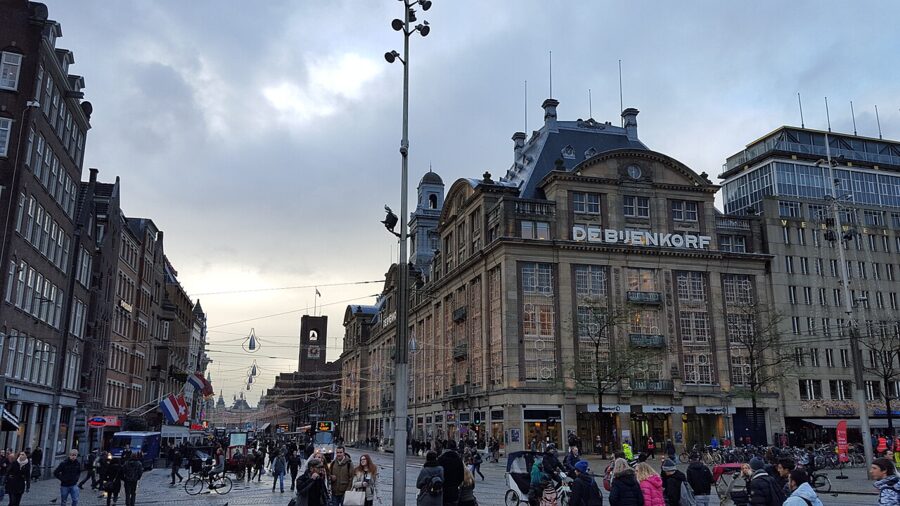
The department store at the northeast corner is De Bijenkorf, the Beehive, founded in 1870 by Simon Philip Goudsmit as a haberdashery on the Nieuwendijk. In 1912 it moved into a temporary building on the empty site of the old stock exchange, did so well there that it stayed, and opened its present store in 1915. It is the city’s smartest department store and a good place to warm up and buy something you do not need.
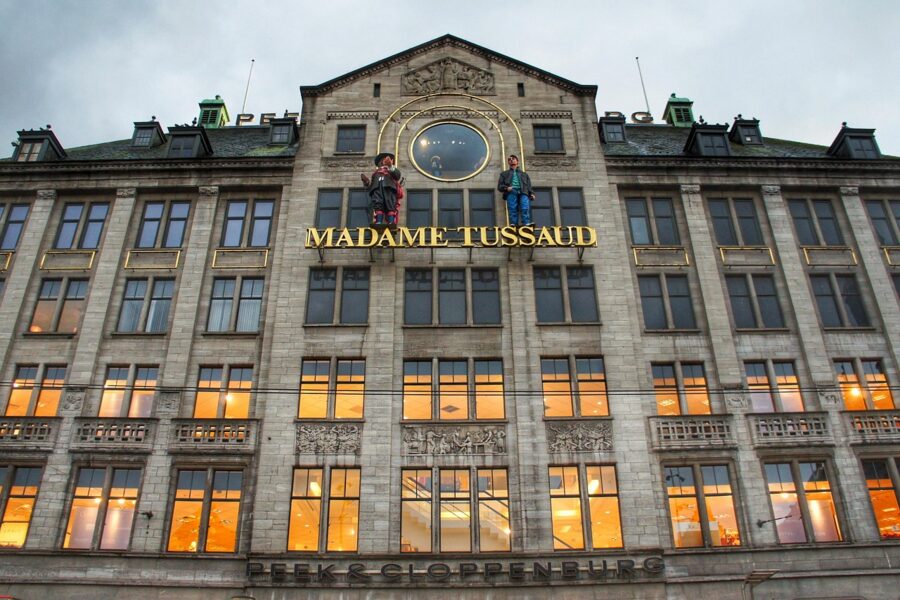
Across the square, in the upper floors of the Peek & Cloppenburg building, is Madame Tussauds Amsterdam. It opened on the Kalverstraat in 1970 and moved here in 1991, and it has more than 90 wax figures, the Dutch royals among them. Online tickets start at €19 (about US$22) for a timed slot, with a cheaper evening ticket after 17:00, and its hours on the day I checked were 10:00 to 18:15 (November 2026).
What to skip
Skip Madame Tussauds unless you have teenagers who will happily spend an hour taking selfies with wax celebrities; the €19 is more than the palace charges, and the palace is the real thing. Skip eating on the square and on the Damrak, where the snack counters and the waffle shops price for people who will never come back. And skip the souvenir rows that run from the Dam to the station; the shops along the Raadhuisstraat and in the canal streets beyond it sell the same city for less, and better.
Do not light a joint here either. Since 25 May 2023 smoking cannabis in the street has been banned in De Wallen and the rest of the old side east of the Damrak and the Rokin, a few steps from the square, under a city bylaw change, and the police can act on nuisance anywhere in the center. The coffeeshops guide has the rules in full.
The streets off the Dam
Every street that matters in the old center starts or ends at the Dam, and the square makes more sense as a junction than as a destination. Here is where each exit takes you.
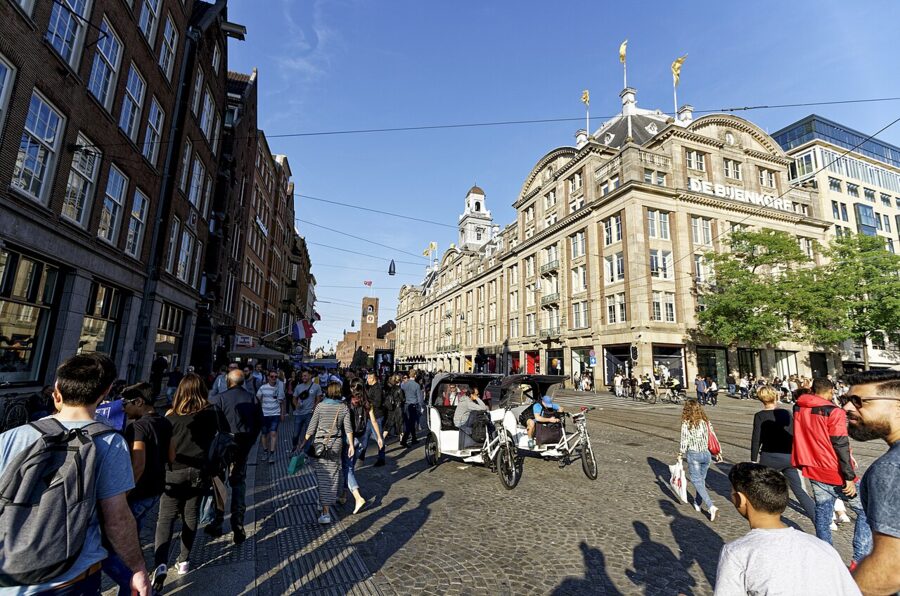

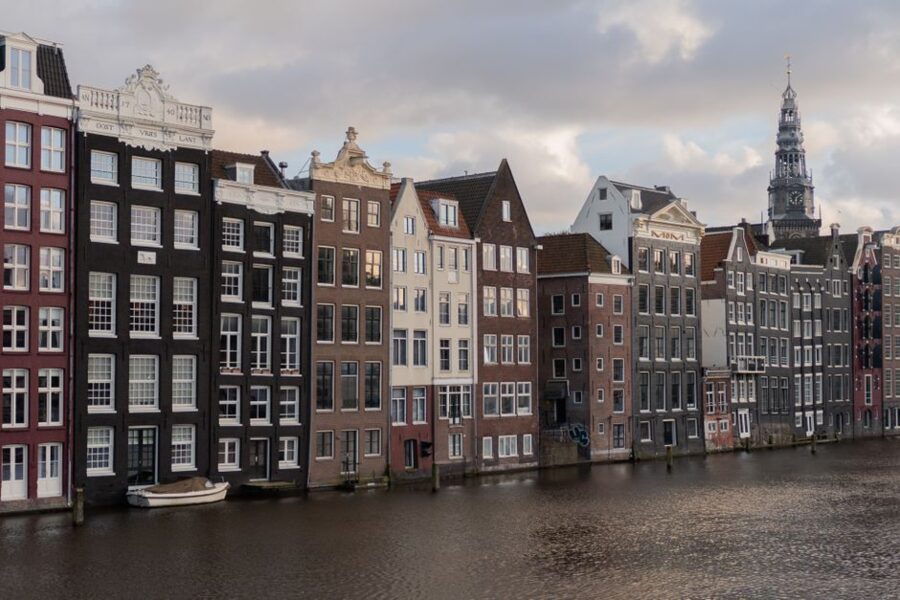
North: the Damrak and the Nieuwendijk. The Damrak runs ten minutes straight to Centraal, past the leaning houses that stand in the water on its east side, the Sex Museum and the piers for the canal cruises. Parallel to it on the west, the Nieuwendijk is a busy shopping street on the old west bank, the line of the first settlement.
East: the Damstraat and the Warmoesstraat. The Damstraat leaves the square at the southeast corner and runs to the canals of the Red Light District. The Warmoesstraat, about 550 meters long and one of the city’s first streets, starts behind the Bijenkorf and runs north to the station, with the Condomerie on it.
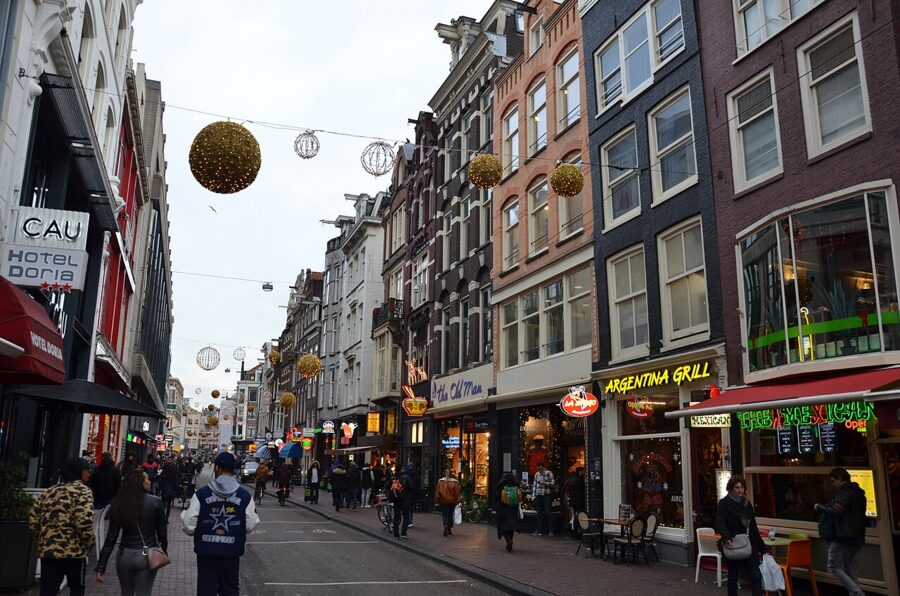

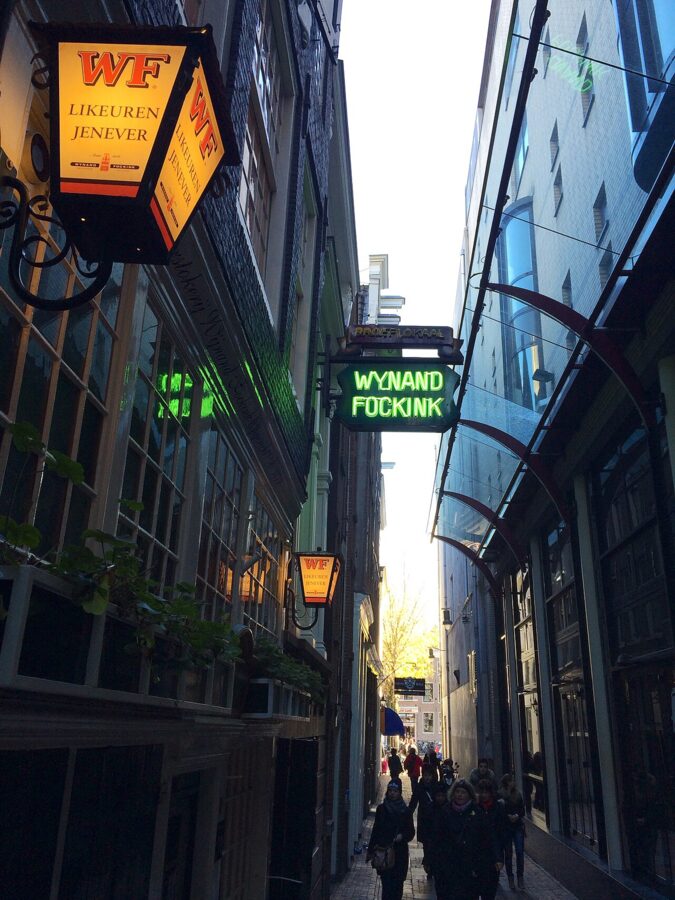
Between the two, in the Pijlsteeg, an alley behind the Dam, Wynand Fockink has poured its own genever and liqueurs in a tiny tasting room since 1679. It is the best reason to leave the square by its east side; the nightlife guide has the details.
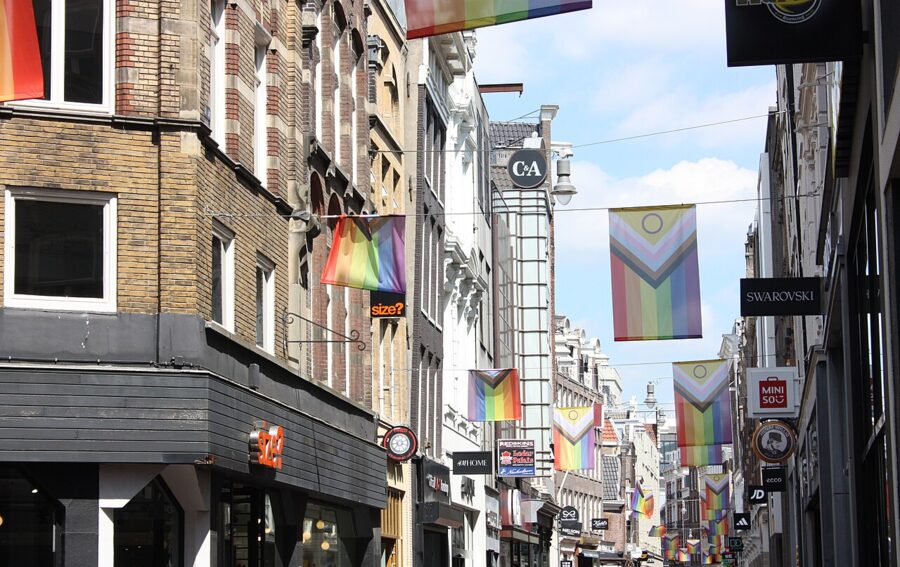
South: the Kalverstraat and the Rokin. The Kalverstraat, a long pedestrian shopping street, leaves from beside Madame Tussauds and runs to the Spui, where the Begijnhof hides behind a door off the Spui. The Rokin, which follows the old course of the Amstel, runs parallel and carries the metro underneath; follow either and you reach the flower market in about ten minutes.

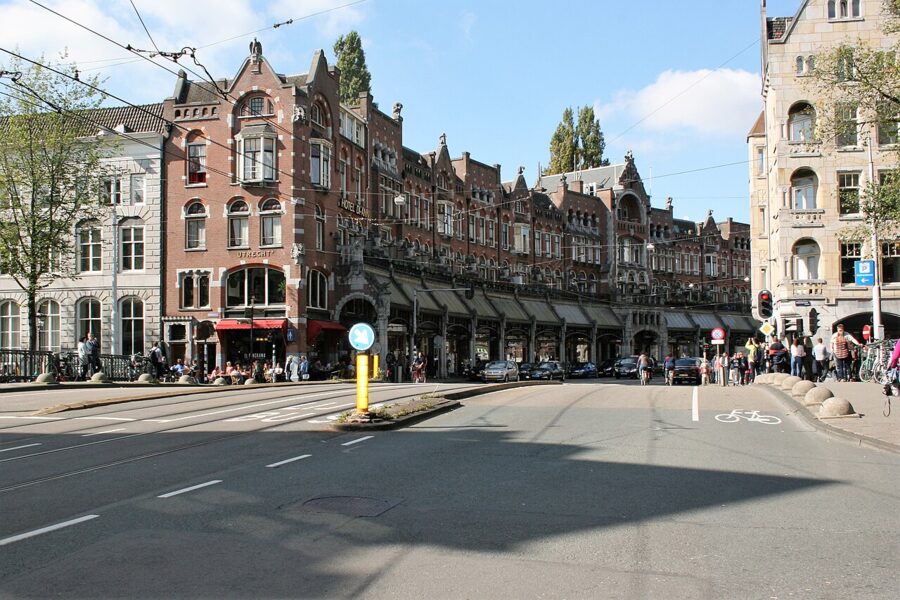
West: behind the palace. Walk round either side of the palace to the Nieuwezijds Voorburgwal, where the red-brick former main post office of 1895 to 1899 faces the back of the building. The Raadhuisstraat, named in 1895 after the town hall, starts here and runs straight west across the Singel, the Herengracht and the Keizersgracht to the Westerkerk, the Anne Frank House and the Jordaan, in about ten minutes. Hotel Nadia sits on it, and my Nadia Hotel review tells the story of how the street was cut through the canal ring.

When to go and how to get there
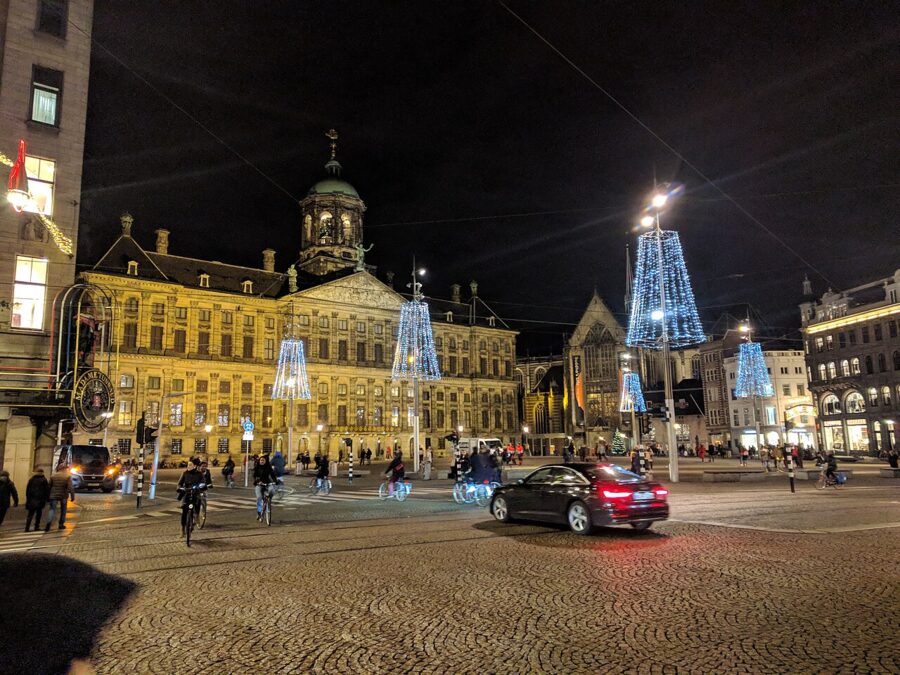
The Dam is busiest from late morning to late afternoon and on weekends, when the tour groups stop at the monument and the street acts set up. Come before 10:00 for the square nearly empty and the light on the palace front, or after dark, when the palace is lit and the crowds have moved to the bars. For decades a Christmas tree has gone up on the square in December, and on King’s Day, 27 April, the square is packed and the palace closed.

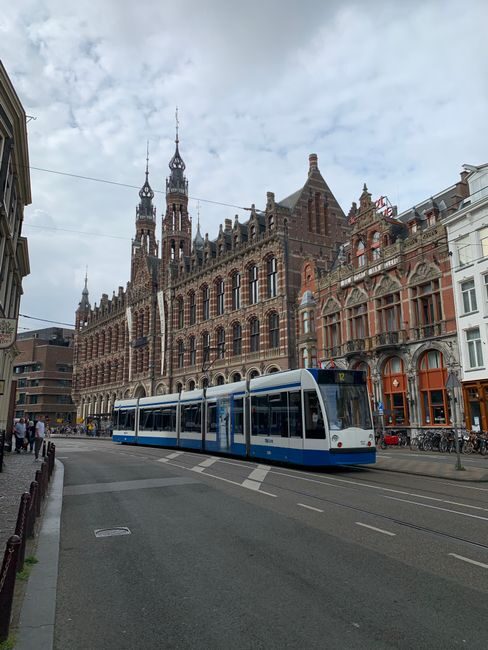
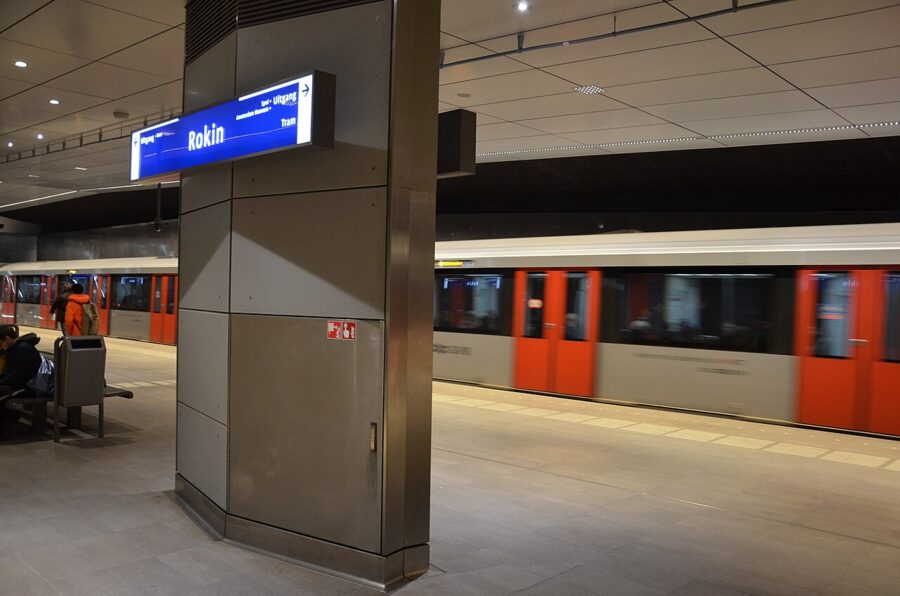
From Centraal it is about 750 meters, a ten-minute walk straight down the Damrak. Trams 2, 4, 14 and 24 stop at Dam (as of November 2026). Metro 52, the Noord/Zuidlijn, runs in a deep tunnel right under the square and stops at Rokin, about 150 meters from the palace; take the Dam exit. If you are choosing a hotel, a room a canal or two away is quieter and better value than one on the square; the neighborhoods are compared under where to stay in Amsterdam.

Allow an hour for the palace, an hour for the Nieuwe Kerk if you go in, and ten minutes at the monument; the rest of the square takes as long as you want to watch the pigeons. For the museums the Dam does not have, start with my overview of Amsterdam’s museums, most of them a tram ride away.

So check the palace calendar the night before, come down the Damrak at 10:00 with a card and a small bag, go in at the right-hand end of the front, and give the Burgerzaal floor the time it deserves. On the way out, cross to the monument, find one of the name stones in the paving, and then leave the square the way most people do: on foot, to somewhere else.