
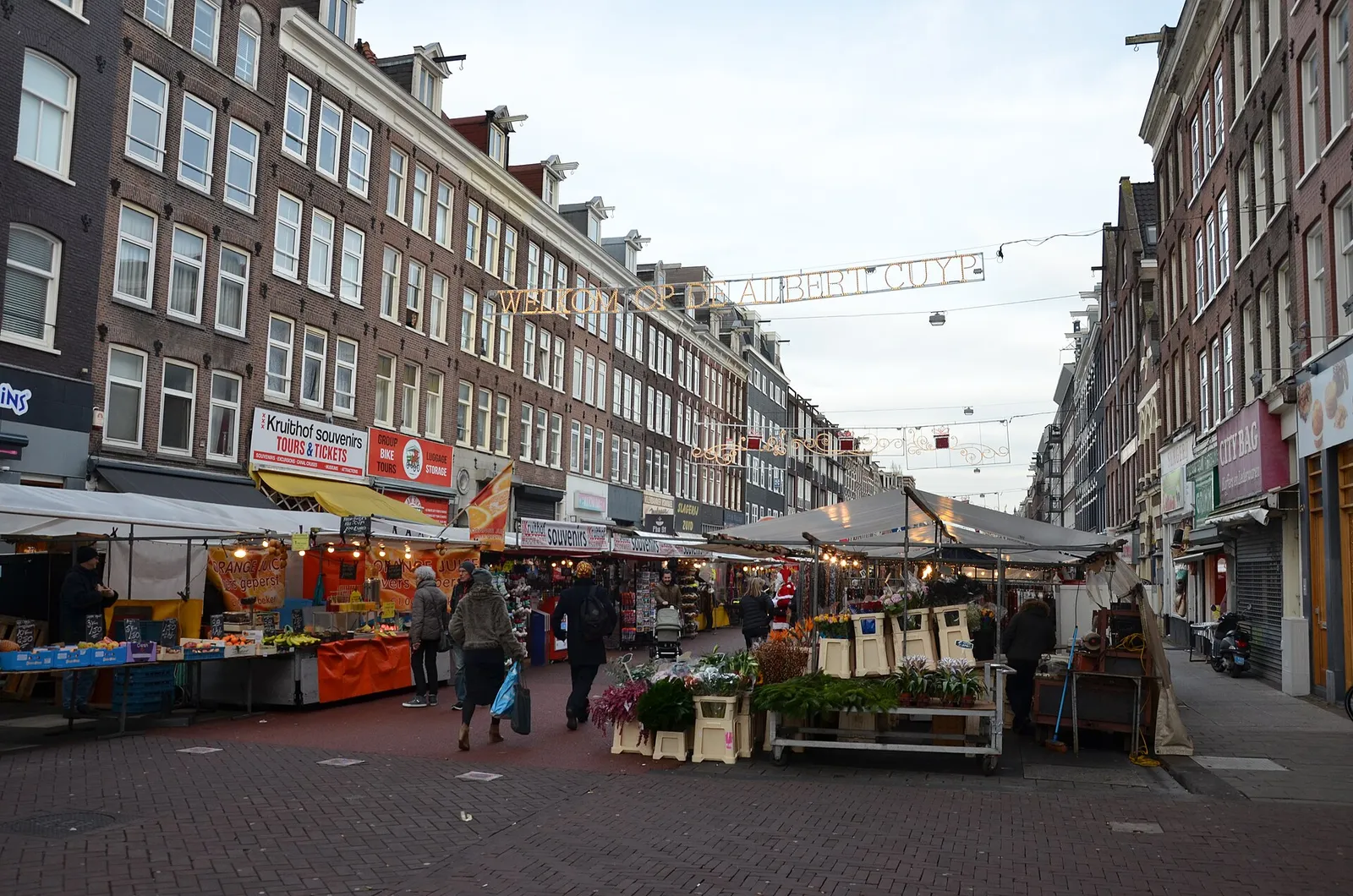

At nine o’clock every morning except Sunday, the market master on the Albert Cuypstraat starts sharing out the pitches that nobody owns. The traders without a permanent spot, the sollicitanten, have to be there in person, and the order they are called in depends on how long they have been on the list. Within the hour the gaps between the fixed stalls have closed, the delivery vans are being driven off the street, and the first stroopwafel irons are hot.
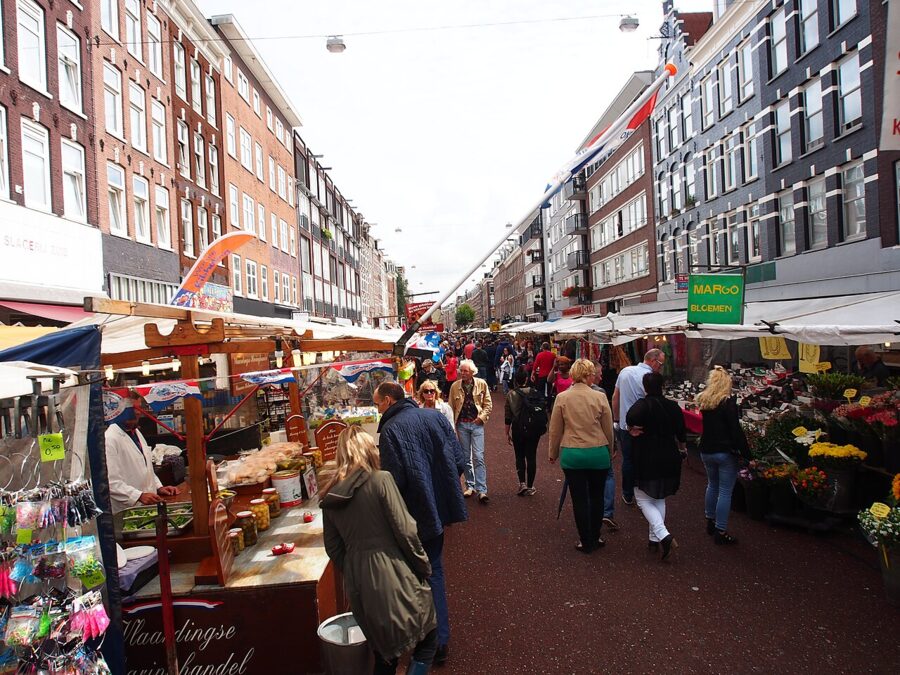
That small daily ritual is the backbone of the Albert Cuypmarkt, which the city of Amsterdam turned from a crowd of handcart sellers into an official market in 1905. Today it is 264 pitches of four meters by four, fixed by a city decree that came into force on 1 July 2026, in three blocks of stalls between the Ferdinand Bolstraat and the Van Woustraat in De Pijp. The market calls itself the biggest day market in Europe, and nobody in the Netherlands has a bigger one.
The decision is easy, so here it is. Come on a weekday between about half past ten and noon, when every stall is up and you can still walk in a straight line. Eat a herring and a stroopwafel off the iron, look at the fabric and the cheese, and leave the souvenir stalls to the people who came for souvenirs.



When to go and what to eat
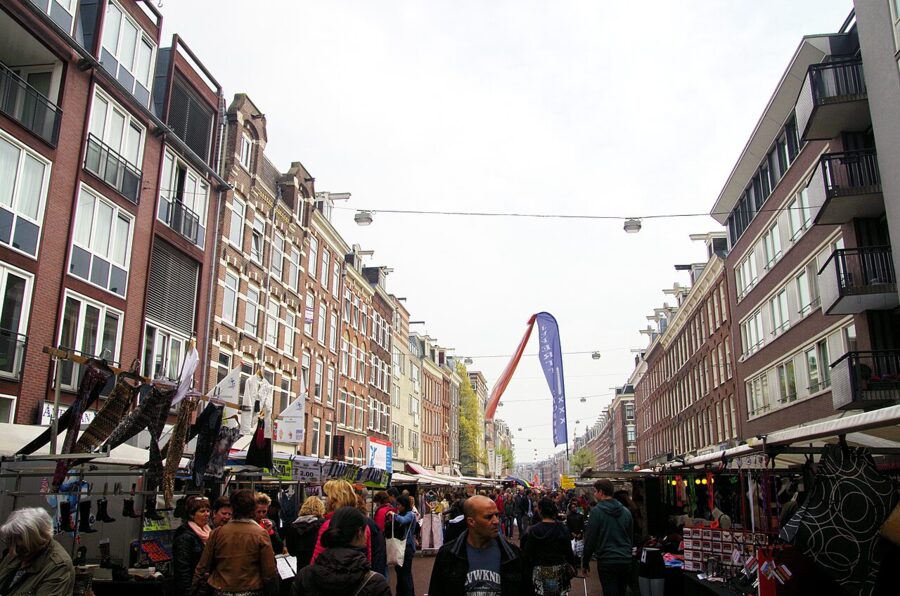
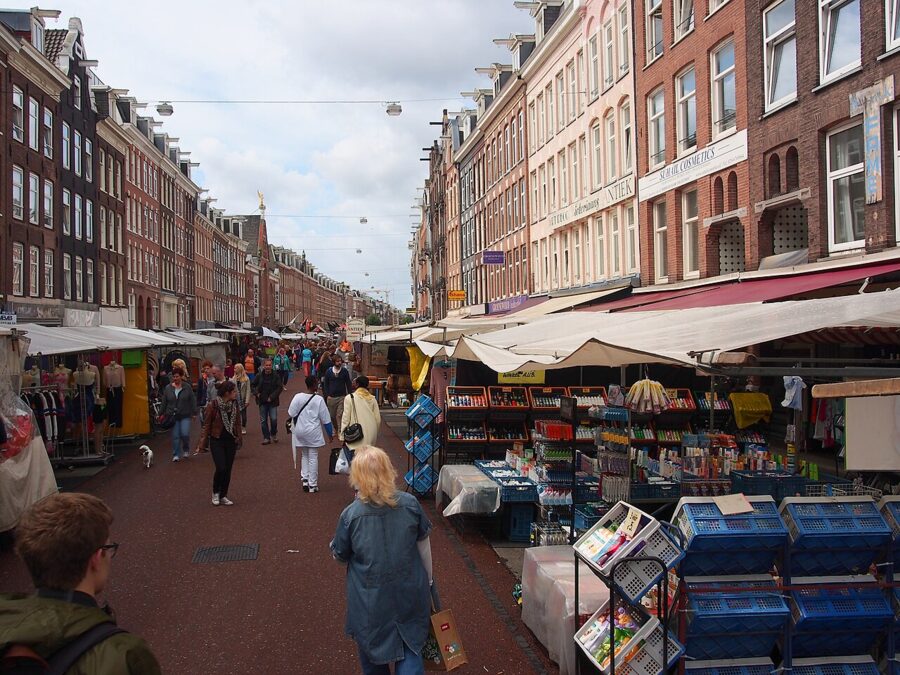
Friday and Saturday are the days the traders want. The market’s own rules make anyone hoping for a free pitch on those two days turn up at least once between Monday and Thursday first, which tells you where the money is. Saturday is when De Pijp does its shopping and the street fills shoulder to shoulder by late morning.
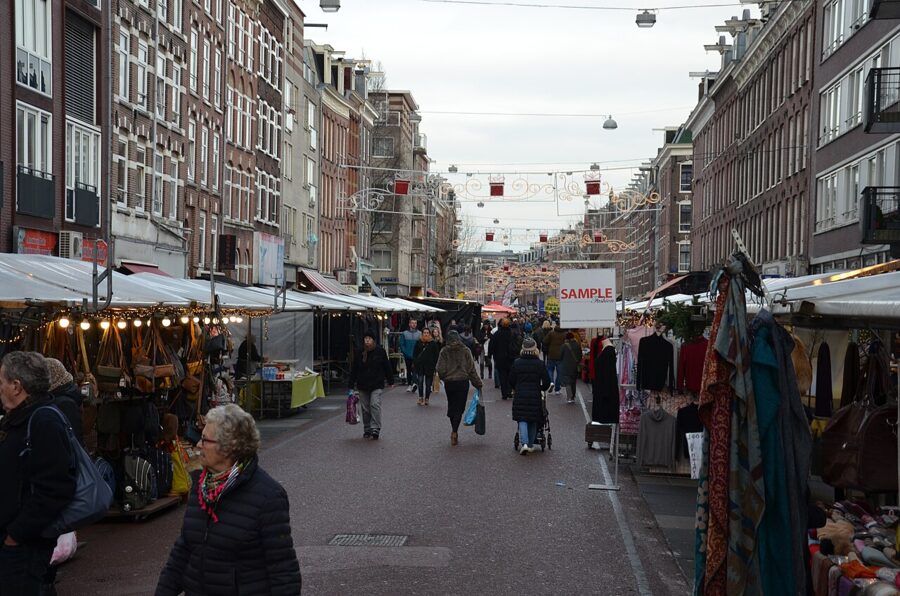
Tuesday to Thursday are the easy days. Deliveries are allowed until 10:30, so before then you share the street with vans, trolleys and traders still hanging up their stock. Between 10:30 and lunch the stalls are complete, the queues at the food stands are short, and the cheese sellers have time to cut you a taste.
What to eat is not a hard question either. The city reserves one pitch on the whole market for herring and five for stroopwafels, and those two are what many visitors come for. After that, the fried fish (kibbeling), the poffertjes and a loempia are the market’s own street food, and the Surinamese food is in the shops behind the stalls rather than on them.
Days and hours, as of November 2026
The market trades Monday to Saturday and is closed on Sundays and on official public holidays, which includes King’s Day on 27 April and Christmas. The two published opening times do not agree, and both are right in their way. The market’s own website gives 09:30 to 17:00, while the city’s rules for the market run the selling day to 18:00, and the I amsterdam listing gives 09:00 to 18:00.
In practice the useful window is 10:30 to 17:00. The city’s 2026 market regulations set the rest of the day’s clock, and it explains what you see on the street.
| Time | What happens on the Albert Cuypstraat |
|---|---|
| 06:30 | The street becomes market ground; traders with their own sales vans park them between 06:30 and 10:00 |
| 08:00–10:30 | Deliveries of stock and stalls by way of the side streets |
| 09:00 | The daily allocation of free pitches; applicants must be there in person |
| 09:30–17:00 | Opening hours as the market publishes them |
| 17:30–19:00 | Packing up and carting goods away, which puts the end of selling at 18:00 |
| Until 21:00 | Cleaning; after that the street goes back to traffic |
| Sunday | Closed, as on public holidays |
Once the deliveries are done the bollards go up and the market is closed to cars and to bicycles, so you cannot cycle down the Albert Cuypstraat in market hours. Lock your bike in a side street and walk. Stalls run in rain and in cold, and the rules even tell traders to clear the snow around their own pitch.
Cash or card
There is no market-wide rule. Whether a stall takes cards is the trader’s own decision, and plenty of them have a reader on the counter, but Dutch market traders have made no secret of preferring cash because of what card fees cost them. Carry some coins and small notes for a herring or a bag of cherries, and keep the card for the cheese.
The traders themselves get no such choice. The market’s page for would-be stallholders says the daily fees are paid by card only: €19.82 (about US$23) to the city for electricity, water, cleaning and promotion, and €16 (about US$19) for the hire of the stall, on top of a €57 (about US$66) market permit.

From handcarts to 264 pitches
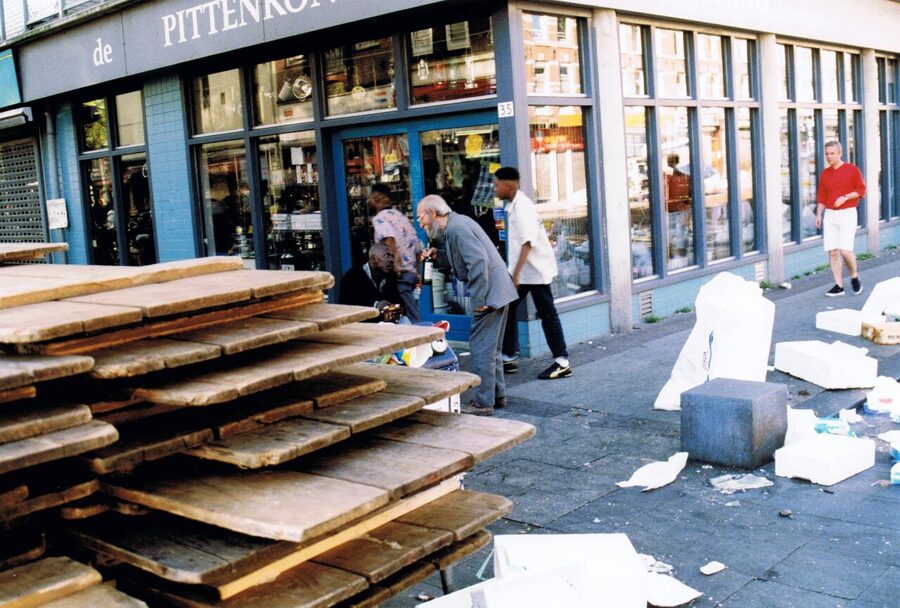
Before De Pijp was built this was polder outside the city walls, and the line of the Albert Cuypstraat was the Zaagmolensloot, a ditch lined with the windmills of timber merchants who sawed wood here. The city filled it in between 1898 and 1900 to build housing for a population that was growing faster than anyone could house it. That is why the street is wider than most in the northern half of De Pijp, and why a market fitted into it so easily.
The painter in the name
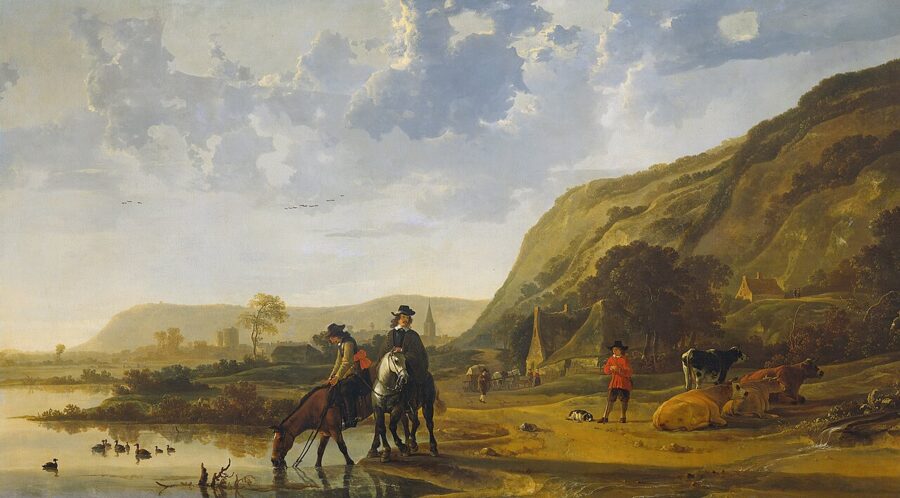
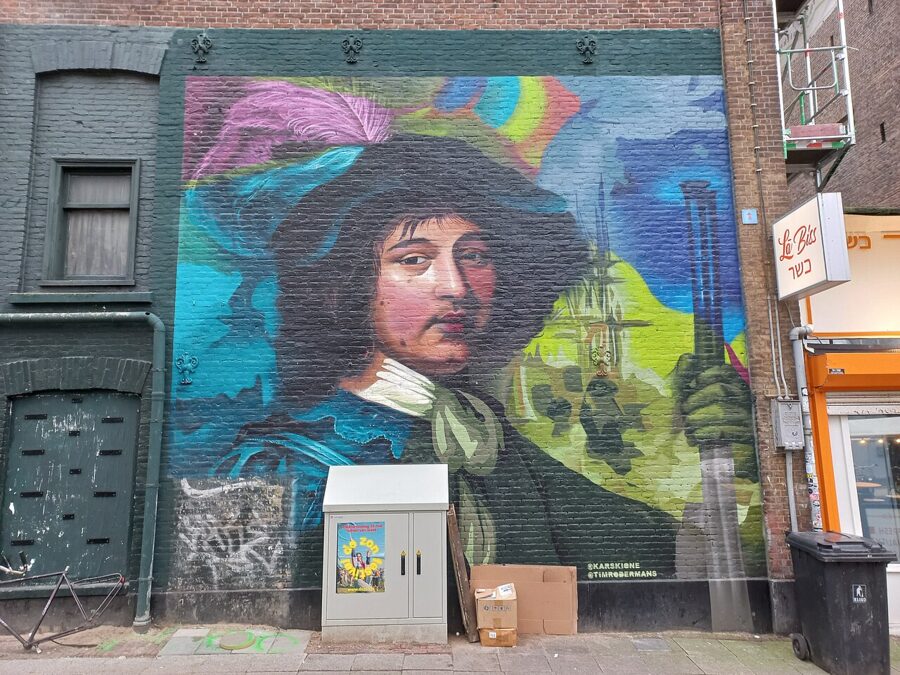
The street was named in 1883 after Aelbert Cuyp, a landscape painter from Dordrecht who lived from 1620 to 1691, so Albert Cuyp himself came from Dordrecht, not Amsterdam. He is known for river views and cattle bathed in a warm southern light, although he never went to Italy. Most streets around the market carry the names of Golden Age painters: Ferdinand Bol, Gerard Dou, Jan Steen, Govert Flinck.
From Saturday evenings to six days a week
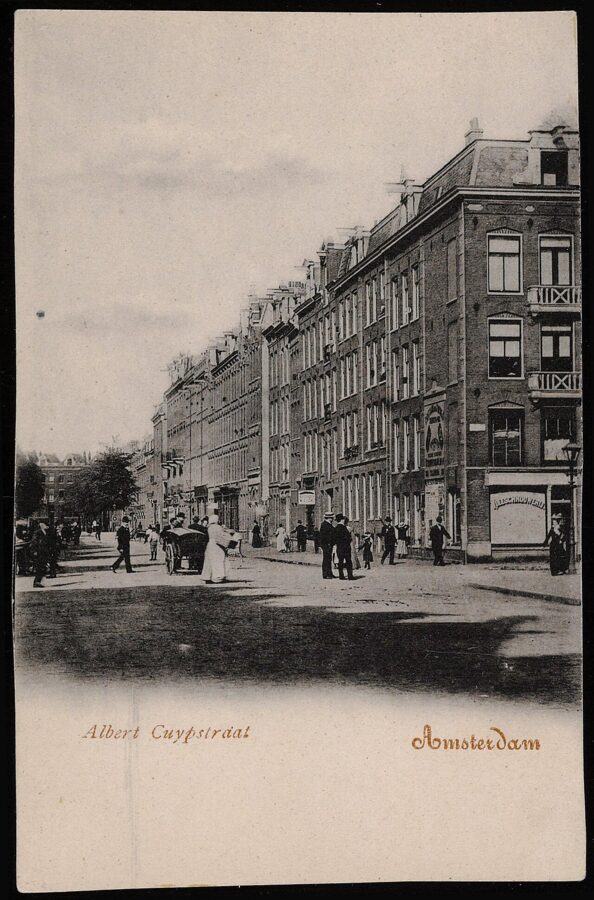
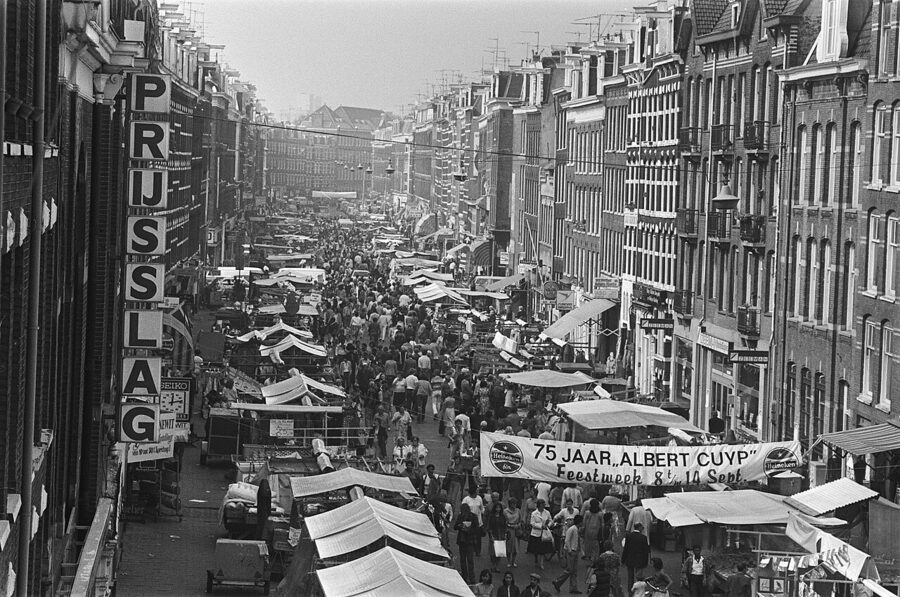
Around 1900 more and more street sellers with handcarts gathered in the broad new street, sometimes drawing such crowds that they blocked the traffic and the police moved them on. In 1905 the city gave in and legalized the situation, at first for a market on Saturday evenings only, according to the city’s own centenary history. In 1912 the market was allowed on every weekday. Around 1910 the Albert Cuypstraat was one of four streets, with the Dapperstraat, the Ten Katestraat and the Lindengracht, formally named as places where street selling was allowed.
The early traders bought their goods before dawn at the central market halls and then waited on the Albert Cuypstraat for a police officer’s whistle. At the signal they raced for the best places, and whoever got there first could stand there for the day. Some of them unscrewed the pins from a rival’s cart wheels to slow him down.
Light came in 1932, when cast-iron electricity poles nicknamed the “cigars” replaced the paraffin lamps; the market then ran far later into the evening than it does now. Around the same time the cobbles were replaced with asphalt, because the carts made such a din on them. The 1930s slump left many traders in deep poverty.
The German occupation ended the market as it had been. Jewish traders, a third of the people selling on the Albert Cuyp, were barred from it and from the city’s other markets, and almost none of them came back. The market’s own history recalls a stall at the Ferdinand Bolstraat corner in 1942 run by the wife of Jaap Jansen, who was later executed for supplying weapons to the resistance.
Post-war, and the market of the world
By 1955 the market was busy again, with 240 pitches taken, and in June 1956 it reopened after the road surface was rebuilt. From the late 1960s the newcomers to Amsterdam changed what was on sale: fishmongers began selling boquerones and sardines next to the Dutch fish, at first importing them themselves. In the 1970s the traders changed too, as students and graduates took stalls beside people who had grown up on the market, and the ladies of Oud-Zuid drove their cars onto the market to do their shopping, which was still allowed.
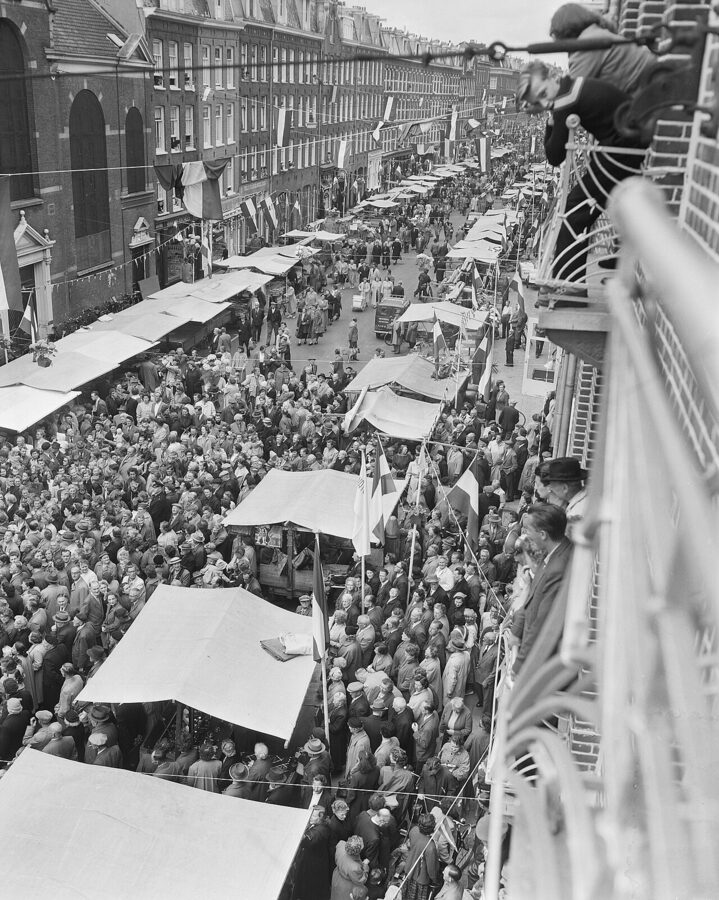
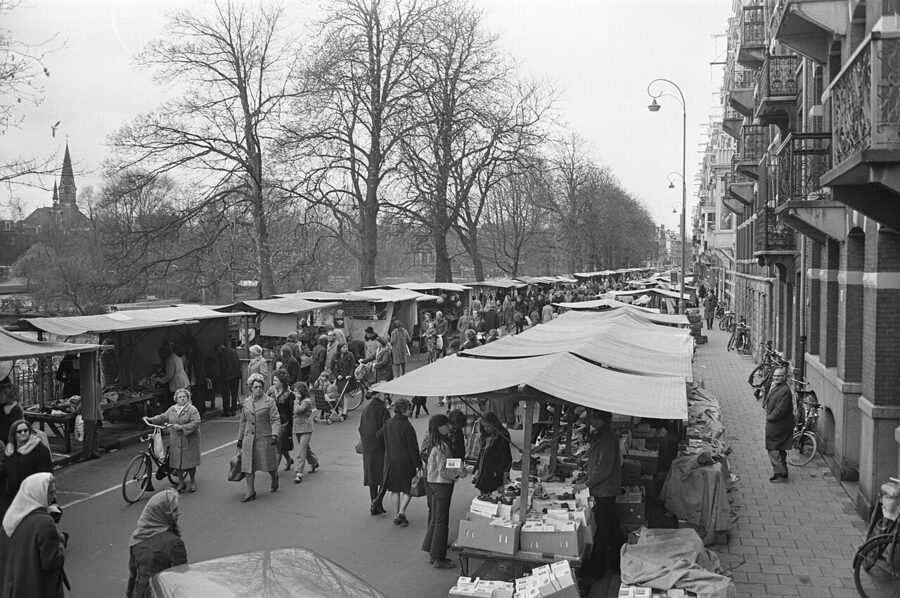
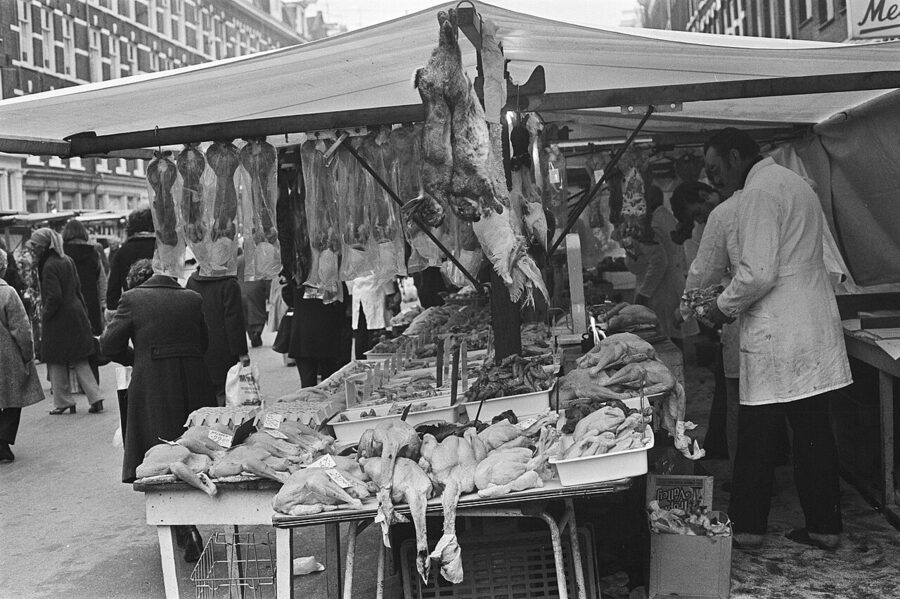
The market celebrated its 75th birthday in September 1980 with a week of parties and a Sunday market. For the centenary in 2005 a book on its first hundred years appeared, and a statue went up on the corner of the Eerste Sweelinckstraat. In 2011 the chairman of the traders’ association told Het Parool that foreign visitors spent an average of thirty euros a visit at the Cuyp, against four on the Damrak.
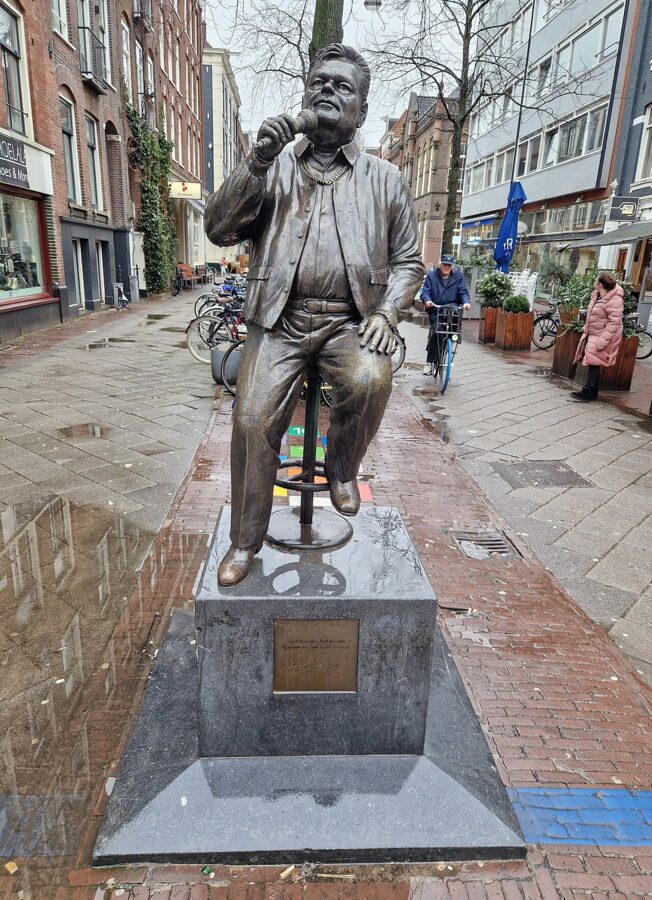
André Hazes, discovered between the stalls
André Hazes, the best known of all Dutch levenslied singers, was born in the Gerard Doustraat, one street from the market. On 5 May 1959, Liberation Day, the boy was singing next to the stall of Stien van Hilten to earn money for a present for his mother, whose birthday was the next day. The actor and comedian Johnny Kraaijkamp heard him and launched him as a child star on television, the start of a career that made Hazes the voice of the Dutch sentimental song.
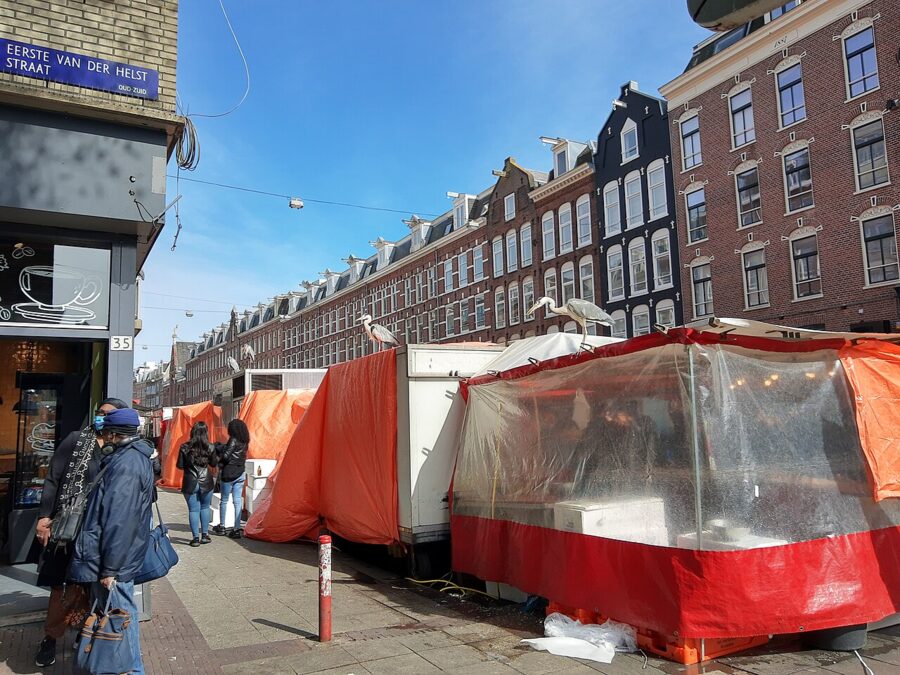
His bronze statue was unveiled on the market on 23 September 2005, the day part of his ashes were fired into the sky from the beach at Hoek van Holland. It stands near the corner of the Eerste Sweelinckstraat, among the stalls where he was found.

What is on the stalls now
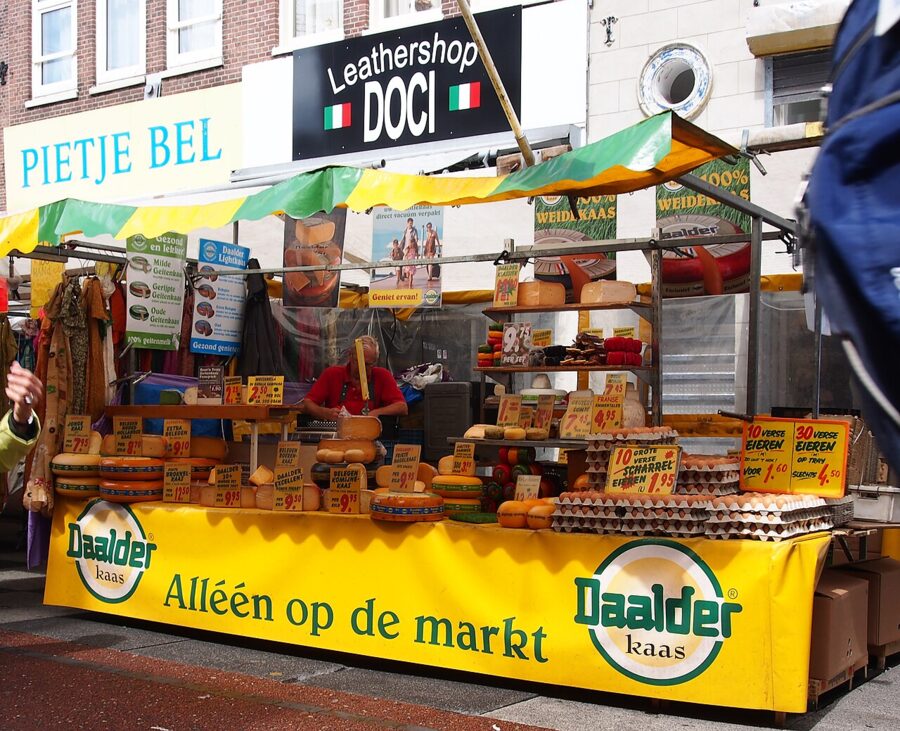
Fruit and vegetables, fish, cheese, bread, flowers and plants make up the food half. The other half is fabric by the meter, clothing, underwear and socks, bags, leather goods, jewelry, phone accessories and household goods, sold by people who have often stood on the same pitch for decades. It is a shopping street for De Pijp first, and visitors are welcome to join in.
The city decides more of the mix than you might think. The 2026 layout decree reserves eight pitches for fresh fish, four for poulterers, four for cheese, three for olives and hummus, two each for bread and nuts, and spreads them along the market so that similar stalls do not bunch together. Of the 264 pitches, 25 may fry, bake and cook, and 22 more may heat food without a deep fryer.
The souvenir cap
Tourist goods are capped at 15 pitches, and the decree says exactly what counts: new clothing printed with national or city symbols, lighters, magnets, umbrellas, socks and candles with the same, clogs and windmills, new Delftware, pre-packed food and pre-packed flower bulbs, and anything printed with the word cannabis or a cannabis leaf, from “space cake” to lollipops. Put plainly, the city would rather the Cuyp sold cauliflowers than XXX mugs. It is not always winning, but it is trying.
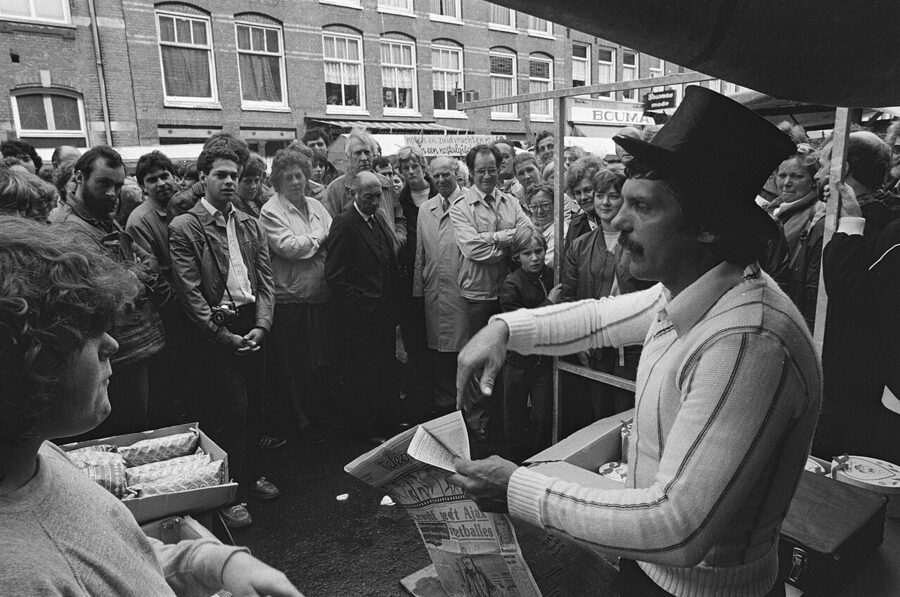
There is one pitch kept for a standwerker, the old-style market pitchman who draws a crowd by demonstrating a single product, and seven pitches in an “experimental zone” for new traders with something the market lacks. The city cut the pitchman places from three to one in 2026 because fewer and fewer turn up. In July 2026 the art center de Appel ran a stall of Shanghai party supplies on the market, with the wholesale price printed on each tag next to the European market price.
The 2026 reshuffle
The current layout is new. The decree took effect on 1 July 2026, and on the evening of 25 August 2026 the traders gathered for a reallocation in which at most 230 pitches went out as permanent places and 26 stay free every day for the morning allocation. The last big reshuffle, in 2022, was not a happy one: the city tried to cut the stroopwafel stalls from four to two to reduce the tourist offer, and one stroopwafel baker with forty years on the market called it bullying the small trader.
The food worth queuing for
Stroopwafels
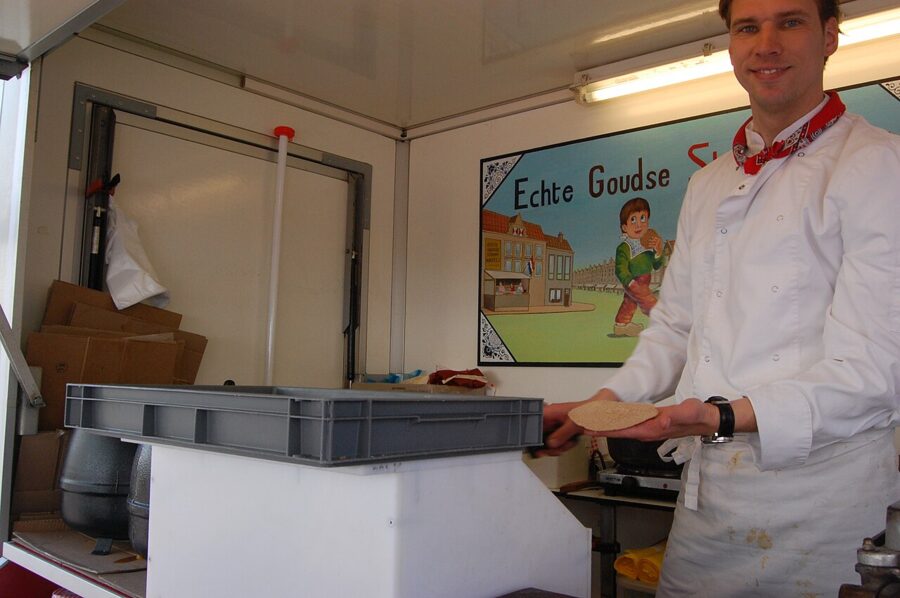
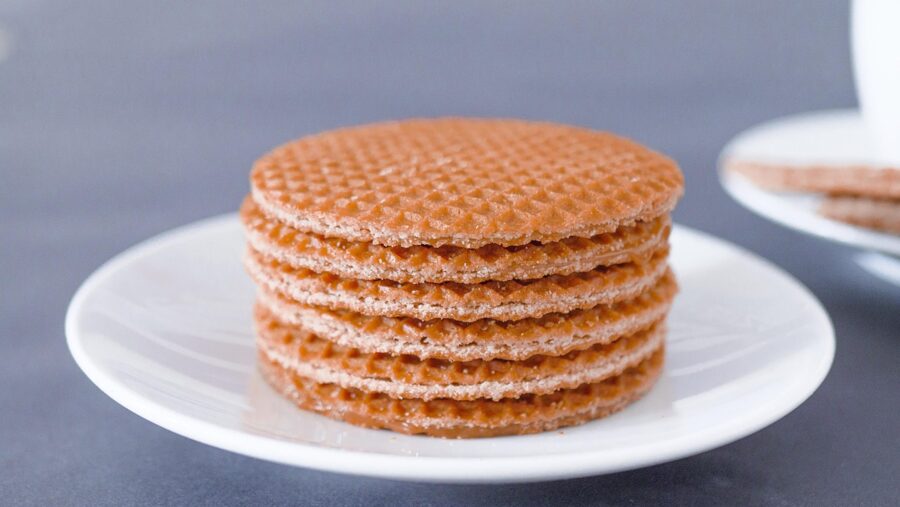
The stroopwafel comes from Gouda, where it began in the early 19th century as a “poor man’s cookie” made from leftover dough and syrup. On the market two thin wafers are pressed on a hot iron, split while warm, and spread with syrup, and you eat the result in a paper sleeve while it is still soft. The packet version in every Dutch supermarket is a different and lesser thing.
The city now allows five stroopwafel pitches, up from the two it wanted in 2022, because stroopwafels, poffertjes and fries are the best-selling food on the market and the city wants one in every part of a street that most people only walk partway. The best known is Rudi’s Original Stroopwafels, opposite Albert Cuypstraat 182, which the city’s tourist board still sends people to as of November 2026; the same roundup of cookie bakers makes the case for eating them plain. I agree. The versions smothered in sprinkles and marshmallows sold elsewhere in town taste mostly of the topping.

Herring and fried fish
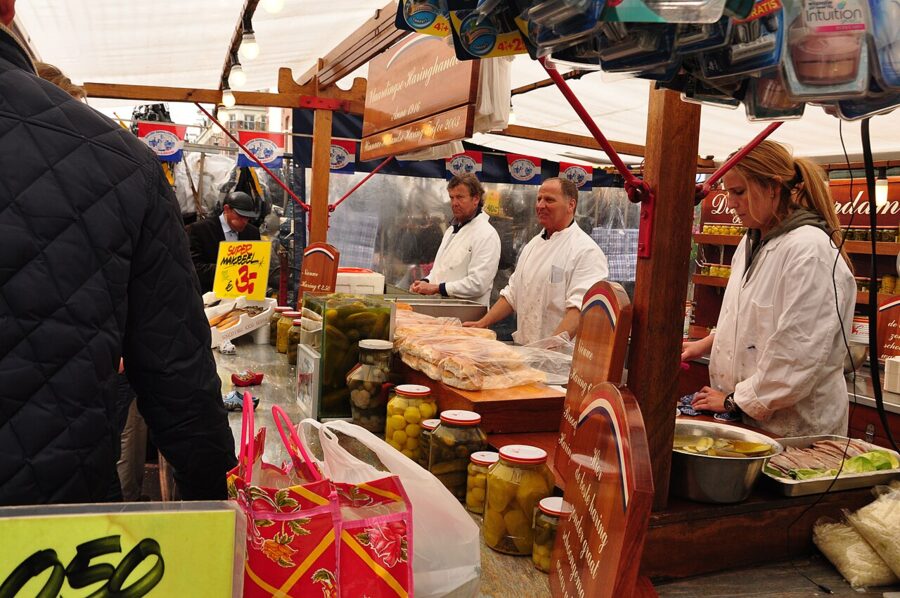
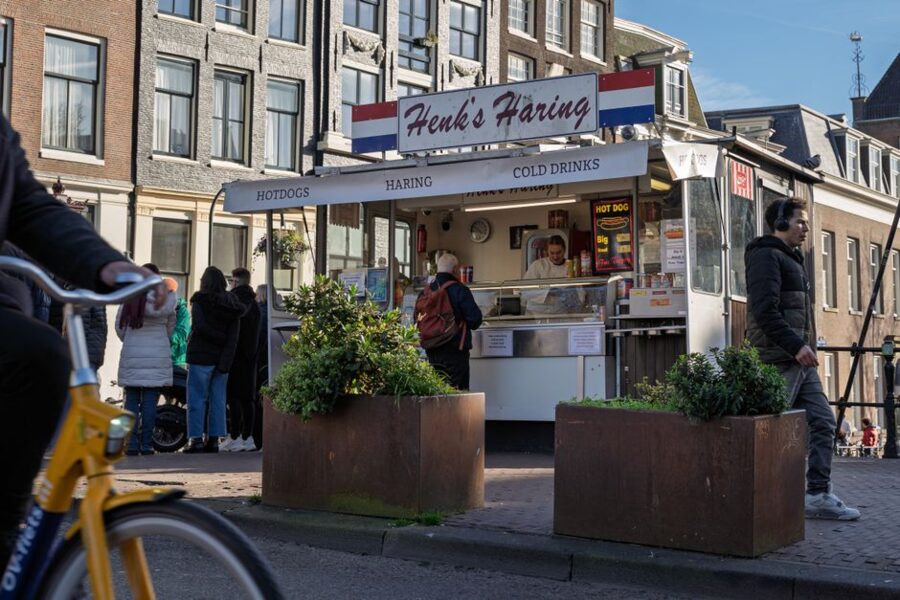
One pitch on the whole market is designated for herring, eight more for fresh fish and two for fried fish, so you will not have trouble finding a fish stall. Hollandse Nieuwe, the new season’s herring, usually arrives in mid-June, but the stalls sell herring all year. It is lightly salted and ripened rather than raw in the sushi sense, and it is eaten cold.
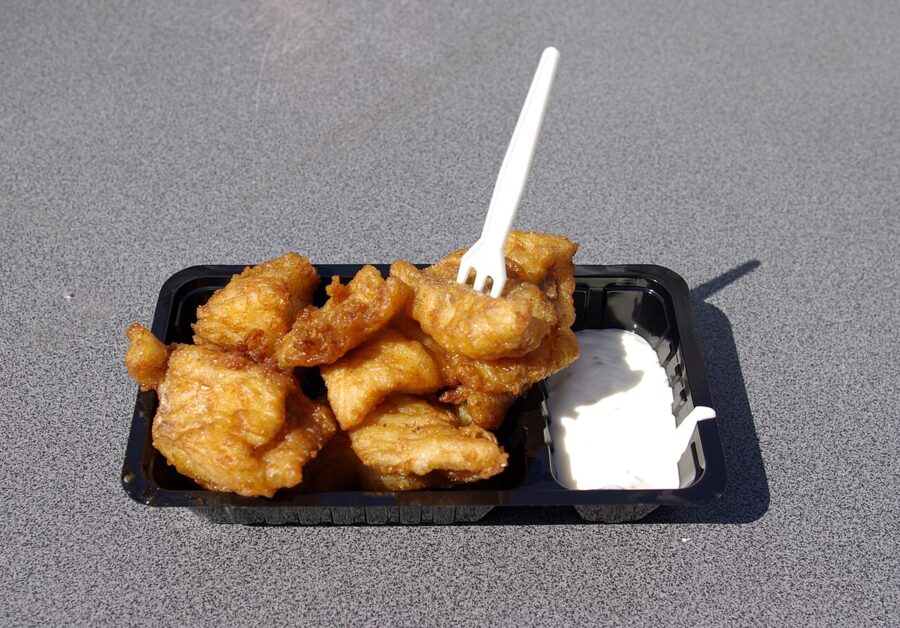
There are three ways to eat it. The traditional one is to take it by the tail, tip your head back and lower it in; the easier one is cut into pieces on a paper tray with chopped onion and pickles, eaten with a toothpick; the third is in a soft white roll, a broodje haring. If raw-ish fish is a step too far, order kibbeling, chunks of white fish fried in batter and served with a garlic or tartare sauce.

Poffertjes, loempia and the rest
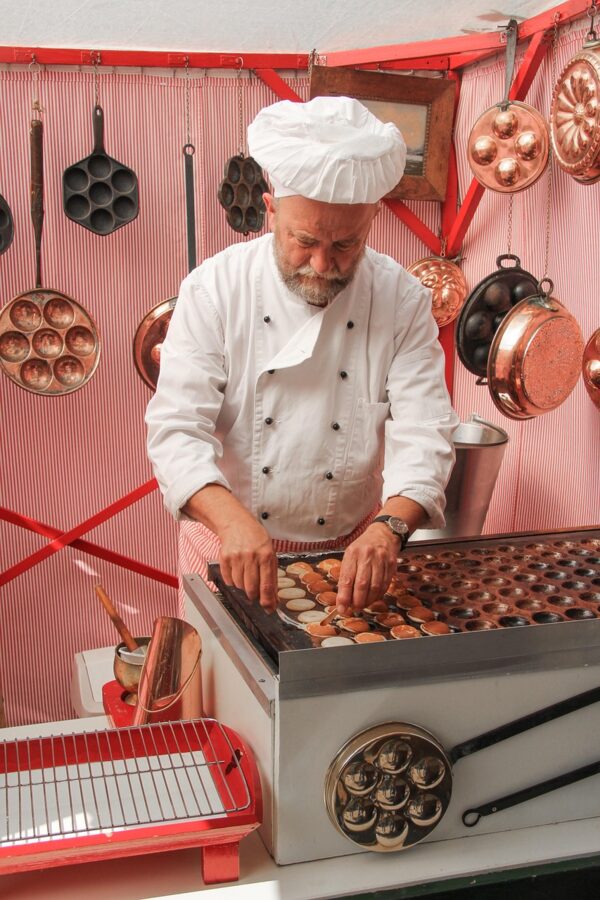
Three pitches are set aside for poffertjes, small puffy pancakes cooked in a tray of dimples and served with butter and powdered sugar. Two are for loempia, the fat Indonesian-style spring roll, and one regular who spoke to I amsterdam reckons the loempia here is the best in the city. There is also a single pitch for churros and, in winter, oliebollen, and three for fries.
The olive and Mediterranean deli stalls draw a line on Saturdays from people buying for that evening’s drinks. For a sit-down lunch, the cafés behind the stalls and in the side streets let you watch the market from a window seat.
Surinamese food, behind the stalls
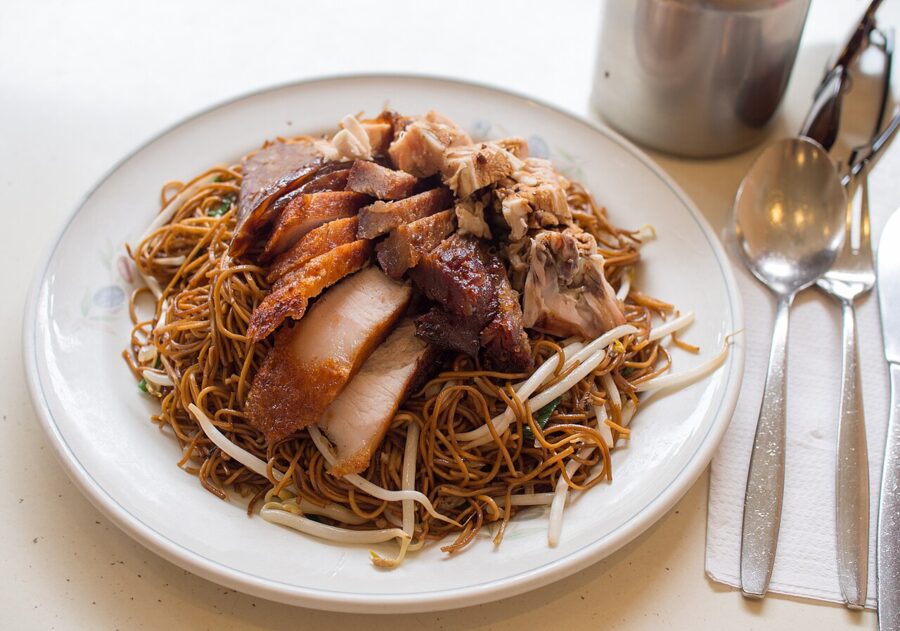
Surinamese food in De Pijp is mostly in the shops and eateries behind the market rather than on it. New Fusion at Albert Cuypstraat 47 is the survivor of a whole row: the street once had ten Chinese-Surinamese places, and the city’s tourist board wrote in November 2026 that only New Fusion remains. Locals go there for moksi meti, mixed roast meats over rice, with the meat marinated for days and slow-roasted in a barrel oven out back.
On the Van Woustraat, the street at the market’s east end, Warung Mini at number 19 has been serving Javanese-Surinamese food for more than 30 years, with a second branch at Ceintuurbaan 205; the Dutch-language guide to Surinamese restaurants recommends the pitjil, vegetables under peanut sauce, and telo, fried cassava. At any Surinamese takeaway, the snacks to know are the broodje pom, a roll filled with pom, an oven dish of grated tayer root and chicken; bara, a fried disc of spiced dough from the Hindustani kitchen; and baka bana, a plantain fritter.

Albert Cuyp or another market?
The Albert Cuyp is the biggest of Amsterdam’s everyday street markets, but it is not the only one, and for some things it is not the best. The comparison below uses the hours each market or the city publishes, as of November 2026.
| Market | Where | Days and hours | Go for |
|---|---|---|---|
| Albert Cuypmarkt | Albert Cuypstraat, De Pijp | Monday to Saturday, 09:30–17:00 (market); selling allowed until 18:00 | Street food, fish, cheese, fabric, everyday shopping |
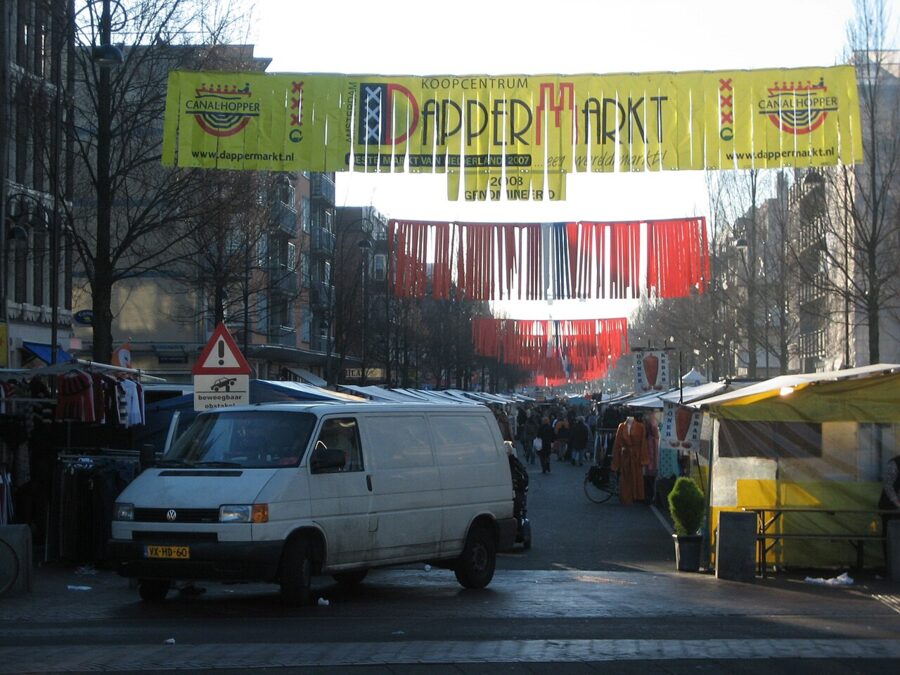
| Dappermarkt | Dapperstraat, Oost | Monday to Saturday | A neighborhood market of about 200 stalls: produce, fabric, clothing, plants |
| Ten Katemarkt | Ten Katestraat, Oud-West | Monday to Saturday, 09:00–18:00 | A smaller daily market close to the Vondelpark |
| Waterlooplein | Waterlooplein, center | Monday to Saturday, 09:00–17:30 | Second-hand clothes, records, bric-a-brac |
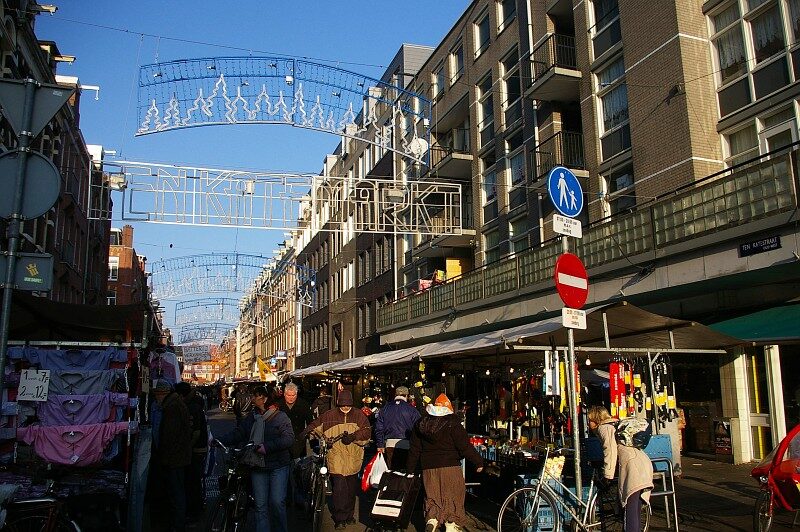
| Noordermarkt | By the Noorderkerk, Jordaan | Monday 09:00–14:00; Saturday 09:00–16:00 | Vintage and textiles on Monday, the organic farmers’ market on Saturday |
| Lindengracht | Lindengracht, Jordaan | Saturday, 09:00–17:00 | An ordinary neighborhood market of 224 stalls |
| Bloemenmarkt | Singel | Glasshouse stalls on the canal | Cut flowers and bulbs, in the right season |
Is the Dappermarkt or the Albert Cuyp more fun? The Dappermarkt in Oost has much the same mix of produce, fabric and cheap clothes, and to me it feels more like a neighborhood market and less like a sight. If you are staying in the east of the city, go there; if you only have time for one, the Albert Cuyp has the better street food and the more interesting neighborhood around it.

The Ten Katemarkt is the one to combine with a walk in the Vondelpark. The Waterlooplein and the Noordermarkt are flea markets rather than food markets, and the Noordermarkt is worth a Saturday in the Jordaan together with the Lindengracht one block north.

De Pijp around the market
The market runs down the middle of De Pijp, a neighborhood of long, straight streets of four-story blocks put up quickly in the late 19th century for workers’ families. It filled with students and migrants in the 20th century and with restaurants in the 21st. Walk off the market down any side street and you are in residential De Pijp within a block.
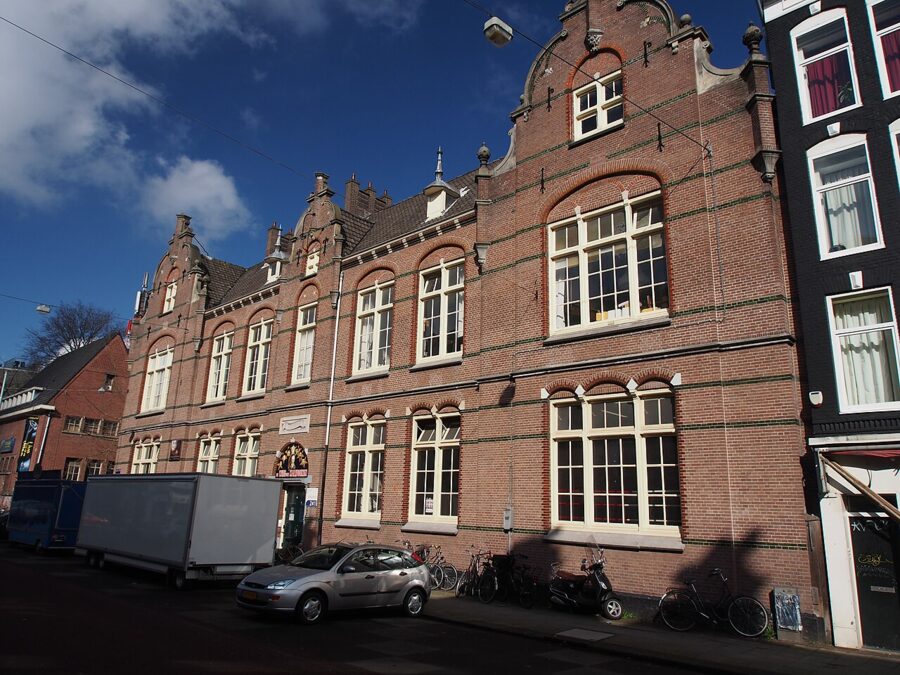
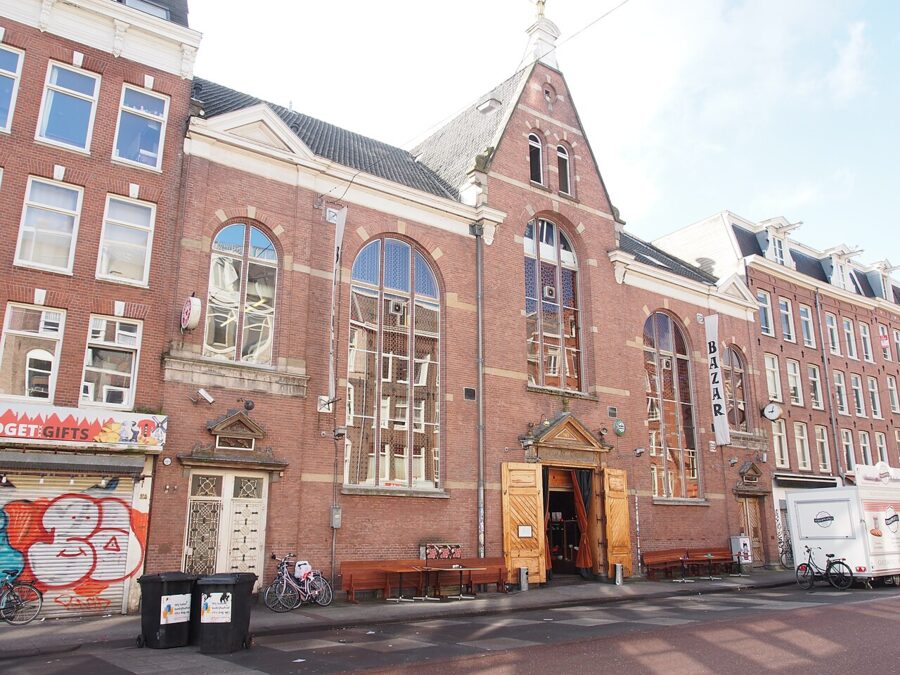
Halfway along, at number 182, is the market’s one big building: the Buiten-Amstelkerk, a church without a tower built in 1892 for the breakaway Reformed congregation led by Abraham Kuyper. It became a supermarket in the 1960s and later a restaurant, which is when the angel appeared on its gable, a decoration its strict Calvinist builders would never have allowed. Farther east, at number 241, a former school and boxing school is also a municipal monument.
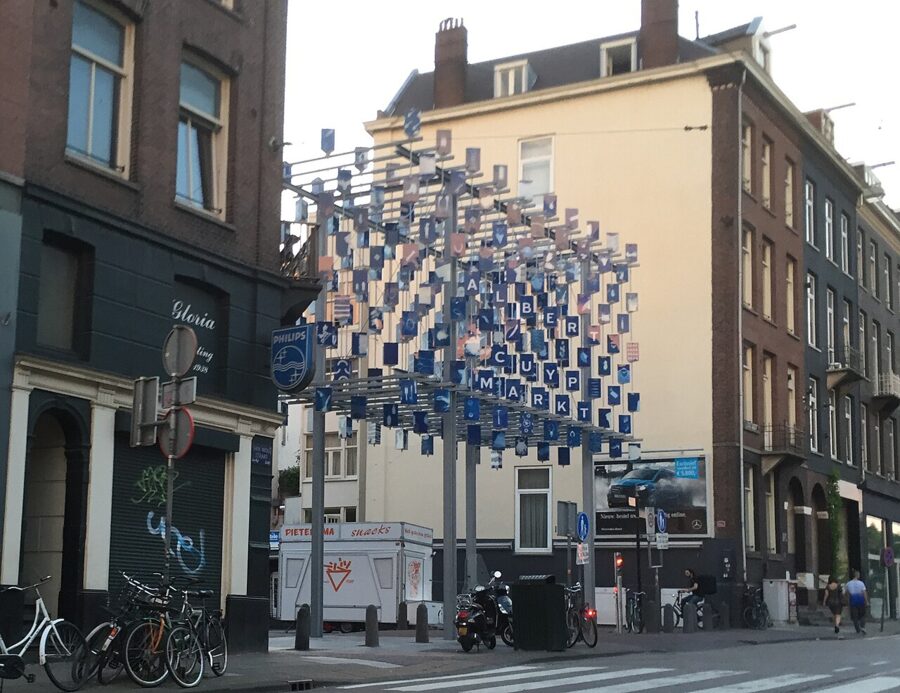
At the Van Woustraat end the market is marked by an artwork, Alles wat er op de markt te koop is (Everything for sale on the market), a steel frame hung with 258 lanterns by the design studio Overtreders W. Each lantern carries a cyanotype print of something sold on the market, recorded item by item in 2014, and the whole piece has been lit since 20 April 2016. It went up because people walking along the Van Woustraat missed the market entirely.

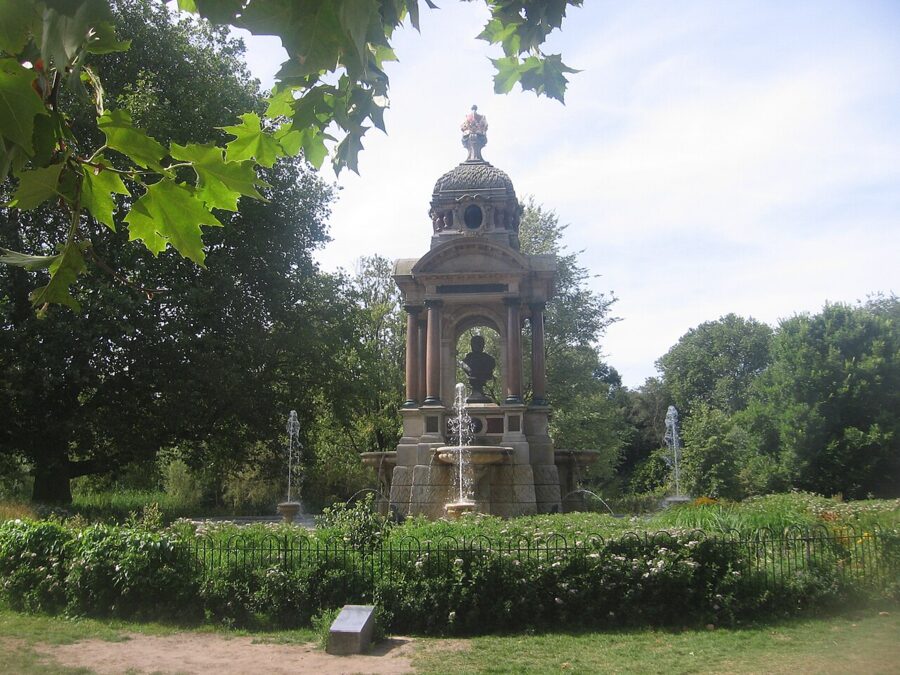
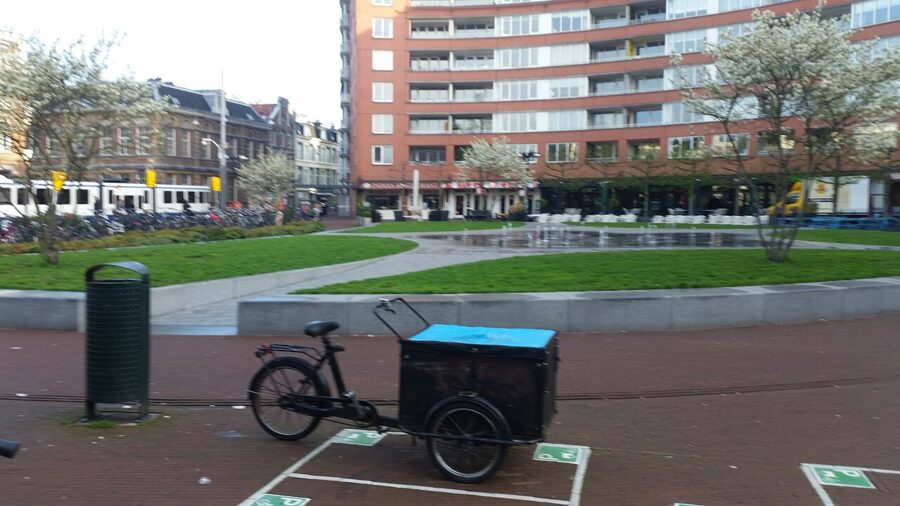
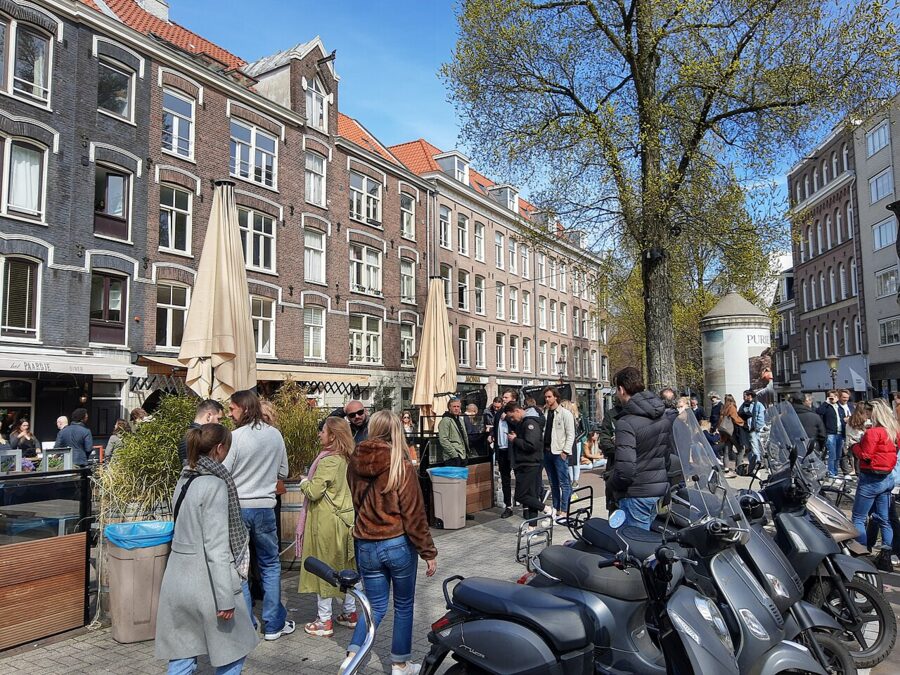
One block south, by way of the Eerste Sweelinckstraat, the Sarphatipark is 4.5 hectares of English-style landscape garden in the middle of the neighborhood, named in 1888 after the doctor and city planner Samuel Sarphati. Take your herring or your cheese there and eat on a bench. To the north and west, the Gerard Douplein and the Marie Heinekenplein are where De Pijp sits on café terraces, and the old Heineken brewery of 1867 on the Stadhouderskade, which brewed until 1988, is now the Heineken Experience.


If you want to stay in the neighborhood rather than visit it, the Bicycle Hotel in De Pijp is a budget option five minutes from the market, and the where to stay in Amsterdam guide sets De Pijp against the other districts.
Getting there
Metro 52, the Noord/Zuidlijn, runs from the platforms under Amsterdam Centraal to De Pijp in three stops, by way of Rokin and Vijzelgracht, in under ten minutes. Follow the signs for the Albert Cuypstraat exit and you come up at the corner of the Albert Cuypstraat and the Ferdinand Bolstraat, at the western end of the market. From Amsterdam Zuid it is two stops the other way, by way of Europaplein, and you can tap in and out with a contactless bank card.
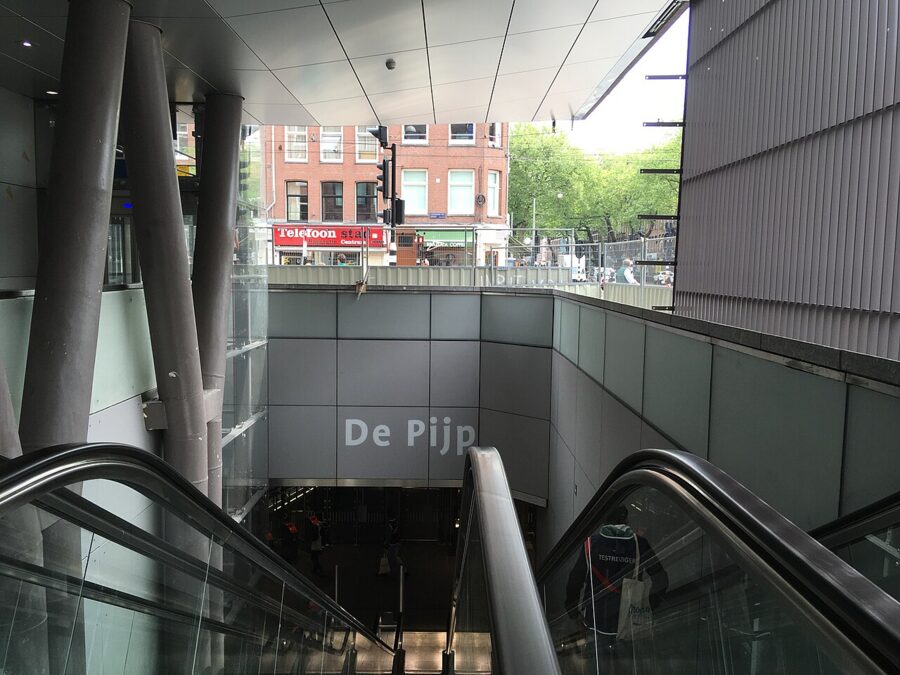

By tram, get off at the Albert Cuypstraat stop on the Van Woustraat for the eastern end of the market, or at Marie Heinekenplein on the Ferdinand Bolstraat for the western end, about five minutes’ walk away. On foot, the market is about fifteen minutes from the Rijksmuseum across the Singelgracht. Do not drive: there is no parking on the market and little in the streets around it, and the market’s own directions point drivers to a garage nearby or to the city’s Park and Ride sites on the edge of town.
Walk it from west to east. Start at the Ferdinand Bolstraat with a coffee, take the herring when you reach the fish stalls, stop at the Eerste Sweelinckstraat corner to say hello to Hazes, and finish under the lanterns at the Van Woustraat with a warm stroopwafel in your hand. Be there after the nine o’clock allocation has done its work and before the vans come back at half past five.